
How to Protect Binoculars the Right Way for Long-Term Use
Binoculars are not fragile toys, but they are not indestructible bricks either. A good pair can survive years of birding trips, hiking trails, hunting blinds, camping weekends, marine use, safari travel, and random bumps in the back of a car — but only if you protect them the right way.
And honestly, most binocular damage does not happen from one dramatic accident.
It happens from small mistakes.
A dusty lens wiped with a shirt. A binocular left in a hot car. A loose strap that slips off your shoulder. Moisture trapped inside a cheap case. A missing lens cover during travel. These little habits slowly turn sharp, reliable optics into scratched, foggy, misaligned gear.
So if you are wondering how to protect binoculars, the answer is not just “buy a case.” It is a full protection system: safe carrying, lens protection, moisture control, proper storage, careful cleaning, and choosing the right accessories for how you actually use your binoculars.
This guide breaks it all down in a practical way — not from a showroom angle, but from real outdoor use where gear gets dusty, wet, knocked around, and tested by impatient hands.
Why Binocular Protection Matters More Than Most People Think
A lot of people buy binoculars based on magnification, objective lens size, brand name, or waterproof rating. Protection is usually an afterthought.
That is a mistake.
Even mid-range binoculars have several sensitive parts: coated lenses, eyecups, hinge mechanisms, focus wheels, prisms, rubber armor, seals, and internal alignment. Damage one of those parts, and your viewing experience changes fast.
A small lens scratch may not ruin the binocular instantly, but it can create glare, reduce clarity, and make bright scenes look messy. A hard drop can knock the optical alignment out of place. Moisture can encourage fungus or internal fogging. Dust can grind into lens coatings if cleaned badly.
That is why learning how to protect binoculars is about preserving performance, not just keeping them looking clean.
The Most Common Ways Binoculars Get Damaged
Most binocular damage comes from:
- Dropping them on hard ground
- Scratching lenses during cleaning
- Carrying them loose in a backpack
- Leaving lens covers off
- Storing them in damp places
- Exposing them to heat for long periods
- Letting sand, dust, or grit sit on lenses
- Using the wrong cleaning cloth
- Forcing the focus wheel or eyecups
- Hanging them from a weak neck strap
The tricky part is that some damage is not obvious at first. A binocular can look fine after a drop but feel slightly “off” afterward. You may notice eye strain, double vision, stiff focusing, or blurry edges later.
That is why prevention is cheaper than repair.
The Core Rule: Protect the Lenses First
If someone asks me the single most important part of how to protect binoculars, I always start with the lenses.
The lenses are where careless habits show up first. Your binocular may have rubber armor, waterproof seals, and a strong chassis, but the glass still needs respect.
Modern binocular lenses usually have coatings that improve light transmission, contrast, and glare control. These coatings are thin. They are made to handle normal use, not aggressive wiping with a sleeve, tissue, rough towel, or dry napkin.
Use Lens Covers Every Time You Carry Them
Lens covers are not just accessories that come in the box. They are your first defense against scratches, fingerprints, rain spots, and dust.
For outdoor use, keep both objective lens covers and eyepiece covers attached when the binoculars are not in use. This matters especially when hiking, hunting, traveling, or carrying them in a bag with other gear.
A lot of people remove lens covers because they feel annoying. I understand that. Loose covers flap around, get lost, or slow you down. But once you get used to tethered lens caps or a rainguard, you stop noticing them.
A small habit protects expensive glass.
For a deeper breakdown of lens cap value and when they are actually necessary, use this supporting guide: do binoculars need lens covers. It helps readers decide whether standard caps, tethered covers, or upgraded rainguards make more sense.
Never Wipe Dry Dirt Across the Lens
This is where people ruin lenses without realizing it.
If dust or grit is sitting on the glass and you wipe it directly, you may drag tiny particles across the coating. That is how fine scratches appear.
The safer method is:
- Blow loose dust away first
- Use a soft lens brush if needed
- Apply proper lens cleaning solution to a microfiber cloth
- Wipe gently in small circles
- Let the lens air dry before replacing caps
Do not spray liquid directly into the binocular. Moisture can seep around edges, especially on older or budget optics.
Protecting the glass is where sharp viewing starts, so before cleaning your optics, read our guide on how to protect binocular lenses from scratches.
Use a Proper Binocular Case, Not Just Any Bag
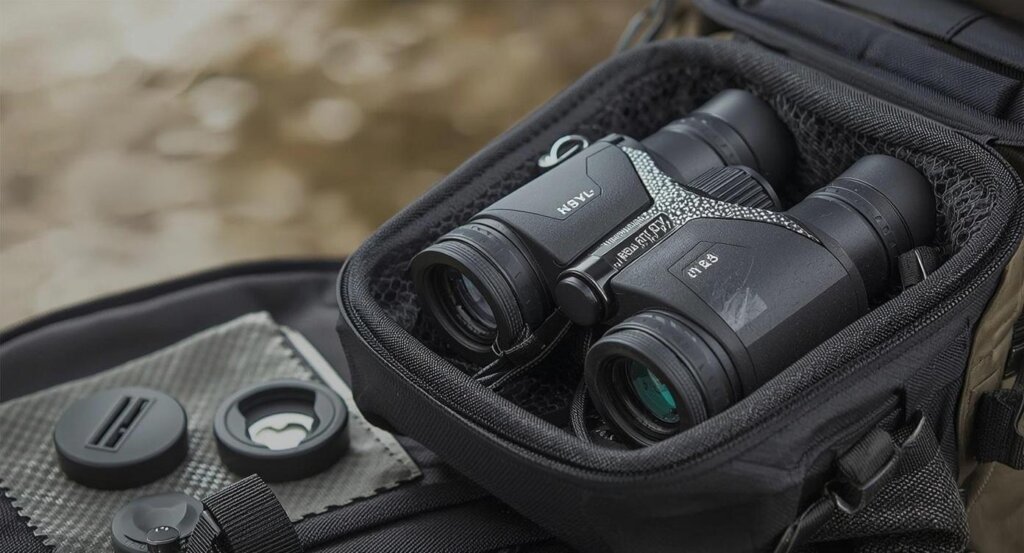
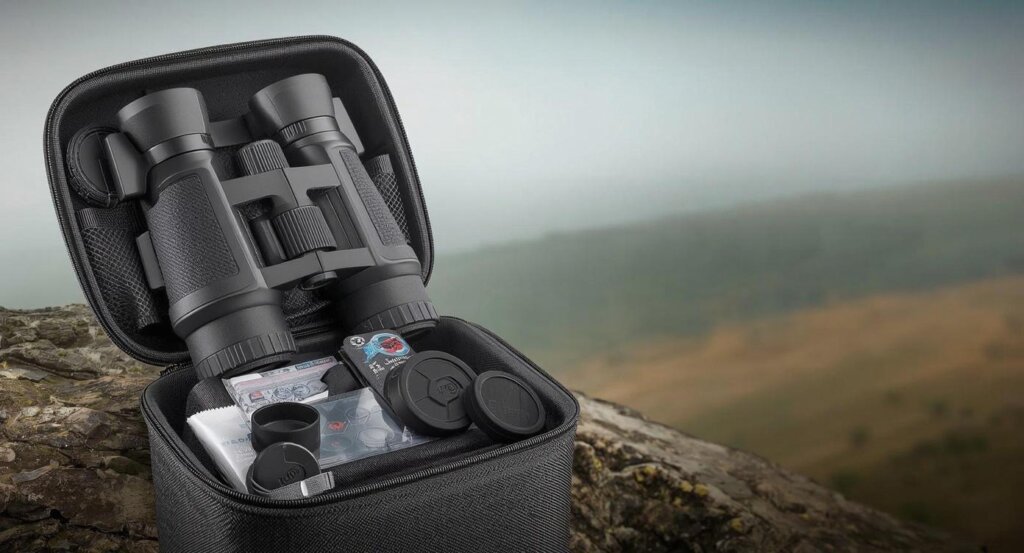
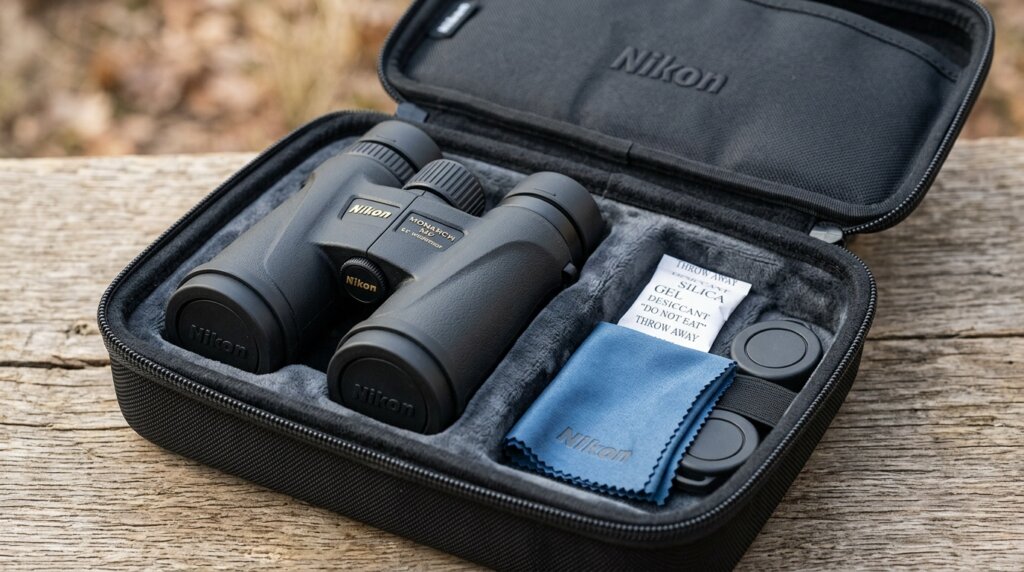
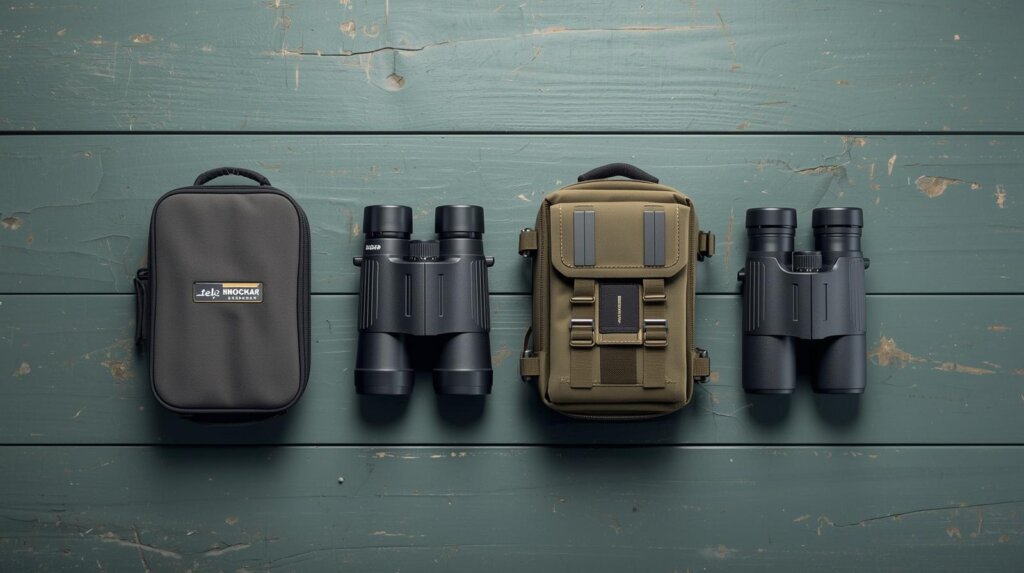
A proper binocular case helps protect your optics from bumps, dust, and scratches. For protection against rain or splashes, you also need a case designed to keep water out.
The right case depends on how you use your binoculars. A thin soft pouch is fine for indoor storage or light travel, but it offers limited cushioning when hiking or packing binoculars alongside other gear. A rigid, padded case provides better protection against crushing, while a lightweight padded case is easier to carry on everyday outings. A waterproof case is especially useful for boating, kayaking, or trips where your equipment may get wet.
Fit matters just as much as the type of case. Your binoculars should sit snugly inside without being squeezed or sliding around. Look for a soft lining and padding around the lenses and body. If you use a larger equipment case, adjustable dividers can help keep binoculars from knocking against cameras or other accessories. Store cleaning tools in a separate pocket, and keep loose items such as keys away from the lenses.
Before closing the case, fit the lens caps and make sure both the binoculars and the interior are dry. Even a waterproof case can trap moisture if you put wet equipment inside. A small silica gel packet can help absorb residual humidity, but it does not replace drying your gear before storage.
Soft Case vs Hard Case vs Harness Case
Here is a simple comparison:
| Protection Type | Best For | Strength | Weakness |
|---|---|---|---|
| Soft padded case | Birding, casual travel, light hiking | Lightweight and easy to carry | Limited crush protection |
| Hard binocular case | Flights, road trips, storage, rough handling | Strong impact and pressure protection | Bulkier |
| Waterproof case | Marine use, wet climates, kayaking | Moisture defense | Can trap moisture if packed wet |
| Harness case | Hiking, hunting, long walks | Keeps binoculars secure and accessible | Less useful for home storage |
| Neoprene sleeve | Quick protection inside a backpack | Flexible and light | Not enough for heavy impact |
For everyday outdoor use, a padded case is the safest first upgrade because it protects your binoculars without making your kit feel bulky.
What to Look for in a Binocular Case
A good case should have:
- Soft inner lining
- Enough padding around the barrels
- Secure zipper or buckle closure
- Space for lens cloth and caps
- Moisture-resistant outer shell
- Proper fit without squeezing the binocular
- Strap attachment points
- Optional divider or molded interior
One thing I do not like is oversized cases with too much empty space. The binocular bounces inside, and that defeats the purpose. A case should hold the binocular snugly, not tightly.
If readers want to understand safe storage beyond the case itself, connect them here: A case protects your binoculars during movement, but long-term care starts at home — read how to store binoculars safely before leaving your optics in a closet, garage, or car trunk.
Protect Binoculars from Drops and Impact
A drop is one of the fastest ways to damage binoculars. Sometimes the outside looks fine, especially if the binocular has rubber armor, but the internal alignment can shift.
That is when the image feels strange. You may notice double vision, headaches, or one side looking sharper than the other.
Use the Strap Properly
Most binoculars come with a basic neck strap. It works, but it is not always comfortable or secure.
For short walks, a neck strap is fine. For hiking, hunting, or birding for hours, a harness is usually better. It spreads the weight across your shoulders and keeps the binocular close to your chest.
This reduces swinging, bouncing, and accidental drops.
A neck strap lets binoculars hang low, hit rocks, bump against zippers, or swing forward when you bend down. A harness keeps them stable.
For an internal link that supports this section, use: If your binoculars swing around every time you walk, you are already taking a risk — learn the best way to carry binoculars safely before your next outdoor trip.
Choose Rubber Armor, But Don’t Trust It Too Much
Rubber armor is helpful. It improves grip, absorbs minor bumps, and gives the binocular better outdoor durability.
But rubber armor does not make binoculars drop-proof.
It may protect the body from scratches, but it cannot fully protect internal prisms from shock. A serious fall can still cause optical misalignment. Think of rubber armor like a phone case. Useful? Yes. Magic? No.
Avoid Carrying Binoculars Loose in a Backpack
This is one of the worst habits.
A backpack seems safe until you remember what else is inside: keys, water bottles, multitools, camera gear, snacks, chargers, tripods, metal buckles, and maybe a spare jacket with sand or dust in the pockets.
Loose binoculars will get scratched, bumped, and pressed.
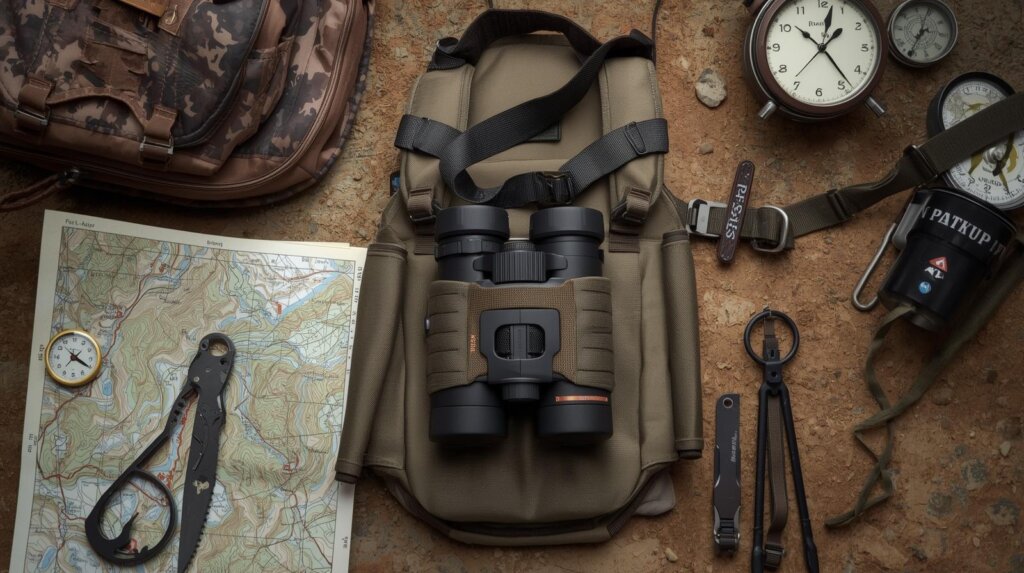
Use a padded insert, case, or sleeve before placing binoculars in a backpack. If you hike often, a chest harness is better than constantly pulling optics in and out of a bag.
How to Protect Binoculars While Hiking
Hiking is rough on binoculars because the risk is constant. Dust, sweat, rain, rocks, sudden weather changes, and uneven trails all create problems.
The best setup for hiking is usually:
- Binocular harness or chest pack
- Tethered lens caps
- Microfiber cloth in a small pouch
- Rain cover or waterproof case
- Silica gel packet for storage after the hike
- Lightweight padded case for transport
Keep Them Close to Your Body
A binocular hanging from a long strap can hit tree branches, rocks, trekking poles, or backpack buckles. In tight trails, that gets annoying fast.
A chest harness keeps the binocular in a fixed position. You can lift it quickly when needed, then let it settle back without swinging.
This is especially useful when climbing, crossing streams, or walking through brush.
Watch Out for Sweat and Skin Oils
On hot hikes, sweat can collect around eyecups, neck straps, and the focus wheel. Over time, salt and oils can degrade rubber and make surfaces sticky.
After a long hike, wipe down the body with a slightly damp cloth, then dry it with a clean towel. Do not store binoculars while they are still damp.
For a dedicated supporting article, add this natural link: Trail dust, sweat, and sudden weather can punish optics quickly, so use how to protect binoculars while hiking before planning your next mountain, forest, or desert route.
Pack for Weather Changes
Even if your binoculars are waterproof, keep a rain cover or dry bag with you. Waterproof does not always mean careless-proof.
Rain can leave mineral spots on lenses. Mud can collect around the focus wheel. Moisture can soak into straps and cases. A waterproof binocular can handle rain, but your accessories may not.
For hiking, I prefer a harness with a protective front flap. It is fast, simple, and reduces the number of times you expose the lenses.
Protect Binoculars from Moisture, Fogging, and Humidity
Moisture is sneaky.
It does not always look like a problem right away. But if binoculars are stored damp, fungus can grow on internal or external lens surfaces. Fogging can also become a recurring issue if seals weaken or moisture gets trapped in a case.
Learning how to protect binoculars from moisture is especially important if you live in a humid climate, travel near water, go birding at sunrise, or store gear in a basement, garage, or vehicle.
Waterproof vs Water-Resistant Binoculars
There is a difference.
Water-resistant binoculars can handle light splashes or brief exposure. Waterproof binoculars are built with better sealing and may be nitrogen-purged or argon-purged to reduce internal fogging.
Still, even waterproof binoculars need drying after use.
| Feature | Water-Resistant Binoculars | Waterproof Binoculars |
|---|---|---|
| Light rain | Usually okay | Safe |
| Heavy rain | Risky | Usually safe |
| Dropped in water | Not recommended | Depends on rating |
| Internal fog resistance | Limited | Better if nitrogen/argon purged |
| Best use | Casual viewing | Hiking, hunting, marine, travel |
Always Dry Before Storage
After rain, fog, snow, or humid use, open the case and let everything dry separately.
Do not put wet binoculars into a sealed case and leave them there. That creates a tiny damp chamber, which is exactly what you do not want.
A smart routine:
- Remove lens caps
- Wipe the body dry
- Let the strap air dry
- Open the case
- Place silica gel nearby
- Store only when fully dry
Use Silica Gel Packets
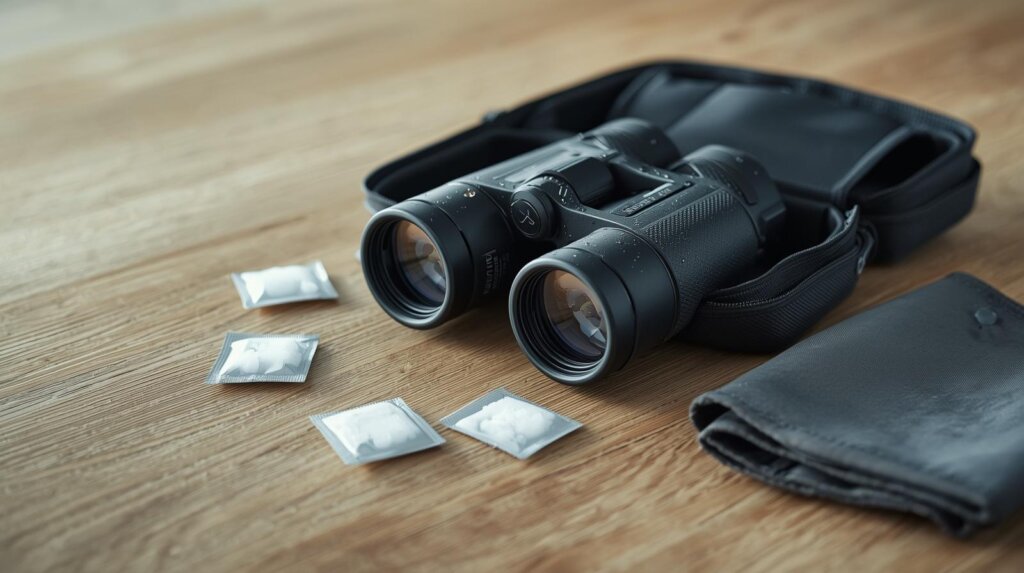
Silica gel packets are small, cheap, and useful. Keep one or two inside your binocular case, especially if you live in a humid area.
Just remember to replace or recharge them when needed. Old packets stop working well.
Protect Binoculars from Dust, Sand, and Dirt
Dust is not just cosmetic. It can damage lens coatings, jam focus mechanisms, and make eyecups feel gritty.
Sand is worse.
If you use binoculars at beaches, deserts, construction sites, dry trails, or windy viewpoints, you need to be extra careful.
Don’t Open the Case in Blowing Dust
This sounds obvious, but people do it all the time. They open their case, remove lens caps, change settings, clean lenses, and expose the glass while dust is moving through the air.
Instead, turn your body away from the wind, shield the binocular, and keep lens caps on until you actually need to view.
Use a Blower Before Cleaning
Never rub dusty lenses first. Use an air blower to remove particles. Then use a soft brush if needed.
A microfiber cloth is safe only after the abrasive particles are gone.
Keep the Focus Wheel Clean
Dust around the focus wheel can make focusing feel rough. Do not pour water into the mechanism. Use a soft brush and gentle wiping around the outer area.
If the wheel becomes stiff after heavy dust exposure, stop forcing it. Forcing can make things worse.
Don’t Leave Binoculars in a Hot Car
Heat is one of the most underrated threats.
A hot car can damage rubber armor, soften adhesives, weaken seals, and encourage internal condensation when the binocular later moves into a cooler environment.
If you care about how to protect binoculars, treat heat like a real enemy.
Why Heat Is Bad for Binoculars
High heat can cause:
- Rubber armor to loosen
- Eyecups to become sticky
- Lens adhesives to weaken
- Lubricants to thin or migrate
- Internal fogging risk to increase
- Plastic parts to warp slightly
- Neck straps to degrade faster
One afternoon in a hot car may not destroy your binoculars, but repeated exposure can shorten their life.
Better Travel Habit
When traveling, keep binoculars in the cabin area with you, not buried in a trunk under direct heat. Use a padded case and avoid placing them near windows.
If you are staying in a hotel, bring the binoculars inside instead of leaving them in the vehicle overnight.
Safe Cleaning: What to Do and What to Avoid
Cleaning binoculars feels simple, but this is where a lot of permanent damage happens.
The goal is not to make them look brand new every time. The goal is to remove harmful dirt without damaging coatings.
Safe Cleaning Kit Checklist
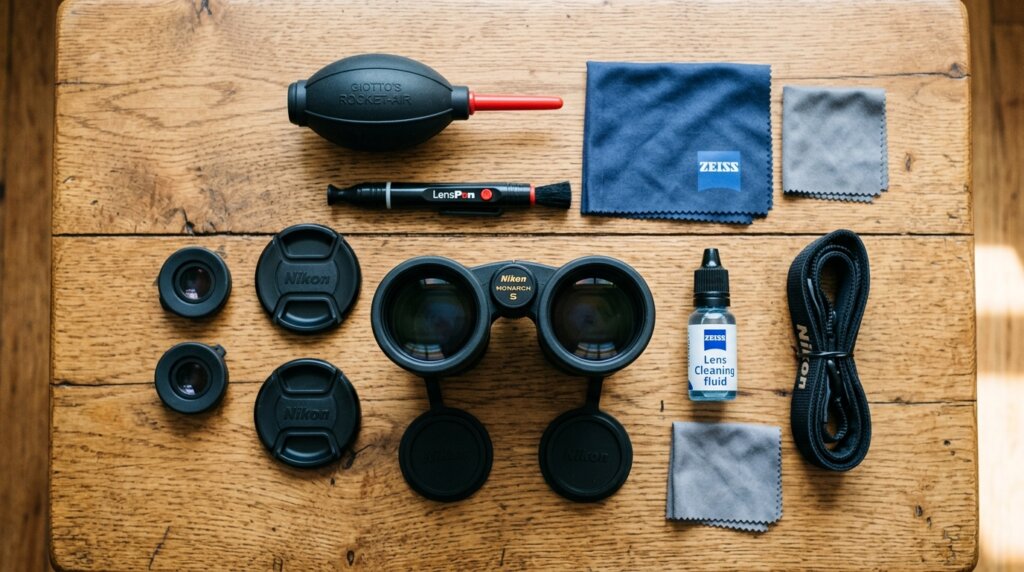
A proper binocular cleaning kit should include:
- Air blower
- Lens brush
- Microfiber cloth
- Lens-safe cleaning solution
- Cotton swabs for outer edges
- Small pouch
- Silica gel packet
Avoid household cleaners, paper towels, tissues, shirt sleeves, alcohol wipes, and rough cloths.
Cleaning Steps That Won’t Ruin the Glass
Use this careful method:
- Hold the binocular facing downward
- Blow dust off the lenses
- Brush remaining particles lightly
- Add lens solution to the cloth, not the lens
- Wipe gently from the center outward
- Dry with a clean microfiber section
- Replace lens covers only after the glass is dry
The downward angle helps loose particles fall away instead of settling back onto the lens.
Don’t Overclean
This is a nuanced point, but important.
Some people clean their binoculars too often. Every cleaning session creates a small chance of rubbing dust across the coating. If the lenses have a little harmless dust but the image is still clear, do not obsess over it.
Clean when needed, not compulsively.
Best Accessories for Binocular Protection
The right accessories make protection easier. The wrong accessories become clutter.
Here is a practical list of protective gear worth considering.
| Accessory | Protection Benefit | Best For |
|---|---|---|
| Lens covers | Prevent scratches and dust | Everyone |
| Rainguard | Protects eyepieces from rain and debris | Birding, hiking, hunting |
| Padded case | Protects during storage and travel | Everyday users |
| Hard case | Prevents crush damage | Flights, road trips |
| Harness | Prevents drops and swinging | Hiking, hunting, long viewing sessions |
| Microfiber cloth | Safe lens cleaning | Everyone |
| Air blower | Removes dust before wiping | Dusty environments |
| Silica gel | Controls moisture | Humid climates |
| Floating strap | Prevents sinking near water | Marine use |
| Rubber objective covers | Adds front lens protection | Outdoor use |
For a broader protection setup, guide readers with this internal link: If you want to build a complete care kit instead of buying random extras, explore binocular protection accessories before choosing straps, caps, cases, and cleaning tools.
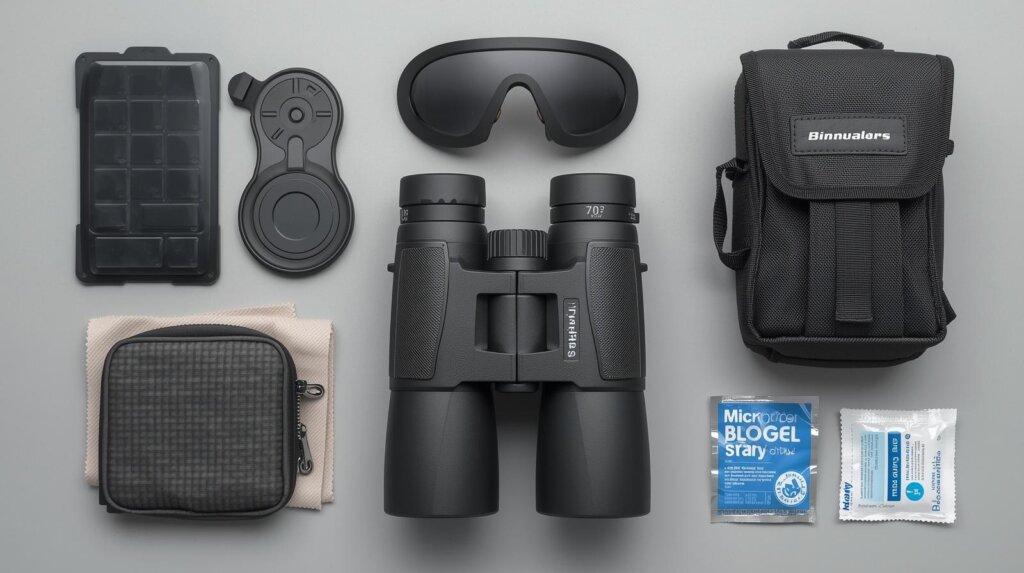
My Practical Accessory Recommendation
For most people, I would not start with expensive upgrades.
Start with four basics:
- Tethered lens covers
- Padded binocular case
- Microfiber cloth and blower
- Comfortable harness or strap
That combination solves most real-world problems.
A marine user may need a floating strap. A hunter may prefer a quiet magnetic harness pouch. A traveler may need a hard case. A backyard birdwatcher may only need a soft case and lens cloth.
This is where buyer psychology matters. People often buy the strongest-looking case because it feels safer, but if it is too bulky, they stop using it. The best protection is the one you will actually carry.
How to Protect Binoculars During Travel
Travel is rough because binoculars face several risks at once: pressure, vibration, temperature changes, airport handling, moisture, and careless packing.
Carry-On Is Better Than Checked Luggage
Whenever possible, pack binoculars in your carry-on bag. Checked luggage gets thrown, stacked, and compressed.
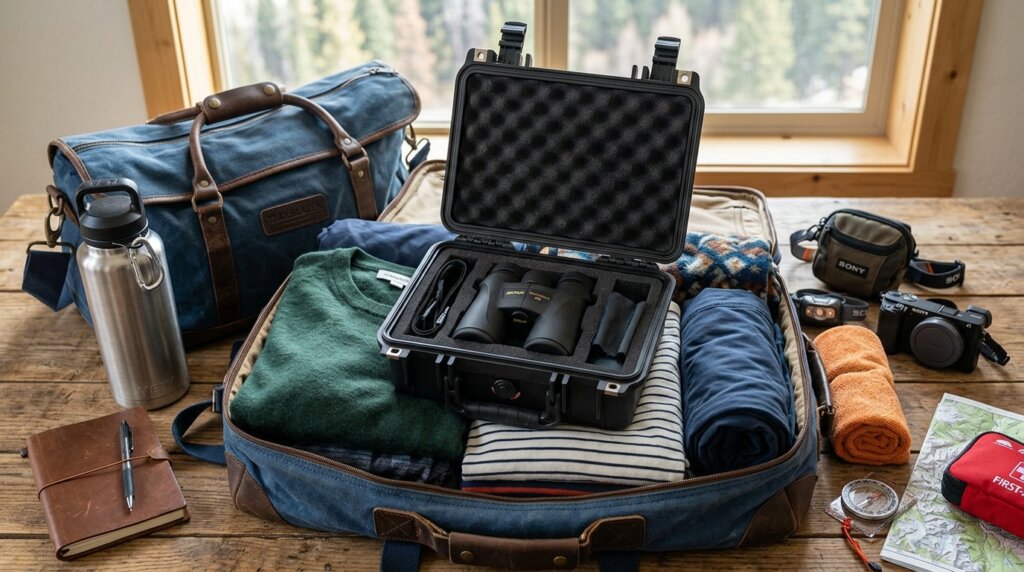
If you must pack binoculars in checked luggage, use a hard case and place it in the center of the suitcase surrounded by soft clothing.
Keep Lens Caps On During Transport
Do not assume the case alone is enough. Keep the lens caps on inside the case. That gives you two layers of protection.
Use a Hard Case for Flights
A hard case is smart if you travel often or carry expensive binoculars. For compact binoculars, a small molded case may be enough. For premium full-size binoculars, use a stronger case with foam padding.
How to Protect Binoculars for Hunting, Birding, Marine Use, and Safari Travel
Different activities create different protection problems. A single care routine does not fit everyone.
Birding
Birders usually need fast access, quiet movement, and lens protection from morning dew. A harness or comfortable neck strap works well. A rainguard is very useful because eyepieces collect moisture when binoculars hang against your chest.
Best protection setup:
- Tethered lens caps
- Rainguard
- Soft padded case
- Microfiber cloth
- Silica gel packet
Hunting
Hunting adds dust, mud, cold, brush, and long periods of waiting. A chest harness with quiet opening is usually better than a neck strap.
Best protection setup:
- Quiet binocular harness
- Padded chest pouch
- Lens covers
- Waterproof binocular body
- Cleaning cloth
- Rain cover
Avoid shiny accessories or noisy clips if stealth matters.
Marine Use
Water is the main threat. A waterproof binocular is strongly preferred. Add a floating strap because even waterproof binoculars are not useful if they sink.
Best protection setup:
- Waterproof binoculars
- Floating strap
- Lens covers
- Dry bag or waterproof case
- Microfiber cloth
- Freshwater wipe-down after salt exposure
Saltwater should not be ignored. Wipe the exterior carefully after marine use.
Safari and Desert Travel
Dust and heat are the biggest concerns. Avoid leaving binoculars exposed in open vehicles or direct sun.
Best protection setup:
- Dustproof case
- Lens blower
- Tethered caps
- Harness or strap
- Heat-safe storage routine
Preventing Long-Term Damage
Long-term binocular care is less exciting than buying accessories, but it matters more.
If you want to know how to protect binoculars for years, focus on habits.
Store in a Dry, Stable Place
Avoid:
- Bathrooms
- Damp basements
- Hot garages
- Car trunks
- Direct sunlight
- Window ledges
- Dusty open shelves
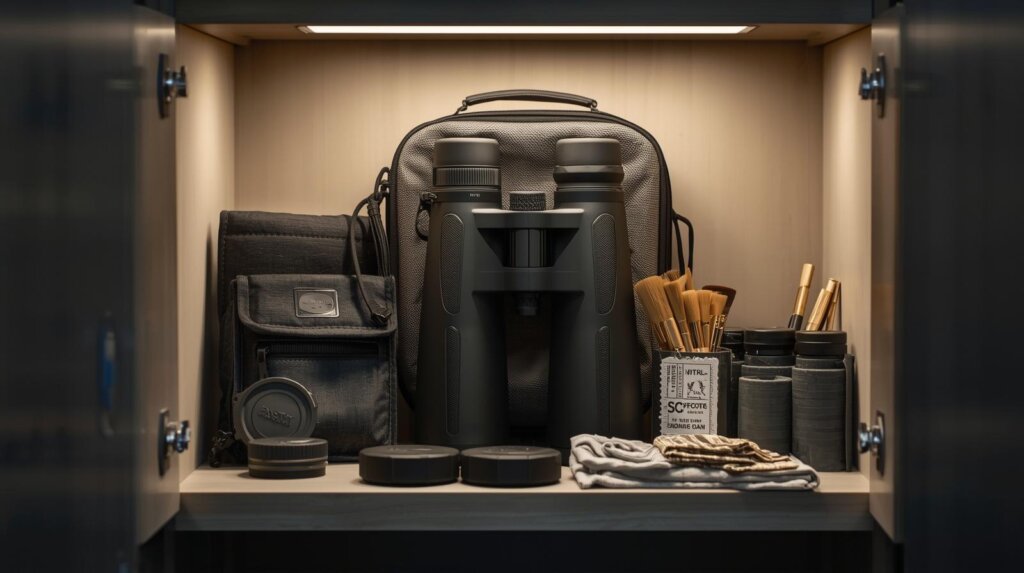
Better places include a bedroom closet, gear cabinet, dry drawer, or climate-stable storage box.
Don’t Compress Eyecups
If your binocular has twist-up eyecups, avoid storing it where pressure constantly pushes against them. Over time, eyecups can loosen, deform, or become uneven.
Check Straps and Hinges
Every few months, check:
- Strap attachments
- Buckles
- Lens caps
- Focus wheel
- Eyecups
- Hinge tension
- Case zipper
A weak strap can fail suddenly. A cracked lens cap may fall off without you noticing.
For prevention-focused readers, add this internal link: Small habits save expensive optics, and how to prevent damage to binoculars gives you a simple routine for avoiding drops, scratches, fogging, and storage mistakes before they happen.
Pros and Cons of Different Binocular Protection Methods
No protection method is perfect. The right choice depends on your habits.
| Method | Pros | Cons | Best Match |
|---|---|---|---|
| Neck strap | Simple, cheap, quick access | Can swing and cause impact | Casual viewing |
| Chest harness | Secure, comfortable, reduces drops | More expensive, more bulk | Hiking, hunting, birding |
| Soft case | Lightweight, easy to carry | Limited crush protection | Everyday use |
| Hard case | Strong protection | Bulky | Travel and storage |
| Lens covers | Cheap and effective | Easy to lose if not tethered | Everyone |
| Waterproof case | Great moisture defense | Can trap dampness if sealed wet | Marine and rainy climates |
| Cleaning kit | Protects lens coatings | Must be used correctly | All binocular owners |
My honest take: a chest harness plus tethered lens covers gives the best real-world protection for active outdoor users. For home storage and travel, add a padded or hard case.
Common Mistakes That Damage Binoculars
Here are the mistakes I see again and again.
Mistake 1: Cleaning with a Shirt
A shirt feels soft, but it may contain dust, sweat, detergent residue, or tiny grit. Use microfiber instead.
Mistake 2: Leaving Binoculars Uncapped in a Bag
Even if the bag is clean, zippers, buckles, and other gear can scratch the lenses.
Mistake 3: Storing Wet Binoculars in a Closed Case
This traps moisture and can lead to odor, fungus, or fogging problems.
Mistake 4: Buying a Case That Is Too Big
Too much empty space allows binoculars to move around during transport.
Mistake 5: Trusting “Waterproof” Too Much
Waterproof binoculars still need drying, cleaning, and proper storage.
Mistake 6: Ignoring the Strap
A $20 strap problem can destroy a $300 binocular. Check attachments often.
Buyer Psychology: What Protection Gear Is Actually Worth Buying?
People usually fall into two groups.
Some under-protect their binoculars because they think gear is tougher than it is. Others overbuy accessories and end up with a complicated kit they never use.
The smarter approach is to match protection to risk.
If You Use Binoculars at Home
You need:
- Lens covers
- Microfiber cloth
- Soft case
- Dry storage spot
No need to overcomplicate it.
If You Travel Often
You need:
- Hard or padded case
- Lens covers
- Cleaning kit
- Carry-on packing habit
If You Hike or Hunt
You need:
- Chest harness
- Tethered lens caps
- Weather protection
- Cleaning cloth
- Moisture control
If You Use Binoculars Near Water
You need:
- Waterproof binoculars
- Floating strap
- Dry bag
- Lens cloth
- Proper drying routine
Choose the protection setup that matches where your binoculars actually go — a lightweight harness for trails, a hard case for travel, or a waterproof case for wet conditions.
Quick Protection Routine Before, During, and After Use
Here is a simple routine readers can actually follow.
Before You Go Out
- Check lens caps
- Check strap or harness
- Pack microfiber cloth
- Pack blower if conditions are dusty
- Use a padded case during transport
- Add silica gel if humidity is high
While Using Binoculars
- Keep strap around neck or harness secured
- Replace lens caps when not viewing
- Avoid setting binoculars directly on dirt or rocks
- Shield lenses from rain and blowing dust
- Do not wipe lenses while gritty
After Use
- Wipe the body
- Dry the strap
- Clean lenses only if needed
- Let moisture evaporate
- Store in a dry case
- Keep away from heat and direct sunlight
This is the kind of routine that keeps binoculars reliable for years.
Best Way to Protect Binoculars: My Practical Recommendation
After years of seeing how people actually use optics, I would keep the system simple.
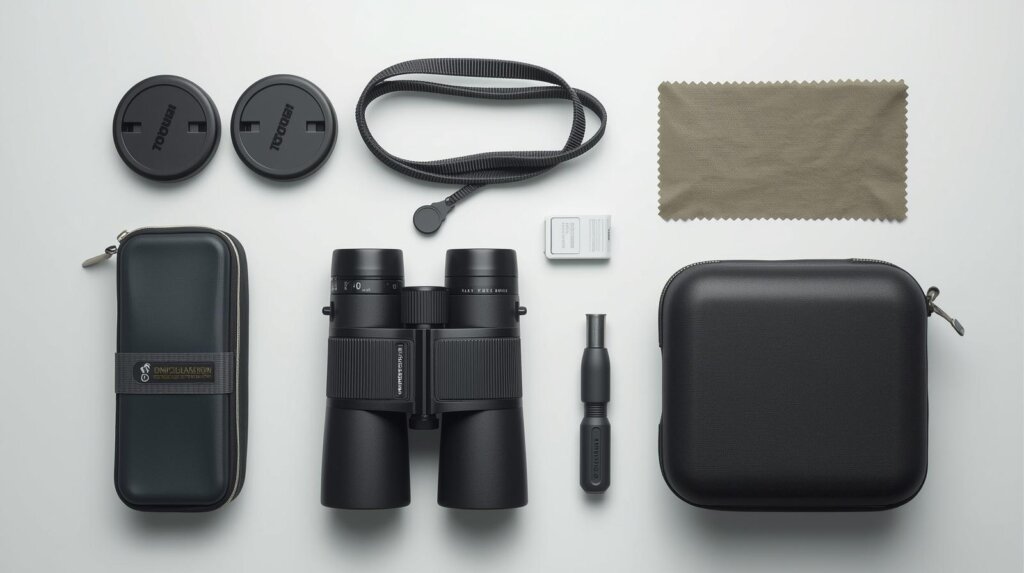
For most users, the best way to protect binoculars is:
- Use tethered lens covers
- Carry them in a padded case or harness
- Clean lenses only with proper tools
- Keep them dry before storage
- Avoid heat and loose backpack packing
- Use silica gel in the case
- Check straps and caps regularly
That setup protects against the most common damage: scratches, drops, dust, moisture, and careless storage.
You do not need a complicated system. You need consistent habits.
For more gear-focused buying guides, outdoor optics tips, and practical binocular care advice, visit bestbinocular.net Home Page before choosing your next pair or accessory.
FAQs About How to Protect Binoculars
How do you protect binoculars from scratches?
The best way to protect binoculars from scratches is to keep lens caps on when not viewing, use a padded case during transport, and clean lenses only after removing dust with a blower or brush. Never wipe dry grit across the glass, and avoid using shirts, tissues, or paper towels.
Should binoculars always be kept in a case?
Yes, binoculars should be kept in a case when stored or transported. A case protects against dust, impact, moisture, and accidental scratches. For home use, a soft padded case is usually enough. For travel, a hard case is safer.
Can binoculars be damaged by heat?
Yes, heat can damage binoculars over time. Leaving binoculars in a hot car can weaken seals, loosen rubber armor, affect adhesives, and increase the risk of condensation. Store them in a cool, dry, stable place.
Are waterproof binoculars fully protected from moisture?
Waterproof binoculars are better protected than water-resistant models, but they still need proper drying. Rain, humidity, and wet straps can create storage problems if the binoculars are placed into a closed case while damp.
What is the safest way to carry binoculars while hiking?
The safest way to carry binoculars while hiking is with a chest harness or protective harness case. It keeps the binoculars close to your body, reduces swinging, and lowers the chance of drops or impact against rocks, trees, and backpack buckles.
Do binoculars need lens covers?
Yes, lens covers are strongly recommended. They protect the objective lenses and eyepieces from scratches, dust, fingerprints, rain spots, and accidental contact. Tethered lens covers are best because they are harder to lose.
Can I clean binocular lenses with alcohol wipes?
It is better to avoid regular alcohol wipes unless the manufacturer specifically says they are safe. Some wipes may damage lens coatings or leave residue. Use lens-safe cleaning solution and a microfiber cloth instead.
How do I store binoculars for a long time?
Store binoculars in a dry, cool place inside a protective case. Make sure they are completely dry before storage. Add silica gel packets to control moisture, keep lens caps on, and avoid garages, bathrooms, basements, and hot vehicles.
What accessories are best for protecting binoculars?
The most useful binocular protection accessories are tethered lens covers, a padded case, a chest harness, microfiber cloth, lens blower, rainguard, and silica gel packets. For marine use, add a floating strap and waterproof case.
What is the biggest mistake people make with binocular care?
The biggest mistake is wiping dirty lenses without removing dust first. Tiny grit particles can scratch lens coatings when dragged across the glass. Always blow or brush dust away before using a microfiber cloth.
Can binoculars survive being dropped?
Some binoculars can survive minor drops, especially if they have rubber armor, but drops can still damage internal alignment. A binocular may look fine outside but produce blurry images, double vision, or eye strain after impact.
How often should I clean my binoculars?
Clean binoculars only when needed. Overcleaning increases the chance of scratching the lenses. If the view is clear and there is only light dust outside the viewing area, leave it alone until proper cleaning is necessary.




