
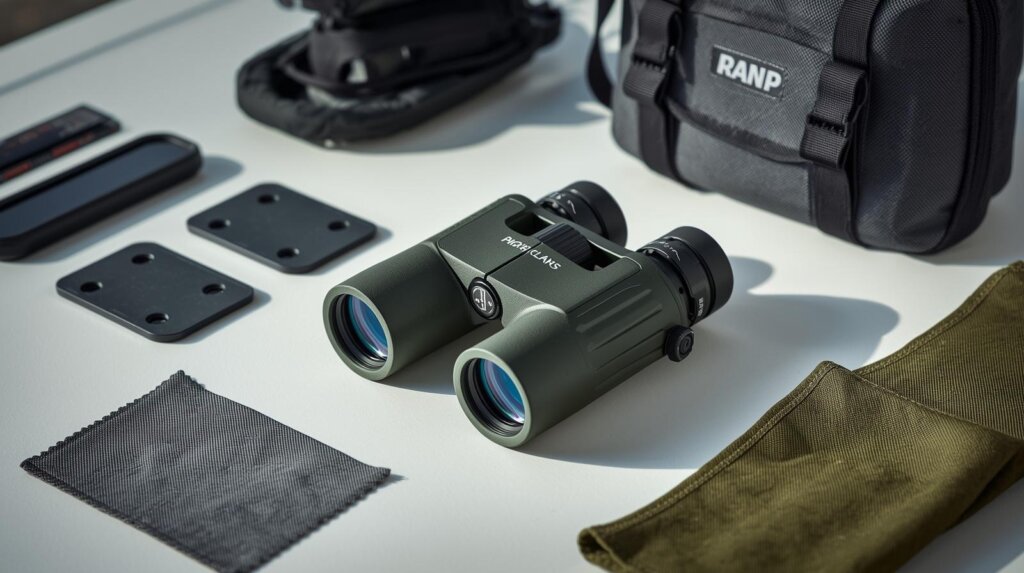
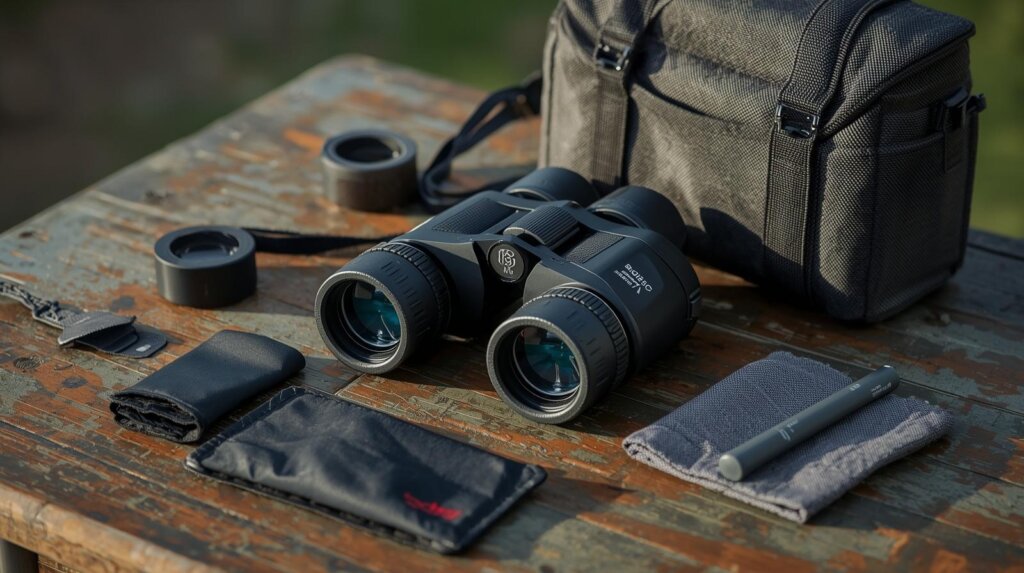
Do Binoculars Need Lens Covers? Here’s Why They Matter
If you use binoculars outside more than a few times a year, then yes — binoculars do need lens covers. Not because they make your binoculars look more “complete,” but because the lenses are the first part of your binoculars to face dust, rain, fingerprints, sand, scratches, and careless storage damage.
A good pair of binoculars can survive years of hiking, birdwatching, hunting, sports viewing, boating, and travel. But the lenses? They are always exposed. One careless wipe with a dusty shirt, one drop into a backpack with keys, or one day on a windy beach can leave tiny marks that slowly ruin clarity.
That is why lens covers are not just small accessories. They are cheap insurance for the most important part of your binoculars.
This article explains when lens covers matter, when they become annoying, what type you should use, and whether you actually need to keep them on all the time. If you are building a full protection setup, you should also read our main guide on how to protect binoculars because lens covers are only one part of keeping binoculars safe for years.
Why Lens Covers Matter More Than Most People Think
The main job of binocular lens covers is simple: they protect the glass when you are not actively looking through it.
That sounds basic, but it matters more in real life than it does on paper.
Think about how binoculars are usually used. They hang from your neck while walking through brush. They sit on a car seat. They get tossed into a daypack. They rest on a dusty windowsill during backyard viewing. During travel, they may end up beside chargers, coins, snacks, camera gear, and keys.
None of those situations are friendly to exposed lenses.
Even if your binoculars have strong coatings, those coatings are still on the outer surface of the glass. Dirt, grit, salt spray, and repeated rough cleaning can wear them down over time. Once the coating is damaged, you cannot polish it back like a phone screen protector. The view may still work, but contrast, sharpness, and light transmission can suffer.
For expensive binoculars, lens covers are obvious. But honestly, even budget binoculars deserve them. If a $15 accessory helps a $100 pair last twice as long, that is still a smart move.
Do Binoculars Need Lens Covers All the Time?
No, binoculars do not need lens covers every second they are in your hands. They need lens covers during storage, transport, bad weather, dusty conditions, and rough outdoor movement.
When you are actively glassing a hillside, watching a match, or scanning the water, covers can get in the way. That is normal. The real mistake is leaving the lenses uncovered during the messy in-between moments.
Here is the practical rule I use:
Use the lens covers whenever the binoculars are not against your eyes.
That does not mean you need to panic after every quick look. But if you are walking, climbing, packing, driving, resting, or moving through brush, cover the lenses. It takes two seconds and saves a lot of cleaning later.
Where Lens Covers Help the Most
Lens covers are most useful in these situations:
| Situation | Why Lens Covers Help |
|---|---|
| Hiking trails | Protect lenses from dust, mud, branches, and backpack contact |
| Beach or boating trips | Reduce sand, salt spray, and moisture exposure |
| Hunting or scouting | Keep lenses clean while moving through brush |
| Travel | Stop scratches inside luggage or camera bags |
| Backyard storage | Prevent dust buildup between uses |
| Car storage | Protect lenses from grit, heat-related residue, and accidental knocks |
This is where many casual users get it wrong. They think lens covers are only for “serious optics people.” In reality, the casual user may need them more because casual users are more likely to store binoculars carelessly.
Objective Lens Covers vs Eyepiece Covers: Which Ones Matter More?
Binoculars usually have two types of lens covers: objective lens covers and eyepiece covers.
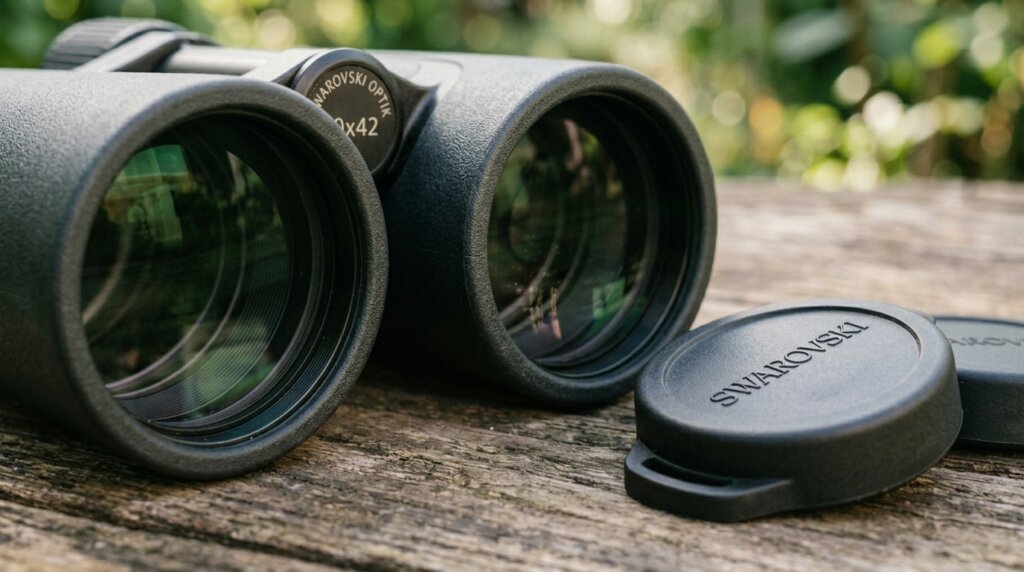
The objective lenses are the large front lenses. These face the world first. They catch dust, rain, sand, fingerprints, pollen, and scratches. If you drop your binoculars into a bag, the objective lenses are usually the most exposed.
The eyepiece lenses are the smaller lenses you look through. They are closer to your face, so they collect skin oil, sweat, sunscreen, and moisture from your breath. In cold weather, they can fog faster too.
Both matter, but if I had to choose one, I would protect the objective lenses first. They are larger, more exposed, and more likely to rub against surfaces.
That said, the best setup is simple: use objective lens covers and a rainguard-style eyepiece cover.
Are Lens Covers Necessary for Waterproof Binoculars?
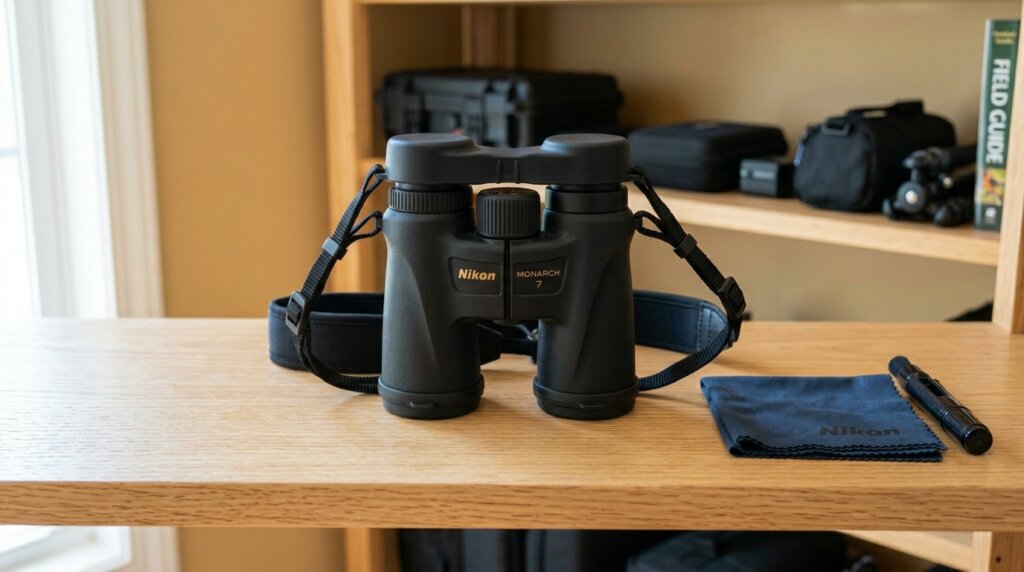
Yes, waterproof binoculars still need lens covers.
This is a common misunderstanding. Waterproofing protects the inside of the binoculars from moisture. It does not stop the outer glass from collecting dust, scratches, fingerprints, salt residue, or dried water spots.
A waterproof binocular can survive rain, but that does not mean you should let rain dry on the lenses every time. Water droplets can leave mineral marks. Saltwater is worse. Dust mixed with moisture can turn into a thin film that reduces clarity.
So, do binoculars need lens covers if they are waterproof and fogproof? Absolutely. Waterproofing protects the body and internal system. Lens covers protect the external glass.
They do different jobs.
The Real Problem: Cheap Lens Covers Can Be Annoying
Here is the honest part: not all binocular lens covers are good.
Some are loose and fall off. Some are too tight and slow you down. Some dangle in front of the lenses while you are trying to focus. Others feel like an afterthought included by the manufacturer just to tick a box.
That is why some people stop using them.
But the problem is not lens covers. The problem is poor lens cover design.
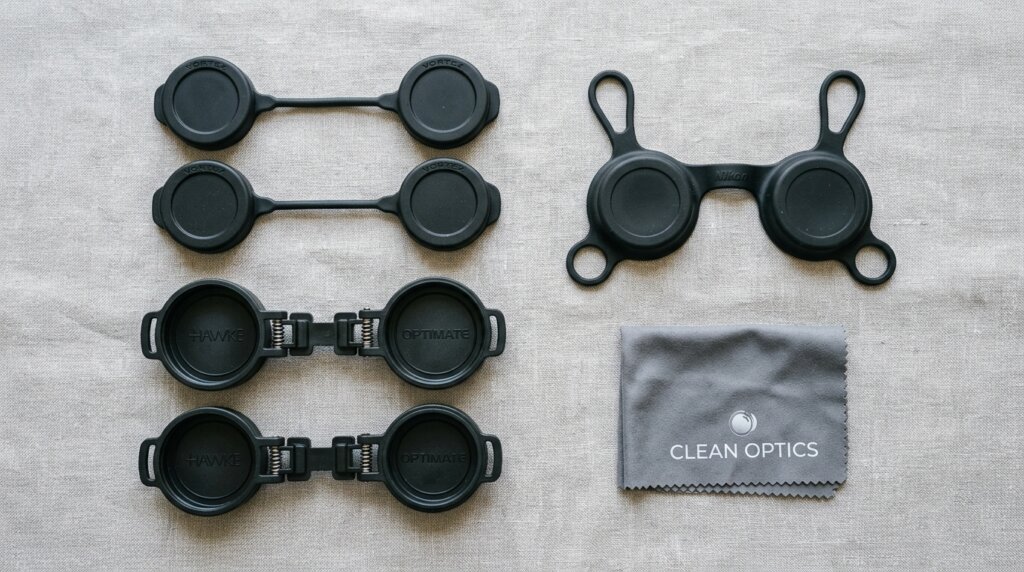
A good lens cover should stay attached, flip away cleanly, and not interrupt your viewing. Tethered objective covers are usually the most practical because they stay connected to the binocular body. You do not have to put them in your pocket or worry about losing them on a trail.
For eyepieces, a soft rainguard cover is usually better than two separate caps. It protects both eyepieces at once and slides on quickly when binoculars are hanging from your neck.
Best Lens Cover Type for Most Users
For most people, the best lens cover setup is:
| Lens Cover Type | Best For | Main Benefit |
|---|---|---|
| Tethered objective covers | Hiking, hunting, travel, general use | Hard to lose and quick to flip down |
| Rainguard eyepiece cover | Neck strap use, rain, cold weather | Protects both eyepieces together |
| Flip-up lens covers | Fast viewing and tactical-style use | Opens quickly without removing |
| Slip-on rubber caps | Storage and casual backyard use | Simple and cheap |
| Hard plastic caps | Long-term storage | More impact-resistant but less convenient outdoors |
If you only use binoculars at home or from a balcony, basic slip-on lens caps are fine. But if you hike, travel, or carry binoculars often, tethered covers are much better.
Useful Lens Cover Option to Consider
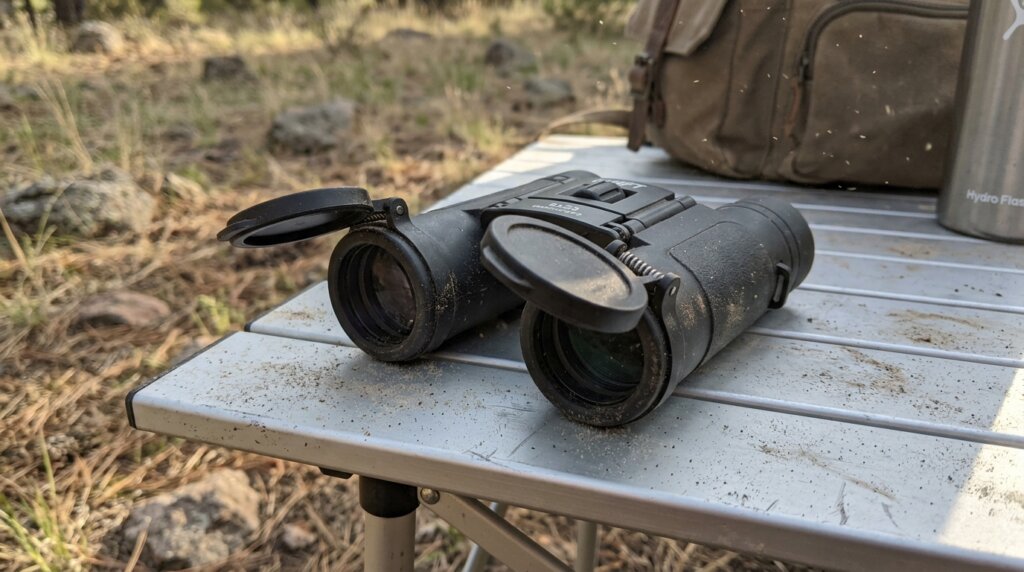
A highly relevant option for users who lose caps or dislike loose covers is the Butler Creek Flip-Open Objective Lens Cover.
I like this style because it solves the main frustration: removing and replacing caps again and again. Flip-open covers stay on the binoculars, open quickly, and protect the front lenses during movement. They are especially useful for hunting, hiking, and field use where your hands may be cold, dusty, or busy.
Just make sure you measure your binocular objective lens diameter carefully before buying. Lens covers are not one-size-fits-all. A slightly loose cover will fall off. A slightly tight one may not seat properly.
When You Can Skip Lens Covers
There are a few moments where lens covers are not necessary.
If you are actively using binoculars every few seconds, constantly removing and replacing covers becomes irritating. For example, during a fast-moving sports event or when scanning a landscape from one fixed position, it is fine to leave the lenses open while you are viewing.
You can also skip covers briefly in a clean indoor environment.
But once the binoculars go into a case, bag, drawer, vehicle, or outdoor setting, the covers should go back on.
This is not about being overly careful. It is about reducing unnecessary lens cleaning. Every time you clean a lens, there is a small risk of dragging fine grit across the coating. The less often you need to clean, the better.
Lens Covers vs Binocular Case: Which Is Better?
Lens covers and binocular cases are not competing accessories. They work together.
A case protects the whole binocular body. Lens covers protect the glass directly.
If your binoculars are inside a padded case without lens covers, they are still safer than being loose in a backpack. But dust and debris can still sit inside the case. If the binoculars move around, the lenses may rub against fabric or grit.
If your binoculars have lens covers but no case, the glass is safer, but the body, hinge, focus wheel, and eyecups are still exposed.
The best protection setup is:
| Protection Item | What It Protects | Best Use |
|---|---|---|
| Lens covers | Objective lenses and eyepieces | Daily use, storage, travel |
| Padded case | Full binocular body | Transport and long-term storage |
| Microfiber cloth | Safe cleaning | Removing fingerprints and light dust |
| Harness | Drop prevention | Hiking, hunting, long walks |
| Dry storage space | Moisture control | Preventing fogging and internal issues |
For a fuller storage routine, see our article on how to store binoculars safely. It explains why the place you keep your binoculars matters almost as much as the accessories you buy.
Real-World Use Cases: Who Needs Lens Covers Most?
Hikers and Backpackers
If you hike with binoculars, lens covers are not optional. Dust, sweat, rain, and swinging gear are constant problems. A binocular hanging from your neck can bump into zippers, trekking poles, jacket snaps, and pack straps.
For hiking, tethered covers are best. You do not want loose caps disappearing into leaves or gravel.
Also, if you use binoculars on trails, read how to protect binoculars while hiking because lens covers are only one part of trail protection. Carry style, strap choice, and storage habits matter too.
Hunters and Wildlife Watchers
In the field, uncovered binocular lenses attract dust fast. Dry grass, brush, mud, and changing weather can make lenses dirty before you even start glassing.
Lens covers help you keep the view clear when the moment matters. Nobody wants to clean lenses while an animal is moving across a ridge or when light is fading.
Travelers
Travel is rough on optics. Binoculars get packed, unpacked, inspected, squeezed into bags, and carried through different climates. Lens covers prevent the small travel scratches that happen when gear rubs against other items.
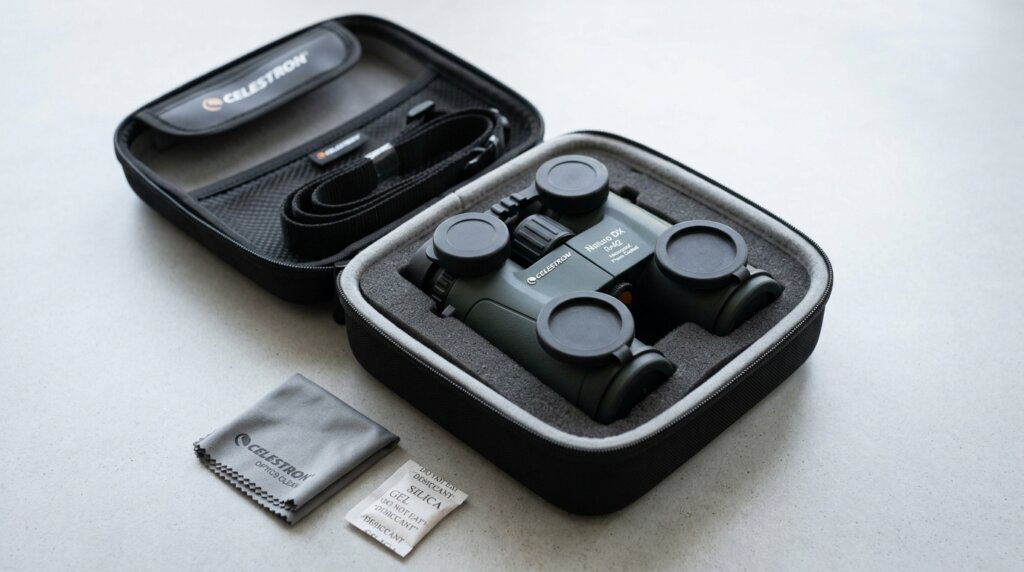
For travel, use lens covers plus a soft case. That combination gives good protection without adding too much bulk.
Casual Users
Even if you only use binoculars for backyard viewing, balcony watching, or occasional trips, lens covers still help. Most casual damage happens during storage, not during use.
A pair sitting uncovered on a shelf will collect dust. A pair in a drawer may rub against random items. Lens covers stop both problems.
Common Mistakes People Make With Binocular Lens Covers
The first mistake is removing the lens covers and never using them again. Many people do this because the covers feel annoying on day one. But after a few months of dusty lenses and extra cleaning, they usually regret it.
The second mistake is cleaning lenses instead of preventing dirt. Prevention is safer than wiping. If your lenses are covered, you will clean them less often.
The third mistake is storing binoculars with wet lens covers. If your covers are wet after rain, remove them when you get home, dry everything, and then store the binoculars properly. Covering wet lenses and sealing them in a case can trap moisture.
The fourth mistake is buying random replacement covers without measuring. Binocular lens covers need the right fit. Check the outside diameter of the lens barrel, not just the binocular size printed on the body.
Pros and Cons of Using Lens Covers
Pros
- Reduce the risk of scratches on the lenses
- Protect against dust buildup, fingerprints, and rain spots
- Help preserve lens coatings for better contrast and brightness
- Reduce how often you need to clean the lenses
- Affordable and lightweight accessory
- Easy to replace if damaged or lost
- Much cheaper than repairing or replacing binoculars
Cons
- Cheap covers may fall off easily
- Some covers can slow down quick viewing
- Poorly designed covers may feel inconvenient during use
- Tethered covers can dangle and tap against the binocular body
- Low-quality covers may become annoying over time
Most of these downsides are convenience issues rather than real protection problems. Better-fitting lens covers usually solve the frustration.
Buyer Tips Before Choosing Lens Covers
Before buying replacement binocular lens covers, check three things: size, attachment style, and field use.
Size is the most important. A cover that almost fits is still a bad cover. Measure carefully.
Attachment style comes next. If you often use binoculars outdoors, choose tethered or flip-open covers. If you mostly store binoculars indoors, simple rubber caps are enough.
Field use matters too. A hunter may prefer quiet rubber covers that do not click. A hiker may prefer covers that stay attached. A traveler may prefer compact slip-on caps that do not add bulk.
This is why the answer to “do binoculars need lens covers” is yes, but the type depends on how you use your binoculars.
Final Verdict: Do Binoculars Need Lens Covers?
Yes, binoculars need lens covers because they help keep the view clean, sharp, and scratch-free while protecting the glass from dust, fingerprints, and scratches.
Lens covers are not exciting gear. They do not improve magnification, brightness, or field of view. But they protect the parts that make all of those things possible.
For most users, the best setup is simple: tethered objective lens covers, a rainguard-style eyepiece cover, a microfiber cloth, and a padded case. That combination handles most everyday risks without making your binoculars difficult to use.
If you want more practical maintenance and buying advice, visit the bestbinocular.net home page and explore our blog tips section at Best Binocular Blog. A few small habits now can save your binoculars from years of unnecessary wear.
FAQs About Binocular Lens Covers
Do binoculars need lens covers for storage?
Yes, binoculars need lens covers for storage because dust, moisture, and accidental contact can still damage or dirty the lenses. Even inside a case, lens covers add a direct layer of protection over the glass.
Should I keep lens covers on while hiking?
You should keep lens covers on while hiking whenever you are not actively viewing. Trail dust, branches, rain, and swinging gear can easily mark exposed lenses.
Are objective lens covers more important than eyepiece covers?
Objective lens covers are usually more important because the front lenses are larger and more exposed. However, eyepiece covers are still useful for blocking dust, sweat, and moisture.
Can lens covers prevent fogging?
Lens covers can reduce sudden moisture exposure, but they do not fully prevent fogging. Fogging is more about temperature change, humidity, and storage habits. Proper drying and safe storage matter more.
Do cheap binoculars need lens covers?
Yes. Cheap binoculars need lens covers too because scratches and dirt affect the view regardless of price. In fact, protecting budget binoculars can help them last much longer.
What should I do if I lose my binocular lens covers?
Measure your binocular lens barrels and buy replacement covers that match the correct outside diameter. Tethered or flip-open covers are better if you often lose standard caps.




