
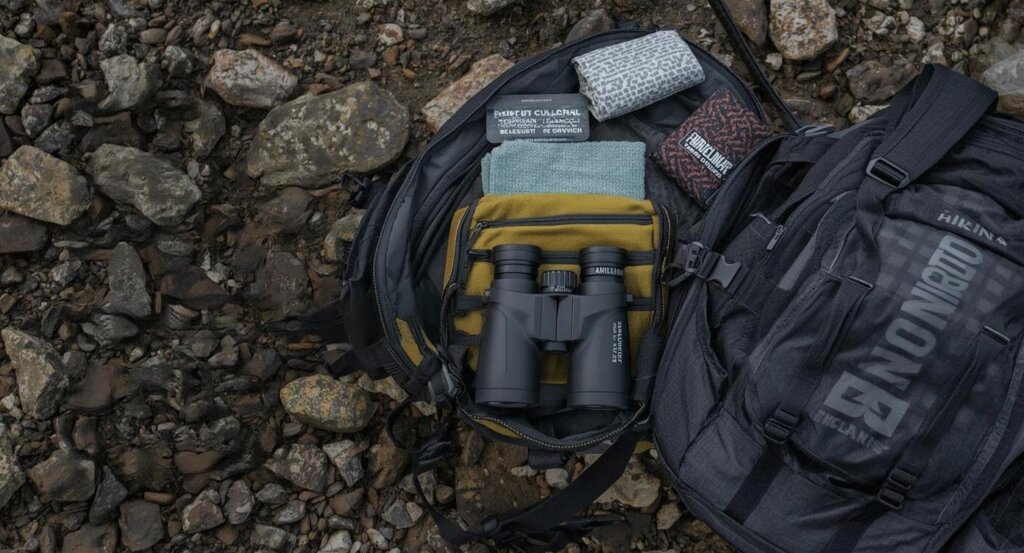
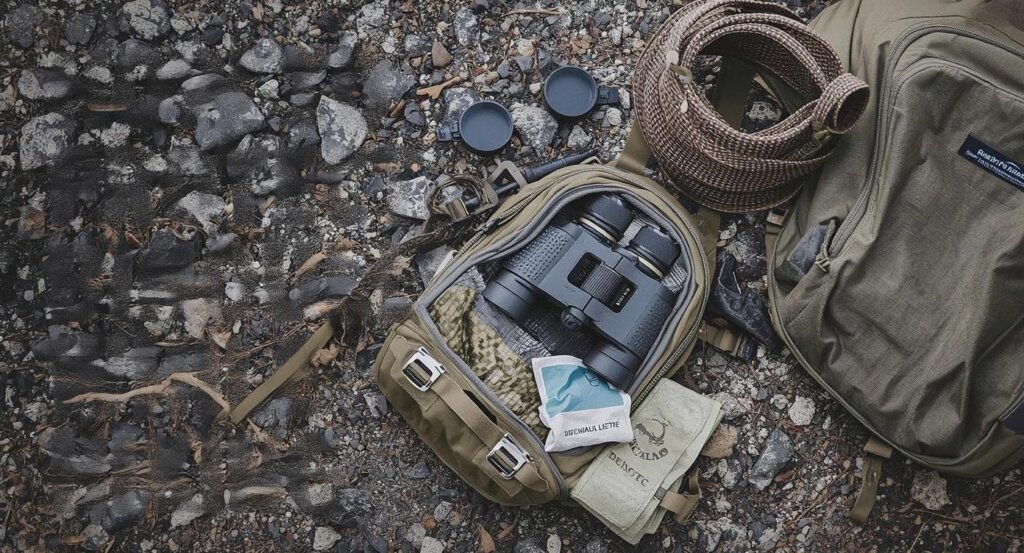
Learning how to protect binoculars while hiking is not about babying your gear. It is about keeping your lenses clear, your focus wheel smooth, and your binoculars ready when the view finally opens up after a steep climb.
On a hike, binoculars face a different kind of abuse than they do at home. They bounce against your chest, collect dust on dry trails, fog up in cold valleys, get splashed near streams, and sometimes end up stuffed into a backpack beside snacks, keys, or trekking poles. That is where small protection habits make a big difference.
If you already read our main guide on how to protect binoculars, this hiking-focused article goes deeper into trail situations where damage usually happens and how to avoid it without overpacking.
Why Binoculars Get Damaged Faster on Hiking Trails
Most binocular damage does not happen from one dramatic accident. It usually comes from repeated little mistakes.
A lens cap left off during a dusty walk. A neck strap rubbing against a zipper. A binocular dropped on a rock while taking off your backpack. A quick wipe with a shirt sleeve after mist collects on the glass.
That is why how to protect binoculars while hiking comes down to controlling four things: impact, dust, moisture, and careless storage.
Hiking trails are unpredictable. You may start in dry heat, enter a shaded forest, cross a damp creek bed, then climb into wind and cold air. Your binoculars move through all of that with you.
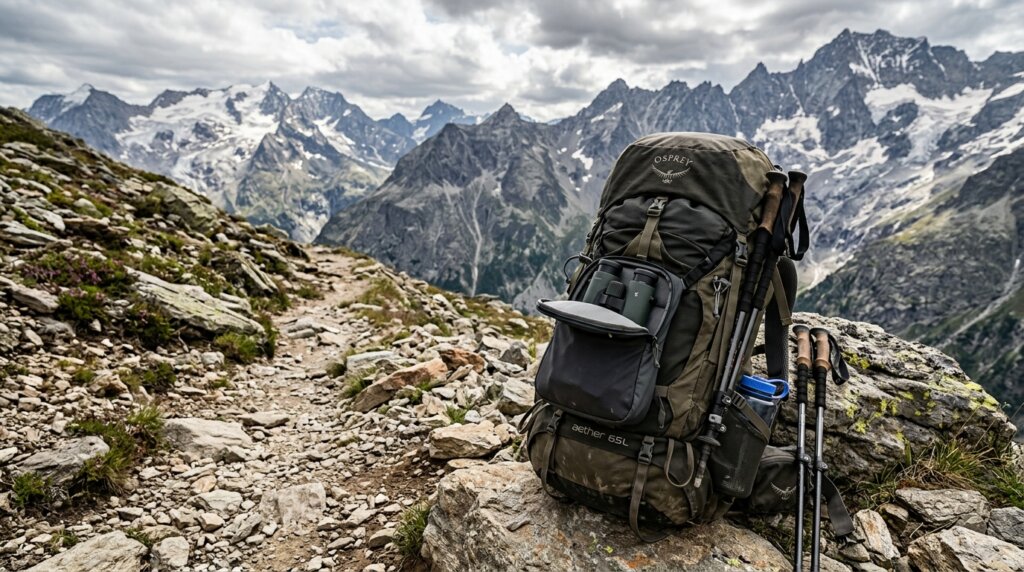
The Best Way to Carry Binoculars While Hiking
The way you carry binoculars matters more than most hikers think. A poor carrying setup causes swinging, knocking, dust exposure, and neck fatigue.
Neck Strap vs Harness vs Chest Pack
Here is the honest comparison.
| Carry Method | Best For | Protection Level | Main Problem |
|---|---|---|---|
| Basic neck strap | Short casual walks | Low | Binoculars swing and hit rocks or zippers |
| Shoulder strap | Light hiking | Medium | Can slide around on steep trails |
| Binocular harness | Long hikes and wildlife viewing | High | Needs proper adjustment |
| Padded chest pack | Rough trails, dust, rain, travel | Very high | Slightly bulkier |
For real hiking, I prefer a binocular harness or padded chest pack. A standard neck strap is fine for a short park trail, but on uneven ground it lets the binoculars swing every time you step down, bend forward, or climb.
That swinging is not harmless. It creates tiny impacts on the body, hinge, eyecups, and focus wheel.
If your trail has rocks, tree branches, steep slopes, or loose gravel, a chest harness is the safer choice.
Best Hiking Accessory: A Padded Binocular Harness Chest Pack
The one product that makes the most sense for hikers is a padded binocular harness chest pack.
Not just a simple elastic harness. I mean a chest pack with padding, quiet magnetic or zipper access, weather-resistant fabric, and enough structure to stop your binoculars from bouncing.
This type of product protects binoculars from three common hiking problems at once: impact, dust, and moisture. It also keeps the binoculars close to your body, so you can reach them quickly without digging through your backpack.
A good harness chest pack is especially useful if you hike with mid-size binoculars like 8×42 or 10×42 models. These are excellent for trail viewing, but they are heavy enough to become annoying on a loose neck strap.
For more gear ideas, read our supporting article on binocular protection accessories where we break down straps, lens covers, cases, cleaning tools, and rain protection.
Keep Lens Covers On Until You Actually Need the View
This sounds obvious, but it is one of the most ignored parts of how to protect binoculars while hiking.
Many hikers remove the objective lens covers at the start of the trail and leave them hanging. That may feel convenient, but it exposes the glass to dust, pollen, grit, and accidental fingerprints.
Lens coatings are tougher than they look, but they are not magic. Fine trail dust can scratch coatings if you rub it across the glass.
When to Keep Covers On
Keep your lens covers on during:
- Steep climbs
- Dusty paths
- Windy ridgelines
- Forest sections with branches
- Creek crossings
- Backpack breaks
- Scrambling over rocks
Remove them only when you are actively viewing something. Then put them back on before moving again.
It becomes muscle memory after a few hikes.
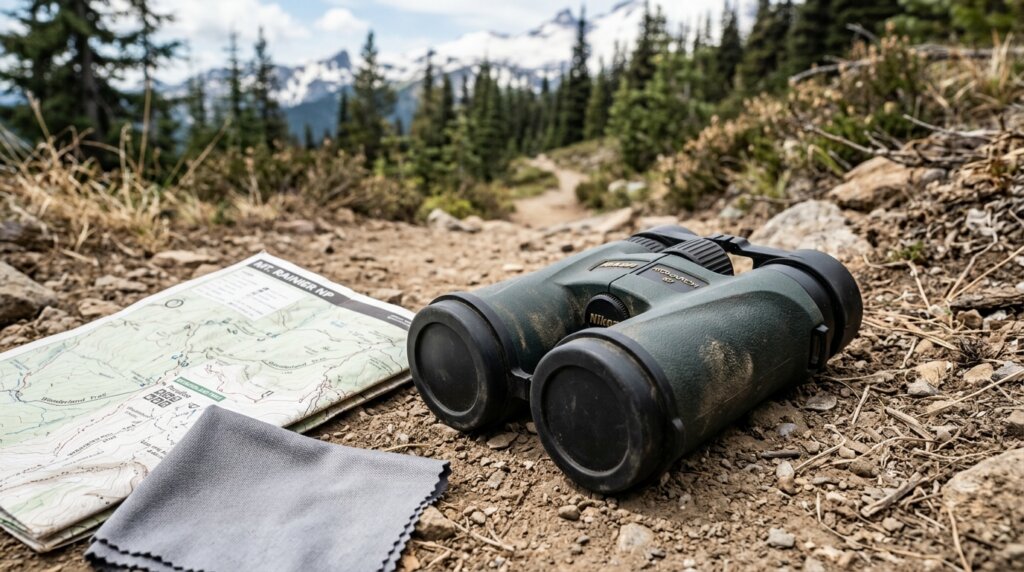
Use a Microfiber Cloth, Not Your Shirt
A shirt sleeve feels convenient. It is also one of the easiest ways to damage lens coatings.
Trail clothing collects sweat, dust, sunscreen, and tiny abrasive particles. When you wipe binocular lenses with your shirt, you may be dragging grit across the glass.
A small microfiber cloth weighs almost nothing. Keep one in a sealed pouch or zip bag, not loose in your pocket where it collects dust.
My Trail Cleaning Rule
Do not wipe first. Blow or brush first.
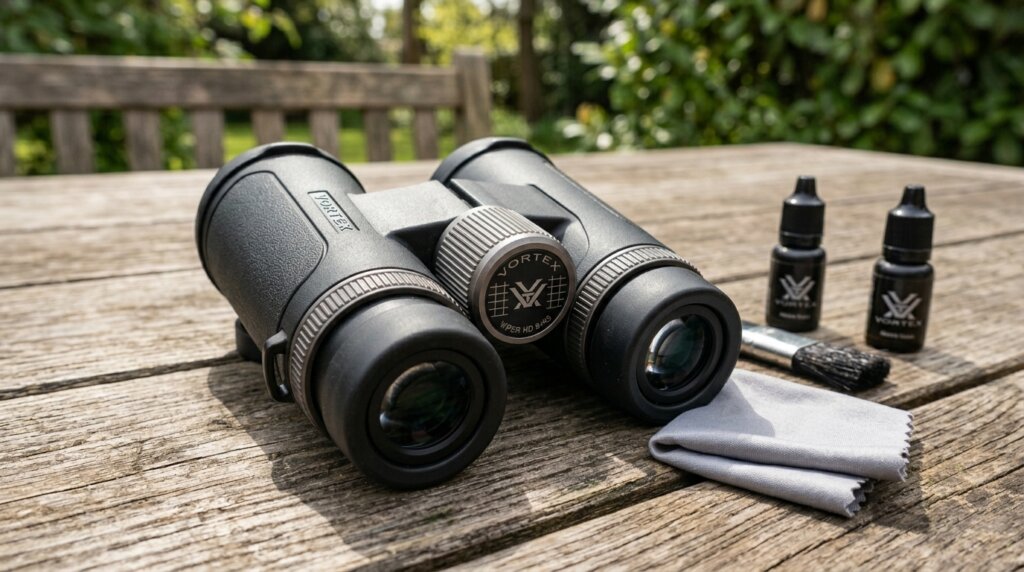
If dust is sitting on the lens, use a small air blower or soft lens brush before touching the glass. Then use the microfiber cloth gently.
For light fog or water spots, dab first instead of rubbing aggressively.
This tiny habit can extend the clean, clear performance of your binoculars for years.
If you want more detail on avoiding scratches, drops, and poor storage habits, check our article on how to prevent damage to binoculars.
Protect Binoculars from Rain, Mist, and Trail Moisture
Weather changes fast on hikes. Even if your binoculars are waterproof, you should still protect them from unnecessary moisture.
Waterproof binoculars are designed to resist water entry. That does not mean you should leave them wet in a closed case for hours.
Moisture can still affect the exterior, eyecups, strap, lens covers, and case lining. If water sits long enough, it can encourage odor, mildew, or residue.
What to Do in Light Rain
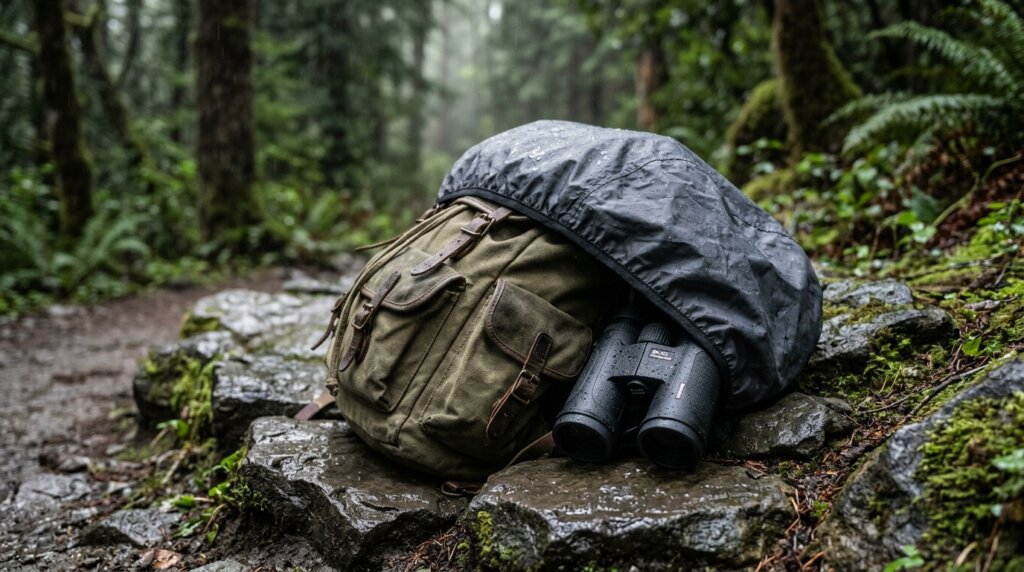
In light rain, keep your binoculars inside your chest pack or under your jacket when not in use. Use them briefly, then cover them again.
If your binoculars get wet, dry the body with a clean cloth before storing them.
Do not seal wet binoculars inside an airtight plastic bag unless you are trying to protect them temporarily during heavy rain. Once you are under shelter, open the bag and let the moisture escape.
What About Fogging?
Fogging usually happens when cold binoculars meet warm, humid air, or when warm binoculars move into colder conditions.
Internally fog-proof binoculars are better for hiking, especially nitrogen-purged or argon-purged models. But external lens fog can still happen.
The fix is patience. Do not rub foggy lenses hard. Let the glass adjust, then gently dab with microfiber if needed.
Avoid Storing Binoculars Loose in Your Backpack
A backpack feels safe, but it can be rough inside.
Binoculars stored loose can rub against food containers, keys, metal zippers, water bottles, power banks, camera gear, or trekking pole tips. Even if the lenses survive, the eyecups and focus wheel can take abuse.
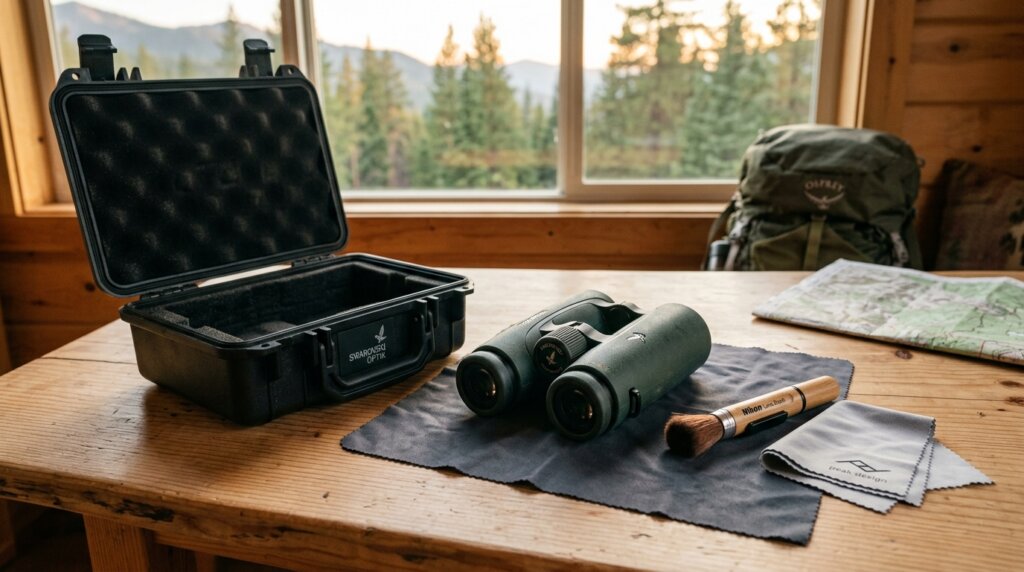
If you must pack binoculars inside your bag, use a padded case.
Best Backpack Storage Setup
Use this simple setup:
| Backpack Situation | Best Protection Method |
|---|---|
| Short hike | Soft padded binocular case |
| Long hike | Harness chest pack plus backpack backup space |
| Rainy hike | Waterproof pouch or dry bag inside backpack |
| Rocky trail | Hard or semi-rigid case |
| Travel + hiking combo | Padded case inside main compartment |
Never place binoculars at the bottom of your backpack. That is where pressure builds when you set the bag down.
Put them near the top or in a separate padded compartment.
Use the Right Binocular Size for Hiking
Protection is not only about accessories. It also starts with choosing binoculars that match your hiking style.
Large binoculars can be amazing from a fixed viewpoint, but they are harder to protect on long trails. Heavy binoculars swing more, tire your neck faster, and are more likely to be packed away carelessly.
For most hikers, 8×32, 8×42, or 10×42 binoculars are the practical range.
8×32 vs 8×42 vs 10×42 for Hiking Protection
| Size | Hiking Benefit | Protection Consideration |
|---|---|---|
| 8×32 | Lightweight, easy to carry | Less bulky, easier to protect |
| 8×42 | Brighter view, stable image | Needs better carrying support |
| 10×42 | More reach for distant views | More shake, more weight, needs harness |
If your goal is comfort and less gear stress, 8×32 is underrated. If you want a better all-around view and do not mind carrying more weight, 8×42 is the sweet spot.
For mountain trails or open landscapes, 10×42 can be useful, but only if you carry it properly.
Protect the Focus Wheel and Eyecups
Most hikers worry about lenses, but the focus wheel and eyecups also take a beating.
The focus wheel is exposed, and dust can settle around it. Eyecups can bend, crack, loosen, or collect grime from sunscreen and sweat.
Trail Habits That Help
Keep the binoculars upright in your pouch instead of forcing them sideways. Avoid placing them face-down on rocks or dirt. Do not hang them from a backpack strap where they can twist and knock against buckles.
After a hike, rotate the focus wheel gently to check for grit or stiffness. Clean around the eyecups with a dry cloth.
Small maintenance after each trail day prevents bigger problems later.
Common Mistakes That Damage Binoculars While Hiking
Even careful hikers make these mistakes.
Leaving Binoculars on a Rock
It happens during snack breaks. You take the binoculars off, place them on a flat rock, then turn around. One bump from a backpack or boot and they slide.
Use your case, pouch, or backpack top instead.
Hanging Them from a Backpack Clip
It looks convenient, but it leaves your binoculars exposed to impact and dust. A swinging binocular on the outside of a pack is basically a trail damage magnet.
Over-Cleaning the Lenses
Some people clean lenses too often and too aggressively. A little dust on the outer glass is not always an emergency. Clean when needed, but do it gently.
Packing Them Wet
This is a big one. Even waterproof binoculars should be dried before long storage. Moisture trapped in a case can create a musty smell and leave marks on the lenses.
Using a Cheap Thin Pouch on Rough Trails
Thin pouches protect from light scratches, not real impacts. For hiking, padding matters.
Real-World Hiking Scenarios and What to Do
Different trails create different risks. Here is how I would handle them.
Dry Desert or Dusty Trail
Dust is the main enemy. Keep lens covers on while walking. Use a chest pack that closes fully. Avoid changing accessories in the wind.
Do not wipe dusty lenses immediately. Blow dust away first.
Forest Trail
Branches, moisture, and sudden shade are common. Keep binoculars close to your chest, not swinging. A harness works well here because it stops the binoculars from hitting tree trunks or straps.
Mountain Hike
Impact protection matters most. Use a padded harness chest pack. Avoid carrying binoculars loose during scrambling or steep climbs.
When resting, secure them before removing your backpack.
Rainy Trail
Use a waterproof or water-resistant case. Keep a small dry cloth available. After the hike, dry everything separately: binoculars, strap, case, and lens covers.
Cold Morning Hike
Expect fogging. Keep binoculars inside your jacket or chest pouch when not in use. Let lenses adjust before wiping.
This is where understanding how to protect binoculars while hiking becomes practical rather than theoretical. The right habit depends on the trail, not just the gear.
Buyer Tips: What to Look for in Hiking Protection Gear
When buying protection gear, do not only think about looks. Think about trail behavior.
A good binocular case or harness should be quiet, secure, padded, and easy to open with one hand.
Features Worth Paying For
Look for:
- Padded interior
- Weather-resistant outer fabric
- Adjustable harness straps
- Quiet opening system
- Secure lens cover attachment
- Enough depth for your binocular size
- Soft lining that will not scratch the body
- Compact shape that does not block backpack straps
Features I Would Avoid
Avoid flimsy pouches with no structure. Avoid noisy Velcro if you hike for wildlife viewing. Avoid oversized cases that let binoculars move around inside.
A case should hold binoculars securely, not just cover them.
Pros and Cons of Carrying Binoculars While Hiking
Binoculars are worth carrying, but they come with trade-offs.
| Pros | Cons |
|---|---|
| Better views from ridges and overlooks | Extra weight on long hikes |
| Helps spot landmarks, trails, and distant details | Needs protection from dust and moisture |
| Makes hiking more engaging and enjoyable | Can swing or bounce without a harness |
| Useful for travel, nature viewing, and scouting | Requires careful cleaning and storage |
For most hikers, the benefits outweigh the hassle when binoculars are carried properly. A good setup makes them feel like part of your hiking kit instead of an annoying object hanging from your neck.
After-Hike Care: The Step Most People Skip
Protection does not end when the hike ends.
When you get home, take the binoculars out of the case. Check for moisture, dust, and grit. Wipe the body. Clean the lenses only if needed. Let the strap and case air out before storing.
Do not store binoculars in a hot car, damp garage, or sealed case while still wet.
This five-minute routine is boring, but it works. It keeps your binoculars ready for the next trail instead of slowly collecting damage between hikes.
Final Thoughts
The best answer to how to protect binoculars while hiking is simple: carry them securely, cover the lenses, avoid loose backpack storage, and clean them carefully after the trail.
You do not need a complicated system. You need repeatable habits.
Use a padded harness chest pack if you hike often. Keep your lens covers attached. Carry a clean microfiber cloth. Dry your binoculars before storage. And most importantly, stop treating them like a random accessory bouncing around your gear pile.
Good binoculars can last for years on the trail, but only if you protect them from the small damage that happens hike after hike.
For more outdoor optics tips, visit the Best Binocular home page and explore our latest binocular care, buying, and trail-use articles.
FAQs About How to Protect Binoculars While Hiking
How do I protect binoculars while hiking on dusty trails?
Keep lens covers on while walking, carry binoculars in a closed chest pack, and avoid wiping dusty lenses without blowing or brushing the grit away first. Dust scratches usually happen when people clean too quickly.
Is a binocular harness better than a neck strap for hiking?
Yes, for most hikes. A harness reduces swinging, spreads weight across your shoulders, and keeps binoculars close to your chest. A neck strap is fine for short walks, but it is not ideal for rough trails.
Should I carry binoculars in my backpack while hiking?
You can, but only if they are inside a padded case. Loose backpack storage can damage lenses, eyecups, and the focus wheel because binoculars rub against other gear.
Are waterproof binoculars enough for hiking?
Waterproof binoculars help, but they still need care. You should dry them after rain, avoid sealing them wet inside a case, and protect the lenses from mud, dust, and fingerprints.
What is the best protection accessory for hiking binoculars?
A padded binocular harness chest pack is the best single accessory for most hikers. It protects against impact, dust, and light moisture while keeping binoculars easy to reach.
How often should I clean binocular lenses on a hike?
Only when needed. Over-cleaning can cause more harm than good. If dust or water affects the view, clean gently with a lens brush and microfiber cloth.




