
How to Keep Binoculars From Fogging in Cold Weather
Cold weather can make binoculars frustrating to use, especially when you move between a warm vehicle, a heated lodge, and freezing air. One minute your view is sharp, and the next the lenses are covered in a thin haze. If you are trying to figure out how to keep binoculars from fogging in cold weather, the answer usually involves a combination of managing temperature changes, adjusting your handling habits, and understanding where the moisture is forming.
The frustrating part is that fogging rarely happens at a convenient time. It shows up when you finally spot movement across a snowy field or when you are watching from a ridge and cannot afford to miss a brief sighting. Even a small patch of condensation on an eyepiece can hide the details you are trying to see, leaving you wiping the glass while the moment passes.
Fogging develops when moist air meets a lens surface that is cold enough for condensation to form. Bringing cold binoculars into a heated vehicle is a common trigger. Outside, your breath can also fog chilled eyepieces, particularly when a scarf or face covering directs warm air upward. Moving warm binoculars into cold air does not automatically cause condensation, but once the lenses cool, moisture from your breath can become a problem.
It also helps to understand what “fogproof” actually means. Sealed, nitrogen- or argon-filled binoculars are designed to resist condensation inside the instrument. Their exposed outer lenses can still fog, so even a well-built pair benefits from careful winter handling.
A little preparation can reduce those interruptions. Keep your breath away from the eyepieces, avoid repeatedly tucking cold binoculars inside a warm, damp jacket, and let wet equipment dry before storing it. Before bringing dry, chilled binoculars indoors, enclosing them in a sealed bag can limit contact with warm, humid air while they gradually warm up. These simple habits give you a better chance of keeping the view clear when it matters.
If you are new to this topic, start with the main guide on how to stop binoculars from fogging because it covers the full picture. This article goes deeper on the cold-weather side of the problem, where temperature swings and trapped moisture cause the biggest headaches.
Why Binoculars Fog So Fast in Cold Weather
The short version: warm air holds more moisture than cold air. When warm, moisture-heavy air hits a cold lens surface, that moisture condenses into tiny droplets. That is the cloudy film you see.
External fogging vs internal fogging
This matters because the solution is different.
External fogging happens on the outside lens surfaces. It is usually caused by your breath, your face, humid indoor air, or moving from warm storage into freezing conditions. This is the most common winter problem, and fortunately, it is usually manageable.
Internal fogging is a bigger issue. If your binoculars fog inside the barrels, that often points to a broken seal, moisture intrusion, or an optic that was never properly sealed in the first place. In that case, no amount of wiping will solve the real problem. You may need servicing or replacement.
A lot of users assume all fogging is normal. It is not. Outside fogging is common. Inside fogging is a warning sign.
Your breath is often the main culprit
This sounds obvious, but in cold weather your own breath causes more fogging than people realize. When you bring binoculars tight against your face and exhale downward, warm moist air rolls straight onto the eyepieces. If you wear a neck gaiter or face covering, it can redirect that moisture upward even faster.
That is why winter fogging feels random. It often is not the weather alone. It is the weather plus your breathing angle plus cold glass.
What Actually Works to Keep Binoculars From Fogging in Cold Weather
There are plenty of “tips” online that sound fine in theory but fail in the field. These are the ones that actually help when temperatures drop.
Let binoculars acclimate before hard use
If your binoculars are sitting in a heated truck and you step into freezing air, the lenses are almost guaranteed to fog. The better move is to let them cool gradually before serious glassing begins.
If I know I will be using binoculars soon, I do not leave them cooking in a warm cab until the last second. I move them into a less heated area first, or I bring them out a few minutes early in their case so the temperature change is less violent. That little transition window makes a noticeable difference.
This is also why cheap “instant fix” routines often disappoint. Once moisture condenses, you are reacting. The smarter play is to reduce the temperature shock before it happens.
Keep them cold once you are outside
A weird truth of winter optics: once your binoculars have adjusted to the outdoor temperature, they often behave better if you keep them there. Constantly tucking them inside a warm jacket and pulling them back out can restart the problem.
Yes, keeping them close to the body sounds protective. In practice, it can create another warm-to-cold cycle over and over. A chest harness worn outside the outer layer often works better than shoving the binoculars under a coat.
Use the case intelligently, not permanently
A case helps during transport, but it is not always the best place during active use. If the binoculars are wet or carrying trapped moisture and you zip them into a sealed case, that humidity lingers around the glass and housing.
The better approach is this:
- use the case during transport
- let the binoculars air out when conditions allow
- never seal them away while damp
If condensation forms after a quick transition, patience beats panic. Let the optic stabilize before you start rubbing lenses.
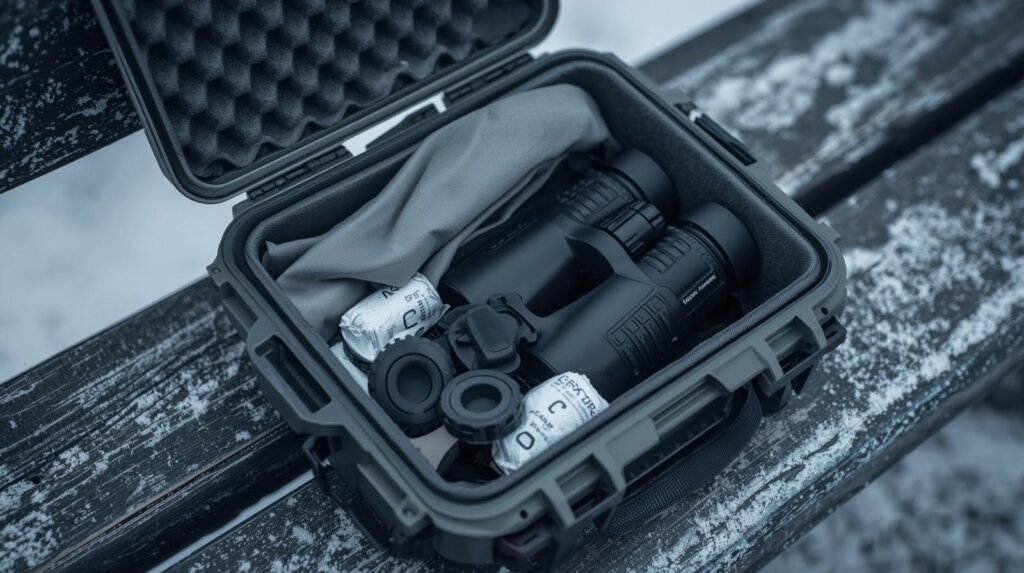
Real-World Cold Weather Scenarios That Change What Works
Advice sounds nice until you put it into a real setting. Here is where winter users usually run into trouble.
Moving from a warm vehicle to freezing air
This is the classic fogging trap. You drive with the heater on, arrive at your spot, hop out, raise the binoculars, and instantly lose clarity.
The best habit is to cool them before you need them. Put them in the cargo area instead of on the heated passenger seat. If possible, shut off direct heater flow toward your gear before arrival. Even a small change in storage temperature helps.
For this scenario, fully waterproof, nitrogen-purged binoculars are worth the extra money. They will not stop outside condensation entirely, but they are far better at resisting moisture problems over time.
Glassing at dawn or dusk
Cold-weather glassing is hardest in low-light windows because that is when you need a clean image most. Dawn hunting, winter birding, and early morning scouting all punish weak lens management.
This is also when people make the mistake of breathing directly into the eyecups while trying to steady themselves. Slow down, angle your breath away, and avoid wrapping scarves or masks so high that they vent upward into the optics.
If winter glassing is part of your routine, the guide on anti-fog tips for binoculars is worth reading next because it adds a few small habits that make a surprising difference over time.
Backpacking, hiking, or riding in snow
Active movement creates sweat, body heat, and repeated temperature swings. That means the binoculars may start cold, warm slightly against your chest, then cool again when exposed to wind.
In these situations, simplicity wins. Keep lens caps handy, avoid touching glass with damp gloves, and do not over-handle the binoculars. Winter fogging often gets worse because people keep checking, wiping, breathing on them, and making the surface wetter.
Quick Comparison: What Helps Most in Cold Weather?
| Method | Best For | Upside | Limitation |
|---|---|---|---|
| Letting binoculars acclimate | Warm-to-cold transitions | Reduces sudden condensation | Requires a bit of planning |
| Keeping binoculars outside your jacket | Long sessions in freezing air | Avoids repeated temperature cycling | Can feel less comfortable at first |
| Waterproof, nitrogen- or argon-purged binoculars | Frequent winter use | Better long-term moisture protection | Costs more upfront |
| Anti-fog lens-safe treatment | Eyepiece and external lens management | Useful in stubborn humidity | Must be coating-safe and used correctly |
| Sealed case with silica pack for transport | Gear storage after use | Helps control trapped moisture | Not a fix during active viewing |
That last point matters. Storage tools help between sessions. They do not replace better handling in the field.
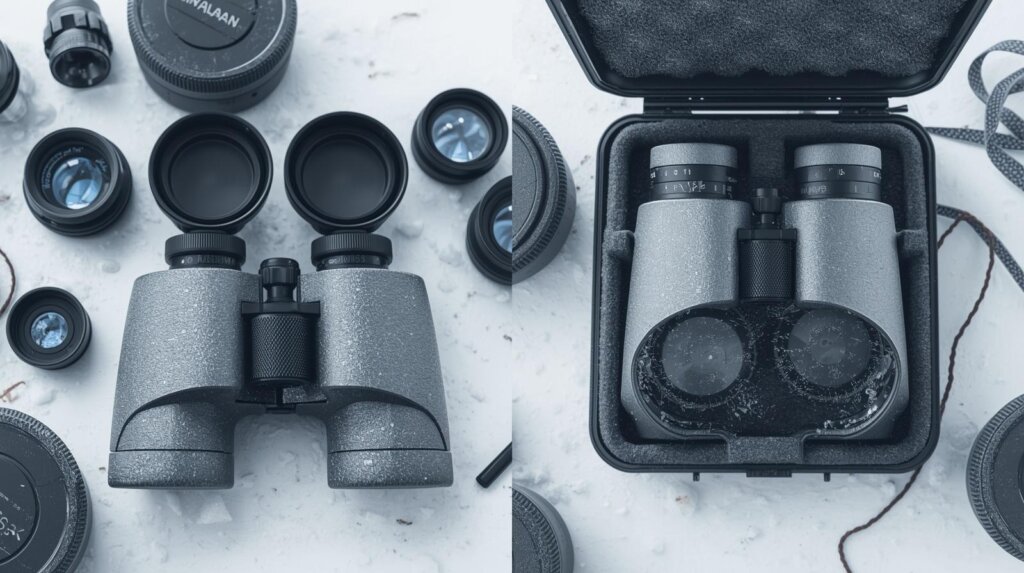
Common Mistakes That Make Winter Fogging Worse
Wiping lenses too early
When lenses fog, the first instinct is to wipe hard and wipe fast. That can smear moisture, drag grit across coatings, and create more frustration than clarity.
If the surface is cold and condensation is active, wiping may only move the problem around. Let the lens settle first, then use a clean microfiber cloth if needed. Never use a sleeve, tissue, or rough glove.
Breathing into the eyepieces without noticing
A lot of winter fogging is self-inflicted. The problem is not that you are careless. It is that cold-weather breathing patterns change. You hunch, cover your face, and exhale downward without realizing it.
A slight shift in posture helps. Hold the binoculars a touch lower while settling in, breathe out to the side, then raise them fully once your breathing is under control.
Packing away damp binoculars
This one causes problems later. If snow melt, condensation, or moisture from your hands stays on the binoculars and you zip them into a case, you are setting up the next session for trouble.
Dry the exterior, leave the case open for a while indoors, and never store optics for long periods with trapped moisture.
If your binoculars already have lingering moisture issues, this related guide on how to remove condensation from binoculars is the logical next read.
What to Look for if You Use Binoculars in Winter Often
If you only deal with cold weather once or twice a year, handling habits may be enough. If winter is your normal season, gear matters more.
Nitrogen- or argon-purged binoculars
This is one feature I would not cheap out on for regular cold-weather use. Gas-purged binoculars are sealed to resist internal moisture and are much less likely to develop internal fogging. They are not immune to outside condensation, but they are far more reliable in real winter conditions.
Good lens caps and a practical harness
Tiny accessories become more important in the cold. A loose cap system lets snow, breath, and moisture get to the glass more easily. A harness that keeps the binoculars stable but not pressed into a sweaty inner layer is usually a better winter setup than a basic neck strap.
One product that actually makes sense
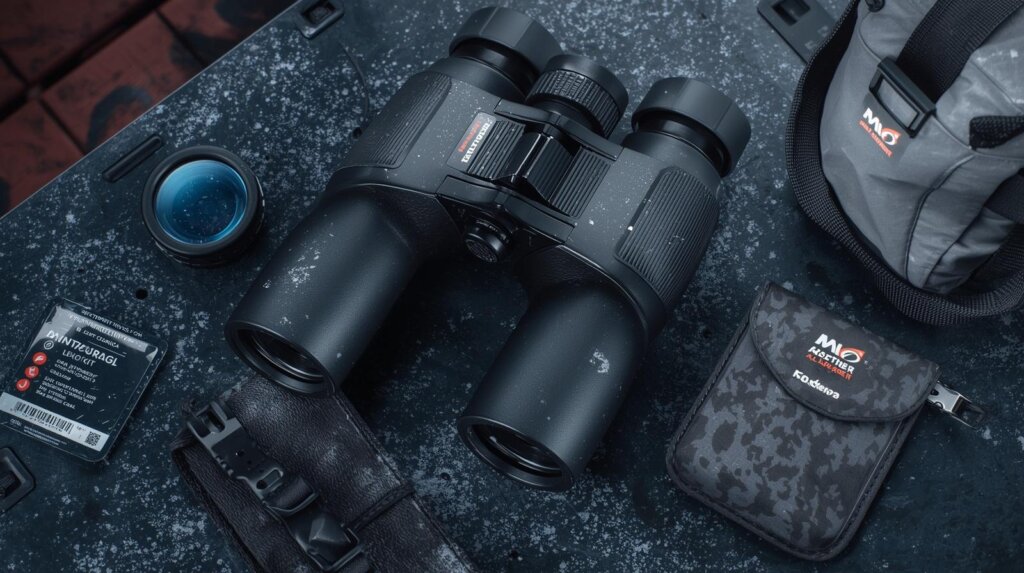
If your binoculars keep fogging on the outside during cold-weather use, especially around the eyepieces, a lens-safe anti-fog kit for coated optics can be worth keeping in your bag. Products such as the ZEISS AntiFOG Kit are designed for optical lenses, so they make more sense than using household glass cleaners or cheap anti-fog sprays that may not be safe for lens coatings. This type of kit works best for external fog caused by breath, face coverings, and sudden temperature changes. It will not repair failed internal seals, but it can make winter viewing much easier when surface fog keeps interrupting your view.
It is not a miracle cure, and it will not fix internal fogging or bad storage habits. But for the right user, it can buy a cleaner viewing window during cold starts and damp mornings. That is where it earns its place.
Pros and Cons of the Most Effective Cold-Weather Approach
Pros
- Reduces fogging before it starts
- Protects lens coatings from unnecessary wiping
- Improves reliability during dawn and dusk use
- Saves time in hunting, hiking, and winter birding scenarios
- Makes budget and premium binoculars both perform better
Cons
- Requires a little pre-planning
- Does not fully eliminate external fogging in every condition
- Cheap non-sealed binoculars still struggle in severe cold
- Users often need to change habits, not just buy gear
That last point is worth stressing. People often search how to keep binoculars from fogging in cold weather expecting a product answer, but the real answer is usually behavioral first, gear second.
Related Guides for Better Winter Binocular Care
If you are building better winter habits, do not stop with one post. The full how to stop binoculars from fogging guide gives the big-picture framework. For more quick field adjustments, the anti-fog tips for binoculars article goes deeper into everyday prevention. And if your optics are already acting up, how to remove condensation from binoculars helps you deal with the cleanup side.
You can also browse the tips page for more maintenance content, or head back to the bestbinocular.net home page if you want to compare binocular categories and supporting guides.
Final Take
If you want the honest answer to how to keep binoculars from fogging in cold weather, it comes down to this: reduce sudden temperature shocks, control your breath around the eyepieces, keep the binoculars dry, and use sealed optics if winter is a regular part of your routine.
That is the combination that works in the field. Not the flashy promise. Not the rushed wipe. Not the desperate breathing trick people use and regret two seconds later.
Cold weather fogging is annoying, but it is also predictable. Once you understand what causes it, you can usually cut the problem down fast and keep your view clear when it matters most.
FAQs About How to Keep Binoculars From Fogging in Cold Weather
Why do my binoculars fog every time I step outside in winter?
Because the binoculars are warmer than the outside air, and moisture condenses on the cold glass during the temperature shift. Fast transitions from a heated car or room are the most common trigger.
Can anti-fog spray stop binocular fogging completely?
Not completely. A coating-safe anti-fog product can help with external lens fogging, especially on eyepieces, but it does not fix internal moisture issues or poor cold-weather handling.
Should I keep binoculars inside my jacket in freezing weather?
Usually no, at least not for repeated use. Keeping them inside a warm jacket can create constant temperature cycling, which often makes fogging worse when you pull them back out.
Is internal fogging a sign that binoculars are damaged?
Often, yes. Internal fogging usually means the seal has failed or moisture has entered the optic. That is more serious than outside condensation and may require servicing or replacement.
Are waterproof binoculars better in cold weather?
Yes. Waterproof, nitrogen- or argon-purged binoculars are much better suited for winter because they resist internal moisture and hold up better during temperature swings.
How can I prevent binocular lenses from fogging in cold weather?
Let your binoculars adjust gradually to the outdoor temperature before using them. Keep the lenses clean and dry, avoid breathing directly onto the eyepieces, and store the binoculars in a protective case when moving between warm and cold environments.




