
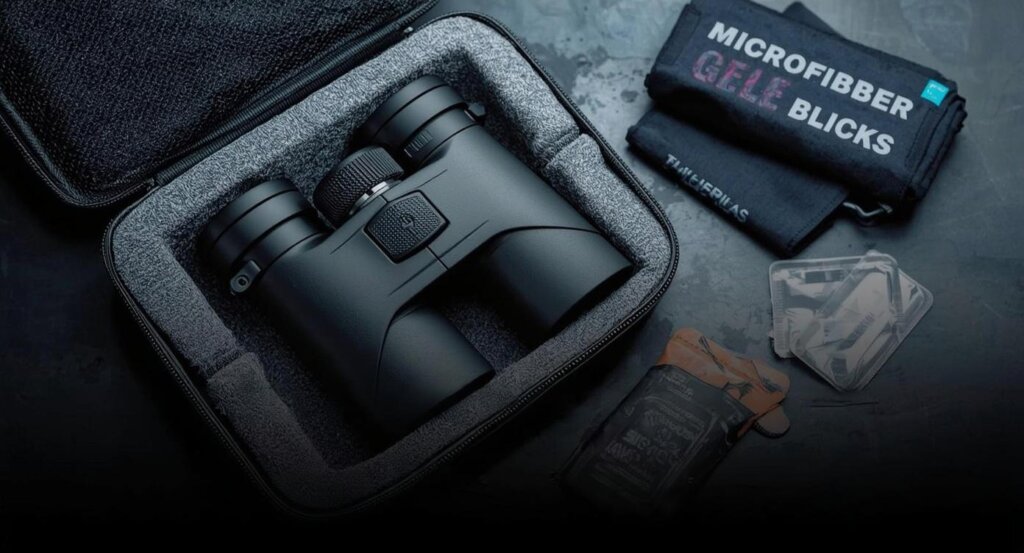
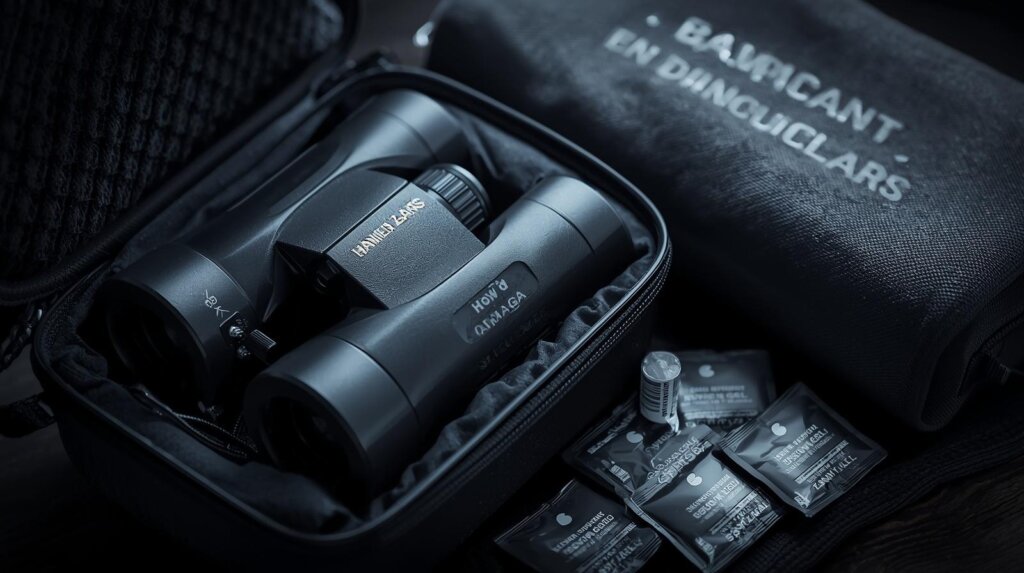
How to Prevent Damage to Binoculars
Binoculars are tougher than they look, but they are not indestructible. A small drop, a sandy lens cloth, a loose case zipper, or moisture trapped after a wet hike can slowly ruin the viewing experience. If you want to know how to prevent damage to binoculars, the answer is not one big secret. It is a mix of smart carrying, careful cleaning, proper storage, and knowing when your binoculars are most vulnerable.
Many binoculars can survive years of hiking, hunting, boating, and backyard stargazing when the owner follows a few simple care habits. Expensive binoculars can also lose sharpness quickly if someone repeatedly cleans the lenses with a shirt sleeve. That small habit can make a big difference over time.
This article focuses on real-world prevention, not boring theory. You will learn where binocular damage usually starts, what mistakes to avoid, and which accessories actually protect your optics without making your setup annoying to use.
If you are building a complete care routine, also read our main guide on how to protect binoculars for a broader protection system.
Why Binoculars Get Damaged Faster Than People Expect
Most binocular damage does not happen in dramatic moments. It usually comes from small, repeated care mistakes.
A lens gets wiped while dusty. A neck strap swings the binoculars into a rock. A case is left slightly open in a car trunk. Moisture sits under the eyecups overnight. These tiny problems build up until the image looks cloudy, the focus wheel feels rough, or the lenses show visible scratches.
That is why learning how to prevent damage to binoculars is mostly about controlling four things:
- Impact damage
- Lens scratches
- Moisture and internal fogging
- Dirt, sand, and careless storage
The good news? You do not need a complicated routine. You just need the right habits at the right time.
The Most Common Types of Binocular Damage
Before protecting your binoculars, you need to understand what you are protecting them from.
Lens Scratches
Lens scratches usually come from dust, sand, grit, shirt fabric, paper towels, or dirty cleaning cloths. Even a tiny grain of sand can act like sandpaper across the coating.
This is one reason I strongly recommend reading this detailed guide on how to protect binocular lenses from scratches. Lens coatings are one of the most valuable parts of your binoculars, and once damaged, they cannot be restored at home.
Impact Damage
Drops, bumps, and swinging against hard objects can knock binocular barrels out of alignment. This is called collimation damage. When it happens, both barrels no longer point exactly the same way, and the image may feel uncomfortable or doubled.
Even rugged binoculars can suffer from this. Rubber armor helps, but it does not make your binoculars drop-proof.
Moisture Damage
Waterproof binoculars are safer, but they still need care. Rainwater, sweat, condensation, and damp storage can create problems around eyecups, focus wheels, lens edges, and case interiors.
Non-waterproof binoculars are much more vulnerable. Moisture can cause internal fogging, fungus, corrosion, and long-term optical haze.
Dirt Inside Moving Parts
The focus wheel, hinge, eyecups, and diopter ring can collect dust or grit. Over time, these parts may feel stiff, scratchy, or loose. Outdoor users often overlook this because the lenses look fine, but mechanical wear can make binoculars frustrating to use.
Use a Proper Carrying System, Not Just a Neck Strap
A neck strap is better than carrying binoculars loose in your hand, but it is not always enough.
When you walk on uneven ground, climb over rocks, or move through brush, binoculars on a neck strap swing. That swinging creates impact risk. The binoculars may hit your chest, backpack buckle, tripod, railing, or nearby gear.
A better option is a padded harness or chest case.
Best Use Case: Hiking, Hunting, and Travel
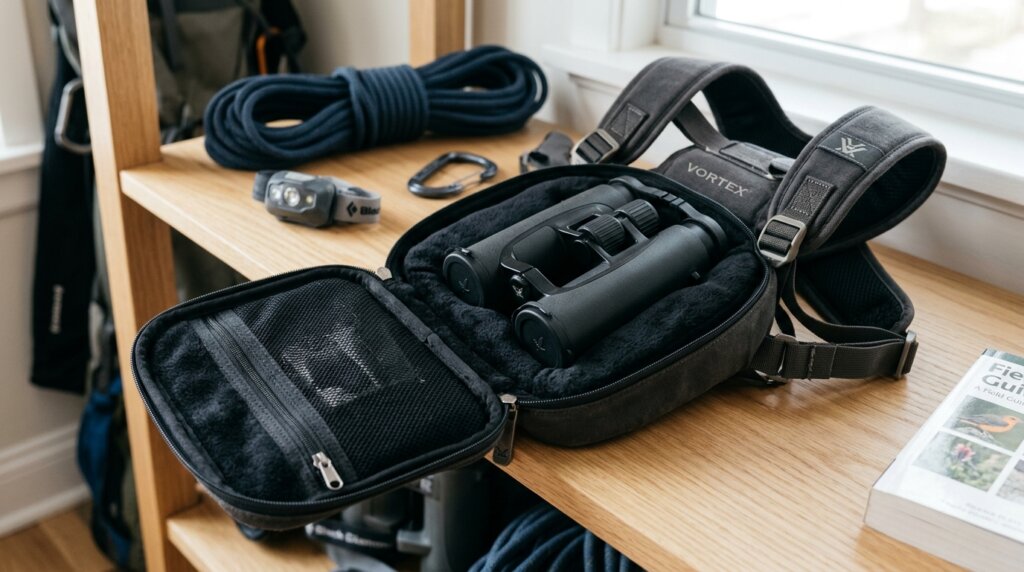
For hikers, hunters, and travelers, a binocular harness case gives the best balance of protection and access. It holds the binoculars close to your body, reduces swinging, and protects them from dust and light rain.
This is especially useful if you use mid-size or full-size binoculars like 8×42, 10×42, or 10×50 models.
Best Accessory to Prevent Binocular Damage
A padded binocular harness case is the one accessory I would recommend first for anyone serious about preventing damage. Look for one with a soft interior, quiet magnetic or zipper closure, side pockets for lens cloths, and enough depth so the eyecups are not pressed down.
This type of product protects against impact, dust, scratches, and accidental drops better than a basic soft pouch. It also solves a real user problem: you can access your binoculars quickly without leaving them exposed all day.
Pros:
- Reduces swinging and accidental knocks
- Keeps lenses covered between use
- Better for hiking, hunting, and travel
- Stores cleaning cloth and lens caps in one place
Cons:
- Slightly bulkier than a neck strap
- Cheap versions may have weak stitching
- Some models feel warm in hot weather
Keep Lens Covers On When Binoculars Are Not in Use
Lens covers are not decorative. They prevent the most common type of damage: accidental contact with glass.
If you often ask yourself whether lens caps are really necessary, the answer is yes for most users. You can read the full supporting article here: do binoculars need lens covers.
Lens covers help when binoculars are inside a bag, hanging from your neck, sitting in a vehicle, or placed on a table. They stop keys, zippers, dust, grit, and fingers from touching the lenses.
Tethered Covers Are Better for Real Use
Loose lens caps get lost. Tethered lens covers stay attached to the binoculars, which makes you more likely to use them.
That sounds simple, but it matters. The best protection accessory is the one you actually use every time.
When to Remove Lens Covers
Remove lens covers only when you are actively viewing. Once you are done, put them back on before walking, packing, or setting the binoculars down.
This habit alone can prevent a surprising amount of long-term lens wear.
Clean Lenses the Right Way
Cleaning is where many people damage their binoculars while trying to protect them.
Never start by wiping the lens. First, remove loose dust.
The safest order is:
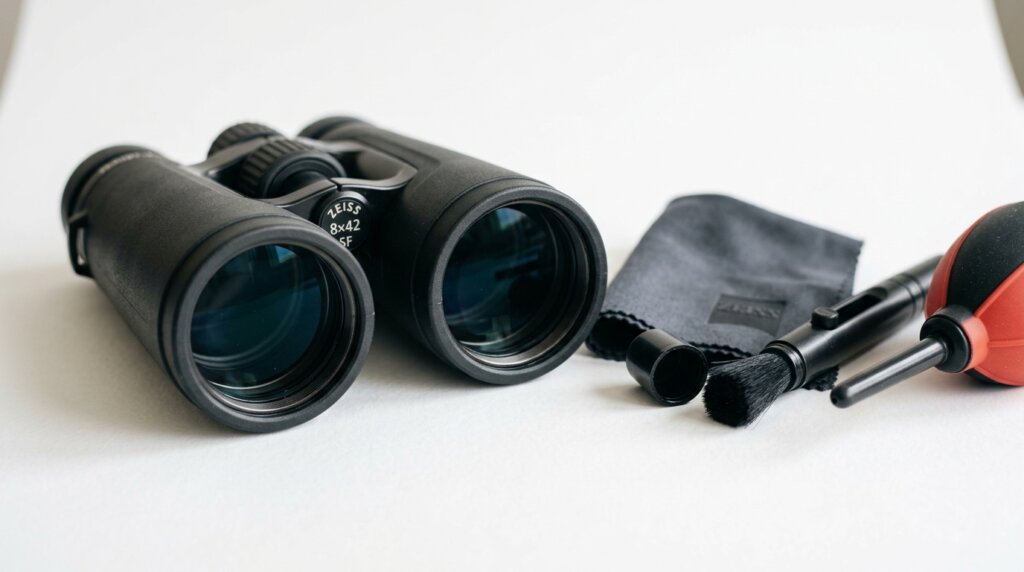
- Use an air blower or soft brush
- Check for visible grit
- Apply lens-safe cleaning solution if needed
- Wipe gently with a clean microfiber cloth
- Use circular pressure only when the lens is already free of debris
A dry wipe on a dusty lens is one of the fastest ways to scratch coatings.
What Not to Use
Avoid these common cleaning mistakes:
- Shirt sleeves
- Tissues
- Paper towels
- Household glass cleaner
- Breath plus rough fabric
- Dirty microfiber cloths
- Alcohol wipes not made for coated optics
Your shirt may feel soft, but it can hold sweat, dust, and tiny grit. Paper towels are worse because they can be abrasive on optical coatings.
Keep a Dedicated Lens Kit
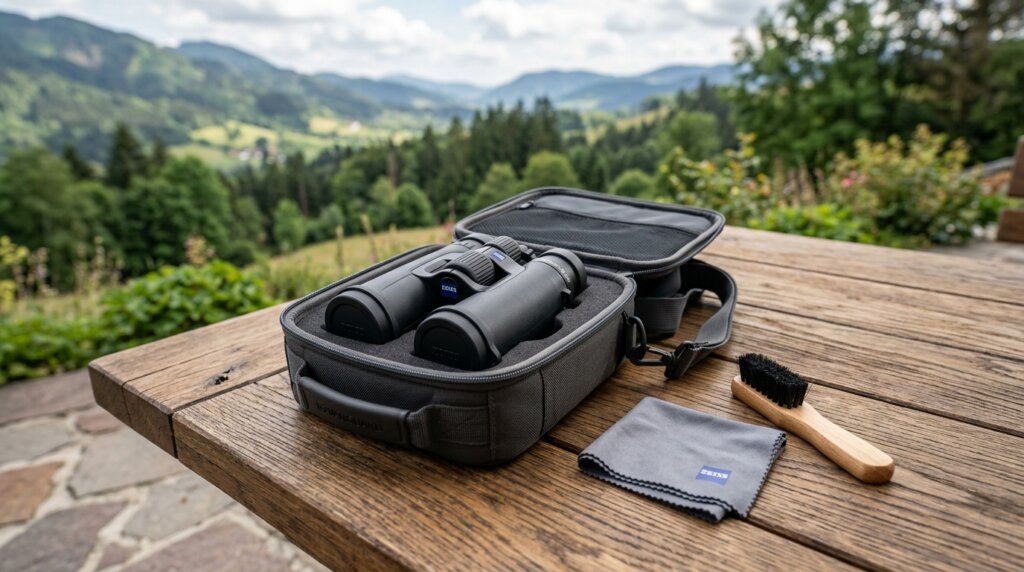
A small lens cleaning kit should include a blower, lens brush, microfiber cloth, and optic-safe cleaning fluid. Keep it in your binocular case, not loose in your backpack.
A clean cloth stored loose beside snacks, tools, or keys is not really clean anymore.
Avoid Packing Binoculars Loose in a Backpack
This is one of my strongest opinions: expensive binoculars should never be tossed loose into a backpack.
Backpacks are rough places. Zippers, water bottles, keys, tripods, snacks, tools, and hard cases all move around. Even if the binocular body survives, the lenses and focus wheel may take repeated pressure.
Better Backpack Packing Method
If you must pack binoculars in a backpack, use this setup:
- Keep lens covers attached
- Place binoculars inside a padded case
- Store the case near the top of the bag
- Avoid placing heavy items on top
- Keep liquids in a separate compartment
- Do not pack binoculars against metal tools or cookware
This matters especially during travel, camping, road trips, and airport carry-on packing.
Soft Case vs Hard Case
| Case Type | Best For | Protection Level | Main Drawback |
|---|---|---|---|
| Soft pouch | Light backyard use | Low to medium | Weak impact protection |
| Padded case | Hiking and travel | Medium to high | Takes extra space |
| Hard case | Long storage and transport | High | Less convenient in the field |
| Harness case | Active outdoor use | High | Slightly bulkier to wear |
For daily outdoor use, a padded harness case is usually the best choice. For long-distance travel or storage, a hard case is safer.
Protect Binoculars From Moisture and Fogging
Moisture damage is sneaky because it may not show immediately.
After rain, snow, coastal air, or humid weather, binoculars need to dry before storage. Do not seal wet binoculars inside a case. That traps moisture against the body and lenses.
After Wet Use
When binoculars get wet, follow this routine:
- Shake off loose water gently
- Wipe the body with a dry cloth
- Dry around eyecups and focus wheel
- Leave the binoculars in a dry room
- Keep lens caps off briefly while drying
- Store only after the case and binoculars are dry
This is especially important for binoculars used near lakes, beaches, boats, forests, and cold mornings.
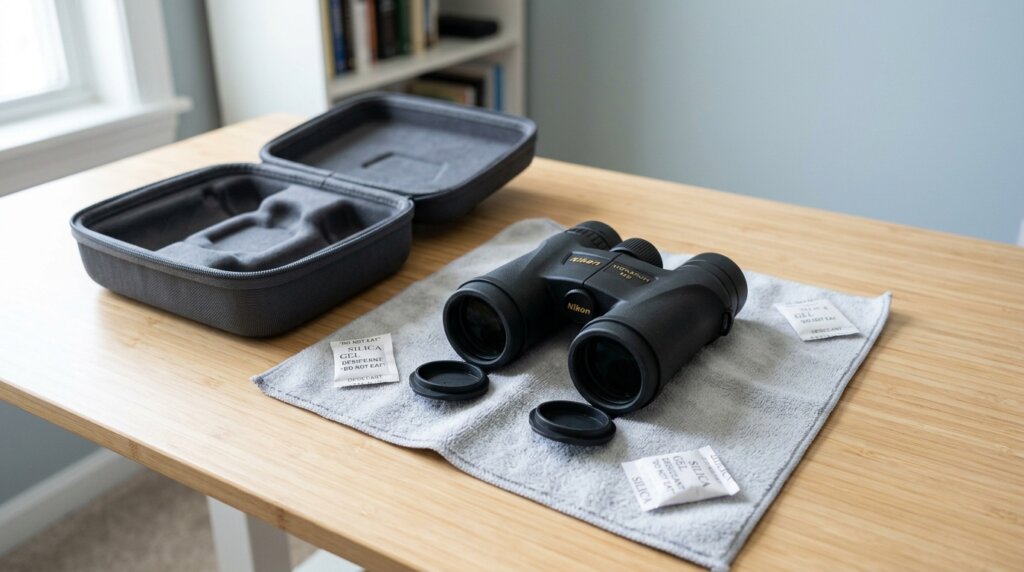
Use Silica Gel Packs
Keep a few silica gel packs in your storage case. They help reduce moisture inside the case, especially if you live in a humid area.
Do not place binoculars near heaters or in direct harsh sunlight to dry them quickly. Fast temperature changes can create condensation and stress seals.
Do Not Leave Binoculars in a Hot Car
Heat is bad for binoculars.
A hot car can soften adhesives, stress seals, affect rubber armor, and create internal expansion. Over time, repeated heat exposure may reduce waterproofing reliability and make rubber parts sticky or warped.
Cold is also a concern. Taking binoculars from freezing outdoor air into a warm indoor room can create condensation. Let them adjust gradually when possible.
Real-World Travel Tip
During road trips, keep binoculars inside the cabin rather than in the trunk. Use a padded case and avoid direct sunlight through windows.
If you stop for food or fuel, do not leave binoculars on the dashboard. That is one of the worst places for optics.
Store Binoculars Correctly at Home
Good storage prevents slow damage.
The best place to store binoculars is somewhere dry, cool, clean, and stable. A closet shelf, gear cabinet, or drawer with a padded case works well.
Avoid basements, garages, damp sheds, windowsills, and car trunks. These areas often have temperature swings or humidity problems.
Long-Term Storage Checklist
Before storing binoculars for weeks or months:
- Clean the body and lenses gently
- Make sure everything is dry
- Attach lens covers
- Place binoculars in a padded or hard case
- Add silica gel packs
- Avoid pressure on the eyecups
- Store away from direct sunlight
This small routine keeps binoculars ready for the next season.
Protect the Focus Wheel and Eyecups
Most people only think about lenses, but binoculars also have moving parts.
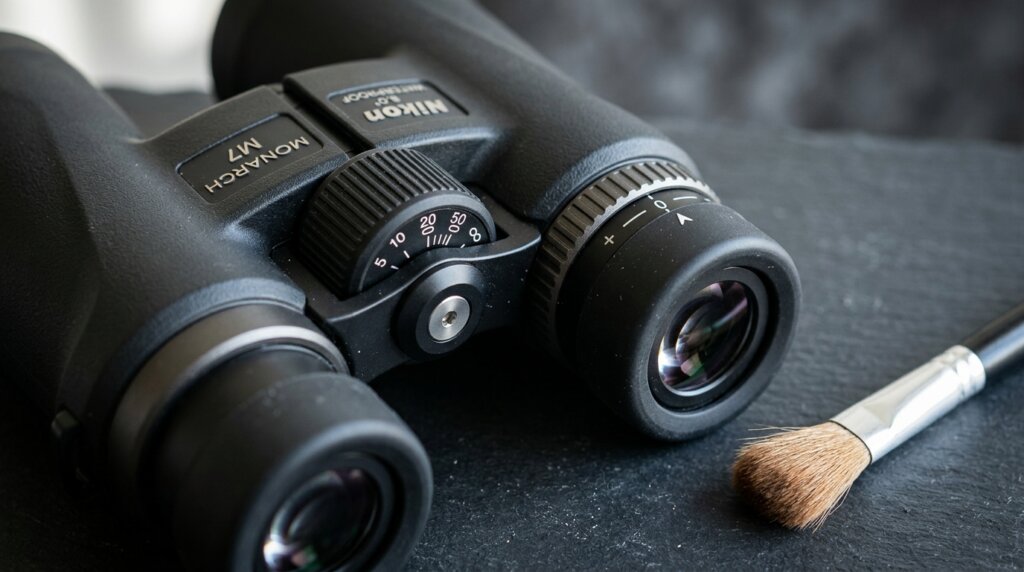
The focus wheel is one of the most used components. If dirt or grit gets around it, the movement can become rough. Eyecups can crack, loosen, or collect grime if they are constantly pressed inside a tight case.
How to Prevent Mechanical Wear
Do not force the focus wheel if it feels stiff. First, check for sand, dirt, or dried moisture around the area. Use a soft brush to clean around the wheel and hinge.
For twist-up eyecups, avoid twisting them aggressively. If they feel stuck, clean around the base before applying pressure.
A binocular can have perfect glass and still feel annoying if the focus system is damaged.
Common Mistakes That Damage Binoculars
Here are the mistakes I see most often.
Wiping Lenses Too Quickly
People see a smudge and instantly wipe. That is risky if dust is sitting on the glass. Blow or brush first.
Carrying Binoculars Without Caps
Even if you are careful, exposed lenses attract fingerprints, dust, and accidental contact.
Using a Cheap Thin Pouch for Outdoor Trips
A thin pouch may stop dust, but it will not protect against real impact.
Storing Binoculars While Damp
This can lead to fogging, mold, odor, and coating issues.
Leaving Binoculars Loose on a Car Seat
A sudden brake can send them flying. Use a case or secure compartment.
Hanging Binoculars From One Strap Clip
Always check both strap connectors. One loose clip can cause a full drop.
Field Scenarios: What Protection Looks Like in Real Life
Hiking Trail
Use a harness case, keep caps on while walking, and clean dust only after returning. Do not wipe lenses on the trail unless necessary.
Beach or Desert
Sand is the biggest danger. Keep binoculars covered when not viewing and avoid changing accessories in windy conditions.
Rainy Weather
Use waterproof binoculars if possible. Dry them fully before storage and never seal wet binoculars inside a closed case.
Backyard Stargazing
Use a neck strap or tripod adapter. Avoid placing binoculars directly on concrete, patio stones, or damp grass.
Road Travel
Keep binoculars in a padded case inside the vehicle cabin, away from heat and direct sunlight.
Buyer Tips: What to Look for in Damage-Resistant Binoculars
When buying binoculars, protection starts with the model itself.
Look for:
- Rubber armor for grip and shock resistance
- Waterproof construction
- Fog-proof nitrogen or argon purging
- Tethered lens caps
- Strong neck strap lugs
- Smooth focus wheel
- Quality eyecups
- Included padded case
Do not buy only for magnification. A 10×42 binocular with poor armor, loose caps, and a weak case may be more fragile in real use than a well-built 8×42 model.
Buyer psychology matters here. Many people spend their full budget on the binoculars and ignore accessories. That feels logical at checkout, but it often costs more later. A good case, lens covers, and cleaning kit protect the money you already spent.
For more practical optics care ideas and gear tips, you can explore the blog tips section and homepage at bestbinocular.net.
Quick Comparison: Prevention Habits vs Damage Risk
| Prevention Habit | Damage It Prevents | Effort Level | Worth It? |
|---|---|---|---|
| Using lens covers | Scratches and fingerprints | Low | Yes |
| Carrying in harness case | Drops and impacts | Medium | Yes |
| Drying after wet use | Fogging and moisture damage | Low | Yes |
| Using microfiber cloth only | Coating scratches | Low | Yes |
| Avoiding hot car storage | Seal and rubber damage | Low | Yes |
| Adding silica gel packs | Humidity damage | Very low | Yes |
Final Thoughts
Learning how to prevent damage to binoculars is really about building simple habits. Keep the lenses covered. Carry them securely. Clean them gently. Dry them before storage. Do not leave them in heat, humidity, or loose inside a backpack.
The best protection routine is not complicated. It is consistent.
If your binoculars are part of your hiking kit, birding setup, hunting gear, travel bag, or stargazing routine, treat them like precision optics instead of ordinary outdoor gear. A few careful habits can keep the image sharp, the focus smooth, and the body reliable for years.
FAQs About How to Prevent Damage to Binoculars
How do I prevent damage to binoculars during hiking?
Use a padded harness case instead of letting binoculars swing from a neck strap. Keep lens covers on while walking, avoid packing them loose in a backpack, and clean dust only with a blower or soft brush before wiping.
Can binocular lenses be repaired if scratched?
Minor surface marks may not affect viewing much, but true scratches in lens coatings usually cannot be repaired at home. Prevention is much better than repair because optical coatings are delicate.
Should I store binoculars with lens caps on?
Yes, store binoculars with lens caps on after the lenses are clean and dry. If the binoculars were used in rain or humidity, let them dry first before closing caps and sealing them inside a case.
Are waterproof binoculars damage-proof?
No. Waterproof binoculars resist moisture better, but they can still be damaged by drops, scratches, heat, dirt, and poor cleaning habits.
What is the safest way to clean binoculars?
Remove dust first with a blower or lens brush. Then use optic-safe cleaning fluid and a clean microfiber cloth. Never start by rubbing a dusty lens.
Is a hard case better than a soft case?
A hard case offers stronger protection for storage and travel. For active outdoor use, a padded harness case is often more practical because it protects the binoculars while keeping them easy to access.




