
What Is the Safest Way to Carry Binoculars?
The best way to carry binoculars safely is to use a padded binocular harness or chest pack instead of relying on a basic neck strap. A harness keeps your binoculars close to your body, spreads the weight across your shoulders, protects the lenses from swinging, and makes it easier to grab them quickly without risking a drop.
That sounds simple, but the right carrying method depends on where you use your binoculars.
A bird watcher walking through wet grass needs a different setup than a hunter moving through brush. A traveler needs something light and compact. A hiker needs comfort over long miles. A beginner may just want to stop their binoculars from bouncing around and hitting rocks, tables, car doors, or railings.
So, let’s break down the safest ways to carry binoculars in real situations — not just what looks good in product photos.
Why Carrying Binoculars Safely Matters More Than People Think
Most binocular damage does not happen during dramatic accidents. It usually happens in small, annoying ways.
The binoculars swing from your neck and hit a zipper. You set them down on a rough picnic table. The objective lenses rub against keys inside a backpack. A loose strap slips from your shoulder while you are getting out of a car.
One bad drop can knock the barrels out of alignment. Scratched lenses reduce clarity. Moisture inside the case can create fogging problems. Even a cheap pair deserves better treatment, and if you own mid-range or premium optics, safe carrying is not optional.
For a full protection setup, you can also read our main article on how to protect binoculars, where we cover storage, cleaning, lens care, weather protection, and handling habits.
The Best Way to Carry Binoculars Safely: Use a Harness Chest Pack
For most users, the safest overall method is a padded binocular harness chest pack.
A chest pack does three things well:
It keeps your binoculars stable.
It protects them from bumps.
It keeps them ready when you need them.
This is why many outdoor users move away from the standard neck strap after a few trips. A neck strap works, but it lets binoculars swing too much. That swinging is the real problem. It causes scratches, knocks, strap tangles, and sometimes painful neck pressure.
A chest harness keeps the binoculars centered against your body. When you walk, climb, bend, or crouch, they stay controlled.
Best For
A binocular harness chest pack is ideal for:
| Use Case | Why It Works |
|---|---|
| Hiking | Stops binoculars from bouncing on your chest |
| Bird watching | Keeps optics ready for quick viewing |
| Hunting | Reduces movement and protects from brush |
| Travel | Adds security in crowded places |
| Wildlife viewing | Keeps binoculars close without constant handling |
Pros
| Pros | Why It Helps |
|---|---|
| Better weight distribution | Less neck strain on long walks |
| Stronger protection | Padded front protects against bumps |
| Quick access | Binoculars are ready without digging in a bag |
| More stable | Less swinging and fewer accidental knocks |
| Extra storage | Some models hold lens cloths, caps, or small accessories |
Cons
| Cons | What to Know |
|---|---|
| Slightly bulkier | Not as minimal as a simple strap |
| Takes adjustment | Shoulder straps must be fitted properly |
| Can feel warm | Chest packs may trap heat in hot weather |
| Costs more | A good harness is usually pricier than a strap |
My honest take: if your binoculars cost enough that you would be upset if they got scratched or dropped, a harness is worth it. It is not the flashiest accessory, but it solves the biggest carrying problems at once.
Best Carrying Option: Padded Binocular Harness Chest Pack
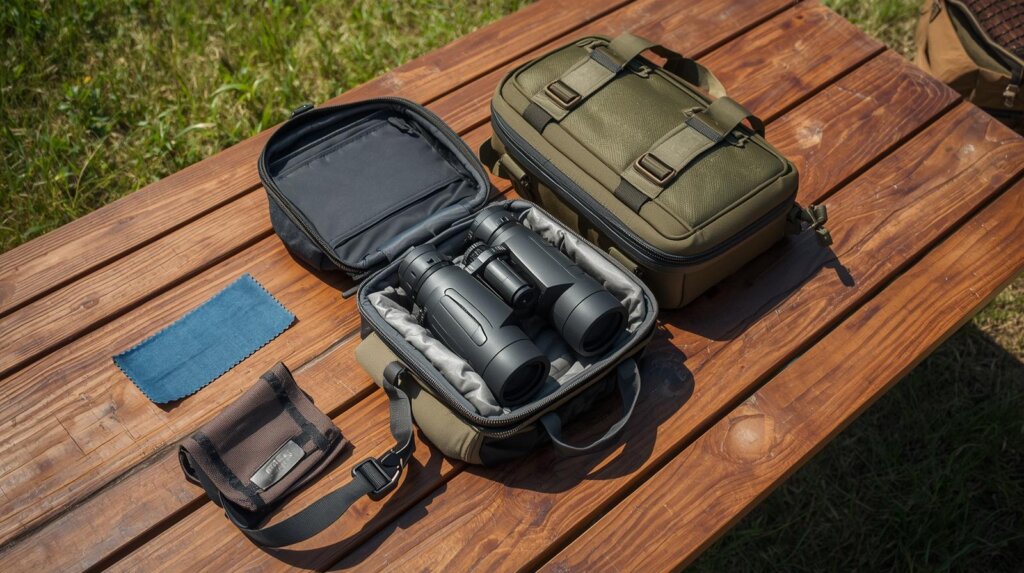
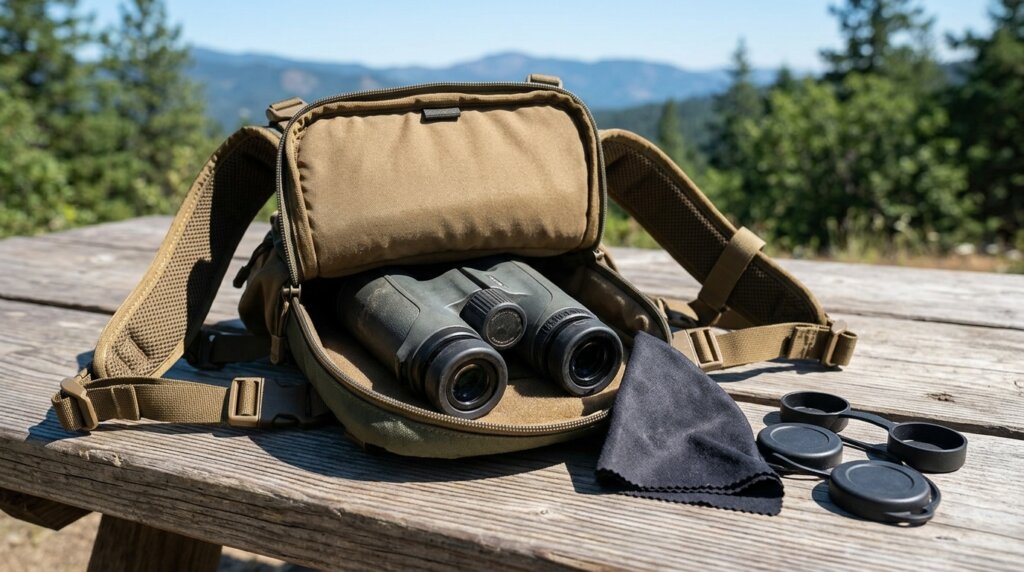
The one product I would recommend for safe carrying is a padded binocular harness chest pack with adjustable shoulder straps and a quiet magnetic or buckle closure.
You do not need the most expensive one. Look for these features:
| Feature | Why It Matters |
|---|---|
| Padded front panel | Protects binoculars from impact |
| Adjustable harness straps | Helps fit different body sizes |
| Soft interior lining | Reduces rubbing and scratches |
| Secure closure | Stops binoculars from slipping out |
| Weather-resistant fabric | Helps with rain, dust, and light moisture |
| Side pockets | Useful for lens cloth, caps, and small accessories |
Avoid very cheap, floppy harnesses that only hold the binoculars with elastic straps. They may reduce neck pressure, but they do not protect the binocular body or lenses very well.
For more add-ons that pair well with a harness, check our article on binocular protection accessories. It covers lens covers, rain guards, straps, harnesses, cleaning cloths, and protective cases.
Neck Strap vs Harness vs Case: Which Is Safest?
Not every user needs the same carrying setup. Here is the simplest comparison.
| Carrying Method | Safety Level | Comfort | Access Speed | Best For |
|---|---|---|---|---|
| Basic neck strap | Low to medium | Low on long walks | Fast | Short casual use |
| Padded neck strap | Medium | Better than basic strap | Fast | Birding, sports, travel |
| Shoulder strap case | Medium | Good | Slower | Travel and storage |
| Binocular harness | High | Very good | Fast | Hiking, hunting, wildlife viewing |
| Chest pack harness | Highest | Very good | Fast | Serious outdoor protection |
A neck strap is fine when you are standing still at a viewpoint, watching a sports event, or using binoculars for a short time. But if you are walking through uneven ground, carrying a backpack, or moving through trees, the neck strap becomes risky.
A shoulder case gives better protection, but it slows you down. You have to unzip or open the case each time. That may be fine for travel, but not great when you need to spot something quickly.
The chest pack harness gives the best balance. It protects the binoculars and keeps them ready.
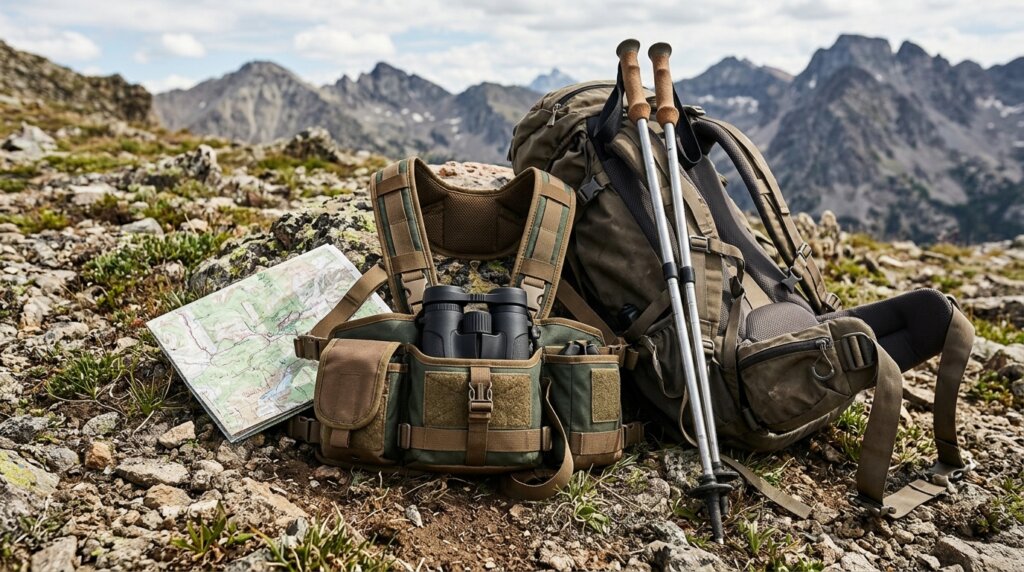
How to Carry Binoculars Safely While Hiking
When hiking, the biggest problems are bouncing, sweat, dust, sudden weather changes, and accidental bumps against rocks or trekking poles.
The best way to carry binoculars safely on a hike is with a chest harness that sits high enough to avoid your waist belt but low enough to let you breathe comfortably.
Your binoculars should not swing when you step downhill. They should not hit your backpack straps. They should not sit so low that they bounce against your stomach.
Hiking Setup That Works
- Use a padded chest harness.
- Keep lens caps attached or stored in the harness pocket.
- Carry a microfiber cloth in a sealed small pouch.
- Use a rain cover if weather looks uncertain.
- Avoid placing binoculars loose inside your backpack.
If hiking is your main use case, you will find more specific trail advice in our supporting article on how to protect binoculars while hiking. It focuses on dust, rain, falls, backpack storage, and trail handling mistakes.
How to Carry Binoculars Safely When Traveling
Travel is different from hiking. You may not need a full outdoor harness all day, but you still need protection from scratches, theft, luggage pressure, and sudden drops.
For travel, the best setup is usually a compact padded binocular case with a shoulder strap or a slim harness if you plan to use the binoculars often.
Do not toss binoculars into a backpack with chargers, keys, sunglasses, coins, or camera gear. That is how lens coatings get scratched.
Travel Carrying Tips
- Keep binoculars in a padded case inside your personal bag.
- Use lens caps when passing through crowded areas.
- Avoid leaving binoculars loose in checked luggage.
- Use a small microfiber pouch for cleaning cloths.
- Keep the strap attached so you can secure them quickly.
For city travel, rooftop views, sightseeing decks, cruises, and stadiums, a compact case is usually enough. For national parks, safari-style trips, or long scenic walks, a harness is safer.
Best Way to Carry Binoculars for Bird Watching
Bird watching requires quick access. Birds move fast, and a zipped case can cost you the moment.
That is why many bird watchers prefer a harness or a comfortable padded strap. The binoculars need to be ready, but they should not be swinging around while you walk.
A good birding setup should feel almost invisible. You should be able to walk, stop, lift the binoculars, focus, and lower them without thinking too much.
Bird Watching Carrying Setup
| Item | Purpose |
|---|---|
| Padded harness | Keeps binoculars stable |
| Objective lens covers | Protects front lenses |
| Rain guard | Protects eyepieces |
| Microfiber cloth | Removes dust and smudges |
| Small chest pocket | Holds caps and cleaning cloth |
One mistake beginners make is removing all lens caps because they think it saves time. It does, but it also exposes the lenses to dust, fingerprints, and scratches. A better move is to use tethered lens caps or keep a rain guard on the eyepieces.
Carrying Binoculars in a Backpack: Safe or Risky?
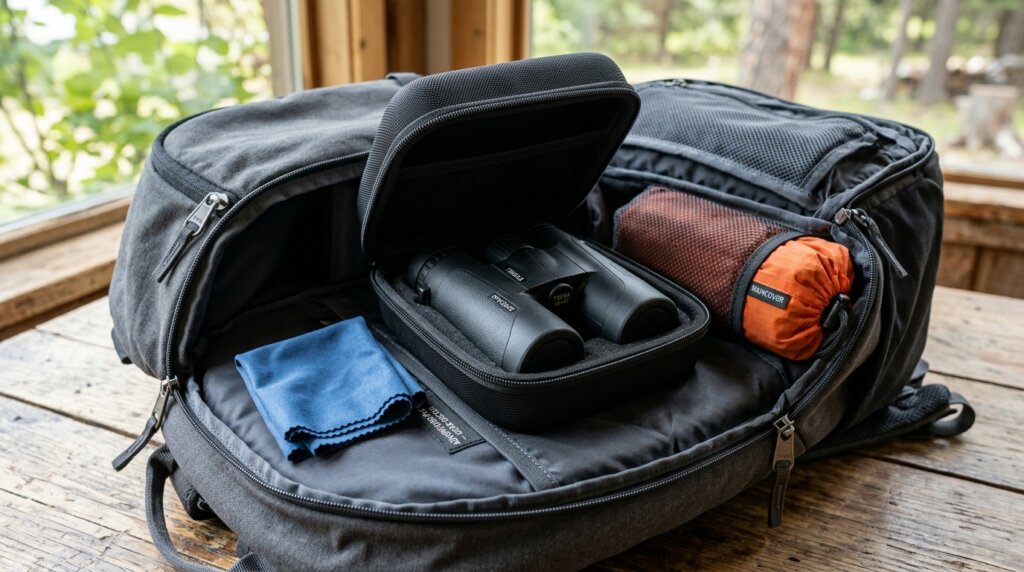
A backpack is safe only if the binoculars are inside a padded case or dedicated compartment.
Loose backpack carry is one of the worst options. Your binoculars can rub against hard items, get pressed under weight, or collect dust and crumbs from inside the bag.
If you must carry binoculars in a backpack, do it this way:
- Wrap them in a padded binocular case.
- Keep them upright, not crushed under heavy gear.
- Store them away from water bottles.
- Avoid placing them beside metal tools, keys, or tripods.
- Keep a silica gel packet in the case if you travel in humid areas.
A backpack works best for storage, not active viewing. Once you reach the viewing area, switch to a strap or harness.
Common Mistakes When Carrying Binoculars
Some mistakes look harmless until your binoculars take damage.
Letting Binoculars Swing Freely
This is the classic one. A basic neck strap lets binoculars hit zippers, belt buckles, rocks, tables, and car doors. Over time, those small hits add up.
Carrying Binoculars by One Barrel
Do not hold binoculars casually by one side while walking. It puts uneven stress on the hinge and increases the chance of dropping them.
Leaving Lens Caps Off All Day
Lens caps are annoying until you need them. Dust, grit, and fingerprints are harder on lenses than most people think.
Using a Loose Strap
A strap that is too long makes binoculars bounce. A strap that is too short feels uncomfortable. Adjust it so the binoculars sit high enough to stay controlled.
Putting Binoculars in a Bag Without Protection
Even if the bag feels soft, the items inside may not be. Chargers, keys, bottles, and camera accessories can damage binoculars quickly.
Buyer Tips: What to Look for in a Safe Carrying Setup
Before buying any strap, case, or harness, think about how you actually use your binoculars.
- Do you walk long distances? Choose a harness.
- Do you travel light? Choose a compact padded case.
- Do you use binoculars quickly and often? Choose a harness or padded neck strap.
- Do you use them near water or rain? Choose weather-resistant protection.
- Do you own expensive binoculars? Choose a chest pack with padding, not just elastic straps.
Important Features to Check
| Feature | Good Choice | Avoid |
|---|---|---|
| Padding | Soft interior and padded shell | Thin fabric only |
| Strap quality | Wide, adjustable, secure | Narrow and slippery |
| Closure | Quiet, firm, easy to open | Weak Velcro or loose flap |
| Fit | Snug but not tight | Oversized and floppy |
| Weather protection | Water-resistant fabric | Open design in wet areas |
| Storage pockets | Small accessory pockets | No place for caps or cloth |
A safe carrying system should protect your binoculars without making them annoying to use. If it feels clumsy, you will stop using it — and then the protection does not matter.
Real-World Carrying Scenarios
Short Walks and Backyard Viewing
A padded neck strap is enough. Keep the binoculars close to your chest and use lens caps when not viewing.
Hiking Trails
Use a padded chest harness. This gives the safest balance of comfort, access, and protection.
Road Trips
Keep binoculars in a padded case when driving. Do not leave them loose on the seat where they can slide during sudden stops.
Stadiums and Events
Use a compact shoulder case or padded neck strap. A bulky harness may feel unnecessary in tight seating.
Wet or Dusty Conditions
Use a weather-resistant chest pack and keep a microfiber cloth inside. Never wipe dusty lenses with your shirt.
Final Verdict: What Is the Best Way to Carry Binoculars Safely?
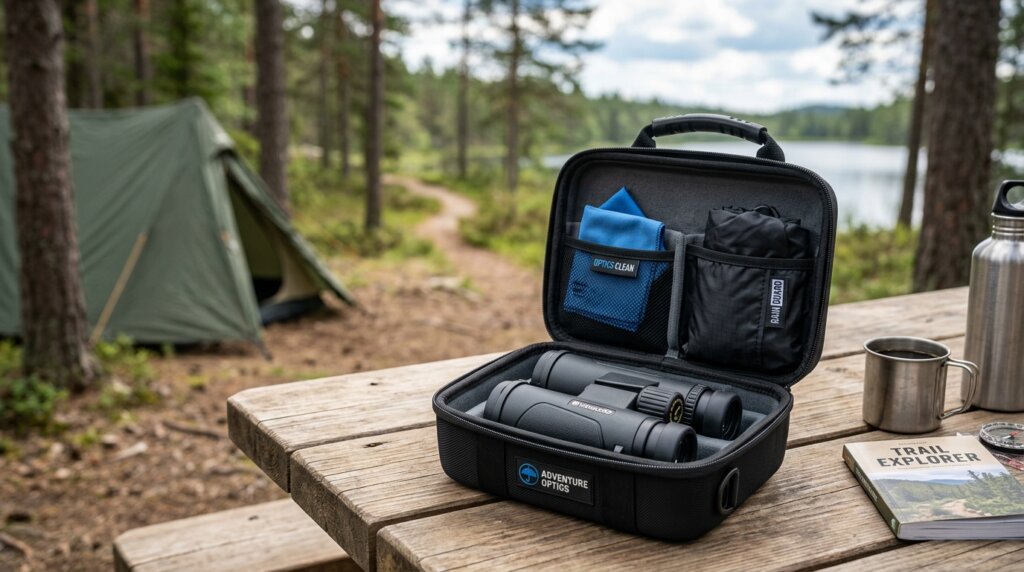
The best way to carry binoculars safely is with a padded binocular harness chest pack, especially if you hike, bird watch, hunt, travel outdoors, or use binoculars for long periods.
A neck strap is okay for quick use, but it does not control swinging well. A case protects better, but it slows access. A chest harness gives you the best of both: protection and speed.
For most people, the smartest setup is simple:
- Use a chest harness when actively using binoculars.
- Use a padded case when storing or traveling.
- Keep lens caps and a microfiber cloth with you.
- Never carry binoculars loose in a backpack.
- Adjust straps so the binoculars stay stable, not bouncing.
That is the practical answer. No overthinking needed.
For more simple protection advice, visit our binocular tips blog or explore more gear care resources on the Best Binocular homepage.
FAQs About the Best Way to Carry Binoculars Safely
What is the safest way to carry binoculars?
The safest way to carry binoculars is with a padded binocular harness chest pack. It keeps the binoculars stable, reduces swinging, spreads weight across your shoulders, and protects the body and lenses from accidental bumps.
Is a binocular harness better than a neck strap?
Yes, a binocular harness is usually better than a neck strap for long walks, hiking, bird watching, and outdoor use. A neck strap is lighter, but it can cause neck strain and lets binoculars swing more.
Can I carry binoculars in my backpack?
You can carry binoculars in a backpack only if they are inside a padded case or protected compartment. Never place binoculars loose in a backpack with keys, bottles, chargers, or hard gear.
Should binoculars be carried with lens caps on?
Yes, binoculars should be carried with lens caps on when you are not actively viewing. Lens caps help protect the glass from dust, fingerprints, scratches, and accidental rubbing.
What is the best way to carry binoculars while hiking?
The best way to carry binoculars while hiking is with a padded chest harness. It keeps them close, stops bouncing, allows quick access, and protects them from trail bumps, dust, and light weather.
Are binocular chest packs worth it?
Binocular chest packs are worth it if you use binoculars outdoors often or own a pair you want to protect. They are more comfortable than neck straps and offer better protection than basic open harnesses.
How do I stop binoculars from bouncing when walking?
Use a properly adjusted harness or shorten your strap so the binoculars sit higher on your chest. If they hang too low, they will bounce more and become easier to damage.
What should I avoid when carrying binoculars?
Avoid carrying binoculars loose in a bag, holding them by one barrel, leaving lens caps off all day, using a weak strap, or letting them swing freely while walking.




