
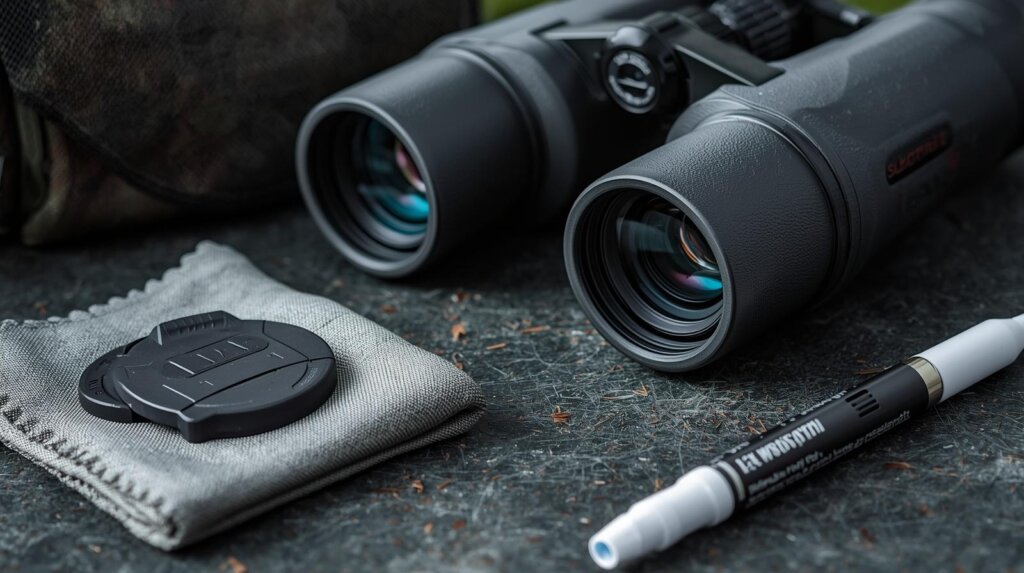
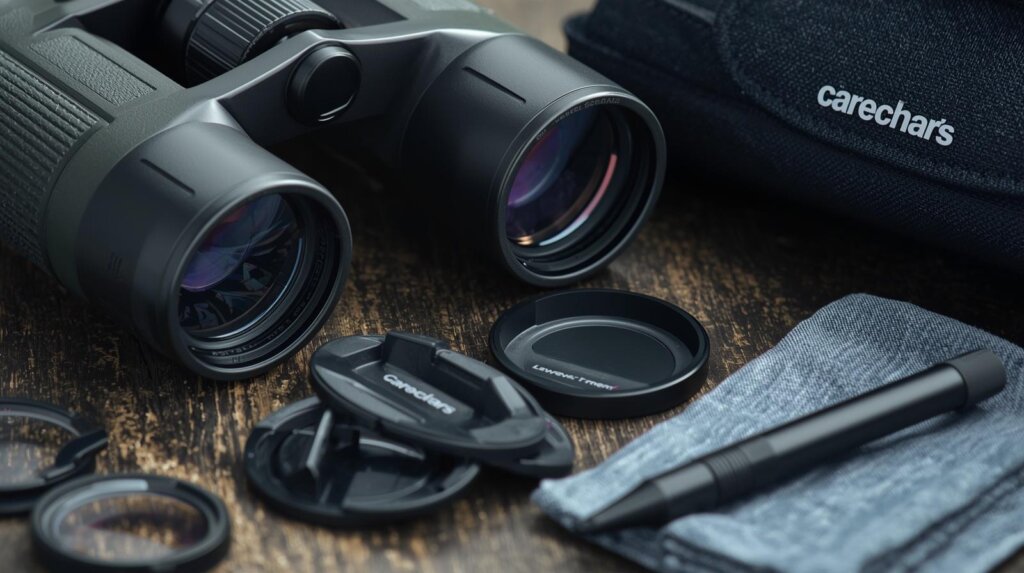
How to Protect Binocular Lenses From Scratches Without Complicated Maintenance
Binocular lenses scratch more easily than most people expect. Not because the glass is weak, but because real outdoor use is messy. Dust gets on the lens. Sand sticks to the eyecups. A shirt sleeve feels harmless until it drags tiny grit across the coating. One quick wipe in the field can leave a mark that annoys you every time light hits the glass.
That is why learning how to protect binocular lenses from scratches matters, especially if you use your binoculars for birding, hunting, hiking, boating, stargazing, travel, or sports events. A scratched binocular lens usually does not make the binocular useless right away, but it can reduce contrast, increase glare, and lower resale value.
The good news? You do not need a complicated cleaning kit or expensive routine. You need a few smart habits, the right accessories, and the discipline to stop wiping lenses the wrong way.
Why Binocular Lenses Get Scratched So Easily
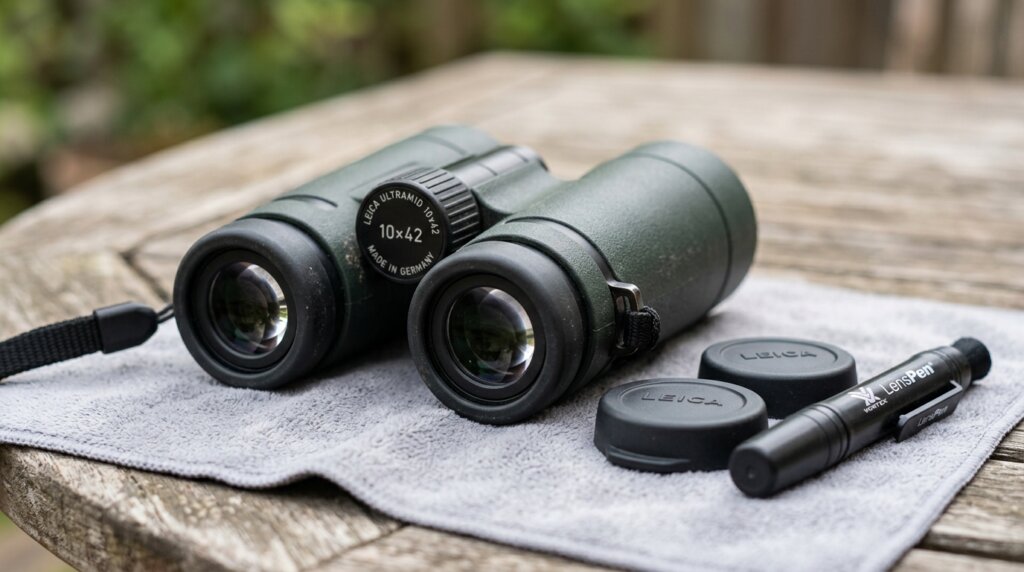
Most scratches do not happen from dropping binoculars. They happen from tiny particles.
Dust, sand, pollen, salt, dried mud, and small debris can sit on the objective lenses or eyepieces. When you wipe the glass without removing those particles first, they act like fine sandpaper.
The outer glass may also have anti-reflective coatings. These coatings help with brightness, clarity, and color transmission, but they are not magic armor. Cheap cleaning cloths, paper towels, jacket sleeves, and rough tissues can damage coatings over time.
This is why serious binocular users care about lens care. They are not being dramatic. They just know one bad cleaning habit can permanently mark a good optic.
For a broader protection setup, you can also read our main guide on how to protect binoculars, where lens safety fits into the bigger picture of storage, handling, weather protection, and field use.
The Real Rule: Do Not Touch the Glass Unless You Have To
Here is the unpopular truth: the best way to protect binocular lenses is to clean them less often.
A little dust on the outer lens usually affects your view less than people think. But aggressive wiping can cause real damage. If your binoculars still give a clear image, do not polish them just because the glass looks slightly dusty.
Use this simple mindset:
| Lens Condition | What To Do |
|---|---|
| Light dust only | Blow it off gently |
| Fingerprint or oil mark | Use proper lens cleaner and microfiber |
| Sand or grit | Remove particles first, then clean |
| Mud or salt spray | Rinse/loosen carefully before wiping |
| Inside fogging | Do not open binoculars yourself |
That one habit alone can save your lenses.
Use Lens Caps Every Time You Stop Looking
Lens caps are boring until they save your binoculars.
When people ask how to protect binocular lenses from scratches, lens caps are usually the first practical answer. They protect the objective lenses from dust, keys, branches, backpack zippers, and accidental contact.
The best setup is tethered lens caps because they stay attached to the binocular body. Loose caps often disappear after a few trips. If your binoculars came with weak caps that fall off easily, replacing them is worth it.
Pros of Lens Caps
| Pros | Why It Matters |
|---|---|
| Cheap protection | Saves expensive coated glass |
| Easy to use | No learning curve |
| Blocks dust and grit | Reduces cleaning frequency |
| Helps during storage | Keeps lenses covered in bags and cases |
Cons of Lens Caps
| Cons | Real-World Issue |
|---|---|
| Can be annoying in fast use | Some users leave them dangling |
| Cheap caps fall off | Poor fit makes them useless |
| Easy to lose if not tethered | Loose caps disappear quickly |
If you are still deciding whether they are worth using daily, read do binoculars need lens covers. It explains when lens covers are essential and when they are just convenient.
Keep Binoculars in a Case, Not Loose in a Backpack
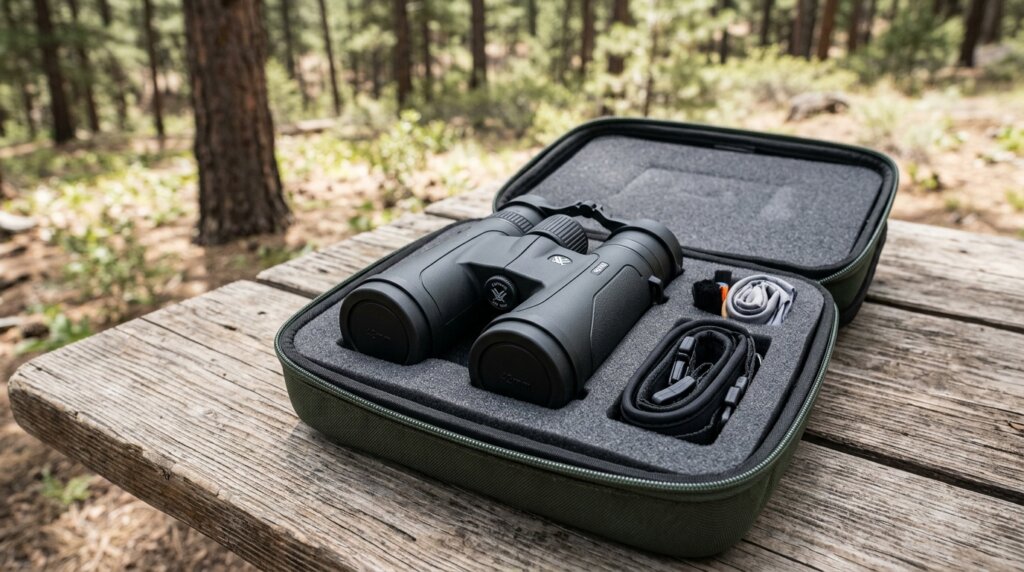
A backpack is not a binocular case.
That sounds obvious, but many scratches happen because binoculars are tossed into a bag with keys, snacks, camera gear, flashlights, chargers, or tools. Even if the glass is capped, pressure and movement can push grit into the lens area.
A padded binocular case gives the optics a dedicated space. It also protects the eyepieces, focus wheel, rubber armor, and lens covers.
For most users, a soft padded case is enough. For boating, travel, or rough vehicle storage, a semi-hard or waterproof case makes more sense.
Quick Case Comparison
| Case Type | Best For | Scratch Protection |
|---|---|---|
| Soft padded case | Birding, casual hiking, sports | Good |
| Semi-hard case | Travel, hunting, field kits | Better |
| Waterproof hard case | Boats, harsh weather, storage | Best |
| Drawstring pouch | Light indoor storage | Basic |
A case is not just for storage at home. It matters during the “in-between moments” — walking back to the car, packing after sunset, riding in a dusty truck, or stuffing gear into a suitcase.
For long-term care, pair this with the storage advice in how to store binoculars safely, especially if your binoculars sit unused for weeks or months.
Never Use Your Shirt to Clean Binocular Lenses
This is the classic mistake.
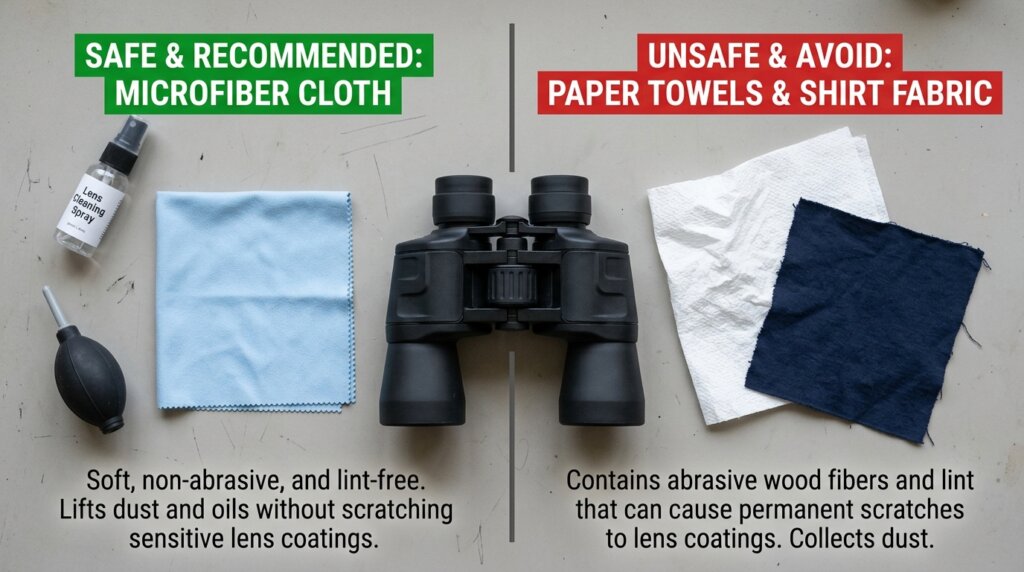
A cotton shirt looks soft, but it may hold dust, sweat, dirt, detergent residue, or tiny fibers. Same goes for hoodie sleeves, towels, napkins, and tissues. They might clean the lens in the moment, but they can also create fine scratches or coating marks.
The safest option is a clean microfiber lens cloth made for optics. Not a random microfiber towel from the kitchen. Not an old cloth that has been sitting in your glove box collecting grit.
Keep one cloth sealed in a small plastic pouch. Once it gets dirty, wash it or replace it.
Bad Cleaning Materials to Avoid
| Avoid This | Why |
|---|---|
| Shirt sleeve | May contain grit and sweat |
| Paper towel | Too rough for coated lenses |
| Facial tissue | Can leave fibers and scratches |
| Wet wipes | May contain chemicals |
| Household glass cleaner | Can damage lens coatings |
This is one of the biggest differences between people who keep binoculars clear for years and people who slowly ruin them.
Useful Tool: Vortex Optics Lens Cleaning Pen
One product that actually makes sense here is the Vortex Optics Lens Cleaning Pen.
It is small, easy to carry, and useful in the field. One side usually has a soft brush for removing dust and loose particles. The other side has a cleaning tip for smudges and fingerprints.
This type of tool is especially handy because it helps you follow the correct order: remove particles first, then clean the smudge.
Why It Makes Sense
| Feature | Benefit |
|---|---|
| Soft brush | Removes grit before wiping |
| Compact size | Easy to keep in a case or backpack |
| Lens-safe tip | Helps clean fingerprints properly |
| Good for field use | Better than using your sleeve |
Do you absolutely need this exact product? No. But a quality lens pen is one of the few binocular accessories that earns its place in the bag. It is practical, affordable, and directly helps with how to protect binocular lenses from scratches.
Clean in the Right Order
Cleaning binocular lenses is not hard, but order matters.
Start by removing loose particles. Use a blower bulb or a soft lens brush. Do not press down. Do not scrub. Get the grit off first.
Then use a lens-safe cleaning solution if there are fingerprints, oil spots, or dried marks. Apply cleaner to the cloth, not directly onto the lens. Wipe gently in small circular movements or from the center outward.
Finish with a dry section of microfiber if needed.
Simple Cleaning Order
| Step | Action |
|---|---|
| 1 | Inspect the lens in light |
| 2 | Blow off loose dust |
| 3 | Brush away remaining particles |
| 4 | Use lens cleaner only if needed |
| 5 | Wipe gently with clean microfiber |
| 6 | Replace lens caps |
The key is patience. Most damage happens when someone is in a hurry and wipes a dirty lens too aggressively.
Be Extra Careful Around Sand, Salt, and Dust
Beach trips, desert hikes, hunting fields, and dry trails are rough on binocular lenses.
Sand is the worst. It is tiny, hard, and easy to drag across glass. Salt spray is another problem because it can dry into a crusty layer that should not be rubbed off dry.
If your binoculars get sandy, do not wipe them immediately. Blow off as much as possible first. If there is salt or dried spray, lightly dampen a lens cloth with proper lens cleaning fluid and gently loosen the residue.
For waterproof binoculars, you may be able to rinse the exterior carefully, but always check your model’s rating. Water-resistant and waterproof are not the same thing.
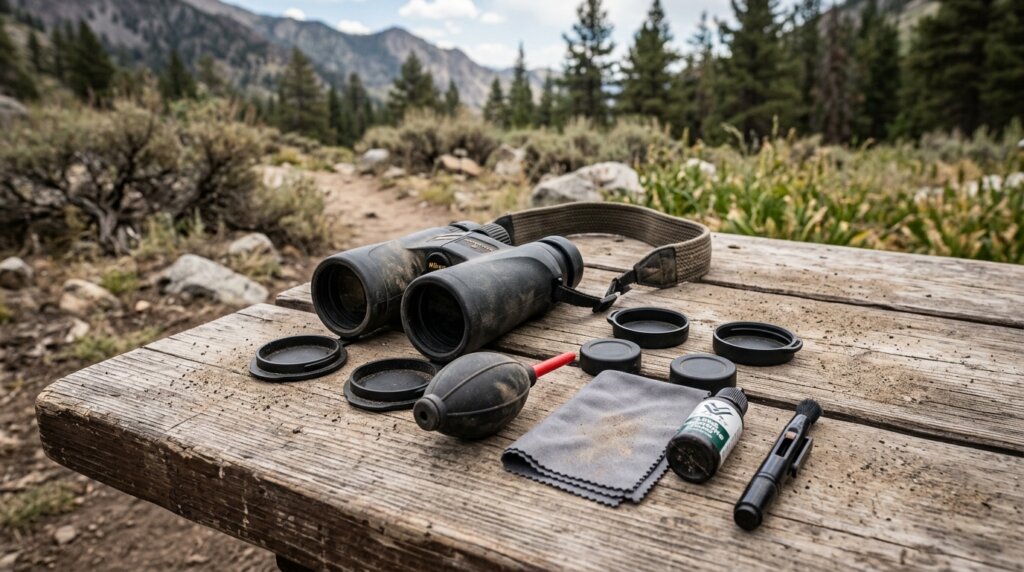
Use a Binocular Harness When Moving Around
A neck strap is fine for casual use. A harness is better for active use.
When binoculars swing around your neck, they hit zippers, buttons, trekking poles, backpack straps, and sometimes rocks or railings. Even if the lenses are capped, repeated bumping can loosen caps or push debris near the glass.
A binocular harness keeps the binoculars close to your chest. It reduces swinging and makes them easier to access.
Harness vs Neck Strap
| Feature | Neck Strap | Harness |
|---|---|---|
| Casual use | Good | Good |
| Hiking | Average | Better |
| Hunting | Average | Better |
| Long wear comfort | Can strain neck | More balanced |
| Scratch prevention | Basic | Better |
If you use binoculars while walking, climbing, boating, or moving through brush, a harness is a smart upgrade.
Do Not Store Binoculars With Dirty Lenses
Field dirt becomes worse during storage.
Dust, fingerprints, salt, and moisture can sit on the lens coatings for days or weeks. Over time, that can cause marks, haze, or coating damage. Before storing binoculars, do a quick inspection.
You do not need a full cleaning every time. Just make sure the lenses are dry, capped, and free from obvious grit.
Avoid storing binoculars in hot cars, damp basements, or dusty shelves without covers. Heat can affect rubber parts and adhesives. Moisture can encourage fungus inside optics. Dust increases the chance of scratches the next time you clean.
This is where safe storage becomes part of lens protection, not a separate topic.
Common Mistakes That Scratch Binocular Lenses
Most lens scratches come from habits people barely notice.
| Mistake | Better Habit |
|---|---|
| Wiping dust with a shirt | Blow or brush first |
| Leaving caps off in a bag | Cap lenses before packing |
| Using household cleaner | Use optics-safe cleaner |
| Cleaning too often | Clean only when needed |
| Storing binoculars loose | Use a padded case |
| Touching lenses with fingers | Hold binoculars by the body |
| Rubbing dried mud | Loosen debris first |
Over-cleaning is just as bad as neglect. A few specks of dust are not an emergency. Scrubbing the glass every time you see a mark is how coatings get damaged.
Real-World Use Cases
Bird Watching
Birders often move between shaded trails, open fields, and dusty paths. Lens caps help while walking, but a harness makes the bigger difference. Keep a lens pen in your vest or case for pollen and fingerprints.
Hunting
Hunting binoculars deal with dirt, moisture, brush, and quick movement. Use tethered caps, a chest harness, and a padded case. Avoid cleaning in the middle of wind or dust unless the view is badly affected.
Travel
Travel binoculars get scratched in bags more than outdoors. Keep them in a compact padded case and never pack them loose with chargers, keys, or camera gear.
Boating
Salt spray is the main enemy. Use waterproof binoculars if possible, keep caps on when not viewing, and clean salt residue carefully after use.
Stargazing
Stargazing binoculars usually avoid dirt but collect fingerprints and dew. Let them dry before capping and storing. Do not wipe fogged lenses aggressively in the dark.
Buyer Tips for Scratch Prevention Accessories
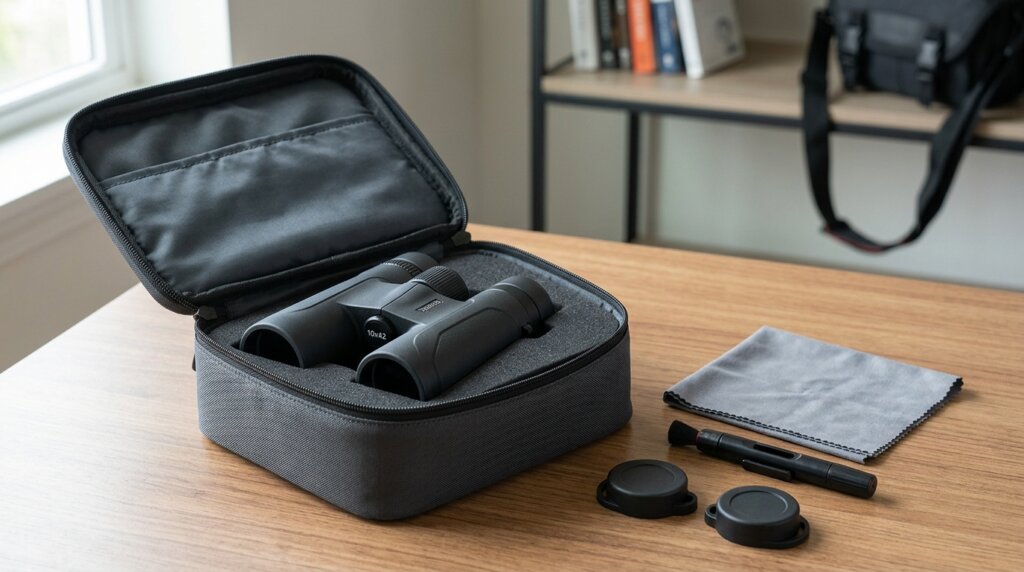
When buying accessories, do not chase the fanciest kit. Buy what you will actually use.
A good scratch-prevention setup should include:
| Accessory | Worth Buying? | Reason |
|---|---|---|
| Tethered lens caps | Yes | Daily protection |
| Microfiber lens cloth | Yes | Safe cleaning |
| Lens pen | Yes | Field-friendly cleaning |
| Blower bulb | Yes | Removes grit safely |
| Padded case | Yes | Prevents bag damage |
| Cheap cleaning sprays | Be careful | Not all are coating-safe |
| Random cloth bundles | Be careful | Quality varies |
The best accessories are boring but reliable. If they are easy to carry, you will use them. If they are bulky or annoying, they will stay at home.
Can Scratched Binocular Lenses Be Fixed?
Small surface marks usually cannot be fully removed at home. Polishing binocular lenses is risky because it can damage coatings or change the optical surface.
Some manufacturers may offer repair or replacement, depending on the brand and warranty. But for many budget binoculars, lens replacement may cost more than the binocular is worth.
That is why prevention matters. Once the coating is scratched, there is no magic cloth that restores it perfectly.
How Much Do Scratches Actually Affect the View?
Tiny scratches near the edge of the objective lens may not be obvious during normal use. Deep scratches, central marks, or coating damage can reduce contrast and create glare, especially in bright light.
Eyepiece scratches are often more annoying because your eye is close to that glass. A small mark near the eyepiece can feel more distracting than a small mark on the front objective lens.
So yes, binoculars can still work with minor scratches. But protecting the lenses keeps the view cleaner, the resale value higher, and the user experience better.
Final Thoughts: Protect the Lens Before You Need to Clean It
The best answer to how to protect binocular lenses from scratches is not constant cleaning. It is prevention.
Use caps. Keep binoculars in a case. Stop wiping lenses with clothing. Remove dust before touching the glass. Store them dry and covered. Carry a lens pen or microfiber cloth when you go outside.
That is the whole game.
If you want to build a complete care setup, start with the main guide on how to protect binoculars, then check the supporting posts on do binoculars need lens covers and how to store binoculars safely. For more practical buying and care advice, visit the binocular blog page or the Best Binocular home page.
FAQs About How to Protect Binocular Lenses From Scratches
What is the best way to protect binocular lenses from scratches?
The best way is to keep lens caps on when binoculars are not in use, store them in a padded case, and clean the lenses only after removing dust or grit with a blower or soft brush.
Can I clean binocular lenses with my shirt?
No. A shirt can hold dust, sweat, and tiny debris that may scratch lens coatings. Use a clean microfiber lens cloth made for optics instead.
Do binocular lens caps really prevent scratches?
Yes. Lens caps protect the glass from dust, grit, bag contact, fingerprints, and accidental rubbing. Tethered lens caps are better because they are harder to lose.
Is a lens pen safe for binocular lenses?
A quality lens pen is safe when used correctly. Use the brush side first to remove particles, then use the cleaning tip for smudges. Never press hard or use it on muddy lenses.
Should I clean binocular lenses after every use?
Not always. Clean them only when dirt, oil, fingerprints, or residue affects visibility. Over-cleaning can wear coatings faster, especially if done carelessly.
What should I do if sand gets on my binocular lenses?
Do not wipe it. Blow off loose sand first, then use a soft lens brush. Only after the particles are removed should you use a microfiber cloth or lens cleaner.
Can scratches on binocular lenses be repaired?
Most scratches cannot be fully repaired at home. Deep scratches or coating damage may require professional service, but prevention is usually cheaper and safer.
Are waterproof binoculars more scratch-resistant?
Not necessarily. Waterproofing protects against moisture, not scratches. You still need lens caps, safe cleaning habits, and proper storage.
What cleaning cloth is best for binocular lenses?
A clean microfiber cloth designed for camera lenses, eyeglasses, or optics is best. Keep it sealed when not in use so it does not collect grit.
How do I protect binocular lenses during travel?
Use lens caps, pack binoculars in a padded case, and keep them away from keys, chargers, tools, and loose camera accessories. Never throw them uncovered into a backpack.




