
How to Store Binoculars Properly Without Damaging Them
Binoculars are tougher than they look, but they are not “throw them in a drawer and forget them” gear. The glass, lens coatings, hinge, focus wheel, eyecups, prisms, and rubber armor all need the right storage conditions if you want your binoculars to stay sharp for years.
The safest way to store binoculars is simple: clean off dust and moisture, keep the lens caps on, place them in a padded case, store them in a dry room-temperature spot, and avoid pressure on the lenses or focus mechanism.
That sounds easy, but small mistakes cause most long-term damage.
A little humidity can invite fungus. One uncovered lens can pick up scratches. A binocular left in a hot car can suffer from rubber breakdown or internal fogging. A cheap soft pouch tossed into a backpack can protect from dust, but not from impact.
If you already read our main article on how to protect binoculars, think of this as the storage-focused part of that same protection routine. Good storage is not fancy. It is about removing the things binoculars hate: moisture, dust, heat, pressure, and careless handling.
Why Safe Binocular Storage Matters More Than Most People Think
Most binocular damage does not happen during one dramatic accident.
It happens slowly.
A small grain of sand rubs against the objective lens. Moisture sits inside the case after a rainy hike. The focus wheel gets compressed in a tight drawer. The neck strap bends around the eyecups for months. The binoculars stay in a garage where temperature changes are brutal.
Then one day, the view looks hazy, the focus feels stiff, or the lenses show tiny scratches under light.
That is why learning how to store binoculars safely is worth it even if you only use your binoculars a few times a month. Bird watchers, hunters, hikers, stargazers, sports fans, and casual backyard users all deal with the same problem: binoculars spend more time being stored than being used.
What Unsafe Storage Can Damage
Poor storage can affect:
| Binocular Part | What Can Go Wrong | Common Cause |
|---|---|---|
| Objective lenses | Scratches, dust marks, coating wear | No lens caps, dirty pouch |
| Eyepieces | Oil buildup, dust, rubber cracking | Stored uncovered or compressed |
| Internal prisms | Misalignment or fogging | Impact, humidity, heat |
| Focus wheel | Stiff or loose movement | Pressure, dirt, temperature swings |
| Rubber armor | Sticky texture, cracking | Heat, sunlight, damp storage |
| Neck strap | Mold, odor, weak stitching | Stored wet or twisted |
The real issue is not just cosmetic damage. Bad storage can reduce image sharpness, contrast, and comfort. Once coatings are scratched or fungus grows inside the optics, repair can cost more than the binoculars are worth.
The Best Way to Store Binoculars Safely at Home
For everyday home storage, the goal is boring but effective: dry, padded, covered, and easy to access.
Here is the storage routine I trust most:
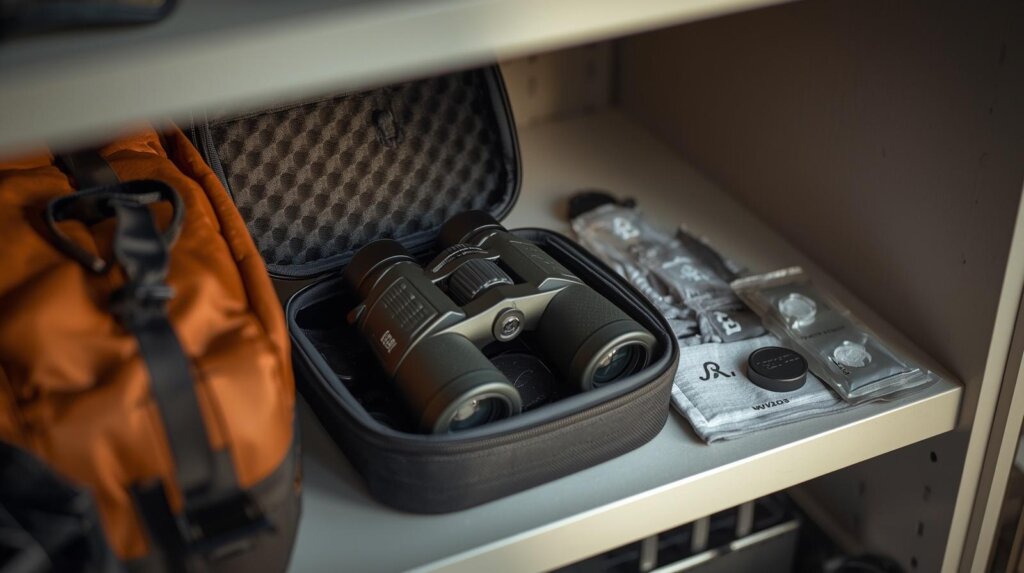
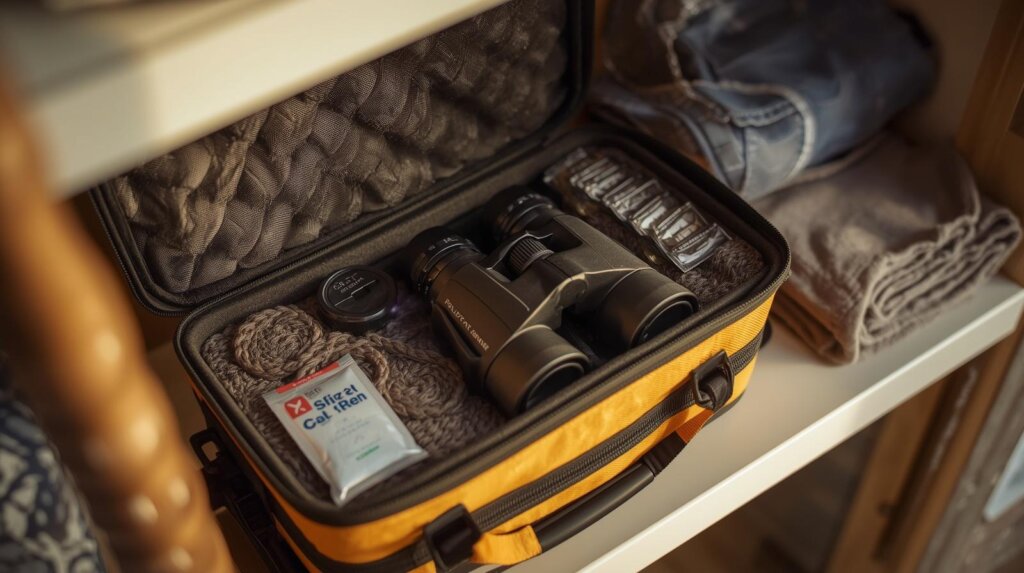
Clean loose dust first. Let the binoculars dry fully if they were used outdoors. Put on both objective lens caps and eyepiece covers. Fold the eyecups down only if that is how they fit naturally in the case. Place the binoculars inside a padded case without forcing the hinge or strap. Add a silica gel packet if your room gets humid. Store the case on a shelf, drawer, or cabinet away from heat and direct sunlight.
That is it.
No overthinking. No special display box needed. Just a controlled place where the binoculars are not getting knocked around.
Best Home Storage Spots
Good places to store binoculars include:
| Storage Spot | Good Choice? | Why |
|---|---|---|
| Bedroom drawer | Yes | Stable temperature and low dust |
| Closet shelf | Yes | Protected from sunlight and bumps |
| Office cabinet | Yes | Easy access and usually dry |
| Garage shelf | Usually no | Heat, cold, humidity, and dust |
| Car glove box | No | Heat and vibration are rough on optics |
| Damp basement | No | Fungus and moisture risk |
| Open display shelf | Maybe | Looks nice but collects dust |
A closet shelf is often the sweet spot. It keeps your binoculars accessible but protected. If you use them weekly, do not bury them under heavy gear. Safe storage should be easy enough that you actually do it.
Should You Store Binoculars in a Case?
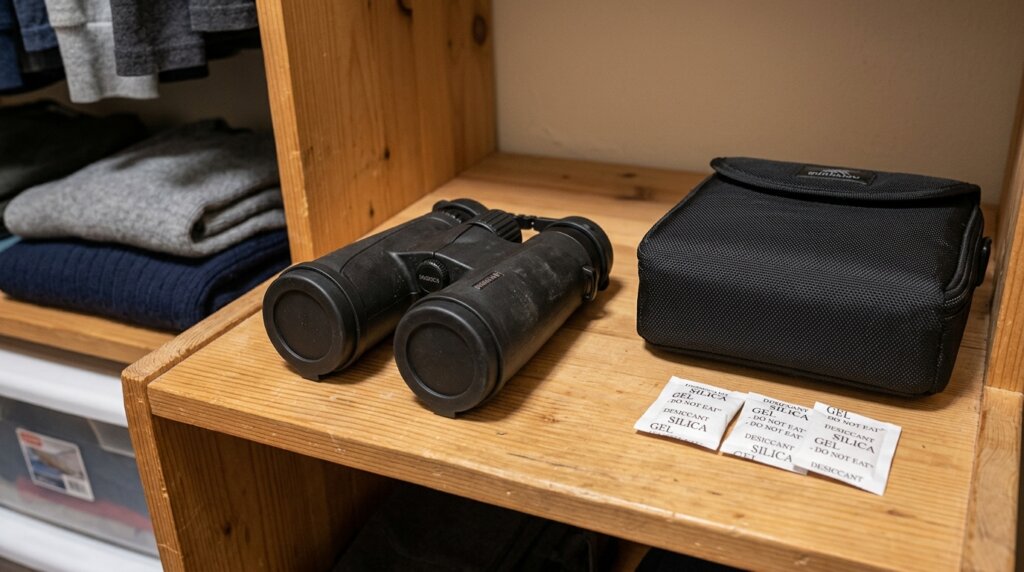
Yes, most binoculars should be stored in a case when not in use.
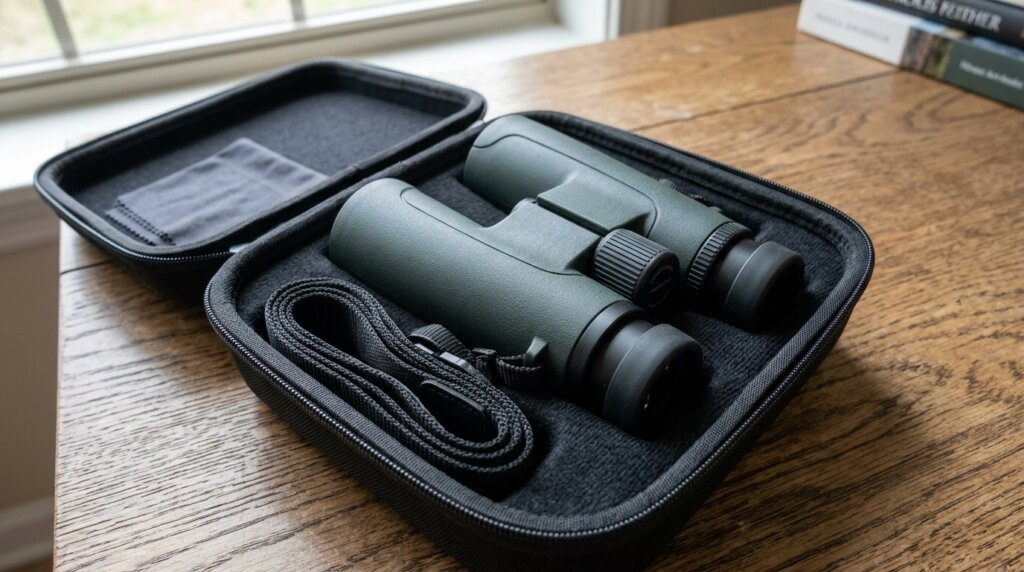
A case protects against dust, scratches, accidental bumps, and pressure from other items. But the type of case matters. A thin fabric pouch is better than nothing, but it is not enough for expensive binoculars or rough travel.
Soft Case vs Hard Case for Binocular Storage
| Case Type | Best For | Pros | Cons |
|---|---|---|---|
| Soft padded case | Daily home use, car-to-field carry | Lightweight, easy to pack, affordable | Less impact protection |
| Semi-rigid case | Hiking, travel, regular outdoor use | Better shape protection, still portable | Bulkier than soft cases |
| Hard case with foam | Long-term storage, expensive binoculars, rough trips | Best impact protection, protects alignment | Heavier, takes more space |
| Binocular harness pouch | Field use, quick access | Great while moving outdoors | Not ideal for long-term storage |
For most users, a padded soft case is fine at home. But if your binoculars cost serious money or you travel often, a hard case is worth it.
Best Case Option for Long-Term Storage
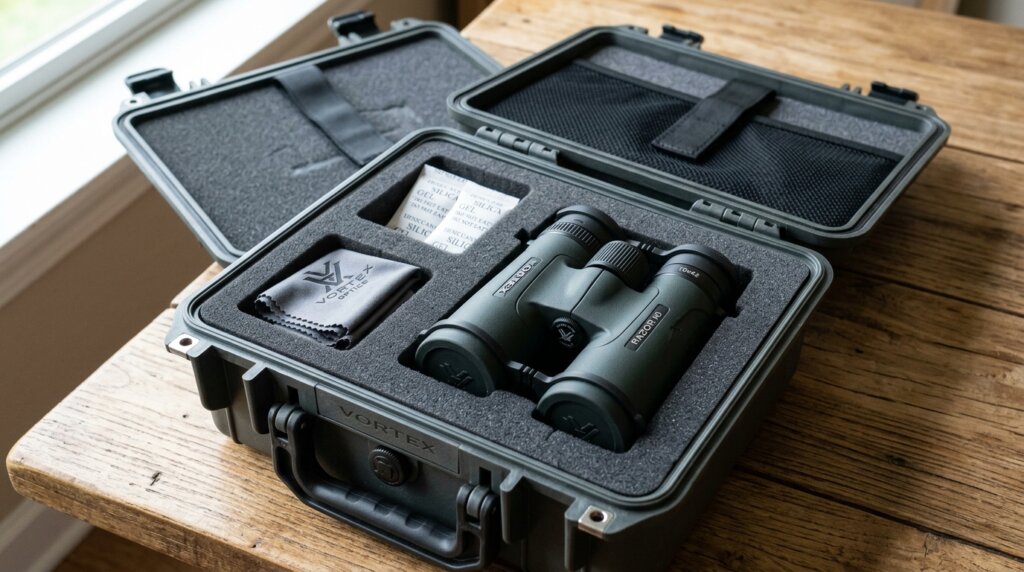
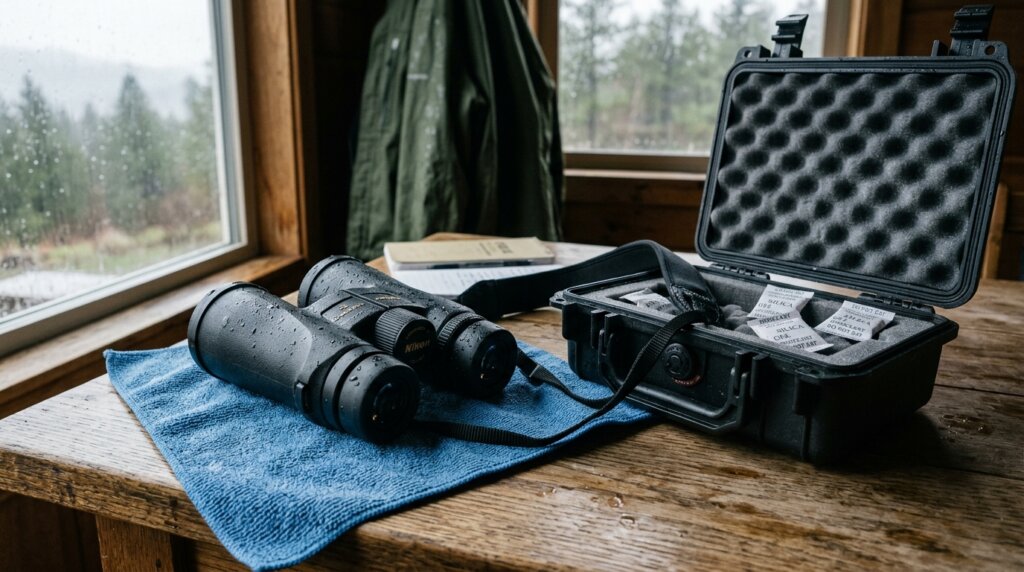
A Pelican 1200-style hard protective case with customizable foam is one of the most practical storage upgrades for binoculars. It makes sense if you own mid-range or premium binoculars and want stronger protection than the basic pouch that came in the box.
Why it works:
It has a rigid outer shell, foam padding that can be shaped around your binoculars, and enough room for small accessories like a microfiber cloth, rain guard, lens caps, and silica gel packets.
Is it overkill for cheap compact binoculars? Maybe.
But for larger 10×42, 12×50, marine binoculars, astronomy binoculars, or any pair you actually care about, a hard foam case gives peace of mind. This is especially useful if your binoculars are stored with other gear or taken on road trips.
Never Store Binoculars Wet
This is where many people mess up.
You finish hiking, bird watching, boating, or watching a game in light rain. The binoculars look fine. You wipe the outside quickly, put them back in the case, and forget about them.
Bad move.
A closed case can trap moisture. If the binoculars stay damp inside, you may get musty smells, mildew on the strap, cloudy lenses, or even internal fungus over time.
What to Do After Rain, Fog, or Humid Use
Before storing binoculars safely after wet use:
- Remove them from the case.
- Wipe the exterior with a clean dry cloth.
- Leave lens caps off for a short drying period in a safe indoor space.
- Let the case dry separately if it is damp.
- Once everything is dry, cap the lenses and store them again.
Do not use direct heat. No hair dryer. No heater vent. No leaving them under strong sun. Fast heat changes can be harder on binoculars than the moisture itself.
For trail use, you may also want to read how to protect binoculars while hiking because storage habits start before you even get home. A wet binocular bouncing around in a backpack is already halfway to trouble.
Use Silica Gel Packets, But Do Not Treat Them Like Magic
Silica gel packets are cheap and useful. Add one or two inside your binocular case if you live in a humid area or store binoculars in a closet that gets slightly damp.
But silica gel does not fix bad storage.
If your binoculars are wet, a tiny packet will not save them. If your case is soaked, silica gel will not magically dry it overnight. If your room has heavy moisture problems, you need a better storage location.
Best Use of Silica Gel for Binoculars
Use silica gel when:
- You live in a humid climate.
- Your binoculars are stored for weeks at a time.
- You use binoculars near water.
- Your closet or storage room gets mild moisture.
- You travel with optics in a closed case.
Replace or recharge the packets when needed. Some silica packets change color when saturated, which makes life easier.
Silica gel is one of the cheapest binocular protection accessories that actually makes sense. It is not exciting, but it works when used properly. For more add-ons that are actually useful, check our article on binocular protection accessories.
Keep Lens Caps On, But Store Clean First
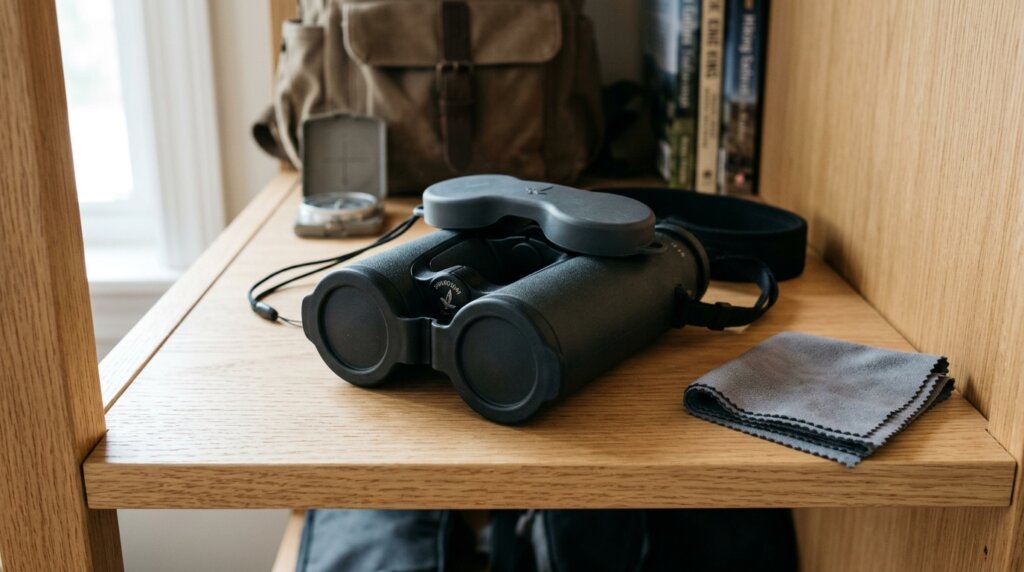
Lens caps protect binocular lenses from dust and scratches. Use them.
But do not trap dirt under them.
If the lenses are dusty, sandy, or oily, putting caps on and then moving the binoculars around can press debris against the glass. That can create tiny scratches, especially on coated lenses.
Safe Lens Storage Habit
Before capping the lenses:
- Use an air blower to remove loose dust.
- Lightly brush away particles with a lens brush.
- Use a microfiber cloth only after grit is gone.
- Avoid shirt sleeves, tissues, and paper towels.
A microfiber cloth is useful, but it can also become a scratch tool if it is dirty. Keep one clean cloth in the case and wash or replace it when it picks up dust.
Do Not Store Binoculars in a Hot Car
A car is one of the worst long-term storage places for binoculars.
Heat builds up fast inside vehicles. That heat can affect rubber armor, adhesives, internal lubrication, and seals. Even if the binoculars survive, the repeated hot-cold cycle is not doing them any favors.
Leaving binoculars in a car for a short drive is normal. Storing them there for days is not.
Real-World Example
Let’s say you keep binoculars in your car because you like stopping at scenic overlooks or checking wildlife from the roadside. Convenient? Yes. Smart long-term storage? Not really.
A better setup is to keep a compact binocular case near your door at home. When you head out, grab it. When you return, bring it inside. That tiny habit can add years to your binoculars.
Avoid Pressure on the Focus Wheel and Eyecups
Binoculars should not be squeezed into tight spaces.
Pressure on the focus wheel can make it feel uneven over time. Eyecups can bend, crack, or lose their shape if pressed down inside a crowded bag. The hinge can also loosen if heavy gear sits on top of the binoculars.
Storage Position: Flat or Upright?
Both can work, but I prefer storing binoculars flat inside a case with foam or padding underneath. The main point is to avoid pressure points.
Do not store binoculars:
- Under books
- Under camera gear
- At the bottom of a backpack
- Wedged inside a tight drawer
- Hanging by the strap for months
- With the strap wrapped tightly around the eyecups
If the case bulges when closed, it is too tight.
Long-Term Binocular Storage: What to Do Before Putting Them Away for Months
If you only use binoculars during hunting season, travel, sports events, or summer hiking, you need a slightly better storage routine.
Long-term storage is not about hiding binoculars somewhere. It is about making sure they come out in the same condition months later.
Long-Term Storage Checklist
Before storing binoculars for months:
| Step | Why It Matters |
|---|---|
| Clean the exterior | Removes sweat, dust, and dirt |
| Dry completely | Prevents moisture buildup |
| Clean lenses carefully | Stops oil or dust from sitting long-term |
| Cap all lenses | Protects coatings from dust |
| Loosen strap tension | Prevents bent eyecups or strap stress |
| Add silica gel | Helps control humidity |
| Store in padded case | Reduces impact and dust exposure |
| Choose indoor location | Avoids heat, cold, and damp conditions |
Check them every couple of months if you live in a humid place. Open the case, inspect for odor or moisture, and make sure the focus wheel still moves smoothly.
Should Binoculars Be Stored With Lens Caps On or Off?
For normal storage, lens caps should be on.
The only time I leave caps off briefly is after wet use, when the binoculars need to dry in a clean indoor area. Once dry, caps go back on.
Lens Caps On: Pros and Cons
| Lens Caps On | Lens Caps Off |
|---|---|
| Protects lenses from dust | Allows faster drying after moisture exposure |
| Reduces scratch risk | Avoids trapping moisture briefly |
| Safer inside cases | Useful only in clean drying conditions |
| Best for long-term storage | Bad for dusty shelves or drawers |
Best answer: dry first, then cap.
Common Mistakes When Storing Binoculars
Even careful users make these mistakes.
Mistake 1: Storing Binoculars Right After Rain
This is the big one. Always dry first.
Mistake 2: Using the Original Thin Pouch Forever
Many binoculars come with basic cases. Some are fine. Some are barely better than a dust bag. If your binoculars move around inside the pouch, upgrade.
Mistake 3: Keeping Them Near a Window
Sunlight and heat can damage rubber, coatings, and adhesives over time. A window shelf looks convenient but is not ideal.
Mistake 4: Leaving the Strap Damp
Neck straps absorb sweat, rain, and outdoor moisture. Let the strap dry before storing it in a closed case.
Mistake 5: Overcleaning Before Storage
This sounds weird, but too much lens wiping can create scratches. Blow dust away first. Wipe only when needed.
Mistake 6: Storing With Loose Accessories
Lens pens, keys, adapters, tripod screws, or metal clips can scratch binoculars if they move around in the case. Keep accessories in a separate pocket.
Safe Storage Based on Your Use Case
Different users need different storage setups. A casual backyard user does not need the same case as someone carrying binoculars through rain, dust, and mountain trails.
For Bird Watching
Use a padded case, lens caps, microfiber cloth, and silica gel. Bird watchers often deal with early morning dew, so drying before storage matters a lot.
For Hiking
A semi-rigid case or harness pouch works better than a loose soft bag. You want impact protection and quick access. Read our full article on how to protect binoculars while hiking if your binoculars spend time on trails.
For Hunting
Choose a quiet case or harness system for field use, then switch to a dry hard case for home storage. Keep scent, mud, and moisture away from the storage area.
For Marine Use
Moisture control is everything. Even waterproof binoculars should be rinsed carefully if exposed to salt spray, dried fully, and stored with silica gel.
For Astronomy Binoculars
Large binoculars need more space and stronger case support. Do not let heavy 15×70 or 20×80 binoculars sit under pressure. A hard case with foam is usually the smarter move.
Buyer Tips: What to Look for in a Binocular Storage Case
If you are buying a storage case, do not only look at size. Look at how the case handles impact, moisture, and daily use.
Features Worth Paying For
- Padded interior
- Secure zipper or latch
- Room for lens caps and cloth
- Water-resistant exterior
- Separate accessory pocket
- Foam insert for expensive binoculars
- No rough seams touching the lenses
- Case shape that does not press the eyecups
Features You Can Skip
You do not always need luxury leather, oversized branding, or bulky tactical styling. Protection matters more than looks.
A plain padded case that fits correctly is better than an expensive-looking case that crushes the eyecups.
Simple Storage Setup I Recommend
For most people, this setup is enough:
| Item | Purpose |
|---|---|
| Padded binocular case | Main protection |
| Lens caps and rain guard | Keeps glass covered |
| Clean microfiber cloth | Safe lens cleaning |
| Small air blower | Removes dust before wiping |
| Silica gel packet | Controls moisture |
| Small accessory pouch | Keeps sharp items away |
This setup is affordable, practical, and not overbuilt.
For more practical optics care content, visit the Best Binocular homepage or browse our latest binocular care ideas on the blog page.
Final Thoughts on How to Store Binoculars Safely
The best way to store binoculars safely is not complicated.
Keep them dry. Keep them clean. Keep the lenses capped. Use a padded case. Avoid heat, damp rooms, tight drawers, and loose gear pressing against them.
That routine protects the parts that matter most: the lens coatings, prisms, focus wheel, rubber armor, and alignment. You do not need a museum-level storage system. You just need to stop treating binoculars like ordinary plastic gear.
Most binocular owners do not need more cleaning products. They need better storage habits.
A decent case, a dry indoor shelf, and a few silica gel packets will do more for long-term binocular protection than constantly wiping the lenses or buying random accessories. Store them right, and your binoculars will stay clearer, smoother, and more reliable every time you pick them up.
FAQs About How to Store Binoculars Safely
What is the safest way to store binoculars?
The safest way to store binoculars is to clean and dry them first, put the lens caps on, place them in a padded case, and keep them in a dry indoor location away from heat, sunlight, and moisture.
Should binoculars be stored in their case?
Yes, binoculars should usually be stored in their case. A case protects them from dust, scratches, accidental bumps, and pressure from other items. For expensive binoculars, a hard case with foam offers better protection.
Can I store binoculars in a garage?
A garage is not ideal for binocular storage because temperatures and humidity can change quickly. Heat, cold, dust, and damp air can damage rubber armor, seals, and internal optics over time.
Should I leave lens caps on when storing binoculars?
Yes, keep lens caps on when storing binoculars after they are fully dry. If the binoculars are wet or damp, let them air dry indoors first, then replace the caps before putting them in the case.
How do I prevent fungus in binoculars?
To prevent fungus, store binoculars in a dry place, avoid putting them away wet, use silica gel packets in the case, and keep them away from damp basements, humid closets, and long-term sealed moisture.
Is it okay to store binoculars in a car?
Storing binoculars in a car is not recommended for long periods. Heat, vibration, and temperature swings can affect rubber parts, seals, focus movement, and internal alignment.
Do waterproof binoculars still need careful storage?
Yes. Waterproof binoculars are better protected against moisture, but they still need to be dried before storage. Waterproof does not mean fungus-proof, heat-proof, or scratch-proof.
What kind of case is best for binocular storage?
A padded soft case is good for normal home storage, while a hard case with foam is better for expensive binoculars, travel, rough handling, and long-term storage.
How often should I check stored binoculars?
If binoculars are stored for months, check them every few months. Look for moisture, odor, lens haze, sticky rubber, or stiff focus movement, especially if you live in a humid area.
Can silica gel packets damage binoculars?
Silica gel packets are safe when kept sealed and placed inside the case away from direct contact with lenses. They help reduce moisture but should not replace proper drying and safe indoor storage.




