
Why a Compact Binocular Case Matters
A compact binocular case sounds simple until you actually need one.
You buy a small pair of binoculars for travel, hiking, concerts, stadium seats, birding walks, or keeping in the car. Then the original case turns out to be thin, loose, bulky, or just annoying to carry. Some cases are so oversized that your compact binoculars bounce around inside. Others are so tight that you have to fight the zipper every time you want to use them.
That is where the right compact binocular case makes a real difference. It should protect your optics without turning a small binocular setup into a bulky bag situation. The best compact case keeps your binoculars safe, quick to access, and easy to carry when space matters.
A good case is not just about storage. It affects how often you actually bring your binoculars with you.
What Is a Compact Binocular Case?
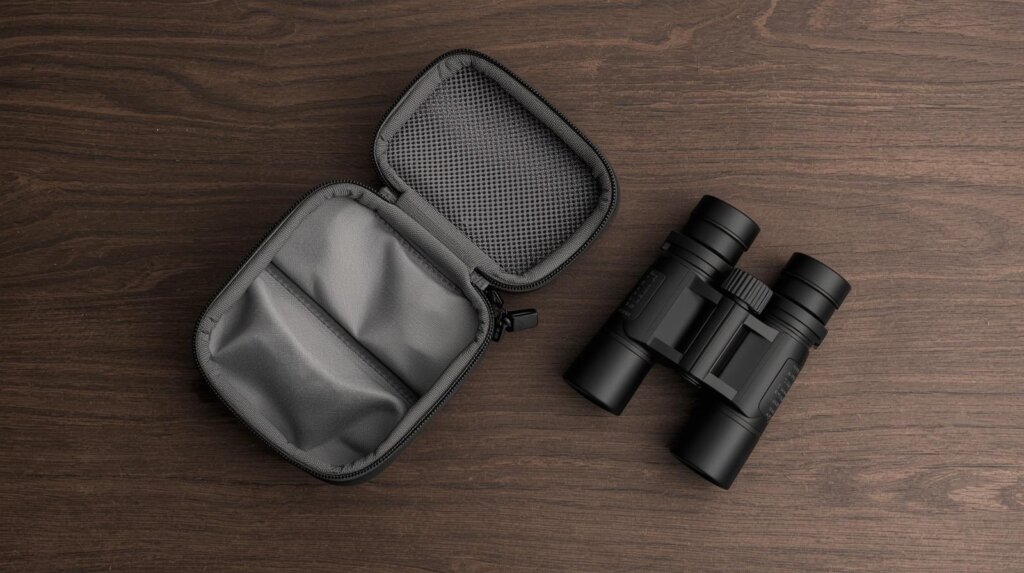
A compact binocular case is a small protective storage case designed for lightweight binoculars, usually in sizes like 8×21, 10×25, 8×32, or similar travel-friendly models.
Unlike large field cases, compact cases focus on portability. They are made to fit inside a backpack, sling bag, glove box, suitcase, or jacket pocket without wasting space.
The right case should do three things well:
It should hold the binoculars securely.
It should protect against scratches, light bumps, dust, and daily handling.
It should stay small enough that you do not leave it at home.
That last point matters more than people think. A bulky case defeats the purpose of buying compact binoculars in the first place.
If you are building a full optics storage setup, start with our main best binocular case page first. It covers larger cases, hard cases, waterproof options, and field-ready protection. This article focuses only on the smaller, everyday-carry side.
Who Actually Needs a Compact Binocular Case?
A compact binocular case is best for people who want protection without carrying extra weight.
It makes the most sense for:
- Travelers who pack light
- Hikers who use small daypacks
- Concert or stadium visitors
- Casual bird watchers
- People keeping binoculars in a car
- Kids’ binoculars or beginner models
- Cruise, safari, and sightseeing trips
- Anyone using pocket binoculars
Here is the honest truth: if your binoculars are expensive, full-size, or used in harsh outdoor conditions, a compact case may not be enough. You may want a stronger protective option like a padded binocular case for protection, especially if your gear gets knocked around in bags or stored with heavier items.
But for lightweight binoculars, a compact case is often the sweet spot. Small, simple, and easy to carry.
Why the Case That Came With Your Binoculars Is Often Not Enough
Many compact binoculars come with a basic pouch. Sometimes it is fine. Often, it is not.
The included case may have thin fabric, weak stitching, loose sizing, or no real padding. It may protect from dust, but not from a drop, pressure inside a backpack, or scratches from keys and other gear.
Many small binoculars come with cases that feel more like a sunglasses pouch than proper optics protection.
A better compact binocular case gives you a stronger shell, smoother zipper, better fit, and more reliable protection while still keeping the whole setup small.
Soft Case vs Hard-Shell Compact Binocular Case
This is the first buying decision most people get stuck on.
Soft Compact Binocular Case
A soft compact binocular case is usually made from nylon, polyester, neoprene, canvas, or padded fabric. It is flexible and lightweight.
Pros:
Easy to pack
Usually lighter
Often cheaper
Can fit slightly different binocular shapes
Comfortable to carry
Cons:
Less crush protection
Can absorb moisture
May flatten inside a crowded bag
Often has weaker structure
A soft case works well for short walks, car storage, indoor events, and casual travel. It is also a good choice if you want something that folds or compresses when empty.
Hard-Shell Compact Binocular Case
A hard-shell compact binocular case is usually made from EVA, molded plastic, or semi-rigid material. It holds its shape and gives better impact resistance.
Pros:
Better protection from bumps
Keeps binoculars from getting crushed
Usually has a cleaner fit
Good for travel bags and backpacks
Feels more secure
Cons:
Less flexible
Can take more space
May not fit odd-shaped binoculars
Usually costs a little more
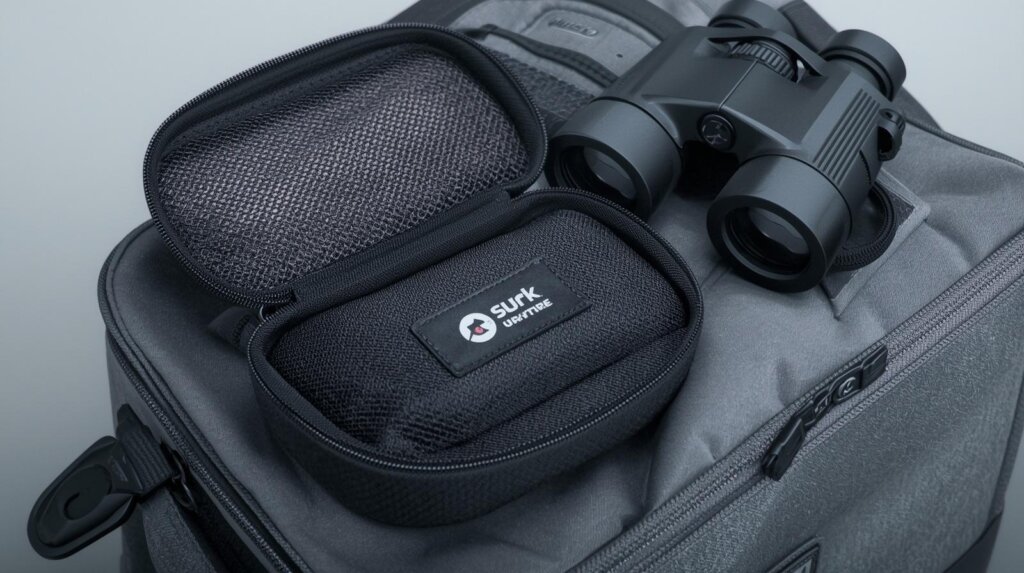
For most people, a semi-hard EVA case is the best balance. It is not as bulky as a heavy-duty hard case, but it gives more confidence than a thin pouch.
Compact Binocular Case Comparison Table
| Case Type | Best For | Protection Level | Portability | Main Drawback |
|---|---|---|---|---|
| Soft pouch case | Light indoor or casual use | Low to medium | Excellent | Limited bump protection |
| Padded compact case | Day trips and regular carry | Medium | Very good | May not be waterproof |
| EVA hard-shell case | Travel, backpack storage, car storage | Medium to high | Good | Less flexible fit |
| Universal compact case | Multiple small binocular models | Medium | Good | Fit may not be exact |
| Waterproof compact case | Rain, boating, wet hikes | High against moisture | Moderate | Usually bulkier |
If you own more than one pair of binoculars, a universal binocular case can be a smarter buy because it gives you more sizing flexibility instead of locking you into one exact model.
What Size Compact Binocular Case Should You Buy?
Do not guess the size. That is the fastest way to buy the wrong case.
Measure your binoculars first:
- Length from eyepiece to objective lens
- Width across both barrels
- Depth from front to back
- Extra space needed for lens caps or folded eyecups
A good compact binocular case should leave a little room, but not too much. If the case is too tight, the zipper will press against the binoculars. If it is too loose, the binoculars will slide around and hit the sides.
A snug fit is better than a roomy fit, but only if the zipper closes smoothly.
For compact binoculars, look for a case that has enough space for the binoculars plus a cleaning cloth. If you use a neck strap attached to the binoculars, make sure the case can close without forcing the strap into the hinge area.
That small detail matters. A badly packed strap can press against the focus wheel or eyecups.
Best Materials for a Compact Binocular Case
Material decides how the case feels, protects, and lasts.
EVA Foam
EVA is one of the best materials for a compact binocular case. It is lightweight, semi-rigid, and resistant to minor bumps. Many compact hard-shell cases use EVA because it protects without becoming heavy.
Nylon or Polyester
These are common in soft cases. They are light and easy to clean. Better versions include padding and water-resistant coating.
Neoprene
Neoprene is flexible and soft. It is good for scratch protection and light carrying, but it is not the best choice if your binoculars are packed with heavier gear.
Faux Leather or Leather-Style Cases
These look nice and work well for casual use, but they are not always the most practical for rain, hiking, or rough travel.
Inner Lining
Do not ignore the inside of the case. A soft microfiber or felt-like lining helps prevent scratches on the lens housing and body. Rough interiors are a bad sign.
The One Compact Binocular Case Style I’d Actually Recommend
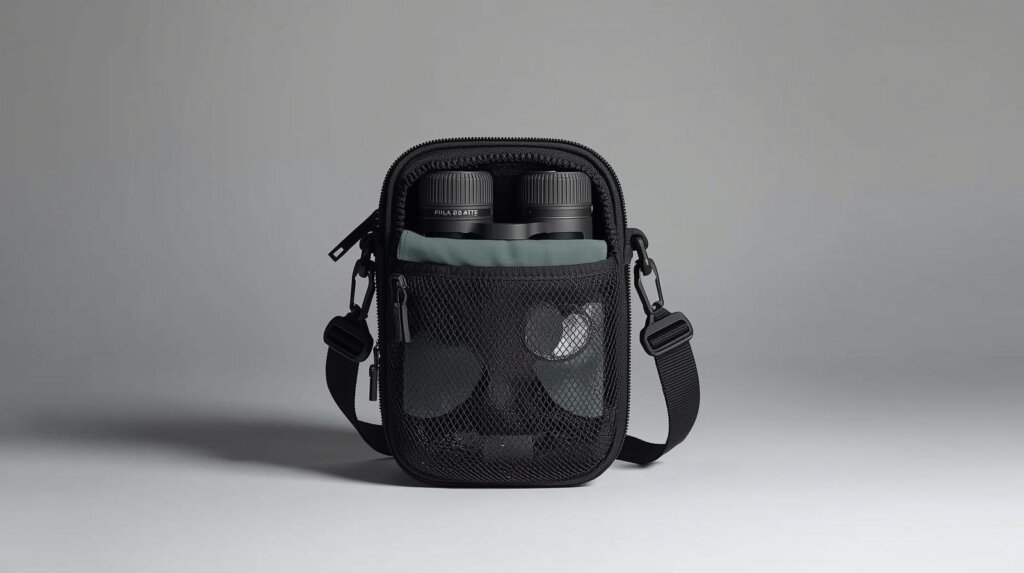
For most users, the best choice is a compact EVA hard-shell binocular case with an adjustable strap, soft inner lining, and zipper closure.
That style gives you the most useful mix of protection and portability. It is small enough for travel but strong enough to protect compact binoculars inside a backpack, suitcase, or car compartment.
Look for these features:
- Semi-hard EVA shell
- Smooth zipper
- Soft lining
- Light padding
- Small mesh pocket
- Adjustable shoulder or wrist strap
- Correct internal dimensions
- Water-resistant outer surface
This is the type of product that works for most compact binocular users without being overkill. It is especially good if you carry binoculars for sightseeing, hiking, road trips, sports events, or casual wildlife viewing.
I would not choose a super-thin drawstring pouch unless the binoculars are very cheap or only used at home.
Real-World Use Cases for a Compact Binocular Case
Travel and Sightseeing
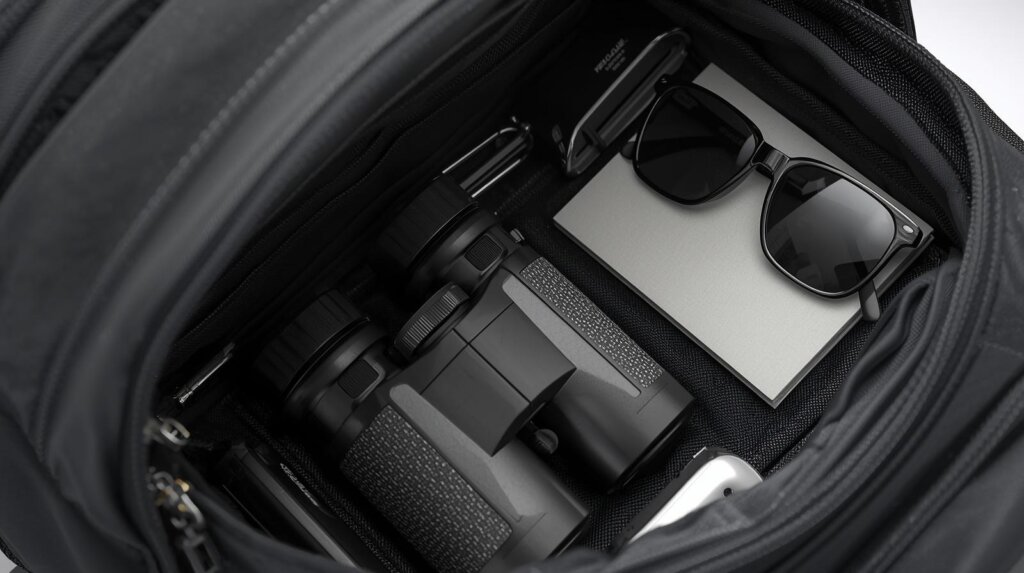
When traveling, space is always tight. A compact binocular case lets you pack small binoculars without worrying about scratches from chargers, keys, sunglasses, or camera accessories.
For city viewpoints, cruises, mountain drives, and national park stops, a compact case keeps binoculars ready without adding another bulky bag.
Hiking and Day Walks
On short hikes, you do not want a heavy optics case swinging around. A compact binocular case with a belt loop or strap works better because it stays close to your body and does not take over your backpack.
Just make sure the case has enough padding if your trail is rocky or crowded.
Stadiums and Concerts
For events, compact binoculars are usually small enough to carry, but the case matters because security checks and tight seating can be annoying. A slim case is easier to pass through bag checks and easier to store under a seat.
A quiet zipper is also better than noisy Velcro in seated areas.
Car Storage
Keeping binoculars in the car is common, especially for road trips, scenic drives, or quick outdoor stops. A compact binocular case protects them from dust and random items in the glove box.
Do not leave optics in direct heat for long periods, though. A case helps with protection, but it does not make binoculars heat-proof.
Kids and Beginner Binoculars
A compact case is useful for kids’ binoculars because it encourages better storage habits. A small hard-shell case can prevent cracked plastic, scratched lenses, and lost accessories.
Choose something easy to open and not too tight.
Why People Choose the Wrong Compact Binocular Case
Most buyers make one of two mistakes.
They either buy the cheapest pouch because “it is only a case,” or they buy a case that is too large because they think extra space means extra protection.
Both can backfire.
A cheap case may not protect the binoculars when it matters. An oversized case can let the binoculars move around inside, which can cause scuffs, pressure on the eyecups, or damage during travel.
The best compact binocular case feels boring in the right way. It fits well, opens easily, protects the binoculars, and disappears into your bag.
No drama. No wasted space.
Common Mistakes to Avoid
Buying Without Measuring
Model numbers do not always tell the full size. Two 10×25 binoculars can have different body shapes. Always check dimensions.
Ignoring Strap Space
If your binocular strap stays attached, the case needs room for it. Otherwise, closing the zipper becomes annoying fast.
Choosing Looks Over Protection
A stylish case is fine, but not if it has weak padding or a rough interior.
Buying Too Much Case
A heavy case for tiny compact binoculars ruins portability. Match the case to the use.
Forgetting Weather Conditions
If you hike, travel near water, or live in a rainy area, water resistance matters. A basic fabric pouch may not be enough.
Compact Binocular Case Pros and Cons
Pros
- Easy to carry
- Protects against scratches and dust
- Better than most factory pouches
- Good for travel and everyday use
- Keeps small binoculars organized
- Can fit inside bags, cars, and luggage
- Usually affordable
Cons
- Not always enough for full-size binoculars
- Some cases are too tight for attached straps
- Soft cases offer limited impact protection
- Water-resistant does not always mean waterproof
- Universal sizing can be hit or miss
Compact Case vs Full-Size Binocular Case
A compact case is not supposed to replace every binocular case. It has a specific job.
| Feature | Compact Binocular Case | Full-Size Binocular Case |
|---|---|---|
| Best for | Small binoculars | Standard and large binoculars |
| Portability | Better | Lower |
| Protection | Light to medium | Medium to high |
| Storage space | Limited | More room for accessories |
| Travel use | Excellent | Good but bulkier |
| Everyday carry | Easier | Less convenient |
If your binoculars are small and used casually, compact wins.
If your binoculars are expensive, full-size, or used in rough outdoor conditions, a more protective case is smarter. You can compare more options on the best binocular case page before choosing.
Features Worth Paying Extra For
Not every feature matters, but a few are worth it.
- A smooth zipper is important because cheap zippers fail quickly.
- A soft lining protects the binocular body and lenses from rubbing.
- A semi-hard shell protects better inside backpacks and luggage.
- A mesh pocket gives you space for a microfiber cloth or lens caps.
- A strap or belt loop makes the case easier to carry during walks.
- Water-resistant material helps during light rain or damp travel conditions.
These are not luxury features. They are practical features that make the compact binocular case easier to live with.
When a Compact Binocular Case Is Not Enough
There are times when compact is not the right choice.
Do not rely on a small case if:
- You use large 10×50 or 12×50 binoculars
- You pack heavy camera gear on top of your optics
- You hike in rough weather often
- You need waterproof protection
- You carry expensive binoculars without lens caps
- You travel with checked luggage and rough handling
In those cases, move up to a padded, waterproof, or hard protective binocular case. Compact is great, but it has limits.
Final Buying Advice
A good compact binocular case should match how you actually use your binoculars.
- For travel, choose a semi-hard EVA case.
- For light daily use, a padded soft case is enough.
- For kids or beginner binoculars, choose something simple and easy to open.
- For multiple compact binoculars, consider a universal compact case with flexible sizing.
- For rain, boating, or wet outdoor trips, look for a water-resistant or waterproof option.
My strongest advice: do not buy only by looks. Buy by fit, padding, zipper quality, and carry style. That is what you will notice after a few weeks of real use.
For more optics storage ideas, visit the Best Binocular homepage or browse the blog tips page for practical binocular care, buying, and accessory advice.
FAQs About Compact Binocular Cases
What is the best compact binocular case?
The best compact binocular case is usually a semi-hard EVA case with a soft lining, zipper closure, and adjustable strap. It gives better protection than a thin pouch while staying small enough for travel, hiking, and everyday carry.
Do compact binoculars need a case?
Yes, compact binoculars need a case if you carry them in a bag, car, suitcase, or outdoor pack. A case protects the lenses and body from scratches, dust, bumps, and pressure from other items.
Should I choose a soft or hard compact binocular case?
Choose a soft compact binocular case for light use and easy packing. Choose a hard-shell or semi-hard case if your binoculars will be inside a backpack, suitcase, or car with other gear.
What size case do I need for compact binoculars?
Measure the length, width, and depth of your binoculars, then choose a case with a little extra room for lens caps, folded eyecups, and the strap. Avoid cases that are too loose or too tight.
Can I use a sunglasses case for compact binoculars?
Sometimes, but it is not ideal. Sunglasses cases may not fit the binocular shape correctly and may press against the focus wheel or eyecups. A proper compact binocular case is safer.
Is a compact binocular case waterproof?
Most compact binocular cases are water-resistant, not fully waterproof. They can handle light moisture, but they should not be submerged or left in heavy rain unless clearly labeled waterproof.
What should I keep inside a compact binocular case?
Keep the binoculars, a microfiber cleaning cloth, lens caps, and possibly a small strap. Avoid storing sharp objects or loose metal accessories that can scratch the binocular body or lenses.
Is a universal compact binocular case a good idea?
Yes, a universal compact binocular case is useful if you own more than one small binocular or are unsure about exact sizing. Just make sure the case is not too large, or your binoculars may move around inside.




