
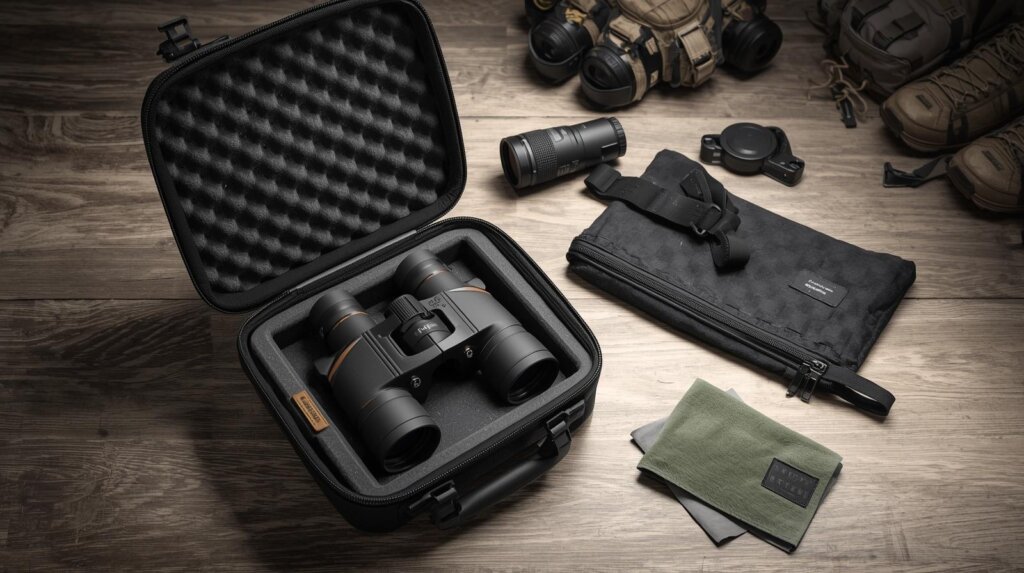
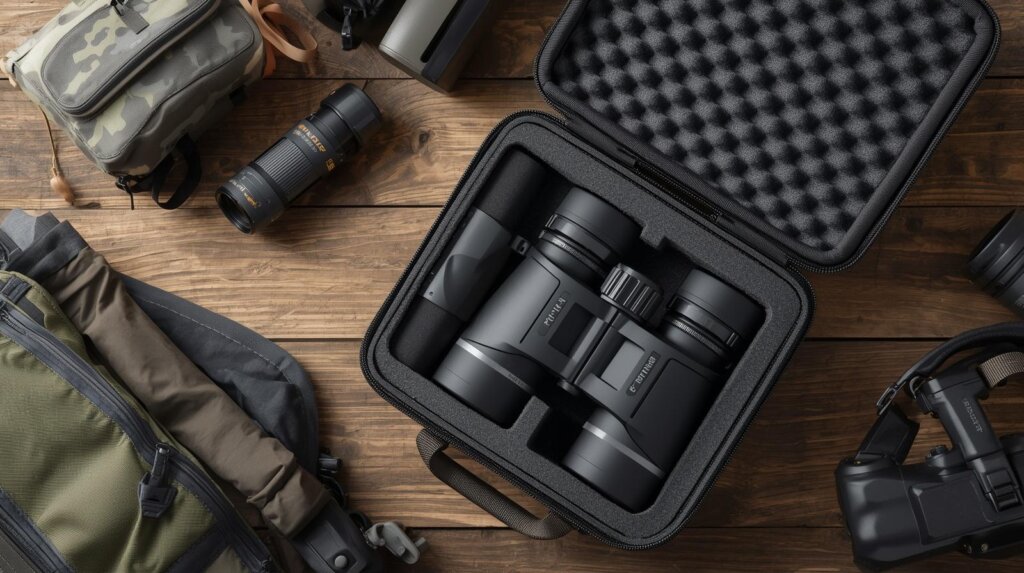
Why a Padded Binocular Case Matters for Protection
A padded binocular case for protection is not just a soft bag you throw your optics into when you are done using them. It is the layer between your binoculars and the small accidents that actually ruin gear: a dropped backpack, a dusty truck floor, a zipper scraping the eyecups, sudden rain, or that one careless moment when your binoculars slide off the car seat.
Most binocular damage does not happen in dramatic ways. It happens quietly.
A lens cap gets pressed too hard. The focus wheel takes a knock. Moisture sits inside a cheap pouch. The bridge gets scratched because the case has no internal padding. After enough of those small hits, even a good pair of binoculars starts feeling rough, loose, or frustrating to use.
That is why choosing the right padded binocular case for protection matters, especially if you use your binoculars for hiking, hunting, travel, birding, safari trips, sports viewing, or general outdoor use.
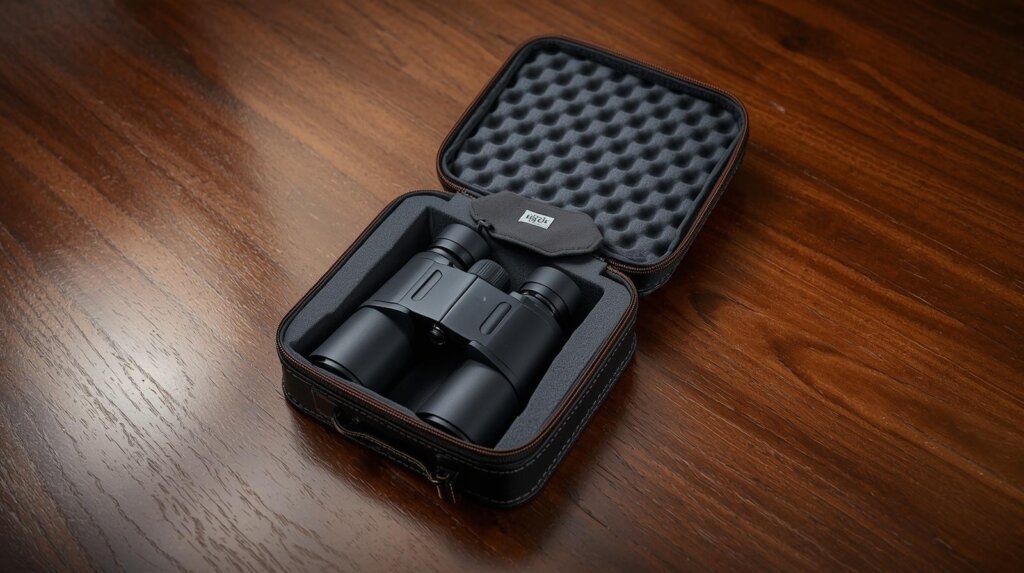
Why a Padded Binocular Case for Protection Is Worth It
A basic pouch protects against dust. A hard case protects against crushing. But a padded binocular case for protection sits in the sweet spot for everyday users because it protects your optics while still being easy to carry.
That balance matters.
If your case is too bulky, you will leave it at home. If it is too thin, it will not protect your binoculars when they are packed with other gear. The best padded cases give enough cushioning around the lenses, eyecups, hinge, and focus wheel without turning your binocular setup into a suitcase.
For most people, the goal is simple: keep binoculars safe without making them annoying to use.
A padded case helps protect against:
| Protection Need | Why It Matters | Best Case Feature |
|---|---|---|
| Scratches | Lenses and body coatings can mark easily | Soft inner lining |
| Small drops | Binoculars often slip during packing or travel | Shock-absorbing padding |
| Dust and debris | Sand and dirt can collect around eyecups and focus wheels | Zippered or flap closure |
| Gear pressure | Backpacks can squeeze optics from every angle | Structured padding |
| Light moisture | Outdoor use often means damp grass, drizzle, or humidity | Water-resistant outer fabric |
A padded binocular case for protection is especially useful if you carry binoculars in a backpack with chargers, snacks, keys, trekking gear, or camera accessories. Those items do not look dangerous, but they can scuff rubber armor and press into lens covers during travel.
For a broader look at case types, you can compare this article with our main resource on the best binocular case, where we break down different styles for travel, outdoor use, and everyday storage.
What Makes a Padded Binocular Case Actually Protective?
Not every soft case deserves your money. Some look padded in photos but collapse like cloth once you put them in a bag. A proper padded binocular case for protection should feel slightly structured even when it is empty.
1. Thick but Flexible Padding
Good padding should absorb pressure without becoming stiff. If the case feels like a thin camera pouch, it may only protect against scratches, not impact.
A better padded binocular case has foam or quilted cushioning around the sides, bottom, and top flap. The bottom padding matters more than people think because most binoculars land bottom-first when placed inside a backpack or storage box.
2. Soft Interior Lining
The inside of the case should not feel rough. A soft lining protects the binocular body and prevents small scuffs around the barrels.
This is especially important for higher-end binoculars with premium rubber armor, textured grip zones, or coated finishes. A padded binocular case for protection should protect your gear from the outside world, not create friction inside the case.
3. Secure Closure
A loose flap is fine for light home storage, but outdoor users need a closure that stays shut. Zippers, magnetic flaps, buckles, or quiet hook closures all work, depending on the use case.
For hiking and travel, I prefer a zipper because it keeps out dust better. For hunting or fast field access, a quiet flap can be more practical.
4. Room Without Sloppiness
A case should not squeeze your binoculars, but it also should not let them bounce around. Too much extra room can be just as annoying as a tight fit.
A good padded binocular case for protection should hold your binoculars snugly with space for lens caps, a cleaning cloth, and maybe a small strap. If the binoculars rattle inside the case, the padding is not doing its full job.
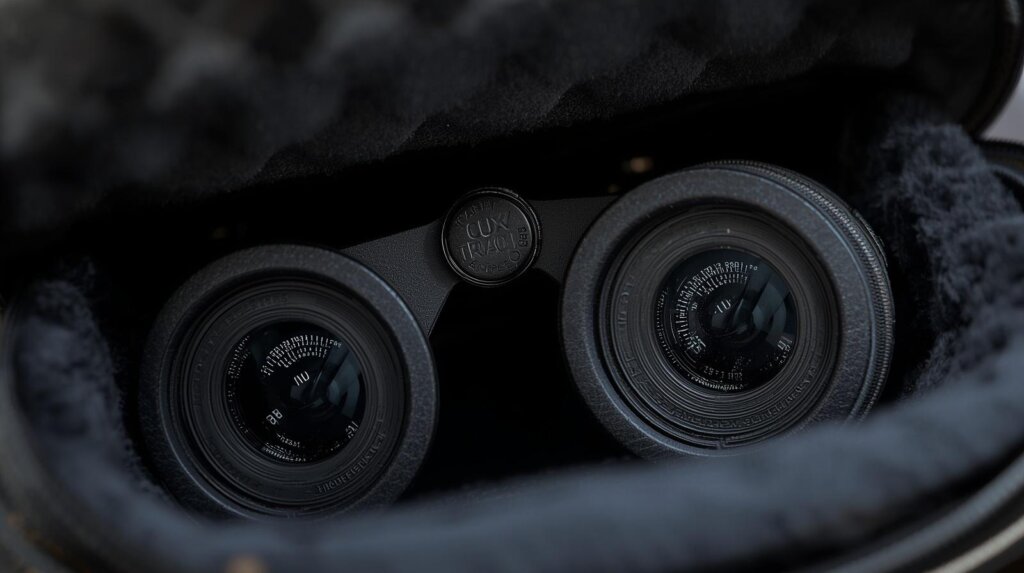
Padded Case vs Hard Case vs Waterproof Case
The right case depends on how you actually use your binoculars. A padded case is not always the strongest option, but it is often the most convenient one.
| Case Type | Best For | Main Strength | Main Weakness |
|---|---|---|---|
| Padded binocular case | Daily use, hiking, travel, light outdoor protection | Comfortable, lightweight, protective enough for most users | Less crush-resistant than hard cases |
| Hard case | Long storage, air travel, expensive optics | Strong impact and pressure protection | Bulkier and slower to access |
| Waterproof binocular case | Wet weather, boating, kayaking, marine use | Moisture resistance | Can be heavier or less breathable |
A padded binocular case for protection is ideal when you want daily usability. It is the case you actually bring with you, not the one that stays in the closet because it is too big.
However, if your binoculars are often packed in checked luggage, stored in a crowded vehicle, or carried with heavy tools, you may want to compare options in our hard case for binoculars article.
And if your biggest concern is rain, boat spray, or wet campsites, our waterproof binocular case article will help you decide whether water resistance should matter more than padding.
Best Real-World Uses for a Padded Binocular Case
A padded case is not just for people who baby their gear. It is for people who use binoculars often enough to know that real life gets messy.
For Hiking and Backpacking
When you hike, binoculars usually share space with water bottles, jackets, snacks, chargers, and other gear. A padded binocular case for protection keeps the optics from being pressed against hard objects inside your pack.
I especially like padded cases for day hikes because they are light enough to carry but still protective when the trail gets rough.
For Travel and Road Trips
Travel is where binoculars get abused without anyone noticing. They sit under seats, slide around in luggage, or get packed beside camera gear.
A padded binocular case makes travel easier because it gives your binoculars their own safe zone. If you are using compact binoculars, choose a slim padded case. For 10×42 or 12×50 models, go slightly larger so the eyecups and strap do not get crushed.
For Hunting and Field Use
Hunters often need fast access, so a traditional zippered pouch may not always be ideal. In that case, a padded binocular harness case can be better than a regular shoulder case.
A padded binocular case for protection used in hunting should be quiet, secure, and comfortable against the chest. No loud fabric. No clunky buckles. No awkward lid that gets in the way when you need to glass quickly.
For Home Storage
Even if your binoculars mostly stay at home, padding still matters. A case protects against dust, shelf scratches, kids moving things around, and accidental bumps inside a drawer or cabinet.
For home users, you do not need the most technical case. You just need a padded binocular case with a clean lining, reliable closure, and enough structure to keep pressure off the lenses.
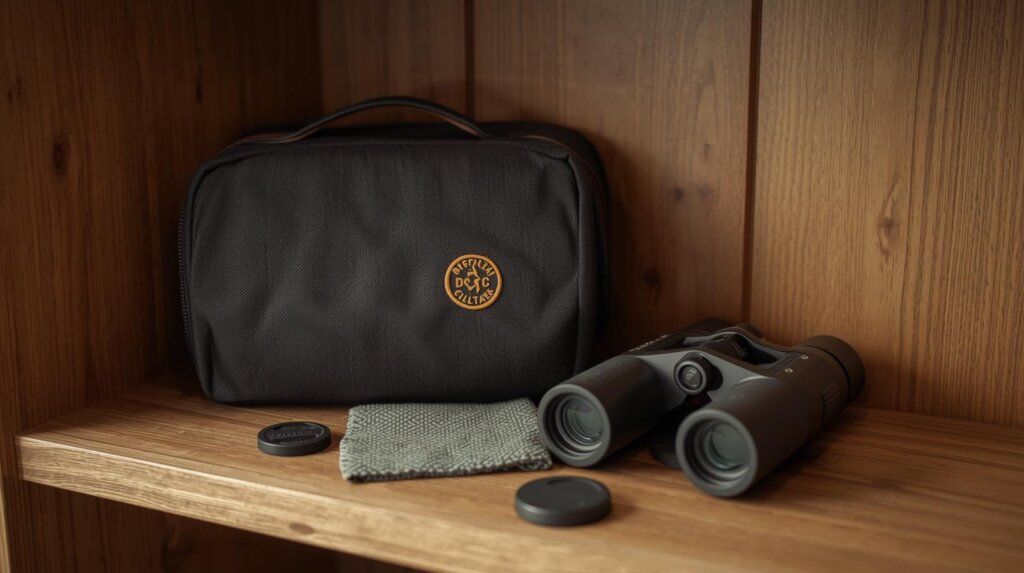
Pros
- A padded binocular case is lightweight and easy to carry.
- It works well for most outdoor, travel, and everyday use.
- It gives better protection than a basic soft pouch.
- It is less bulky than a hard case.
- You can easily keep it in a backpack, car, or travel bag.
- Many padded cases come with shoulder straps, making them easier to carry.
- Soft padding helps protect binoculars from light bumps, scratches, and pressure.
- Padded cases usually feel more comfortable for daily use.
- They often have softer edges and flexible fabric.
- They are a good choice for hiking, birding, sports viewing, and casual travel.
Cons
- A padded case is not the best option for extreme impact protection.
- It may not protect binoculars well if heavy gear is placed on top.
- It is not as safe as a hard case for shipping or checked luggage.
- Some cheap padded cases can absorb moisture.
- Thin, low-quality fabric may become damp after light rain.
- A poor padded case can act like a sponge if it has no water-resistant layer.
- Some padded cases lose shape over time.
- For expensive binoculars or rough travel, a hard case may be safer.
One Product Worth Considering: Vortex GlassPak Pro Binocular Harness
If you want a premium chest-style option, the Vortex GlassPak Pro Binocular Harness is one highly relevant pick. Vortex describes it as tough, weather-resistant, and padded to help shield binoculars from scratches and dings, with modular attachment points and two sizes for different binocular setups.
This makes the most sense for hunters, hikers, and outdoor users who want protection plus fast access. It is not the cheapest style, but the design solves a real problem: keeping binoculars protected without burying them inside a backpack.
I would not recommend it for someone who only stores binoculars at home. But for active field use, a padded harness-style case feels much more practical than a basic pouch.
Buyer Tips Before Choosing a Padded Binocular Case
Before buying a padded binocular case for protection, check the actual size of your binoculars. Do not guess based only on magnification.
A 10×42 roof prism binocular may fit differently than a 10×50 porro prism binocular. The shape matters. The eyecups, hinge design, and strap attachment points can change how the binocular sits inside the case.
Check These Details First
| Feature | What to Look For |
|---|---|
| Interior size | Enough room for binoculars without forcing the zipper |
| Padding thickness | Cushioned sides, base, and top flap |
| Closure style | Zipper for travel, quiet flap for field use |
| Carry method | Shoulder strap, belt loop, harness, or backpack-friendly shape |
| Weather resistance | Helpful for outdoor use, even if not fully waterproof |
| Inner lining | Soft fabric that will not scratch the body or lenses |
A small detail I always notice is the zipper path. If the zipper rubs against the binocular body every time you close the case, that case will annoy you fast. The zipper should move smoothly around the binoculars, not fight against them.
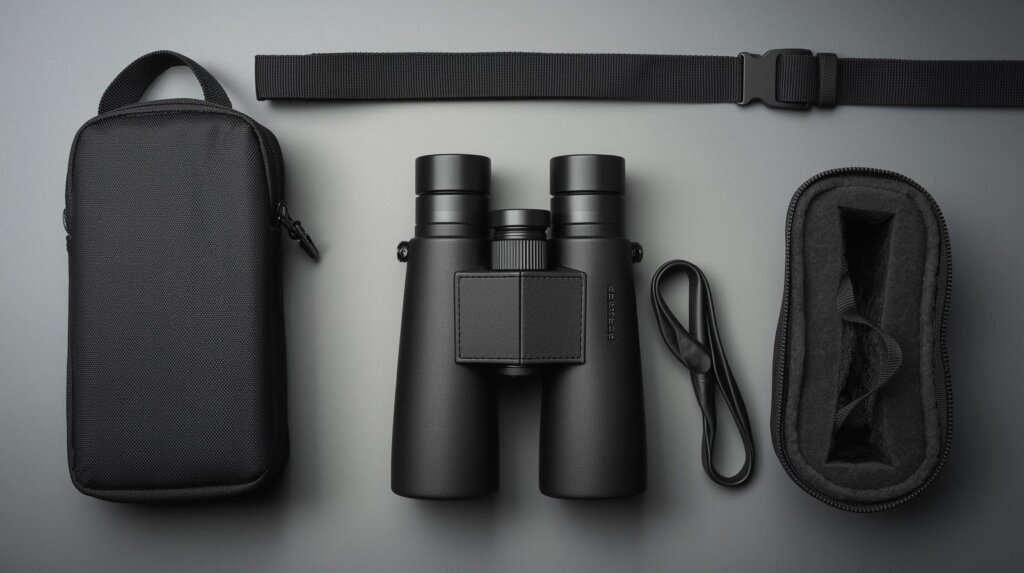
Common Mistakes People Make
The biggest mistake is buying a case that only fits the binoculars with the strap removed. In real use, most people do not want to detach the strap every time.
Another mistake is choosing the smallest possible case because it looks neat. Tight cases can press against eyecups, lens caps, and focus wheels. That pressure may not break anything immediately, but it can make storage frustrating.
People also overvalue external toughness and ignore the inside. A case can look rugged outside but still have a rough interior. For a padded binocular case for protection, the inside matters as much as the outside.
And finally, do not assume water-resistant means waterproof. If you are going boating, kayaking, or spending hours in heavy rain, choose a proper waterproof option instead of relying only on padding.
Best Case Size by Binocular Type
| Binocular Type | Recommended Case Style | Why It Works |
|---|---|---|
| Compact 8×25 or 10×25 | Slim padded pouch | Keeps weight low and fits easily in travel bags |
| Mid-size 8×32 | Light padded case | Good balance of size and cushioning |
| Full-size 8×42 or 10×42 | Structured padded case | Protects lenses, eyecups, and focus wheel better |
| Large 10×50 or 12×50 | Deep padded case | Prevents tight pressure around barrels |
| Premium binoculars | Padded case or hard case | Depends on whether you need access or maximum protection |
A padded binocular case for protection is usually best for compact, mid-size, and full-size binoculars used regularly. For oversized binoculars, make sure the case has enough depth. If the lid bulges when closed, it is too small.
How a Padded Case Supports Better Gear Habits
A good padded case does more than protect binoculars. It also helps you build better storage and carrying habits.
When your case is easy to open, comfortable to carry, and protective enough, you actually use it. That means your binoculars spend less time loose in the car, exposed on a table, or buried under other gear.
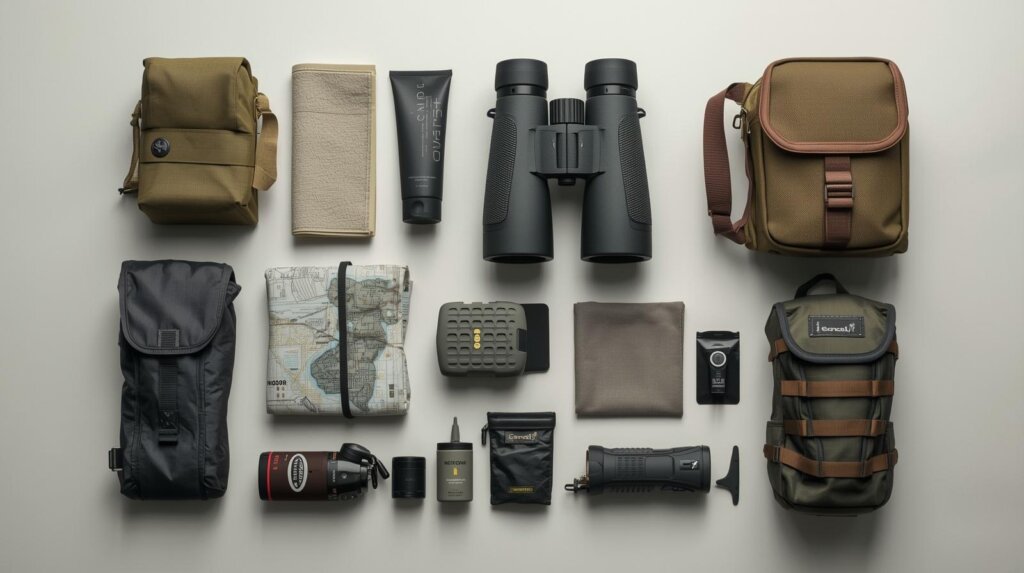
A padded binocular case for protection also makes your setup feel organized. Lens cloth in one pocket. Caps in place. Strap tucked properly. Binoculars ready for the next trip.
That small routine helps your optics last longer.
For more practical binocular storage and field-use ideas, visit our blog page or explore the bestbinocular.net home page for more gear-focused resources.
Final Verdict: Who Should Buy a Padded Binocular Case?
A padded binocular case for protection is the right choice if you want everyday safety without carrying a bulky hard box. It is practical for hikers, travelers, hunters, casual bird watchers, sports fans, and anyone who stores binoculars with other gear.
Choose a padded case if your main concerns are scratches, small bumps, dust, light moisture, and convenient carry.
Choose a hard case if your binoculars face heavy pressure, rough transport, or long-term storage.
Choose a waterproof case if water is the main threat.
For most people, though, a well-made padded binocular case for protection is the case they will use the most. And that matters more than buying the toughest case on paper.
Because the best protection is not the case that looks impressive in a product photo. It is the one that keeps your binoculars safe every time you actually leave the house.
FAQs About Padded Binocular Case for Protection
What is the best padded binocular case for protection?
The best padded binocular case for protection is one that fits your binoculars snugly, has soft interior lining, structured padding, and a secure closure. For outdoor users, a padded harness-style case can be more practical than a basic pouch.
Is a padded binocular case better than a hard case?
A padded case is better for daily carry, hiking, travel, and quick access. A hard case is better for maximum crush protection, checked luggage, or long-term storage. The better choice depends on how you use your binoculars.
Can a padded binocular case protect against drops?
A padded binocular case for protection can help absorb small bumps and light drops, but it is not designed for severe impact. If you regularly carry expensive optics in rough conditions, choose a structured padded case or a hard case.
Should a padded binocular case be waterproof?
It does not have to be fully waterproof for normal use, but water-resistant fabric is helpful. If you use binoculars near boats, heavy rain, or wet campsites, consider a waterproof binocular case instead.
How do I know what size padded binocular case to buy?
Check your binocular model dimensions, not just magnification. Leave enough room for lens caps, eyecups, and the strap. The case should close easily without pressing hard against the binoculars.
Is a padded binocular case good for travel?
Yes, a padded binocular case for protection is excellent for travel because it protects binoculars from scratches and pressure inside bags. For air travel or heavy luggage, a hard case may be safer.




