
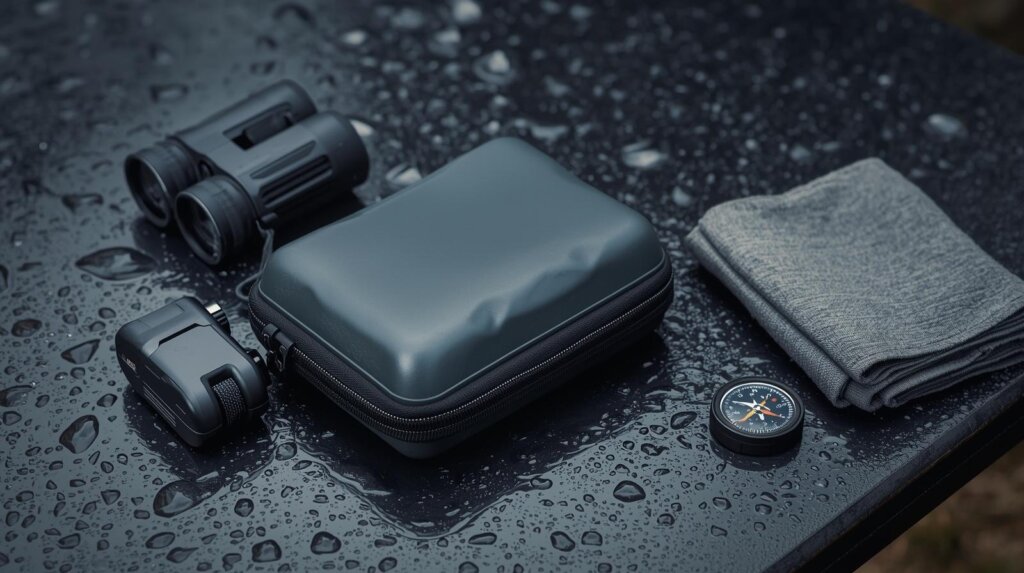
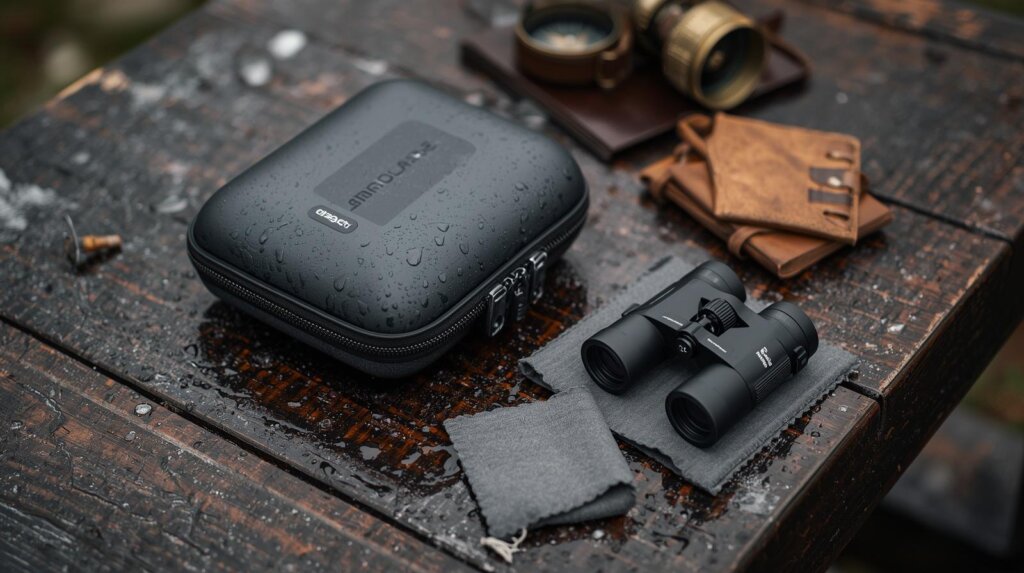
Why a Waterproof Binocular Case Is Worth Buying
A waterproof binocular case is not just for people who hike in heavy rain or spend weekends near rivers. It is for anyone who has ever thrown binoculars into a backpack, left them in a damp car, carried them through morning fog, or used them near sand, snow, or wet grass.
Binoculars are tougher than they look, but the small things still get them: moisture inside the case, dust around the eyecups, pressure on the focus wheel, or a hard bump while traveling. That is where a proper waterproof case earns its place.
The goal is simple: keep your binoculars dry, stable, and ready to use when the weather turns messy. Not “kind of protected.” Actually protected.
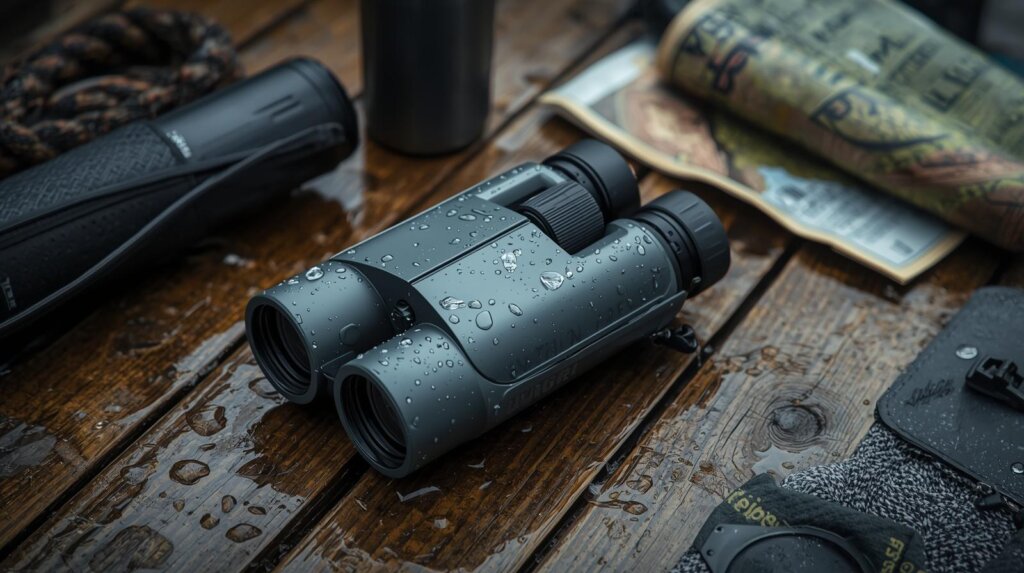
What Is a Waterproof Binocular Case?
A waterproof binocular case is a protective storage case designed to keep water, moisture, dust, and impact away from your binoculars. The best ones usually include a sealed outer shell, foam padding, tight closures, and enough internal space to stop the binoculars from shifting around.
There are two main types:
| Case Type | Best For | Main Benefit | Main Drawback |
|---|---|---|---|
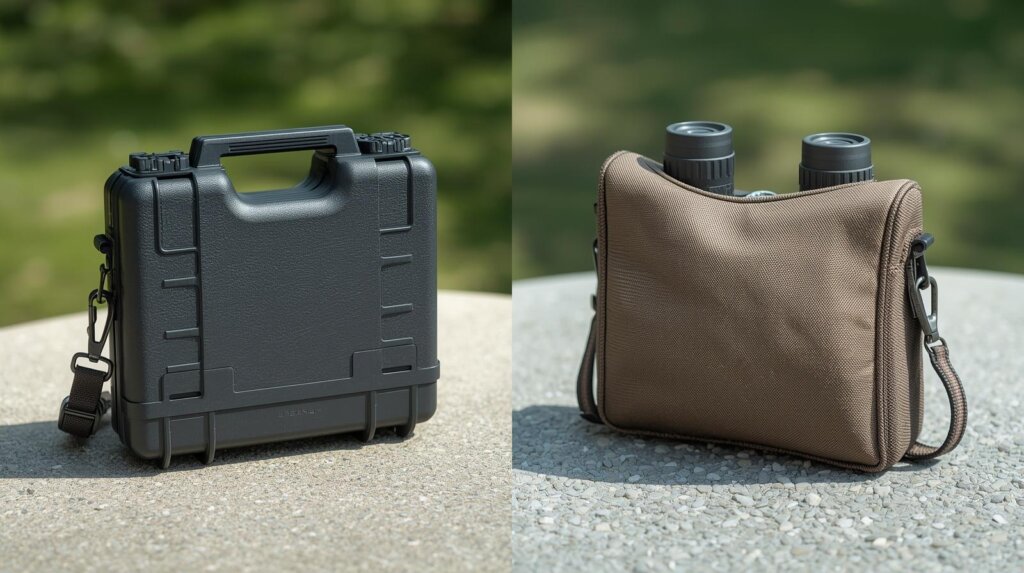
| Waterproof hard case | Travel, kayaking, boating, hunting, rough storage | Best protection from water and impact | Bulkier and heavier |
| Water-resistant soft case | Hiking, birding, casual outdoor use | Lighter and easier to carry | Not fully waterproof in heavy rain |
Here’s the honest part: many soft cases are advertised like they can handle anything. Most cannot. A soft binocular pouch may handle light rain, but if it sits in wet grass or gets soaked inside a backpack, your binoculars are still at risk.
A true waterproof binocular case should give you confidence when conditions are ugly.
Who Actually Needs a Waterproof Binocular Case?
You do not need one just because it sounds cool. You need one if your binoculars are exposed to moisture, rough travel, or unpredictable storage.
A waterproof binocular case makes the most sense for:
- Bird watchers who go out early when grass, fog, and humidity are everywhere.
- Hunters carrying optics through rain, mud, snow, or thick brush.
- Boat users who deal with spray, splashes, and wet decks.
- Campers who store gear overnight in tents, cars, or backpacks.
- Travelers packing binoculars with clothes, chargers, cameras, and other gear.
- Anyone who owns expensive binoculars and does not want to gamble with damage.
If your binoculars are valuable enough to protect carefully, they deserve better than the thin pouch that came in the box.
Why Waterproof Protection Matters More Than People Think
The biggest mistake people make is thinking waterproof binoculars do not need a waterproof case.
Yes, many binoculars are waterproof or fogproof. That helps protect the optics themselves. But it does not protect against scratches, pressure damage, lens cap loss, dust buildup, or repeated impact inside a backpack.
A waterproof binocular case protects the entire setup.
That includes:
- Binocular body
- Objective lenses
- Eyecups
- Focus wheel
- Diopter adjustment
- Lens caps
- Neck strap
- Cleaning cloth
- Small accessories
The case is not just about water. It is about control. You control where the binoculars sit, how much pressure touches them, and what kind of environment they stay in.
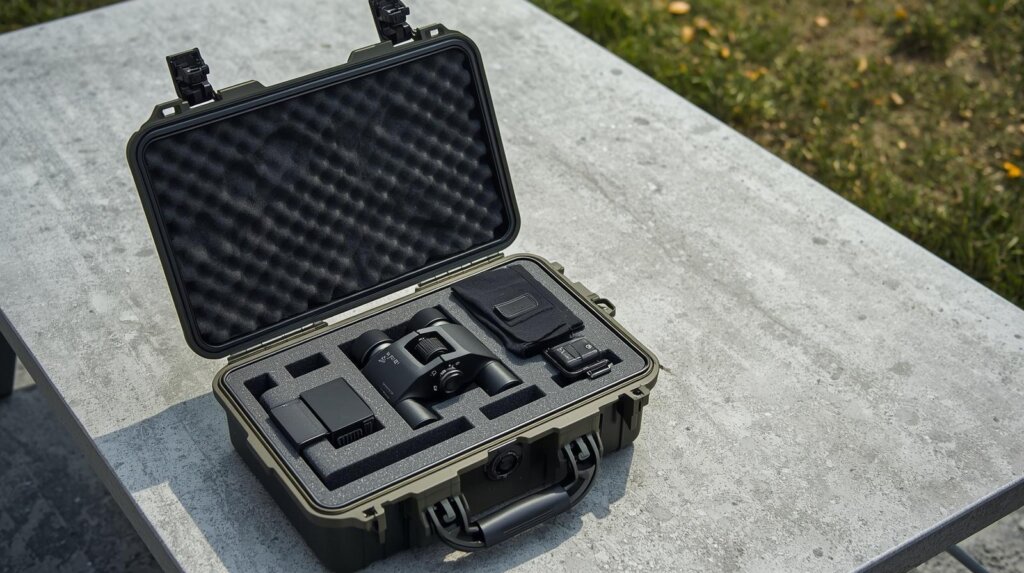
Hard Waterproof Case vs Soft Binocular Case: Which One Should You Choose?
This is where buyer intent gets real. Most people searching for a waterproof binocular case are stuck between protection and convenience.
A hard waterproof case gives better protection. A soft case is easier to carry.
Neither is perfect for everyone.
Waterproof Hard Case
A hard case is the better option if your binoculars are expensive, used in rough environments, or packed with other gear.
Pros
- Strong impact protection
- Better water sealing
- Good for travel and storage
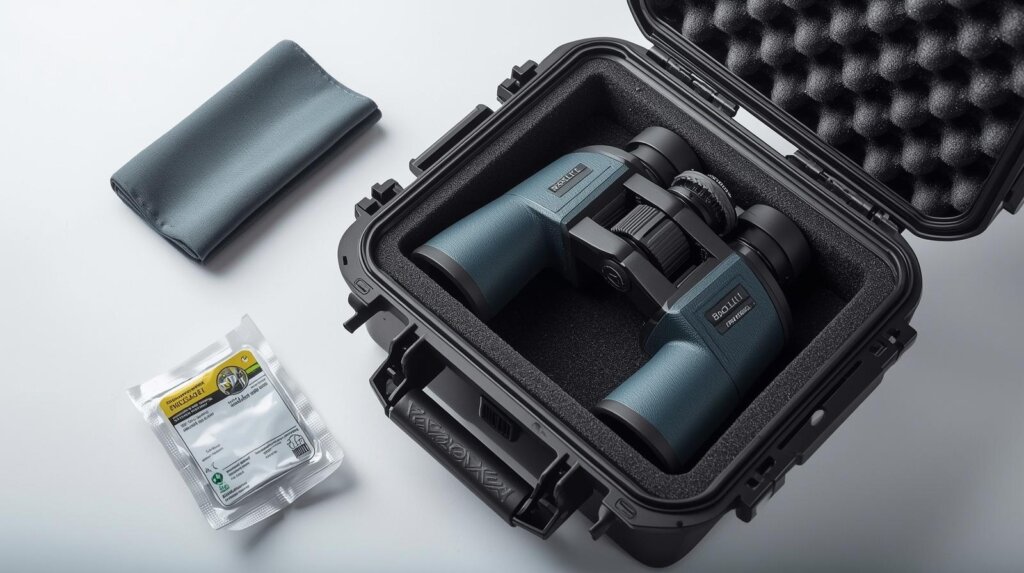
- Custom foam can hold binoculars tightly
- Protects lenses and focus wheel from pressure
Cons
- Heavier than soft cases
- Takes more space in a backpack
- Not as quick to access in the field
- Can be overkill for casual users
A hard waterproof binocular case is what I would choose for road trips, boating, camping, long-term storage, and any situation where the binoculars might get knocked around.
For a deeper comparison, check our full breakdown on choosing a hard case for binoculars when protection matters more than quick access.
Water-Resistant Soft Case
A soft case works better when you want something light and easy to carry during normal outdoor use.
Pros
- Lightweight
- Easier to wear with a strap
- Faster access
- Better for short hikes and casual birding
- Usually cheaper
Cons
- Often not fully waterproof
- Less impact protection
- Can absorb moisture
- Padding varies a lot
- Not ideal for travel abuse
If you mainly want comfort and easy carry, a soft binocular case with strap may be better than a bulky hard case.
But if rain, water spray, or gear damage is your biggest worry, go hard case.
Best Use Cases for a Waterproof Binocular Case
A waterproof binocular case is not just a storage box. It solves different problems depending on where you use your binoculars.
1. Bird Watching in Wet Grass and Morning Fog
Birding usually starts early. That means dew, fog, damp benches, wet trails, and unpredictable weather.
A waterproof case helps when you stop for coffee, place your gear on a damp surface, or pack everything back into the car after a wet morning. Even if your binoculars are weather-sealed, keeping the outside dry reduces lens cleaning and long-term wear.
2. Boating, Kayaking, and Lake Trips
Water and optics are a stressful combo.
A waterproof binocular case is almost mandatory if your binoculars go near boats, docks, lakes, or rivers. The danger is not always full submersion. More often, it is spray, wet hands, slippery decks, and water collecting inside bags.
This is where a sealed hard case is the smarter buy.
3. Hunting and Rough Outdoor Storage
Hunters usually carry more gear than they admit. Binoculars get packed with rangefinders, gloves, calls, snacks, and tools.
A waterproof binocular case keeps optics protected from mud, rain, snow, and accidental knocks. It also helps when gear gets left in a truck bed, blind, or camp bag overnight.
4. Travel and Checked Luggage
If you travel with binoculars, do not trust a thin pouch.
Airline bags get squeezed. Road trip luggage shifts. Backpacks get dropped. A hard waterproof case with foam is far safer, especially for mid-range or premium binoculars.
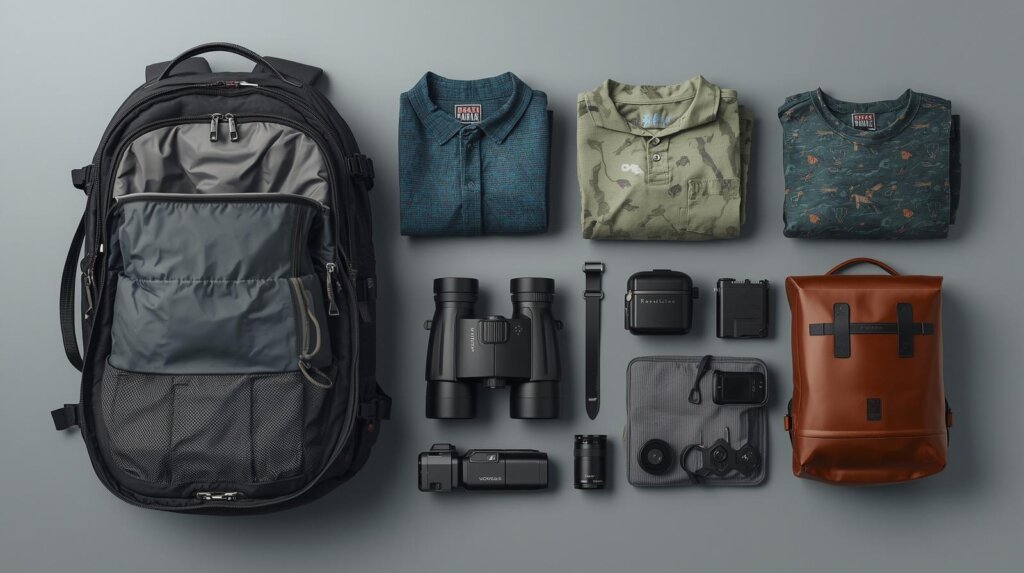
This is also where a compact hard case feels worth the space.
What to Look for Before Buying a Waterproof Binocular Case
Not every “waterproof” label deserves your trust. Some cases are splash-resistant at best.
Here is what actually matters.
1. Proper Water Seal
Look for a rubber gasket, O-ring seal, or clear waterproof rating. A tight latch alone does not mean waterproof.
For serious use, a sealed hard case is more reliable than fabric with a water-repellent coating.
2. Interior Fit
This is where many buyers mess up.
A case can be waterproof and still be bad for your binoculars if the inside fit is loose. Your binoculars should not bounce around inside the case.
Measure:
- Binocular length
- Width at the barrels
- Height with eyecups
- Extra room for strap or lens caps
A little room is good. Too much room is not.
3. Foam Padding
Foam is underrated. It keeps the binocular body stable and protects the lenses from hard pressure.
Pick-and-pluck foam is useful because you can shape it around your binoculars. Soft interior lining is fine for light use, but foam is better for travel and storage.
4. Case Weight
A waterproof hard case is protective, but it can become annoying if you carry it all day.
For field use, ask yourself:
Will this case stay in the car, boat, camp, or backpack?
If yes, hard case is fine.
Will you carry it on your shoulder for hours?
Then consider a lighter option.
5. Latch Quality
Cheap latches are a pain. They pop open, pinch fingers, or stop closing tightly after repeated use.
A good waterproof binocular case should close with a firm, secure snap. It should feel tight without needing force.
6. Space for Accessories
Do not only think about binoculars.
You may also want room for:
- Lens cloth
- Extra lens caps
- Neck strap
- Harness connector
- Small desiccant pack
- Compact cleaning brush
A slightly larger case is better than one that forces you to crush the strap against the eyepieces.
Recommended Product: Pelican 1150 Protector Case
If I had to recommend one waterproof binocular case for most people who want serious protection, I would look at the Pelican 1150 Protector Case with foam.
It is not the lightest option, and it is not made only for binoculars. That is actually part of the appeal. It is a tough, compact waterproof hard case that works well for smaller binoculars, compact optics, and travel protection.
Pelican lists the 1150 Protector Case with waterproof, crushproof protection and an interior size around 8.3 x 5.8 x 3.8 inches, depending on configuration. The official specifications also mention an O-ring style sealed design and strong protective build.
Why It Makes Sense
The Pelican 1150 works best if you own compact or mid-size binoculars and want a case that can handle rain, storage, travel, and hard knocks.
It is especially useful for:
- Compact 8×25 binoculars
- Many 8×32 binoculars
- Some smaller 10×32 models
- Travel binoculars
- Binoculars used near water
- Optics stored in trucks, boats, or gear bins
Where It May Not Fit
Do not blindly buy it for large 10×42, 12×50, or bulky porro prism binoculars. Measure first.
This is the part many affiliate articles skip because they want the sale. Don’t do that. If your binoculars are too large, the foam and lid pressure can become a problem.
Best Buyer Type
Buy it if you care more about protection than fast access.
Skip it if you want a lightweight shoulder pouch for quick birding walks.
Quick Comparison: Waterproof Binocular Case Options
| Feature | Hard Waterproof Case | Soft Water-Resistant Case | Basic Included Pouch |
|---|---|---|---|
| Water protection | Best | Medium | Low |
| Impact protection | High | Medium | Low |
| Carry comfort | Medium | High | High |
| Travel safety | Best | Medium | Low |
| Field access | Slower | Faster | Faster |
| Best for | Travel, boating, storage | Hiking, birding, daily use | Light home storage |
For a full comparison of different binocular case styles, start with our main best binocular case guide. It compares different case styles so you can match protection level with how you actually use your binoculars.
Common Mistakes When Buying a Waterproof Binocular Case
Mistake 1: Buying Too Small
This happens a lot. People check the binocular size but forget about the strap, eyecups, caps, and foam.
A tight case can press against the focus wheel or eyecups. That defeats the whole point of protection.
Mistake 2: Trusting “Water-Resistant” Like It Means Waterproof
Water-resistant is not the same as waterproof.
Water-resistant usually means the case can handle light moisture. Waterproof means it is built to stop water from getting inside under more serious conditions.
For rain walks, soft water-resistant can be okay. For boating, travel, or wet storage, choose waterproof.
Mistake 3: Ignoring Interior Padding
A sealed plastic box with no padding is not enough.
Your binoculars need to stay still. Without foam or padding, the case protects from water but not from internal movement.
Mistake 4: Choosing a Huge Case “Just to Be Safe”
Bigger is not always better.
Too much empty space lets binoculars slide around unless you use foam properly. Bigger cases also take more backpack room and feel annoying over time.
Mistake 5: Forgetting About Drying the Gear First
Never seal wet binoculars inside a waterproof case for long periods.
A waterproof case keeps water out, but it can also trap moisture inside. Dry the binoculars first, wipe the case interior, and use a small desiccant pack if you store optics for more than a few days.
Buyer Psychology: What You Are Really Paying For
When people buy a waterproof binocular case, they are not just buying plastic, foam, or latches.
They are buying peace of mind.
You want to stop thinking:
“Will my binoculars be okay in that bag?”
“Did rain get into the pouch?”
“Are the lenses scratched?”
“Did something press against the focus wheel?”
That mental stress disappears when your binoculars have a proper case. And honestly, that is worth it if your optics are part of your regular outdoor kit.
A cheap case feels fine until the first bad weather day. A good waterproof binocular case feels boring in the best way possible. It just works.
Practical Setup Tips for Better Protection
Here is how I would set up a waterproof binocular case for real use:
- Place binoculars in the case with eyecups down or sideways, depending on fit.
- Keep the focus wheel away from hard pressure points.
- Use foam cutouts so the binoculars do not shift.
- Store a microfiber cloth in a separate corner.
- Add a small silica gel pack for moisture control.
- Avoid stuffing the neck strap tightly against the lenses.
- Check the seal every few months for dirt or damage.
Small setup details matter. A good case used badly becomes an average case.
When a Waterproof Binocular Case Is Overkill
Not everyone needs one.
If you only use small binoculars from your porch, at sports events, or from the car on dry days, a padded soft case may be enough.
A waterproof case may feel too bulky if:
- You need fast access every few minutes.
- You carry binoculars around your neck all day.
- Your binoculars are already inexpensive.
- You rarely deal with rain, mud, water, or rough travel.
In that case, spend your money on a comfortable soft case or harness setup instead.
But if your binoculars leave the house often, travel with you, or cost enough to hurt if damaged, waterproof protection is smart.
Final Verdict: Is a Waterproof Binocular Case Worth It?
A waterproof binocular case is worth it if your binoculars face rain, dust, travel pressure, boat spray, camping storage, or rough handling. It is not the flashiest accessory, but it is one of the most practical.
For maximum protection, choose a hard waterproof case with foam. For comfort and fast access, choose a soft padded case with a strap. The best choice depends on where your binoculars spend the most time: in your hands, in your backpack, in your car, or near water.
A practical rule is simple: if your binoculars are expensive or used outdoors often, a waterproof case is a smart investment. You will probably only appreciate it on the day something goes wrong — and that is exactly why it matters.
For more buying help, visit the Best Binocular homepage and explore our latest binocular tips and accessory guides on the blog.
FAQs About Waterproof Binocular Cases
What is the best waterproof binocular case for outdoor use?
The best waterproof binocular case for outdoor use is usually a hard case with a sealed lid, foam padding, and a secure latch system. It should fit your binoculars snugly without pressing on the lenses, eyecups, or focus wheel.
Do I need a waterproof case if my binoculars are already waterproof?
Yes, in many cases. Waterproof binoculars protect the internal optics from moisture, but a waterproof case protects the full body from scratches, impact, dust, pressure, and storage damage.
Can I use a camera case for binoculars?
Yes, some camera cases work well for binoculars, especially waterproof hard cases with adjustable foam. Just make sure the interior dimensions fit your binoculars properly.
Are soft binocular cases waterproof?
Most soft binocular cases are water-resistant, not fully waterproof. They can handle light rain or splashes, but they are not the best choice for boating, heavy rain, wet backpacks, or rough storage.
Should I choose a hard or soft waterproof binocular case?
Choose a hard waterproof case for travel, boating, camping, hunting, and long-term protection. Choose a soft case if you want lighter carry, faster access, and basic protection during casual outdoor use.
How do I keep moisture out of a binocular case?
Dry your binoculars before storage, wipe the case interior, and add a small silica gel pack. Do not seal wet binoculars inside a waterproof case for long periods because trapped moisture can still cause problems.
What size waterproof case do I need for binoculars?
Measure your binoculars first, including the height, width, and length with eyecups and caps. Then choose a case with enough space for foam padding and accessories without allowing the binoculars to slide around.




