
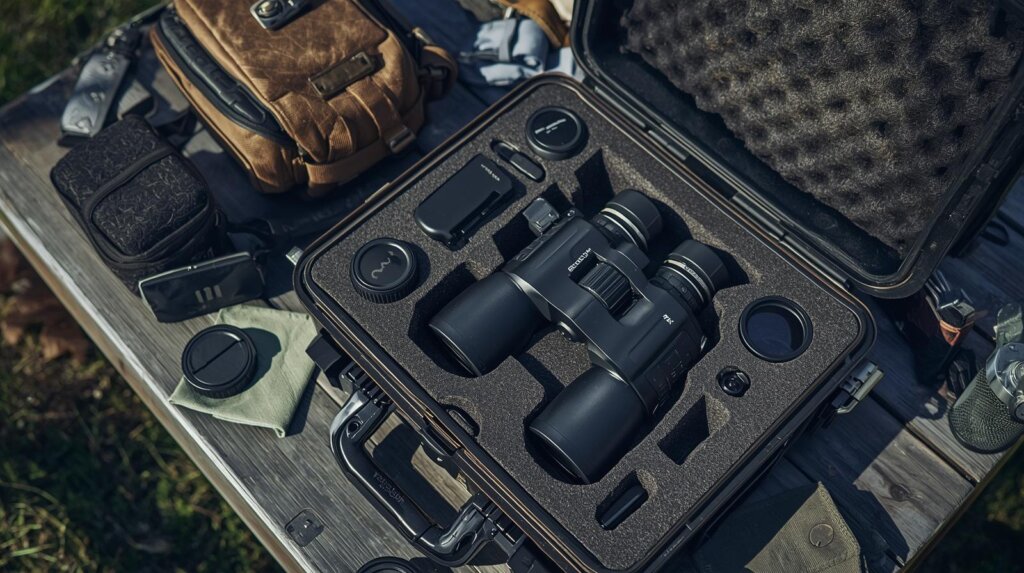
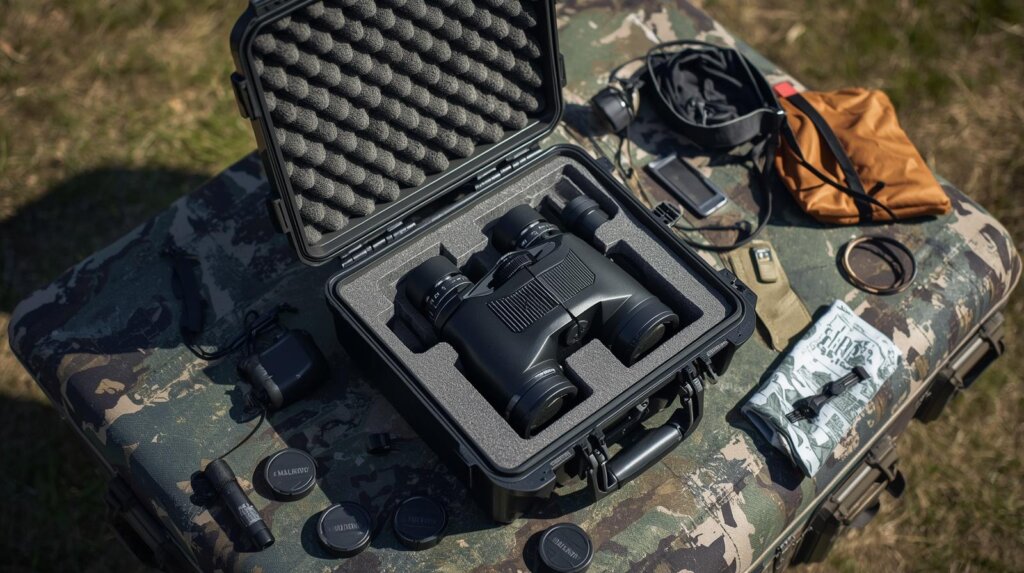
Hard Case for Binoculars: Strong Protection for Real-Life Use
A hard case for binoculars is not something you buy because it looks serious. You buy it because binoculars are easy to damage in all the boring, real-life moments nobody talks about.
The case gets tossed into a truck bed. It slides under a car seat. It gets packed beside a tripod, water bottle, flashlight, or camping stove. At home, it sits in a closet where something heavy eventually lands on top of it. That is where a soft pouch starts feeling a little too optimistic.
A good hard case for binoculars protects the lenses, keeps the body from taking impact, and gives your optics a proper storage space instead of letting them float around loose in a backpack. For hunters, bird watchers, travelers, marine users, and anyone who owns mid-range or premium binoculars, it is one of the smartest accessories you can buy.
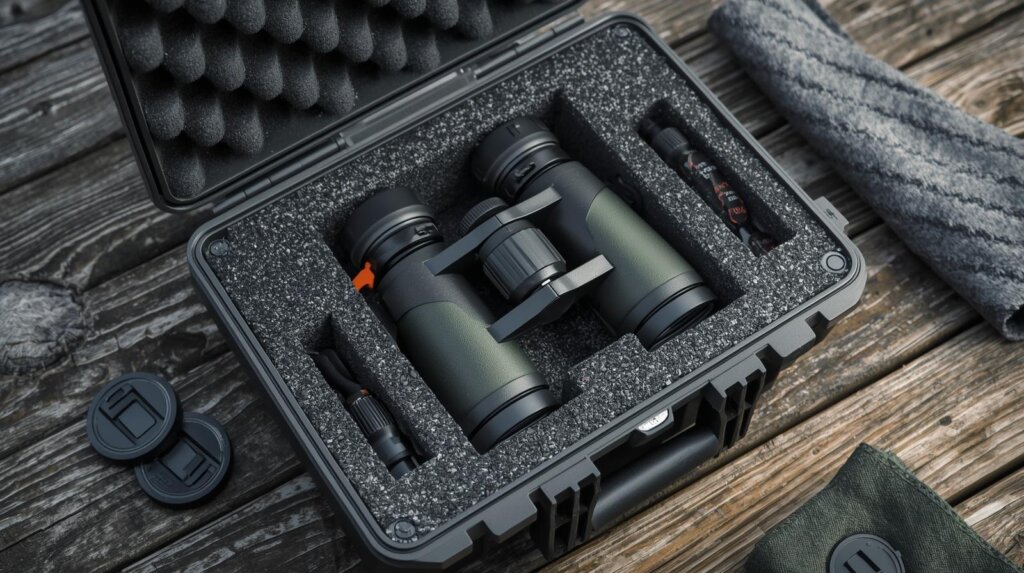
Why a Hard Case for Binoculars Makes Sense
A hard case for binoculars solves one main problem: impact protection.
Most binoculars can handle normal use. They are made to be carried outdoors, held in cold weather, used around dust, and sometimes exposed to light rain. But that does not mean they are safe from crushing pressure or sudden drops.
A soft case may protect against scratches. A hard case protects against accidents.
Think about a road trip. You pack your binoculars for wildlife viewing, but the bag gets squeezed between shoes, jackets, and a camera kit. A soft case will bend. A hard shell case keeps its shape. That difference matters when your binoculars have delicate eyecups, focus wheels, lens coatings, and internal alignment.
If your binoculars cost more than a cheap dinner out, they deserve better than being stored loose.
Hard Case vs Soft Binocular Case: Which One Is Better?
Both have a place. The right choice depends on how you use your optics.
| Case Type | Best For | Main Strength | Main Weakness |
|---|---|---|---|
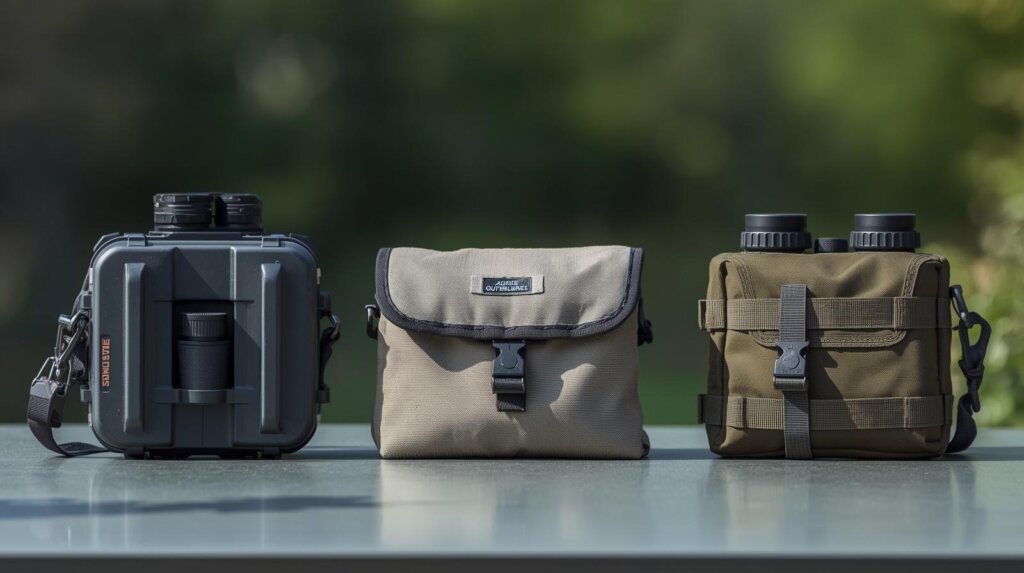
| Hard case for binoculars | Storage, travel, rough transport | Strong impact and crush protection | Bulkier than soft cases |
| Soft binocular case | Light daily carry, short walks | Lightweight and easy to pack | Less protection from pressure |
| Harness-style case | Hunting, hiking, birding on the move | Fast access while wearing binoculars | Not ideal for long-term storage |
| Waterproof hard case | Boating, camping, wet climates | Moisture and dust protection | Heavier and more expensive |
A hard case for binoculars is best when protection matters more than speed. A soft case is better when you want quick access and low weight.
For example, if you are walking around a park for casual bird watching, a soft binocular case with strap is usually more comfortable. You can learn more about that style in the supporting article on soft binocular case with strap. But if your binoculars are going inside luggage, a vehicle, a gear box, or a garage cabinet, a hard case wins.
For active use, especially hunting or mountain hiking, you may prefer a chest setup. That is where a binocular carrying case with harness makes more sense because it keeps the binoculars close to your body and ready to use.
Who Actually Needs a Hard Case for Binoculars?
Not everyone needs one. That is the honest answer.
If you own a small budget pair and only use it from the porch, a simple pouch may be enough. But a hard case for binoculars becomes much more useful in these situations.
You Travel With Binoculars
Travel is rough on optics. Airport luggage, car trunks, overhead compartments, and packed backpacks are not friendly places for lenses.
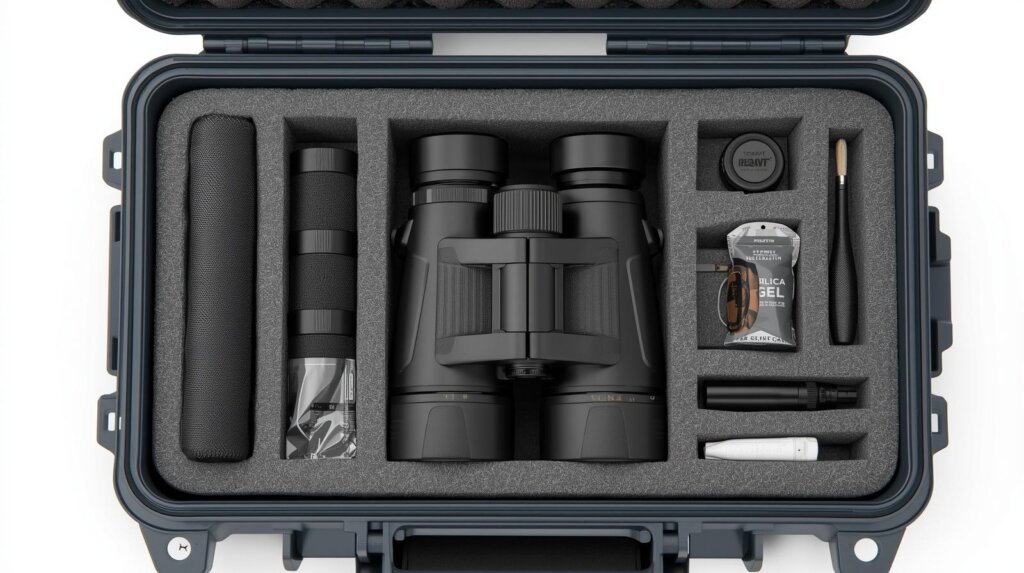
A hard case protects binoculars from being squeezed or knocked around. It also gives you one fixed place for accessories like a cleaning cloth, lens caps, neck strap, and small silica gel pack.
For travel binoculars, I prefer a compact hard case with foam because it stops the binoculars from shifting inside the case. Empty space is not your friend. If the case is too large, the binoculars can still move around and hit the sides.
You Own Expensive Binoculars
If your binoculars are premium, the case should match the investment. A $300, $500, or $1,000 pair should not be stored in a thin pouch that came free in the box.
The best hard case for binoculars does not have to be fancy. It simply needs a strong outer shell, a secure latch, and enough internal padding to hold the binoculars firmly without pressing too hard on the eyecups.
You Store Binoculars for Long Periods
Storage damage is slow and annoying. Dust settles on lenses. Moisture builds up. Rubber armor gets marked. Lens caps disappear.
A hard case gives your binoculars a clean, controlled space. It keeps them away from random household pressure and helps reduce the chance of lens scratches when they are not in use.
For more protection ideas around storage and accessories, visit the main silo page on best binocular case, where different case styles are compared for everyday users, travelers, hunters, and outdoor gear owners.
You Use Binoculars Around Water, Sand, or Dust
Boating, beach trips, desert camping, and dusty job sites are exactly where a hard protective case becomes useful.
A waterproof hard case for binoculars is especially helpful if your optics are exposed to wet gear, muddy boots, or changing weather. Even if your binoculars are waterproof, that does not mean you should store them wet or dirty.
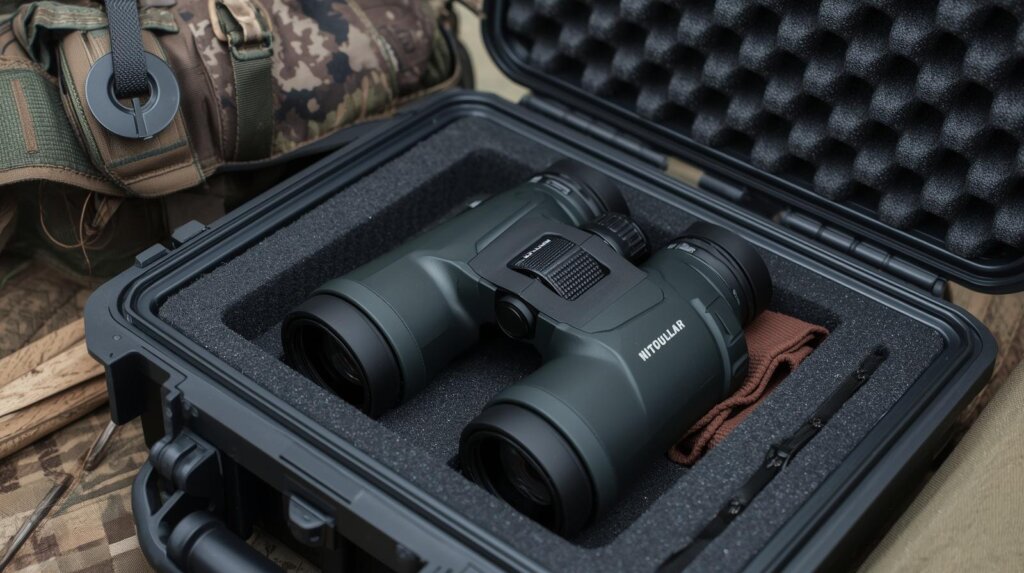
What to Look for in a Hard Case for Binoculars
A hard case can look tough and still be badly designed. The outside matters, but the inside matters even more.
Interior Padding Should Hold, Not Crush
Foam padding is one of the biggest buying points. You want the binoculars to sit snugly inside the case without being forced.
Too much pressure can bend eyecups, press against the focus wheel, or make the case annoying to close. Too little padding lets the binoculars rattle around.
The best setup is usually customizable foam. Pick-and-pluck foam lets you shape the interior around your binoculars. It is not glamorous, but it works.
Check the Internal Dimensions First
This is where many buyers make mistakes.
They check the outside size of the case and forget the inside size. A hard case for binoculars must fit the actual length, width, and height of your binoculars, including folded eyecups, strap points, lens caps, and sometimes the neck strap.
Common binocular sizes like 8×42, 10×42, 10×50, and 12×50 may need different case depths. A compact case that fits 8×32 binoculars may not close properly around a full-size 10×50 model.
Before buying, measure your binoculars when folded into the position you normally store them.
The Latch Should Feel Secure
Cheap latches are frustrating. They either pop open too easily or feel like they will break after a few trips.
For a proper hard case for binoculars, the latch should close firmly and stay closed when the case is moved, stacked, or carried. If you travel often, a double-latch design is usually better than a single small latch.
Weather Resistance Matters
Not every hard case is waterproof. Some are simply hard-shell storage boxes. That can still be fine for home use.
But if you plan to take your binoculars camping, boating, hunting, or traveling in wet weather, look for a water-resistant or waterproof hard case. A rubber seal around the lid can help keep dust and moisture out.
Handle and Portability
A hard case should be easy to carry. It sounds obvious, but some cases are awkward once loaded.
For car storage or home storage, a simple handle is enough. For travel, a compact case that fits inside a larger bag is better. For heavy binoculars or multiple accessories, a stronger carry handle becomes more important.
Best Product Pick: Pelican-Style Compact Protective Case
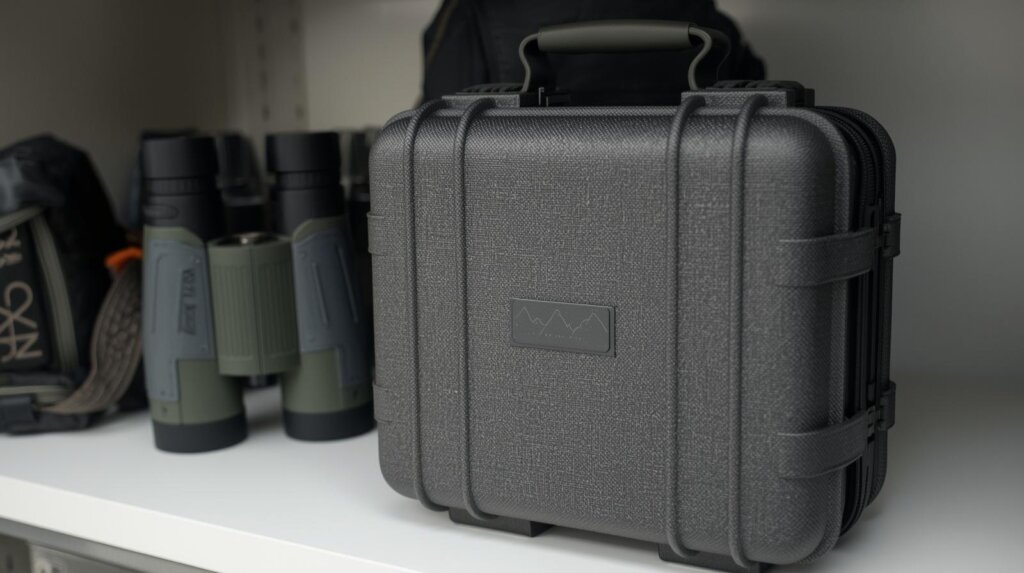
For one highly relevant recommendation, a Pelican-style compact protective case with foam insert is the safest choice for most binocular owners.
I like this style because it feels purpose-built for real-world abuse. It has a rigid shell, secure latches, and customizable foam that can be shaped around your binoculars. That makes it useful for 8×42 and 10×42 binoculars, especially if you travel, camp, hunt, or store optics with other gear.
This is not the lightest option. It is also not the cheapest. But for anyone who wants a reliable hard case for binoculars, this case style makes sense because it protects against the kind of damage that actually happens: pressure, drops, dust, and rough packing.
Pros
- Gives stronger impact protection than a soft pouch.
- Helps protect binoculars from drops, pressure, and rough storage.
- Keeps accessories organized in one place.
- Makes travel safer and less stressful.
- Useful when binoculars move between home, vehicle, backpack, boat, or campsite.
- Works like a protective home base for your optics.
- Reduces worry when other gear is placed near or on top of the case.
- Best for mid-range or premium binoculars that need extra protection.
- A smart choice for hunters, travelers, marine users, and outdoor users.
Cons
- Bigger and bulkier than a soft binocular pouch.
- Takes up more space in bags, cars, or storage areas.
- Not always ideal for quick-access use in the field.
- Can feel inconvenient during long hikes.
- Less comfortable than a chest harness if you use binoculars again and again.
- May be overkill for casual users.
- A rugged waterproof model may not be necessary if binoculars rarely leave the house.
Real-World Use Cases
For Hunters
Hunters often carry binoculars through rough terrain, trucks, blinds, and camps. A hard case is great for transport before and after the hunt.
However, during the hunt itself, a chest harness may be more practical. Use the hard case for storage and travel, then switch to a binocular carrying case with harness when you need fast access in the field.
That combination protects your optics without slowing you down.
For Bird Watchers
Bird watchers usually need quick access, so a hard case is not always the best choice during an active walk. But it is excellent for storing binoculars at home or transporting them to parks, wetlands, and reserves.
If you keep binoculars in the car for spontaneous viewing, a hard case for binoculars is much safer than leaving them loose in the glove box or back seat.
For Travelers
A hard case is almost essential if binoculars are going inside luggage.
Even if you use compact binoculars, travel bags get compressed. A hard case keeps the optics from being crushed by shoes, chargers, toiletries, and camera equipment.
For airline travel, choose a case that fits inside your carry-on. I would avoid checking expensive binoculars unless the case is extremely rugged and well-padded.
For Marine and Boating Use
Around water, a waterproof hard case is the better choice. Salt air, spray, wet ropes, and damp storage compartments can all create problems.
A sealed hard case helps keep binoculars dry when they are not being used. Add a small silica gel pack inside for extra moisture control.
For Home Storage
This is the most overlooked use case.
A hard case for binoculars is perfect for closet storage, garage shelves, camera cabinets, and outdoor gear rooms. It prevents scratches, keeps dust away, and stops family members from accidentally stacking things on top of the binoculars.
Common Mistakes to Avoid
Buying a Case That Is Too Big
A bigger case feels safer, but it can create movement inside. If the binoculars bounce around, the case is not doing its job properly.
Always use foam or dividers to secure the binoculars.
Forgetting About the Strap
A binocular neck strap takes space. If you plan to store the strap inside the case, measure with the strap included.
Otherwise, you may end up forcing the case closed every time.
Storing Wet Binoculars Inside
A hard case protects against outside moisture, but it can also trap moisture inside.
Never store wet binoculars in a closed case for long periods. Dry the body, clean the lenses carefully, and let the binoculars air out before sealing the case.
Ignoring Lens Caps and Accessories
A good hard case for binoculars should have space for small accessories. Lens caps, cleaning cloths, anti-fog wipes, and a silica gel pack should not be floating loose against the lenses.
Use a small pouch or separate foam slot when possible.
Buyer Psychology: Why People Regret Cheap Cases
Most buyers do not regret buying a protective case. They regret buying the wrong one.
The common mistake is choosing the cheapest hard case because all hard cases look similar in pictures. But once it arrives, the problems show up quickly. The plastic feels thin. The latch feels weak. The foam tears. The binoculars do not fit properly.
A case is boring until it saves your optics.
That is why I would rather buy one solid hard case than three cheap ones. If your binoculars are part of your hunting kit, travel bag, birding setup, or boat gear, the case should feel dependable.
A hard case for binoculars is not about showing off. It is about reducing risk.
Hard Case for Binoculars vs Original Manufacturer Case
Many binoculars come with a basic case. Sometimes it is decent. Often, it is just enough to say a case is included.
Manufacturer cases are usually soft, lightweight, and shaped for the binoculars. That makes them convenient for short-term use. But they rarely provide serious crush protection.
A separate hard case gives you more control. You can choose better padding, more space for accessories, stronger latches, and better protection for travel.
Here is the simple rule: use the original case for light use, and use a hard case when your binoculars are being stored, packed, shipped, or transported with other gear.
How a Hard Case Compares With Other Binocular Case Types
A hard case for binoculars is the protection-first option. It belongs in the same buying journey as other case types, but it solves a different problem.
If your reader wants maximum protection, send them to your main best binocular case pillar page for a full comparison of case styles.
If they want something lighter for casual walks, naturally point them toward your article on soft binocular case with strap.
If they are hunters, hikers, or active outdoor users, recommend the binocular carrying case with harness article because access and comfort matter more when binoculars are being used all day.
For more practical outdoor optics tips, case comparisons, and buying advice, readers can also explore the blog tips section and homepage at bestbinocular.net.
Final Thoughts: Is a Hard Case for Binoculars Worth Buying?
A hard case for binoculars is worth buying if your optics are exposed to travel, storage pressure, vehicles, outdoor gear, or unpredictable weather.
It is not the most convenient case for quick field access. It is not the lightest option either. But when it comes to protection, a hard case does the job better than almost anything else.
A practical approach is to use a hard case for storage and transport, then use a strap, soft case, or harness when actively carrying binoculars outdoors. That setup gives you the best of both worlds — strong protection when your binoculars are packed away, and easy access when it is time to use them.
FAQs About Hard Case for Binoculars
What is the best hard case for binoculars?
The best hard case for binoculars is one that fits your specific binocular size, has strong outer protection, secure latches, and padded foam inside. For most users, a compact protective case with customizable foam is the safest choice because it prevents movement and protects against impact.
Do binoculars really need a hard case?
Binoculars do not always need a hard case, but they benefit from one if you travel, store them with other gear, own expensive optics, or use them outdoors often. A hard case protects against crushing, drops, dust, and rough handling better than a soft pouch.
Can I use a camera case for binoculars?
Yes, you can use a camera case if the internal dimensions fit your binoculars properly. The case should have enough padding and should not let the binoculars move around. A hard camera-style protective case with foam can work very well for binocular storage.
Is a waterproof hard case worth it?
A waterproof hard case is worth it if you use binoculars around boats, rain, camping gear, beaches, or humid storage areas. For indoor-only storage, a basic hard case may be enough. For outdoor use, weather sealing adds valuable protection.
Should I keep silica gel in my binocular case?
Yes, keeping a small silica gel pack inside your hard case can help reduce moisture. This is especially useful if you live in a humid area or use binoculars in cold, wet, or marine environments. Replace or recharge the silica gel when needed.
Can a hard case damage binoculars?
A hard case can damage binoculars only if the fit is poor. If the case is too tight, it may press against eyecups or controls. If it is too loose, the binoculars may bounce inside. Proper foam padding solves both problems.




