
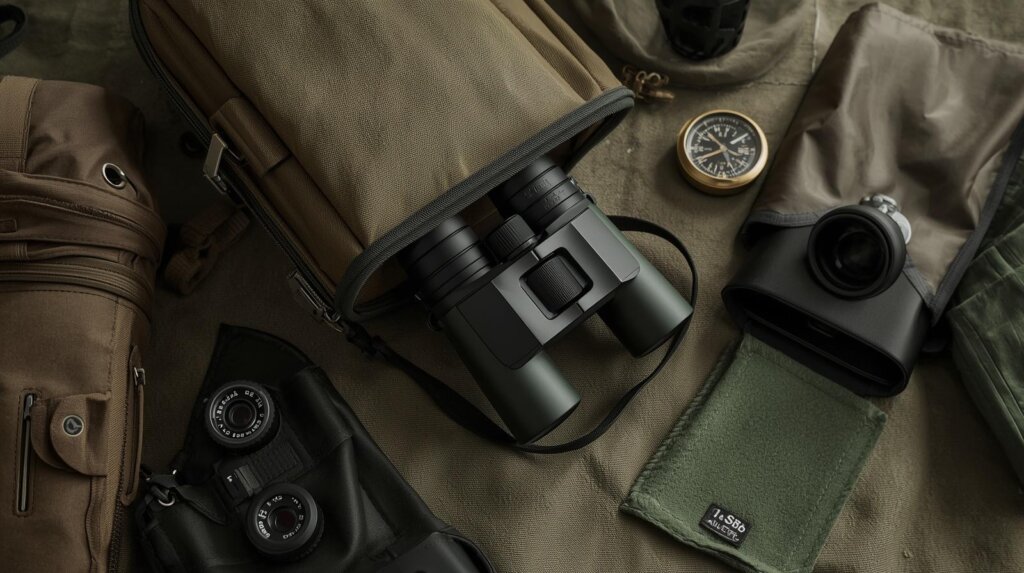
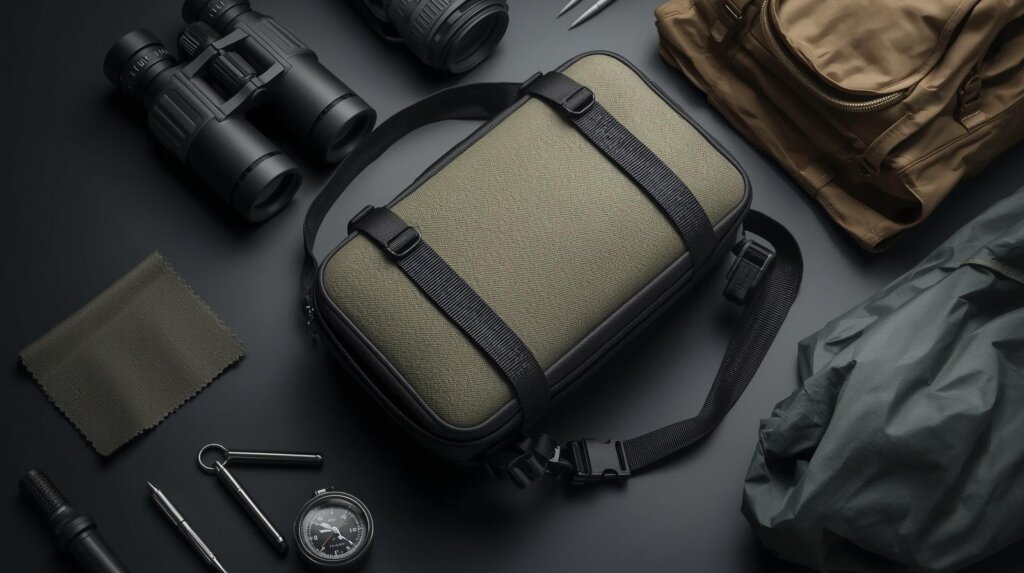
Why a Binocular Carrying Case With Harness Matters
A binocular carrying case with harness is not just a storage pouch with straps. It is a field-carry system designed for people who keep reaching for their binoculars again and again — hunters glassing ridgelines, birders walking wet trails, hikers covering uneven ground, or safari travelers who do not want expensive optics swinging from their neck all day.
The real value is simple: your binoculars stay protected, close to your chest, and ready in seconds.
A normal neck strap works fine for short viewing sessions. But once you walk for two hours, climb over rocks, crouch behind brush, or move through rain and dust, that strap starts to feel cheap. Your binoculars bounce. Your neck gets tired. The lenses pick up grit. That is where a binocular carrying case with harness becomes the better choice.
If you are still deciding between different storage styles, you may also want to compare this setup with our main best binocular case guide, where we break down hard cases, soft pouches, padded covers, and travel-ready options.
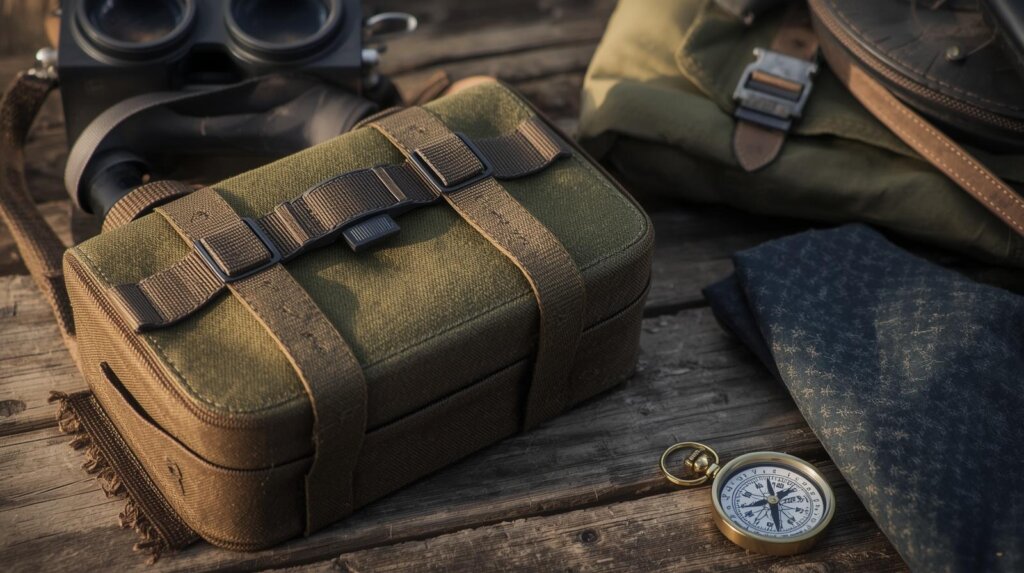
Why a Binocular Carrying Case With Harness Feels Different in Real Use
The biggest difference is weight distribution.
With a neck strap, all the pressure sits on one narrow area. With a binocular carrying case with harness, the load spreads across your shoulders, back, and chest. After a full morning outside, that matters more than most buyers expect.
You also get better control. The binoculars do not swing forward when you bend down. They do not smack against a rifle stock, backpack buckle, camera, or tripod leg. And when you are moving through brush, the lenses are not exposed to every branch and dust cloud.
A good harness case turns binoculars from “something hanging on you” into “something carried with purpose.” That is the quiet upgrade.
Best For People Who Use Binoculars Often
This setup makes the most sense if you use binoculars repeatedly, not occasionally.
For example, a birder scanning trees every few minutes will appreciate quick access. A hunter glassing from one ridge to the next will appreciate silent opening and chest stability. A hiker carrying compact optics will like the comfort. A traveler on safari will enjoy having binoculars protected without digging into a backpack every time something appears in the distance.
If your binoculars mostly stay in the car or only come out once during a trip, a basic pouch may be enough. But if your optics are part of the experience, a binocular carrying case with harness earns its place quickly.
Binocular Carrying Case With Harness vs Regular Binocular Case
Not every binocular case solves the same problem. Some are made for storage. Some are made for protection. A harness case is made for movement.
| Case Type | Best Use | Main Benefit | Main Limitation |
|---|---|---|---|
| Standard soft case | Light storage and short trips | Simple and affordable | Usually not comfortable for long carry |
| Hard binocular case | Travel, car storage, impact protection | Strong shell protection | Too bulky for active use |
| Padded binocular case | Everyday lens and body protection | Cushioned and lightweight | May not include stable carry support |
| Binocular carrying case with harness | Hunting, birding, hiking, safari | Hands-free carry and fast access | Can feel bulky if oversized |
For a lighter everyday option, read our supporting article on the compact binocular case because compact users do not always need a full chest rig. But for rugged field use, the harness design is usually more practical.
What Makes a Good Binocular Carrying Case With Harness?
A poor harness case feels annoying within ten minutes. A good one disappears into your routine.
Comfortable Shoulder and Back Straps
The straps should be wide enough to spread pressure but not so bulky that they rub under backpack straps. Elastic straps feel flexible, but too much stretch can make the binoculars bounce. Fixed webbing feels more stable, especially for heavier 10×42 or 12×50 binoculars.
The sweet spot is a harness that keeps the case tight to your chest without squeezing your breathing. You want stable, not restricted.
Quiet Opening System
This matters more for hunters than anyone else, but even birders notice it.
Velcro can be loud. Magnetic closures are smoother, but weak magnets can pop open if the case is overloaded. Zippers give security, but they are slower. Buckles are durable, but they can be clumsy with gloves.
For most outdoor users, a magnetic front flap with a backup security loop offers a good mix of quiet access and security. It gives quick access without sounding like you are opening a snack wrapper in the middle of the woods.
Proper Binocular Fit
This is where many buyers make a mistake.
They buy a large harness case because it looks more “professional,” then their binoculars bounce inside the pouch. Or they buy a tight case that scrapes the eyecups every time they pull the binoculars out.
A binocular carrying case with harness should fit your optic size closely. Compact 8×32 binoculars need a smaller chest pack. Standard 10×42 binoculars usually fit medium harness cases. Big 12×50 models may need a deeper pouch with more front clearance.
If your binoculars have raised eyecups, lens covers, or an attached rangefinder mount, measure before buying.
Weather Resistance
You do not always need a fully waterproof case, but you do need weather resistance.
Rain, sweat, dust, snow, and morning dew are common enemies. A good harness case should have water-resistant fabric, covered seams, and a flap that sheds moisture away from the opening. If it includes a rain cover, even better.
For users focused mainly on cushioning and impact resistance, our padded binocular case for protection article explains how padding thickness, lining, and case structure affect long-term optic safety.
Real-World Use Cases
Hunting
For hunting, a binocular carrying case with harness is almost non-negotiable if you glass often. It keeps optics steady against the chest while crawling, climbing, kneeling, or moving through timber.
The best hunting harness cases also include small side pockets for a wind checker, rangefinder, license, lens cloth, or extra calls. But avoid overloading it. Once the chest pack becomes a mini backpack, it loses the clean, silent feel that makes it useful.
Bird Watching
Birders usually care less about tactical features and more about comfort, access, and lens cleanliness.
A harness case helps when walking through damp grass, woodland paths, or coastal areas where salt air and moisture can reach the lenses. Instead of swinging binoculars from a strap, you keep them tucked away until the moment you need them.
For birding, choose a lighter binocular carrying case with harness with soft lining and smooth access. You do not need a heavy-duty hunting rig unless you carry larger optics.
Hiking and Travel
On hikes, neck straps become irritating fast. They bounce on descents and pull on your neck during climbs. A harness case fixes that by keeping the binoculars centered.
For travel, the advantage is security. Your binoculars are not buried in a daypack, but they are also not exposed. A low-profile chest harness can be especially useful on safaris, national park trips, scenic train routes, and road trips where views appear quickly.
Pros
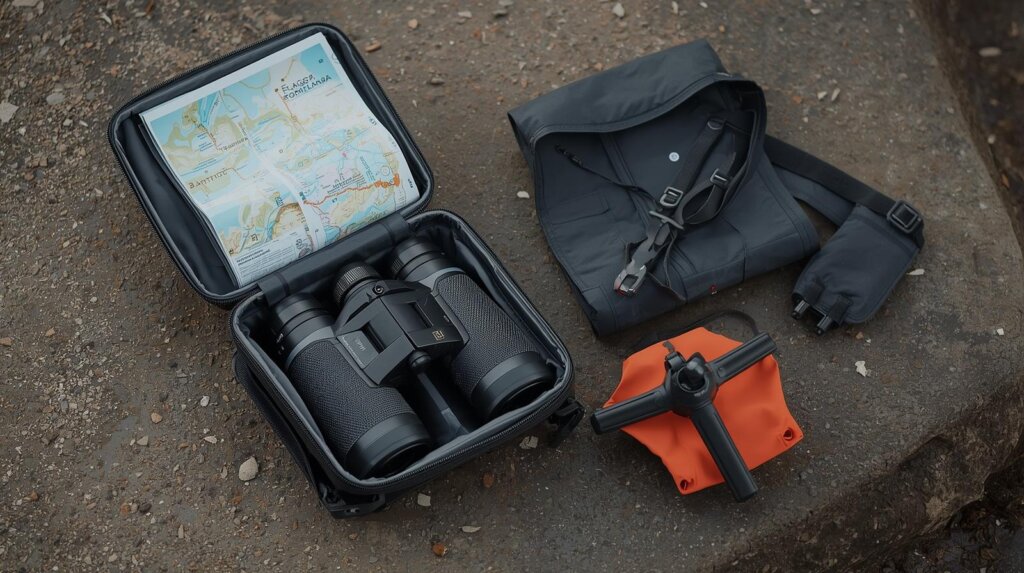
- A binocular carrying case with harness gives better comfort than a basic neck strap.
- It works well for long outdoor sessions.
- It helps reduce neck strain during hiking, hunting, birding, or safari travel.
- It keeps binoculars close to your chest.
- It reduces bouncing while walking or climbing.
- It protects lenses from dust, light rain, and accidental bumps.
- It keeps binoculars ready for quick use.
- You do not need to keep taking binoculars in and out of your backpack.
- It saves backpack space.
- Small accessories stay organized.
- Lens cloths, lens caps, rangefinders, or compact tools can fit in dedicated pockets.
- It feels more secure and practical for field use.
Cons
- The main downside is extra bulk.
- Some users do not like having gear sitting on their chest.
- It can feel warm or uncomfortable in hot weather.
- Cheap harnesses may trap sweat.
- Some harnesses can feel awkward when worn with a backpack.
- Sizing can be a problem.
- A tight harness can feel slow and restrictive.
- A loose harness can feel sloppy and unstable.
- Poor fit can make the whole setup frustrating.
- You should check size, adjustment options, and fit before buying.
One Product Worth Considering: Vortex GlassPak Binocular Harness
If you want one solid, widely trusted option, the Vortex GlassPak Binocular Harness is a strong starting point.
It is not the fanciest system, but that is part of its appeal. It offers padded protection, chest carry comfort, side storage, and a simple access design. For hunters, hikers, and casual wildlife watchers, it gives the main benefits of a binocular carrying case with harness without making the setup overly complicated.
The GlassPak works especially well with common 8×42 and 10×42 binoculars. It is practical, durable enough for regular field use, and easier to live with than many bulky premium chest rigs.
Would I recommend it for giant rangefinding binoculars or heavy 12×50 optics? Not always. For larger binoculars, you should check internal dimensions carefully. But for most standard outdoor binoculars, it makes sense.
Buyer Tips Before You Choose
Match the Case to Your Binocular Size
Do not guess. Measure your binoculars or check the manufacturer’s dimensions. Pay attention to height, width, depth, and eyecup position.
A binocular carrying case with harness should allow one-hand removal without forcing the binoculars out like a tight shoe.
Think About Your Clothing Layers
A harness that fits perfectly over a T-shirt may feel tight over a winter jacket. Adjustable straps matter if you hunt or hike across different seasons.
If you use a backpack, test whether the harness straps fight with your shoulder straps. A slim back panel usually works better than a thick padded one.
Avoid Too Many Pockets
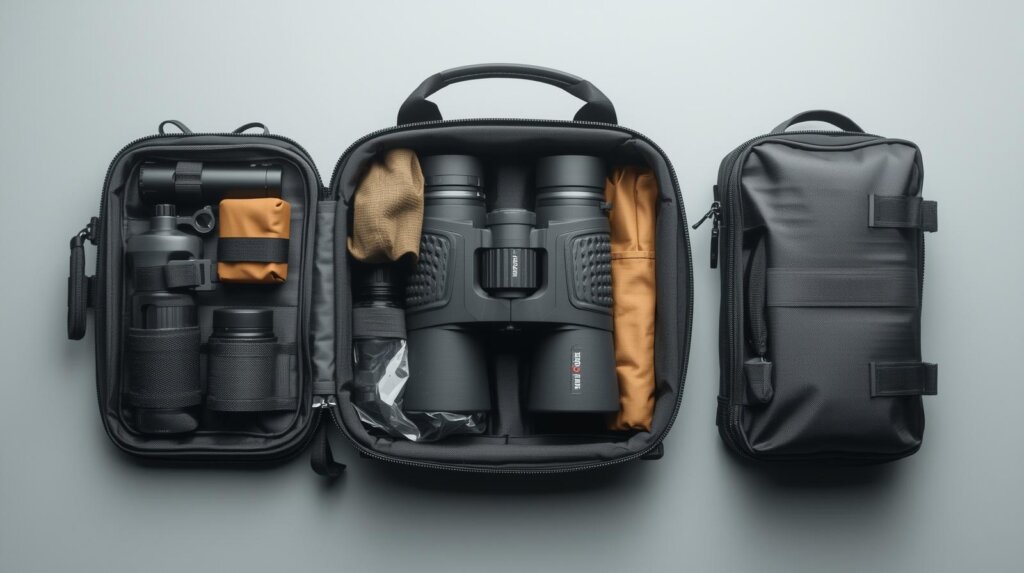
More pockets look useful online, but in the field they can become clutter. A lens cloth pocket, rangefinder pocket, and small zip area are enough for most people.
The best setup feels quick and quiet, not overloaded.
Common Mistakes Buyers Make
The first mistake is buying based on looks. Some harness cases look rugged but feel stiff, noisy, or poorly balanced.
The second mistake is ignoring access speed. If you need two hands and too much effort to open the case, you will eventually stop using it properly.
The third mistake is choosing the wrong size. Oversized cases allow movement inside the pouch. Undersized cases make every pull annoying.
The fourth mistake is assuming all harness cases are waterproof. Most are water-resistant, not fully waterproof. If you expect heavy rain, carry a rain cover or dry bag.
Is a Binocular Carrying Case With Harness Worth It?
Yes, if you actively use your binoculars outdoors.
A binocular carrying case with harness is worth it for people who value comfort, lens protection, and quick access. It is especially useful for hunting, bird watching, hiking, camping, safari travel, and long nature walks.
It may not be necessary for occasional backyard use. But once you spend real time outside, the difference becomes obvious. Your neck feels better. Your binoculars stay cleaner. You stop worrying about every branch, buckle, and dust patch.
For more optic storage ideas, comparison tips, and field-use advice, visit the bestbinocular.net home page and explore our latest binocular blog before choosing your next case.
FAQs About Binocular Carrying Case With Harness
What is a binocular carrying case with harness?
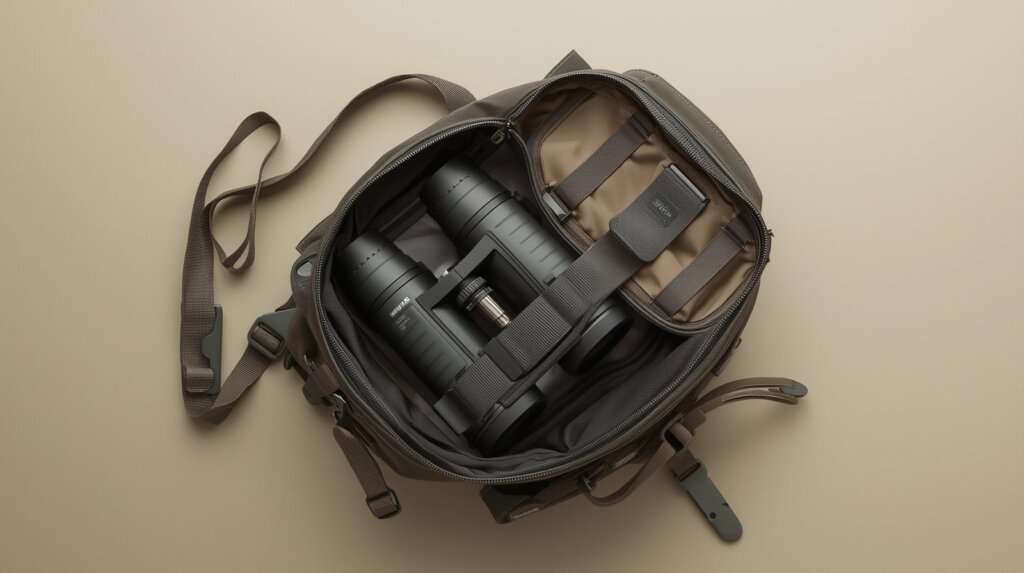
A binocular carrying case with harness is a chest-mounted case that holds binoculars securely while spreading weight across your shoulders and back. It protects binoculars while keeping them easy to reach during outdoor activity.
Is a binocular harness better than a neck strap?
For long use, yes. A harness is more comfortable, more stable, and better at preventing binoculars from bouncing. A neck strap is lighter and simpler, but it becomes uncomfortable during long walks or active movement.
Can I use a binocular carrying case with harness for bird watching?
Yes. Birders often benefit from a lighter harness case because it protects lenses from moisture, dust, and accidental knocks while keeping binoculars ready for quick viewing.
Will a harness case fit all binoculars?
No. Fit depends on binocular size. Compact 8×32, standard 10×42, and larger 12×50 binoculars may need different case sizes. Always check internal dimensions before buying.
Is a binocular carrying case with harness waterproof?
Most harness cases are water-resistant, not fully waterproof. They can handle light rain, mist, and dust, but heavy rain may require a rain cover or extra dry storage.
What size harness case do I need for 10×42 binoculars?
Most 10×42 binoculars fit a medium-sized binocular carrying case with harness. Still, check the case dimensions because eyecup height, body shape, and attached lens covers can affect the fit.
Should I buy a padded or hard binocular case instead?
Choose a padded case if you mainly want protection inside a backpack or vehicle. Choose a hard case for maximum storage protection. Choose a harness case when you need hands-free carry and fast access outdoors.
How do I adjust a binocular harness case for a secure fit?
Tighten the shoulder straps until the case sits high and close to your chest without restricting movement. A proper fit reduces bouncing, improves comfort, and keeps your binoculars easy to access while walking.




