
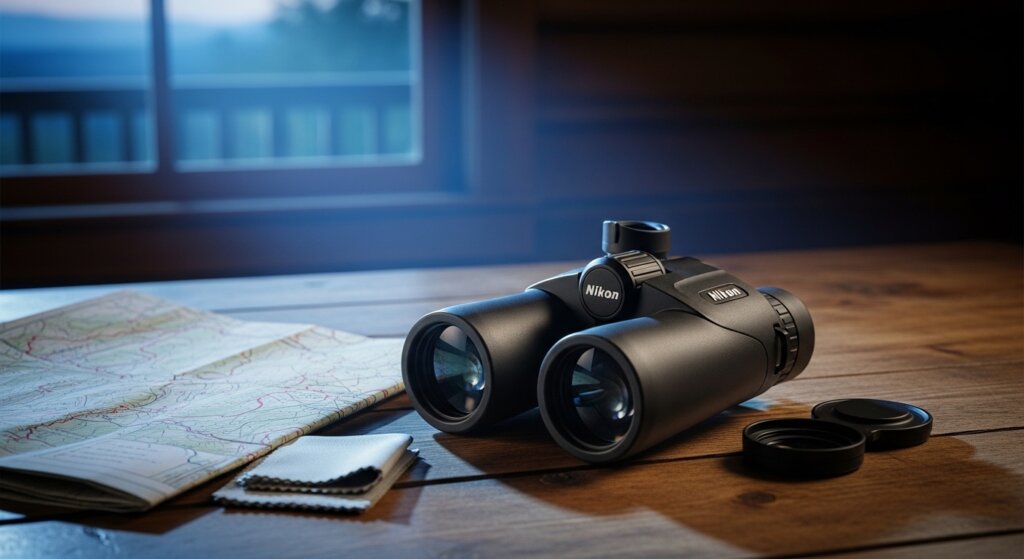
Finding the best Nikon binoculars for low light is not as simple as buying the biggest pair with the highest magnification.
That is where a lot of buyers get trapped.
Low-light viewing is not just about “more power.” In fact, too much magnification can make the view worse because it magnifies hand shake, narrows the field of view, and makes the image harder to stabilize. If you are glassing at dawn, watching wildlife near sunset, scanning shaded woods, or using binoculars from a cabin porch in blue-hour light, steadiness matters just as much as brightness.
For most people, the best Nikon binoculars for low light are the Nikon Monarch M7 8×42.
Not because they are the largest. Not because they are the cheapest. But because they give you the most useful low-light performance in a binocular you can actually carry, hold steady, and use comfortably.
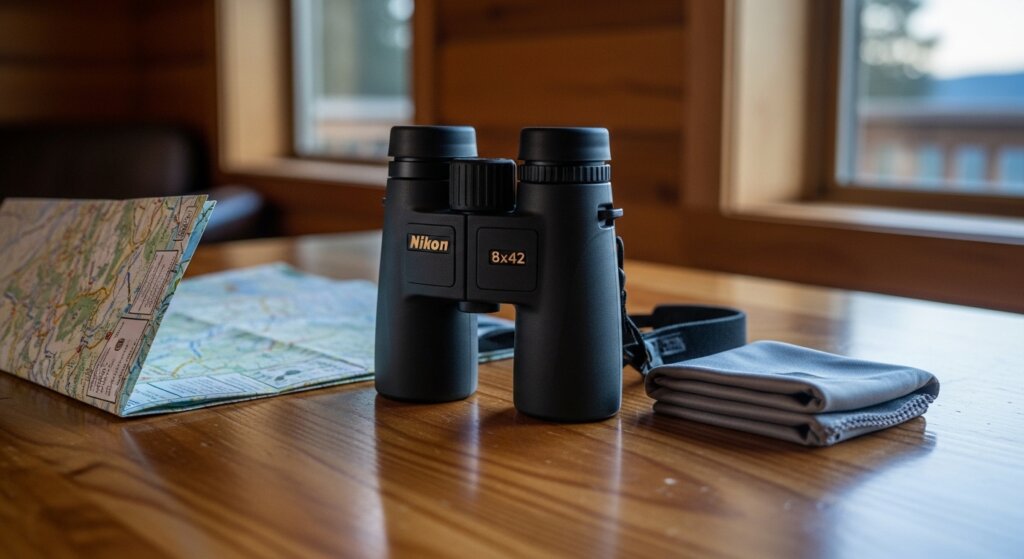
Quick Answer: Best Nikon Binoculars for Low Light
If you want one safe recommendation, choose the Nikon Monarch M7 8×42.
It is the best Nikon binoculars for low light for most real-world users because it balances brightness, steadiness, field of view, glass quality, and portability. A huge 10×50 binocular may look better on paper, but if it is heavy, shaky, or annoying to carry, it will not help you much in the field.
| Low-Light Need | Best Nikon Choice | Why It Makes Sense |
|---|---|---|
| Best overall low-light pick | Nikon Monarch M7 8×42 | Bright, steady, wide, and practical |
| Best value low-light option | Nikon Monarch M5 8×42 | ED glass at a lower price |
| Best big-objective option | Nikon Action EX 10×50 | Larger lenses for stationary viewing |
| Best beginner low-light pick | Nikon Prostaff P3 8×42 | Affordable and easy to use |
| Best compact option | Nikon Trailblazer 8×25 ATB | Portable, but limited in dim light |
The Monarch M7 8×42 is the one I would recommend first because low light is not only about gathering light. It is about getting a clean, stable image when conditions are already working against you.
Why Low-Light Binoculars Are So Misunderstood
A lot of buyers search for the best Nikon binoculars for low light and immediately start looking at 10×50 or 12×50 models.
That is understandable.
Big lenses sound brighter. Bigger numbers feel more powerful. But binocular performance in dim conditions depends on several things working together:
- Objective lens size
- Exit pupil
- Optical coatings
- Glass quality
- Magnification
- Field of view
- Hand steadiness
- Eye comfort
- How long you actually use the binocular
Here is the practical truth: a technically brighter binocular that shakes in your hands can show less usable detail than a slightly smaller binocular that stays steady.
That is why 8×42 is such a strong low-light format.
Why Nikon Monarch M7 8×42 Is the Best Low-Light Pick
The Nikon Monarch M7 8×42 works well in low light because it avoids the classic mistake of overbuilding one feature and ruining the rest.
It gives you enough objective size for dawn and dusk. It gives you 8x magnification that is easier to stabilize than 10x. It gives you a wide view, which helps when you are scanning shaded tree lines, fields, or water edges. And it gives you better optical quality than entry-level Nikon models.
That combination matters.
The 8×42 Format Is Practical
An 8×42 binocular gives you a 5.25mm exit pupil. Without turning this into a physics lecture, that means the view can feel bright and forgiving, especially compared with smaller compact binoculars.
More importantly, 8x is easier to hold steady.
At dawn or dusk, your eyes are already working harder. The last thing you need is a shaky 10x or 12x image bouncing around while you try to identify detail.
ED Glass Helps in Difficult Light
Low light often creates messy contrast. Dark branches against pale sky. Shadowed brush against open fields. Wet surfaces. Haze. Reflections.
ED glass helps reduce color fringing and makes the image look cleaner. It will not turn night into day, but it does help the view feel more controlled and easier on your eyes.
Wider Field of View Helps You Scan Faster
In low light, finding your subject is half the battle.
A wider view helps you scan without feeling like you are looking through a narrow pipe. This is useful for wildlife watching, hunting, backyard observation, and general outdoor use.
That is one reason the Monarch M7 8×42 stands out as the best Nikon binoculars for low light for most people.
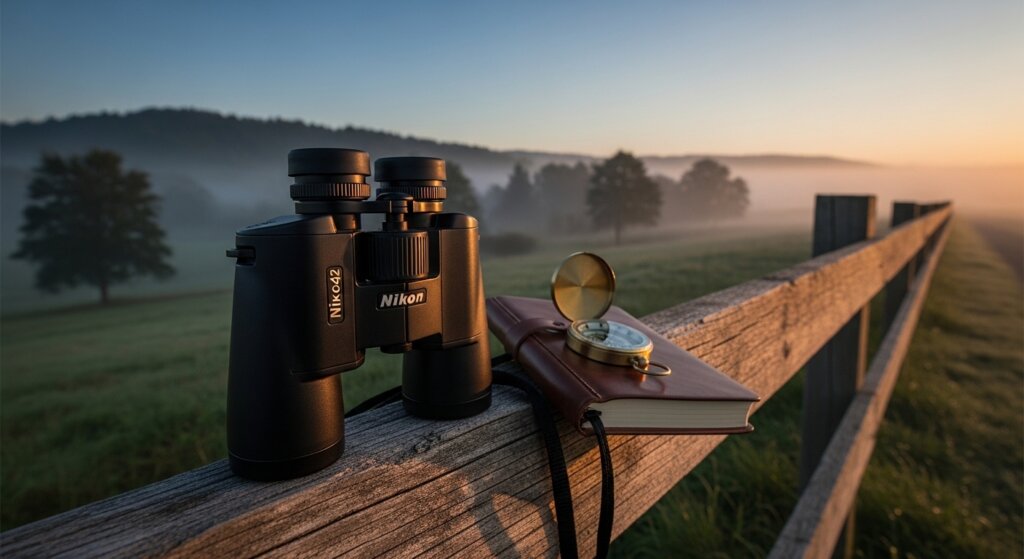
Nikon Monarch M7 8×42 Pros and Cons for Low Light
Pros
- Bright and steady 8×42 format
- Easier to hold still than 10x or 12x binoculars
- ED glass helps reduce color fringing
- Wide field of view makes scanning easier
- Waterproof and fogproof design for wet mornings
- Good choice for wildlife, shaded woods, dusk viewing, and general outdoor use
- More practical to carry than bulky 10×50 binoculars
Cons
- Costs more than Prostaff models
- Not as bright on paper as a large 50mm binocular
- Not pocket-sized for minimalist travel
- Serious astronomy users may want a larger binocular or tripod setup
The main point is simple: the Monarch M7 8×42 is not the biggest low-light Nikon binocular, but it is the most useful low-light Nikon binocular for most people.
Nikon Monarch M7 8×42 vs Nikon Action EX 10×50
This is the comparison low-light buyers need to understand.
The Nikon Action EX 10×50 has larger objective lenses. That can be useful when you are sitting still, scanning open views, or doing casual night-sky viewing. But it is also bulkier and less convenient.
The Nikon Monarch M7 8×42 is smaller, easier to carry, easier to hold steady, and more versatile.
| Feature | Nikon Monarch M7 8×42 | Nikon Action EX 10×50 |
|---|---|---|
| Best For | Handheld low-light use | Stationary low-light viewing |
| Magnification | 8x, steadier | 10x, more reach but shakier |
| Objective Size | 42mm | 50mm |
| Portability | Better | Bulkier |
| Field Use | More practical | More specialized |
| Best Buyer | Most outdoor users | Stationary viewers and casual sky watchers |
Which One Should You Choose?
Choose the Nikon Monarch M7 8×42 if you want the best Nikon binoculars for low light that you can use for hiking, wildlife viewing, hunting, bird watching, and general outdoor observation.
Choose the Nikon Action EX 10×50 if you mostly view from one place and do not mind extra bulk.
The Action EX 10×50 is not wrong. It is just less versatile.
And versatility matters because most people do not use binoculars only in one perfect scenario.
8×42 vs 10×42 vs 10×50 for Low Light
This is where buyers often overthink the wrong thing.
8×42: Best for Most People
The 8×42 format is the safest low-light choice because it is bright, steady, and comfortable. It works well for handheld viewing and does not punish you with excessive shake.
For most people searching for the best Nikon binoculars for low light, 8×42 is the smarter starting point.
10×42: Better Reach, Less Forgiving
A 10×42 binocular gives you more reach, which can help for hunting, open fields, ridges, and distant wildlife. But it also shows more hand movement.
In bright daylight, that may not bother you. In low light, it can.
If your hands are steady or you glass from a supported position, 10×42 can work. But for general low-light use, I still prefer 8×42.
10×50: Bright but Bulky
A 10×50 binocular can be useful for stationary viewing. The larger objective lenses help, but you pay for that with size and weight.
If you are watching from a porch, cabin, vehicle, tripod, or fixed spot, a 10×50 can make sense. If you are walking trails or carrying gear, it can get old fast.
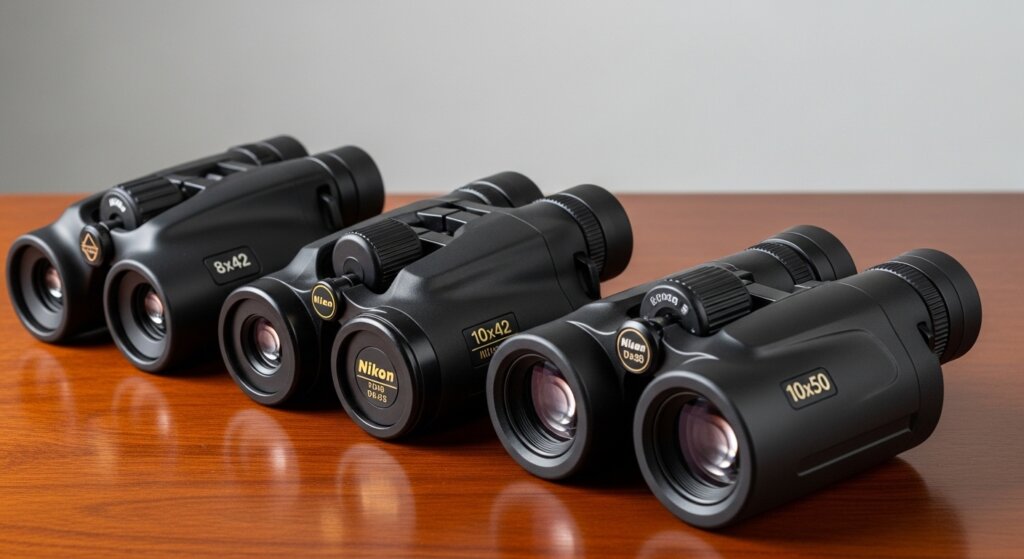
Best Nikon Binoculars for Low Light by Use Case
Low light means different things depending on the person using the binocular.
A hunter at last light has different needs than someone watching scenery from a cabin window. A backyard user has different priorities than someone scanning the night sky.
Best for Dawn Wildlife Watching
For early morning wildlife viewing, the Nikon Monarch M7 8×42 is the best choice.
It is bright enough, steady enough, and wide enough to scan edges, fields, and wooded areas before full daylight. You do not want a heavy binocular here. You want something you can grab quickly and use without fighting it.
Best for Dusk Backyard Viewing
If you watch from a deck, porch, or backyard, the Monarch M7 8×42 still works beautifully.
The image feels relaxed, and the 8x magnification is easy to control. If you are on a tighter budget, the Monarch M5 8×42 is also worth considering.
Best for Hunting in Low Light
For hunting, the answer depends on terrain.
If you hunt thick woods, 8×42 is usually better. If you hunt open fields and need more reach, 10×42 may be more useful.
Before buying specifically for hunting, read the best Nikon binoculars for hunting guide inside this page. It will help you decide whether you need reach, brightness, or a wider field of view.
Best for Bird Watching in Shaded Woods
Bird watching in shaded woods is brutal on cheap binoculars. The light is uneven, movement is fast, and branches create high-contrast edges.
The Monarch M7 8×42 is a strong option because it gives you a wide field, good color control, and steady handling.
Best for Casual Astronomy
For casual moon viewing or scanning the night sky, the Nikon Action EX 10×50 deserves attention.
But be realistic. Handheld astronomy with 10x binoculars can still get shaky. If you want longer sessions, consider using support.
Common Mistakes When Buying Low-Light Nikon Binoculars
Most people do not buy the wrong binocular because they are careless. They buy the wrong binocular because marketing trains them to look at the wrong numbers.
Mistake 1: Thinking Higher Magnification Means Better Low Light
Higher magnification does not automatically mean a brighter view.
A 12x binocular may bring the image closer, but it also reduces steadiness and often narrows your view. In low light, that can make the experience worse.
Mistake 2: Ignoring Exit Pupil
Exit pupil matters in low-light viewing because it affects how forgiving and bright the image feels to your eye.
You do not need to obsess over the math, but you should understand the pattern: 8×42 is generally more forgiving than 10×42, and compact binoculars are usually weaker in low light.
Mistake 3: Buying Compact Binoculars for Dusk Use
Compact binoculars are convenient, but they are not low-light heroes.
An 8×25 binocular can be great for travel, but it will not match an 8×42 when the sun drops. Physics does not care how much you like small gear.
Mistake 4: Choosing Big Binoculars You Will Not Carry
A 10×50 binocular may be brighter, but if it feels too bulky, you will leave it behind.
That is why the best Nikon binoculars for low light are not always the largest Nikon binoculars. The best pair is the one that balances brightness with actual usability.
Mistake 5: Buying Too Cheap
Budget binoculars can work in daylight. Low light exposes their weaknesses faster.
Poor coatings, dim images, glare, weak contrast, and uncomfortable eye relief become more obvious when the light fades.
If your budget is strict, compare realistic options in the best Nikon binoculars under $200 guide. That is better than buying a random cheap model and pretending it will perform like Monarch glass.
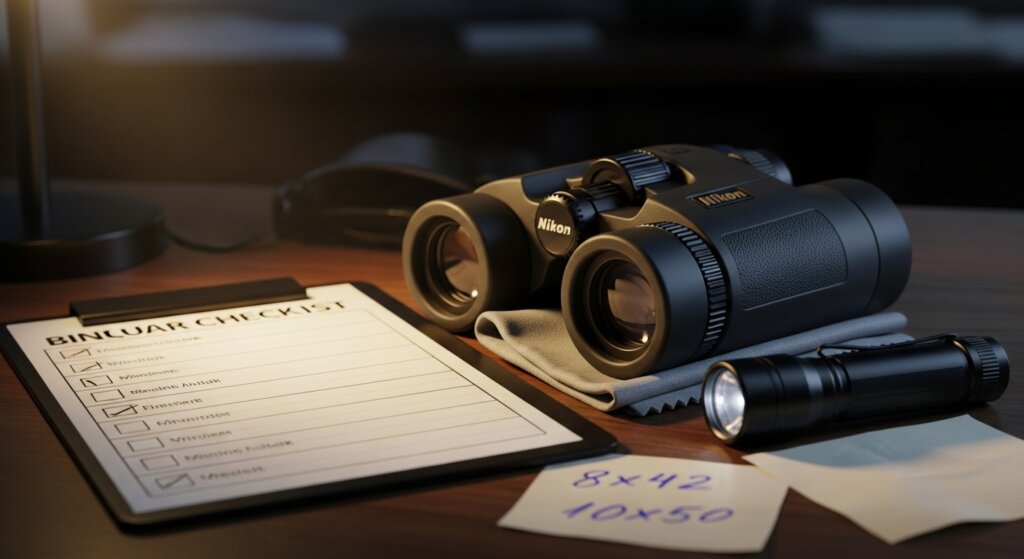
Do You Really Need Premium Low-Light Binoculars?
Here is the practical truth.
Some people use “low light” as an excuse to overspend. Others use budget as an excuse to buy optics they will hate.
Both are mistakes.
If you only use binoculars occasionally from your porch, you probably do not need premium glass. A Nikon Prostaff or Action EX model may be enough.
But if you regularly watch wildlife at dawn, hunt near last light, walk shaded trails, or care about detail in difficult conditions, the Monarch M7 8×42 is worth it.
Low-light viewing is where cheap optics feel cheap.
The image gets dull. Glare becomes obvious. Focus feels more annoying. Your eyes get tired faster. You stop using the binocular because the experience is not enjoyable.
That is the hidden cost of buying too low.
Best Low-Light Nikon Binocular for Beginners
If you are new to binoculars, do not start with an oversized, high-magnification model just because it sounds powerful.
Start with something easy to use.
For beginners who can afford it, the Monarch M7 8×42 is excellent. For tighter budgets, the Prostaff P3 8×42 is more realistic. The key is to avoid tiny compact binoculars or shaky high-power models as your first low-light pair.
If this is your first serious binocular purchase, read the best Nikon binoculars for beginners guide before choosing. It will help you avoid the classic beginner mistakes: too much magnification, too little objective size, and poor low-light expectations.
Final Verdict: Best Nikon Binoculars for Low Light
The Nikon Monarch M7 8×42 is the best Nikon binoculars for low light for most people.
It gives you the right mix of brightness, steadiness, field of view, ED glass, weather protection, and real-world usability. It is not the biggest option Nikon makes, but it is the one most people will enjoy using more often.
- Choose the Monarch M7 8×42 if you want the strongest all-round low-light Nikon binocular.
- Choose the Monarch M5 8×42 if you want good low-light value with ED glass.
- Choose the Action EX 10×50 if you mostly view from a fixed location and want larger objectives.
- Choose the Prostaff P3 8×42 if your budget is tight and you need a beginner-friendly option.
But if you want one serious answer, buy the Nikon Monarch M7 8×42.
For the full comparison, visit our main Best Nikon Binoculars guide. For more practical buying help, field-use comparisons, and tips, visit the BestBinocular.net homepage or browse the latest blog tips before you make your final decision.
FAQs About the Best Nikon Binoculars for Low Light
What are the best Nikon binoculars for low light?
The best Nikon binoculars for low light are the Nikon Monarch M7 8×42 for most users. They offer a strong balance of brightness, steadiness, ED glass, wide field of view, and practical portability.
Are 8×42 binoculars good for low light?
Yes, 8×42 binoculars are excellent for low light because they provide a bright, steady, and comfortable view. They are often more useful than higher-magnification binoculars because they are easier to hold still.
Are 10×50 binoculars better than 8×42 in low light?
A 10×50 binocular can be brighter in some stationary viewing situations, but it is also heavier and shakier. For handheld low-light use, 8×42 is often more practical and easier to use.
Is Nikon Monarch M7 good in low light?
Yes, the Nikon Monarch M7 8×42 is very good in low light. Its 8×42 format, ED glass, wide field of view, and weather-sealed design make it a strong choice for dawn, dusk, shaded woods, and general outdoor viewing.
Which Nikon binoculars are best for dusk viewing?
The Nikon Monarch M7 8×42 is the best Nikon binocular for dusk viewing for most people. If you mostly view from one fixed place, the Nikon Action Extreme 10×50 ATB can also be useful.
What magnification is best for low-light binoculars?
For handheld low-light binoculars, 8x is usually best. It gives a steadier image and a more forgiving view than higher magnification. A 10x binocular can work well if you need more reach and have steady hands or support.
Are compact Nikon binoculars good in low light?
Compact Nikon binoculars are convenient but not ideal for low light. Smaller objective lenses collect less light, so a full-size 8×42 binocular is usually much better for dawn, dusk, and shaded viewing.
Do I need ED glass for low-light binoculars?
You do not absolutely need ED glass, but it helps improve image quality. ED glass reduces color fringing and gives a cleaner view, especially in difficult light with branches, bright sky, haze, or reflections.
Are Nikon Prostaff binoculars good for low light?
Nikon Prostaff binoculars can work for casual low-light use, especially the 8×42 models. However, Monarch models usually perform better because they offer more refined optics and, in the Monarch M5 and M7, ED glass.
Should I buy Nikon Monarch M7 or Action EX 10×50 for low light?
Buy the Nikon Monarch M7 8×42 if you want a versatile, handheld low-light binocular. Buy the Action EX 10×50 if you mostly view from one place and do not mind carrying a larger binocular.
Are Nikon 7×50 binoculars good for low-light viewing?
Yes, Nikon 7×50 binoculars can perform well in low light because their large 50mm objective lenses and lower magnification provide a bright, steady image. However, they are heavier than 8×42 models and are better suited to stationary viewing, boating, or astronomy.




