
What Makes Binoculars Good for Elk Hunting
The best elk hunting binoculars are not always the biggest, heaviest, or most expensive pair you can hang around your neck.
Elk hunting is different from casual deer hunting in the back forty. You are often glassing across canyons, picking apart dark timber, watching avalanche chutes, and trying to decide whether that tan patch in the shade is a bedded cow, a bull’s shoulder, or just another rock playing tricks on tired eyes.
That is where binocular choice gets serious.
For elk, you need enough magnification to read distant terrain, enough brightness to stay useful at dawn and dusk, and enough comfort that you can actually glass for long sessions without feeling like your eyeballs need a vacation. A cheap pair might show you “something moving.” A good pair helps you judge distance, behavior, terrain, and whether it is worth burning your legs on a brutal stalk.
If you are building a premium hunting optics setup, start with the main buying path here: Best High-end Binoculars for Hunting. This article goes deeper into the elk-specific side, where long-distance glassing and mountain comfort matter more than showroom specs.
Why Elk Hunting Demands Better Binoculars
Elk are big animals, but that does not mean they are easy to spot.
A bull can disappear into burnt timber like smoke. A herd can bed in broken shade where every patch of grass, rock, and deadfall looks suspicious. During rifle season, elk may move at first light, feed briefly, and then tuck into cover before many hunters even finish their coffee.
That is why the best elk hunting binoculars need to do more than magnify.
They need to help you scan wide country without missing movement. They need to show contrast in low light. They need to reduce eye fatigue when you are glassing for 30 minutes, then another 30, then another hour because the country still feels “elk-y.”
In real use, elk binoculars must answer three questions fast:
Can I spot animals at distance?
Can I judge what I am looking at before it disappears?
Can I stay behind the glass long enough to find what other hunters walk past?
That last question matters more than most buyers admit. Many hunters do not fail because their binoculars are technically unusable. They fail because their binoculars are annoying. The image feels narrow. The focus wheel is stiff. The eye cups fight their face. The view gets dim when shadows fill the slope.
Good elk glass keeps you patient. Bad glass makes you quit early.
Best Elk Hunting Binoculars Overall: 10×42 Is the Sweet Spot
For most elk hunters, the best all-around choice is a premium 10×42 hunting binocular.
A 10×42 gives you enough reach for western basins, open burns, sage flats, and opposing ridgelines. At the same time, it stays light enough for carrying all day. You can glass handheld when you are moving, then mount it on a tripod when you need to slow down and dissect country.
That balance is why 10×42 keeps showing up in elk camps.
An 8×42 can feel more relaxed in tight timber. A 12×50 can be powerful from a tripod. But if you want one serious pair for most elk hunts, 10×42 is usually the safest answer.
Quick Elk Hunting Binocular Comparison
| Size | Best For | Strength | Weakness |
|---|---|---|---|
| 8×42 | Timber, shorter distances, shaky hands | Wider, steadier view | Less detail across big country |
| 10×42 | Most elk hunters | Best balance of reach, weight, and usability | Slightly less steady than 8x |
| 10×50 | Low-light glassing from fixed points | Brighter feel and more forgiving exit pupil | Heavier around the neck |
| 12×50 | Tripod glassing in open country | More detail at long range | Harder to handhold |
| 15×56 | Dedicated tripod glassing | Excellent for picking apart basins | Too bulky as your only binocular |
Here is my honest take: if you are not sure what to buy, do not overthink it. Get the best 10×42 you can afford. Then learn to glass better.
That combo beats a complicated optics setup you barely use.
Recommended Product: Swarovski NL Pure 10×42
If I had to recommend one premium elk hunting binocular for serious western hunters, it would be the Swarovski NL Pure 10×42.
No, it is not the budget-friendly answer. It is the “buy once, cry once, then stop blaming your glass” answer.
The NL Pure 10×42 makes sense for elk hunting because it combines 10x magnification with a wide, easy view and a body shape that feels less tiring during long glassing sessions. Swarovski lists the NL Pure 10×42 with 10x magnification, a 42mm objective lens, a wide field of view, and a weight that stays manageable for mountain use.
In the field, that means you are not just getting a sharp image. You are getting a calmer viewing experience. That matters when you are scanning an opposite slope for a bedded bull’s antler tips, ear flicks, tan hide, or horizontal body lines hidden in vertical timber.
Why It Fits Elk Hunting So Well
The biggest reason I like the NL Pure 10×42 for elk is simple: it feels useful in almost every elk scenario.
You can carry it on a chest harness during a long climb. You can handhold it while still-hunting through dark timber edges. You can lock it onto a tripod and pick apart far ridges. It does not feel like a specialty tool that only works in one narrow situation.
Pros
- Excellent long-distance detail for open country glassing
- Comfortable ergonomics for longer sessions
- Wide, immersive view that helps when scanning slopes
- Strong premium option for mountain terrain
- Better suited as an all-day binocular than bulkier 12x or 15x setups
Cons
- Expensive enough to make most hunters pause
- Still benefits from tripod use for serious long-range glassing
- More binocular than casual weekend hunters need
- You may still want a spotting scope for judging bulls at extreme distance
The Swarovski NL Pure 10×42 is not the only good choice, but it is one of the cleanest examples of what the best elk hunting binoculars should feel like: bright, steady, detailed, comfortable, and trustworthy when the mountain finally gives you a small window.
What Magnification Is Best for Elk Hunting?
Most elk hunters should choose 10x magnification.
That may sound boring, but boring is often right in hunting gear. A 10x binocular gives you enough detail to evaluate distant movement without making every heartbeat shake the image into soup. It also works better from a tripod than many hunters expect.
When 8×42 Makes Sense
An 8×42 works well if you hunt thicker country, timber pockets, steep north-facing slopes, or areas where shots and sightings happen inside moderate range. The image feels steadier, the field of view usually feels wider, and your eyes relax more easily.
If you mostly hunt whitetails or mixed deer and elk country, you may also want to read Best Deer Hunting Binoculars because deer hunting often rewards a slightly different balance of speed, field of view, and woodland usability.
When 10×42 Makes Sense
A 10×42 is the best middle ground for elk.
It lets you scan timber edges, watch open parks, study burns, and glass across canyons without carrying a brick around your neck. It is also easier to use without a tripod than 12x or 15x binoculars.
For most hunters searching “best elk hunting binoculars,” this is the size I would point to first.
When 12×50 Makes Sense
A 12×50 becomes interesting if you glass huge country from fixed points. Think open basins, high desert elk, late-season migration routes, or long sits behind a tripod.
The downside? Handheld use gets shaky fast. If you buy 12x because you think “more power equals more elk,” you may end up seeing less because you cannot hold the image still.
When 15×56 Makes Sense
A 15×56 is a specialized tripod binocular. It can be excellent for picking apart distant country, but it should not be your only optic unless your hunting style is heavily tripod-based.
For most elk hunters, 15×56 belongs beside a 10×42, not instead of it.
Low Light Performance Matters More Than You Think
Elk are rude about timing.
They rarely stand in perfect noon sunlight and pose like a product photo. They move in gray light, feed in shadows, and slip through timber right when your eyes are still waking up.
That is why the best elk hunting binoculars need strong low-light performance.
Low light is not only about objective size. Yes, a larger objective can help. But coatings, glass quality, contrast, exit pupil, and image control matter too. A premium 10×42 can beat a cheap 10×50 when shadows get heavy because better glass preserves detail instead of turning everything into a muddy blur.
If dawn and dusk performance is your top priority, compare this article with Best Low Light Hunting Binoculars. It will help you decide whether you need a lighter elk setup or a brighter low-light-focused pair.
Real Elk Scenario
You reach a glassing knob before sunrise. The basin below you looks empty at first. Ten minutes later, one pale shape appears near the dark timber. Then another. Then a line of bodies becomes visible as your binoculars separate tan hide from yellow grass.
That is where cheap binoculars lose.
They may show the hillside, but they do not show enough contrast. You stare, doubt yourself, adjust focus, stare again, and by the time you are sure, the elk are already moving into cover.
Better glass buys you confidence.
Field of View: The Spec Elk Hunters Underrate
Magnification gets all the attention, but field of view helps you find elk faster.
A wider field of view lets you scan more country without feeling boxed in. When elk are moving through scattered timber, you want to catch movement at the edge of your view. A narrow image can make you feel like you are looking through a straw.
This is one reason premium 10×42 binoculars are so valuable. They often give you enough power without making the view feel cramped.
Wide View Helps When:
- You are scanning avalanche chutes
- Elk are feeding across a large meadow
- You are following a herd through timber gaps
- You are watching multiple ridgelines
- You need to relocate animals after looking away
A tight field of view creates frustration. You find an elk, lower the binoculars, look back, and suddenly the whole mountain looks different. We have all done that little panic dance. It is not fun.
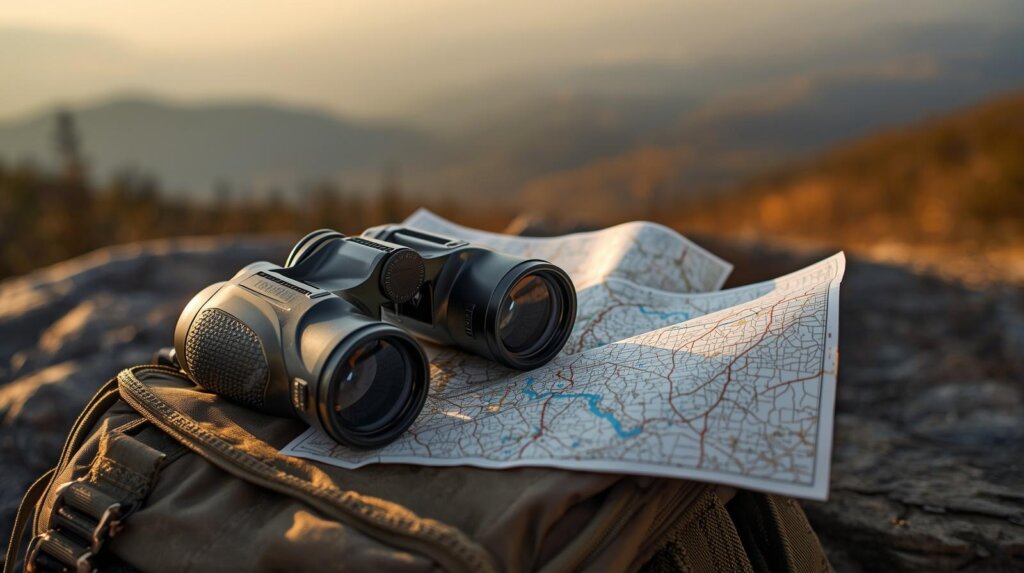
Should You Use Elk Binoculars on a Tripod?
Yes, if you hunt open country.
A tripod turns a good binocular into a much better glassing tool. Even a 10×42 becomes more effective when the image stops bouncing. You notice tiny movements. You pick apart shade more carefully. You stop rushing.
Handheld binoculars are fine for quick checks. Tripod glassing is for finding animals other hunters miss.
Best Tripod Use Cases
| Situation | Why a Tripod Helps |
|---|---|
| Glassing across canyons | Removes shake and reveals small movement |
| Watching bedding areas | Keeps your view locked on one zone |
| Late-season open country | Helps cover distant slopes slowly |
| Windy conditions | Stabilizes the image |
| Long sessions | Reduces arm and eye fatigue |
If your elk hunting is mostly spot-and-stalk in big country, budget for a tripod adapter. Do not spend all your money on binoculars and then balance them on your knees like a caveman.
What About Rangefinding Binoculars for Elk?
Rangefinding binoculars can be excellent for elk hunting, especially rifle hunting in open terrain.
They combine glassing and ranging into one tool, which saves movement. That matters when a bull steps out and you do not want to drop your binoculars, grab a rangefinder, range the slope, then rebuild your shooting position.
But there is a trade-off.
Rangefinding binoculars are usually heavier, more expensive, and sometimes not quite as optically refined as the best traditional premium binoculars in the same price tier. Some hunters love them. Others prefer a lighter 10×42 binocular and a separate rangefinder.
Choose Rangefinding Binoculars If:
- You rifle hunt open country
- You often shoot across canyons
- You want fewer devices in your chest harness
- You value speed more than minimum weight
Choose Traditional Binoculars If:
- You glass for long hours
- You want the cleanest optical image possible
- You bowhunt or hunt mixed terrain
- You already like your separate rangefinder
For pure glassing comfort, I still prefer premium traditional 10×42 binoculars for many elk hunters.
Best Elk Hunting Binoculars by Use Case
Best for Western Elk Hunting
Choose a premium 10×42.
Western elk hunting often means climbing, glassing, moving, and glassing again. You need reach, but you also need comfort. A heavy binocular may sound powerful at home and feel like punishment by day three.
Best for Timber Elk Hunting
Choose an 8×42 or easy-handling 10×42.
In timber, speed and field of view matter. You are not always judging animals at extreme distance. Sometimes you are catching movement through dark trunks or checking a small opening before stepping forward.
Best for Long-Range Glassing
Choose a 10×42 on a tripod or add a 12×50/15×56 as a second optic.
If you glass huge country from high points, stabilization matters more than another two clicks of magnification. A steady 10x can reveal more than a shaky 12x.
Best for Backpack Elk Hunting
Choose a lightweight premium 10×42.
Backpack elk hunting punishes gear decisions. Every ounce rides on your shoulders. You want binoculars good enough to trust, but not so heavy that you start leaving them in the tent.
Best for Low-Light Elk Hunts
Choose high-quality 10×42, 10×50, or 8×42 binoculars with excellent coatings and contrast.
Do not chase objective size alone. A bargain 10×50 may look impressive on paper and still fall apart in gray light.
Buyer Tips Before You Spend Premium Money
Buying the best elk hunting binoculars is partly about specs and partly about being honest with yourself.
A lot of hunters buy for the hunter they imagine they are, not the hunter they actually are. They buy giant tripod binoculars, then still spend most of the day hiking. Or they buy compact glass to save weight, then complain they cannot judge distant slopes.
Match the binocular to your real hunt.
Check Eye Relief
If you wear glasses, eye relief matters. Short eye relief makes the view frustrating because you cannot see the full image comfortably.
Test the Focus Wheel
Elk hunting often happens with cold fingers. A focus wheel that feels fine indoors can feel stiff and annoying in freezing weather.
Think About Your Chest Harness
Some premium binoculars fit better in certain harnesses than others. Big eyecups, long barrels, and bulky armor can make the draw feel clumsy.
Do Not Ignore Weight
A few ounces sound meaningless until you carry them all week. The best binocular is the one you keep using when you are tired.
Plan for a Tripod
Even if you buy 10×42 binoculars, tripod compatibility matters. A tripod turns casual scanning into real glassing.
Common Mistakes Elk Hunters Make With Binoculars
The first mistake is buying too much magnification.
More power sounds useful, but only if you can hold it steady. A shaky image hides detail. That is why many hunters see more with a quality 10×42 than with a cheap 12×50.
The second mistake is ignoring comfort.
You may compare sharpness, brightness, and coating names for hours, then forget that your hands and face decide whether you enjoy using the binocular. Ergonomics are not fluff. They are the reason you stay behind the glass.
The third mistake is buying low-end optics for a high-effort hunt.
Elk tags, fuel, boots, packs, layers, travel, food, and time off work already cost real money. Saving a little on the one tool that helps you find elk can be false economy.
The fourth mistake is glassing too fast.
Even the best elk hunting binoculars cannot help if you whip across a hillside like you are scanning a parking lot for your truck. Slow down. Grid the slope. Look into shadows. Watch edges. Elk often appear as pieces before they appear as animals.
Final Verdict: What Should Most Elk Hunters Buy?
Most elk hunters should buy the best premium 10×42 binocular they can comfortably afford.
That is the honest answer.
A 10×42 gives you the right mix of reach, brightness, portability, and all-day usability. It works for open parks, timber edges, high basins, burned slopes, and most western elk country. Add a tripod, and it becomes far more powerful than many hunters expect.
If your hunting style is heavily timber-based, consider 8×42. If you spend most of your time glassing from fixed points, consider adding 12×50 or 15×56 binoculars later. But as a primary elk optic, premium 10×42 is the safe, practical, field-proven choice.
The best elk hunting binoculars do not magically put elk on the mountain. They help you notice what is already there before it vanishes.
That is the difference.
FAQs About the Best Elk Hunting Binoculars
What magnification is best for elk hunting?
For most hunters, 10x is the best magnification for elk hunting. It gives you enough reach for western country while still being usable handheld. A 10×42 binocular is the best all-around choice for most elk hunters.
Are 8×42 binoculars good for elk hunting?
Yes, 8×42 binoculars work well for timber elk hunting, closer terrain, and hunters who want a steadier handheld view. They are not as strong for long-distance glassing across large basins, but they are comfortable and easy to use.
Are 10×42 binoculars enough for elk hunting?
Yes, 10×42 binoculars are enough for most elk hunting situations. They offer a strong balance of magnification, field of view, low-light ability, and carry weight. For serious long-range glassing, mount them on a tripod.
Should I buy 10×42 or 12×50 binoculars for elk?
Buy 10×42 if you want one main binocular for hiking, glassing, and all-day carry. Choose 12×50 if you glass mostly from fixed positions and plan to use a tripod often. For most hunters, 10×42 is easier to live with.
Do elk hunters need a spotting scope?
Not always. Good binoculars help you find elk. A spotting scope helps you judge details at longer distance. If you are trophy judging bulls across big country, a spotting scope can help. If you are mainly locating elk and planning stalks, premium binoculars come first.
Are expensive binoculars worth it for elk hunting?
Expensive binoculars can be worth it if you hunt hard, glass often, and spend time in low-light or long-distance terrain. Better glass reduces eye strain, improves contrast, and helps you stay behind the optic longer.
What is the best elk hunting binocular size?
The best elk hunting binocular size for most hunters is 10×42. It is powerful enough for open country and still light enough for mountain hunting. It also pairs well with a tripod for more careful glassing.
Can I use the same binoculars for deer and elk hunting?
Yes, you can use the same binoculars for both deer and elk hunting. A 10×42 works especially well as a crossover size. For thicker deer woods, 8×42 may feel better. For open elk country, 10×42 usually has the advantage.
Should I use a tripod with elk hunting binoculars?
A tripod is useful when glassing open basins, distant ridgelines, or large areas for long periods. It reduces hand shake, improves detail, and helps you spot small movements. A 10×42 can work handheld, but tripod support makes careful glassing more effective.
For more practical buying help, read the latest field tips on the blog page or head back to the bestbinocular.net home page to explore more hunting optics guides.




