
Best Binocular Case: How to Choose the Right Protection for Your Optics
A binocular case is one of those accessories people ignore until something annoying happens. A zipper scratches the barrels. Dust gets inside the eyecups. The binoculars bounce around in a backpack beside keys, snacks, a power bank, and a half-empty water bottle. Or worse, the case looks protective at home but becomes awkward the moment you actually walk a trail, climb into a truck, or move through wet grass.
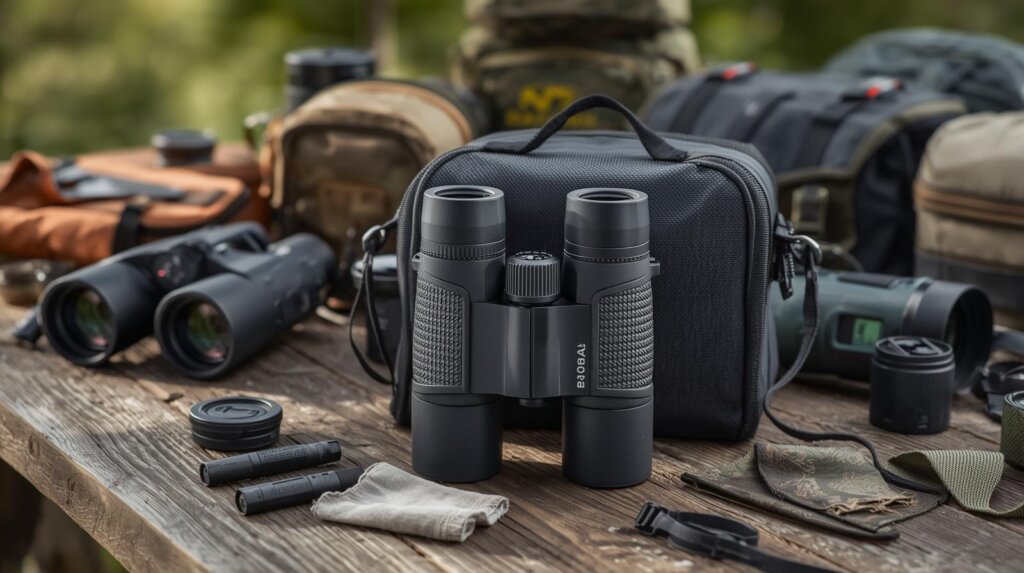
That is why choosing the best binocular case is not just about buying something that “fits.” A good case should protect the optics, match the way you carry your gear, and make you more likely to actually use your binoculars instead of leaving them buried in a bag.
The right choice depends on your binocular size, your outdoor habits, your tolerance for weight, and how fast you need access. A hunter glassing at first light needs a different setup than a traveler protecting compact 8×25 binoculars in a suitcase. A backyard stargazer with large Porro prism binoculars may care more about padding than silent access. A birder walking through damp woodland may want a soft case that rides comfortably and keeps drizzle off the lenses.
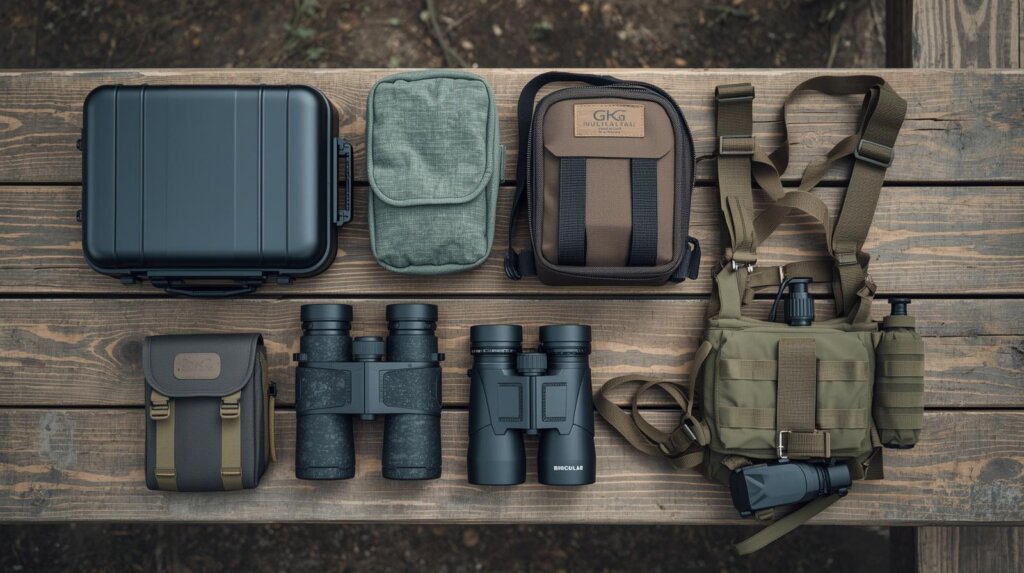
This complete guide breaks down the best binocular case options based on real-world use, not just product labels. You will learn when a hard case is the smarter choice, when a soft case feels easier for everyday carrying, why harness cases are popular with hunters and bird watchers, and which features actually matter after the first few uses.
Why the Best Binocular Case Matters More Than Most Buyers Think
Binoculars are built to be handled outdoors, but that does not mean they enjoy being treated like a metal water bottle. Even rugged binoculars have vulnerable points: eyecups, diopter rings, focus wheels, objective lenses, hinge tension, coatings, and armor edges. A case protects more than the glass. It protects the alignment, the finish, and the little adjustments that make binoculars comfortable to use.
A cheap, floppy pouch may be fine for storing binoculars in a closet. But if you carry your optics through airports, hunting blinds, hiking trails, fishing piers, or muddy campsites, the case becomes part of the system.
The best binocular case does three jobs well:
- It keeps impact away from the optical body.
- It prevents dust, moisture, grit, and loose gear from rubbing against the lenses.
- It lets you access the binoculars without fighting straps, noisy zippers, or awkward lids.
That third point is underrated. A case that protects well but slows you down too much often gets abandoned. And once the binoculars are carried outside the case, the protection is gone.
A good case should feel like a natural part of your setup. You should not have to think about it every five minutes.
Quick Comparison: Best Binocular Case Types by Use Case
| Case Type | Best For | Main Strength | Main Weakness | Best User |
|---|---|---|---|---|
| Hard binocular case | Travel, storage, vehicle gear, expensive optics | Excellent crush and impact protection | Bulkier and slower to access | Travelers, photographers, stargazers |
| Soft padded case | Hiking, birding, casual outdoor use | Lightweight and comfortable | Less crush protection | Walkers, birders, general users |
| Waterproof binocular case | Kayaking, wet climates, fishing, boat use | Moisture and splash protection | Can feel bulky or less breathable | Anglers, boaters, rainy-weather users |
| Harness binocular case | Hunting, long hikes, active movement | Fast chest access and weight distribution | More expensive, more visible | Hunters, guides, serious outdoor users |
| Compact binocular case | Travel, concerts, sports, city trips | Small and easy to pack | Limited room for accessories | Travelers, casual users |
| Universal binocular case | Mixed binocular sizes, budget buyers | Flexible fit | May not be perfectly shaped | Users with multiple binoculars |
If your binoculars are your “grab and go” outdoor tool, a soft padded case or harness case usually makes the most sense. If your binoculars are expensive and spend time in luggage, a hard case is safer. If rain, spray, or boat storage is part of the story, start with a waterproof binocular case before looking at anything else.
Best Binocular Case Overall: Padded Protection With Easy Access
The best all-around binocular case is usually not the most armored option. It is the case you will actually carry.
For most users, the sweet spot is a padded binocular case with a structured body, soft interior, secure closure, and comfortable strap. It should be firm enough that the binoculars do not collapse into the bottom, but not so rigid that it feels like carrying a toolbox.
The ideal everyday case has:
- A padded interior
- A weather-resistant outer material
- A smooth or soft lining
- Enough depth for eyecups and lens caps
- A shoulder strap or belt loop
- A closure that does not scratch the binocular body
- Enough structure to stop the binoculars from bouncing around
This type of case works well for 8×42 and 10×42 roof prism binoculars, which are probably the most common outdoor sizes. It is also easier to use than a bulky hard case when you are moving between locations.
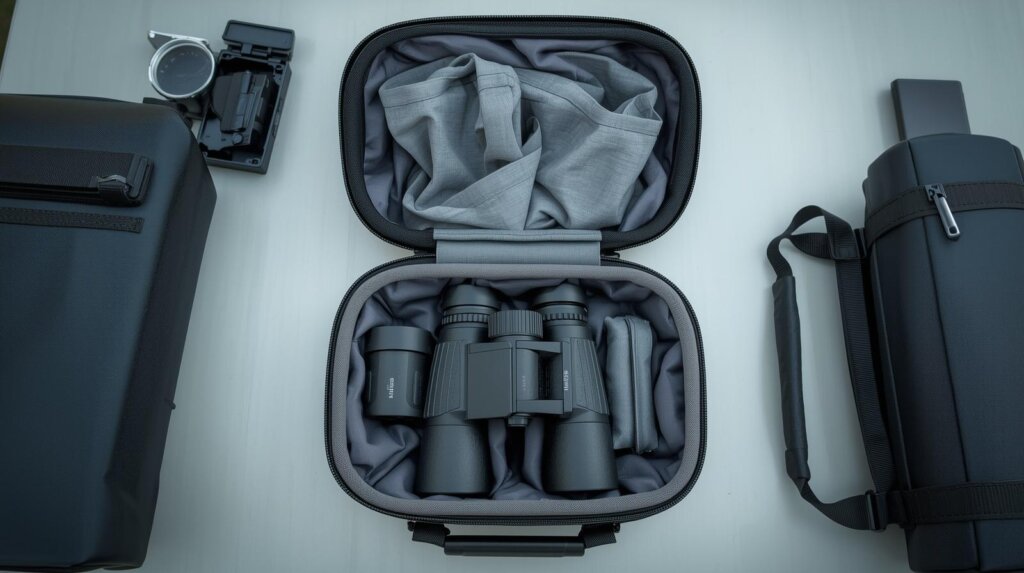
If your binoculars often ride in a backpack with other gear, compare materials and padding depth in our padded binocular case for protection guide before choosing.
Best Hard Case for Binoculars: Maximum Protection for Travel and Storage
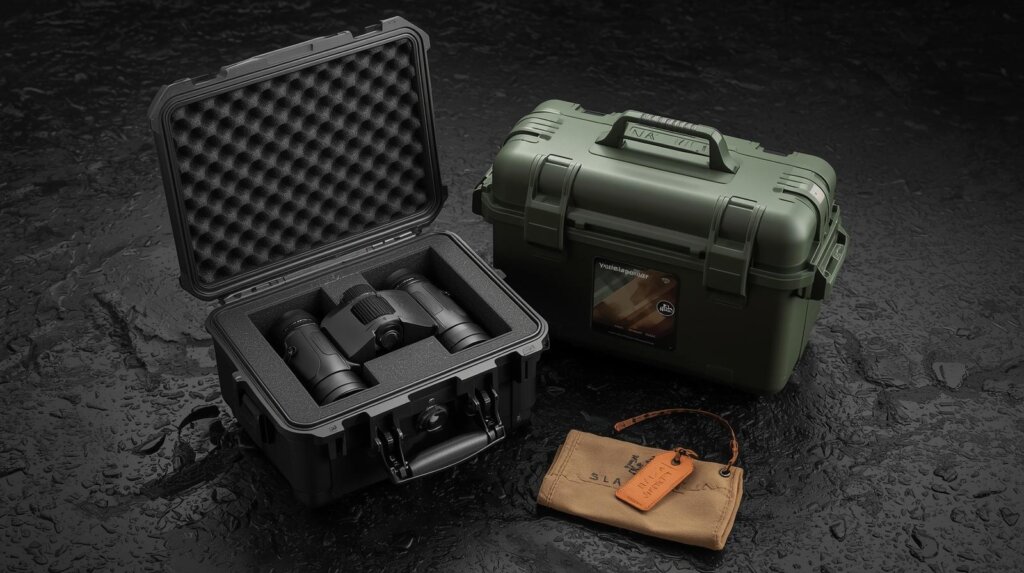
A hard case is the right choice when impact protection matters more than instant access. Think checked luggage, car trunks, boats, storage shelves, camera bags, or expensive binoculars you do not use every day.
The best hard case for binoculars should have foam or molded interior support. Without that, the binoculars can still rattle around inside a tough shell. The outside protects against crushing, but the inside needs to control movement.
Hard cases are especially useful for:
- Large Porro prism binoculars
- Astronomy binoculars
- Premium glass
- Long-distance travel
- Shared family gear
- Storing binoculars with accessories
- Carrying optics in a vehicle
Pelican-style protective cases are popular because they are built around watertight construction and pressure equalization. Pelican’s 1120 Protector Case, for example, is described with a watertight silicone O-ring lid, automatic purge valve, rubberized handle, and stainless steel hardware, while the Peli version lists IP67 protection with submersion resistance up to 1 meter for 30 minutes.
That does not mean every binocular owner needs a Pelican case. For compact binoculars, it may be overkill. But if you own premium glass, or your case may be thrown into a truck bed, boat locker, or overhead bin, a hard case starts to make sense.
| Hard Case Feature | Why It Matters |
|---|---|
| Foam insert | Stops binoculars from shifting inside |
| Waterproof seal | Helps protect from rain, spray, and damp storage |
| Pressure valve | Useful for air travel and changing altitude |
| Lockable latches | Adds security during travel |
| Crush-resistant shell | Protects against luggage and heavy gear pressure |
A hard case is not the most convenient field case. You will not want to open a box every time something moves in the distance. But for storage and transport, it is often the best binocular case style for serious protection.
For a full breakdown of rigid protection and travel-ready shells, read our hard case for binoculars guide.
Best Soft Binocular Case With Strap: Comfortable for Walking and Birding
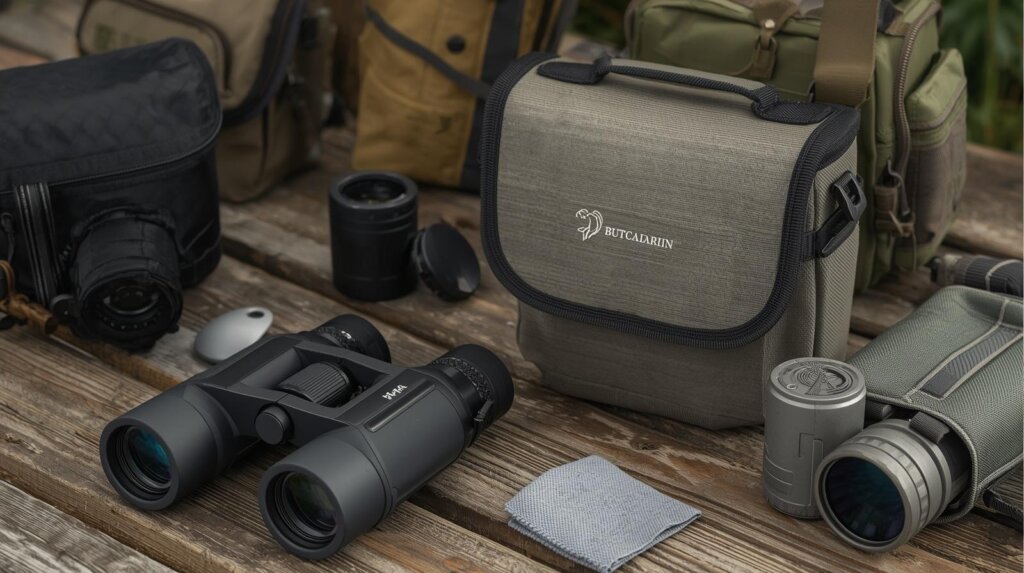
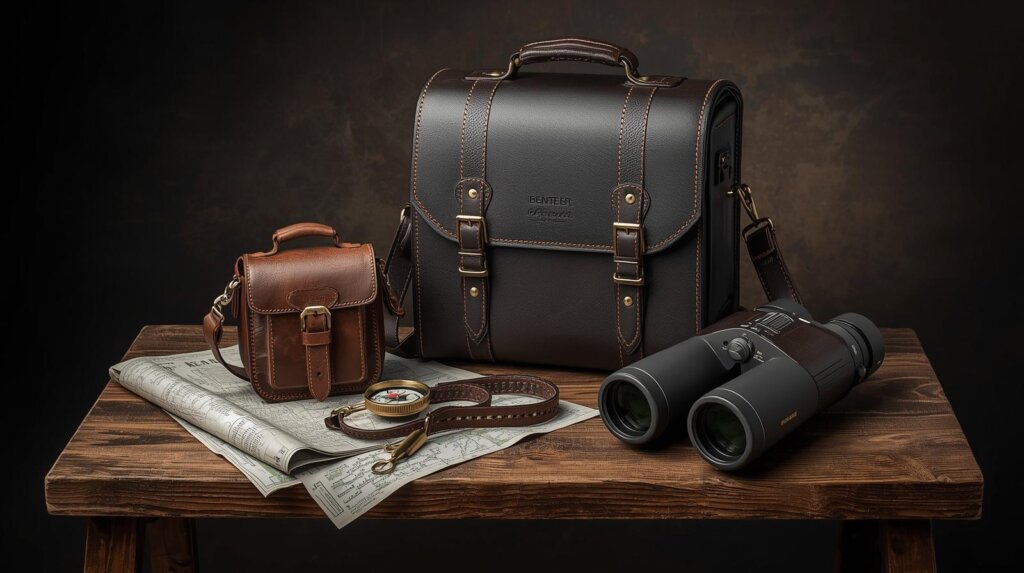
A soft binocular case with a strap is the practical choice for people who walk more than they drive. It is lighter than a hard case, quieter than a plastic shell, and easier to carry across parks, trails, gardens, reserves, and travel stops.
This style works best when the binoculars come in and out often, but you still want them protected between viewing moments.
The biggest advantage is comfort. A soft case does not feel like luggage. You can carry it crossbody, over one shoulder, or tucked inside a daypack. If the strap is adjustable and the case has enough padding, it becomes very easy to live with.
The main downside is crush protection. A soft case protects well against scratches, dust, and mild bumps. It does not protect well if someone sits on it, stacks a suitcase over it, or drops a heavy object on top.
Look for:
- Wide strap, not a thin cord
- Reinforced stitching at strap points
- Padded sides and base
- Smooth inner lining
- Quiet zipper or flap closure
- Space for lens caps
- Water-resistant outer fabric
A soft case is often the best binocular case for birders because it does not overcomplicate the day. You can keep your binoculars close, avoid neck fatigue, and move quietly.
If comfort matters more than maximum armor, you will get more practical value from a soft binocular case with strap than from a heavy-duty storage box.
Best Binocular Carrying Case With Harness: For Hunting and Long Outdoor Sessions
A harness-style case changes how binoculars feel in the field. Instead of hanging from your neck or bouncing against your stomach, the binoculars ride on your chest in a compact pack. The weight spreads across your shoulders and back. Access is faster. Your hands stay free.
For hunters, this is often the best binocular case category because binoculars are not occasional gear. They are used repeatedly while walking, waiting, glassing, and repositioning.
Harness cases are also useful for:
- Long hikes with frequent viewing
- Mountain hunting
- Wildlife observation
- Field work
- Archery setups
- Rangefinder users
- Anyone tired of neck straps
The Vortex GlassPak Pro is one popular example of a chest-style binocular harness. Vortex describes it as tough, weather-resistant, padded, and built with modular attachment points, with sizes for small and large binoculars. Marsupial Gear’s Enclosed Binocular Pack is another well-known example, using a front-folding magnetic lid, taller sidewalls, overlapping wings, and MOLLE attachment points for added accessories.
The best harness cases usually have:
- One-handed opening
- Quiet closure
- Binocular tethers
- Weather-resistant fabric
- Comfortable shoulder straps
- Room for rangefinder or small accessories
- Enough structure to protect lenses
- No loud zipper right where silence matters
Here is the honest downside: harness cases can feel like too much gear for casual use. If you only take binoculars to the park twice a month, a full chest pack may be unnecessary. But if you glass for hours or move through brush, it can feel like a major upgrade.
| Harness Case | Best For | Notable Strength | Consideration |
|---|---|---|---|
| Vortex GlassPak Pro | Hunting and all-day field use | Weather-resistant padding and modular setup | Choose size carefully |
| Marsupial Gear Enclosed Binocular Pack | Quiet access and full containment | Magnetic lid and enclosed protection | Premium price range |
| Leupold GO Afield Harness | Simple chest carry | Keeps binoculars secure and accessible with adjustable non-elastic webbing | May be less modular than premium packs |
| Badlands Bino XR | Binocular + rangefinder users | Dual compartments and magnetic-style access mentioned in Badlands gear descriptions | More specialized for hunters |
For more field-carry setups, use this natural internal link: Serious hunters and hikers should compare fit, access, and chest comfort in our binocular carrying case with harness breakdown before buying.
Best Compact Binocular Case: Small, Light, and Easy to Pack
Compact binoculars deserve a compact case. It sounds obvious, but many people buy a universal pouch that is too large, then the binoculars slide around inside. That movement is what causes small scratches, worn armor, and loose lens caps.
A compact case should fit close to the binocular shape. It should not squeeze the focus wheel, but it should not leave enough room for the binoculars to tumble either.
Best uses for compact binocular cases:
- Travel
- Concerts
- Stadium events
- Cruises
- City sightseeing
- Museum trips
- Backpack pockets
- Glove boxes
- Day bags
For 8×25, 10×25, 8×30, or similar smaller binoculars, a compact case is usually better than a large padded pouch. It takes less room and makes you more likely to carry the binoculars.
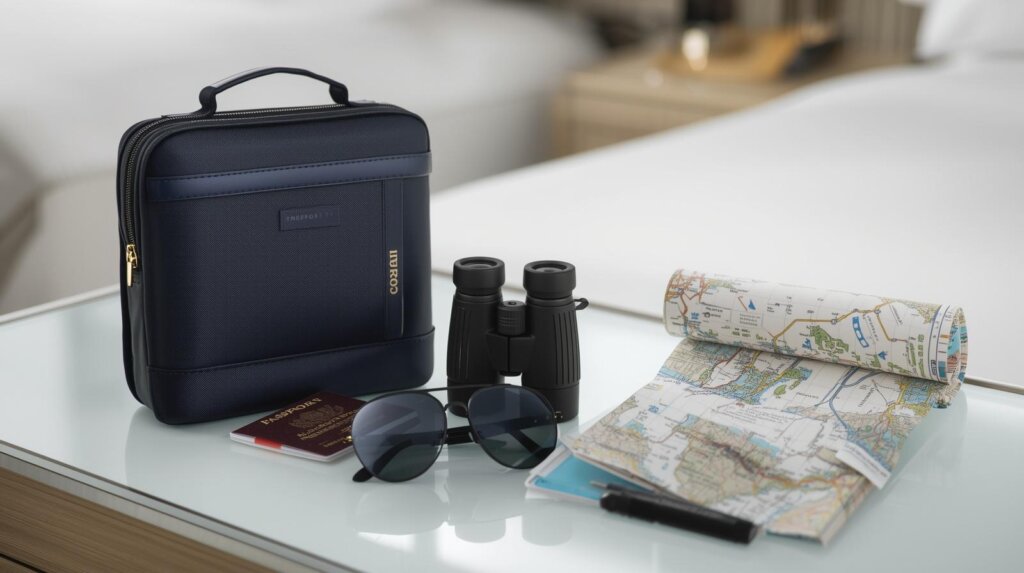
Compact does not mean flimsy. A good compact binocular case still needs padding, a secure closure, and a soft interior. The main difference is that it avoids wasted space.
For small optics and easy packing, compare slim options in our compact binocular case guide.
Best Waterproof Binocular Case: For Rain, Boats, Fishing, and Wet Storage
A waterproof binocular case is not only for kayakers. It is also useful for anyone who leaves gear in a damp vehicle, walks in unpredictable weather, fishes near spray, or stores binoculars in a garage or cabin.
There are two levels to understand:
- Water-resistant means the case can handle light rain, damp grass, or brief splashes.
- Waterproof usually means sealed construction that can resist heavier water exposure.
Most soft cases are water-resistant, not truly waterproof. That is enough for many users. But if your binoculars may be near boat spray or heavy rain, you want a stronger sealed case or a waterproof dry-bag-style setup.
A waterproof case should include:
- Sealed zipper or roll-top closure
- Coated or waterproof shell
- Raised seams or welded seams
- Interior padding or foam
- Secure latches if hard-shell
- Enough room to keep binoculars from pressing against the seal
The buyer psychology here is simple: people often underestimate water until their optics fog, smell damp, or develop stubborn residue. A waterproof case is not exciting, but it is one of those purchases you appreciate after the first bad-weather day.
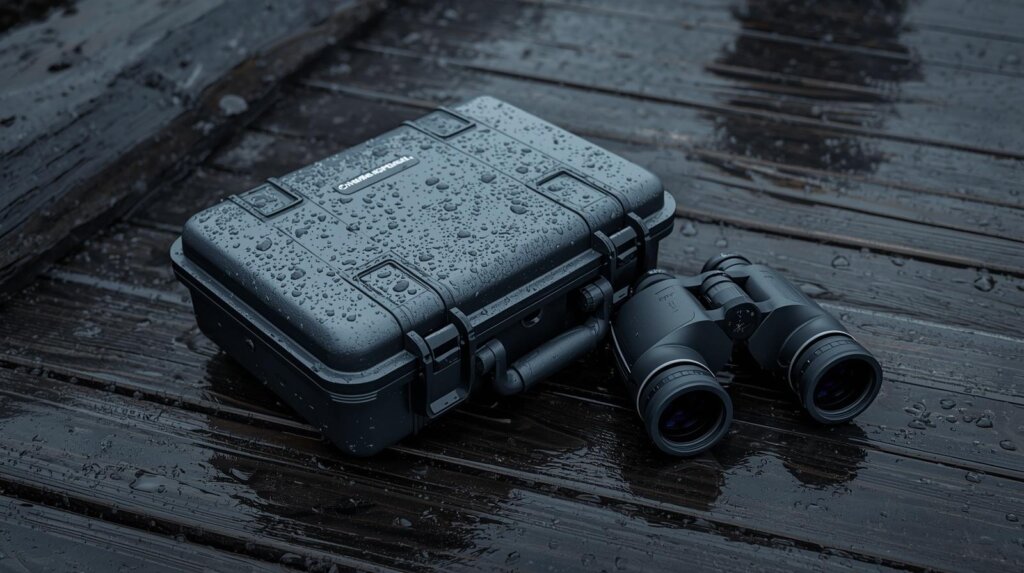
The best binocular case for wet conditions is usually not the smallest. Waterproofing adds bulk. That is the trade-off. But if your binoculars cost more than a weekend trip, the extra size feels reasonable.
Universal Binocular Case: Flexible, But Choose Carefully
A universal binocular case is useful when you own multiple binoculars or do not know the exact model measurements. It can also be a budget-friendly replacement if the original case gets lost.
The risk is fit. A universal case can be too loose, too tight, too shallow, or too tall. Loose cases cause movement. Tight cases put pressure on eyecups and focus wheels.
Before buying a universal case, measure:
- Binocular height
- Width across barrels
- Depth from eyepiece to objective lens
- Eyecup extension
- Strap attachment width
- Whether lens caps stay attached
Universal cases work best when they offer adjustable dividers, elastic sides, or forgiving padded walls. They are less ideal for very large astronomy binoculars or oddly shaped Porro prism models.
If you are buying for more than one binocular size, our universal binocular case page can help you avoid the common loose-fit mistake.
How to Match the Best Binocular Case to Your Binocular Size
The wrong size case creates daily frustration. Too small, and you fight the zipper. Too large, and the binoculars slide around. The best binocular case should feel slightly roomy, not sloppy.
For 8×25 and 10×25 Compact Binoculars
Choose a compact padded pouch or slim EVA case. You do not need a full harness unless you are carrying them all day in rugged terrain.
Best case style: compact case
Avoid: oversized universal pouches
For 8×32 Binoculars
These are easy to carry and often used for travel, hiking, and birding. A soft padded case with strap is usually ideal.
Best case style: soft padded shoulder case
Avoid: bulky hard cases unless traveling
For 8×42 and 10×42 Binoculars
This is the classic outdoor size. You have the most options here: padded pouch, harness case, soft shoulder case, or hard storage case.
Best case style: padded case or harness
Avoid: thin drawstring bags
For 10×50, 12×50, and Larger Binoculars
Larger binoculars need more structure. If you use them from vehicles, camps, balconies, or astronomy setups, a hard case makes more sense.
Best case style: hard case or deep padded case
Avoid: compact pouches and shallow cases
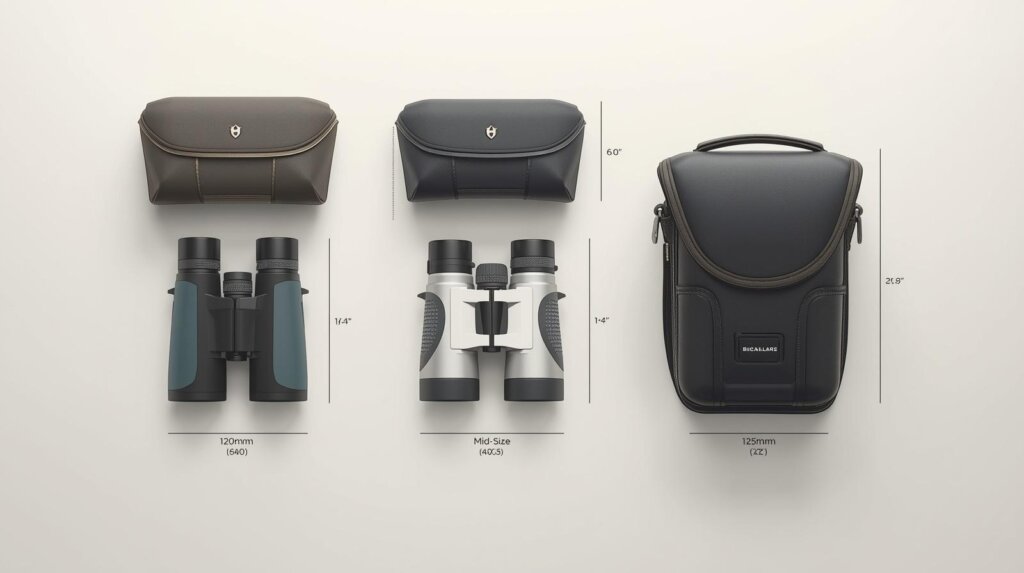
Material Comparison: EVA, Nylon, Leather, Neoprene, and Hard Shell
Material changes how a case feels in real use. It also affects noise, weight, weather resistance, and durability.
| Material | Best For | Pros | Cons |
|---|---|---|---|
| EVA hard shell | Travel and compact protection | Light, structured, affordable | Less rugged than premium hard cases |
| Nylon fabric | Outdoor soft cases | Durable, flexible, common | Depends heavily on padding quality |
| Neoprene | Lightweight scratch protection | Soft and stretchy | Weak impact protection |
| Leather | Classic look and storage | Attractive, durable if cared for | Can absorb moisture |
| Plastic hard shell | Storage and transport | Strong crush protection | Bulky and less field-friendly |
| Foam-lined hard case | Premium protection | Excellent impact control | Takes more space |
For most outdoor users, padded nylon is the best balance. For travel, EVA is convenient. For premium optics or wet transport, a hard waterproof shell is safer.
Features That Separate a Good Case From an Annoying One
Some features look small online but matter in the field.
Quiet Closure
Hunters and wildlife watchers know this one. Loud Velcro can ruin a moment. Zippers can also be noisy if they are stiff or oversized. Magnetic lids are popular in harness cases because they are easier to open quietly.
Soft Interior
The inside should never feel abrasive. Lens coatings can be tough, but they are not magic. A gritty lining is asking for trouble.
Real Padding
Thin foam is not enough. The base and front panel need padding because those are the areas that hit tables, rocks, car seats, and pack frames.
Secure Strap Points
Cheap cases often fail where the strap joins the pouch. Look for reinforced stitching or metal/plastic attachment hardware that feels substantial.
Weather Resistance
You do not always need waterproofing, but you do want enough resistance to handle drizzle, damp hands, wet grass, or morning condensation.
Room for Accessories
Lens cloth, caps, straps, phone, small notebook, cleaning pen, and rangefinder accessories can all matter. But extra pockets should not make the case bulky for no reason.
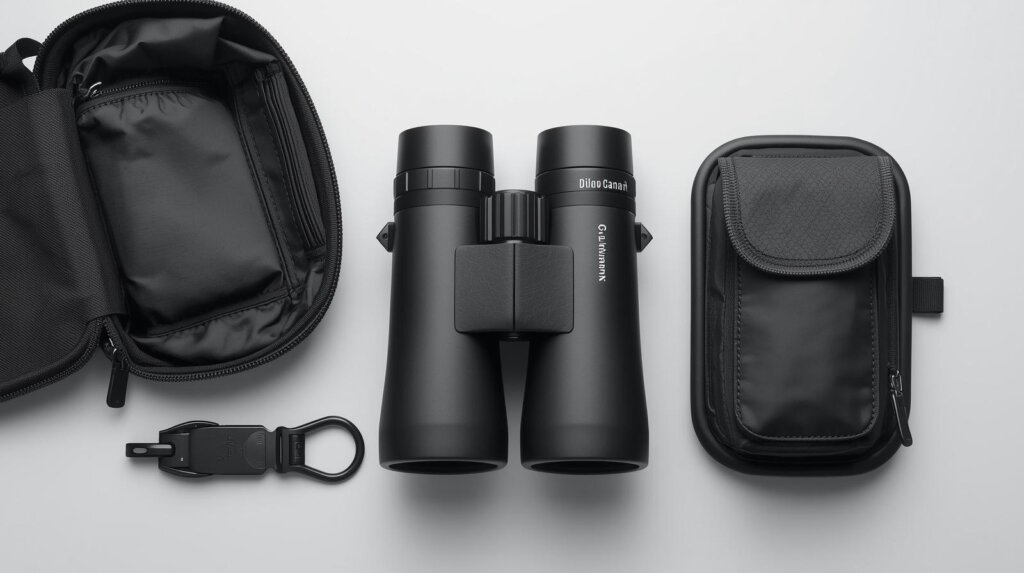
Best Binocular Case Recommendations by Buyer Type
Here is the most practical way to choose.
| Buyer Type | Best Case Choice | Why It Works | Product Direction |
|---|---|---|---|
| Casual backyard user | Soft padded case | Simple, affordable, easy to store | Padded nylon pouch |
| Traveler | Compact EVA or hard case | Protects inside luggage | Compact hard shell |
| Hunter | Harness binocular case | Fast access and weight distribution | Vortex, Marsupial, Badlands, Leupold-style harness |
| Birder | Soft case with strap | Quiet, light, easy to carry | Padded shoulder case |
| Boat/fishing user | Waterproof hard case | Handles spray and wet storage | Sealed hard case |
| Premium optics owner | Foam-lined hard case | Strong protection for expensive glass | Pelican-style case |
| Multi-binocular household | Universal padded case | Flexible fit | Adjustable universal case |
Hard Binocular Case
Pros
- Best crush protection
- Excellent for travel
- Great for expensive optics
- Often water-resistant or waterproof
- Can hold accessories safely
Cons
- Bulky
- Slower access
- Not ideal for active walking
- Takes more storage space
Soft Binocular Case
Pros
- Comfortable to carry
- Lightweight
- Better for birding and walking
- Easy to pack
- Usually affordable
Cons
- Lower impact protection
- Can absorb moisture if poorly coated
- Strap quality varies
Harness Binocular Case
Pros
- Best for fast field access
- Reduces neck strain
- Keeps binoculars stable
- Great for hunting and long hikes
- Often supports accessories
Cons
- More expensive
- Can feel too tactical for casual users
- Fit matters a lot
- May be warm in hot weather
Compact Binocular Case
Pros
- Small and travel-friendly
- Easy to carry daily
- Great for mini binoculars
- Less clutter in bags
Cons
- Limited storage
- Less protective for larger optics
- Some are too thin
Common Mistakes When Buying a Binocular Case
Buying Only by Brand
Brand helps, but fit matters more. A premium case that does not fit your binocular size is still the wrong case.
Ignoring Depth
Many buyers measure height and width but forget depth. This is where eyecups and lens caps create problems.
Choosing Too Much Case
Not everyone needs a waterproof hard case. If the case is too bulky, you may leave it at home.
Choosing Too Little Case
The soft pouch included with many binoculars is often fine for storage, but not always enough for travel or rough outdoor use.
Forgetting the Strap
A case with poor strap design becomes annoying fast. Thin straps dig into the shoulder. Weak clips feel unsafe.
Not Thinking About Access
Protection matters, but access matters too. If you miss the moment because the case is hard to open, it is not the best binocular case for your use.
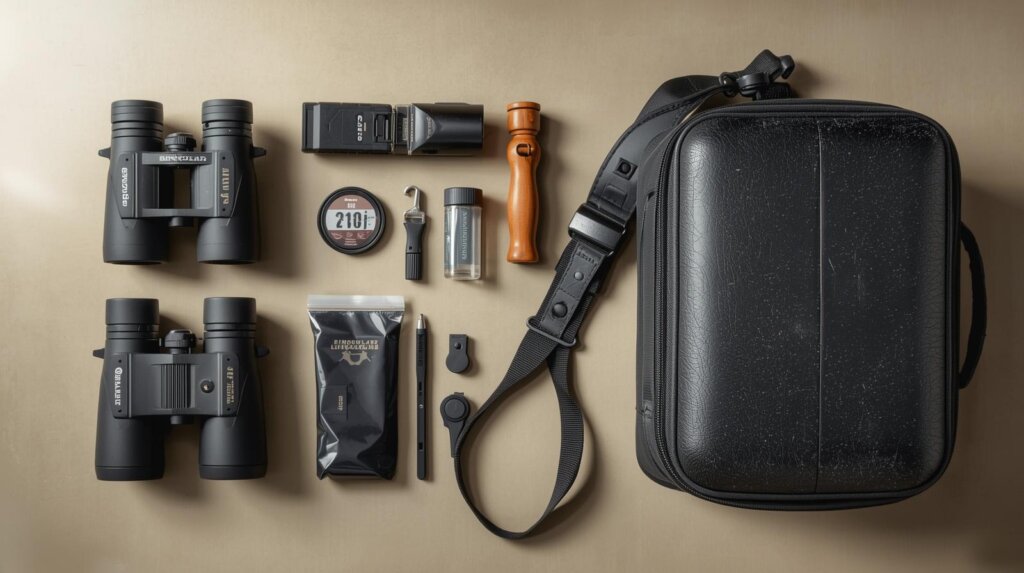
What About the Case That Comes With Your Binoculars?
Many binoculars come with a basic case. Sometimes it is perfectly fine. Sometimes it feels like an afterthought.
Factory cases are usually designed for storage and light carrying. They may not be shaped for harsh outdoor use. The padding may be thin. The strap may be basic. The closure may not be quiet. But if you only use binoculars occasionally, the original case can work.
Upgrade when:
- The case feels too tight
- The zipper rubs the binoculars
- There is little or no padding
- You travel often
- You carry binoculars with other gear
- You use binoculars in rain or dust
- The strap is uncomfortable
- You own expensive optics
A case upgrade is not glamorous, but it is cheaper than repairing or replacing damaged binoculars.
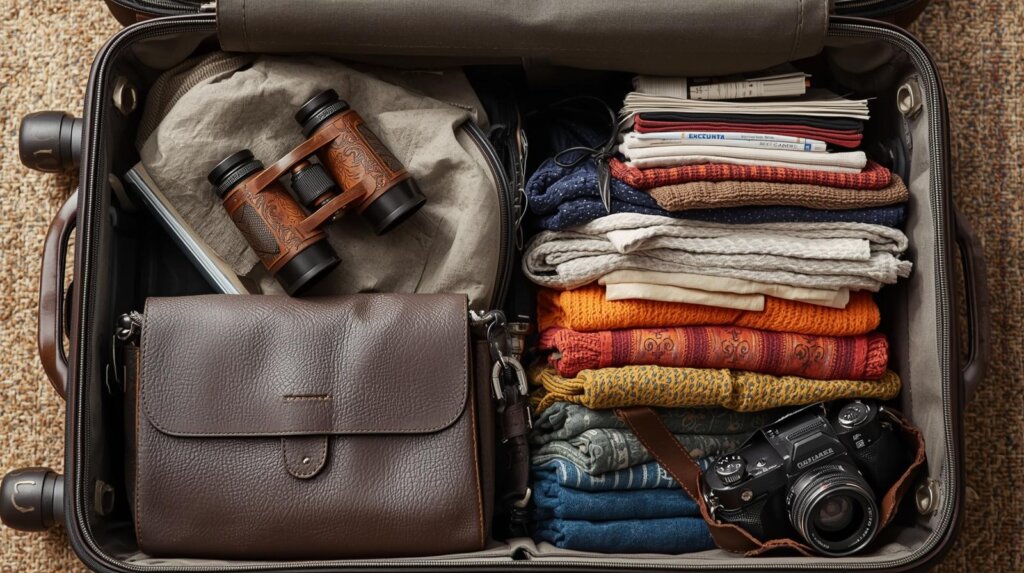
Best Binocular Case Setup for Travel
For travel, I prefer a case that protects first and looks second. Airports, car trunks, and hotel rooms are not gentle environments. Even if you are careful, your gear may be packed beside chargers, shoes, camera accessories, or souvenirs.
The best travel setup is:
- Compact or hard shell case
- Soft interior
- Enough room for lens cloth
- Secure zipper or latch
- No loose metal parts inside
- Optional waterproofing
- Easy-to-identify exterior
If you are carrying compact binoculars, an EVA shell case is enough for many trips. If you are packing premium 10×42 binoculars into checked luggage, use a hard case or place a padded case inside a structured bag.
Best Binocular Case Setup for Hunting
For hunting, the case is not just protection. It is workflow.
You need binoculars available quickly, quietly, and securely. A normal shoulder case can swing, bounce, or slide out of position. A chest harness keeps the binoculars centered and accessible.
Good hunting cases usually include:
- Chest harness design
- Quiet lid
- Binocular tethers
- Weather-resistant fabric
- Rangefinder pouch option
- Side pockets
- Low-bounce fit
- Enough room for gloves
The best binocular case for hunting is usually a harness-style case from brands that understand field movement. Vortex, Marsupial Gear, Badlands, Alaska Guide Creations, and Leupold all appear in this category with different levels of structure, modularity, and pricing. Alaska Guide Creations describes its focus around American-made binocular packs and rugged hunting gear, while Marsupial Gear emphasizes modular gear systems and a lifetime-style product promise.
Do not buy a harness only because it looks tactical. Buy it because it solves a real problem: neck fatigue, bouncing optics, slow access, or carrying a rangefinder with binoculars.
Best Binocular Case Setup for Bird Watching
Birding is different from hunting. You may still want quiet access, but the case should feel lighter and less bulky. Birders often walk for long periods, stop suddenly, raise binoculars quickly, then continue moving.
A good birding case should be:
- Lightweight
- Quiet
- Comfortable over the shoulder
- Weather-resistant
- Easy to open with one hand
- Not overly bulky
- Soft enough to carry close to the body
Many birders are better served by a soft padded case with strap than by a large chest harness. However, if you carry binoculars for hours and dislike neck straps, a minimalist harness can still be useful.
Best Binocular Case Setup for Astronomy and Large Binoculars
Astronomy binoculars are often larger, heavier, and more awkwardly shaped than standard roof prism field binoculars. Many use Porro prism designs with wider bodies. A generic soft pouch may not fit properly.
For large binoculars, prioritize:
- Deep interior
- Strong base padding
- Hard shell or semi-hard shell
- Foam support
- Space for tripod adapter
- Secure carry handle
- Protection during storage
The best binocular case for astronomy is usually closer to a storage case than a walking case. You are not pulling binoculars out every thirty seconds while hiking. You are protecting them during transport from house to car, car to viewing spot, or storage shelf to tripod.
Buyer Psychology: What You Are Really Paying For
When people shop for a binocular case, they often compare price first. That makes sense. Cases can feel like accessories, not main gear. But the better question is: what failure are you trying to avoid?
You may be paying to avoid:
- Scratched lenses
- Broken eyecups
- Damp storage smell
- Fogging from poor storage habits
- Lost lens caps
- Neck strain
- Slow access
- Gear bouncing while walking
- Damage during travel
- Regret after buying expensive binoculars
A $20 case can be enough for simple storage. A $60 to $150 case can make sense for frequent outdoor use. A premium harness or waterproof hard case can be worth it if your binoculars are expensive or mission-critical.
The best binocular case is not always the most expensive one. It is the one that protects your actual binoculars in your actual routine.
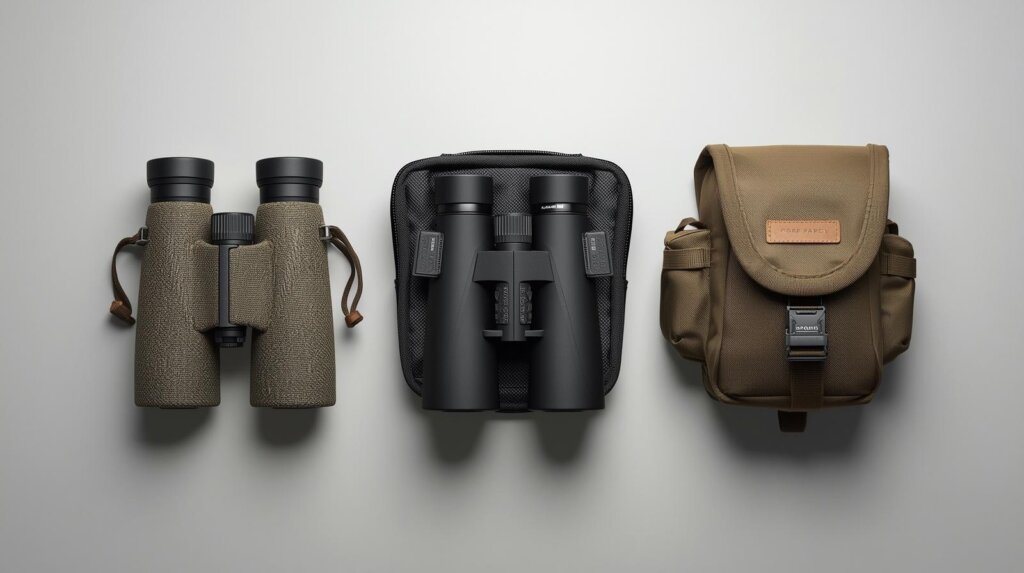
My Practical Buying Rule
Here is the simplest way to decide:
- If your binoculars mostly stay at home, buy a padded soft case.
- If your binoculars travel in luggage, buy a hard case.
- If your binoculars go into rain, boats, or wet storage, buy waterproof protection.
- If your binoculars are used for hunting or long field sessions, buy a harness case.
- If your binoculars are small and casual, buy a compact fitted case.
- If you own multiple pairs, buy a universal case only after checking measurements.
This rule works because it starts with behavior, not marketing.
Final Verdict: What Is the Best Binocular Case?
The best binocular case for most people is a padded, weather-resistant case that fits snugly, carries comfortably, and opens without fuss. That is the safest everyday choice for 8×32, 8×42, and 10×42 binoculars.
But there is no single case that wins for everyone.
Choose a hard case if you travel or store premium optics. Choose a soft binocular case with strap if you walk, bird, or hike casually. Choose a harness case if you hunt, glass for long periods, or hate neck strain. Choose a waterproof case if rain, fishing, boating, or damp storage is part of your routine. Choose a compact case for travel binoculars. Choose a universal case only when the measurements truly match.
The right case should make your binoculars easier to use, not just safer to own.
For a complete optics setup, explore more binocular care, buying, and outdoor gear resources at bestbinocular.net.
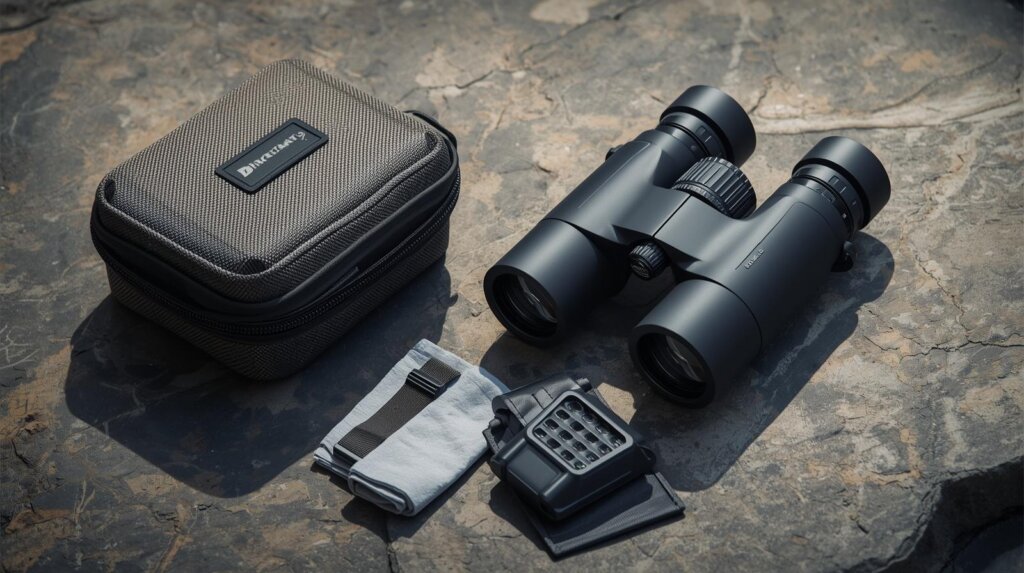
FAQs About the Best Binocular Case
What is the best binocular case for everyday use?
The best binocular case for everyday use is a padded, weather-resistant soft case with a comfortable strap and soft interior lining. It gives enough protection for walking, storage, birding, and casual outdoor use without feeling bulky.
Is a hard case better than a soft binocular case?
A hard case is better for travel, storage, crush protection, and expensive optics. A soft binocular case is better for walking, birding, hiking, and quick access. The better choice depends on how you carry your binoculars.
Do I need a waterproof binocular case?
You need a waterproof binocular case if you use binoculars around boats, fishing spots, heavy rain, wet vehicles, or damp storage areas. For normal walking and casual outdoor use, a water-resistant padded case may be enough.
What size binocular case do I need for 10×42 binoculars?
Most 10×42 binoculars fit medium padded binocular cases or harness-style cases designed for standard roof prism binoculars. Always check the case’s internal dimensions and compare them with your binocular height, width, and depth.
Are binocular harness cases worth it?
Binocular harness cases are worth it for hunters, hikers, wildlife watchers, and anyone who carries binoculars for long periods. They reduce neck strain, keep optics stable, and allow faster access than a normal shoulder case.
Can I use a camera case for binoculars?
You can use a camera case if the dimensions fit and the interior is soft enough. However, a proper binocular case usually fits the binocular shape better and may offer better strap placement, lens protection, and outdoor access.
What is the best binocular case for travel?
The best binocular case for travel is usually a compact hard-shell or foam-lined case. It protects binoculars from pressure inside luggage and keeps accessories like lens cloths and caps organized.
Should binoculars be stored in their case?
Yes, binoculars should be stored in a clean, dry case when not in use. The case helps prevent dust, scratches, moisture exposure, and accidental knocks. Make sure the binoculars are dry before sealing them inside.
Is a universal binocular case a good idea?
A universal binocular case is useful if you own multiple binoculars or need a replacement case, but fit matters. Avoid cases that are too loose, because binoculars can slide around and get scratched.
What features should I look for in the best binocular case?
Look for padding, soft lining, secure closure, proper size, weather resistance, comfortable strap, reinforced stitching, and enough structure to prevent impact damage. For hunting, quiet access and a harness design are also important.




