
You raise your binoculars, adjust the focus, and the view stays cloudy. A moment ago, everything looked sharp. Now even a nearby fence post looks blurred.
Knowing how to defog binocular lenses starts with checking where the moisture is. It is tempting to rub the eyepieces and keep going, but wiping may only clear the view briefly before the fog returns.
For exterior condensation, let the binoculars adjust to the surrounding temperature in a sheltered spot with airflow. If wiping is necessary, remove loose grit first and use a clean optical microfiber cloth with light pressure.
Moisture behind the glass needs a different response. No amount of wiping the outside will reach it.
Here is how to identify the problem, restore a clear view, and decide whether an anti-fog treatment is worth buying.
🔍 Check Where the Fog Is Before Touching the Lenses
Set the binoculars somewhere secure and inspect the eyepieces and front objective lenses in indirect daylight.
Tilt them slightly so you can see across the surface. Avoid pointing them toward the sun.
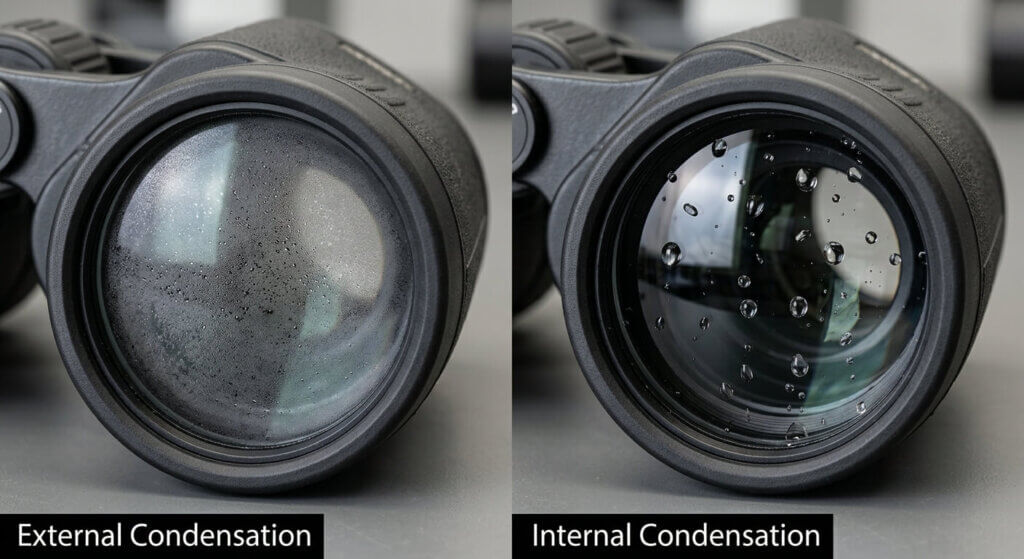
Exterior condensation
Surface fog usually looks like a fine mist or tiny droplets across exposed glass. It often appears when cold binoculars enter warmer, humid air or when your breath reaches chilled eyepieces.
Watch what happens as the binoculars sit away from your face. If the mist gradually retreats, you are probably dealing with exterior condensation.
Internal condensation
Internal moisture appears behind the accessible lens surface. The outside may look clean while a cloudy patch remains deeper inside one barrel.
Distinct droplets behind the glass are a stronger warning sign than a generally soft image. Persistent haze can also come from contamination or an optical fault, so appearance alone does not always confirm condensation.
Nikon advises contacting the retailer or customer support if an internal lens in a waterproof binocular becomes foggy. Our explanation of why binoculars fog up inside can help you understand the symptoms before arranging an assessment.
Something other than fog
Fingerprints, dried salt, and cleaning residue can all make the image look cloudy.
A useful clue is whether the haze changes. Condensation often develops or clears as conditions change. A greasy smear tends to stay in the same place.
If nearby objects look crisp but distant scenery appears washed out, atmospheric mist may be the problem. Cleaning the binoculars cannot improve visibility through fog in the landscape.
| What you notice | Possible cause | What to do first |
|---|---|---|
| Fine mist on exposed glass | Exterior condensation | Allow sheltered airflow and temperature adjustment |
| Eyepieces fog each time you raise them | Breath reaching cold glass | Lower the binoculars and check airflow around your face |
| A fixed streak or oily patch | Fingerprint or cleaning residue | Follow the model’s lens-cleaning instructions |
| Droplets behind the outer lens | Internal moisture | Contact the manufacturer |
| Clear nearby objects but hazy distant scenery | Atmospheric mist | Wait for conditions to improve |
How to Defog Binocular Lenses Safely
Once you have confirmed exterior condensation, work through the following steps. The goal is to remove moisture without turning a temporary inconvenience into scratched glass.
1. Stop feeding moisture onto the lenses
Lower the binoculars away from your face. If you are talking, breathing heavily, or wearing a scarf, notice where your breath travels.
Move under shelter if rain or spray is reaching the glass.
Avoid pushing fogged binoculars inside a damp jacket. That may feel protective, but it can surround the lenses with warm, humid air.
2. Let the binoculars adjust naturally
Rest them securely in a sheltered position with airflow. Keep exposed lenses away from falling rain, blowing grit, and direct heat.
There is no reliable “wait exactly five minutes” rule. A lightly fogged eyepiece may clear quickly; a thoroughly chilled binocular body can take longer.
Nikon recommends natural drying after condensation develops and warns against placing binoculars near heat-generating equipment. A radiator or hair dryer is not a worthwhile shortcut.
3. Remove loose particles before wiping
If moisture remains and you need to resume viewing, inspect the surface for dust or grit.
Use an optical blower or suitable lens brush according to your binocular manual. Then, if necessary, use a clean optical microfiber cloth with minimal pressure to lift accessible moisture.
A cloth that has been loose in a sandy pocket is not clean enough simply because it still looks soft.
4. Check the view before cleaning again
Look at a stationary object once the visible fog has cleared. If needed, check each barrel separately.
If one side remains cloudy despite clear outer surfaces, stop wiping. More pressure will not help a problem behind the glass.
The important part of learning how to defog binocular lenses is recognizing when cleaning has reached its limit.
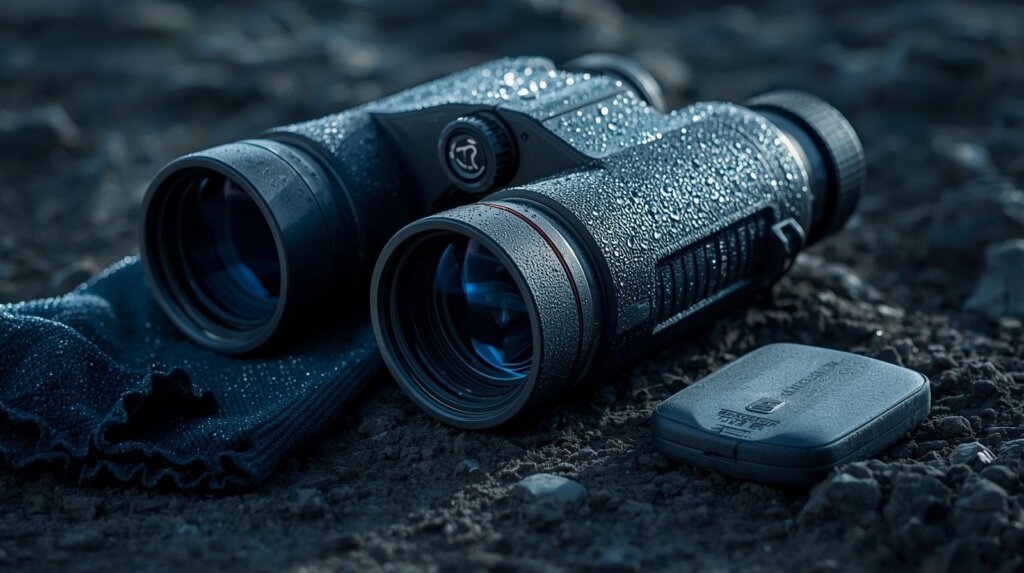
Why the Fog Comes Back After You Wipe It
A cloth removes droplets. It does not necessarily change the conditions that produced them.
Condensation forms when the lens surface is below the dew point of the air touching it. If the glass stays cold and moist air keeps reaching it, another layer can form immediately.
That is why repeated wiping often becomes a losing battle.
Cold binoculars entering warm, humid air
Think of binoculars taken from an air-conditioned vehicle onto a humid coastal viewpoint. The glass is still cold, even though the surrounding air feels warm.
Let the instrument acclimate in a sheltered place. Repeatedly returning it to the cold vehicle can restart the problem.
For the reverse journey, place dry binoculars in a clean, sealed bag before bringing them from cold outdoor conditions into a warm room. Let them warm gradually before opening the bag.
Do not use this approach to pack away rain-soaked equipment. Wet binoculars need appropriate drying.
Breath reaching cold eyepieces
Winter fog often affects the eyepieces while the front lenses remain clear.
A scarf, face covering, or high collar may direct exhaled air upward. Lower the binoculars between observations and adjust the airflow where practical.
For more help with that particular problem, read how to keep binoculars from fogging in cold weather.
What Works in Different Viewing Conditions?
The best response depends on how the moisture arrived. These situations may look similar through the eyepieces, but they call for slightly different habits.
Early-morning viewing beside a lake
Dew forms on the glass, the case feels damp, and your cleaning cloth has been sitting beside a wet cover.
Start by moving the binoculars into a sheltered position. Check that the cloth is actually dry and clean before using it.
If condensation keeps forming, constant polishing gives only temporary relief. Keep the lenses protected between observations and allow them to recover without adding more moisture.
Winter viewing with glasses
You raise the binoculars and immediately lose the view.
Before cleaning anything, check your spectacles. Fogged glasses can make clear binoculars seem faulty.
If the eyepieces are responsible, examine how close they sit to your face and whether breath is being channelled toward them. Preserve the correct viewing position, but give the glass a break between looks.
Arriving at a humid viewpoint
The binoculars come straight out of a cool room or vehicle, and both front lenses turn cloudy.
Allow adjustment time before the observation you care about. This is especially useful when you know you will be moving between air conditioning and humid outdoor conditions.
Buying a spray is not always the first answer to a predictable temperature transition.
Coastal viewing after sea spray
A pale film left by seawater is not ordinary fog.
Do not grind dried salt across the lens with a dry cloth. Follow the manufacturer’s cleaning instructions, and rinse only where the model’s care guidance permits it.
If you are unsure whether moisture remains outside or deeper within the instrument, how to remove condensation from binoculars helps you decide what to do next.
Compare the Main Defogging Options
Before buying anything, match the solution to the actual problem.
| Option | Best suited to | Main benefit | Main drawback |
|---|---|---|---|
| Natural acclimation | Fog after a temperature change | Requires no surface treatment | Takes time |
| Clean optical microfiber | Accessible moisture after grit removal | Convenient to carry | Cannot stop new condensation forming |
| Compatible anti-fog treatment | Recurring exterior fog | May reduce viewing interruptions | Needs correct application and coating compatibility |
| Desiccant in suitable storage | Controlling storage humidity | Useful between outings | Not a quick outdoor defogging solution |
| Professional assessment | Internal moisture or persistent haze | Can identify sealing or optical faults | Involves downtime and possible cost |
For occasional exterior fog, I would start with handling and acclimation. A treatment becomes more appealing when the same problem repeatedly interrupts an otherwise sensible routine.
To compare the wider options, explore our binocular anti-fog and waterproofing products page. It is a useful next step before buying something that addresses a different moisture problem.
🧴 A Relevant Product: ZEISS Anti-Fog Defender Kit
Disclosure: If you buy through the affiliate link below, we may earn a commission at no additional cost to you.
The ZEISS Anti-Fog Defender Kit is worth considering for recurring exterior condensation, provided your binocular manufacturer permits the treatment.
ZEISS lists binoculars among its intended applications. The kit includes a small spray bottle and an application cloth. The company advertises fog protection lasting up to 72 hours; that is a manufacturer claim, not a guaranteed result in every weather condition.
When it makes sense
Consider it if exterior eyepiece fog repeatedly interrupts winter viewing or humid outings despite better breath control and temperature management.
It makes much less sense if your binoculars fog once after leaving an air-conditioned car.
And it is the wrong purchase for internal condensation. An exterior treatment cannot repair a seal or restore a binocular’s gas filling.
Pros
- Specifically marketed for binocular use.
- Small enough to carry with other optical accessories.
- May reduce repeated interruptions from exterior fog.
Cons
- Requires preparation and correct application.
- Excess residue can leave an unsatisfactory view.
- Cannot waterproof binoculars or fix internal moisture.
Check the binocular manual before applying it. Follow the product’s current instructions for optical equipment, use it on clean surfaces, and avoid soaking lens edges.

Buyer Tips: Read the Compatibility Details First
A large “anti-fog” label tells you little about whether a product belongs on your binoculars.
Check for an explicit optical-lens or binocular application. Then check your binocular manufacturer’s restrictions. A formula intended for bathroom mirrors or automotive glass is not automatically appropriate for coated optics.
Also separate these three claims:
- Waterproof: resistance to water entering the instrument under specified conditions.
- Fogproof: generally refers to resistance to internal condensation.
- Exterior anti-fog treatment: addresses moisture on exposed glass.
Those features solve different problems.
If recurring internal condensation has you considering replacement binoculars, compare the exact model’s sealing specifications, service arrangements, and warranty. Our best Leica binoculars comparison can help you assess premium options, but even expensive binoculars can develop exterior condensation.
Common Mistakes That Make the Problem Worse
Wiping with a sleeve
The fabric may feel soft while carrying dust, skin oil, or detergent residue. Keep an optical cloth in its own clean pouch.
Breathing onto already fogged glass
Warm breath supplies more moisture. On a cold lens, it can make the haze worse.
Using household remedies
Dish soap and shaving foam sometimes appear in anti-fog suggestions. Their usefulness on another surface does not establish compatibility with your lens coatings.
Mistaking residue for fresh condensation
If the moisture has evaporated but a streak remains, the lens may need proper cleaning. Another layer of anti-fog treatment could add to the residue.
Trying to dry the inside by opening the body
Unscrewing a binocular can compromise sealing and optical alignment. Internal condensation is not a reason to begin an improvised repair.
Keep the View Clear After the Fog Disappears
A few carrying and storage habits can prevent the same interruption from returning.
Avoid repeatedly placing binoculars inside damp clothing. Keep them accessible, protect the lenses from rain between observations, and let wet covers dry separately afterward.
A comfortable carrying setup makes those habits easier. Browse our binocular straps and harnesses if your current arrangement encourages you to keep pushing the binoculars into a coat or damp pocket.
At home, inspect the case as well as the instrument. Dry binoculars put into a wet case are still surrounded by moisture.
Where suitable, use maintained desiccant in enclosed storage. Replace or regenerate it according to its instructions.
For a more consistent routine, these anti-fog tips for binoculars cover habits worth building into each outing.
When Internal Fog Needs Professional Attention
Contact the manufacturer if condensation repeatedly appears inside a waterproof model, follows immersion or an impact, or leaves persistent haze after the outer surfaces have cleared.
Note which barrel is affected and when the problem happens. A photograph of visible droplets can help explain an intermittent fault.
Temporary clearing does not prove that the underlying issue has been repaired. Dry air around the binoculars cannot demonstrate that a compromised seal is sound again.
FAQs About How to Defog Binocular Lenses
What is the fastest safe way to defog binocular lenses?
Move them away from breath, rain, or spray and allow sheltered airflow. Let the temperature settle. If wiping is necessary, check for grit first and use clean optical microfiber with minimal pressure.
Can I use a hair dryer on fogged binoculars?
Avoid concentrated heat. Let the binoculars adjust naturally, and seek manufacturer advice if moisture remains inside.
Why do waterproof binoculars still fog?
Waterproofing does not prevent condensation on exposed glass. Fog inside a waterproof model is a separate concern that warrants assessment.
Will silica gel remove internal fog?
Silica gel can control humidity in suitable storage, but it is not a dependable repair for moisture inside sealed binoculars.
Is anti-fog spray safe for coated binocular lenses?
Only use a treatment with appropriate optical compatibility, and follow your binocular manufacturer’s restrictions. Do not assume every anti-fog formula is suitable.
How long should binoculars take to clear?
There is no fixed time. Temperature difference, humidity, airflow, and the location of the moisture all affect recovery.
Should I replace binoculars that keep fogging?
Occasional exterior fog does not justify replacement. Recurring internal condensation calls for a service assessment before deciding between repair and replacement.
Restore the View Without Overcleaning
Knowing how to defog binocular lenses comes down to identifying the moisture, letting conditions stabilize, and touching the glass only when necessary.
For more practical maintenance advice, visit our binocular Blog Tips page. You can also explore BestBinocular.net for buying advice and accessories suited to the conditions where you actually use your binoculars.




