
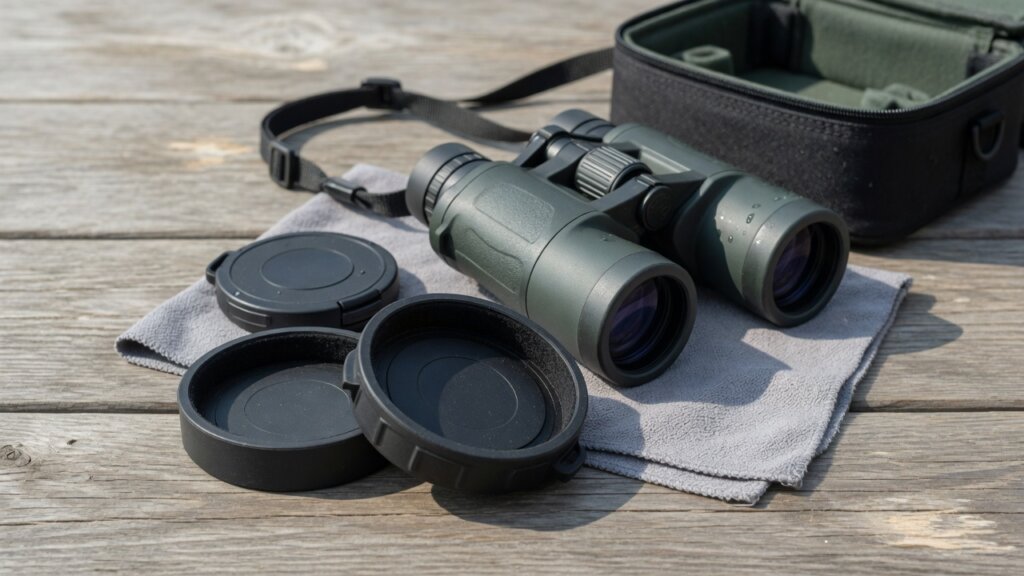
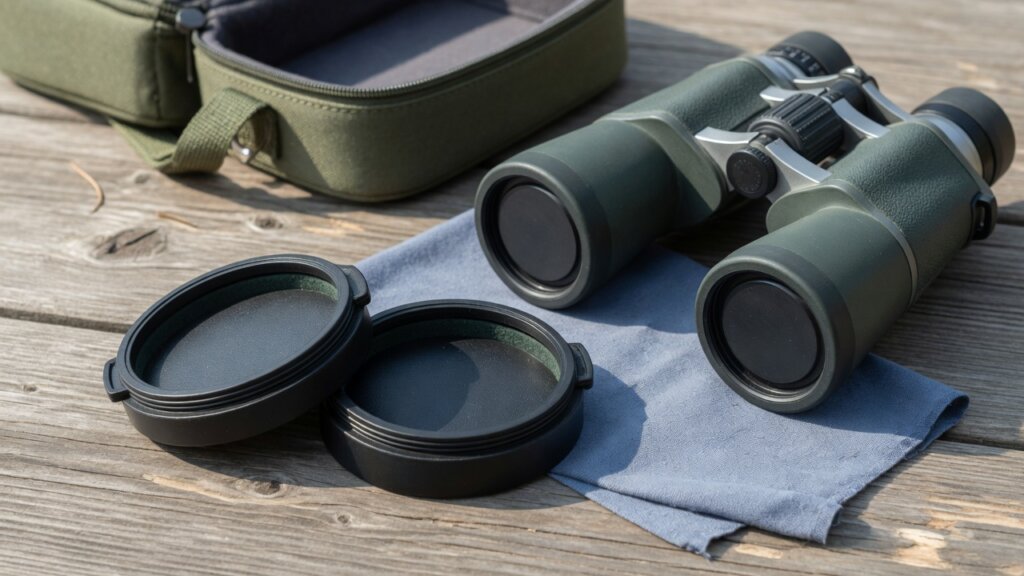
Why Binocular Lens Caps Matter More Than You Think
Binocular lens caps look boring until the day you lose one.
Then dust starts sitting on your objective lenses. A shoulder strap swings your binoculars into a zipper. A bit of sand gets wiped across the coating. Or the eyepiece caps vanish somewhere between the car seat and the trail bag.
That is when most people realize binocular lens caps are not just “plastic covers.” They are the cheapest insurance for the most delicate part of your binoculars: the glass and its coatings.
A good set of binocular lens caps protects against dust, fingerprints, moisture, scratches, accidental bumps, and storage damage. A bad set falls off every five minutes, traps moisture, blocks quick use, or fits so loosely that it might as well not exist.
This guide explains the main types of binocular lens caps, how to choose the right size, when rubber or tethered caps work best, and which options are most suitable for 42mm and 50mm binoculars.
What Are Binocular Lens Caps?
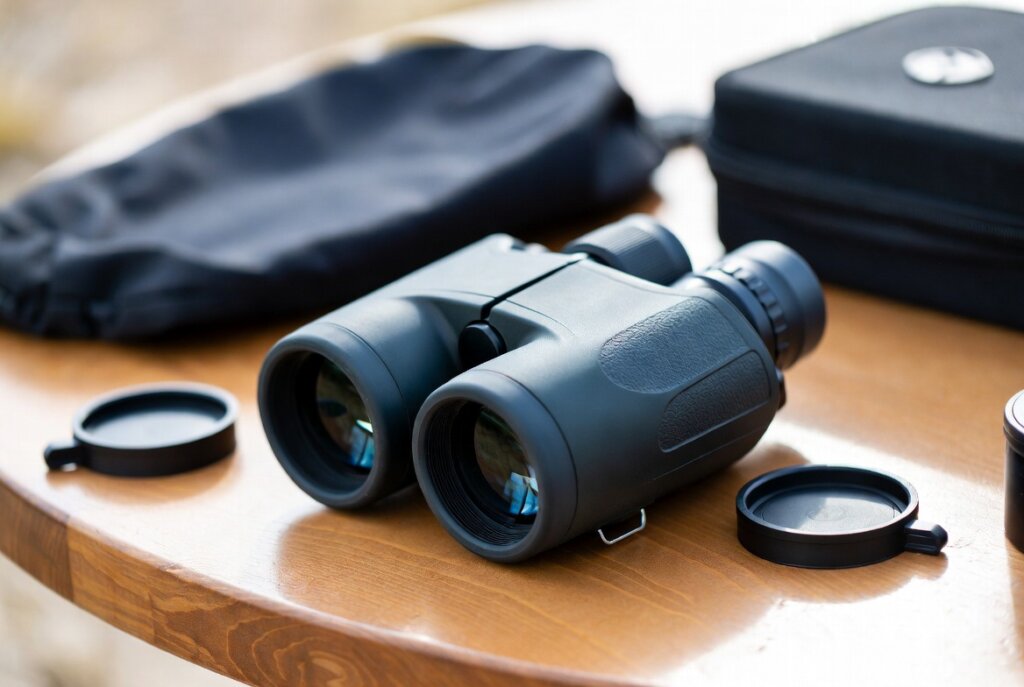
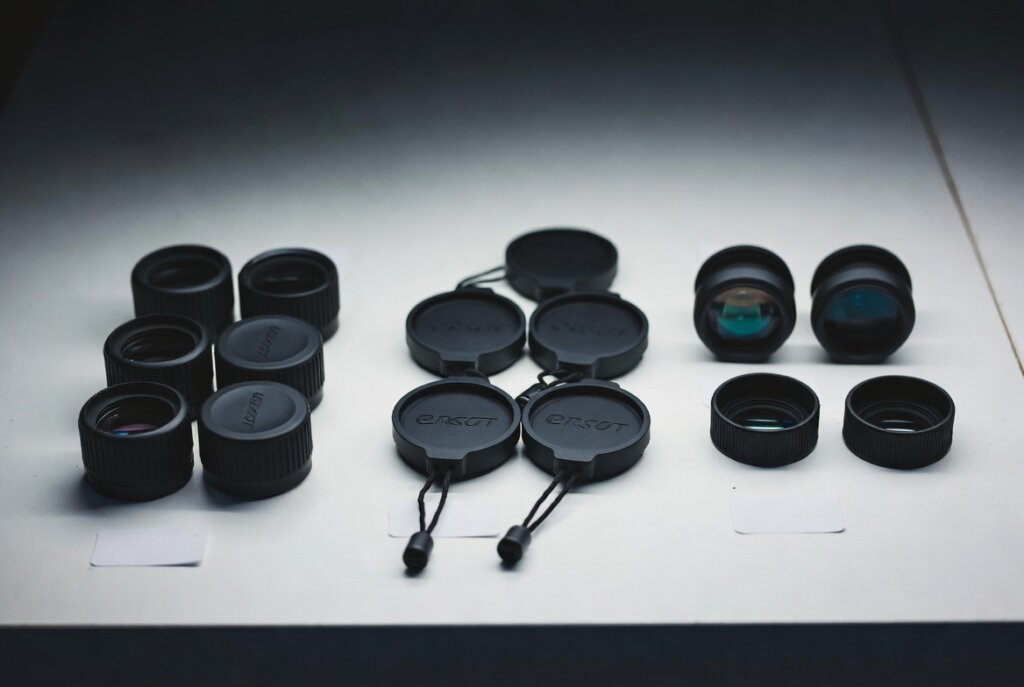
Binocular lens caps are protective covers made to shield the lenses of your binoculars when they are not in active use. Most binoculars have two main cap areas:
- Objective lens caps — These cover the large front lenses.
- Eyepiece caps or rain guards — These cover the smaller lenses you look through.
The front objective lenses collect light, so they are exposed to more dust, branches, bag friction, and accidental bumps. The eyepieces are more likely to collect sweat, fingerprints, rain droplets, and lint from clothing.
Some caps push directly into the lens rim. Some stretch around the outside barrel. Some hang from a tether so they do not get lost. Others come as a one-piece rain guard that covers both eyepieces at once.
The right choice depends on how you use your binoculars. A casual backyard user can live with simple slip-on caps. A hiker or birder usually needs tethered caps. A traveler may want compact caps that stay secure inside a backpack. A marine or wet-weather user needs rubber caps that do not crack or pop off in cold air.
Why Binocular Lens Caps Matter More Than People Think
The glass on binoculars is not just glass. Modern binoculars use coatings to improve brightness, contrast, glare control, and color quality. These coatings are thin and sensitive. One rough wipe with dust on the lens can create fine scratches.
A small scratch may not ruin the view instantly, but repeated abuse slowly reduces clarity. The image starts looking hazy. Glare becomes more obvious. Low-light performance drops. And once coatings are damaged, you cannot simply polish them back like a car headlight.
Lens caps help prevent that damage before it starts.
They also protect resale value. A used binocular with clean lenses, original caps, and a tidy case feels well-kept. A binocular with missing caps and dusty lenses instantly feels neglected, even if the optics still work.
The Main Types of Binocular Lens Caps
Not all binocular lens caps solve the same problem. Before buying replacements, it helps to know the main types.
Objective Lens Caps
Objective lens caps cover the large front lenses of your binoculars. These are usually sold in pairs.
They may be:
- Push-in caps
- Stretch-fit rubber caps
- Tethered caps
- Flip-down caps
- Brand-specific replacement caps
Objective caps matter most if your binoculars spend time in a backpack, vehicle, gear shelf, or outdoor case.
For deeper front-lens protection choices, see [binocular objective lens caps] because objective caps have their own fit and durability issues.
Eyepiece Caps / Rain Guards
Eyepiece caps protect the lenses you look through. On many binoculars, the eyepiece cover is a single flexible bridge piece that covers both eyepieces at once. This is often called a rain guard.
Rain guards are useful because they can stay attached to the neck strap. You can slide them off quickly when you raise the binoculars.
Cheap rain guards are often too loose. Better ones fit snugly without making you fight the cap every time you want to glass something quickly.
Tethered Binocular Lens Caps
Tethered binocular lens caps attach to the binocular barrel with a flexible ring or cord. When you remove the cap, it hangs below the lens instead of falling into your bag or onto the ground.
This is the best style for people who use binoculars outdoors often.
The real advantage is not only convenience. It also reduces the chance of losing caps. And honestly, lost lens caps are the number one reason most people search for replacements.
For a full breakdown of this style, check [tethered binocular lens caps] before buying any replacement pair.
Rubber Binocular Lens Caps
Rubber binocular lens caps are popular because they grip well, flex around barrels, and handle outdoor abuse better than brittle plastic. They are also more forgiving if your binocular barrels are not a perfect standard size.
Rubber caps are useful for:
- Hiking
- Travel
- Bird watching
- Car storage
- Damp weather
- Cold mornings
- Frequent packing and unpacking
The downside is that low-quality rubber can stretch, loosen, crack, or collect dust over time.
Need a more focused buying angle? Read [rubber binocular lens caps] for the pros, cons, and fit tips.
Universal Binocular Lens Caps
Universal binocular lens caps are made to fit a range of barrel sizes instead of one exact model. They are often sold by diameter range, such as 40–42mm, 42–45mm, 50–52mm, or similar.
Universal caps are helpful when:
- Your original caps are lost
- Your binocular model is discontinued
- Brand replacements are overpriced
- You do not know the exact part number
- You want a backup pair
But “universal” does not mean “fits everything.” You still need to measure the outside diameter of the binocular barrel, not just the objective lens number printed on the binocular.
That detail matters a lot.
For a dedicated fit guide, see [universal binocular lens caps].
The Biggest Mistake: Buying by Objective Size Only
Here is where many buyers mess up.
They see “10×42” printed on their binoculars and assume they need 42mm lens caps.
Sometimes that works. Often it does not.
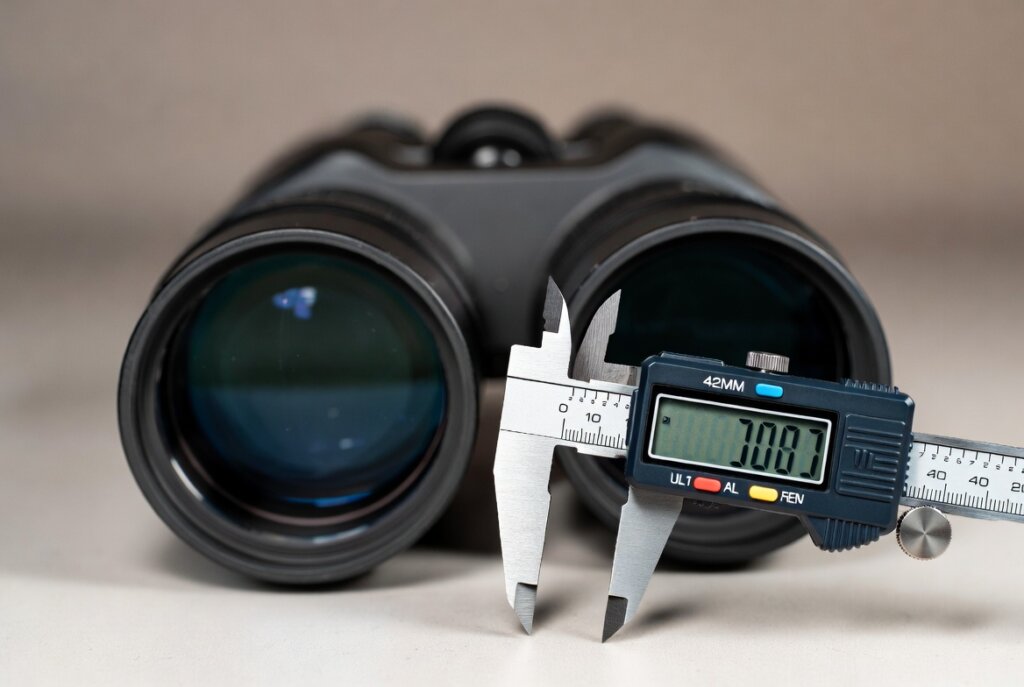
The “42” in 10×42 refers to the objective lens diameter, not the outside diameter of the binocular barrel. The cap usually fits around the outer housing, which includes the rubber armor and rim. So a 42mm binocular might need a cap with an internal diameter closer to 44mm, 45mm, 46mm, or more depending on the design.
That is why a cap labeled “42mm” may be too tight or too loose for your 10×42 binoculars.
Many replacement cap listings recommend measuring the outside barrel diameter, including the rubber armor, before choosing a cap size. That is the practical move because the outer tube diameter decides the real fit, not the printed size on the binocular.
How to Measure for Binocular Lens Caps
You do not need a workshop setup. But you do need accuracy.
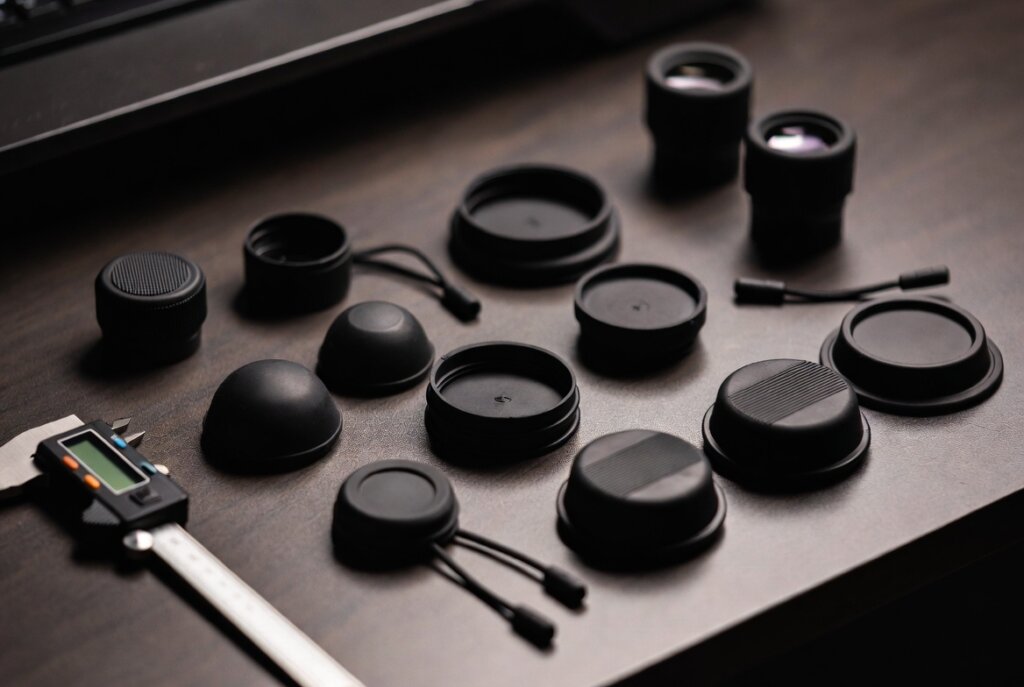
Step 1: Measure the Outside Diameter
Use a digital caliper if possible. Measure across the outside edge of the objective barrel, including the rubber armor.
Do not measure only the glass.
Do not measure the inside of the lens rim unless the cap is specifically an insert-style cap.
Step 2: Check the Cap Style
A stretch rubber cap can usually tolerate a tiny size difference. A hard plastic push-in cap cannot. Tethered caps with rings also need enough stretch to slide over the barrel without tearing.
Step 3: Decide How Snug You Want the Fit
For backpack use, choose a snug fit. Loose caps fall off inside bags.
For quick observation, choose a cap that comes off smoothly without needing both hands.
For wet weather, avoid caps that trap water against the glass.
Step 4: Buy a Pair, Not One Cap
Some listings sell objective caps individually. Others sell pairs. Always check before ordering. It is annoying to wait for replacement caps and realize you only bought one side.
42mm Binocular Lens Caps: Best Fit for Popular Birding and Travel Binoculars
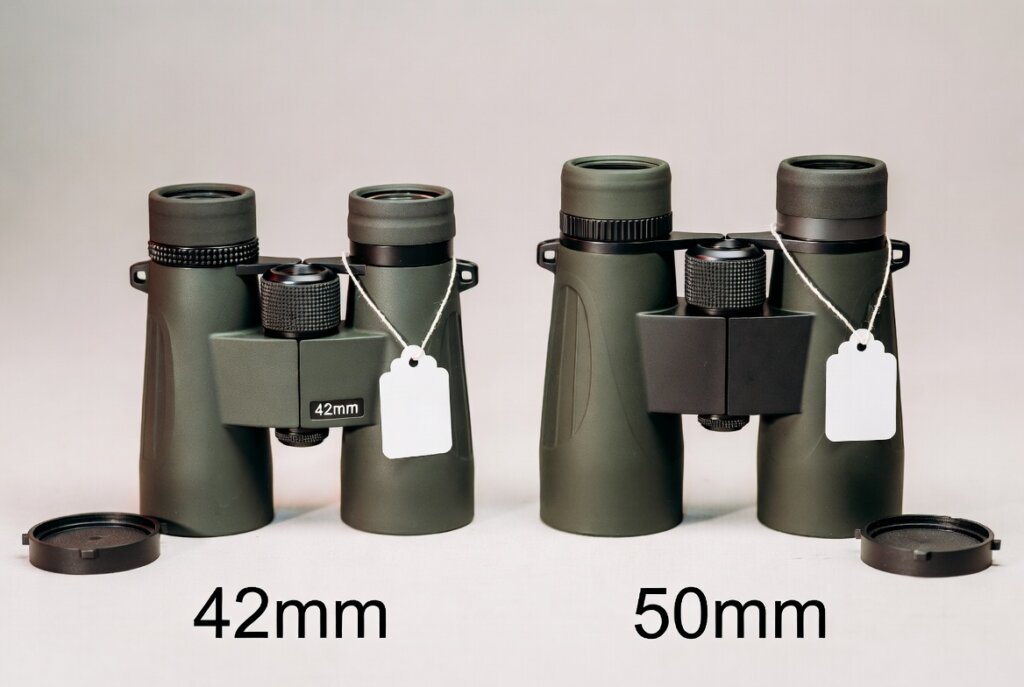
42mm binoculars are extremely common because they balance brightness, portability, and comfort. Many 8×42 and 10×42 binoculars are used for birding, wildlife viewing, hiking, stadium events, and general outdoor use.
Because this size is so popular, 42mm binocular lens caps are easier to find than obscure sizes.
But again, not every 42mm cap fits every 42mm binocular.
Vortex, for example, sells specific tethered objective cap sets for certain 42mm models, such as Crossfire 42mm binoculars, instead of calling them one-size-fits-all. That tells you something important: model-specific fit still matters.
If you own a 10×42 or 8×42 binocular and want a replacement, start by checking:
- Brand-specific cap availability
- Outside barrel diameter
- Cap internal diameter
- Whether the cap is tethered or loose
- Whether your binocular has raised armor or a smooth barrel
For a focused size guide, open [42mm binocular lens caps] before you choose a replacement.
50mm Binocular Lens Caps: More Glass, More Protection Needed
50mm binoculars collect more light than smaller models, which is why they are popular for low-light viewing, astronomy, long-distance observation, and open-area scanning.
But larger objective lenses also mean larger exposed surfaces.
A 50mm binocular with missing caps is more vulnerable inside a backpack or storage case. The bigger front lenses collect dust faster and are easier to bump against zippers, tripod plates, and other gear.
For 50mm binoculars, I prefer rubber or tethered objective caps over loose hard caps. Bigger caps are easier to lose because they take up more space and tend to get removed fully during use.
Look for:
- Strong rubber flexibility
- Deep cap walls
- Tether rings that do not tear easily
- Correct inner diameter
- A fit that stays on when the binocular hangs vertically
If your binoculars are 10×50, 12×50, or similar, read [50mm binocular lens caps] for a better size-specific recommendation.
Rubber vs Plastic Binocular Lens Caps
Both rubber and plastic caps can work, but they behave differently in real use.
| Feature | Rubber Lens Caps | Plastic Lens Caps |
|---|---|---|
| Grip | Usually better | Depends on exact fit |
| Durability | Good if quality rubber | Can crack if brittle |
| Weather comfort | Better in cold and damp use | Can feel stiff |
| Fit forgiveness | More forgiving | Less forgiving |
| Dust attraction | Can collect lint | Usually cleaner surface |
| Best for | Outdoor use, travel, backpacks | Storage, indoor use, exact-fit models |
| Common issue | Stretching over time | Falling off if fit is poor |
My take: rubber binocular lens caps are usually the safer replacement choice when you do not have the exact original part. Plastic caps are fine when they are brand-specific and designed for your binocular model.
Tethered vs Loose Caps
Loose caps are clean and simple. Tethered caps are practical.
That is the real difference.
Loose caps look neater when your binoculars are stored. They do not dangle. They are easy to remove. But they disappear fast. One rushed moment at a viewpoint or during a trail stop, and they are gone.
Tethered caps hang from the binocular barrel. They may swing slightly, but they stay attached.
For real outdoor use, I would choose tethered objective caps almost every time.
Vortex and other optics brands sell tethered objective cap sets as replacement or spare parts for specific binocular models. The purpose is straightforward: keep the caps with the binocular and protect the lenses when the original caps are worn or lost.
| Use Case | Better Choice | Why |
|---|---|---|
| Backyard use | Loose or tethered | Low risk either way |
| Bird watching | Tethered | Fast removal, less chance of loss |
| Hiking | Tethered | Caps stay attached in motion |
| Travel | Rubber tethered | Better backpack protection |
| Vehicle storage | Rubber caps | Handles vibration and dust |
| Astronomy | Loose or tethered | Depends on tripod setup |
| Marine/damp use | Rubber tethered | Better grip and moisture handling |
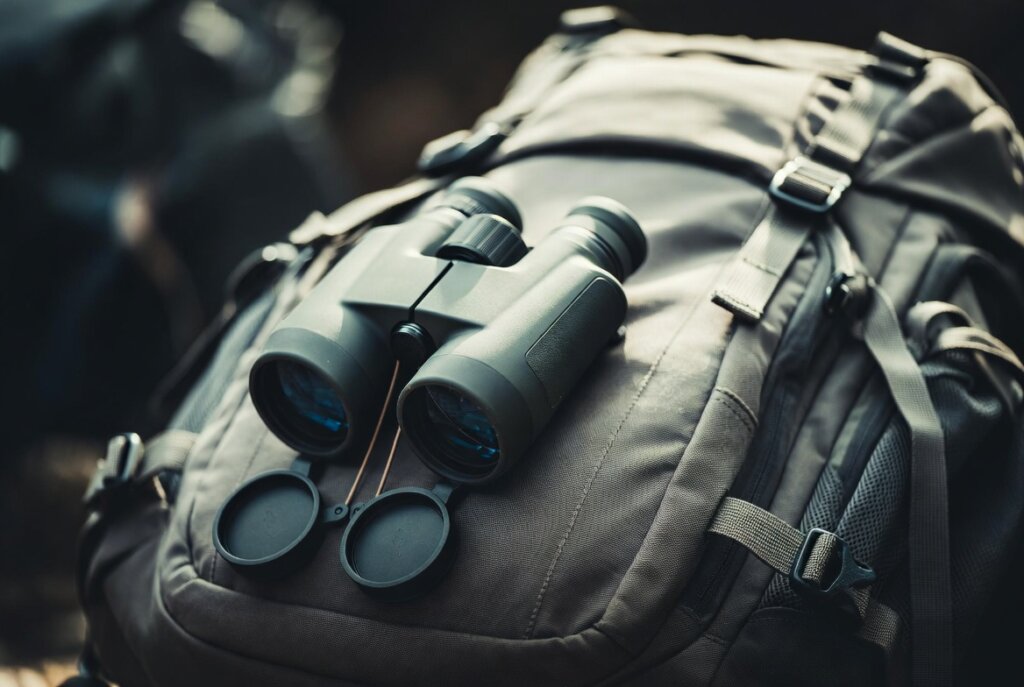
Best Binocular Lens Caps by Use Case
Best for Bird Watching
Choose tethered rubber objective caps and a strap-mounted rain guard.
Bird watching often involves quick movement. You raise the binoculars, lower them, adjust focus, walk, stop, and raise them again. Loose caps are annoying in that rhythm.
The best setup is:
- Tethered front objective caps
- Flexible eyepiece rain guard
- Snug but not sticky fit
- Quiet material that does not slap loudly against the barrels
Best for Hiking and Backpacking
Choose rubber caps with strong grip and flexible tether rings.
Hiking is rough on optics. Binoculars rub against jackets, backpack straps, zippers, and camera gear. Caps need to stay on during movement.
Look for caps that do not pop off when the binoculars hang downward from a harness.
Best for Travel
Choose low-profile universal caps that fit securely without adding bulk.
Travel users usually care about packing space. Big floppy caps can be annoying if the binoculars go in a small sling bag or carry-on pouch.
A universal cap set is fine if measured correctly.
Best for 42mm Binoculars
Choose model-specific caps first. If unavailable, use measured universal rubber caps.
Many 42mm binoculars have different outer barrel sizes even when the objective lens size is the same. This is especially true with thick rubber armor.
Best for 50mm Binoculars
Choose deeper rubber objective caps with reliable tethers.
Bigger caps fall off more easily if the fit is shallow. A deeper cap wall gives better contact and better protection.
What Makes a Good Binocular Lens Cap?
A good binocular lens cap should do five things well.
1. Stay On When Stored
This is the basic job. If the cap falls off inside a backpack, it failed.
A slightly snug cap is better than a loose one. But too tight is also annoying because you will avoid using it.
2. Come Off Without a Fight
Caps should protect the lenses, not slow you down every time you spot something worth viewing.
If you need both hands and a twisting motion every time, the fit is too tight.
3. Avoid Touching the Glass
The inside of the cap should not rub the lens surface. Better caps grip the outer rim or barrel, not the actual glass.
4. Handle Weather
Good caps should tolerate cold mornings, mild heat, damp air, and repeated use. Cheap rubber can become loose or sticky. Cheap plastic can crack.
5. Match the Way You Use Binoculars
A casual user does not need the same cap setup as someone carrying binoculars every weekend. Buy for your actual use, not the most expensive-looking option.
Buyer Psychology: Why People Buy the Wrong Caps
Most buyers do not shop for lens caps until something goes wrong.
That creates rushed decisions.
They search “binocular lens caps,” click the first affordable option, check that it says 42mm or 50mm, and order it. Then the caps arrive and do not fit properly.
The problem is not always the product. It is the buying process.
People buy wrong caps because:
- They confuse lens diameter with barrel diameter
- They do not check whether caps are sold singly or as a pair
- They assume universal means automatic fit
- They ignore rubber armor thickness
- They buy the cheapest option without checking cap depth
- They forget eyepiece caps and only replace objective caps
A better buying mindset is simple: measure first, choose style second, compare price last.
Cheap caps that fit well are better than expensive caps that do not.
Binocular Lens Caps vs Full Carry Case
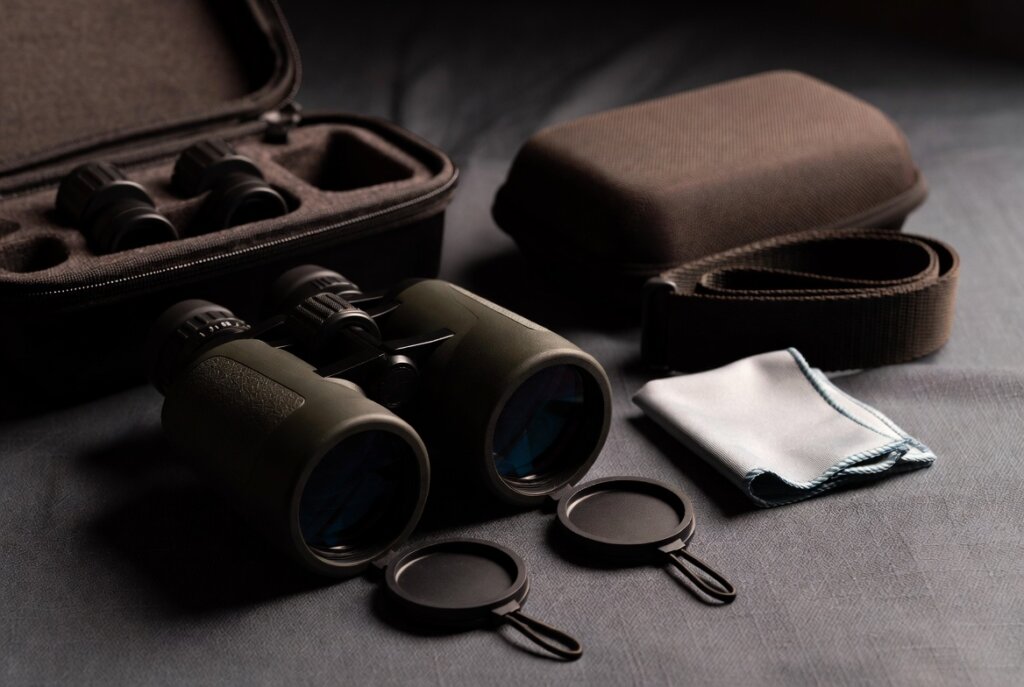
A carry case protects the entire binocular. Lens caps protect the glass directly.
You need both.
A soft case is helpful during storage, but it does not stop dust from touching the glass once the binoculars are out. Lens caps keep the glass covered during short breaks, transport, and quick packing.
| Protection Item | Protects | Best For | Limitation |
|---|---|---|---|
| Lens caps | Objective and eyepiece glass | Daily protection | Does not protect whole body |
| Carry case | Whole binocular | Storage and travel | Slower access |
| Neck strap | Drop prevention | Active use | No lens protection |
| Harness | Weight distribution | Long outdoor sessions | Still needs caps |
| Microfiber cloth | Cleaning | Smudges and dust | Can scratch if used wrongly |
A case without caps is incomplete. Caps without a case are better than nothing, but still not ideal for travel.
Common Problems With Binocular Lens Caps
Problem: Caps Keep Falling Off
The cap is too large, too shallow, or stretched out.
Fix it by measuring the barrel diameter and buying a snugger replacement. If the cap used to fit but now falls off, the rubber may have stretched.
Problem: Caps Are Too Tight
The cap is too small or made from stiff material.
A tight cap may protect well, but it becomes irritating in the field. You will eventually stop using it, which defeats the point.
Problem: Tether Rings Tear
This usually happens with cheap rubber or when the tether ring is forced over a barrel that is too large.
Buy a cap with a slightly larger ring or better-quality material.
Problem: Eyepiece Rain Guard Slides Off
The rain guard opening may be too wide for your eyecups. Some binocular eyecups are slim, especially on compact models.
Look for adjustable or better-fitting eyepiece covers.
Problem: Moisture Gets Trapped
Do not cap wet lenses and store them long-term. Let the binoculars air dry first. Lens caps are for protection, not for sealing moisture against glass.
Should You Buy Original Brand Caps or Universal Replacements?
Original brand caps are usually the best fit. Universal caps are usually the best value.
If your binocular brand sells replacement caps for your exact model, start there. Brand-specific caps are more likely to match the barrel shape, armor thickness, and tether position.
Vortex, for instance, lists replacement tethered objective caps for specific model families and sizes, including 42mm and 56mm models. That model-specific approach is useful when you want a clean fit without guessing.
Universal caps are better when the original caps are unavailable, discontinued, overpriced, or hard to ship.
Original Brand Caps: Pros and Cons
Pros
- Best chance of accurate fit
- Often matches original design
- Cleaner look
- Less measuring risk
- Better resale appearance
Cons
- Can cost more
- May be hard to find
- Older models may be unsupported
- Sometimes sold as single pieces
Universal Caps: Pros and Cons
Pros
- Easier to find
- Usually affordable
- Available in many sizes
- Good backup option
- Useful for discontinued binoculars
Cons
- Fit can be imperfect
- Material quality varies
- “Universal” sizing can be confusing
- May look less premium
Best Binocular Lens Cap Recommendations by Need
Do not recommend lens caps only because they are cheap or have a generic five-star rating. Recommend based on fit logic.
Recommendation 1: Tethered Rubber Objective Caps
Best for most outdoor users.
These are the safest first recommendation because they solve the two biggest problems: lens protection and lost caps.
Best for:
- Birding
- Hiking
- Travel
- Outdoor storage
- Frequent use
Recommendation 2: Universal Replacement Lens Cap Set
Best when the original caps are lost and the brand replacement is unavailable.
This works well for older binoculars or lesser-known models. Just remind readers to measure the outside barrel diameter first.
Recommendation 3: 42mm Replacement Caps
Best for common 8×42 and 10×42 binoculars.
These are high-demand because 42mm binoculars are everywhere.
Recommendation 4: 50mm Objective Caps
Best for larger binoculars.
These should be deeper, more secure, and ideally tethered. A loose 50mm cap gets annoying fast.
Recommendation 5: Eyepiece Rain Guard
Best add-on recommendation.
Many buyers replace front caps and forget the eyepiece cover. A rain guard is a natural cross-sell because it completes the protection setup.
Best Materials for Binocular Lens Caps
Soft Rubber
Soft rubber is the most practical all-around material. It grips well and flexes around slightly different barrel shapes.
Best for active use.
Silicone
Silicone caps are flexible and can fit well, but quality varies. Some feel too stretchy and can loosen over time.
Best for universal fit situations.
Hard Plastic
Hard plastic caps work when the sizing is exact. They are not as forgiving, but they can look clean and stay lightweight.
Best for original brand replacements.
Hybrid Designs
Some caps combine a firmer center with a flexible rim. These can be excellent if the fit is right.
Best for users who want durability without a floppy feel.
Real-World Use Cases
The Backpack Problem
You place binoculars in a backpack pocket with a power bank, keys, snack wrapper, and small tripod plate. Without lens caps, the glass is exposed to friction. Even if nothing scratches deeply, dust and grit can sit on the coatings.
Better choice: snug rubber objective caps and a rain guard.
The Car Storage Problem
Binoculars kept in a glove box or door pocket collect dust fast. Heat can also affect cheap rubber over time.
Better choice: original caps or higher-quality rubber caps, plus a soft case.
The Quick-View Problem
You see something interesting and need the binoculars immediately. Tight caps slow you down. Loose caps disappear.
Better choice: tethered caps with smooth removal.
The Travel Problem
You pack binoculars in a carry-on. Loose caps fall off during airport handling or bag movement.
Better choice: low-profile rubber caps that grip securely.
The Shared Binocular Problem
Family or group binoculars lose caps faster because different people handle them differently.
Better choice: tethered caps. No debate.
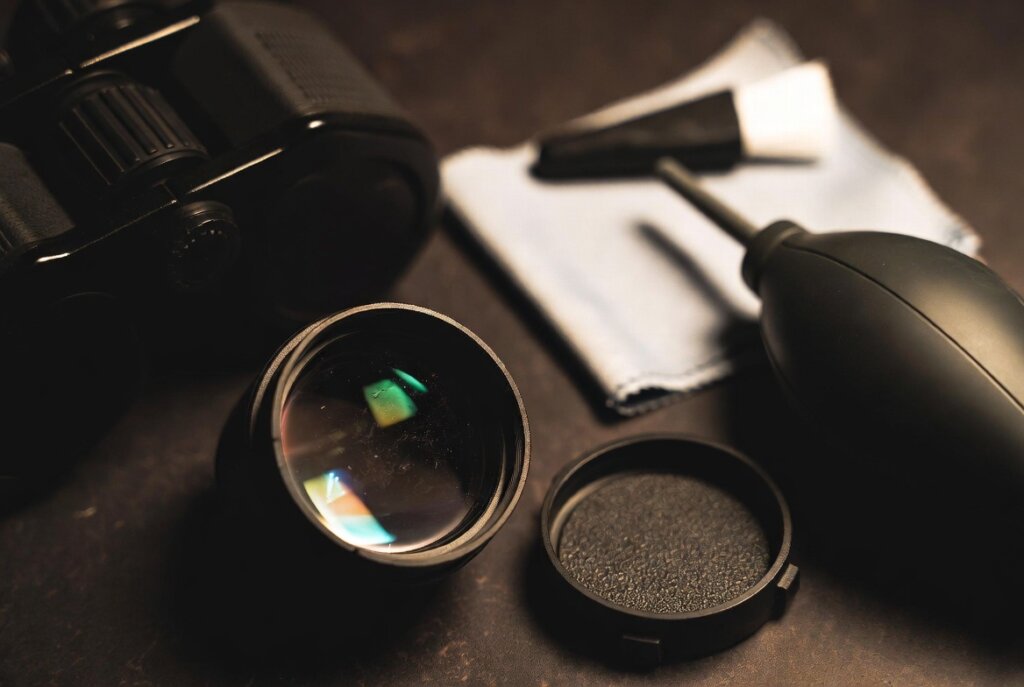
Cleaning and Lens Caps: What to Know
Lens caps reduce how often you need to clean your binoculars. That is good because every cleaning carries some risk if done carelessly.
Do not use your shirt to wipe lenses. That is how fine scratches happen.
Better routine:
- Blow off loose dust first.
- Use a clean lens brush if needed.
- Use a proper microfiber cloth.
- Let moisture dry before capping.
- Store binoculars in a case.
Caps are not a substitute for cleaning, but they reduce the need for aggressive cleaning.
How Many Lens Caps Should You Own?
For your main binoculars, you should have:
- 2 objective lens caps
- 1 eyepiece rain guard
- 1 backup cap set if you travel often
That may sound extra, but lens caps are small and easy to lose. A backup set is cheap compared to replacing damaged glass or dealing with a binocular that always gets stored uncovered.
If you own premium binoculars, keep the original caps even if you switch to aftermarket caps. Original accessories can help resale value later.
Signs You Need New Binocular Lens Caps
Replace your caps if:
- They fall off easily
- The rubber has stretched
- The tether ring is cracked
- The cap no longer grips evenly
- The inside is dirty or gritty
- The plastic is warped
- One side is missing
- The cap touches the lens surface
- The eyepiece guard slides off constantly
Lens caps age quietly. You do not notice the problem until they stop doing their job.
Binocular Lens Caps Comparison Table
| Lens Cap Type | Best For | Main Advantage | Main Weakness | Buyer Tip |
|---|---|---|---|---|
| Tethered objective caps | Outdoor use | Harder to lose | Can dangle | Choose flexible rubber |
| Loose objective caps | Storage | Clean and simple | Easy to misplace | Best for indoor or case storage |
| Universal caps | Replacements | Affordable and available | Fit varies | Measure barrel diameter |
| Brand-specific caps | Exact models | Best fit | Can cost more | Search by model name |
| Eyepiece rain guard | Eyepieces | Fast access | Can slide if oversized | Attach to strap |
| Rubber caps | Active use | Better grip | May stretch | Avoid very cheap rubber |
| Plastic caps | Exact-fit models | Lightweight | Less forgiving | Best when original |
Related Binocular Lens Cap Guides
- For flexible replacement options, read universal binocular lens caps.
- For outdoor grip and durability, read rubber binocular lens caps.
- For people who keep losing caps, read tethered binocular lens caps.
- For common birding and travel binoculars, read 42mm binocular lens caps.
- For larger low-light binoculars, read 50mm binocular lens caps.
- For front-glass protection, read binocular objective lens caps.
Final Buying Advice
Buy binocular lens caps based on fit first, style second, and price third.
That sounds simple, but it prevents most bad purchases.
For most people, the best choice is a tethered rubber objective cap set plus a good eyepiece rain guard. That setup protects both ends of the binocular, reduces lost caps, and works well for real outdoor use.
For premium binoculars, check original brand replacements first. For older or discontinued binoculars, measure carefully and choose universal rubber caps.
The best binocular lens caps are not always the most expensive. They are the ones you actually use every time you put the binoculars away.
And that is the whole point.
For more optics buying guides, practical comparisons, and outdoor gear advice, start from [Best Binocular Home Page] and build your setup the smart way.
FAQs About Binocular Lens Caps
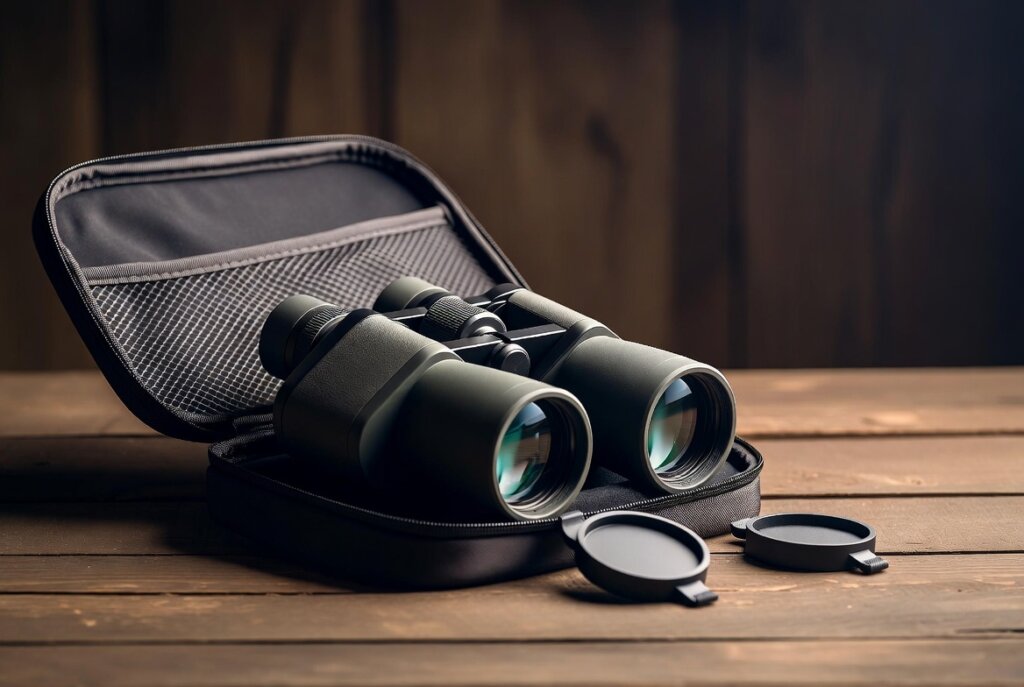
What are binocular lens caps used for?
Binocular lens caps protect the objective lenses and eyepieces from dust, scratches, fingerprints, moisture, and storage damage. They are especially useful when binoculars are carried in a backpack, stored in a vehicle, or used outdoors.
Are binocular lens caps universal?
Some binocular lens caps are universal, but they still need the right size range. You should measure the outside diameter of the binocular barrel before buying. The objective size printed on the binocular, such as 42mm or 50mm, does not always match the cap size needed.
How do I know what size binocular lens caps to buy?
Measure the outside diameter of the objective barrel, including the rubber armor. Use that measurement to choose the cap’s internal diameter. If the cap stretches around the outside, the barrel measurement matters more than the glass diameter.
Are tethered binocular lens caps better?
Tethered binocular lens caps are better for active outdoor use because they stay attached to the binoculars when removed. They are ideal for hiking, bird watching, travel, and any situation where loose caps are easy to lose.
Should I choose rubber or plastic binocular lens caps?
Rubber caps are usually better for outdoor use because they grip well and flex around the barrel. Plastic caps can work well when they are original brand replacements or exact-fit caps, but they are less forgiving if the size is slightly off.
Do I need caps for both ends of binoculars?
Yes. Objective lens caps protect the large front lenses, while eyepiece caps or rain guards protect the lenses you look through. A complete protection setup covers both ends.
Can lens caps damage binocular lenses?
Poorly fitted caps can cause problems if they press against the glass or trap grit inside. Good caps should grip the rim or barrel, not rub the lens surface. Always keep the inside of the caps clean.
Why do my binocular lens caps keep falling off?
They may be too large, stretched out, too shallow, or not designed for your binocular model. Measure your barrel diameter and choose a snugger replacement. Tethered rubber caps are often better for active use.
Are 42mm binocular lens caps the same for all 10×42 binoculars?
No. A 10×42 binocular has 42mm objective lenses, but the outside barrel diameter can vary by brand and model. Rubber armor thickness and barrel design affect the real cap size.
Are 50mm binocular lens caps harder to fit?
They can be, because larger binoculars often have thicker barrels and heavier caps. For 50mm binoculars, deeper rubber tethered caps usually work better than shallow loose caps.
How should I clean binocular lens caps?
Remove the caps and shake out loose dust before wiping them. Clean the inside with a soft microfiber cloth and mild soapy water if needed. Let them dry completely before placing them back on the binoculars.




