
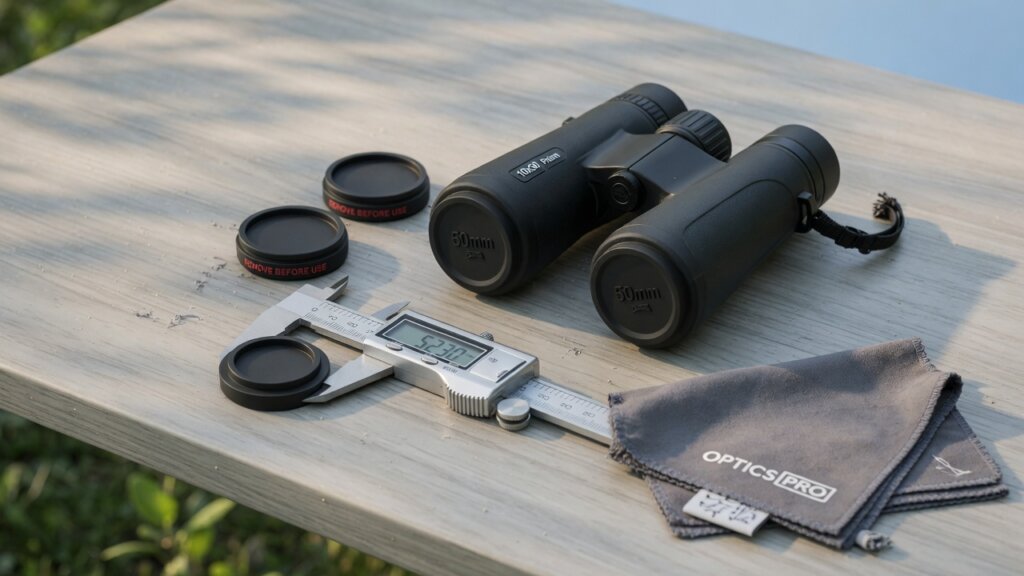
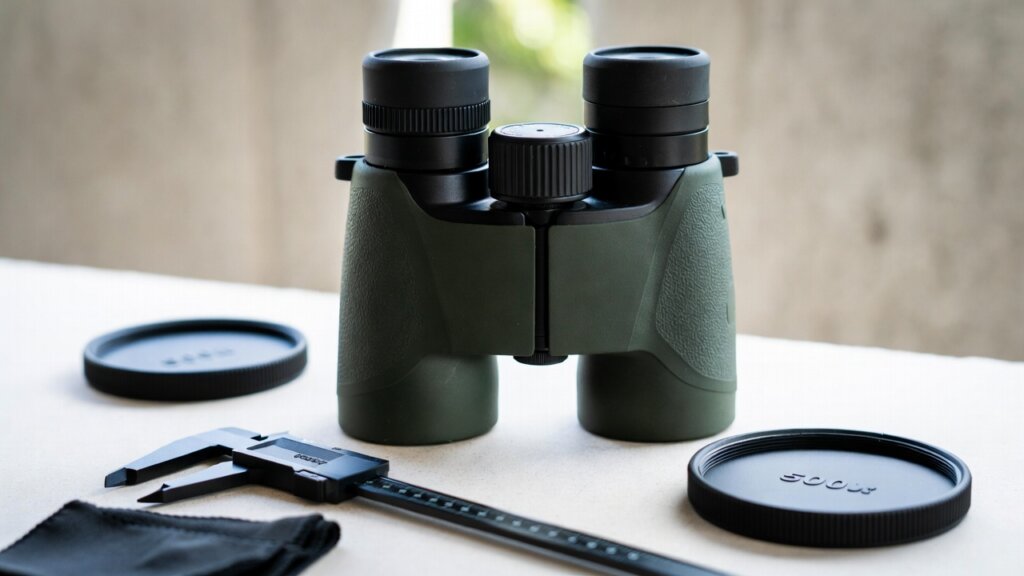
50mm Binocular Lens Caps: Why Size and Fit Matter
50mm binocular lens caps sound simple until you try replacing a lost pair.
You search for “50mm binocular lens caps,” order the first set that looks close, and then the caps either fall off in your bag or refuse to stretch over the objective barrels. Annoying? Very. Common? Also very.
The main thing to understand is this: 50mm usually refers to the binocular’s objective lens size, not always the exact cap size you need. A 10×50, 12×50, 15×50, or 20×50 binocular has 50mm objective lenses, but the outside diameter of the binocular barrel can be larger because of the housing, rubber armor, trim ring, or threaded edge.
So yes, 50mm binocular lens caps are made for binoculars with 50mm objective lenses, but fit still depends on your actual outer barrel measurement.
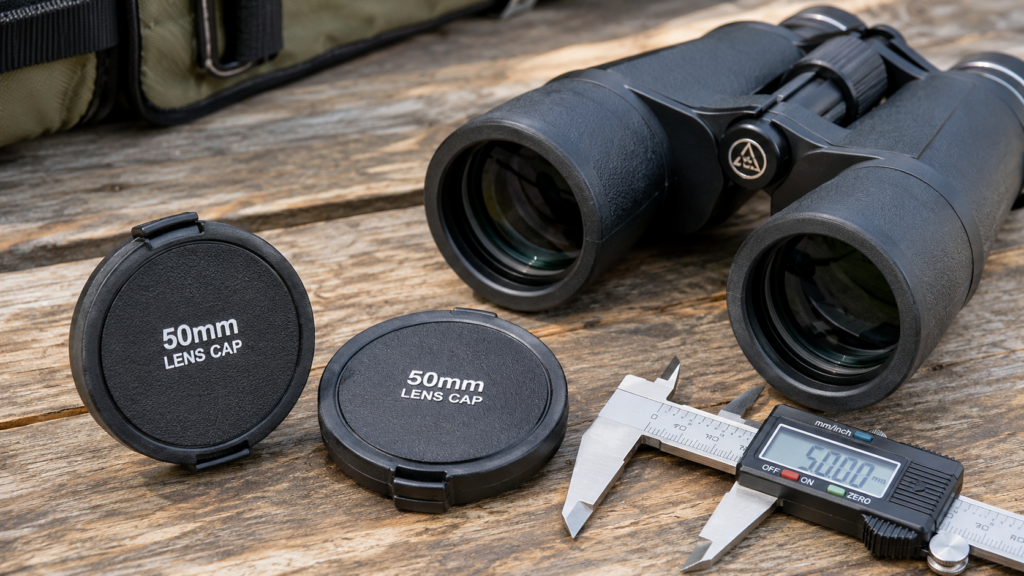
What Are 50mm Binocular Lens Caps?
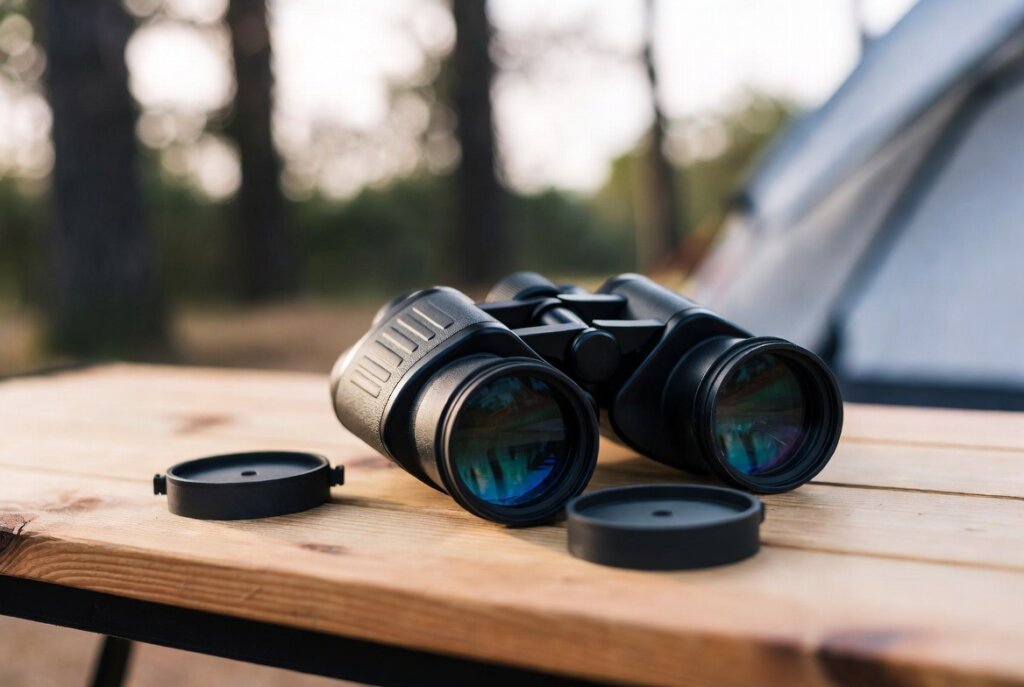
50mm binocular lens caps are protective covers made for the large front lenses on 50mm objective binoculars. These caps protect the glass from dust, scratches, fingerprints, moisture, sand, and accidental bumps.
You usually see them on binoculars like:
| Binocular Type | Common Size | Typical Use |
|---|---|---|
| 10×50 binoculars | 50mm objective | Stargazing, wildlife, general outdoor use |
| 12×50 binoculars | 50mm objective | Long-distance viewing, hunting, open-field use |
| 15×50 binoculars | 50mm objective | Astronomy, tripod use, coastal viewing |
| 20×50 binoculars | 50mm objective | High-magnification observation |
The big front lenses collect more light, which is why 50mm binoculars are popular for low-light viewing, astronomy, hunting, marine use, and long-distance scanning. But bigger glass also means more exposed surface area. One careless toss into a backpack can leave marks on the coatings.
That is where good 50mm binocular lens caps earn their place.
Why Fit Matters More Than the “50mm” Label
This is the mistake many buyers make: they think a 50mm binocular automatically needs a 50mm cap.
Not always.
The objective lens may be 50mm, but the outer barrel may measure 54mm, 55mm, 56mm, or even slightly more. Some rubber-armored binoculars have chunky barrels. Some have recessed glass. Some have raised rings around the objective lens.
For slip-on 50mm binocular lens caps, you need to measure the outside diameter of the objective barrel, not just read the number printed on your binocular.
How to Measure Before Buying
Use a digital caliper if you have one. If not, a simple ruler can still help.
Measure straight across the outside edge of the front barrel. Do not measure the glass only. Measure the full outer rim where the cap will sit.
Here’s the practical rule:
| Your Barrel Measurement | Cap Type to Consider |
|---|---|
| 49–51mm | Tight 50mm slip-on cap |
| 52–54mm | Flexible rubber 50mm-style cap |
| 55–57mm | Larger universal binocular lens caps |
| 58mm+ | Check oversized objective caps |
A cap that is too tight will be annoying every time you use it. A cap that is too loose will disappear the first time you hike, travel, or pull the binoculars out of a case.
For more flexible fit options, you can also compare this with our detailed page on universal binocular lens caps, especially if your binocular barrels are slightly larger than expected.
Best Use Cases for 50mm Binocular Lens Caps
50mm binocular lens caps are especially useful for people who actually carry binoculars outside, not just store them on a shelf.
Stargazing and Night Sky Viewing
A lot of astronomy users own 10×50 or 15×50 binoculars. These models collect enough light for moon viewing, star clusters, and casual sky scanning.
The problem? Night use often means dew, cold air, and handling gear in the dark. A good pair of 50mm binocular lens caps keeps moisture and dust off the glass when you pause between viewing sessions.
This simple protection can make a noticeable difference during outdoor use.
Hunting and Field Scouting
Hunters usually care about speed. You do not want loose caps rattling around or falling off in grass. Tethered 50mm binocular lens caps are better here because they stay attached to the binocular body.
Rubber caps also make sense because they are quiet. Hard plastic caps can click, scrape, or make noise at the worst time.
If durability is your main concern, the article on rubber binocular lens caps goes deeper into why soft caps are usually better for rough outdoor use.
Travel and Backpacking
For travel, lens caps prevent the classic problem: binocular glass rubbing against chargers, zippers, snacks, keys, or random gear inside your bag.
Even if your binoculars came with a case, people often leave the case behind because it takes space. In that situation, 50mm binocular lens caps become your first layer of protection.
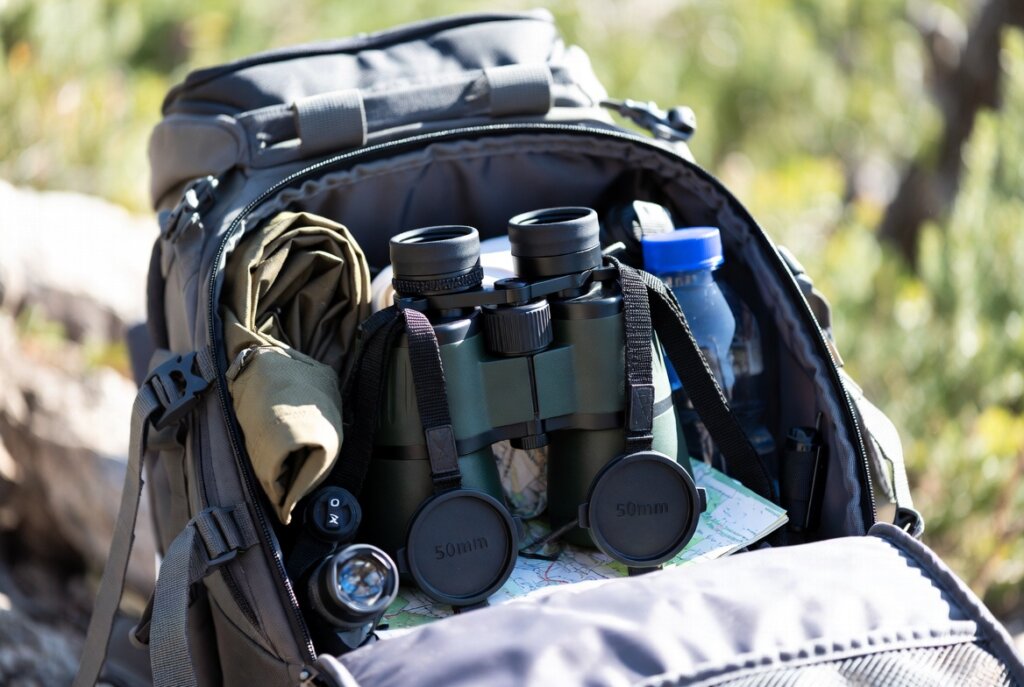
Types of 50mm Binocular Lens Caps
Not all caps feel the same in real use. Some are made for storage. Some are better for active outdoor movement.
Slip-On Objective Caps
Slip-on caps are the most common. They push over the front barrels and stay in place through friction.
They are simple, affordable, and easy to replace. The downside is fit sensitivity. If the sizing is slightly wrong, they either fall off or feel too tight.
Tethered 50mm Binocular Lens Caps
Tethered caps have a small rubber loop or strap that attaches around the binocular barrel. When you remove the cap, it hangs below instead of getting lost.
This style is often the most practical choice for regular outdoor use. You remove the caps, start viewing, and do not have to shove them into your pocket.
The only downside is that poorly designed tethered caps can dangle too much in windy conditions. Still, for most users, tethered 50mm binocular lens caps are the safer buy.
Flip-Down Lens Caps
Flip-down caps stay attached and open like a lid. They are quick, clean, and convenient.
However, they are not always available for every binocular model. They also need a more precise fit, and on some binoculars they can add bulk.
Universal Rubber Caps
Universal rubber caps stretch slightly and work across a small range of sizes. These are useful when you are not 100% sure of the exact diameter.
They are not always as sleek as factory caps, but they often solve the problem better than trying to find an original replacement part.
50mm Binocular Lens Caps Comparison Table
| Cap Style | Best For | Main Benefit | Main Drawback |
|---|---|---|---|
| Slip-on caps | Storage, casual use | Simple and affordable | Easy to lose |
| Tethered caps | Hunting, hiking, field use | Stay attached | Can dangle |
| Flip-down caps | Fast viewing | Quick open/close | Needs precise fit |
| Universal rubber caps | Odd-sized barrels | Flexible sizing | Less factory-looking |
Recommended Product: 50mm Universal Rubber Tethered Objective Lens Caps
For most people replacing lost caps, the safest choice is a 50mm universal rubber tethered objective lens cap set.
Why this type?
Because it solves the two biggest problems at once: fit and loss. The rubber gives a little flexibility, and the tether keeps the caps attached while you are using the binoculars.
This is especially useful for 10×50 binoculars, 12×50 binoculars, and other common full-size models used for stargazing, hunting, camping, and travel.
Look for these features before buying:
| Feature | Why It Matters |
|---|---|
| Flexible rubber body | Helps fit slightly different barrel sizes |
| Tethered loop | Prevents losing caps outdoors |
| Matte black finish | Reduces reflections and looks cleaner |
| Firm grip edge | Makes removal easier with cold hands |
| Sold as a pair | You need two objective caps, not one |
For daily outdoor use, universal rubber tethered caps can often be more practical than factory caps.. Factory caps look nicer, but universal rubber tethered caps are usually more forgiving and easier to replace.
Pros and Cons of 50mm Binocular Lens Caps
Pros
- Protect lenses from dust, dirt, scratches, and grit.
- Keep fingerprints and oil marks away from lens coatings.
- Help maintain clear image quality and contrast.
- Cheap replacement compared to optic repair.
- Make binoculars safer to carry in a bag, car, or case.
Cons
- “50mm” label does not always mean perfect fit.
- Cheap caps can feel weak or flimsy.
- Soft rubber caps may stretch over time.
- Some caps fit at first but become loose later.
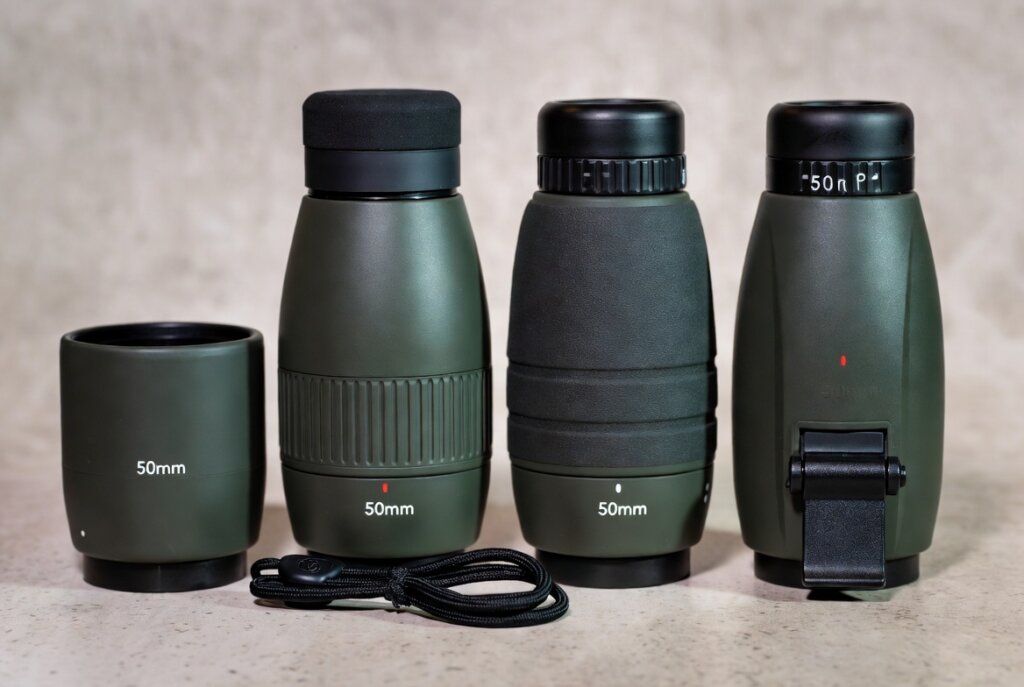
Tethered caps can sometimes hang awkwardly, especially on compact harness setups. For tripod-mounted astronomy binoculars, dangling caps are less annoying. For fast field use, they can bother some users.
Common Mistakes When Buying 50mm Binocular Lens Caps
Buying Based Only on “10×50”
A 10×50 binocular does not automatically need an exact 50mm cap. Always measure the outer barrel.
This one mistake causes most bad purchases.
Ignoring Rubber Armor Thickness
Many modern binoculars have thick rubber armor. That extra layer changes the outside diameter. If you only measure the glass, your cap will likely be too small.
Choosing Hard Plastic for Rough Use
Hard plastic caps can work for storage, but they are not my first pick for hiking, hunting, or travel. Rubber handles bumps better and usually grips the barrel more securely.
Buying Single Caps by Accident
Some sellers show two caps in the photo but sell only one piece. Always check whether the listing includes a pair.
Forgetting About Eyepiece Caps
Objective caps protect the front lenses. But the eyepieces need protection too. If your binoculars are missing both, consider buying a full replacement lens cap kit.
Real-World Fit Tips for 50mm Binoculars
If your cap is slightly loose, do not immediately throw it away. Sometimes a thin strip of black electrical tape around the inside edge can improve grip. It is not pretty, but it works as a quick field fix.
If the cap is too tight, do not force it hard over the barrel. You can stretch some rubber caps gently, but forcing them repeatedly can tear the cap or stress the binocular’s front trim.
For cold weather, rubber becomes less flexible. A cap that feels perfect indoors may feel stiff outside at night. Stargazers should keep this in mind.
For marine or coastal use, rinse dust and salt from caps occasionally. Grit trapped inside the cap can rub against the lens rim or coating area over time.
Are 50mm Binocular Lens Caps Worth Replacing?
Yes, especially if your binoculars are worth more than a cheap toy pair.
The lens coatings on 50mm binoculars are part of what makes them bright and clear. Once scratched, they are not easy to fix. A simple cap protects that investment.
If you use your binoculars for astronomy, hunting, boating, hiking, travel, or backyard wildlife watching, replacing missing 50mm binocular lens caps is not optional. It is basic maintenance.
For a wider breakdown of cap styles, sizes, and replacement options, visit our main silo resource on best binocular lens caps. It helps you compare cap types before buying the wrong size.
Buyer Psychology: What You Should Really Pay For
Most buyers focus only on price. That is understandable because lens caps feel like a small accessory.
But the better question is: Will these caps still be on my binoculars after one month of real use?
A cheap loose cap is not cheap if it falls off during the first trip.
Pay for fit, flexibility, and attachment. A slightly more expensive tethered rubber cap is usually a smarter buy than a hard plastic cap that looks clean but disappears quickly.
Also, do not overpay for “premium” unless the fit is confirmed. Lens caps are protective accessories, not performance upgrades. They will not make your binoculars sharper. They simply protect what you already paid for.
Best 50mm Binocular Lens Caps by Situation
| Situation | Best Choice |
|---|---|
| Backyard use | Simple slip-on 50mm caps |
| Hiking | Tethered rubber objective caps |
| Hunting | Quiet rubber tethered caps |
| Astronomy | Flexible caps that handle dew and cold |
| Travel | Snug universal rubber caps |
| Storage only | Basic plastic or rubber caps |
For most users, I would skip ultra-cheap hard caps unless the binoculars stay indoors. Outdoor binoculars deserve better.
Maintenance Tips for Longer Cap Life
Clean your caps once in a while. Dust, sand, and tiny grit can collect inside them. A quick rinse and dry cloth are enough.
Do not store wet caps sealed tightly over the lenses for long periods. If the binoculars got wet, let everything dry before storage.
Avoid leaving rubber caps in direct heat for days, such as inside a hot car. Heat can soften, warp, or loosen the material.
If your tether loop starts cracking, replace the caps before they break during a trip.
Small maintenance, fewer headaches.
FAQs About 50mm Binocular Lens Caps
What size lens caps do I need for 10×50 binoculars?
For 10×50 binoculars, you usually need caps made for 50mm objective lenses, but you should measure the outside diameter of the front barrels first. Many 10×50 binoculars need caps slightly larger than 50mm because of rubber armor or housing thickness.
Are 50mm binocular lens caps universal?
Some 50mm binocular lens caps are universal, but not all. Universal caps usually use flexible rubber and can fit a small range of barrel sizes. Fixed plastic caps need a more exact measurement.
Do 50mm binocular lens caps fit 12×50 binoculars?
Often, yes. Since 12×50 binoculars also use 50mm objective lenses, many 50mm caps can fit. Still, the outside barrel diameter can vary by brand and model, so measuring is the safest move.
Are rubber lens caps better than plastic caps?
For outdoor use, rubber lens caps are usually better because they grip well, stay quieter, and handle bumps better. Plastic caps can be fine for storage but are more likely to crack or fall off if the fit is not exact.
Should I buy tethered 50mm binocular lens caps?
Yes, if you use binoculars outdoors. Tethered 50mm binocular lens caps are harder to lose and more practical for hiking, hunting, astronomy, travel, and field observation.
Can loose binocular lens caps be fixed?
A slightly loose cap can sometimes be improved with a thin inner grip layer, but this is only a temporary fix. If the cap falls off easily, replacing it with a better-sized rubber or universal cap is smarter.
How do I measure binocular barrels for 50mm lens caps?
Use a ruler or digital caliper to measure the outside diameter of each front barrel, including the rubber armor. Measure in millimeters and choose a cap with an internal diameter that matches closely for a secure fit.
Final Verdict
50mm binocular lens caps are a small accessory, but they protect the most exposed and important part of your binoculars: the objective lenses.
The smartest move is to measure the outside barrel diameter before buying, choose flexible rubber if you are unsure, and go tethered if you use binoculars outdoors. For most 10×50 and 12×50 owners, a universal rubber tethered cap set is the safest and most practical replacement.
Cheap caps may work for storage, but loose caps are not reliable for regular outdoor use.
For more practical binocular accessory tips, explore the latest posts on our blog tips page and visit the homepage at BestBinocular.net for more binocular buying and maintenance advice.




