
Binocular Mount vs Tripod Adapter: What’s the Real Difference?
Choosing between a binocular mount vs tripod adapter sounds simple until you actually try to attach your binoculars to a tripod and realize every product name is slightly confusing.
Some sellers call a basic L-shaped adapter a “binocular mount.” Some call a full support system a “tripod adapter.” Others use both terms for the same small metal bracket. That is where most buyers get stuck.
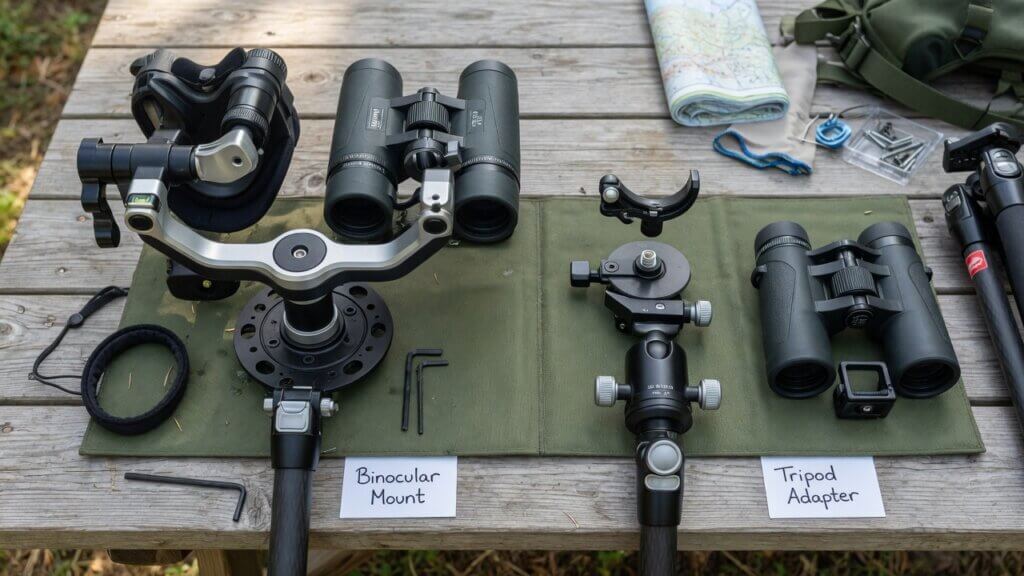
Here is the clean answer: a tripod adapter is usually the small connector that attaches your binoculars to a tripod, while a binocular mount can mean a wider support system designed to hold, balance, or position binoculars more comfortably.
For casual users, a tripod adapter is usually enough. For astronomy, long glassing sessions, heavy binoculars, or seated observation, a proper binocular mount can feel much better.
Why This Comparison Matters
The binocular mount vs tripod adapter question is not just about names. It affects comfort, stability, money, and how long you can actually enjoy using your binoculars.
If you buy the wrong one, you may still technically mount your binoculars, but the setup may feel awkward.
For example, a compact 10×42 binocular used for quick backyard viewing usually does not need a heavy-duty mount. A simple tripod adapter can hold it steady enough.
But a 15×70 astronomy binocular is different. It is heavier, more magnified, and harder to aim upward. In that case, a basic adapter may attach the binoculars, but it may not give you the comfort you need for long sky viewing.
That is why this guide focuses on real use, not just product definitions.
For the complete setup process, you can also read our pillar guide on how to mount binoculars to a tripod because it explains the full step-by-step mounting method in more detail.
What Is a Binocular Tripod Adapter?
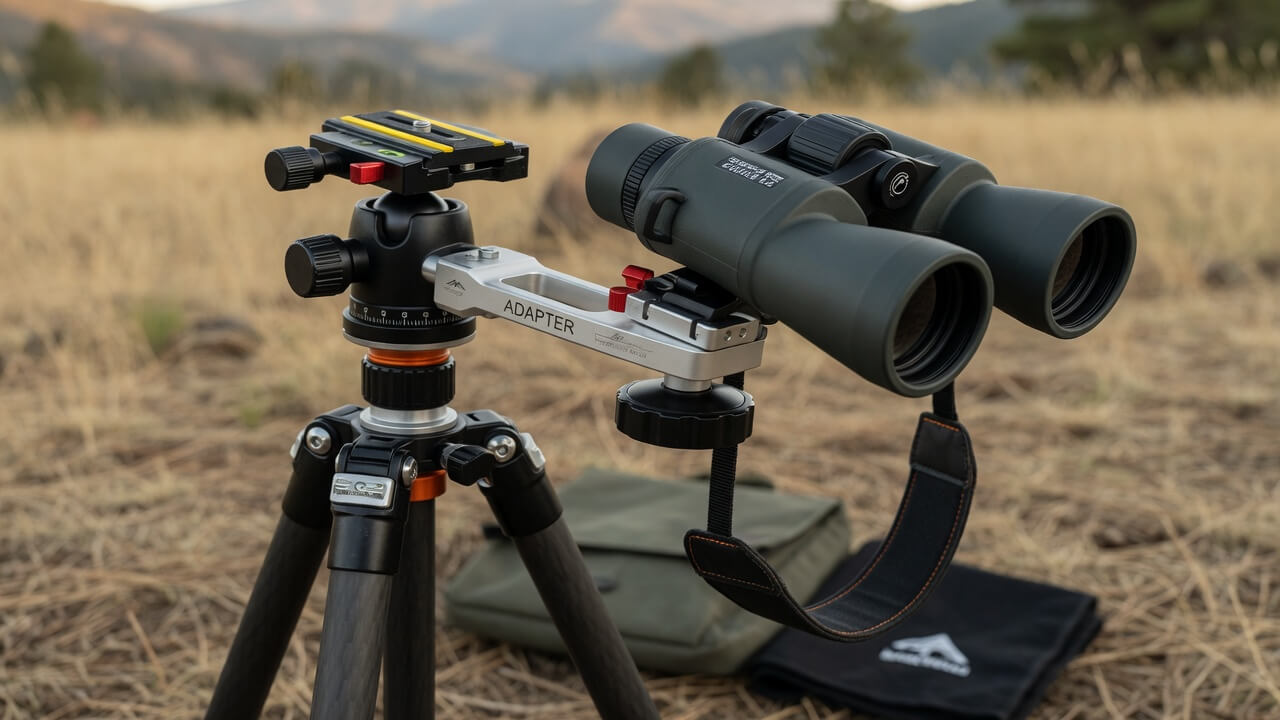
A binocular tripod adapter is a small accessory that connects your binoculars to a tripod head.
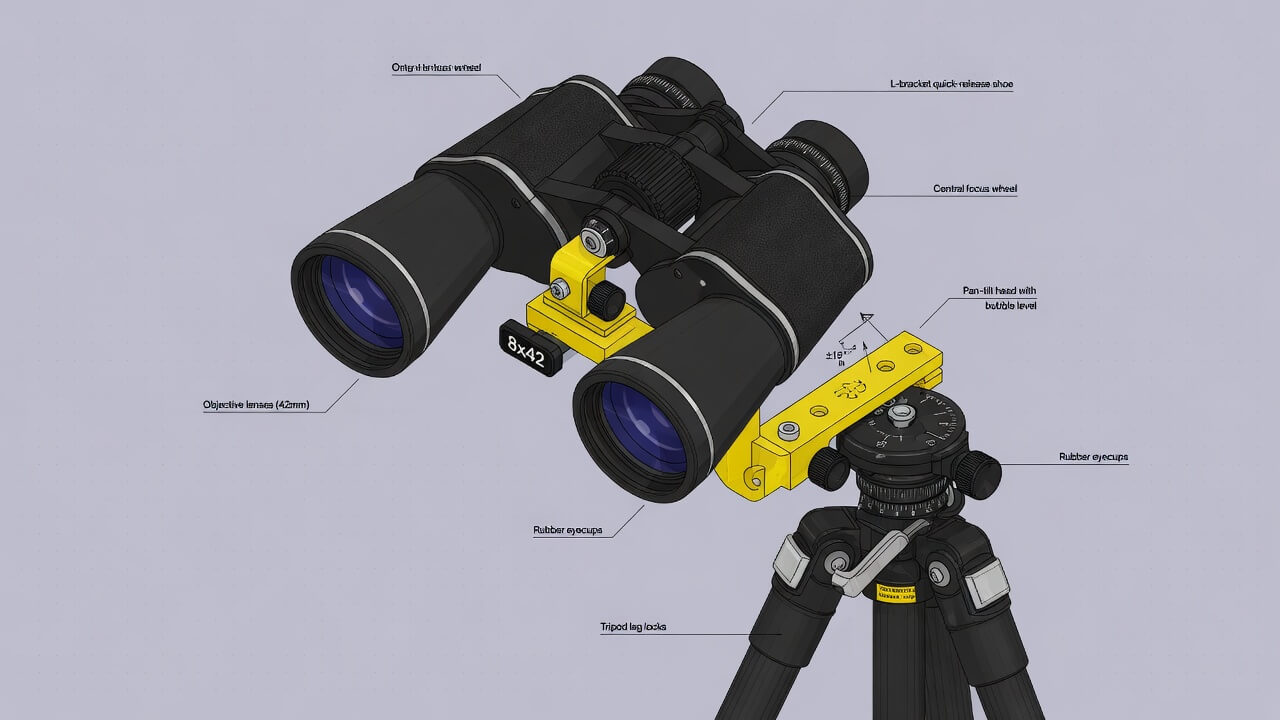
Most standard binoculars have a hidden threaded socket at the front bridge. Usually, you remove a small cap between the barrels, screw in the adapter, and then attach the adapter base to your tripod plate.
Simple.
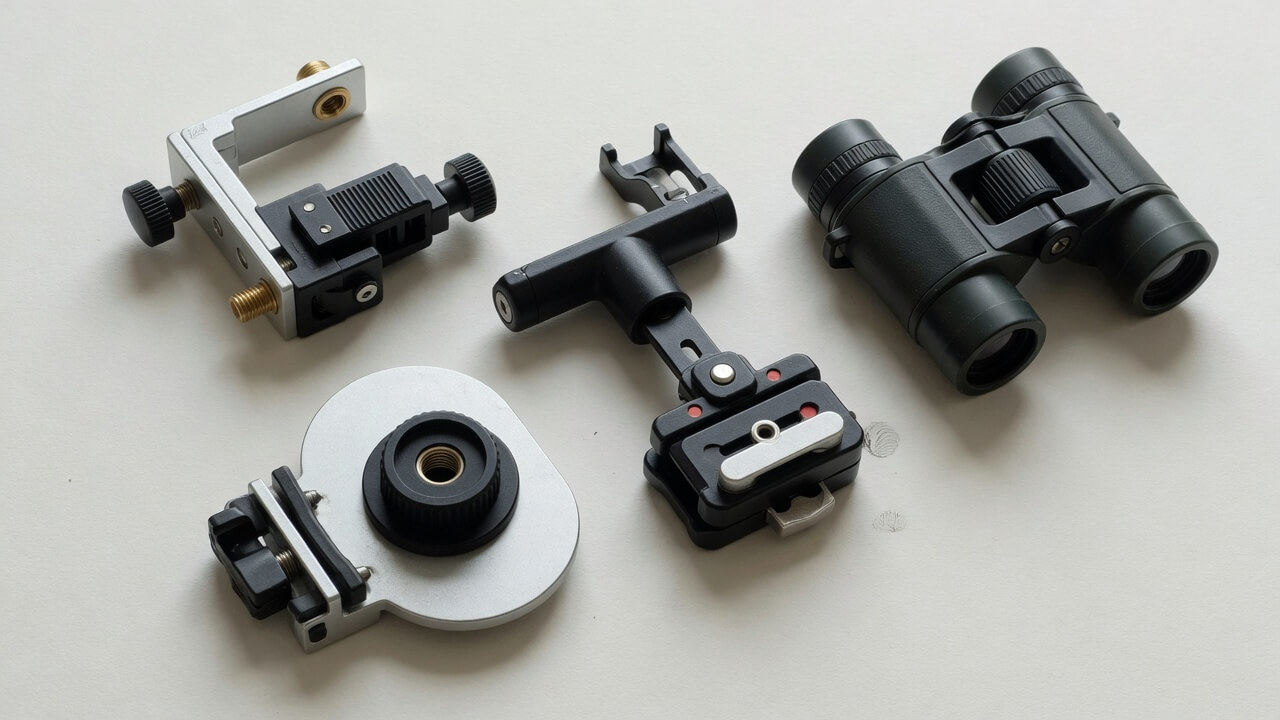
The most common design is the L-shaped metal or plastic adapter. It stands vertically between the binocular barrels and connects downward to the tripod.
A tripod adapter is usually best when you want:
| Situation | Why a Tripod Adapter Works |
|---|---|
| Bird watching from one location | Keeps the image steady without adding much weight |
| Backyard moon viewing | Reduces hand shake for casual astronomy |
| Range viewing | Helps keep the binoculars fixed on one target |
| Wildlife scanning from a deck or blind | Gives stability without a bulky setup |
| Using 8×42, 10×42, or 10×50 binoculars | These sizes are usually easy to support |
The biggest advantage is simplicity. You do not need a complex frame or expensive mount. You only need the adapter, a tripod, and binoculars with a tripod socket.
What Is a Binocular Mount?
A binocular mount is a broader term. It may refer to a simple adapter, but more accurately, it refers to a support system made to hold binoculars in a more stable or flexible way.
Some binocular mounts are basic brackets. Others are parallelogram mounts, window mounts, monopod mounts, or heavy-duty astronomy mounts.
This is where the binocular mount vs tripod adapter difference becomes important.
A tripod adapter connects the binoculars to a tripod.
A binocular mount may help you move, balance, angle, or position the binoculars more comfortably.
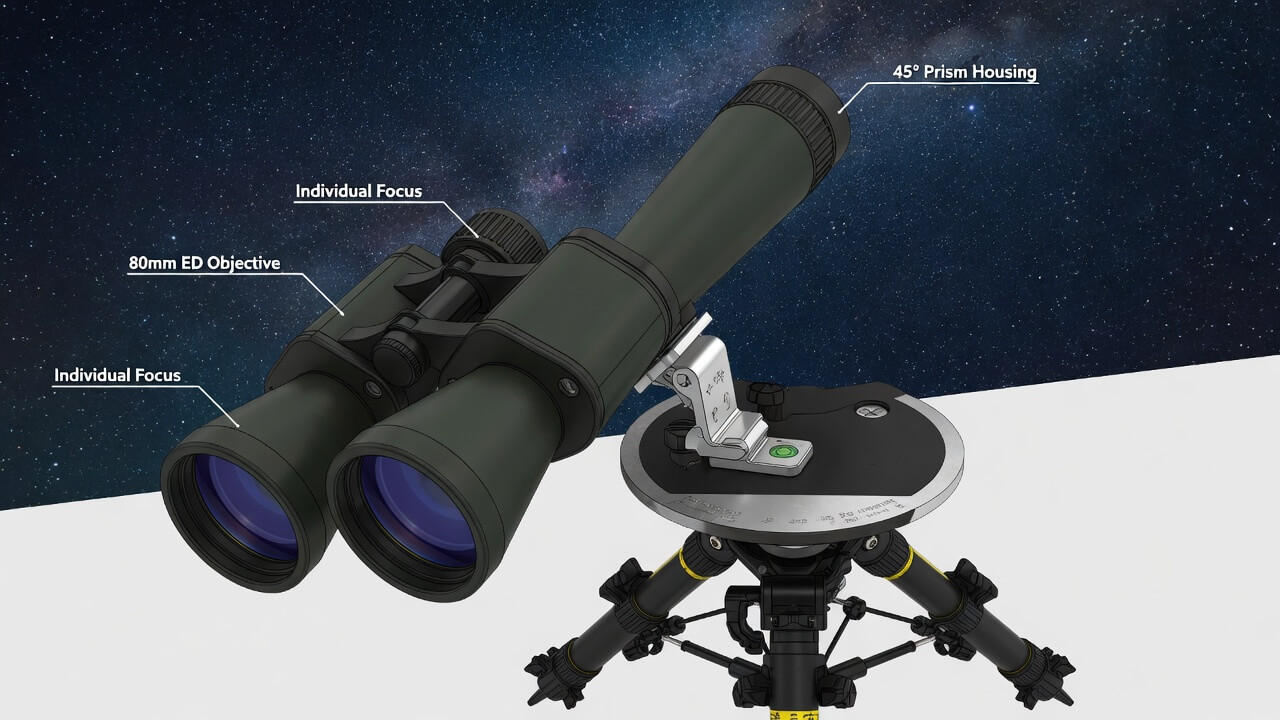
For example, a parallelogram binocular mount lets you raise, lower, and move binoculars while keeping the same target in view. That is very useful for astronomy because you can sit in a chair and look upward without fighting the tripod angle.
For hunting or scenic observation from a vehicle, a window mount can be more useful than a standard tripod adapter.
So, a binocular mount is more about the full observing experience. A tripod adapter is more about basic attachment.
Binocular Mount vs Tripod Adapter: The Main Difference
Here is the easiest way to understand the binocular mount vs tripod adapter debate.
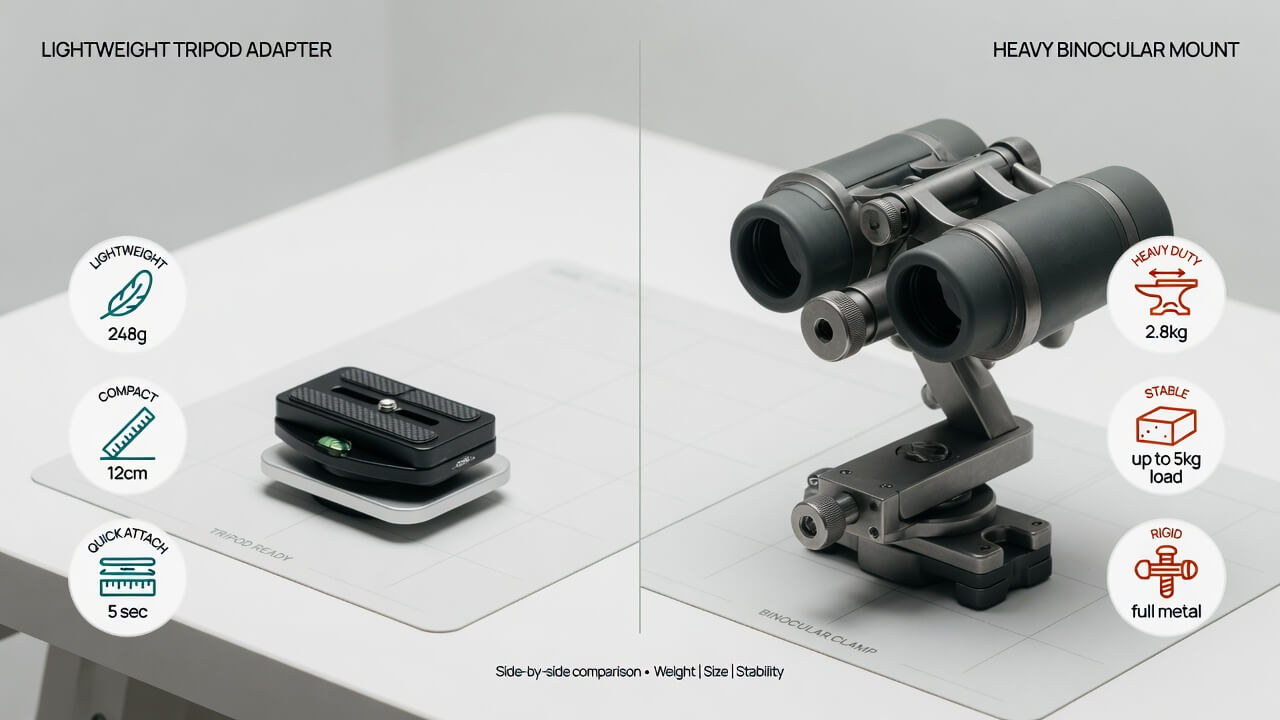
| Feature | Tripod Adapter | Binocular Mount |
|---|---|---|
| Main job | Connects binoculars to tripod | Supports and positions binoculars |
| Size | Small and lightweight | Can be small or large |
| Best for | Normal tripod use | Long sessions, heavy binoculars, special angles |
| Cost | Usually cheaper | Often more expensive |
| Portability | Very portable | Depends on mount type |
| Comfort | Good for straight viewing | Better for seated or angled viewing |
| Setup time | Fast | Can take longer |
| Ideal users | Beginners, birders, casual users | Astronomy users, hunters, serious glassers |
In plain words, if your main problem is “How do I attach my binoculars to my tripod?” then you probably need a tripod adapter.
If your problem is “How do I use heavy binoculars comfortably for 30 minutes or more?” then you may need a binocular mount.
When a Tripod Adapter Is the Better Choice
A tripod adapter is the better choice when you want a clean, affordable, lightweight setup.
This is what I recommend for most people using standard binoculars.
If you have 8×42, 10×42, 10×50, or similar binoculars, a basic tripod adapter usually does the job well. You mount the binoculars, adjust the tripod height, lock the head, and enjoy a much steadier image.
For bird watching, this helps a lot when you are observing from a fixed spot. Think lake edges, feeding stations, open fields, balconies, or nature reserves.
For casual stargazing, it also makes the moon, bright planets, and large star fields easier to view.
The image will not suddenly become sharper because of the adapter itself. What improves is stability. Once hand shake disappears, your eyes can notice more detail.
Pros of a Tripod Adapter
| Pros | Why It Matters |
|---|---|
| Affordable | Easy upgrade without buying a full mount |
| Lightweight | Good for travel and field use |
| Quick to install | Less setup frustration |
| Works with most tripod-ready binoculars | Good compatibility if your binocular has a front socket |
| Easy to pack | Fits in small accessory pockets |
Cons of a Tripod Adapter
| Cons | What to Watch For |
|---|---|
| Not ideal for very heavy binoculars | May flex or feel unbalanced |
| Can be awkward for high-angle astronomy | Tripod legs and head position may limit comfort |
| Cheap plastic models may wobble | Stability depends on build quality |
| Narrow binocular bridges can be tight | Some adapters may not fit between barrels |
The biggest mistake is buying the cheapest adapter without checking clearance. Some binoculars have narrow space between the barrels, and a thick adapter may not fit properly.
For more setup detail, read our supporting guide on how to use binocular tripod adapter because it explains placement, tightening, and balance in a practical way.
When a Binocular Mount Is the Better Choice
A binocular mount makes more sense when comfort matters as much as stability.
If you use big astronomy binoculars like 15×70, 20×80, or larger, a simple adapter can feel limiting. The binoculars may attach to the tripod, but pointing them high into the sky can become uncomfortable fast.
You bend your neck. You adjust the tripod again and again. The eyepieces land at the wrong height. After ten minutes, the setup feels more annoying than useful.
That is when a better mount becomes worth it.
A binocular mount is also helpful for long-distance glassing from one position. Hunters, coastal watchers, and mountain viewers often spend long periods scanning the same area. A solid mount reduces fatigue and keeps the view controlled.
Best Situations for a Binocular Mount
| Use Case | Best Mount Type |
|---|---|
| Astronomy from a chair | Parallelogram binocular mount |
| Heavy 15×70 or 20×80 binoculars | Heavy-duty tripod mount |
| Vehicle-based glassing | Window mount |
| Long-range hunting observation | Tripod-mounted binocular support |
| Seated nature viewing | Adjustable binocular mount |
This is where the binocular mount vs tripod adapter decision becomes less about price and more about how you actually observe.
If you stand for five minutes, choose the adapter.
If you sit for one hour, consider the mount.
Real-World Examples: Which One Should You Buy?
Let’s make this practical.
Scenario 1: You Own 10×42 Binoculars for Bird Watching
Choose a tripod adapter.
A 10×42 binocular is usually light enough for a standard adapter. You get better stability without adding much bulk. This is the setup I would choose for garden bird watching, lake viewing, and casual wildlife observation.
Scenario 2: You Own 15×70 Binoculars for Astronomy
Choose a binocular mount, or at least a strong metal tripod adapter with a stable tripod.
The higher magnification makes hand shake very obvious. The heavier body also puts more stress on the adapter. For moon viewing, a tripod adapter can work. For long sky sessions, a proper mount is more comfortable.
Scenario 3: You Want to Use Binoculars from a Car
Choose a window mount.
This is technically a binocular mount, not a standard tripod adapter. It clamps onto a car window and gives you a stable viewing platform. It is useful for safari-style viewing, scenic overlooks, or vehicle-based wildlife observation.
Scenario 4: You Are Not Sure If Your Binoculars Can Be Mounted
First check the front hinge area. If there is a small removable cap between the barrels, your binoculars are likely tripod-adaptable.
If you are still unsure, read our guide on can binoculars be mounted on a tripod before buying any accessory.
My One Product Recommendation
If you want one practical adapter that fits the needs of most users, the Vortex Uni-Daptor Binocular Tripod Adapter is a smart pick.
I like it because it solves one of the most annoying field problems: switching between tripod use and handheld use. The Vortex Uni-Daptor is designed for tripod-adaptable binoculars and offers a slim, quick-release setup that lets you remove the binoculars without disconnecting the whole adapter.
That quick-release style makes sense if you move between fixed viewing and handheld scanning.
It is not the right choice for every heavy astronomy setup, but for birders, hunters, travelers, and general outdoor users, it is a strong middle-ground option.
Why I Would Choose It
| Reason | Benefit |
|---|---|
| Slim design | Fits better between many binocular barrels |
| Quick-release function | Easier to switch from tripod to handheld |
| Metal construction | Better confidence than cheap plastic adapters |
| Good for tripod-adaptable binoculars | Practical for common 8×42, 10×42, and 10×50 models |
Most users do not want a complicated mount. They want less shake, easier viewing, and a setup that feels simple in real use. A good adapter gives that without turning binocular setup into a bulky project.
Common Mistakes Buyers Make
The binocular mount vs tripod adapter decision goes wrong when people buy based only on price or product photos.
Mistake 1: Ignoring Binocular Weight
A small adapter may hold lightweight binoculars well, but large binoculars need stronger support. If your binoculars are heavy, avoid weak plastic adapters.
Mistake 2: Forgetting About Tripod Quality
Even the best adapter will not fix a shaky tripod.
If the tripod legs flex, the head droops, or the center column wobbles, your view will still shake. Stability is a system: binoculars, adapter, tripod head, and tripod legs all matter.
Mistake 3: Buying a Mount When an Adapter Is Enough
Some beginners overbuy. They see astronomy-style mounts and assume they need one. For normal 10×42 binoculars, you probably do not.
Start simple unless your binoculars are heavy or your use case demands long-session comfort.
Mistake 4: Buying an Adapter That Does Not Fit
Check the front socket and barrel clearance. Some binoculars are tripod-adaptable, but the space between the barrels may be tight.
A slim adapter is safer than a bulky one.
Buyer Tips Before You Choose
Before buying anything, ask yourself these five questions:
| Question | What It Tells You |
|---|---|
| Are my binoculars tripod-adaptable? | Confirms whether a standard adapter will work |
| How heavy are my binoculars? | Helps decide between basic adapter and stronger mount |
| Will I observe standing or sitting? | Comfort changes the best option |
| Do I need quick handheld switching? | Quick-release adapters become more useful |
| Am I using binoculars for astronomy? | A mount may be better for high-angle viewing |
My honest advice: do not make the setup heavier than your actual use requires.
For most people comparing binocular mount vs tripod adapter, the tripod adapter wins because it is simple and affordable. But for heavy binoculars, astronomy, or long observation sessions, the mount wins because it is more comfortable.
Binocular Mount vs Tripod Adapter for Different Users
| User Type | Better Choice | Reason |
|---|---|---|
| Beginner | Tripod adapter | Cheap, simple, easy to learn |
| Bird watcher | Tripod adapter | Stable enough for most field viewing |
| Backyard astronomer | Strong tripod adapter | Good for casual moon and sky viewing |
| Serious astronomy user | Binocular mount | Better comfort for upward viewing |
| Hunter | Tripod adapter or window mount | Depends on vehicle or field setup |
| Traveler | Compact tripod adapter | Lightweight and packable |
| Heavy binocular owner | Binocular mount | More secure and balanced |
This is the part many buying guides skip: your viewing style matters more than the accessory name.
A person using 10×42 binoculars on a balcony does not need the same support as someone using 20×80 binoculars under a dark sky.
Final Verdict: Which One Should You Choose?
The simplest answer is this:
Choose a tripod adapter if you have normal-size binoculars and want to attach them to a tripod for steadier viewing.
Choose a binocular mount if you use heavy binoculars, observe for long sessions, need more comfort, or want better movement control.
The binocular mount vs tripod adapter choice is not about which one is “better.” It is about which one matches your binoculars and your viewing habits.
For most beginners, I would start with a quality metal tripod adapter. It is cheaper, easier, and solves the main problem: shaky hands.
Then, if you later move into astronomy binoculars, extended wildlife glassing, or seated long-distance viewing, upgrade to a dedicated binocular mount.
That path saves money and keeps your setup practical.
FAQs About Binocular Mount vs Tripod Adapter
What is the difference between a binocular mount and a tripod adapter?
A tripod adapter is usually a small connector that attaches binoculars to a tripod. A binocular mount is a broader support system that may hold, balance, or position binoculars more comfortably. In the binocular mount vs tripod adapter comparison, the adapter is simpler, while the mount is usually more advanced.
Do I need a binocular mount or just a tripod adapter?
You probably need only a tripod adapter if you use standard binoculars like 8×42, 10×42, or 10×50. You may need a binocular mount if your binoculars are heavy, high-magnification, or used for long astronomy sessions.
Can all binoculars use a tripod adapter?
No, not all binoculars can use a standard tripod adapter. Many full-size binoculars have a front threaded socket under a small cap, but some compact models do not. Always check before buying.
Is a binocular mount better for astronomy?
Yes, a binocular mount is often better for astronomy, especially with large binoculars. A basic adapter can work for casual sky viewing, but a proper mount is more comfortable when looking upward for long periods.
Is a metal tripod adapter better than plastic?
Usually, yes. A metal tripod adapter is more stable and durable, especially with heavier binoculars. Plastic adapters can work for lightweight binoculars, but they may flex more.
What is the best beginner choice in the binocular mount vs tripod adapter debate?
For beginners, a tripod adapter is usually the best first choice. It is affordable, easy to use, and works well for most normal tripod-ready binoculars.
Do I need a special tripod for binoculars?
Not always. A regular camera tripod can work if it is stable and has a compatible mounting plate. However, heavier binoculars need a stronger tripod and smoother tripod head.
Where can I learn more about binocular setup and buying tips?
You can explore more practical guides on the Best Binocular blog page or visit the bestbinocular.net home page for more binocular buying and setup advice.
Can I use a binocular mount with compact binoculars?
Yes, but compact binoculars often lack a standard tripod socket. In that case, you may need a universal clamp-style binocular mount. Check the binocular size, mount grip, and weight support before purchasing.




