
Can Binoculars Be Mounted on a Tripod?
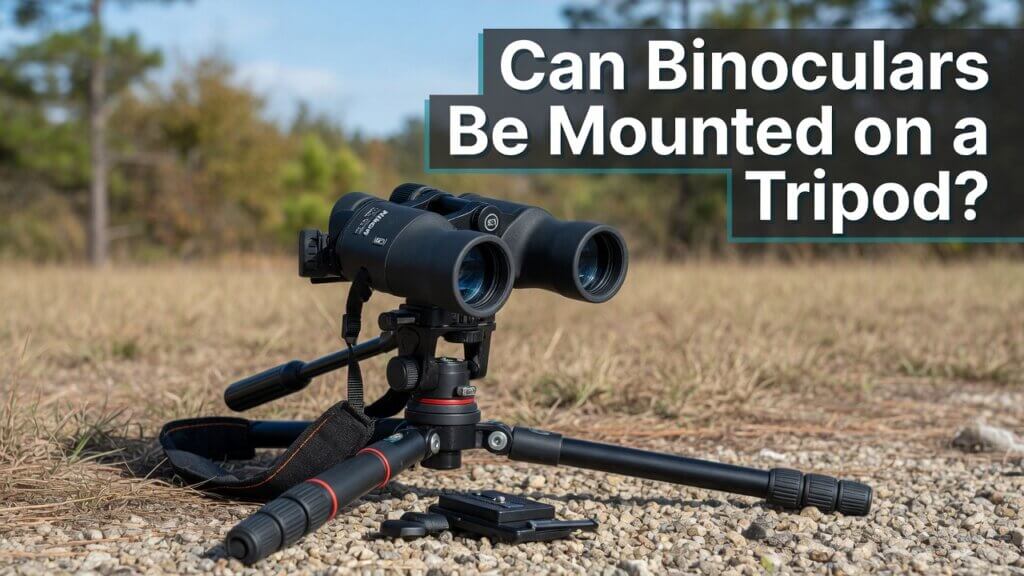
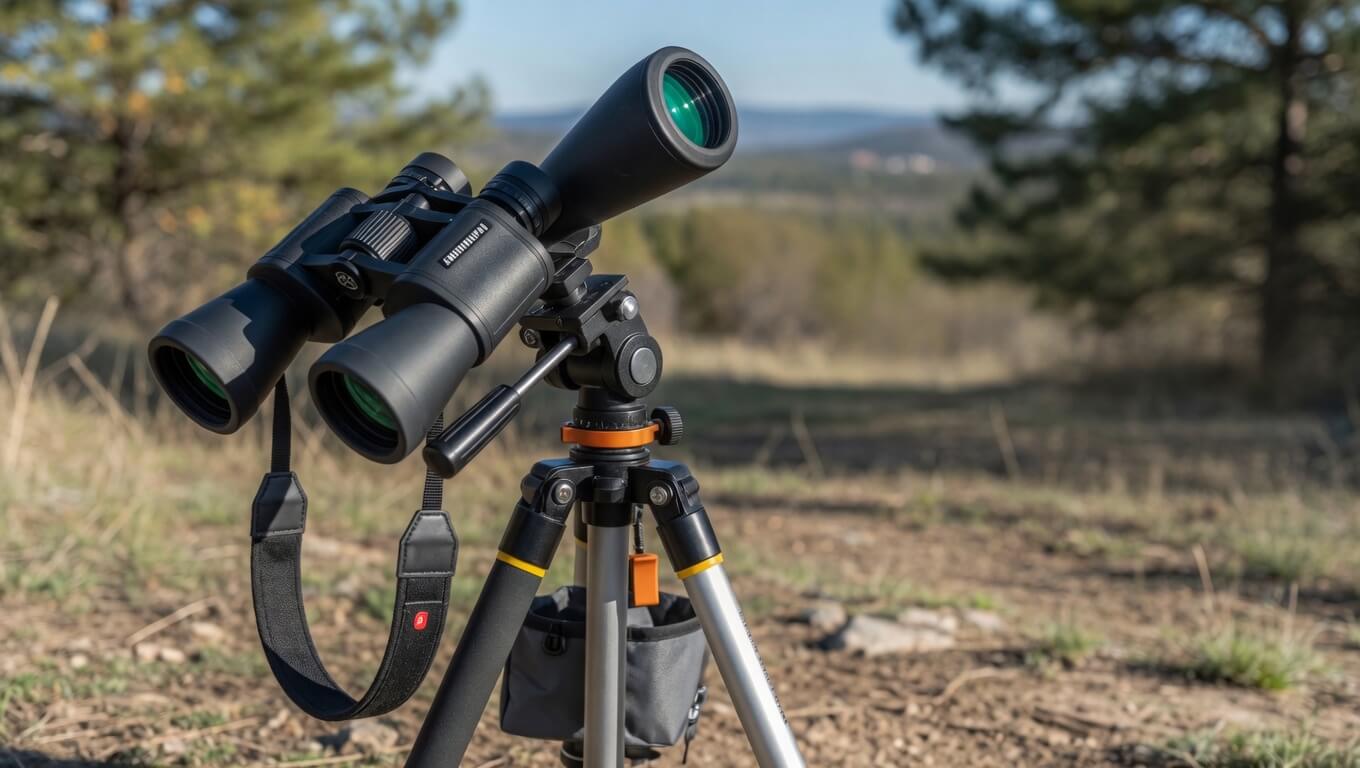
Yes, binoculars can be mounted on a tripod — but only if they are tripod-adaptable or supported with the right mounting accessory. In real use, tripod mounting is one of the simplest upgrades you can make if your hands shake, your arms get tired, or you use higher-magnification binoculars like 10x, 12x, 15x, or 20x.
The short answer is simple: most full-size binoculars can be mounted on a tripod using a binocular tripod adapter. Compact binoculars are more hit-or-miss. Some have a hidden threaded socket under the front hinge cap, while others do not support direct tripod mounting at all.
And honestly, once you try binoculars on a stable tripod, handheld viewing starts to feel a little rough — especially for moon viewing, long-distance wildlife scanning, hunting, astronomy, ocean watching, or reading far-off signs.
Why Mount Binoculars on a Tripod?
The main reason is stability. Even good binoculars can feel average if they are shaking in your hands.
A tripod removes hand movement, arm fatigue, and tiny vibrations that make distant details harder to see. This matters more as magnification increases. An 8x binocular is usually manageable by hand. A 10x can still work, but you may notice shake after a few minutes. With 12x or higher, a tripod becomes much more useful.
Think about this real situation: you are watching a distant ridge, coastline, or open field. Handheld binoculars show the subject, but the image keeps floating. On a tripod, the same view becomes calmer. You start noticing small details — texture, movement, edges, colors, and depth.
That is where tripod mounting really earns its place. 🔭
If you want the complete mounting process, read our full guide on how to mount binoculars to a tripod where we explain the setup step by step.
Can All Binoculars Be Mounted on a Tripod?
No, not all binoculars can be mounted on a tripod directly.
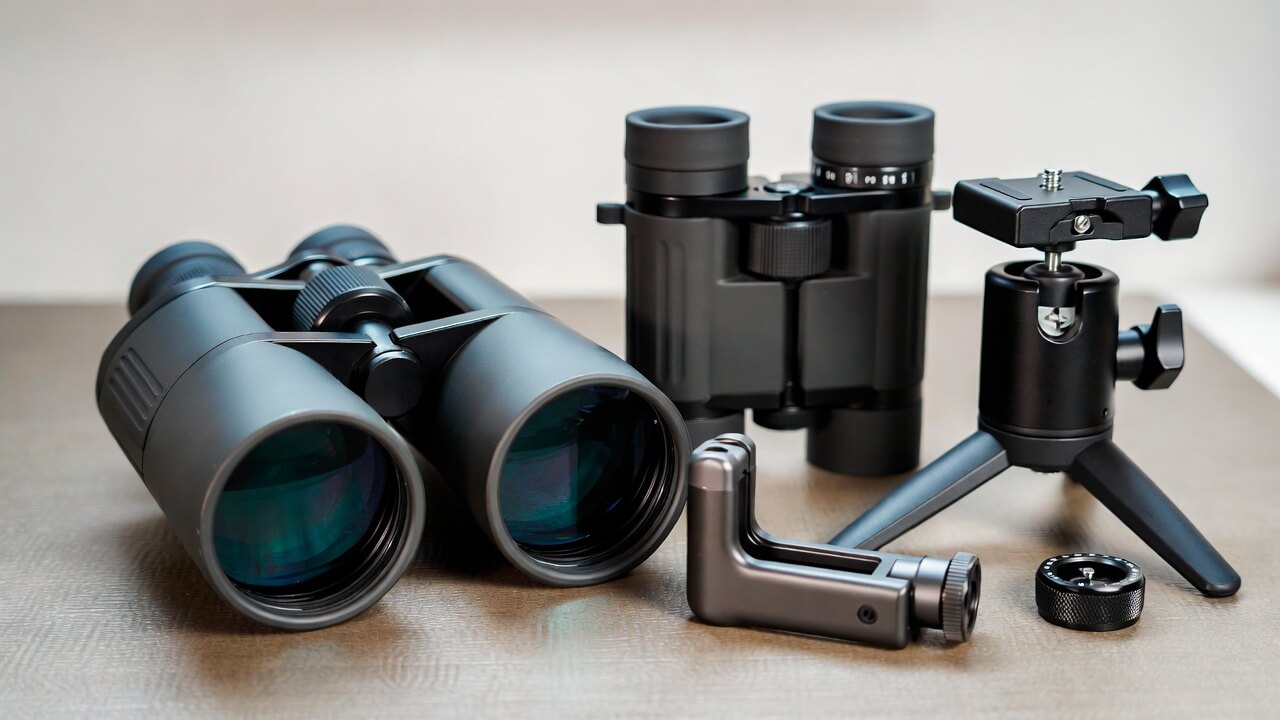
Most standard and full-size binoculars include a tripod adapter socket. This socket is usually hidden under a small cap at the front center hinge. You unscrew the cap, attach a binocular tripod adapter, and then connect that adapter to your tripod.
But some compact binoculars, pocket binoculars, and cheap entry-level models do not include this socket. In that case, you may need a clamp-style mount, platform mount, or a universal binocular holder.
Here is the easy way to check:
| Binocular Type | Tripod Mounting Chance | Best Mounting Option |
|---|---|---|
| 8×42 binoculars | High | Standard L-shaped tripod adapter |
| 10×50 binoculars | Very high | Metal binocular tripod adapter |
| 12×50 binoculars | Very high | Sturdy adapter + stable tripod |
| 15×70 binoculars | Usually high | Heavy-duty adapter + tall tripod |
| Compact 8×25 binoculars | Low to medium | Clamp or universal platform |
| Pocket binoculars | Low | Usually not ideal for tripod use |
| Astronomy binoculars | Very high | Heavy-duty tripod and adapter |
So, can binoculars be mounted on a tripod if they are compact? Sometimes, but compact models are not always designed for it. Full-size binoculars are the safer bet.
Where Is the Tripod Mount on Binoculars?
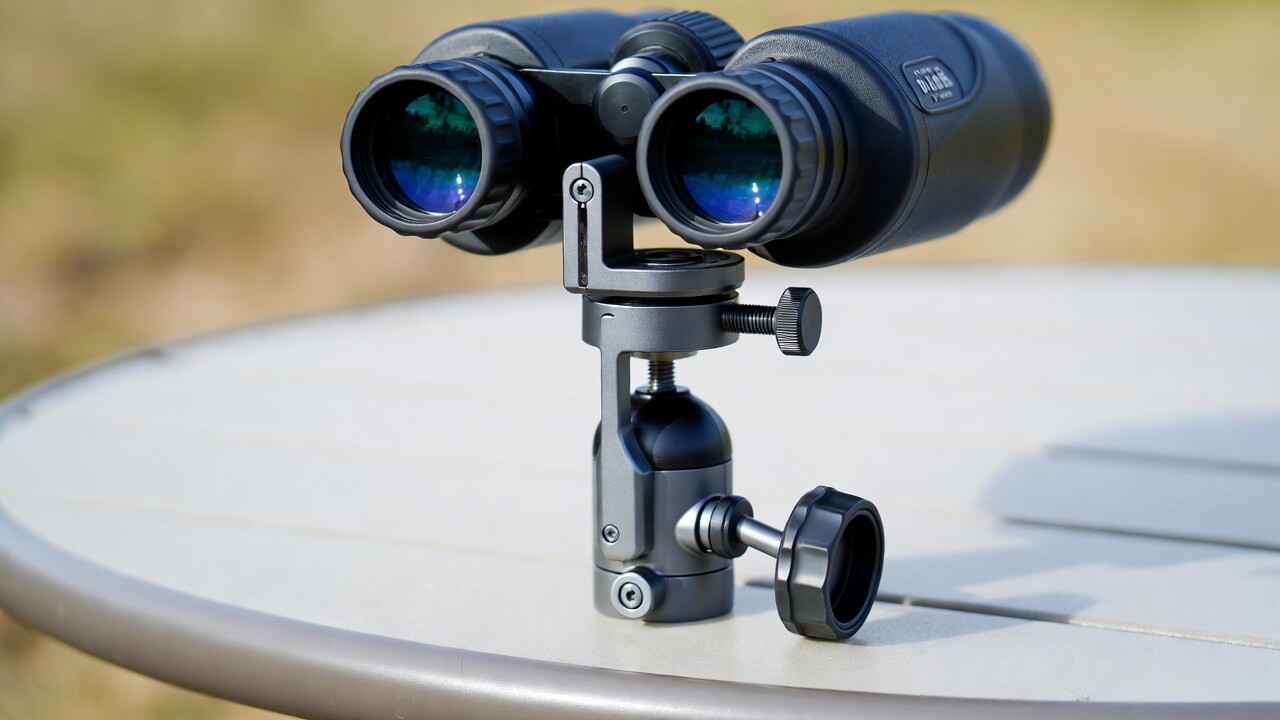
On most tripod-adaptable binoculars, the mount is at the front of the central hinge. Look between the two barrels, near the objective lenses. You may see a small round plastic or metal cap.
That cap often unscrews.
Under it, you should find a threaded hole. This is where the binocular tripod adapter screws in. The adapter then connects to the tripod using the standard tripod plate or screw.
A common mistake is thinking the binoculars are not tripod-ready because the socket is hidden. Many users never remove the hinge cap and assume their binoculars cannot be mounted.
Before buying any extra mount, check that center hinge first.
If you are unsure about the actual attaching process, our supporting article on how to attach binoculars to tripod explains the connection points in a beginner-friendly way.
What Adapter Do You Need?
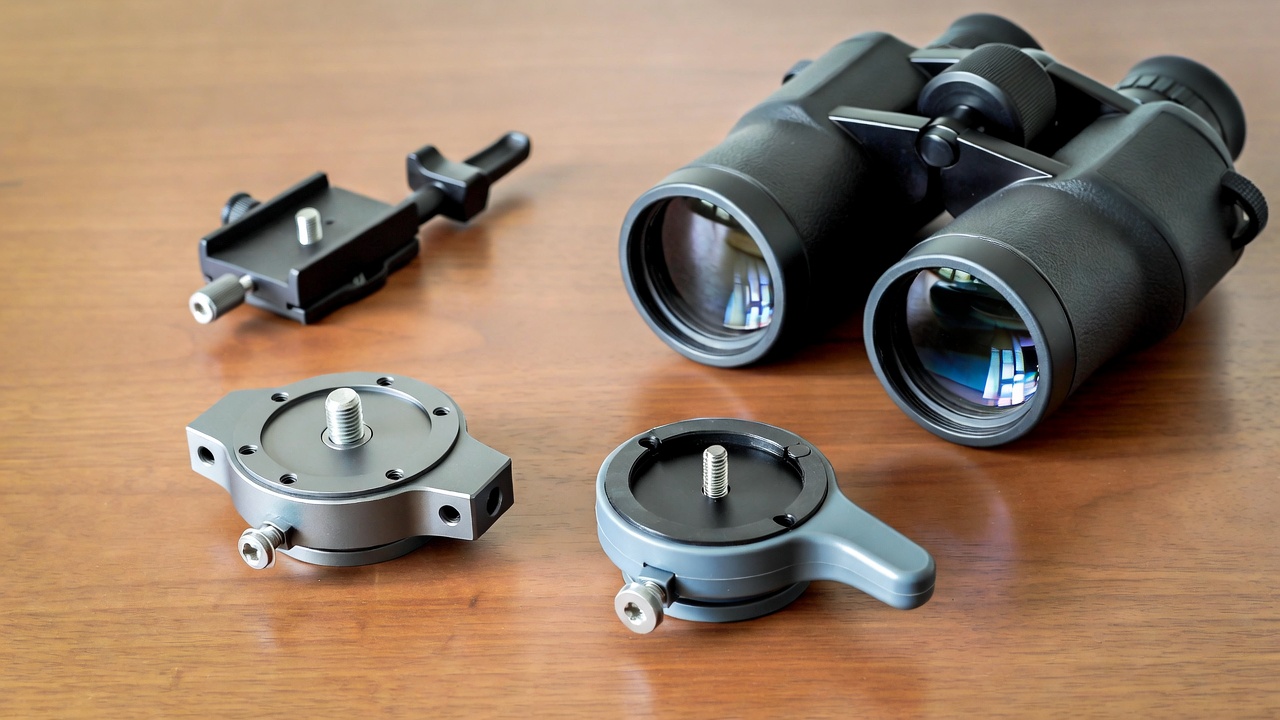
Most binoculars need an L-shaped binocular tripod adapter. This small accessory screws into the binocular hinge socket and gives your tripod a stable connection point.
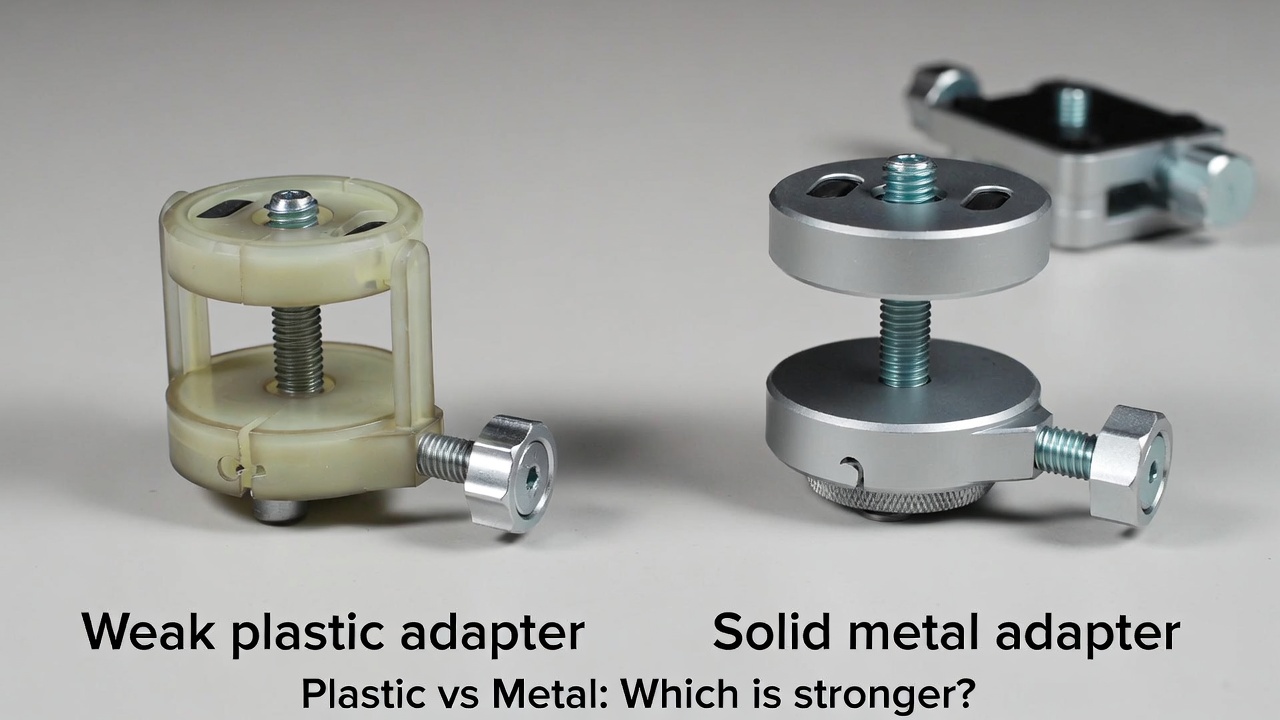
For lighter binoculars, a basic adapter can work. For heavier models, especially 10×50, 12×50, 15×70, or astronomy binoculars, I strongly prefer a metal adapter over a thin plastic one.
Plastic adapters can flex. Flexing creates tiny movement. Tiny movement ruins the whole point of mounting binoculars.
Here is my practical rule:
| Binocular Size | Recommended Adapter |
|---|---|
| 8×32 or 8×42 | Basic metal adapter |
| 10×42 or 10×50 | Strong metal L-adapter |
| 12×50 | Heavy-duty metal adapter |
| 15×70 or larger | Tall, rigid, heavy-duty adapter |
| Compact binoculars without socket | Clamp-style or platform mount |
Recommended Product: Vortex Uni-Daptor Binocular Tripod Adapter
If you want one reliable adapter that makes sense for most tripod-adaptable binoculars, the Vortex Uni-Daptor Binocular Tripod Adapter is a strong pick.
Why I like it: it is slim, quick-release friendly, and designed for tripod-adaptable binoculars. Vortex describes it as precision machined, with a low-profile design that fits between binocular barrels and a quick-release connector that allows the binocular to be removed for handheld use without removing the whole adapter.
That last point matters in real use. If you are switching between tripod viewing and handheld scanning, you do not want to keep unscrewing everything. It gets annoying fast.
I would especially consider it for birding, hunting, range scanning, and general outdoor observation where you move between fixed viewing and quick handheld checks.
Tripod vs Handheld Binoculars: Which Is Better?
Neither is always better. It depends on the job.
| Situation | Handheld Binoculars | Tripod-Mounted Binoculars |
|---|---|---|
| Quick hiking stops | Better | Slower |
| Long glassing sessions | Tiring | Much better |
| Astronomy | Difficult | Strongly recommended |
| Bird watching from one spot | Good | Excellent |
| Sports events | Easier | Usually unnecessary |
| Hunting from a fixed position | Good | Better |
| Ocean or mountain viewing | Shaky over time | More detailed |
| High magnification binoculars | Hard to control | Best choice |
For casual use, handheld is fine.
But when you care about detail, comfort, and longer viewing, tripod-mounted binoculars win easily.
The first time I used 12x binoculars on a tripod, the difference was obvious. Handheld, I could see the target area. On the tripod, I could study it. That is the real upgrade.
Pros and Cons of Mounting Binoculars on a Tripod
Pros
| Benefit | Why It Matters |
|---|---|
| Better stability | Removes hand shake and small vibrations |
| More detail | Distant objects look clearer and easier to study |
| Less fatigue | No need to hold binoculars for long periods |
| Better for high magnification | 12x, 15x, and 20x binoculars become more usable |
| Good for shared viewing | Others can look through the same fixed view |
| Helpful for astronomy | Stars, moon details, and sky objects are easier to observe |
Cons
| Drawback | Why It Matters |
|---|---|
| Slower setup | You need time to attach and adjust everything |
| Less portable | A tripod adds weight and bulk |
| Not ideal for fast movement | Harder to follow quick action |
| Extra cost | You may need an adapter and better tripod |
| Compatibility issues | Some binoculars do not have a tripod socket |
So, can binoculars be mounted on a tripod for every situation? Technically, many can. Practically, it makes the most sense when stability matters more than speed.
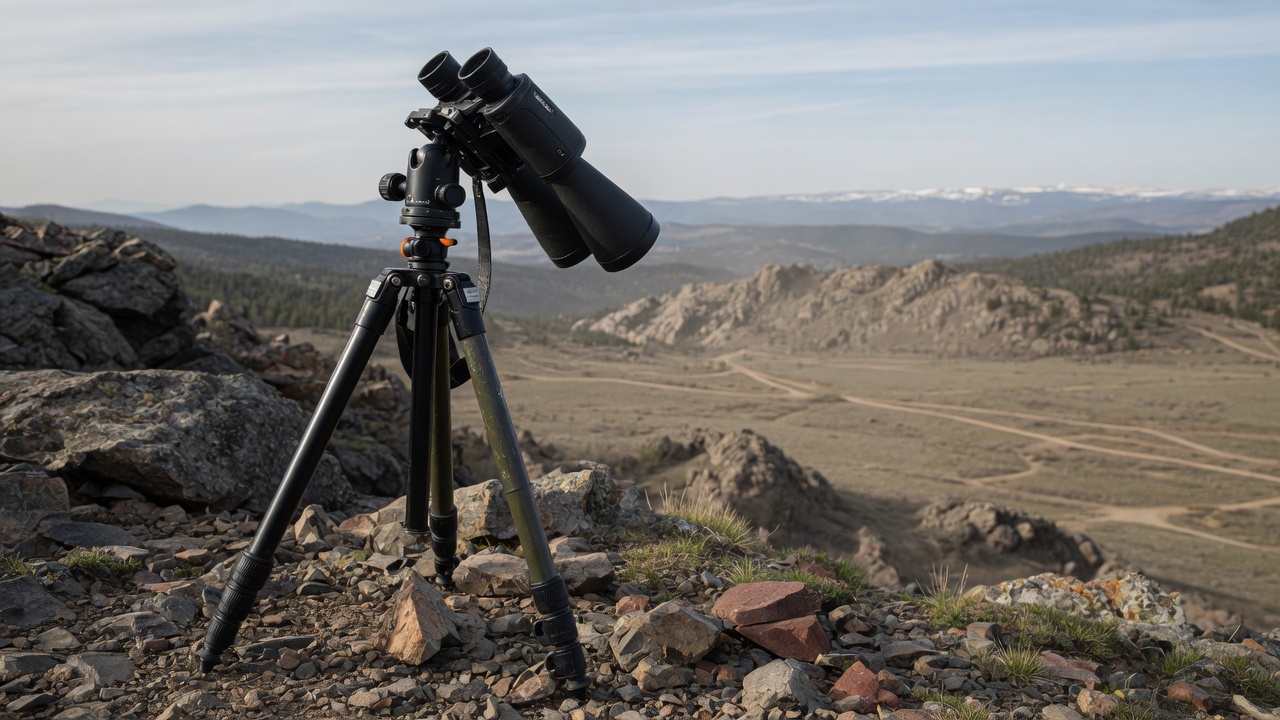
Real-World Use Cases Where Tripod Mounting Makes Sense
1. Astronomy and Moon Viewing
If you use binoculars for the moon, stars, or night sky scanning, a tripod is almost essential. Even a 10x binocular becomes easier to use when the view is steady.
For 15×70 astronomy binoculars, I would not even bother using them handheld for long. They are too heavy and too shaky. A tripod makes them feel like a different instrument.
2. Hunting and Long-Range Glassing
Hunters often spend long periods scanning ridges, tree lines, fields, or open terrain. Holding binoculars for 20 minutes gets uncomfortable.
A tripod lets you scan slowly and catch small movement. It also reduces eye strain because your view is not constantly bouncing.
3. Bird Watching from a Fixed Spot
For quick bird movement, handheld binoculars are better. But if you are watching a feeder area, wetland, lake edge, or distant nesting zone, tripod mounting helps a lot.
You can keep the binoculars aimed and observe without constantly lifting and lowering them.
4. Ocean, Lake, and Mountain Viewing
Water and long-distance landscapes expose every bit of hand shake. A tripod helps you read the scene calmly.
This is especially useful for coastal viewpoints, ship watching, mountain cabins, and scenic overlooks.
5. Backyard or Balcony Observation
A tripod is perfect if you use binoculars from one fixed spot. You can set it near a window, balcony, patio, or rooftop and keep your setup ready.
This is where convenience matters. You are not hiking with gear. You are building a comfortable observation station. 🧭
Buyer Tips Before You Mount Binoculars on a Tripod
Check for the Tripod Socket First
Before buying an adapter, inspect the front hinge. If there is a removable cap, your binoculars are probably tripod-adaptable.
Match the Adapter to the Binocular Weight
Do not use a weak adapter for heavy binoculars. Heavy binoculars need a rigid adapter, or you will still get vibration.
Use a Tripod Tall Enough for Comfortable Viewing
A short tripod can ruin the experience. If you have to bend your neck or crouch, you will stop using it.
For astronomy, height matters even more because you may be looking upward.
Choose a Smooth Tripod Head
A cheap tripod head can make binocular viewing frustrating. You want smooth movement, especially for scanning.
A pan head is often easier for binoculars than a stiff ball head.
Think About Portability
For hiking, use a lighter setup. For backyard, astronomy, or vehicle-based viewing, choose stability over weight.
Many people buy the lightest tripod first, then realize it shakes too much. The better choice is the lightest tripod that still feels stable for your binocular size.
Common Mistakes to Avoid
Mistake 1: Buying the Adapter Before Checking Compatibility
Not every binocular accepts a standard adapter. Always check the hinge socket first.
Mistake 2: Using a Camera Tripod That Is Too Weak
A tripod that works for a phone or small camera may not feel stable with large binoculars. The image may still vibrate.
Mistake 3: Over-Tightening the Adapter
Tight is good. Forcing it is not. Over-tightening can damage threads or make removal difficult.
Mistake 4: Ignoring Eye Height
Comfort is not a small detail. If the tripod is too low, you will bend your back and neck. That gets old quickly.
Mistake 5: Expecting a Tripod to Fix Poor Binoculars
A tripod improves stability, not optical quality. If your binoculars are dim, misaligned, or low quality, mounting them will not magically make them premium.
Can Binoculars Be Mounted on Any Tripod?
Most binoculars can be mounted on a normal camera tripod as long as you have the correct adapter. The tripod itself does not usually connect directly to the binoculars. The adapter is the bridge between them.
A standard tripod screw connects to the adapter, and the adapter connects to the binocular.
But “any tripod” does not mean “any tripod will be good.”
A tiny travel tripod may technically work, but it may shake in wind or feel unstable with larger binoculars. For 10×50 and above, use a stronger tripod with a smooth head.
If you need a more practical layout of the full setup, read our binocular tripod mount setup guide before buying accessories.
Final Verdict: Should You Mount Your Binoculars on a Tripod?
If you mostly use small 8x binoculars for quick walks, casual travel, or sports events, you may not need a tripod.
But if you use 10x, 12x, 15x, or larger binoculars, tripod mounting is worth it. The image becomes steadier, your arms relax, and your eyes can actually study the view instead of fighting shake.
So, can binoculars be mounted on a tripod? Yes — and for the right use case, they absolutely should be.
My honest recommendation: if your binoculars have a tripod socket, buy a decent metal adapter and try them on a stable tripod before upgrading your binoculars. Many people think they need stronger optics when what they really need is a steadier setup.
For more binocular setup help, buying advice, and field-use tips, visit our binocular blog page or explore the latest guides from the bestbinocular.net home page.
FAQs About Mounting Binoculars on a Tripod
Can binoculars be mounted on a tripod without an adapter?
Usually, no. Most binoculars need a binocular tripod adapter. The tripod connects to the adapter, and the adapter connects to the binocular hinge socket.
How do I know if my binoculars are tripod adaptable?
Look at the front center hinge between the two barrels. If there is a small removable cap, unscrew it gently. If you see a threaded socket underneath, your binoculars are likely tripod-adaptable.
Are compact binoculars tripod mountable?
Some compact binoculars can be mounted, but many cannot. Pocket binoculars often do not have enough space for a standard adapter. A clamp-style or platform mount may work, but it is not always ideal.
What size binoculars need a tripod?
A tripod is most useful for 10x and higher magnification. For 12x, 15x, and astronomy binoculars, a tripod can make a major difference in comfort and image stability.
Can I use a regular camera tripod for binoculars?
Yes, you can use a regular camera tripod if it is stable enough and you have the correct binocular tripod adapter. For heavier binoculars, avoid flimsy tripods.
Is a metal binocular tripod adapter better than plastic?
For most users, yes. Metal adapters are usually more rigid and stable. Plastic adapters can work with lightweight binoculars, but they may flex with heavier models.
Can tripod mounting improve binocular image quality?
It improves the viewing experience by reducing shake. It does not change the glass quality, brightness, or coatings, but a steadier image often looks clearer because your eyes can focus better.
What is the best tripod setup for binoculars?
A stable tripod, smooth pan head, and rigid metal binocular adapter make the best setup for most users. For large astronomy binoculars, choose a heavier tripod with better height adjustment.




