
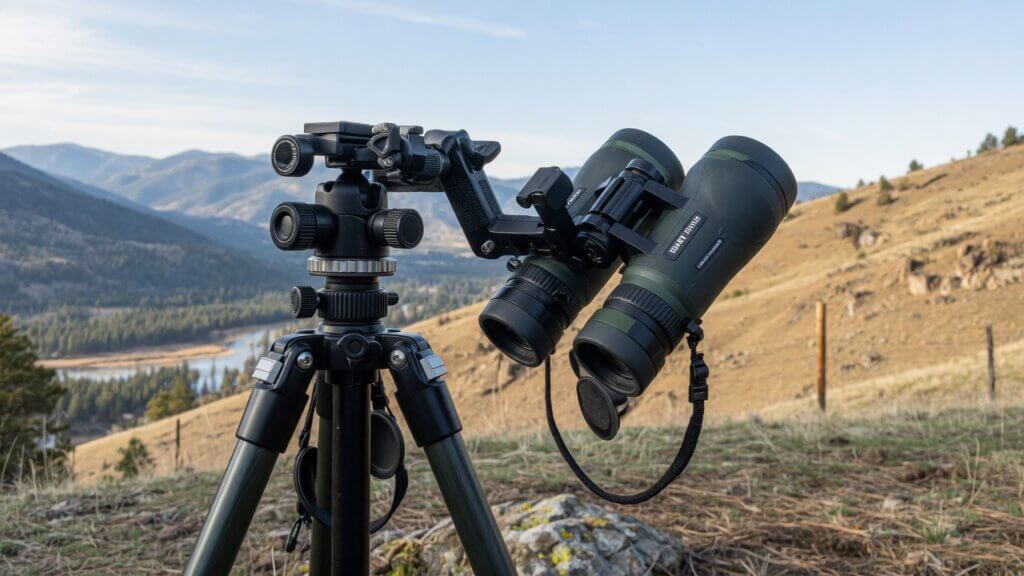
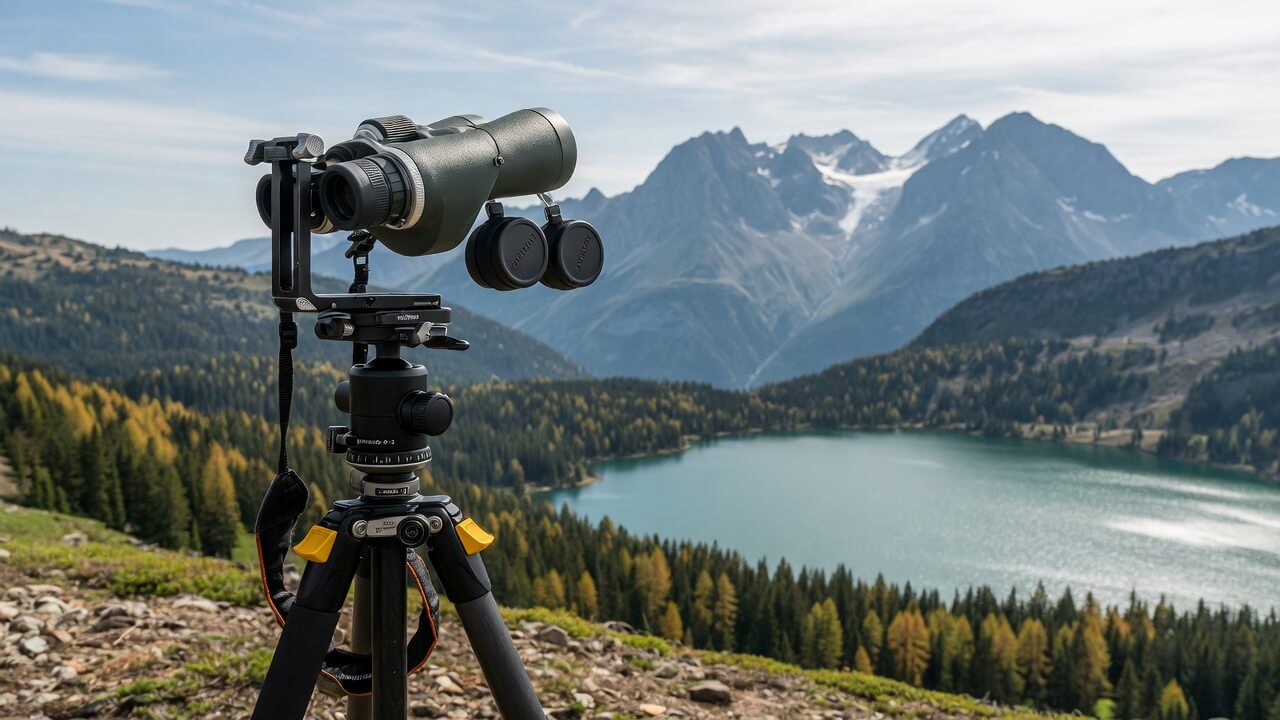
Binocular Tripod Mount Setup: Build a Steady and Comfortable Viewing System
A good binocular tripod mount setup changes the whole viewing experience. Handheld binoculars are fine for quick looks, but once you start watching distant birds, scanning the moon, glassing hillsides, or using higher magnification binoculars, shaky hands become the real enemy.
The funny thing is, many people buy decent binoculars and a tripod, then still get poor results because the setup is wrong. The tripod is too light. The adapter does not fit well. The binoculars sit too close to the tripod head. The eyepiece height is uncomfortable. After ten minutes, the whole setup feels annoying.
This guide is written for one job: helping you build a steady, comfortable, real-world binocular tripod mount setup that actually works outside, not just on a desk for five minutes.
Why a Binocular Tripod Mount Setup Matters
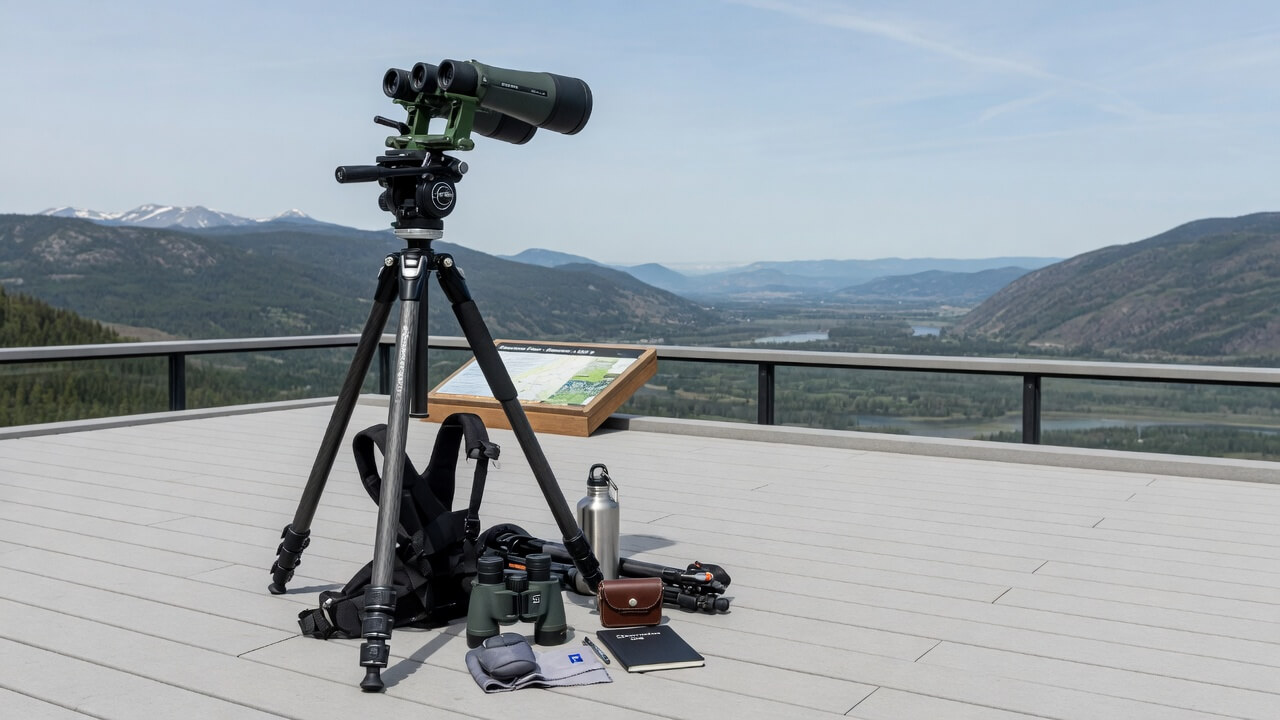
A tripod does more than stop shake. It lets your eyes relax.
When binoculars are handheld, tiny movements constantly force your eyes and brain to correct the image. That may not bother you at 8x for short viewing, but at 10x, 12x, 15x, or 20x, the shake becomes obvious. For astronomy, coastal viewing, long-distance wildlife spotting, and range observation, a stable binocular tripod mount setup can make your binoculars feel sharper than they did in your hands.
It also helps with patience. You can keep the binoculars aimed at one area and wait. That is useful when watching a nest area, a distant trail, a ship line, a ridgeline, or the moon as it moves across the sky.
A tripod setup is not only for expensive binoculars. Even mid-range binoculars perform better when they are properly mounted.
What You Need for a Proper Binocular Tripod Mount Setup
A complete binocular tripod mount setup usually needs three things:
| Item | Purpose | What to Check |
|---|---|---|
| Binoculars | Main viewing optic | Must have tripod adapter socket or work with a clamp adapter |
| Tripod adapter | Connects binoculars to tripod | Must fit your binocular body and thread size |
| Tripod with head | Holds and moves the binoculars | Should be tall, stable, and smooth |
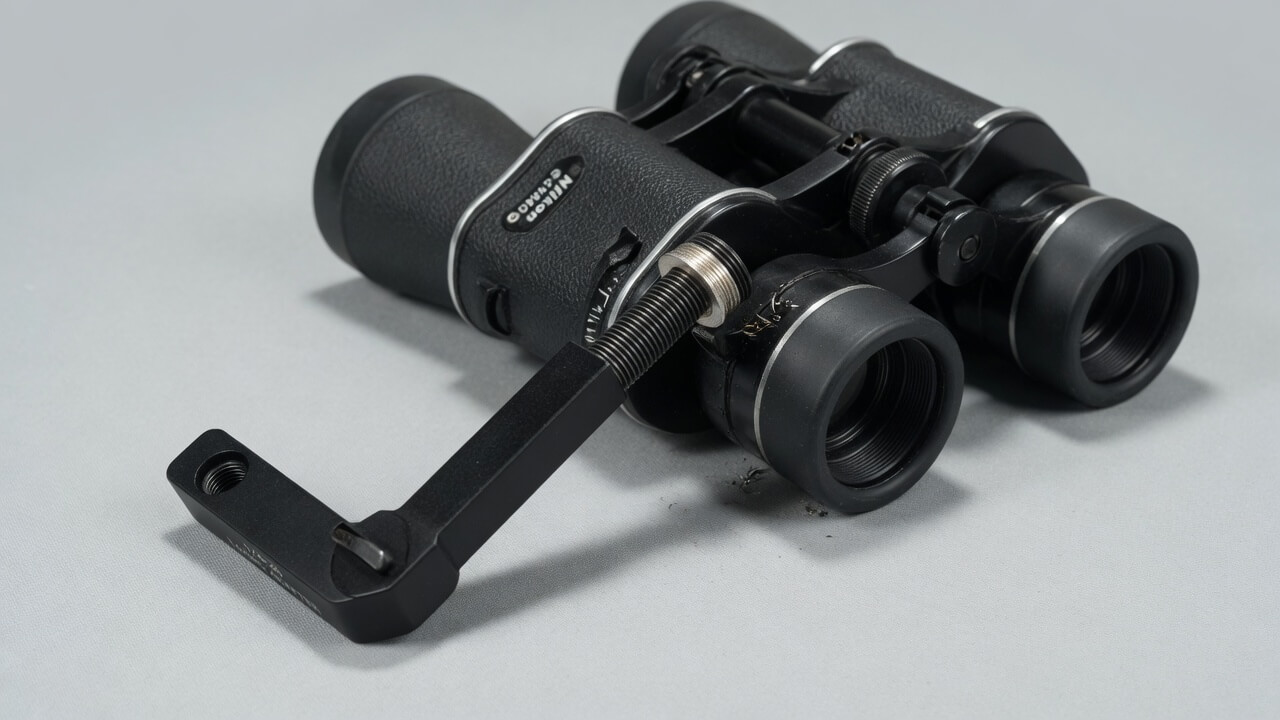
Most binoculars that are tripod-adaptable have a small threaded socket between the barrels. It is usually hidden under a round plastic cap near the front hinge. You remove that cap, screw in the adapter, then attach the adapter to your tripod plate.
Some compact binoculars do not have this socket. In that case, you need a clamp-style universal adapter. It grips the binocular body instead of screwing into the front hinge.
Step-by-Step Binocular Tripod Mount Setup
Step 1: Check the Binocular Adapter Socket
Before buying anything, look at the front bridge of your binoculars. There may be a small cover cap. Unscrew it gently.
If you see a threaded hole, your binoculars are tripod-ready. Most standard binocular tripod adapters are designed for this kind of front socket.
If there is no socket, do not force anything. You need a universal clamp mount instead. This is common with some compact travel binoculars and cheaper roof prism models.
This first check saves money because the wrong adapter is the most common mistake in a binocular tripod mount setup.
Step 2: Choose the Right Adapter
There are two main adapter types:
| Adapter Type | Best For | Main Advantage | Main Weakness |
|---|---|---|---|
| L-shaped screw adapter | Standard tripod-ready binoculars | Strong, simple, affordable | May be tight between large barrels |
| Universal clamp adapter | Binoculars without tripod socket | Works with more designs | Can add bulk and may need careful tightening |
For most users, a metal L-shaped adapter is the cleanest option. Plastic adapters can work for light binoculars, but they often flex with heavier 12×50, 15×70, or astronomy binoculars. That tiny flex creates image vibration, which defeats the point of the tripod.
My practical buyer tip: do not overthink the adapter, but do not buy the cheapest plastic one either. A basic metal adapter is usually the sweet spot.
Step 3: Attach the Adapter to the Binoculars
Hold the binoculars steady and screw the adapter into the front socket by hand. Do not use pliers. Do not overtighten. You want it snug, not crushed.
The adapter should sit straight. If it feels angled or rough while turning, stop and restart. Cross-threading the socket can damage your binoculars.
Once attached, gently move the adapter side to side. If there is wobble, the screw may not be fully seated, or the adapter may not be a good match for your binocular body.
Step 4: Connect the Adapter to the Tripod Plate
Most tripods use a quick-release plate. Remove the plate from the tripod head and screw it into the bottom of the binocular adapter.
Make sure the plate is tight and aligned. If the plate is loose, the binoculars will shift every time you pan.
Then lock the plate back into the tripod head. Before looking through the binoculars, give the setup a gentle test. Tilt, pan, and lightly tap the binocular body. A good binocular tripod mount setup should feel solid without bouncing for several seconds.
Step 5: Adjust Tripod Height Before Fine Tuning
Height matters more than beginners think.
Set the tripod so the eyepieces come naturally to your eyes. You should not bend your neck hard or crouch. For long viewing, comfort is part of image quality.
For standing use, a tall tripod is better. For astronomy, a tripod with an adjustable center column can help, but too much center-column extension can reduce stability.
For seated viewing, lower the tripod and use a chair. This is often the best setup for long sessions. A seated binocular tripod mount setup feels more relaxed and usually vibrates less because the tripod legs stay lower.
Best Real-World Setup by Use Case
For Bird Watching
For birding, speed matters. You need smooth panning and quick height adjustment. A light-to-medium tripod with a fluid-style head works better than a stiff photography head.
Best setup:
- 8×42, 10×42, or 10×50 binoculars
- Metal L-adapter
- Smooth pan head
- Tripod tall enough for standing viewing
The biggest birding mistake is using a heavy astronomy-style tripod in areas where you keep moving. It may be stable, but you will hate carrying it.
A birding binocular tripod mount setup should be stable, but still portable.
For Astronomy
Astronomy is different. You look upward, not straight ahead. Normal tripods can become uncomfortable because the eyepieces point at awkward angles.
Best setup:
- 10×50, 12×50, 15×70, or 20×80 binoculars
- Strong metal adapter
- Tall tripod
- Smooth head with good tilt range
For sky viewing, stability matters more than weight. If your binoculars are 15×70 or larger, avoid cheap lightweight tripods. They may hold the binoculars on paper, but in real use they shake after every adjustment.
For a deeper guide on the main mounting process, read the full pillar guide here: how to mount binoculars to a tripod. It connects this setup process with tripod choice, adapter fit, and field comfort.
For Hunting and Long-Distance Scanning
For hillside scanning, you want a setup that holds position without drifting. A pan head or fluid head is usually better than a ball head because small horizontal movements are easier to control.
Best setup:
- 10×42, 10×50, 12×50, or 15×56 binoculars
- Strong adapter
- Stable tripod with wide leg stance
- Pan head with adjustable tension
A good binocular tripod mount setup lets you grid an area slowly. Instead of waving the binoculars around, you scan in sections. That is where tripod-mounted binoculars become genuinely useful.
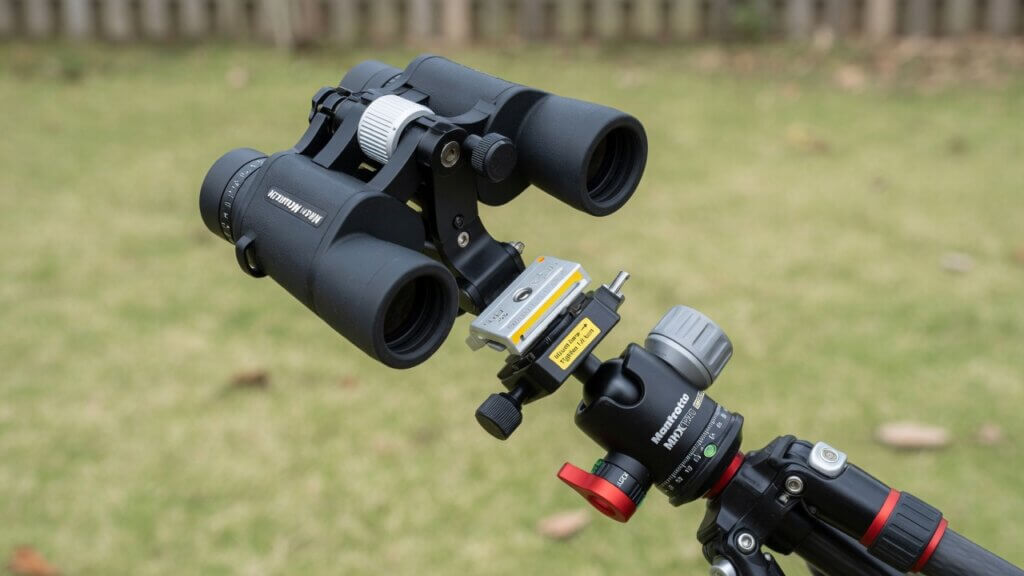
Recommended Product: Metal Universal L-Type Binocular Tripod Adapter
For most readers, the best single product to look for is a metal universal L-type binocular tripod adapter.
It is simple, affordable, and works with many tripod-ready binoculars that have a front adapter socket. The key is choosing a metal version with a standard tripod connection, not a flimsy plastic adapter.
Why this product makes sense:
- It fits most standard tripod-ready binoculars
- It keeps the binoculars centered above the tripod
- It is small enough to keep in a gear pouch
- It works for birding, casual astronomy, travel viewing, and range use
- It is usually cheaper than buying a specialized mount
When buying one, check the product photos carefully. If your binoculars have very little space between the barrels, make sure the adapter stem is slim enough to fit.
Pros and Cons of Using a Binocular Tripod Mount Setup
| Pros | Cons |
|---|---|
| Much steadier image | Adds extra gear to carry |
| Better for high magnification binoculars | Slower than handheld viewing |
| Reduces eye strain | Cheap adapters can wobble |
| Helps with long viewing sessions | Not ideal for fast-moving targets |
| Great for astronomy and distance scanning | Tall tripods can be bulky |
The pros are strongest when you use 10x or higher magnification. With 8x binoculars, a tripod is helpful but not always necessary. With 12x, 15x, and above, a tripod starts feeling less like an accessory and more like a requirement.
Common Binocular Tripod Mount Setup Mistakes
Using a Weak Tripod
A tripod may say it supports your binocular weight, but that does not mean it will feel stable. Binoculars magnify vibration. A tiny shake that looks harmless on a camera can ruin the view through 15x binoculars.
Choose a tripod that feels slightly overbuilt for your binoculars. That extra stability pays off.
Buying the Wrong Adapter
Some users buy a standard screw adapter when their binoculars do not have a tripod socket. Others buy a bulky universal clamp when a simple L-adapter would be cleaner.
Before ordering, check your binocular body. If you need help with the attachment process, this supporting guide on how to attach binoculars to tripod is useful because it focuses on the physical connection and common fit problems.
Extending the Center Column Too Much
The center column is convenient, but it is also the least stable part of many tripods. If you raise it fully, your binoculars may vibrate more.
Better method: extend the tripod legs first, then use the center column only for small height adjustments.
Ignoring Eye Relief and Viewing Position
A technically stable binocular tripod mount setup can still feel bad if your face position is awkward. Set the eyepieces at a comfortable height. Adjust the interpupillary distance. Set the diopter properly. Then fine-tune the tripod head.
Comfort comes before tiny adjustments.
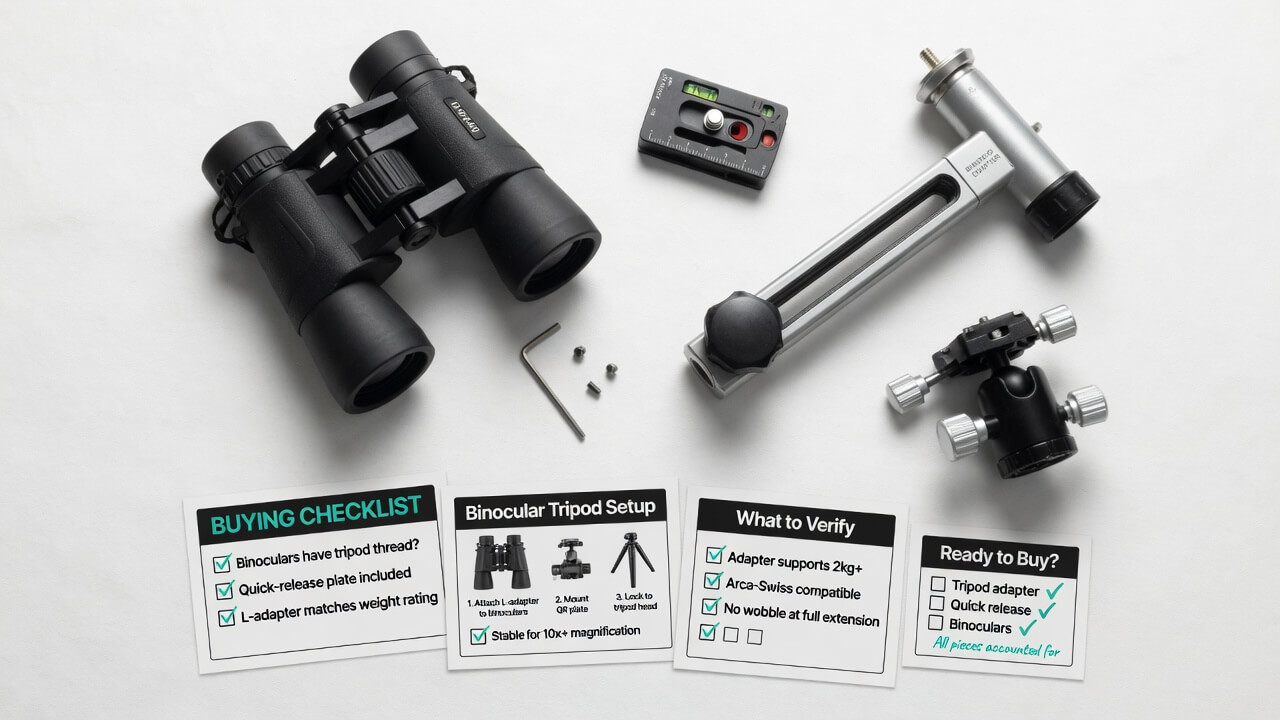
L-Adapter vs Universal Clamp Adapter
| Feature | L-Adapter | Universal Clamp Adapter |
|---|---|---|
| Best for | Binoculars with tripod socket | Binoculars without socket |
| Stability | Usually better | Depends on clamp quality |
| Portability | Very compact | Bulkier |
| Setup speed | Fast | Slower |
| Price | Usually cheaper | Often more expensive |
| Best user | Most binocular owners | Compact binocular users |
For most people, the L-adapter wins. It is cleaner, lighter, and more secure. The universal clamp is a backup solution when your binoculars lack a built-in tripod thread.
For installation details, you can also read binocular tripod adapter installation, especially if you want a more focused walkthrough on adapter fitting and tightening.
What Actually Matters Before You Buy
Many beginners focus only on binocular magnification. They buy 15x or 20x binoculars, then realize they cannot hold them steady. That is when the tripod setup becomes important.
Before spending more on new binoculars, ask yourself:
Do I need sharper optics, or do I just need a steadier view?
A tripod often makes your current binoculars feel better. Not because it changes the glass, but because it removes hand shake. For many users, that is the cheapest upgrade.
The smart buying order is usually:
- Use your current binoculars
- Add a proper adapter
- Mount them on a stable tripod
- Upgrade binoculars later if needed
This approach saves money and gives you a clearer idea of what you actually need.
Quick Field Setup Checklist
Before each viewing session, run this simple checklist:
| Check | Why It Matters |
|---|---|
| Adapter is tight | Prevents side wobble |
| Tripod plate is locked | Stops sudden movement |
| Legs are fully opened | Improves stability |
| Center column is not overextended | Reduces vibration |
| Head tension is adjusted | Makes panning smoother |
| Eyepieces are at eye height | Improves comfort |
| Focus and diopter are set | Gives the sharpest view |
This is the boring stuff that makes the experience better. Skip it, and even expensive binoculars can feel frustrating.
Final Thoughts: Build for Stability First
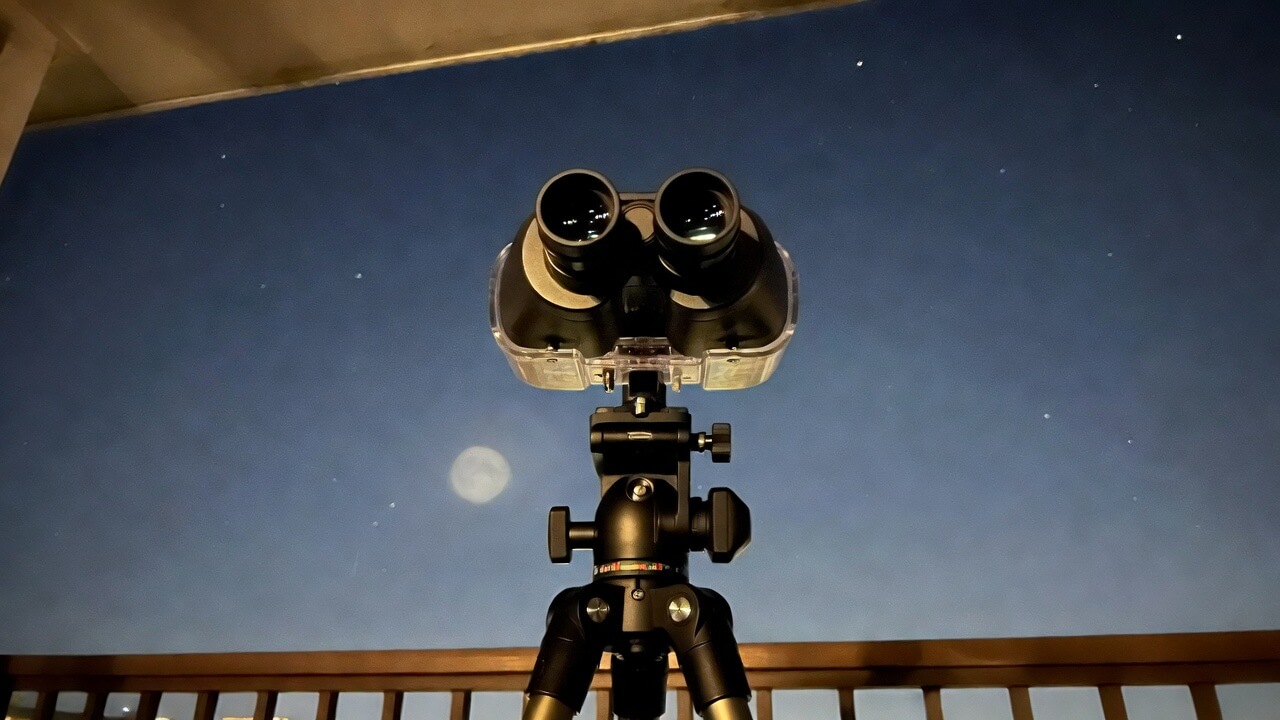
A good binocular tripod mount setup does not need to be complicated. You need a compatible adapter, a stable tripod, and a comfortable viewing position. That is it.
The biggest upgrade is not always a premium optic. Sometimes it is simply removing shake from the view.
For birding, choose a portable setup with smooth panning. For astronomy, choose stability and height. For long-distance scanning, use a tripod head that lets you move slowly and hold position. Match the setup to the way you actually view, not just what looks impressive online.
For more practical binocular setup and buying help, visit the main site here: bestbinocular.net You can also explore the latest article tips section on Best Binocular blog page to build a smarter binocular gear setup without wasting money on accessories you do not need.
FAQs About Binocular Tripod Mount Setup
What is the best binocular tripod mount setup for beginners?
The best beginner setup is a standard tripod-ready binocular, a metal L-shaped tripod adapter, and a stable tripod with a smooth pan head. This gives you a steady image without making the setup too bulky or expensive.
Can all binoculars be mounted on a tripod?
No, not all binoculars have a tripod adapter socket. Many full-size binoculars do, but some compact models do not. If your binoculars lack a threaded socket, you may need a universal clamp-style adapter.
Do I need a tripod for 10x binoculars?
You can use 10x binoculars handheld, but a tripod helps a lot during long viewing sessions. For birding, stargazing, and distant landscape scanning, a binocular tripod mount setup makes the image steadier and easier to study.
What tripod height is best for binoculars?
The best tripod height depends on how you view. For standing use, the tripod should bring the eyepieces close to eye level without forcing you to bend. For long sessions, seated viewing is often more comfortable and stable.
Is a ball head good for binoculars?
A ball head can work, but it is not always ideal. A pan head or fluid head usually feels better because binocular viewing often involves slow horizontal scanning. Ball heads can shift suddenly if not tightened carefully.
Why does my mounted binocular still shake?
Your tripod may be too light, the adapter may be loose, the quick-release plate may not be tight, or the center column may be extended too high. Check each connection point before blaming the binoculars.
What is better, an L-adapter or a universal binocular mount?
An L-adapter is better if your binoculars have a tripod socket. It is lighter, simpler, and usually more stable. A universal mount is better only when your binoculars do not support a standard screw-in adapter.




