
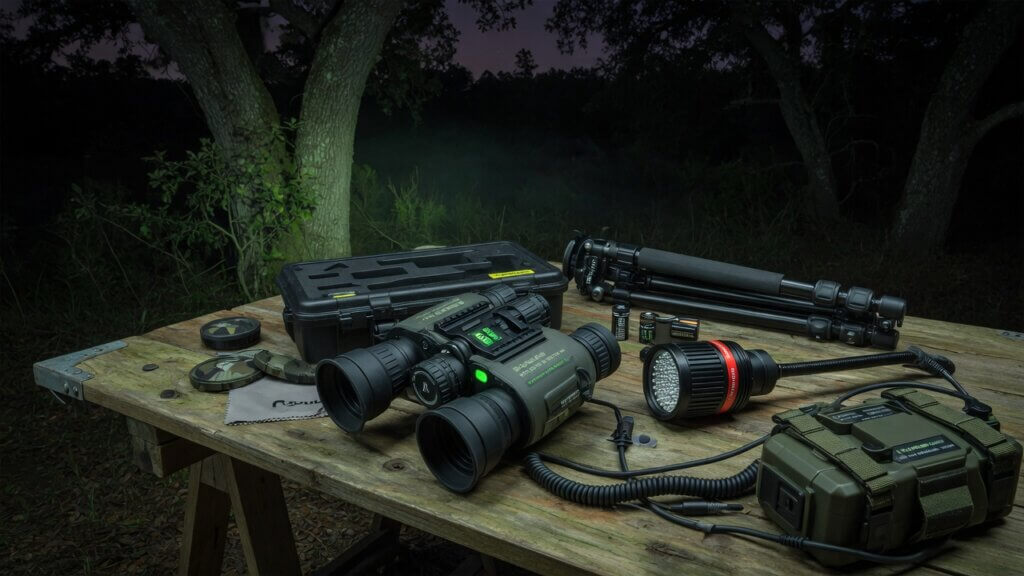
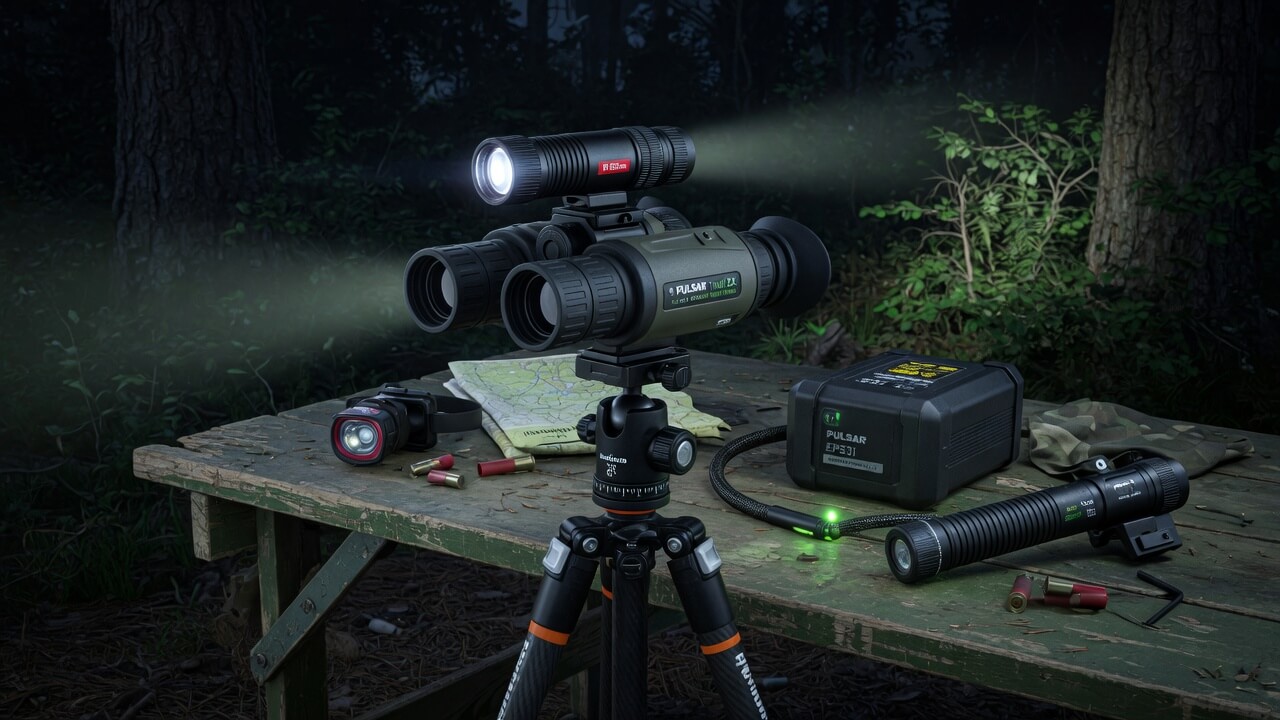
What Actually Matters in the Best Night Vision Binoculars for Hunting?
Choosing the best night vision binoculars for hunting is not about buying the model with the biggest zoom number on the box.
That is where many hunters waste money.
A binocular can claim “long range,” “HD night vision,” or “military grade,” but in the field, the real questions are simpler:
- Can you identify movement before it becomes a problem?
- Can you scan without eye strain?
- Can you tell the difference between brush, livestock, a fence post, and game?
- Can the battery last through the sit?
- Can you use it without fumbling around in the dark?
That is what matters.
Night hunting is a different world. You are not just looking at distance. You are dealing with black shadows, glare from IR light, fog, reflective eyes, uneven fields, and the pressure of making a clean, legal, ethical decision. The best night vision binoculars for hunting help you read the whole scene, not just “see something glowing.”
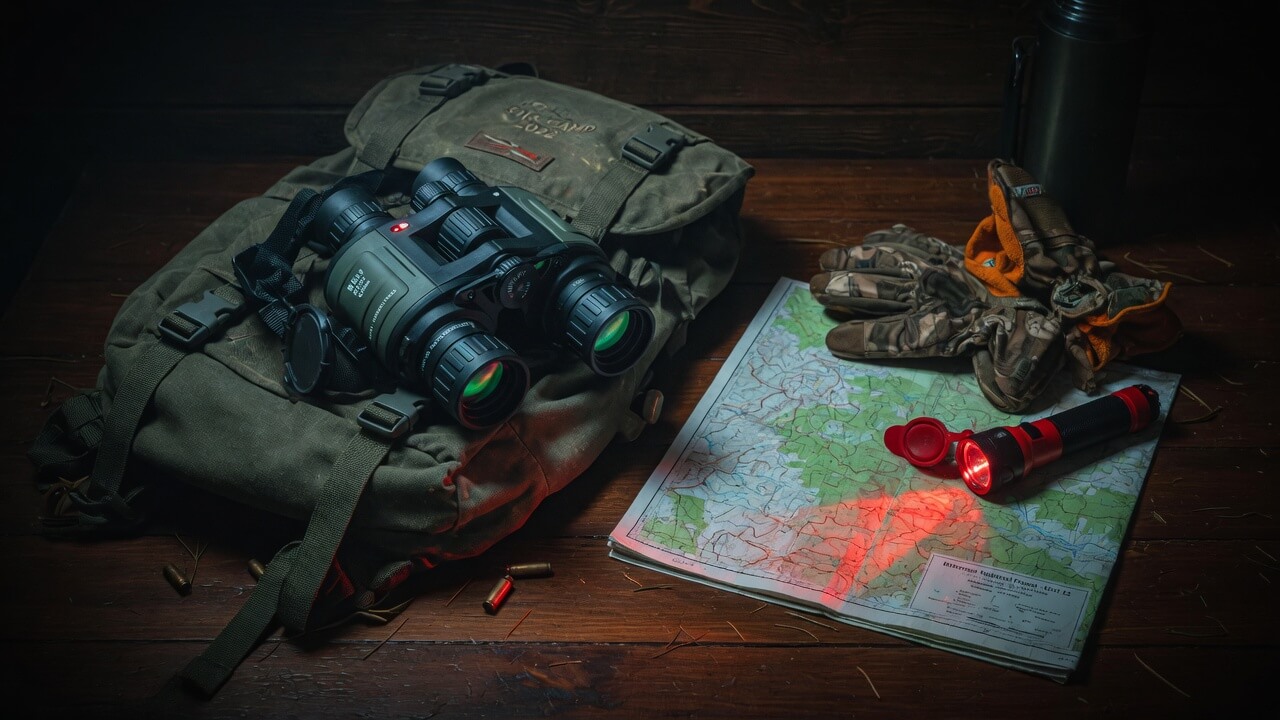
This guide is written for hunters who want practical buying logic, not recycled product blurbs. It breaks down what actually matters, where digital night vision makes sense, when infrared matters, how to compare thermal vs night vision, and which binocular style fits different hunting situations.
Before buying anything, always check your local hunting regulations. Night vision, infrared illuminators, thermal optics, and night hunting rules vary by state, country, species, and season.
Quick Answer: What Are the Best Night Vision Binoculars for Hunting?
For most hunters, the best night vision binoculars for hunting are digital night vision binoculars with built-in infrared illumination, good battery life, comfortable handheld use, recording capability, and enough real-world range for the terrain you hunt.
- If you hunt hogs over fields, you need range and detection confidence.
- If you hunt coyotes, you need fast scanning and wide awareness.
- If you hunt wooded property, you need clarity at short-to-medium range more than extreme zoom.
- If you are on a budget, you need a simple unit that performs reliably inside 100–200 yards.
Here is the simple decision table:
| Hunting Need | Best Type to Consider | Why It Works |
|---|---|---|
| General night hunting | Digital night vision binoculars | Affordable, easy to use, good with IR |
| Hog hunting over fields | Long-range digital night vision binoculars | Better scanning across open land |
| Coyote hunting | Wider field of view night vision binoculars | Faster movement detection |
| Budget setup | Entry-level digital IR binoculars | Good for feeders, trails, and short stands |
| Recording hunts | Digital binoculars with video/photo capture | Useful for reviewing activity |
| No visible IR glow | 940nm IR-compatible models | Less visible to animals, usually shorter range |
| Maximum detection | Thermal binoculars | Detect heat, but cost much more |
A good rule: buy for your actual hunting distance, not the fantasy distance in the product title.
If most of your shots happen inside 150 yards, you do not need a bulky, expensive, ultra-long-range device. If you scan wide crop fields, cheap night vision binoculars will feel limiting very quickly.
Why Night Vision Binoculars Are Different From Regular Hunting Binoculars
Traditional hunting binoculars depend on available light. They are excellent at dawn, dusk, and daylight glassing, but once the field goes dark, even high-end glass has limits.
Night vision binoculars work differently. Digital models use a sensor and screen. Many rely on infrared light to brighten the scene. Analog night vision uses image intensifier tubes. Thermal optics detect heat signatures instead of visible light.
That difference changes how you hunt.
With regular binoculars, you are judging shape, color, and contrast. With night vision, you are judging brightness, movement, reflection, and outlines. It takes a little practice. The first few nights, you may overreact to every bright dot or shadow. After a while, you start noticing patterns: how a fence reflects IR, how wet grass shines, how brush moves differently from animals, and how distance feels flatter through a digital screen.
That learning curve is one reason the best night vision binoculars for hunting are not always the most powerful. The best unit is the one that gives you a stable, readable image while keeping your hands, eyes, and brain comfortable.
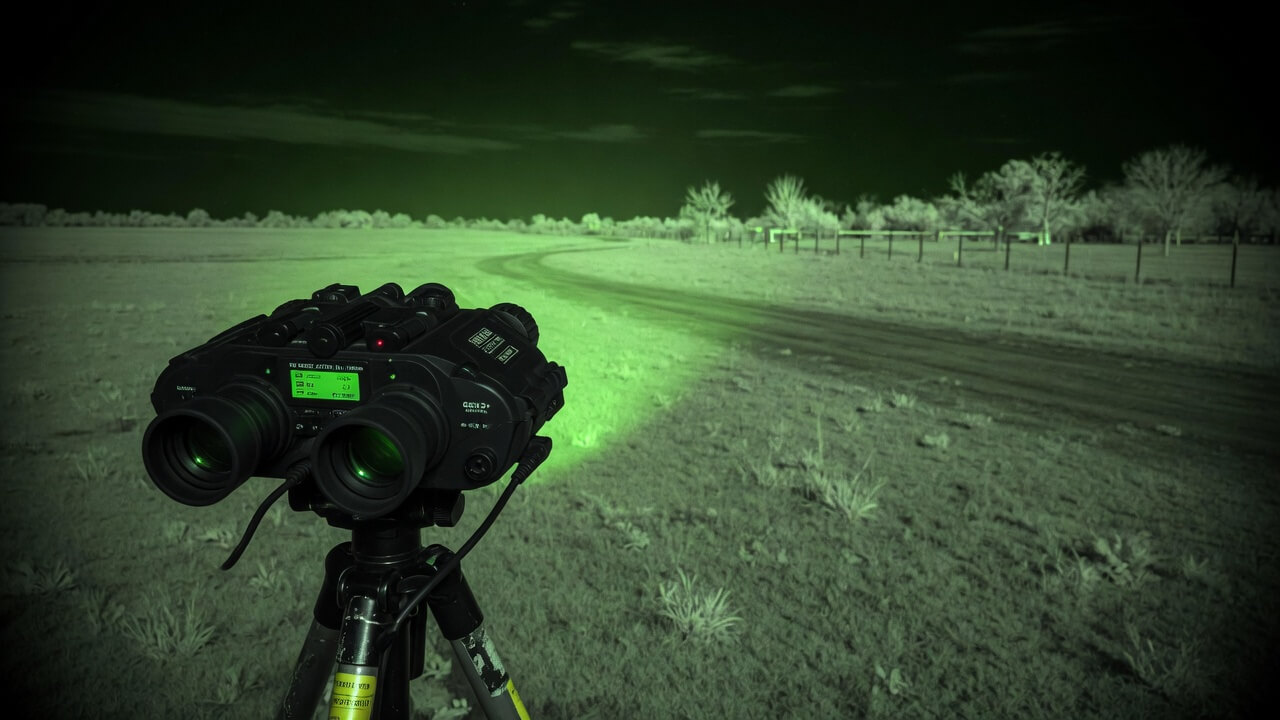
For a deeper breakdown of sensor-based models, you can build your setup around [digital night vision binoculars for hunting] if you want recording features, day-and-night use, and beginner-friendly controls.
What Actually Matters in the Best Night Vision Binoculars for Hunting
1. Detection Range vs Identification Range
This is the biggest detail many buyers miss.
Detection range means you can notice something is there.
Identification range means you can confidently tell what it is.
A manufacturer may advertise 300 yards, 500 yards, or more. But in real hunting, rain, fog, grass height, IR strength, moonlight, and screen resolution affect what you can truly identify.
For hunting, identification matters more than detection.
Seeing “a shape” is not enough. You need to know whether it is a hog, coyote, deer, dog, calf, stump, or another hunter’s gear. That is why I prefer binoculars that give a clean image at realistic distances instead of models that push heavy digital zoom and turn everything grainy.
2. Infrared Illuminator Quality
Most digital night vision binoculars need infrared light in full darkness. The built-in IR illuminator acts like an invisible flashlight for the sensor.
Common IR types include:
| IR Type | Best For | Trade-Off |
|---|---|---|
| 850nm IR | Better range and brighter image | May show faint red glow |
| 940nm IR | Less visible glow | Usually shorter effective range |
| External IR torch | Better performance | Adds cost and bulk |
If you are hunting pressured coyotes or wary hogs, IR discipline matters. Too much IR can wash out nearby brush or create glare. Too little IR makes the image muddy.
A practical hunting setup often uses built-in IR for quick scanning and an external IR illuminator for longer fields.
If your main confusion is IR strength, glow, and real hunting distance, the supporting guide [infrared night vision binoculars for hunting] will help you choose the right IR setup without overspending.
3. Magnification That You Can Actually Use
Big magnification sounds attractive, but at night it can work against you.
High zoom narrows your field of view, exaggerates hand shake, and makes scanning slower. For coyotes, moving hogs, and general property observation, too much zoom can feel like looking through a straw.
For handheld hunting, I usually prefer moderate base magnification with digital zoom available only when needed.
A stable 3x to 6x view often beats a shaky 12x digital mess.
4. Field of View
Field of view is critical when scanning.
Open fields require range, but coyote stands often require quick side-to-side awareness. Thick timber requires fast target separation between trunks, brush, and shadows.
If you are buying the best night vision binoculars for hunting coyotes, do not ignore field of view. A narrow image can cause you to miss movement close to the edge of your setup.
5. Battery Life
Night vision devices use power. Screens, sensors, IR illuminators, Wi-Fi, recording, and zoom all drain batteries.
For short feeder checks, battery life may not matter much. For a long night sit, it matters a lot.
Look for:
| Feature | Why It Matters |
|---|---|
| Rechargeable internal battery | Convenient for frequent use |
| Replaceable AA batteries | Easy backup in the field |
| USB-C charging | Better for power banks |
| IR power control | Saves battery |
| Auto shutoff | Prevents accidental drain |
I like carrying a small power bank or backup batteries. It is not fancy advice, but it saves hunts.
6. Recording Capability
Recording is not essential, but it is useful.
Digital binoculars that capture photos or video let you review movement patterns, feeder visits, property activity, and shot timing. For affiliate buyers, this feature also feels valuable because it turns the device into more than just an optic.
Still, recording should not be the main reason to buy. A clear live image is more important than a grainy video file.
7. Ergonomics
This is underrated.
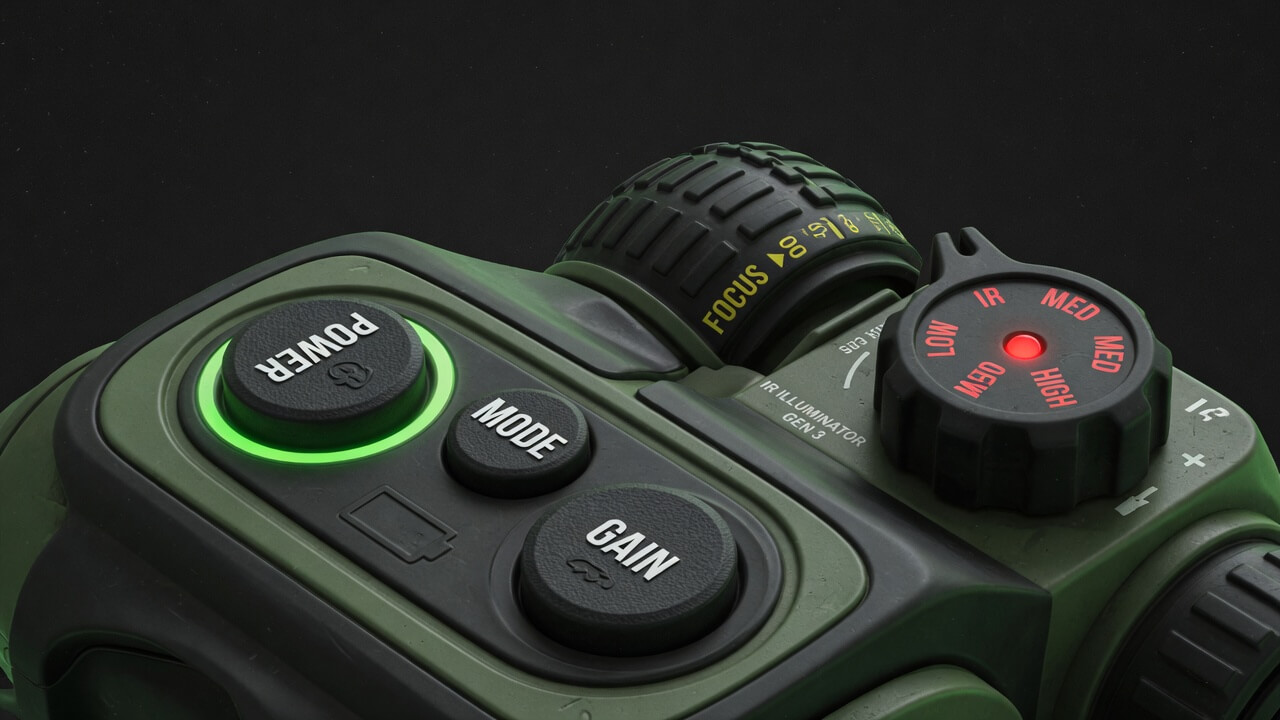
Some night vision binoculars look great online but feel awkward in cold hands. Buttons may be too close together. Focus wheels may be stiff. The screen may cause eye fatigue. The neck strap may be poor. The unit may be too heavy for long handheld scanning.
Good hunting binoculars should be easy to raise, focus, scan, dim, and pack away without making noise.
Best Night Vision Binoculars for Hunting: Recommended Product Types
Instead of pretending one model is perfect for everyone, it is smarter to match the binocular to the hunting scenario.
Below are product-style recommendations you can use naturally in your affiliate content.
Best Overall: ATN BinoX 4K 4-16x for Serious Digital Night Hunting
The ATN BinoX 4K is one of the strongest choices for hunters who want a serious digital day/night binocular with smart features. It is not the cheapest option, but it makes sense for hunters who want more than basic scanning.
ATN highlights the BinoX 4K with a built-in IR illuminator, live streaming, recording, dual-core processing, laser rangefinder, and 4-16x magnification, which makes it more feature-rich than simple budget night vision binoculars.
Where it fits best:
| Best Use | Why |
|---|---|
| Hog hunting fields | Good for scanning open ground |
| Property monitoring | Recording and range tools help |
| Mixed day/night use | Works outside pure darkness |
| Hunters who like tech | Rangefinder, video, app features |
The main strength is practical flexibility. You can scan, range, record, and use it as a more complete field tool. For hog hunters sitting over a wide pasture or agricultural edge, that matters because they are not just spotting movement; they are trying to understand distance, direction, and group behavior.
Pros:
- Strong feature set for hunting
- Good for field scanning
- Built-in IR support
- Laser rangefinder adds real value
- Video recording is useful for scouting
Cons:
- More expensive than basic units
- More features mean more menu learning
- Bulkier than simple handheld models
Best Long-Range Digital Option: Luna Optics Quantum Digital Binoculars
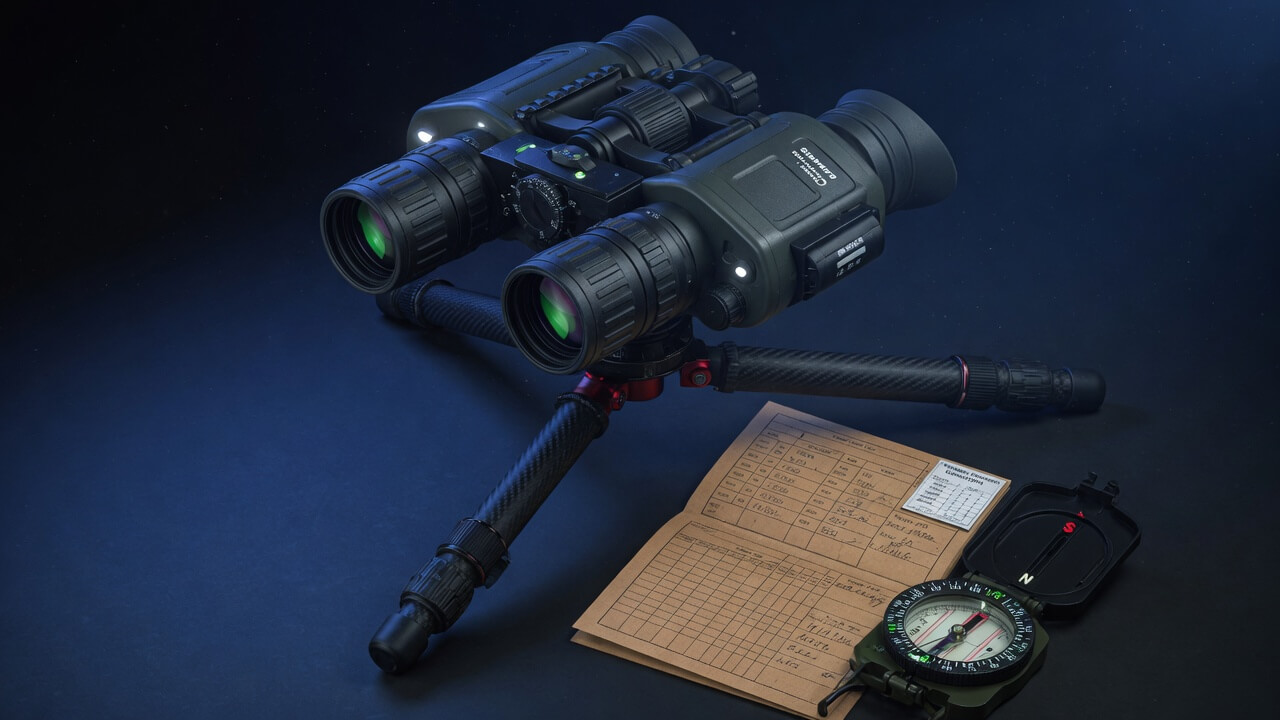
Luna Optics sits in a more premium lane for hunters who want higher-end digital night vision performance. The Luna Optics LN-QE-B50 features a 4K CMOS sensor, AMOLED displays, multiple color modes, Wi-Fi streaming, image stabilization, and up to 512GB microSD support, according to Luna’s official specifications.
This kind of binocular is not for the hunter who just wants to check a feeder at 60 yards. It is for open country, long field edges, security-style property observation, and hunters who want a sharper digital viewing experience.
Where it fits best:
| Best Use | Why |
|---|---|
| Long open fields | Better digital imaging potential |
| Tripod scanning | More stable at higher magnification |
| Detailed observation | Higher-resolution features help |
| Experienced users | More control and settings |
Pros:
- Premium digital image features
- Good for detailed observation
- Useful for serious long-range scanning
- Multiple viewing modes
- Strong recording and display features
Cons:
- Higher price point
- May be more than casual hunters need
- Requires stable handling for best results
If your hunting area includes big fields, long senderos, or wide property lines, study [long range night vision binoculars for hunting] before choosing. Long range is not only about zoom; it is about sensor quality, IR reach, stability, and image confidence.
Best Budget Choice: Nightfox 100V Digital Night Vision Binoculars
Budget night vision has improved a lot. A few years ago, cheap digital night vision felt more like a toy than a tool. Now, some entry-level models are useful for short-range hunting, scouting, camping, and property checks.
Nightfox positions its gear as affordable digital night vision and explains that digital night vision uses infrared light and a CMOS sensor to display the image on a screen. The Nightfox 100V, for example, has been reviewed with a 640×480 sensor, 100m IR range, 3x magnification, and AA battery power.
This category is not perfect, but it has a place.
Where it fits best:
| Best Use | Why |
|---|---|
| Feeder checks | Short-range performance is enough |
| Beginner night hunting | Simple and affordable |
| Backyard property monitoring | Good utility value |
| Backup binocular | Useful secondary device |
Pros:
- Affordable entry point
- Easy to learn
- Good for short-range use
- Less painful if scratched or dropped
- Works for casual scouting
Cons:
- Limited identification range
- Image can get grainy
- Not ideal for large fields
- Battery use can be heavy
The best budget night vision binoculars for hunting are not “cheap miracles.” They are practical tools for realistic distances. Keep that mindset, and you will be happier with the purchase.
For a full low-cost shortlist, connect readers to [best budget night vision binoculars for hunting] with a sentence like: “If you want a useful night setup without paying premium thermal prices, start with [best budget night vision binoculars for hunting] before you choose.”
Best Analog-Style Option: Sightmark Ghost Hunter Series
Some hunters still like the feel of analog night vision. The Sightmark Ghost Hunter line is a Gen 1 night vision option, with models such as the 2×24 and 4×50 aimed at night observation. The 2×24 model specifications list Gen 1 technology, 2x magnification, 24mm lens diameter, built-in IR, and 20-hour battery life in the referenced product document.
Analog night vision feels different from digital. It may not offer the same recording features, but some users like the immediacy of the view and simpler operation.
Where it fits best:
| Best Use | Why |
|---|---|
| Close-to-medium observation | Lower magnification can be steady |
| Simple night scanning | Fewer digital distractions |
| Users who dislike screens | More traditional viewing feel |
| Short stands | Lightweight options available |
Pros:
- Simple operation
- Lightweight models available
- Good for close observation
- No complicated recording menus
Cons:
- Gen 1 has limitations
- Not ideal for serious long range
- Image quality depends heavily on conditions
- Less modern than digital alternatives
Digital Night Vision vs Infrared vs Thermal for Hunting
This is where buyer confusion gets expensive.
Many hunters search for the best night vision binoculars for hunting when they may actually be comparing three different technologies.
Digital Night Vision
Digital night vision uses a sensor and screen. It usually works during the day and night. At night, it often needs IR illumination.
Best for:
- Budget-friendly night hunting
- Recording photos and video
- Property observation
- Beginner-friendly use
- General hog and coyote scanning
Weakness:
- Needs IR in total darkness
- Screen image can feel artificial
- Cheap models get grainy fast
Infrared Night Vision
Infrared is not a separate binocular type in most cases. It is the light source used by digital night vision to see in darkness.
Best for:
- Total darkness
- Feeder setups
- Wooded trails
- Close-to-medium range scanning
Weakness:
- Some IR creates visible red glow
- Reflective brush can wash out the image
- Strong IR drains battery
Thermal Binoculars
Thermal detects heat. It does not need IR light. This is a major advantage for detection.
Best for:
- Finding hidden animals
- Scanning large fields
- Locating heat signatures through light cover
- Serious predator and hog hunting
Weakness:
- More expensive
- Identification can be tricky
- Does not show normal visual detail like night vision
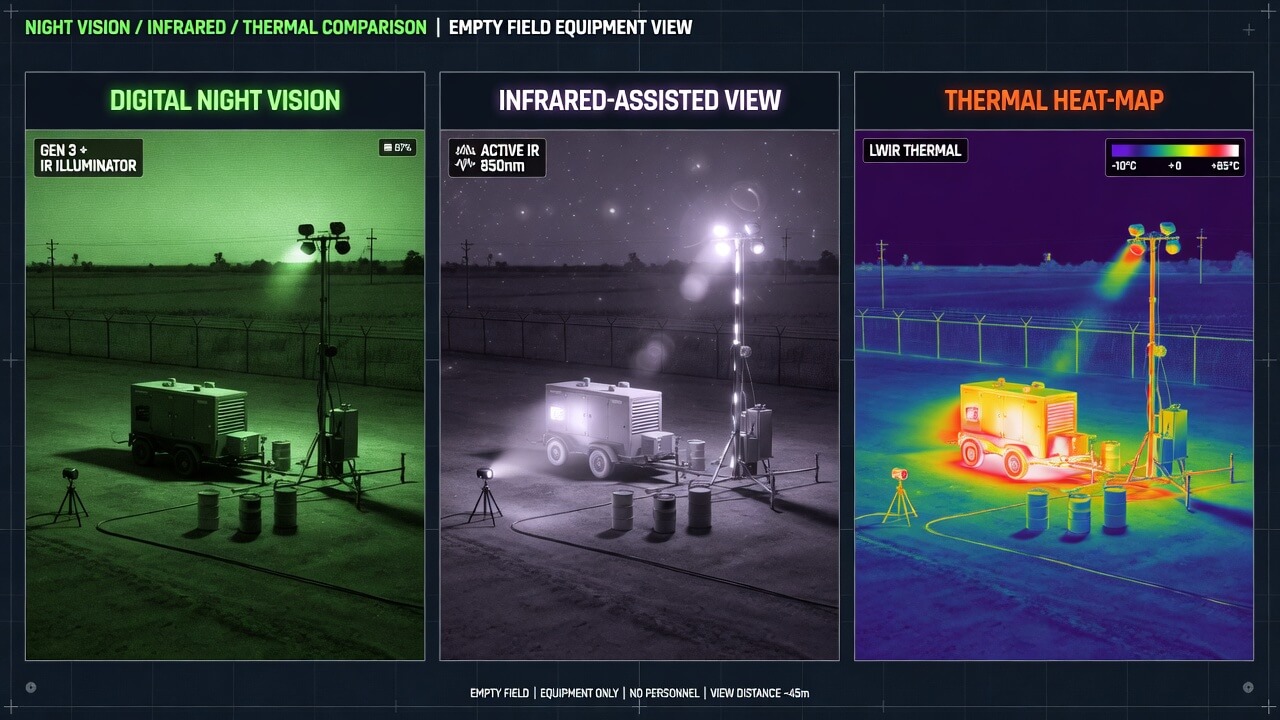
Here is the blunt version: thermal is better for detection, night vision is often better for visual detail. A serious hunter may eventually use both. If you are deciding between the two, read [thermal vs night vision binoculars for hunting] before you spend money.
Best Night Vision Binoculars for Hog Hunting
Hog hunting puts night vision binoculars under real pressure.
Hogs may move in groups. They can appear suddenly, feed in dark low spots, and blend into field edges. You may need to scan wide, judge group size, and identify movement before switching to your main optic.
The best night vision binoculars for hunting hogs should have:
- Strong IR support
- Good field scanning ability
- Comfortable handheld balance
- Real identification range
- Tripod compatibility if scanning long fields
- Battery life for extended sits
For hog hunting over feeders, a budget digital binocular can work if the distance is short. For big agricultural fields, spend more on range, sensor quality, and stability.
Hog hunting rewards patience and scanning rhythm. You do not want to stare at one tiny area all night. A comfortable binocular lets you scan slowly, rest your eyes, and keep track of movement without constantly raising your rifle optic.
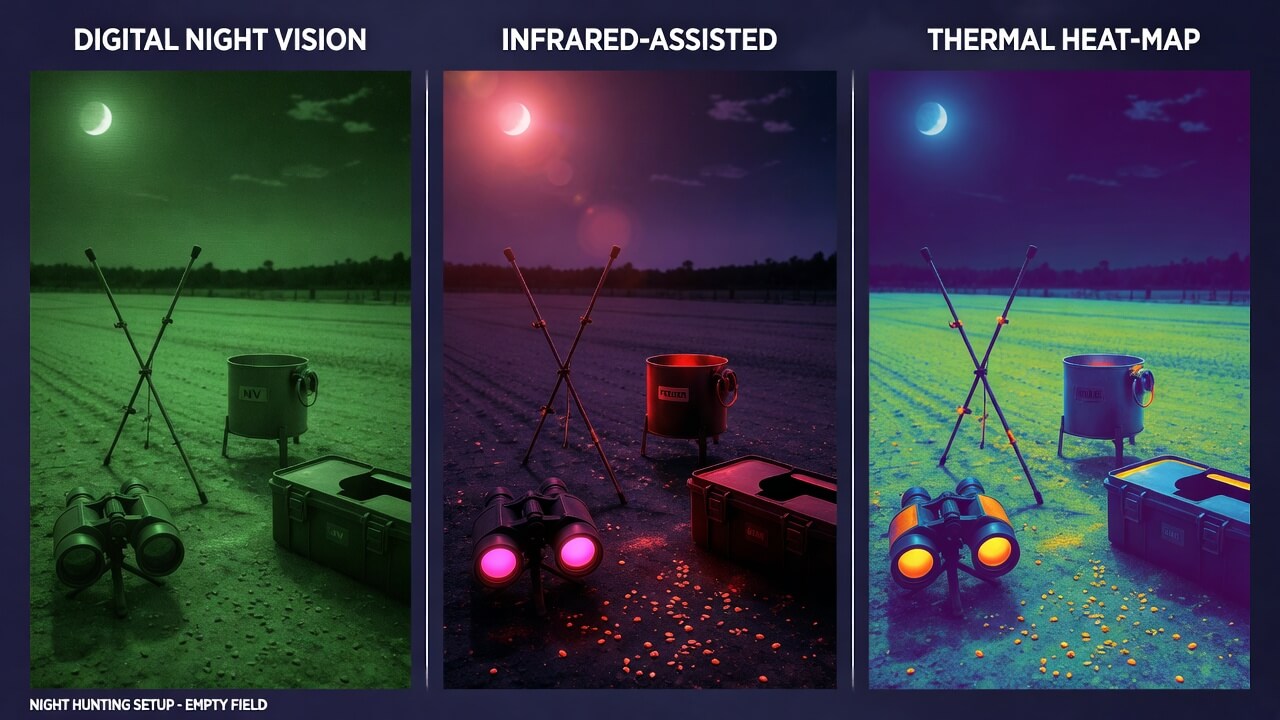
For species-specific buying advice, use this internal link naturally: “For field setups, feeder distances, and group scanning tips, see [night vision binoculars for hog hunting] before buying a model based only on advertised range.”
Best Night Vision Binoculars for Coyote Hunting
Coyote hunting is less forgiving in some ways.
You may be calling, scanning, listening, adjusting wind, and watching multiple approach lanes. A narrow field of view can hurt you. A bright IR glow may not always spook coyotes immediately, but pressured animals can become suspicious of anything unusual.
For coyotes, I prefer night vision binoculars that are:
- Fast to focus
- Not too heavy
- Wide enough for scanning
- Simple to operate with gloves
- Good at detecting eye shine and movement
- Compatible with a less visible IR strategy if needed
The best night vision binoculars for hunting coyotes are not always the highest magnification option. In fact, a lower base magnification can help you catch movement sooner.
Think about the stand.
If you are watching a field corner, you need wider awareness. If you are covering a long open lane, range matters more. If you are hunting pressured coyotes, keep your movement and light signature controlled.
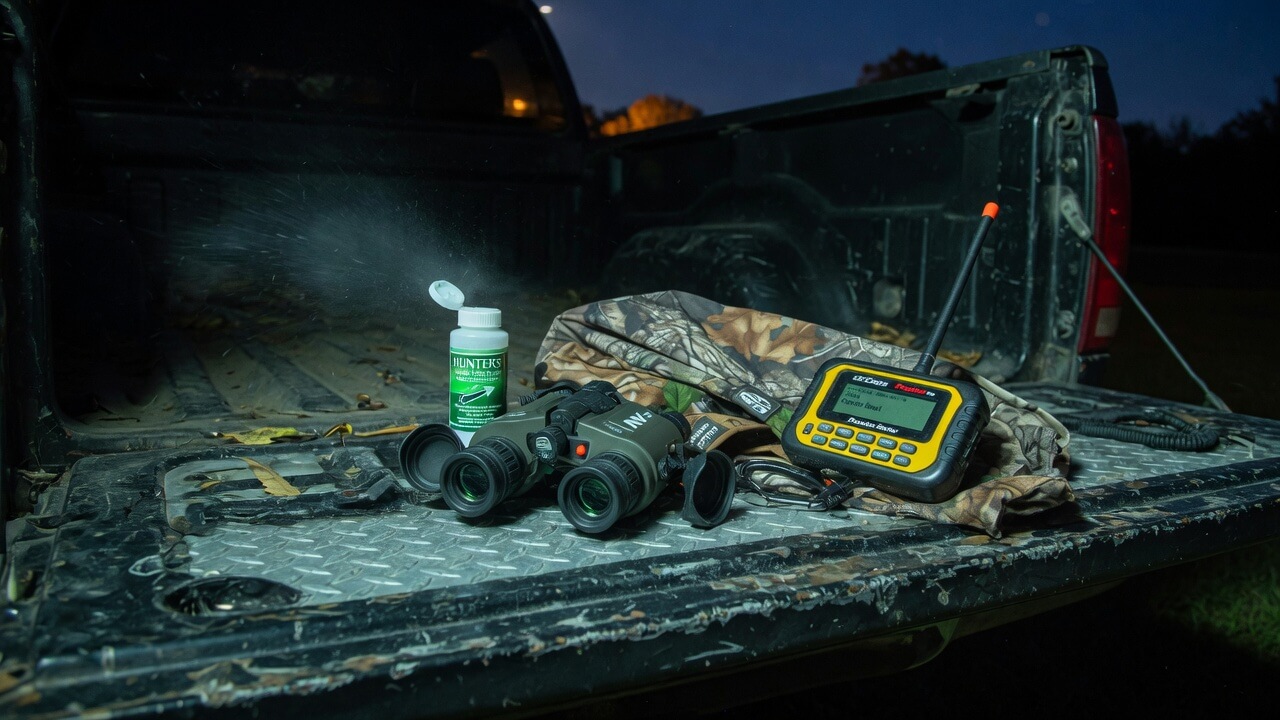
Send readers to the supporting article with a conversion-friendly line: “Predator hunters should compare field of view, IR glow, and scanning comfort in [night vision binoculars for coyote hunting] before choosing a high-zoom model.”
Short-Range vs Long-Range Night Hunting Setups
Not every hunter needs long range.
Actually, most do not.
A hunter watching a 75-yard feeder has different needs from someone scanning 400 yards of pasture. If you buy too much optic for a small property, you may end up with a heavier, more expensive device that is slower to use.
Short-Range Setup
Best for:
- Feeders
- Small farms
- Wooded trails
- Barn lots
- Close property checks
Recommended features:
- 3x to 4x base magnification
- Simple IR control
- Lightweight body
- Budget-friendly price
- Easy focus
Medium-Range Setup
Best for:
- Field edges
- Coyote stands
- Pasture corners
- Hog movement corridors
Recommended features:
- Better sensor resolution
- Adjustable IR
- 4x to 6x base magnification
- Tripod mount option
- Comfortable screen
Long-Range Setup
Best for:
- Open crop fields
- Ranch land
- Utility roads
- Senderos
- Large properties
Recommended features:
- High-quality sensor
- Strong IR or external IR support
- Tripod compatibility
- Rangefinder if possible
- Stable image at higher zoom
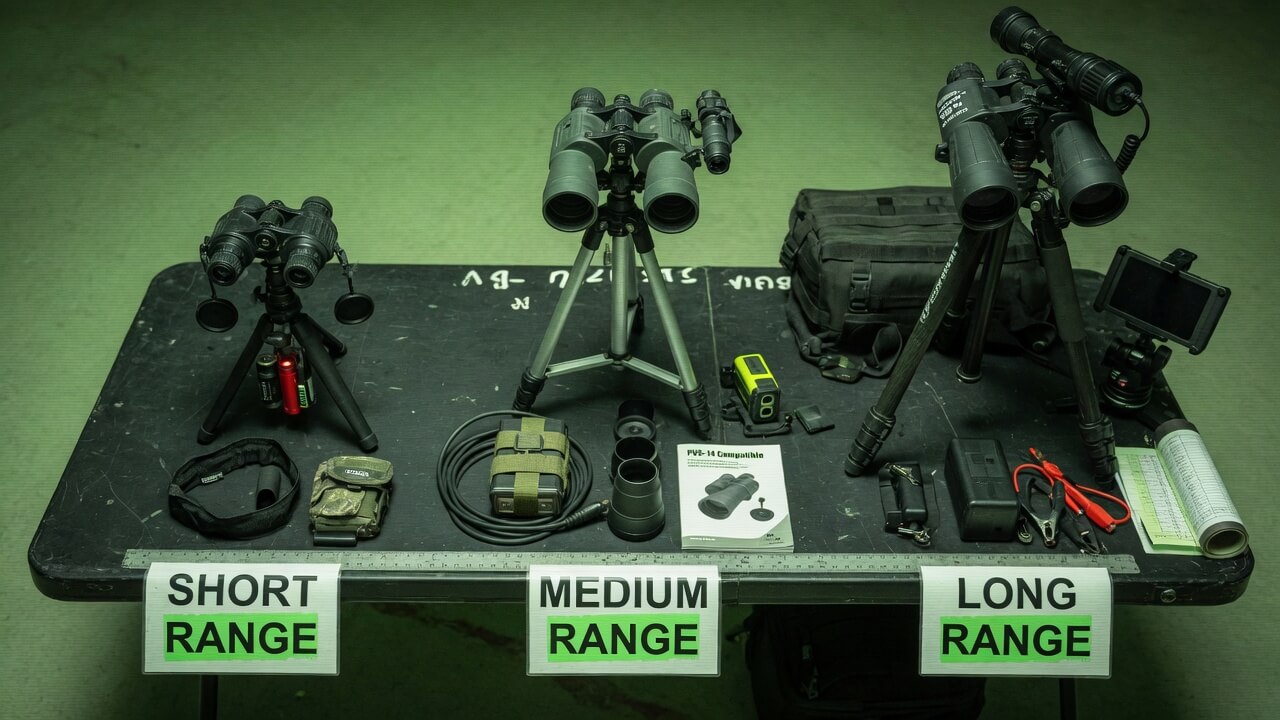
The mistake is buying for maximum distance instead of normal use. When a hunter tells me, “I might need 500 yards,” I ask, “How often do you really identify game at that distance at night?” Usually, the honest answer is almost never.
Features Worth Paying For
Some features genuinely improve the hunting experience. Others are mostly marketing.
Worth Paying For
| Feature | Why It Matters |
|---|---|
| Better sensor resolution | Cleaner image and easier identification |
| Adjustable IR brightness | Helps avoid washout |
| Tripod mount | Reduces fatigue and shake |
| Long battery life | Better for full-night hunts |
| Comfortable controls | Easier in cold/dark conditions |
| Recording | Useful for scouting and content |
| Weather resistance | Important for real field use |
| Laser rangefinder | Valuable for open land |
Nice But Not Essential
| Feature | Why It May Not Matter |
|---|---|
| Extreme digital zoom | Often reduces image quality |
| App control | Useful, but not required |
| Huge screen | Can be bulky |
| Many color modes | Fun, but one or two good modes are enough |
| Overly tactical design | Looks cool, may not improve use |
The best night vision binoculars for hunting should make the hunt smoother. If a feature makes the device slower, louder, heavier, or harder to operate, question whether you need it.
Common Mistakes Hunters Make When Buying Night Vision Binoculars
Mistake 1: Believing Maximum Range Claims Too Literally
Advertised viewing range is usually based on ideal conditions. Real fields are not ideal. Humidity, fog, dust, grass, and moon phase change everything.
Buy with a buffer. If you need clean identification at 150 yards, do not buy a unit that barely claims 150 yards.
Mistake 2: Choosing Too Much Magnification
High magnification makes scanning harder. It also increases shake. For handheld use, moderate power is better.
Mistake 3: Ignoring IR Glow
Some animals may notice faint red glow from 850nm IR. It does not always ruin a hunt, but pressured predators and hogs can react to unusual light or movement.
Mistake 4: Forgetting About Batteries
A night vision binocular that dies halfway through the sit is just expensive dead weight.
Mistake 5: Buying Thermal When You Need Detail
Thermal is amazing for detection, but it does not show the same visual details as night vision. For identification, terrain reading, and recording a more natural scene, night vision still has value.
Mistake 6: Buying Budget and Expecting Premium
Budget binoculars can be useful. But expecting premium range, crisp detail, and perfect low-light handling from a cheap unit leads to disappointment.
Buyer Psychology: What You Are Really Paying For
Most hunters do not buy night vision binoculars only because they want a gadget.
They buy confidence.
- Confidence that they are not missing movement.
- Confidence that they can identify what is in the field.
- Confidence that they can scan without constantly pointing a weapon.
- Confidence that they can make smarter decisions in darkness.
That is why the best night vision binoculars for hunting should be evaluated by trust, not specs alone.
When a product gives you a calm, readable view, you hunt better. You move less. You rush less. You make fewer guesses.
That kind of confidence is worth more than a few extra lines of marketing zoom.
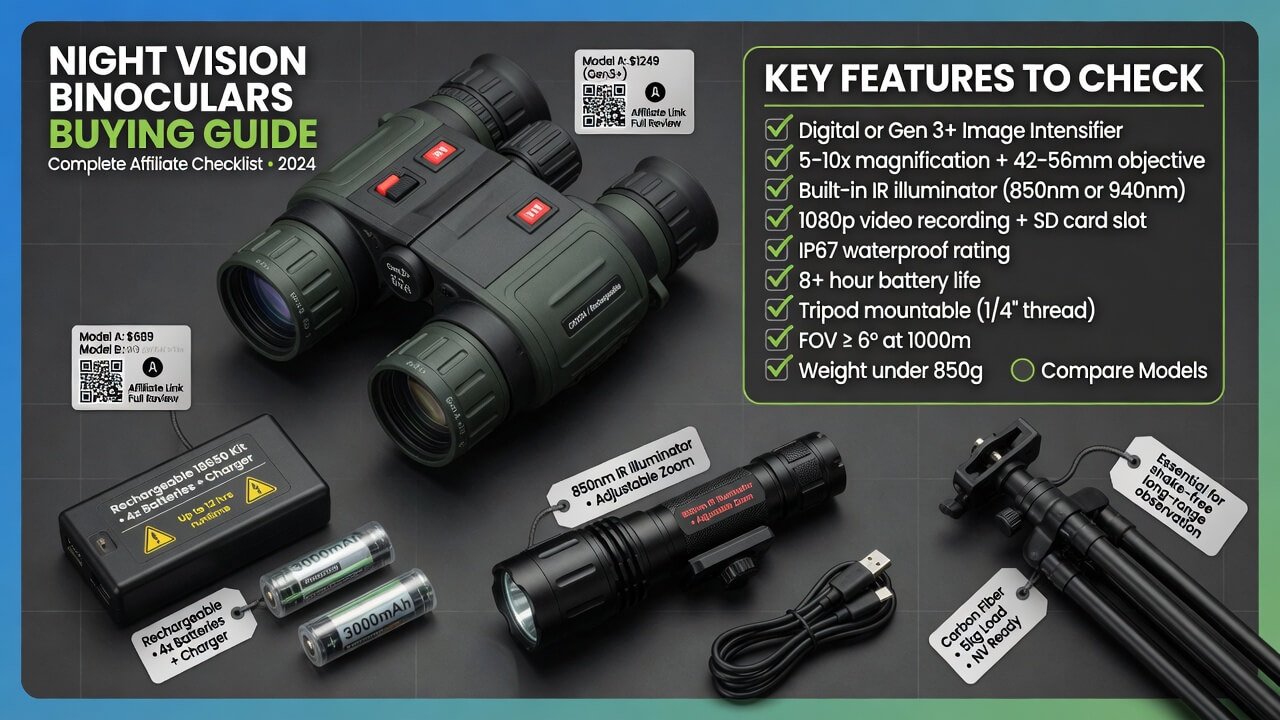
Best Accessories for Night Vision Binoculars
The right accessories can make an average night vision binocular perform better.
External IR Illuminator
A good external IR torch can improve range and reduce image noise. Just make sure it matches your binocular’s IR sensitivity.
Tripod or Window Mount
For long scanning, a tripod is a big upgrade. It reduces shake and lets you watch a field without tiring your arms.
Power Bank or Spare Batteries
Simple but important. Cold weather can reduce battery performance, and IR drains power faster than daytime use.
Lens Cloth and Case
Night hunts are rough on gear. Dust, moisture, and fingerprints make night vision images worse.
Neck Strap or Chest Pack
A heavy device bouncing around your neck gets annoying. A chest pack can protect it and keep it quiet.
How to Choose the Best Night Vision Binoculars for Hunting by Budget
Under $200
Expect basic digital night vision. Good for short-range scanning, feeder checks, and casual use. Do not expect clean long-range identification.
Best for: beginners, small properties, backup gear.
$200–$500
This is where many practical hunting options live. You can get better IR, better screens, recording, and improved range.
Best for: regular night hunting, hog feeders, property checks, predator setups.
$500–$1,000
Expect stronger sensors, better build, better battery systems, and more serious field performance.
Best for: frequent hunters, larger properties, open fields.
$1,000+
This range includes premium digital devices, advanced features, rangefinders, better displays, and some thermal alternatives.
Best for: serious hog/coyote hunters, ranch use, long-range scanning, professional property work.
Product Comparison Table
| Product Type | Best For | Main Strength | Watch Out For |
|---|---|---|---|
| ATN BinoX 4K | Serious digital hunting | Smart features, rangefinder, recording | Higher cost and learning curve |
| Luna Optics Quantum Digital | Premium long-range scanning | Advanced sensor/display features | Expensive for casual users |
| Nightfox 100V digital binoculars | Budget hunters | Affordable and easy to use | Limited long-range identification |
| Sightmark Ghost Hunter | Analog-style users | Simple Gen 1 viewing | Limited compared with modern digital |
This table is not about declaring one universal winner. It is about matching tool to terrain.
The best night vision binoculars for hunting your land may not be the best for someone else’s property.
More Hunting Night Vision Guides
- If you want a simple beginner-friendly setup with recording and day/night use, start with [digital night vision binoculars for hunting].
- If your biggest concern is total darkness performance, IR glow, and beam distance, read [infrared night vision binoculars for hunting].
- If price is the main issue, compare realistic short-range options in [best budget night vision binoculars for hunting].
- If your hunting land has wide fields or long senderos, study [long range night vision binoculars for hunting].
- Predator hunters should compare scanning speed, field of view, and IR discipline in [night vision binoculars for coyote hunting].
- For feeder setups, crop fields, and group movement, review [night vision binoculars for hog hunting].
- If you are stuck between heat detection and visual detail, the clearest next step is [thermal vs night vision binoculars for hunting].
And when you want more hunting optics, buying guides, and field-tested binocular advice in one place, explore [BestBinocular.net].
Final Verdict: What Should You Buy?
The best night vision binoculars for hunting depend on how, where, and what you hunt.
- For serious hog fields and feature-heavy use, the ATN BinoX 4K style makes sense.
- For premium long-range digital scanning, Luna Optics-style models are worth comparing.
- For short-range and budget hunting, Nightfox 100V digital binoculars can be a smart starting point.
- For hunters who prefer simple analog viewing, Sightmark Ghost Hunter-style models still have a place.
But here is the honest buying advice:
Do not buy night vision binoculars only because they look powerful. Buy the model that helps you identify clearly at the distance you actually hunt.
For most hunters, that means moderate magnification, adjustable IR, comfortable controls, good battery planning, and enough image quality to make confident decisions in darkness.
That is what separates useful night vision from expensive disappointment.
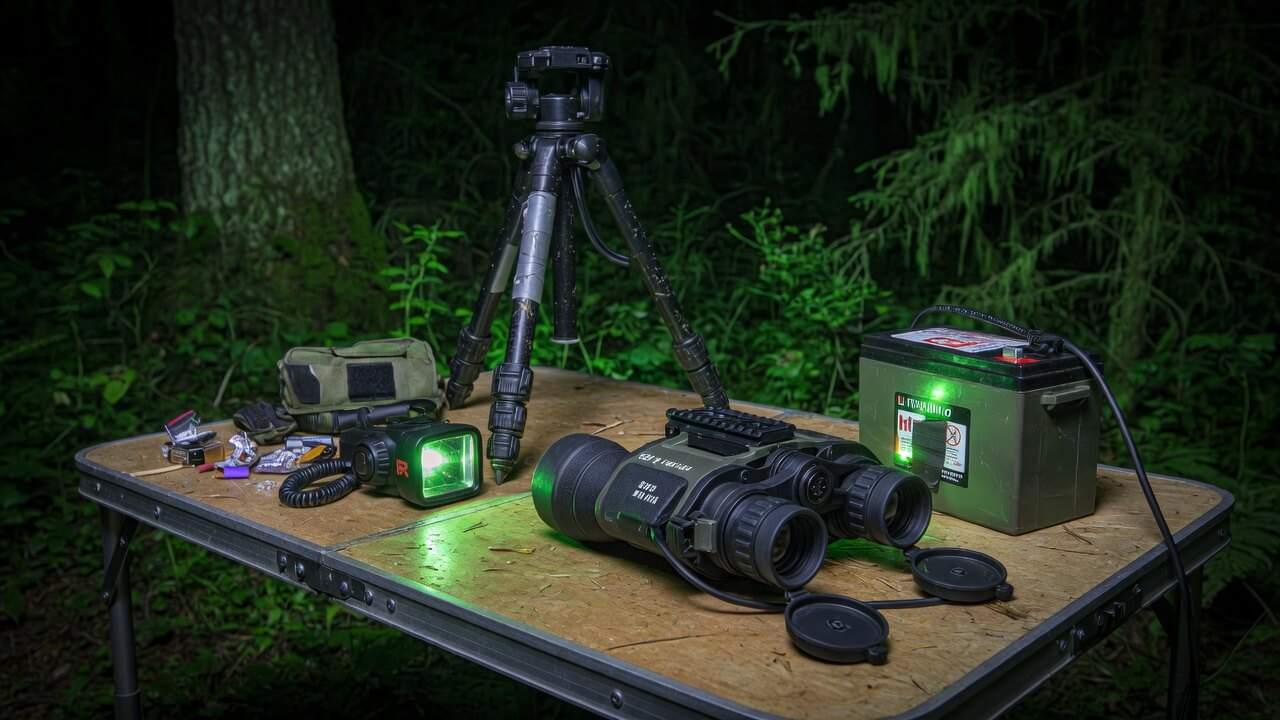
FAQs About the Best Night Vision Binoculars for Hunting
What are the best night vision binoculars for hunting?
The best night vision binoculars for hunting are the ones that match your terrain and distance. For open fields, choose stronger digital models with better range and tripod support. For feeders and short-range property checks, a budget digital IR binocular may be enough. For serious detection, compare thermal options too.
Are digital night vision binoculars good for hunting?
Yes, digital night vision binoculars are good for hunting when used within realistic distances. They are especially useful for hog hunting, predator scanning, feeder checks, and property observation. They also often include recording features, which can help with scouting.
How far can night vision binoculars see while hunting?
Some models advertise several hundred yards, but real identification range is usually shorter than detection range. Weather, IR strength, moonlight, sensor quality, and terrain all affect performance. For hunting, focus on how far you can identify the animal clearly, not just detect movement.
Are night vision binoculars better than thermal binoculars?
Night vision binoculars are often better for seeing visual detail, terrain, fences, trees, and general scene structure. Thermal binoculars are better for detecting heat signatures. Many serious night hunters use thermal for detection and night vision for visual confirmation.
Do night vision binoculars need infrared light?
Most digital night vision binoculars need infrared light in full darkness. Some perform better with moonlight or ambient light, but IR usually improves the image. Analog night vision may work passively in some conditions, but IR helps in darker areas.
Is 850nm or 940nm IR better for hunting?
850nm IR usually gives better range and a brighter image, but it may show a faint red glow. 940nm IR is less visible but usually has shorter effective range. For long fields, 850nm is often stronger. For pressured animals, some hunters prefer 940nm.
Can I use night vision binoculars for hog hunting?
Yes, night vision binoculars are very useful for hog hunting. They help you scan fields, observe feeder activity, and track group movement without constantly aiming a weapon optic. For open fields, choose better range and tripod compatibility.
Can I use night vision binoculars for coyote hunting?
Yes, but choose carefully. Coyote hunting benefits from a wider field of view, fast focus, low movement, and controlled IR use. Too much magnification can make scanning slower and cause you to miss movement.
Are cheap night vision binoculars worth it?
Cheap night vision binoculars can be worth it for short-range hunting, feeder checks, and casual scouting. They are not ideal for long-range identification or serious open-field hunting. Buy budget models with realistic expectations.
What magnification is best for night vision hunting binoculars?
For handheld hunting, moderate magnification is usually best. Around 3x to 6x base magnification is practical for scanning. Very high digital zoom often reduces clarity and makes the image shaky.
Should I mount night vision binoculars on a tripod?
A tripod is helpful for long-range scanning, hog fields, and long sits. It reduces hand shake and eye fatigue. For quick movement or coyote calling, handheld use may be more practical.
Are night vision binoculars legal for hunting?
Night vision hunting laws vary by location, species, and season. Some areas allow night vision for hogs or predators, while others restrict it. Always check current local hunting regulations before using night vision binoculars in the field.




