
What Makes Digital Night Vision Binoculars Useful for Hunting?
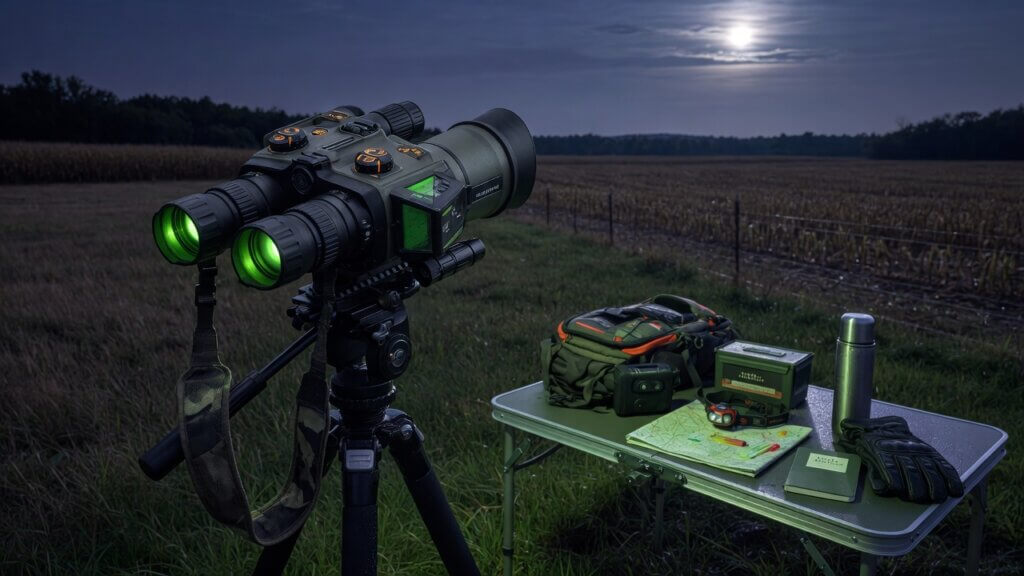
Digital night vision binoculars for hunting are not just “regular binoculars that work at night.” They change the way you scan fields, tree lines, feeder areas, farm edges, and dark trails because they turn weak light — or infrared light — into a visible digital image.
That sounds simple on paper. In real hunting conditions, it is a little more complicated.
A pair that looks impressive in product photos can feel slow, grainy, too narrow, or too power-hungry once you are standing in a cold field at 11:30 p.m. trying to identify movement 120 yards away. The right digital night vision binoculars for hunting should help you detect, identify, and track without making the whole process feel like you are fighting the device.
This article is written for hunters who want a practical, field-focused answer: what should you look for, where do digital binoculars perform well, where do they struggle, and which features are actually worth paying for?
What Makes Digital Night Vision Binoculars Different?
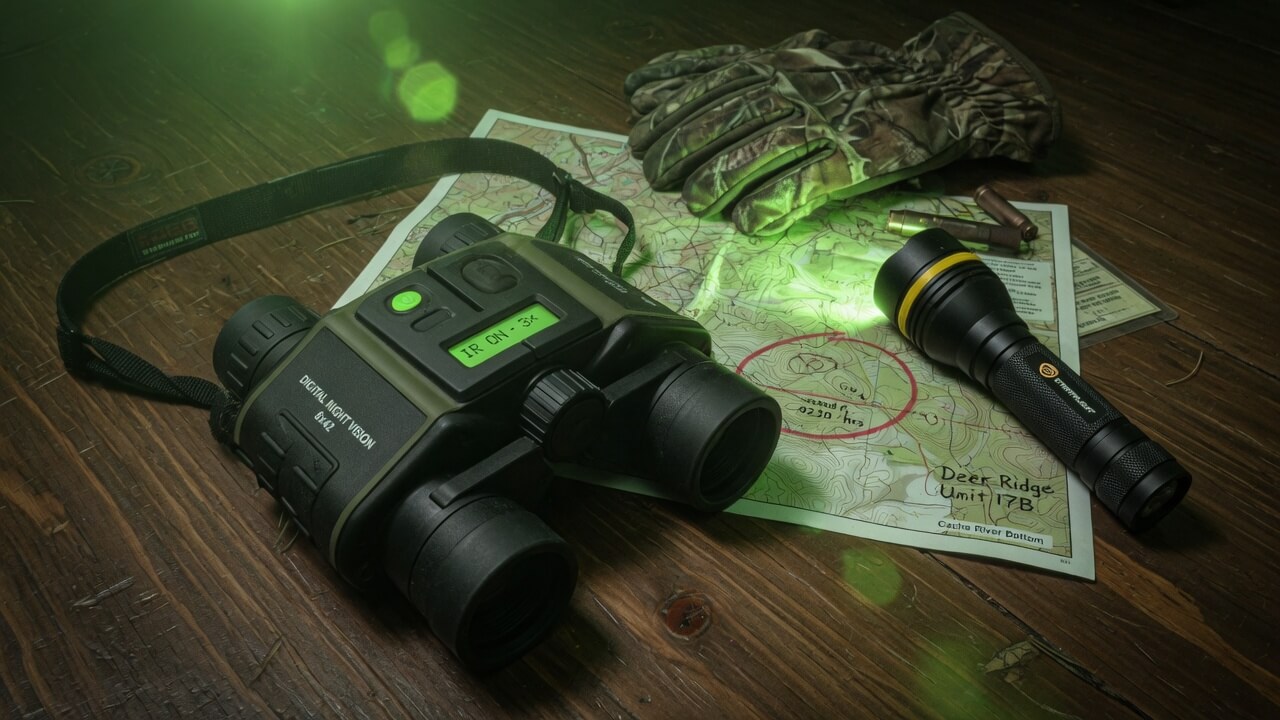
Digital night vision binoculars use an electronic sensor and display screen instead of traditional image intensifier tubes. In simple terms, the binoculars collect available light or infrared light, process it digitally, and show the image on a small internal display.
That is why digital night vision binoculars for hunting usually have features you do not get in old-school night vision optics, such as:
| Feature | Why It Matters for Hunting |
|---|---|
| Day and night viewing | You can scout before sunset and continue after dark |
| Infrared illuminator | Helps you see in total darkness |
| Video recording | Useful for reviewing movement, routes, and shot setup |
| Digital zoom | Lets you inspect distant shapes without changing position |
| Rangefinder on premium models | Helps judge distance more accurately |
| Rechargeable battery | Reduces the need for disposable batteries |
The biggest advantage is flexibility. You can use many digital models during the day, at dusk, and at night. That makes them useful for hunters who do not want to carry separate daytime binoculars and dedicated night vision gear.
But there is a tradeoff. Digital night vision often depends heavily on the sensor quality, screen quality, and IR illuminator. A cheap unit may “see” in darkness, but the image can look flat, noisy, and hard to judge at distance.
Best Use Cases for Digital Night Vision Binoculars for Hunting
Digital night vision binoculars for hunting make the most sense when you are scanning open or semi-open terrain. Think field edges, crop lines, ranch roads, bait sites where legal, wooded gaps, and wide trails.
They are especially useful in these situations:
Night hog hunting
For hog hunters, digital night vision binoculars are excellent for scanning before moving closer. You can check field activity from a safe distance, identify group movement, and avoid walking blindly into noisy ground.
The key here is not just magnification. It is detection speed. A wide enough field of view helps you scan more naturally instead of feeling trapped inside a tiny digital tunnel.
Predator hunting
Coyote and fox hunters often need to scan repeatedly without swinging a rifle-mounted optic everywhere. Binoculars are more comfortable for observation because you can keep your weapon pointed safely while using both eyes to study the field.
Digital night vision binoculars for hunting are useful here because they let you watch movement patterns before committing to a call sequence or shot setup.
Property protection and farm monitoring
Not every night vision user is chasing a trophy. Some hunters use digital binoculars to monitor livestock areas, check fences, scan tree lines, or identify movement around rural property.
In that setting, recording capability becomes more valuable. A short video can help you understand when animals are entering, where they are crossing, and whether your setup needs changing.
Digital vs Infrared vs Thermal: Don’t Mix Them Up
Many beginners confuse digital night vision, infrared night vision, and thermal optics. They are related, but they are not the same.
| Optic Type | Best For | Main Weakness |
|---|---|---|
| Digital night vision binoculars | Identifying shapes, terrain, and movement at night | Needs IR help in full darkness |
| Infrared night vision binoculars | Seeing better in darkness using IR illumination | IR beam can be limited by fog, brush, and distance |
| Thermal binoculars | Detecting heat signatures fast | Usually expensive and less detailed for identification |
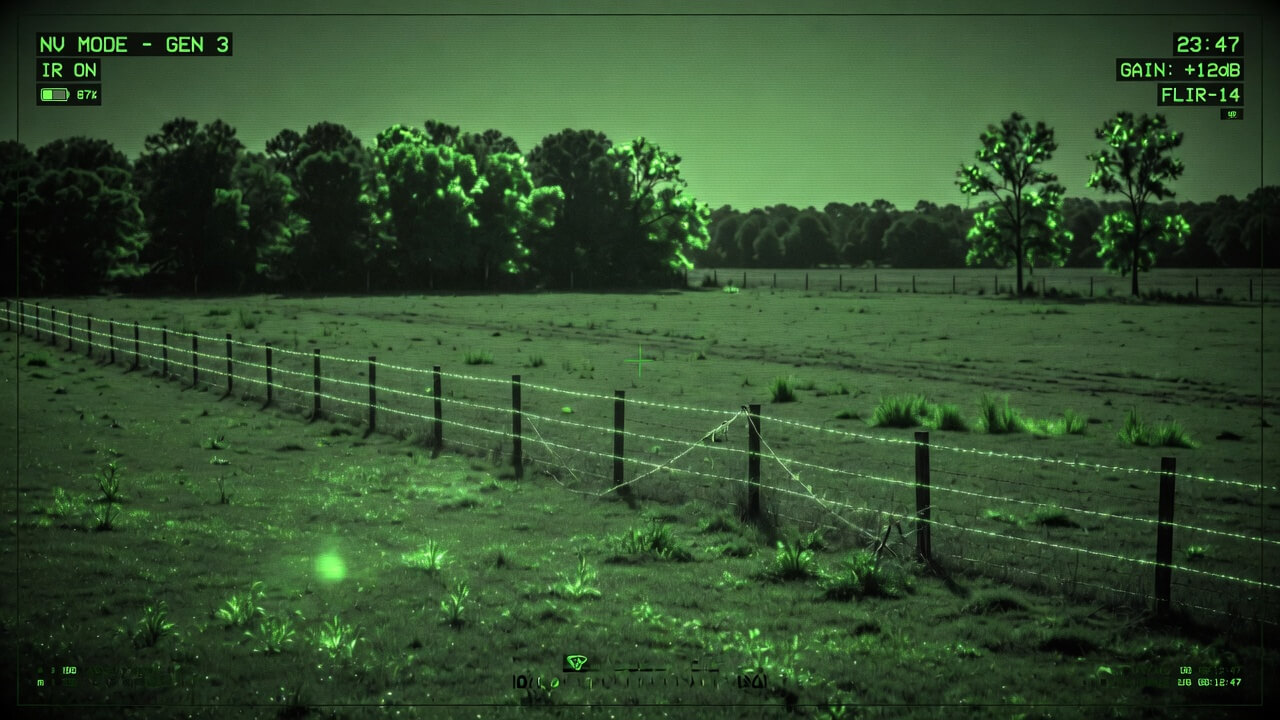
Digital night vision binoculars for hunting often include an infrared illuminator, so the categories overlap. The binocular is digital, but it may use IR light to brighten the scene.
For a deeper breakdown of IR-based performance, read our supporting article on infrared night vision binoculars for hunting. It will help you understand why IR strength, beam focus, and wavelength matter so much after dark.
Thermal is better for fast detection, but digital night vision is often better for hunters who want more visual detail at a lower price. You can see gates, trees, equipment, trails, and body shape more naturally. That context matters when you are trying to make smart decisions in the dark.
Key Features That Matter in Real Hunting Conditions
A spec sheet can look exciting, but hunting exposes weak gear quickly. These are the features that matter most in real hunting conditions.
1. Detection range vs identification range
This is where many buyers get disappointed.
A product may claim long viewing distance, but seeing “something” is not the same as knowing what it is. Digital night vision binoculars for hunting should be judged by identification range, not just detection range.
At 300 yards, you might detect movement. At 150 yards, you might identify the animal clearly. At 80 yards, you may see useful detail. Those numbers change depending on moonlight, IR power, weather, brush, and sensor quality.
2. IR illuminator strength
The built-in IR illuminator is one of the most important parts of digital night vision. Without it, full-dark viewing can become grainy or nearly useless.
A good IR illuminator should offer adjustable brightness. Too much IR can wash out close objects. Too little IR makes distant objects disappear into digital noise.
3. Field of view
Hunters often obsess over zoom. I would rather have a usable field of view.
High magnification sounds powerful, but at night it can make scanning slower and shakier. Digital night vision binoculars for hunting should let you sweep an area smoothly. If the field of view is too narrow, you will miss movement on the edges.
4. Battery life
Night hunting sessions are not always short. Cold weather can also drain power faster.
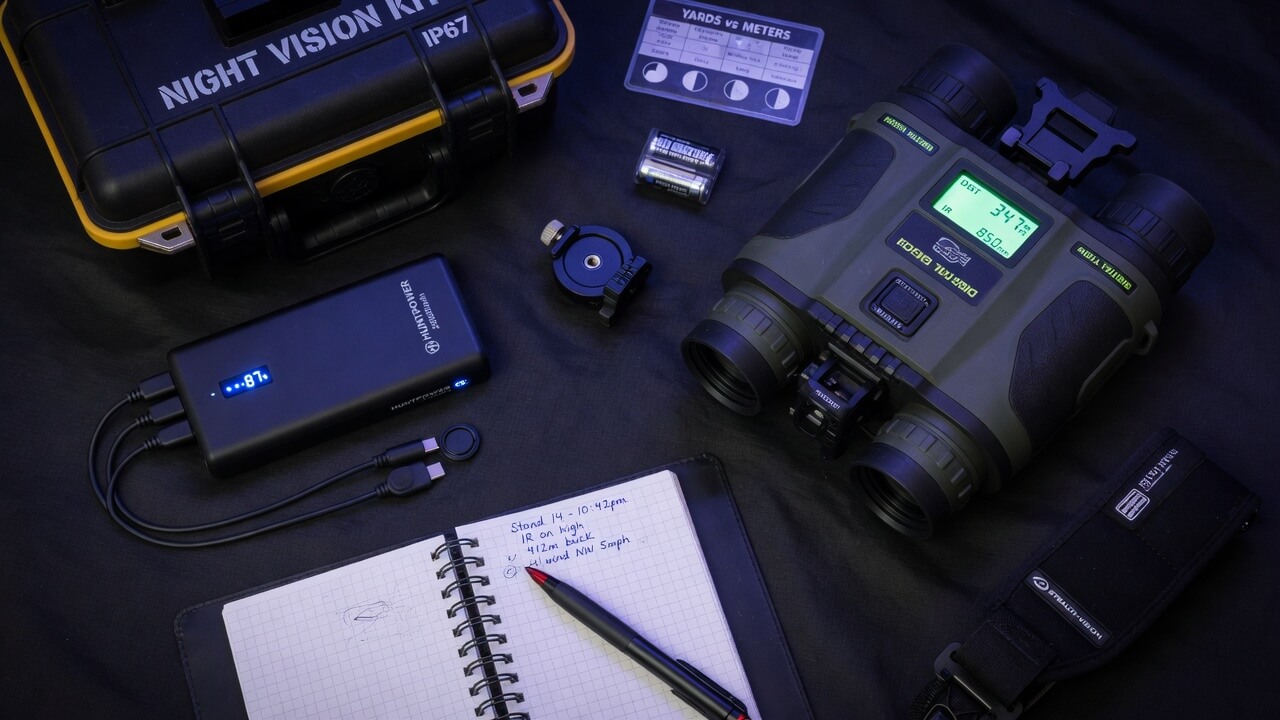
Rechargeable units are convenient, but I still like models that can be supported with an external power bank. Nothing ruins confidence faster than watching the battery icon fall while the field is finally getting active.
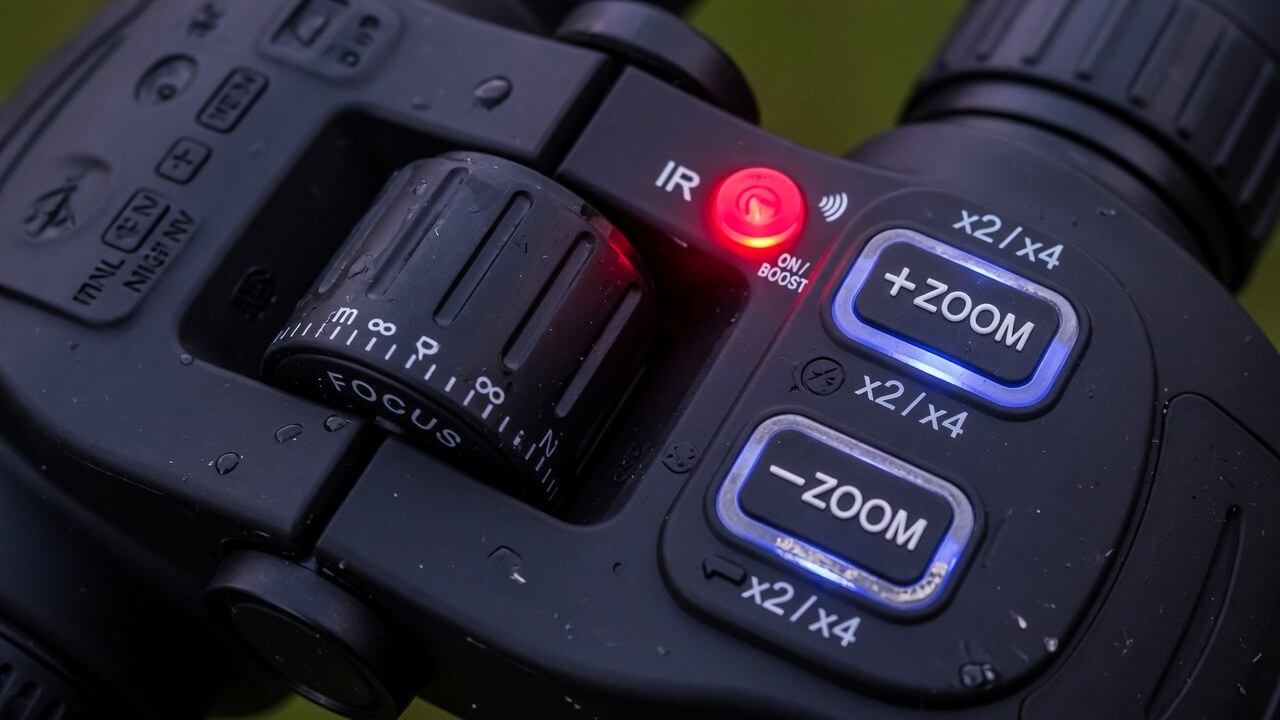
5. Focus control
Manual focus is not a bad thing. In fact, it is often better for hunting because you can fine-tune the image for your exact distance.
The problem is placement. If the focus wheel is stiff, loud, or awkward with gloves, you will notice it immediately.
Pros and Cons of Digital Night Vision Binoculars for Hunting
Pros
| Advantage | Why Hunters Like It |
|---|---|
| Works in day and night | More flexible than traditional night-only devices |
| Often more affordable than thermal | Good entry point for serious night scouting |
| Can record video | Useful for reviewing patterns and content creation |
| Built-in IR support | Helps in dark fields, woods, and farm areas |
| Easier learning curve | Digital display feels familiar to many users |
Cons
| Limitation | What It Means in the Field |
|---|---|
| Image can look grainy | Especially at high zoom or long distance |
| Needs IR in total darkness | Without IR, performance drops fast |
| Screen glow can be distracting | Some hunters need time to adjust |
| Not as fast as thermal detection | Heat signatures are easier to spot quickly |
| Battery management matters | Long hunts require charging discipline |
Digital night vision binoculars for hunting are not magic. They are tools. If you understand the limitations before buying, you will be much happier with the results.
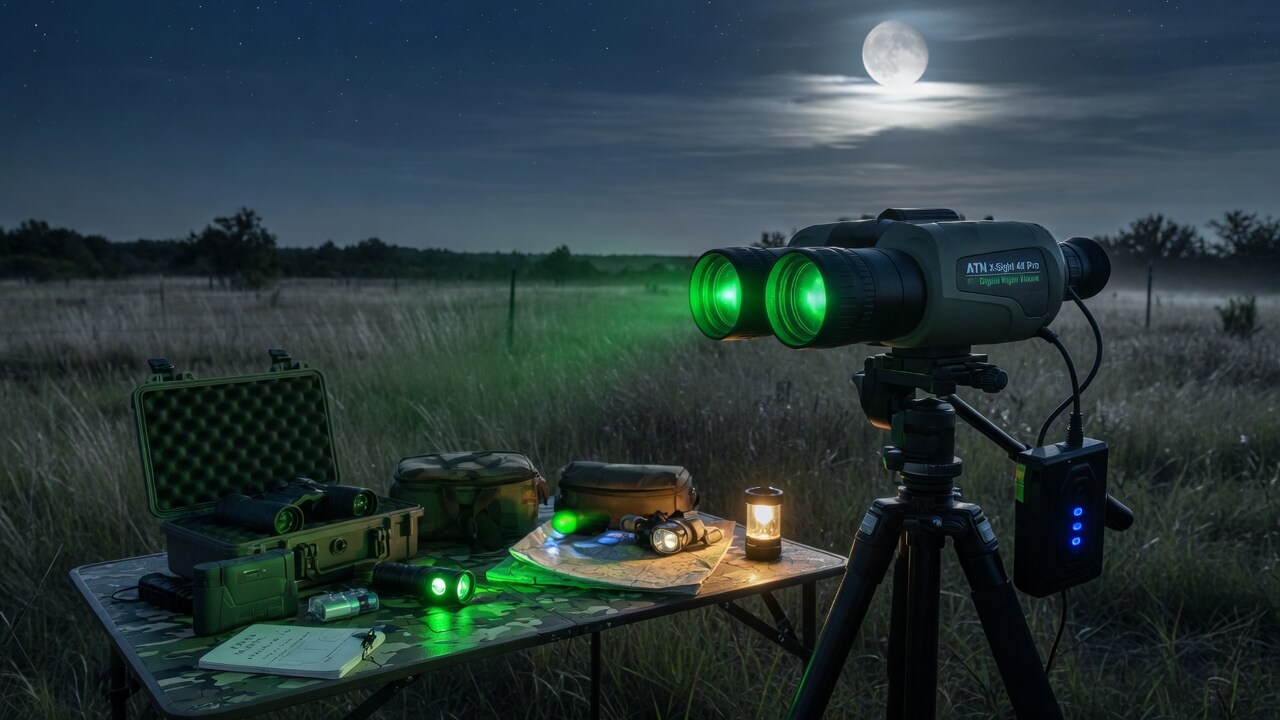
One Product Worth Considering: ATN BinoX 4K 4-16x
If you want one serious option to compare against cheaper models, the ATN BinoX 4K 4-16x is a strong reference point.
It is not the cheapest choice, but it sits in the category many hunters look at when they want digital night vision binoculars for hunting with more advanced features. ATN lists the BinoX 4K with a 4K sensor, 4-16x magnification, built-in IR illuminator, laser rangefinder, 1080p video recording, and weather-resistant construction. The official specification page also lists a 220 ft field of view at 1,000 yards and rangefinder capability up to 1,000 yards/meters depending on measurement mode.
Why it makes sense: the built-in rangefinder and video features are genuinely useful for hunters who scout fields, document movement, or want one device for observation and distance checking.
Where I would hesitate: it may be more binocular than a casual beginner needs. If you only hunt a few nights per year, a more affordable model may be enough. For budget-focused buyers, check our article on best budget night vision binoculars for hunting before spending premium money.
Buyer Tips Before You Purchase
Here is the part most product pages will not tell you clearly.
Do not buy digital night vision binoculars for hunting only because they advertise huge zoom. Zoom makes the image bigger, but it can also make the image darker, shakier, and harder to interpret. A clean 4x or 6x view is often more useful than a messy 16x view.
Also, check whether the IR illuminator is built-in or external. Built-in IR is convenient, but external IR can sometimes give better reach and beam control. If you hunt larger fields, IR upgrade options matter.
Pay attention to weight. Heavy binoculars feel fine for five minutes at home. After an hour of scanning, they become annoying unless you use a tripod, chest harness, or window mount.
Lastly, think about your real terrain. Open farmland, brushy woods, and mountain trails do not require the same setup.
Common Mistakes Hunters Make
The first mistake is expecting daylight clarity at midnight. Digital night vision improves visibility, but the image is still processed. You may see noise, glow, blur, or lag, especially with cheaper units.
The second mistake is ignoring local laws. Night hunting rules vary by state, species, season, land type, and equipment. Always check your local regulations before using digital night vision binoculars for hunting.
The third mistake is using too much IR. More brightness is not always better. Close branches, grass, dust, mist, and reflective surfaces can bounce IR back into the lens and wash out the image.
The fourth mistake is scanning too fast. Digital devices need a steadier rhythm. Slow sweeps reveal more detail than fast movement.
The fifth mistake is forgetting comfort. Neck straps, harnesses, tripod mounts, and power options are not glamorous, but they decide whether your night setup feels smooth or frustrating.
Practical Hunting Scenarios
Scenario 1: Field edge scanning
You park near a field entrance, stay quiet, and scan the far edge before stepping out. Digital night vision binoculars help you check movement, fence gaps, and tree shadows before walking into the open.
Best setup: medium magnification, low-to-medium IR, tripod or window support.
Scenario 2: Watching a bait area where legal
You are not just looking for movement. You are watching timing, direction, and confidence. Digital binoculars with recording can help you study patterns later.
Best setup: fixed observation position, power bank ready, IR adjusted to avoid overexposure.
Scenario 3: Walking between stands
This is where lighter binoculars matter. You need quick checks, not long glassing sessions.
Best setup: lower zoom, neck strap or chest harness, minimal screen brightness.
Scenario 4: Calling predators
You scan before calling, scan during quiet gaps, and avoid pointing your rifle everywhere. Binoculars give safer observation.
Best setup: wide field of view, fast focus, controlled IR beam.
How to Choose Based on Budget
| Budget Level | What to Expect | Best For |
|---|---|---|
| Entry-level | Basic night viewing, shorter range, more image noise | Occasional scouting |
| Mid-range | Better IR, clearer display, improved battery | Regular hunting use |
| Premium | Rangefinder, recording, stronger sensor, better controls | Serious night hunters |
For most hunters, the sweet spot is mid-range. You get usable performance without paying for features you may never use.
However, if you hunt frequently at night, premium digital night vision binoculars for hunting can be worth it because the better sensor, controls, and range tools make the experience smoother.
Final Verdict: Are Digital Night Vision Binoculars Worth It?
Yes — but only if you buy them for the right reason.
Digital night vision binoculars for hunting are best for hunters who want better nighttime awareness, safer scanning, and more confidence before moving or setting up. They are not always the fastest detection tool compared with thermal, and they are not always as crisp as daylight glass. But for the price and feature set, they can be one of the most practical night hunting upgrades.
If your hunting involves fields, farm edges, predators, hogs, or rural property monitoring, a good digital model can change how you read the dark. You start noticing routes, gaps, shapes, and timing that would be invisible with your eyes alone.
For a wider silo overview, start with our main pillar on digital night vision binoculars for hunting.
You can also compare related setups through our guides on infrared night vision binoculars for hunting and best budget night vision binoculars for hunting.
For more practical optics advice, visit our blog page or explore the homepage at BestBinocular.net.
FAQs About Digital Night Vision Binoculars for Hunting
Are digital night vision binoculars good for hunting?
Yes, digital night vision binoculars for hunting are good for scanning fields, identifying movement, monitoring property, and improving nighttime visibility. They work best when paired with a strong IR illuminator and used at realistic distances.
Can digital night vision binoculars be used during the day?
Many digital night vision binoculars can be used during the day because they rely on digital sensors rather than traditional night vision tubes. Always check the model instructions before using daytime mode.
What is the best magnification for digital night vision binoculars for hunting?
For most hunters, lower-to-medium magnification is more useful than extreme zoom. Around 4x to 8x is often easier for scanning, while higher zoom is better for checking specific distant objects from a steady position.
Do digital night vision binoculars need infrared light?
In complete darkness, yes, most digital night vision binoculars need infrared light to show a usable image. In moonlight or low ambient light, they may work without heavy IR, but image quality usually improves with controlled illumination.
Are digital night vision binoculars better than thermal binoculars?
Digital night vision binoculars are usually better for seeing visual details like trees, fences, trails, and object shape. Thermal binoculars are better for detecting heat quickly. For many hunters, digital night vision is the more affordable and detail-friendly choice.
What is the biggest downside of digital night vision binoculars?
The biggest downside is image quality in poor conditions. Heavy fog, rain, brush, dust, and weak IR can reduce clarity. Battery life and screen glow are also important things to manage during long night hunts.




