
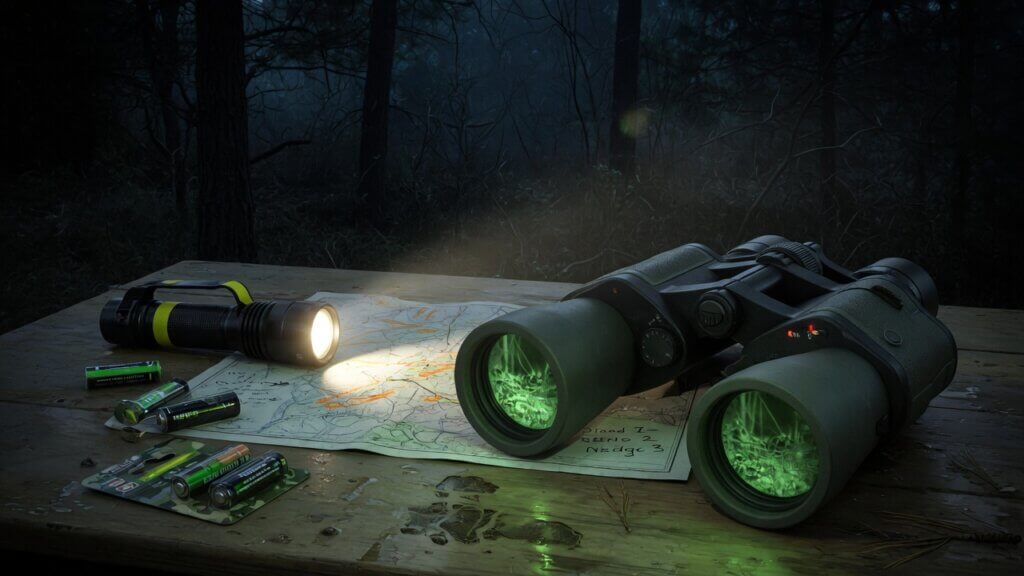
Why Infrared Night Vision Binoculars Matter for Hunting in Low Light
Infrared night vision binoculars for hunting are built for one job: helping you identify movement, terrain, and target areas when natural light is almost gone. Not “kind of dark.” Not late evening with a little moonlight. I mean those quiet hours when your eyes start guessing and every dark shape looks suspicious.
That is where infrared night vision binoculars for hunting make sense.
Unlike regular binoculars, infrared night vision binoculars use an IR illuminator to brighten the scene digitally. You are not seeing the woods the way your natural eyes see them. You are seeing a boosted, sensor-based version of the environment. That difference matters because it changes how you scan, how far you can see, and how confident you feel before making a move.
This article is written for hunters who want practical clarity, not showroom language. We will look at how infrared night vision works, where it performs well, where it disappoints, what features matter, and which type of hunter should actually buy it.
What Are Infrared Night Vision Binoculars for Hunting?
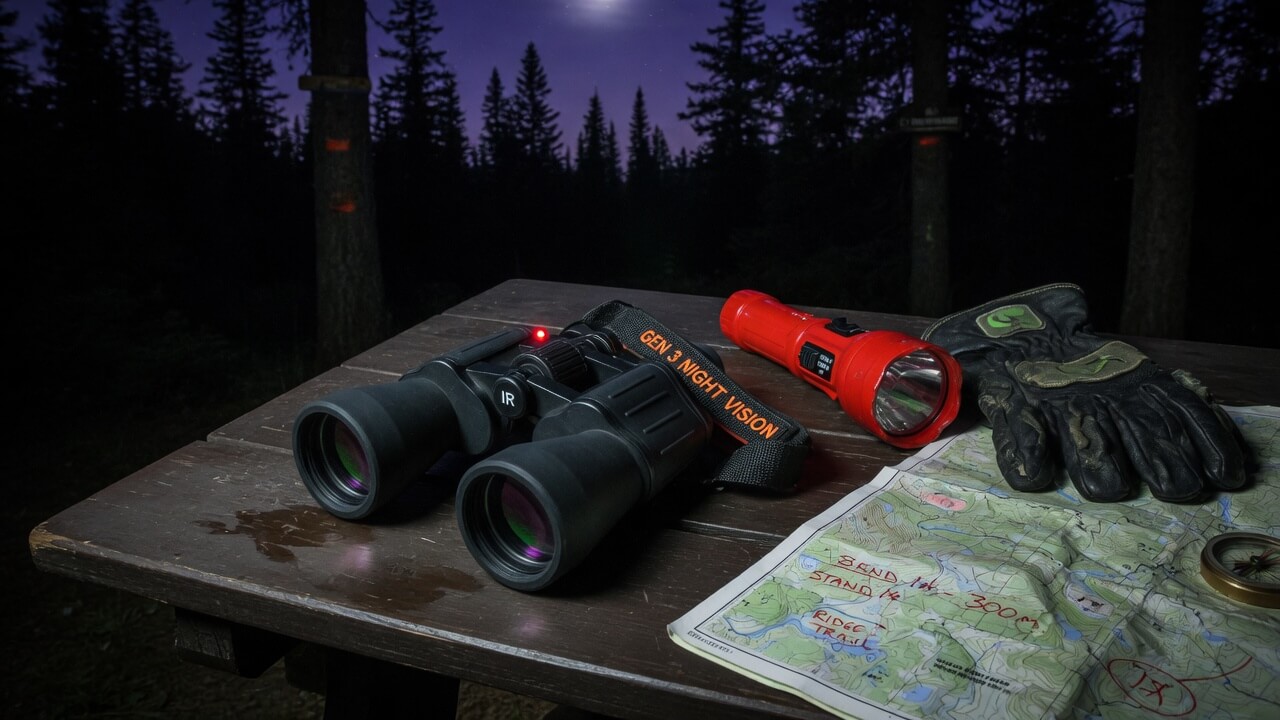
Infrared night vision binoculars for hunting are digital binoculars that use an infrared light source to illuminate dark areas. The IR light is usually invisible or nearly invisible to the human eye, but the binocular’s sensor can detect it and convert the scene into a visible image on a digital screen.
In simple terms, the binocular sends out infrared light, the sensor catches the reflected light, and you see the result through the eyepiece or display.
This is why many infrared night vision binoculars for hunting can work in complete darkness. Traditional optical binoculars need available light. Digital night vision binoculars with infrared illumination create their own viewing light.
That does not mean every model performs the same. Some cheap units look impressive in product photos but become grainy beyond 80–100 yards. Better models give you cleaner edges, stronger IR control, and more usable range.
If you are still comparing the wider category, you may want to read our main silo page on digital night vision binoculars for hunting because it explains how digital sensors, magnification, and recording features fit together.
Why Hunters Choose Infrared Night Vision Instead of Regular Binoculars
The biggest reason is confidence.
At night, a normal binocular may help for a few minutes after sunset, especially under moonlight. But once shadows close in, it becomes more of a guessing tool than a hunting tool. Infrared night vision binoculars for hunting remove much of that uncertainty.
You can scan field edges, check tree lines, follow trails, inspect open pasture, and watch feeder zones without constantly fighting darkness.
They are especially useful when:
| Hunting Situation | Why Infrared Night Vision Helps |
|---|---|
| Dense tree lines | IR helps separate branches, trails, and movement |
| Open fields | Wider visibility helps scan large areas faster |
| Feeder monitoring | Lets you observe activity without using visible light |
| Predator hunting | Helps spot movement before calling or repositioning |
| Trail scouting | Useful for checking paths, gates, and terrain at night |
The best part is not just seeing farther. It is seeing enough detail to avoid bad decisions.
A hunter does not need cinematic image quality. A hunter needs usable recognition: “Is that movement real?” “Is the path clear?” “Is that a fence line, brush pile, or animal-shaped shadow?” Infrared night vision binoculars for hunting are valuable because they answer those questions when your eyes cannot.
Infrared vs Digital Night Vision vs Thermal: What Is the Difference?
This is where many buyers get confused.
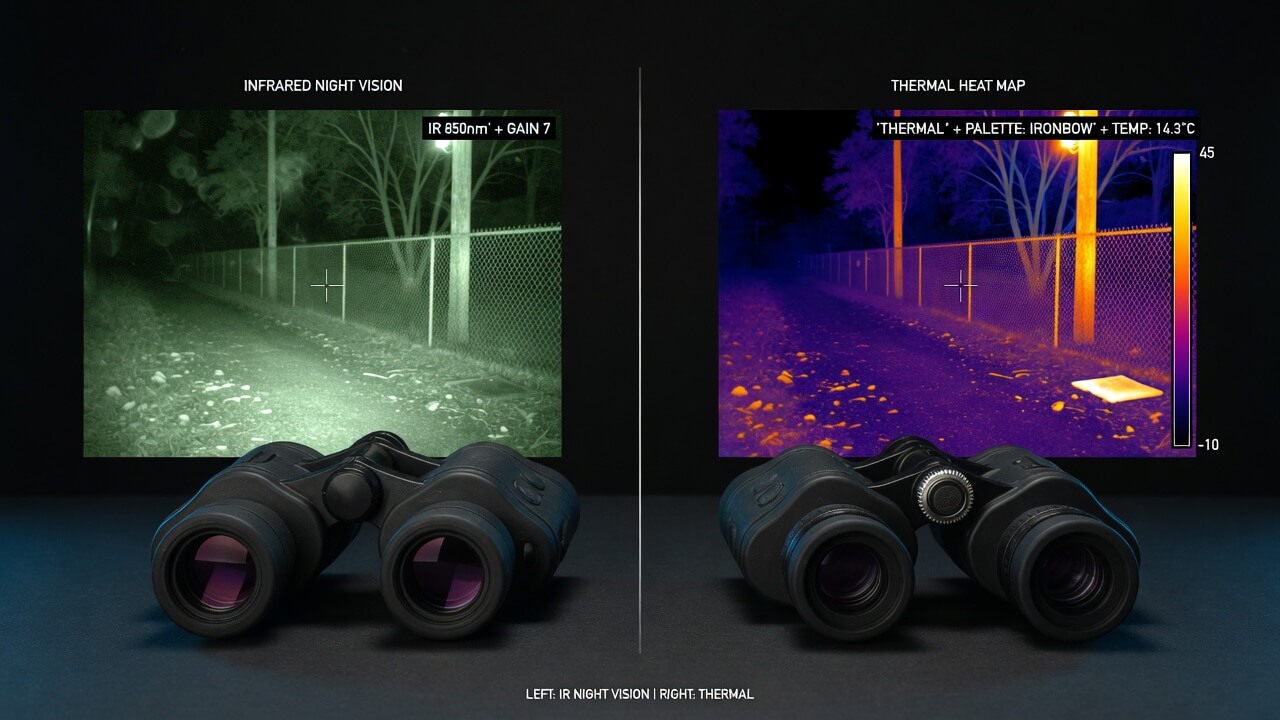
Infrared night vision binoculars for hunting are often digital night vision binoculars with an IR illuminator. Thermal devices are different. They detect heat signatures instead of reflected light.
| Feature | Infrared Night Vision Binoculars | Thermal Optics |
|---|---|---|
| How they work | Use IR light and digital sensor | Detect heat |
| Best for | Viewing terrain and identifying shapes | Detecting warm objects |
| Detail level | Better background and object detail | Better heat contrast |
| Performance in brush | Can be blocked by thick cover | Can detect heat through light cover |
| Price | Usually more affordable | Usually much more expensive |
| Learning curve | Easier for beginners | Requires more interpretation |
Thermal is excellent for detection, but infrared night vision binoculars for hunting are often more practical for hunters who also want to understand the environment. You can see gates, tracks, trees, field edges, fences, and ground layout more naturally.
Thermal tells you something warm is there. Infrared night vision helps you understand what you are looking at.
Real-World Performance: What You Can Expect at Night
Most infrared night vision binoculars for hunting perform best within realistic field distances, not fantasy marketing ranges.
A brand may advertise 300 yards, 500 yards, or even more. That number usually means “something may be visible,” not “you will see sharp, useful detail.” For actual hunting use, the more important question is: how far can you identify terrain and movement clearly?
Here is a more realistic breakdown:
| Distance | Expected Usefulness |
|---|---|
| 30–75 yards | Very useful for trails, feeders, and close scouting |
| 75–150 yards | Good for open fields and movement detection |
| 150–250 yards | Depends heavily on IR strength and sensor quality |
| 250+ yards | Possible with better models, but detail drops quickly |
This is why long-distance hunters should be careful. If your hunting style depends on scanning big open land, you may need a stronger IR illuminator, better digital zoom control, and stable tripod support. Our supporting article on long range night vision binoculars for hunting goes deeper into range expectations and what specs matter most.
For typical woods, farms, and feeder zones, though, infrared night vision binoculars for hunting are often more than enough.
Key Features That Actually Matter
IR Illuminator Strength
The IR illuminator is the heart of infrared night vision binoculars. A weak IR light gives you a short, muddy view. A stronger adjustable IR lets you control brightness based on distance and surroundings.
Adjustable IR levels are important because too much infrared light can wash out close objects. Too little makes distant areas disappear.
In real use, you will often lower IR power for close woods and increase it for open fields.
Sensor Quality
Sensor quality affects clarity, contrast, and grain. Two binoculars can both claim “night vision,” but one may look clean while the other looks like an old security camera.
For hunting, clarity matters because you are not just admiring the view. You are reading movement and shape.
Magnification
Do not chase high magnification blindly.
A 7x or 8x digital night vision binocular can feel more stable than a high-zoom model. Too much magnification narrows your field of view and makes scanning harder.
For infrared night vision binoculars for hunting, moderate magnification is usually better than extreme zoom.
Battery Life
Night vision drains power faster than regular optics because the screen, sensor, and IR illuminator are all working. If you hunt in cold weather, battery performance can drop even more.
A serious night setup should include spare batteries or a power bank if the model supports USB charging.
Recording Features
Photo and video recording are not essential, but they are useful for scouting. You can review trail activity, compare locations, and confirm what you saw later.
Just do not buy a binocular only because it records video. Image quality and IR performance matter more.
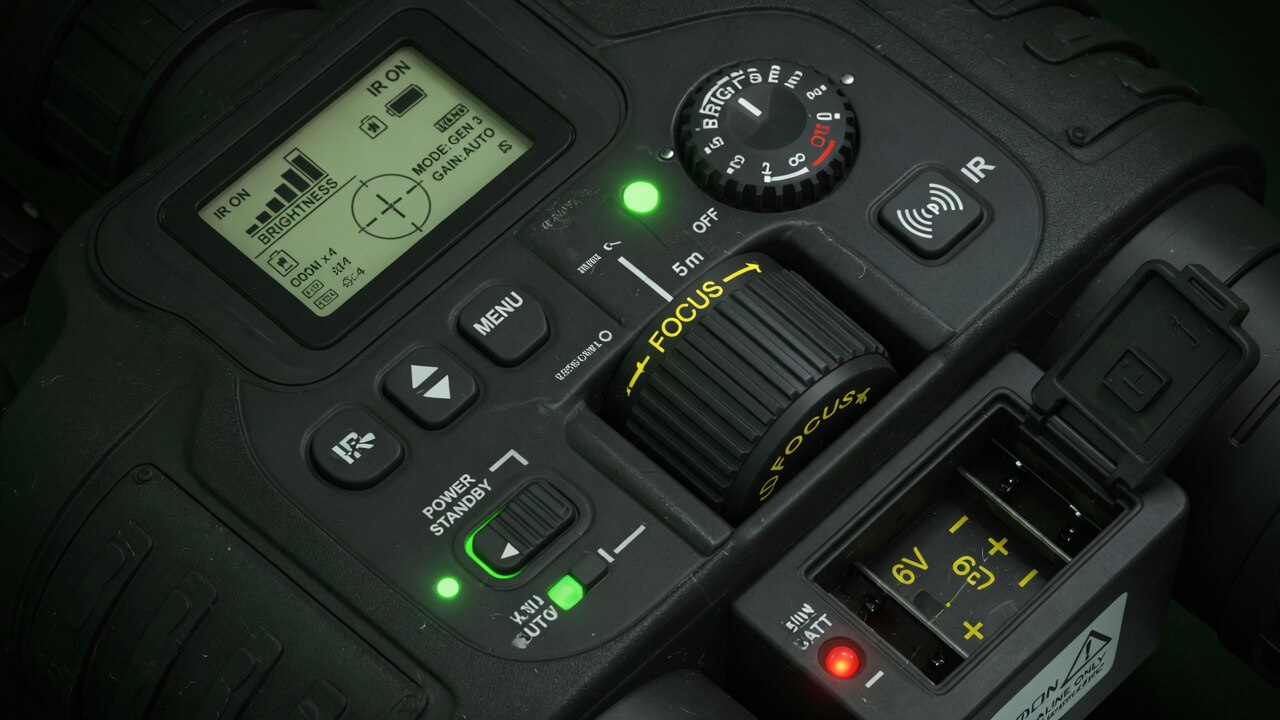
Recommended Product: Bushnell Equinox Z2 Night Vision Monocular
One practical product in this category is the Bushnell Equinox Z2. It is a strong option for hunters who want a known brand, digital night vision capability, and infrared-assisted viewing without jumping into thermal prices. Although it is technically a monocular rather than a binocular, it is still a relevant infrared night vision option for hunters who want handheld digital viewing, IR-assisted scanning, and recording features.
It is not the cheapest night vision binocular, and that is actually part of the point. With infrared night vision binoculars for hunting, ultra-cheap models often create frustration in the field. The Equinox Z2 line offers a more balanced setup for hunters who care about usable clarity, field performance, and brand reliability.
Best fit:
| Hunter Type | Why It Makes Sense |
|---|---|
| Beginner night hunter | Easier to use than complicated tactical devices |
| Farm or feeder hunter | Good for monitoring controlled areas |
| Predator hunter | Helpful for scanning before calling |
| Scout-focused user | Recording features can support observation |
The main reason I like it is simple: it sits in that middle ground where the device feels serious enough for real night use but not so expensive that it becomes overkill for casual hunting.
Pros and Cons of Infrared Night Vision Binoculars for Hunting
Pros
- More affordable than thermal optics
- Shows better environmental detail for understanding the full scene
- Beginner-friendly controls with simple operation
- Easy to learn without extensive practice
- Useful for multiple activities like hunting, scouting, camping security, farm checks, and property monitoring
- Digital zoom, recording, and IR adjustment features available in many models
Cons
- Some animals may detect infrared light, especially with 850nm IR illuminators
- 850nm IR can produce a faint visible red glow
- 940nm IR is more discreet but usually offers shorter viewing range
- Image clarity can drop in rain, fog, thick brush, or reflective environments
- Digital night vision quality is not as sharp or natural as daytime optics
And finally, battery drain is real. If you forget backup power, your night vision session can end early.
850nm vs 940nm Infrared: Which Is Better for Hunting?
This choice matters more than most beginners realize.
| IR Type | Best For | Trade-Off |
|---|---|---|
| 850nm infrared | Better range and brighter image | Slight visible red glow |
| 940nm infrared | More discreet illumination | Shorter viewing distance |
For most hunters, 850nm infrared night vision binoculars for hunting are more practical because they provide better range and clearer viewing. If you are hunting highly pressured areas where animals are easily spooked, 940nm may be worth considering.
Choose 850nm if you want stronger range and brighter images. Choose 940nm if stealth matters more than distance.
Best Use Cases for Infrared Night Vision Binoculars
Feeder and Trail Observation
This is probably the most natural use case. You can sit back, scan the feeder area, watch trail movement, and avoid turning on visible lights.
Predator Hunting
For predator hunting, infrared night vision binoculars help you scan before and after calling. You can check field edges, low brush, and open gaps without constantly moving your rifle or spotlight.
Farm and Property Checks
Many hunters also use these binoculars for practical land management. Checking gates, barns, fences, and open ground at night becomes much easier.
Scouting New Hunting Land
When walking unfamiliar land, night vision helps you avoid obstacles and understand terrain. It is not just about animals. It is about moving safely and quietly.
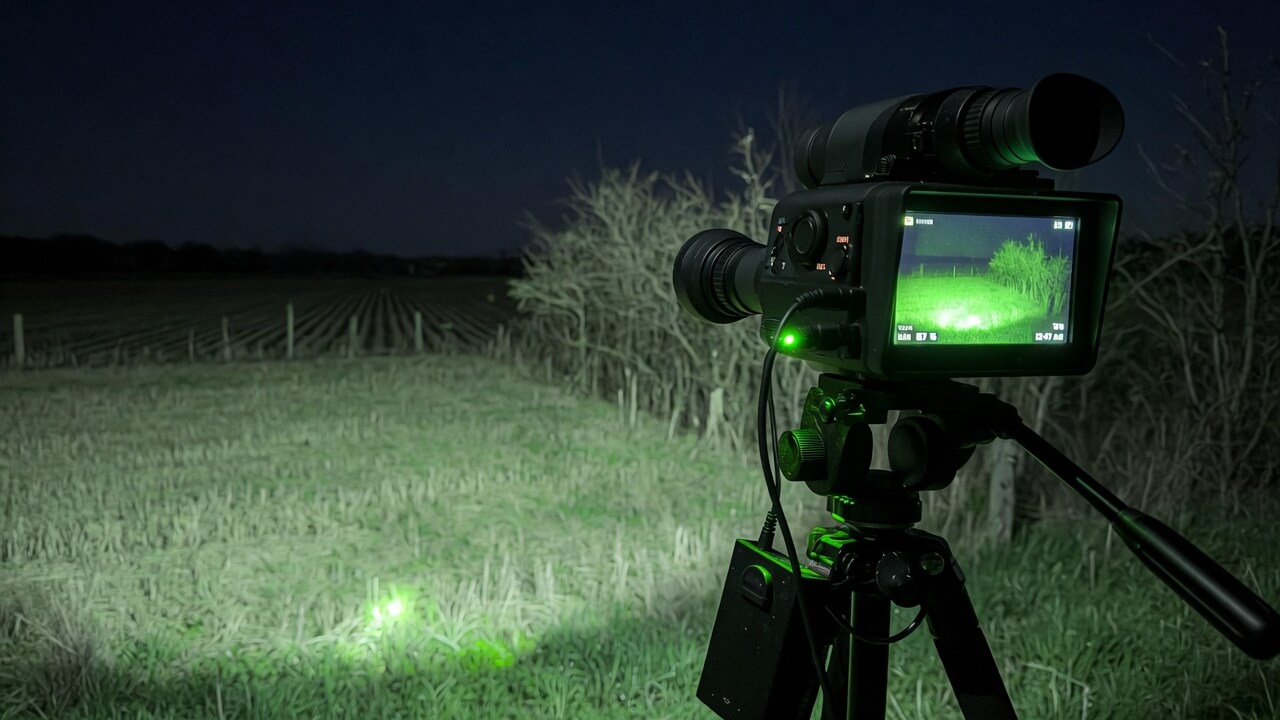
Common Mistakes Buyers Make
The first mistake is believing exaggerated range claims. Always think in terms of usable identification range, not maximum visibility.
The second mistake is buying too much zoom. High zoom sounds powerful, but it can make handheld scanning shaky and narrow.
The third mistake is ignoring weight. Infrared night vision binoculars for hunting are heavier than regular binoculars because of batteries, electronics, and screens. If you plan to carry them for hours, weight matters.
The fourth mistake is expecting thermal performance from infrared night vision. These are different tools. Infrared helps you see illuminated detail. Thermal helps you detect heat.
The fifth mistake is buying the cheapest model possible. Budget is important, but some low-end units are only useful in a backyard. If your budget is tight, check our article on best budget night vision binoculars for hunting before buying something random.
Buyer Psychology: What You Should Decide Before Buying
Before choosing infrared night vision binoculars for hunting, ask yourself one honest question:
Do you need to detect something far away, or do you need to understand what is happening in your hunting area?
If you need long-distance detection across huge open land, you may want stronger optics or even thermal. But if you need a practical night viewing tool for feeders, woods, farms, trails, and field edges, infrared night vision binoculars make a lot of sense.
Also think about how you hunt.
A stationary hunter can use a slightly heavier binocular with a tripod. A mobile hunter needs something lighter, faster, and easier to pack. A beginner should prioritize simple controls. A serious night hunter should prioritize IR strength, battery life, and sensor clarity.
Buying the “most powerful” model is not always the smartest move. Buying the model that fits your actual hunting rhythm is better.
Quick Comparison: Who Should Buy Infrared Night Vision Binoculars?
| User Type | Good Match? | Reason |
|---|---|---|
| Beginner night hunter | Yes | Easy learning curve |
| Feeder hunter | Yes | Great for controlled observation |
| Predator hunter | Yes | Useful for scanning and setup |
| Long-range open-land hunter | Maybe | Needs stronger IR and stable support |
| Thermal-only detection hunter | No | Thermal is better for heat spotting |
| Casual camper or landowner | Yes | Useful beyond hunting |
Final Verdict: Are Infrared Night Vision Binoculars for Hunting Worth It?
Yes, infrared night vision binoculars for hunting are worth it if you understand their role.
They are not thermal scanners. They are not miracle optics. But they are extremely useful for hunters who need better visibility in darkness, especially around feeders, farms, trails, field edges, and predator setups.
The biggest advantage is practical awareness. You can see where you are walking, what is moving, where the cover breaks, and whether the area deserves more attention. That kind of confidence is hard to put a price on.
For most hunters, I would choose a reliable mid-range digital IR binocular over a flashy cheap model with inflated specs. Look for adjustable IR, realistic viewing range, comfortable controls, decent battery life, and a field of view that supports scanning instead of tunnel vision.
To continue building your setup, read the full guide on digital night vision binoculars for hunting, compare affordable options in best budget night vision binoculars for hunting, and explore distance-focused choices in long range night vision binoculars for hunting.
For more binocular tips and hunting optics content, visit the Best Binocular homepage: bestbinocular.net.
FAQs About Infrared Night Vision Binoculars for Hunting
Are infrared night vision binoculars good for hunting?
Yes, infrared night vision binoculars for hunting are good for night scouting, feeder observation, predator hunting, and checking field edges in low-light or no-light conditions. They help you see terrain and movement when regular binoculars become almost useless.
Can animals see infrared night vision?
Some animals may notice the faint red glow from certain 850nm IR illuminators, especially at close range. A 940nm IR illuminator is more discreet but usually has less range. For most hunters, 850nm offers better performance, while 940nm offers better stealth.
How far can infrared night vision binoculars see?
Realistic useful range is often between 75 and 200 yards, depending on the model, IR strength, weather, and terrain. Some models advertise longer ranges, but identification quality usually drops as distance increases.
Are infrared night vision binoculars better than thermal?
They are better for seeing terrain, fences, trees, and object detail. Thermal is better for detecting heat signatures. If you want environmental detail at a lower cost, infrared night vision binoculars for hunting are a smart choice. If you mainly need heat detection, thermal is stronger.
Do infrared night vision binoculars work in total darkness?
Yes, most digital infrared night vision binoculars can work in total darkness because they use an IR illuminator. Without the IR light, performance depends on moonlight, starlight, or other ambient light sources.
What is the best magnification for hunting at night?
Moderate magnification is usually best. Around 4x to 8x is practical for scanning and stability. Higher magnification can be useful in open fields, but it often narrows your field of view and makes handheld use harder.
Should I buy cheap infrared night vision binoculars?
Cheap models can work for short-range viewing, but they often struggle with clarity, range, durability, and battery life. If you only need casual backyard observation, budget models may be fine. For hunting, a reliable mid-range model is usually a better investment.




