
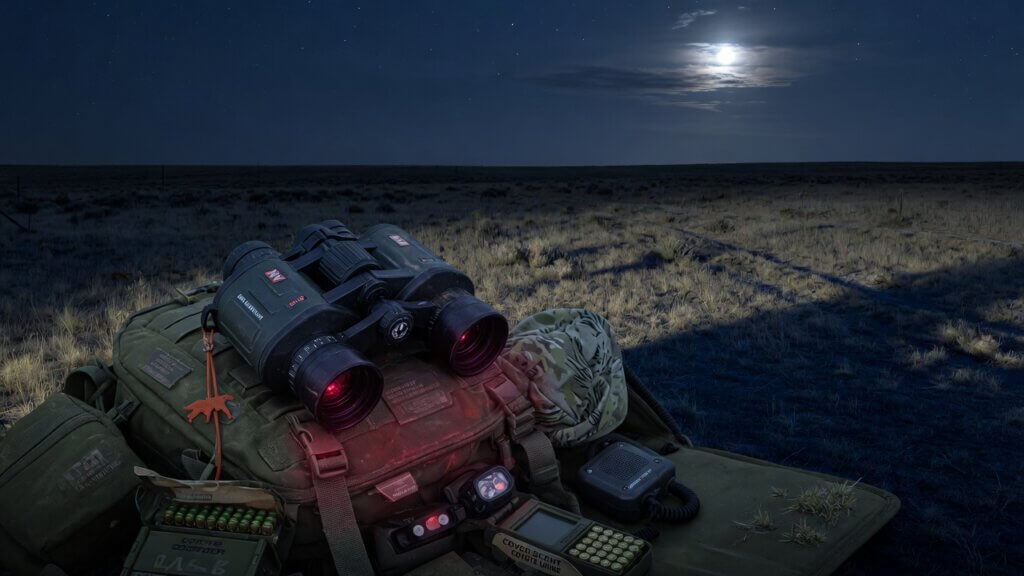
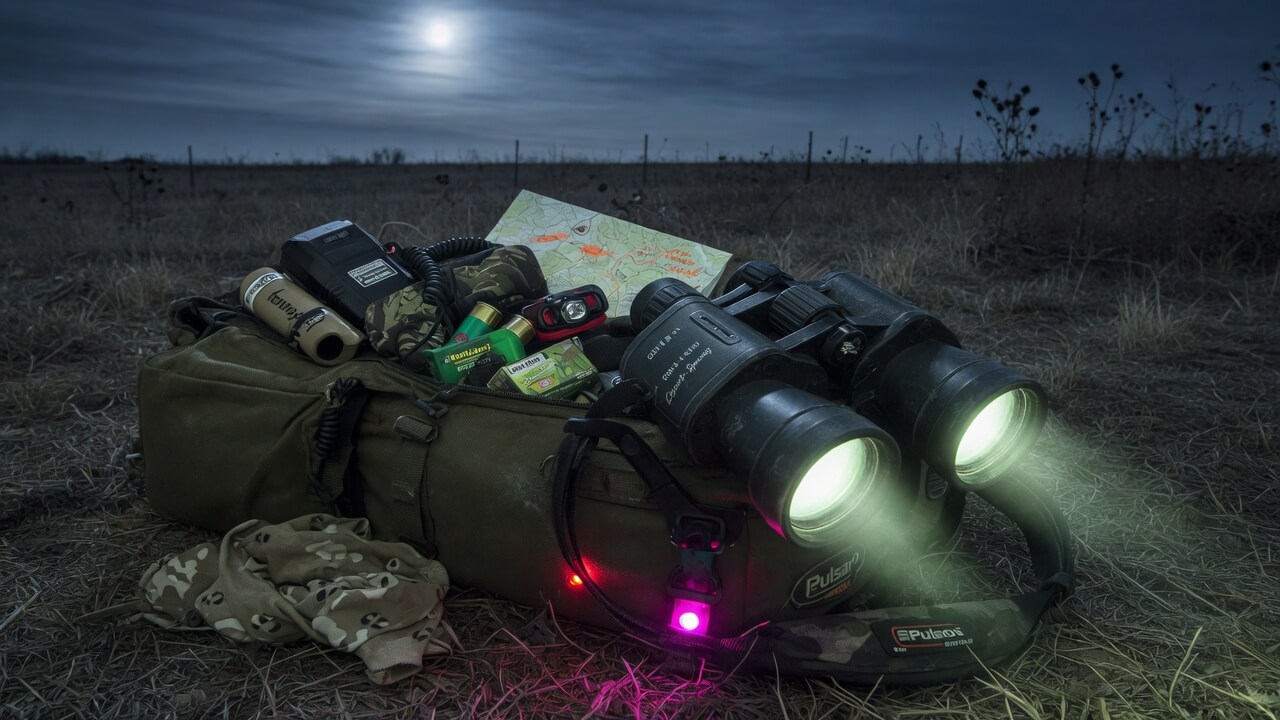
Choosing the Right Night Vision Binoculars for Coyote Hunting at Night
Coyote hunting at night is a different game from sitting in a deer blind or scanning a field for hogs. Coyotes do not usually give you much time. They slip in, stop, circle downwind, and disappear before your brain fully catches up. That is why choosing the right night vision binoculars for coyote hunting is less about buying the strongest-looking gadget and more about matching your optics to how coyotes move in real conditions.
You need fast scanning, clean identification, controlled infrared light, and enough field of view to catch movement before the animal is already gone.
A lot of hunters make the mistake of buying night vision binoculars based only on range claims. “300 yards,” “500 yards,” “HD night vision” — it all sounds good until you are sitting on a cold field edge, calling for 20 minutes, and the screen blooms white because your IR is bouncing off grass, brush, or fog.
The best setup for coyote hunting is not always the most expensive. It is the one that helps you detect movement early, identify safely, and stay quiet while you shift from scanning to shooting.
Why Coyote Hunting Needs a Different Night Vision Setup
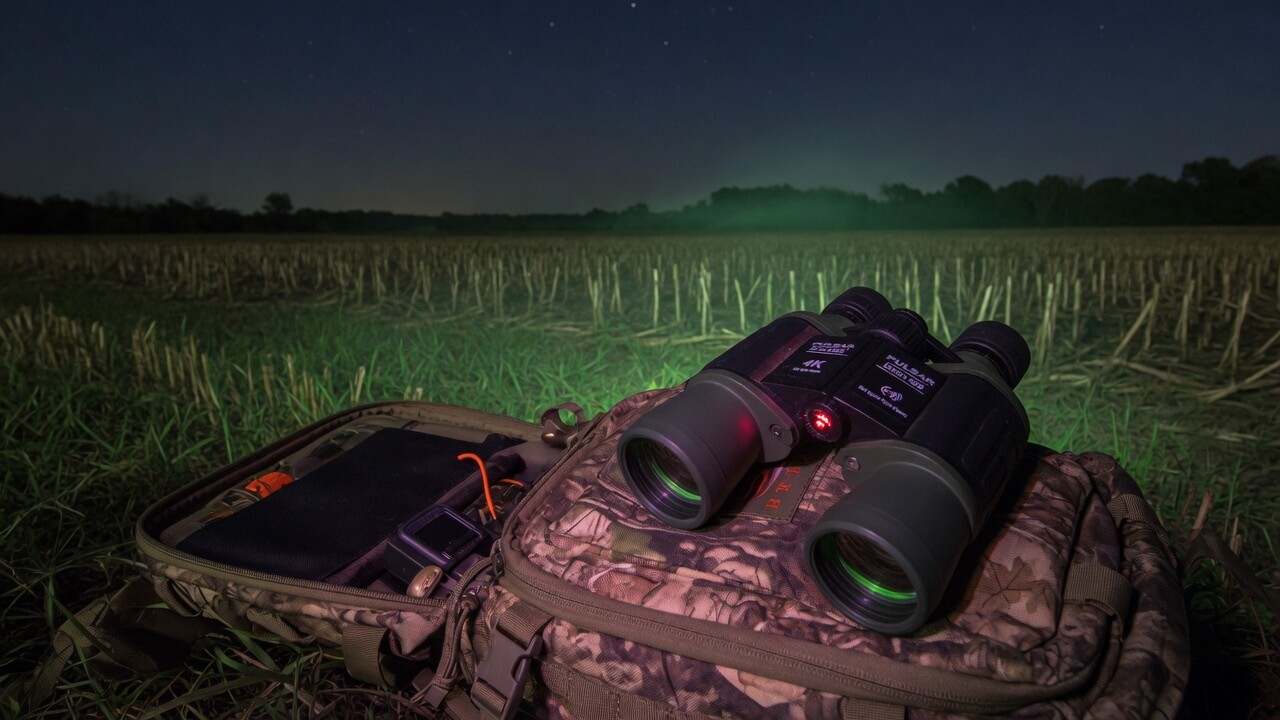
Coyotes are not bulky, slow-moving animals. They are nervous, sharp-eyed predators that often approach calls from angles you did not expect. In open farm country, you might spot them crossing a field at 200 yards. In brushy terrain, they may appear at 60 yards for only a few seconds.
That means night vision binoculars for coyote hunting should prioritize three things:
First, you need a wide enough view to scan. Too much zoom makes it harder to find coyotes quickly.
Second, you need good infrared control. Coyotes may not react to IR like they react to visible white light, but poor IR use can still create glare, reduce image quality, and make your setup feel clumsy.
Third, you need simple handling. Cold hands, gloves, darkness, and adrenaline make tiny buttons and complicated menus annoying fast.
This is why digital night vision binoculars are popular with predator hunters. They are easier to use than traditional analog night vision, often include recording, and usually cost far less than high-end thermal optics. If you are building a complete night hunting setup, start with the broader pillar article on digital night vision binoculars for hunting because it explains how digital NV fits different hunting styles.
What Makes Good Night Vision Binoculars for Coyote Hunting?
For coyotes, you are not just “looking in the dark.” You are reading movement, posture, distance, and approach direction.
Detection Range vs Identification Range
This is where marketing gets tricky.
A binocular may detect eyeshine or movement at 250 yards, but that does not always mean you can confidently identify a coyote at that distance. Detection means “something is there.” Identification means “I know exactly what I am looking at.”
For ethical hunting, identification matters more.
A practical setup for night vision binoculars for coyote hunting should give you clear identification inside the realistic shooting ranges you use most. For many callers, that is 75 to 175 yards. In wide-open fields, you may want more distance. In wooded edges or rolling pasture, a cleaner image at 100 yards beats a blurry long-range claim every time.
Magnification: Do Not Overdo It
A lot of beginners assume more magnification is better. For coyote hunting, too much zoom can actually hurt you.
A 3x to 5x optical magnification range is usually more useful than high fixed zoom. Why? Because coyotes move quickly, and you need to scan wide areas. If your binoculars are too zoomed in, you may miss movement on the edges.
For open fields, 4x is a sweet spot. For tighter stands, lower magnification feels faster and less stressful.
Infrared Illuminator Strength
Most digital night vision binoculars need infrared light in total darkness. Moonlight helps, but in deep cover or cloudy conditions, IR becomes important.
For coyote hunting, adjustable IR is better than a single high-power setting. Too much IR can wash out the image, especially around tall grass, snow, fog, dust, or brush. A good hunter uses just enough IR to identify the target without flooding the entire scene.
A common mistake is turning IR to maximum immediately. That may look impressive in the backyard, but in the field it can reduce contrast and make depth harder to judge.
Digital Night Vision vs Thermal for Coyotes
This comparison matters because predator hunters often debate whether to buy thermal or night vision first.
Thermal detects heat. Night vision shows detail. For coyotes, that difference is huge.
| Feature | Digital Night Vision Binoculars | Thermal Optics |
|---|---|---|
| Best Strength | Identifying details, terrain, eyeshine, fences, brush | Fast detection of heat signatures |
| Weakness | Needs IR in very dark conditions | Can be expensive and may show less visual detail |
| Best Use | Confirming what you are seeing before shooting | Scanning large areas quickly |
| Budget Level | Usually more affordable | Usually higher cost |
| Coyote Hunting Value | Great for ID and calling setups | Excellent for detection |
If your budget allows only one optic, night vision binoculars for coyote hunting are often the more practical starting point because they help you identify the animal and the terrain together. Thermal is incredible for detection, but night vision gives a more natural scene.
For a deeper comparison before spending money, read thermal vs night vision binoculars for hunting. That article is useful if you are deciding whether to buy night vision first or save for thermal.
Best Real-World Use Cases for Night Vision Binoculars for Coyote Hunting
Open Farm Fields
Open fields are where long-range digital night vision makes the most sense. You can scan fence lines, field corners, and cut crop edges without moving too much.
Here, a 4x optic with strong IR is useful. You want enough reach to pick up movement before the coyote gets close, but not so much zoom that you lose the full field.
Best setup: tripod-mounted or chest-supported scanning.
Brushy Creek Bottoms
In brush, coyotes may appear suddenly. Long range matters less. Field of view and fast focus matter more.
A wide view helps you catch motion between trees, weeds, and shadows. Keep IR lower in these spots because branches and brush can reflect light back into the sensor.
Best setup: handheld scanning with low to medium IR.
Snow-Covered Ground
Snow can help and hurt. It reflects ambient light, so your night vision image may look brighter. But high IR can bounce badly and wash out the scene.
For snow, use the lowest IR setting that still gives safe identification. The contrast of dark shapes against snow can be useful, but do not trust shape alone.
Best setup: low IR, careful confirmation, slow scanning.
Calling from a Vehicle or Blind
If legal in your area, scanning from a fixed position can be comfortable, but glare becomes a bigger issue. Windows, dashboards, metal rails, and blind openings can reflect IR.
Keep the binoculars outside glass when scanning. Digital night vision does not perform well through windows, especially with IR turned on.
Best setup: stable rest, open window or blind gap, no glass barrier.
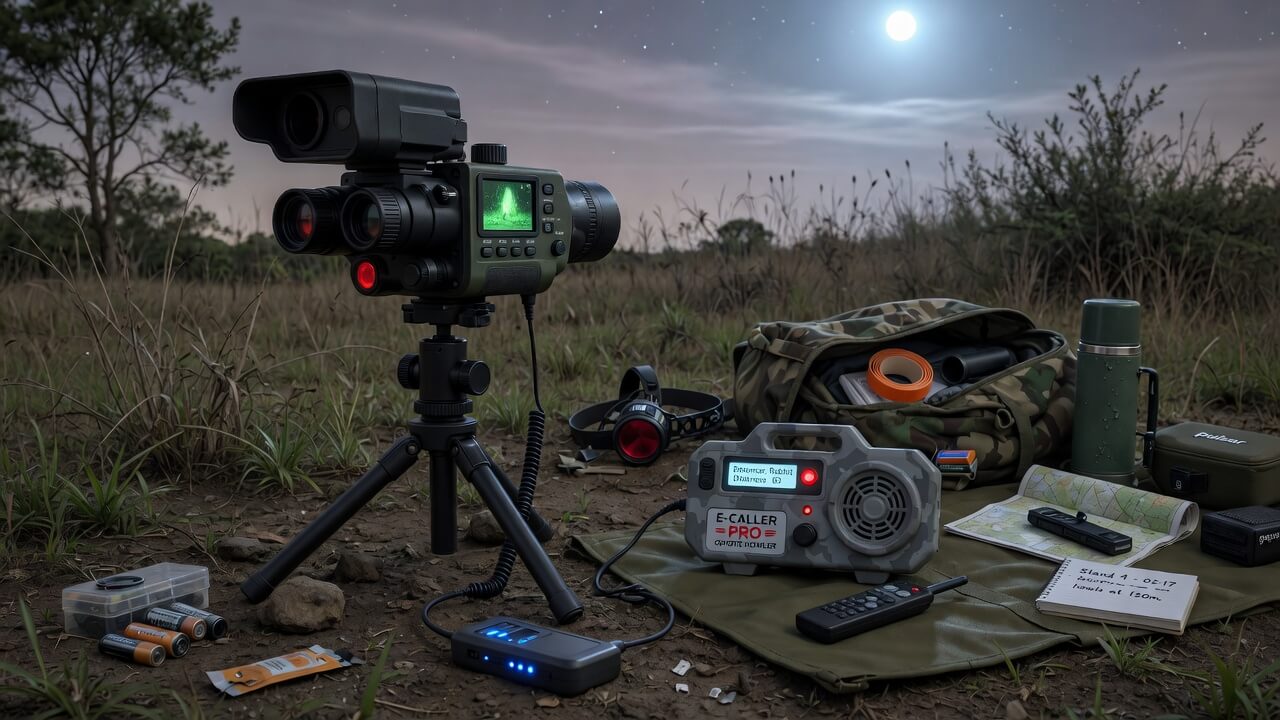
Recommended Product: Nightfox Corsac 2
For hunters who want one practical digital option, the Nightfox Corsac 2 makes sense as a mid-range pick for coyote hunting. The Nightfox Corsac 2 is listed with 4x fixed optical magnification, an 850nm infrared illuminator, a 1920 x 1080 sensor, 1080p recording, a 32GB microSD card, around 4 hours of mixed IR battery life, 640g weight, and a night viewing range of up to 200m / 220 yards. Its listed weight is 640g, which is manageable for handheld scanning but still benefits from a rest during long sets.
Why it fits night vision binoculars for coyote hunting: the 4x magnification is not too narrow, the 850nm IR gives useful illumination for field scanning, and the recording feature is handy if you review stands later.
It is not perfect. The listed mixed IR battery life is around 4 hours, so long winter nights may require charging discipline or backup power planning. Also, like most digital night vision, it still depends heavily on IR when natural light is poor.
Overall, it is a strong option for hunters who want a usable balance of range, image detail, and simplicity without jumping into premium thermal pricing.
Pros
- More natural scene detail than thermal optics
- Helpful for identifying coyotes, terrain, fences, and brush
- More affordable than quality thermal optics
- Useful near farms, property lines, and livestock areas
- Recording feature helps review stands later
Cons
- Depends on IR in very dark conditions
- IR can create glare in fog, brush, dust, or snow
- Battery life may be limited on long winter hunts
- Bright screens can affect natural night vision
Buyer Tips Before Choosing Night Vision Binoculars for Coyote Hunting
Do not buy based on maximum range alone. Look for usable identification distance.
Choose adjustable IR over a simple on/off illuminator.
Avoid extremely high magnification unless you hunt mostly large open fields.
Check battery type. Rechargeable lithium is convenient, but removable batteries or power bank compatibility can save a hunt.
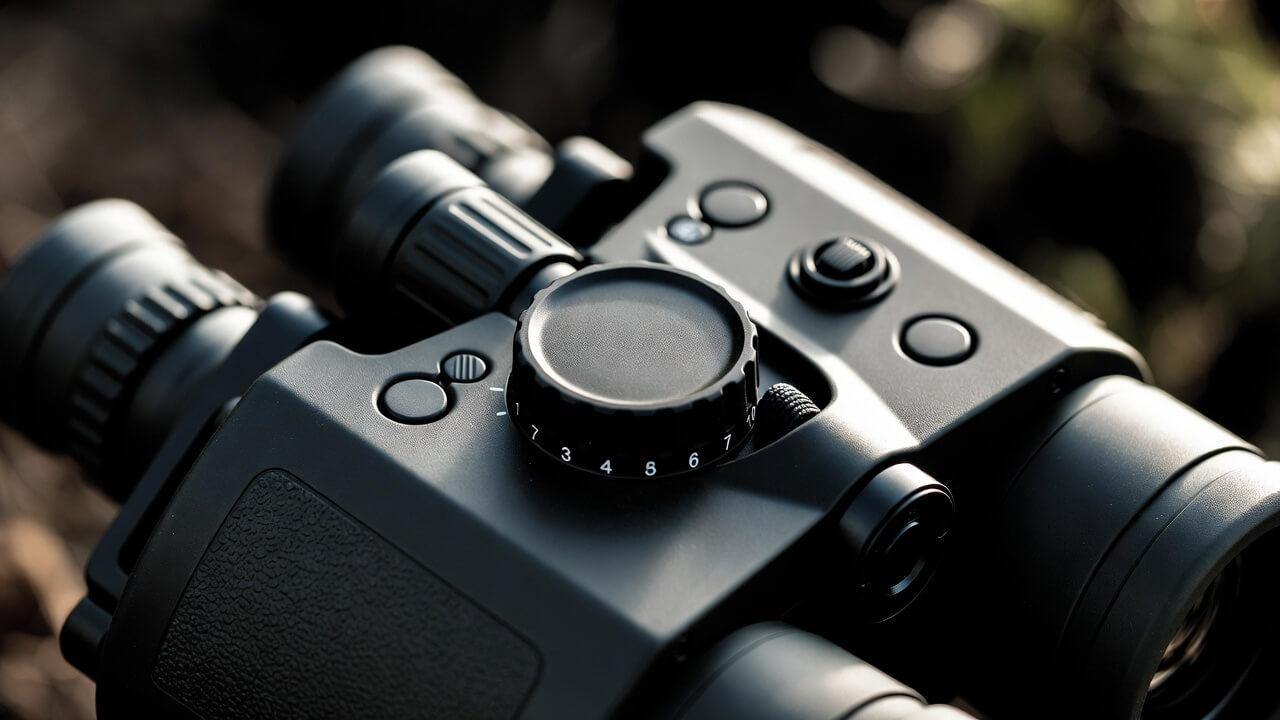
Look at button placement. If you cannot operate it with gloves, it will annoy you in the field.
Pay attention to screen brightness. A screen that is too bright can light up your face and ruin your comfort on long stands.
Also, think about how you actually hunt. A hunter calling over 300-acre fields needs different binoculars than someone working small woodlots and pasture edges.
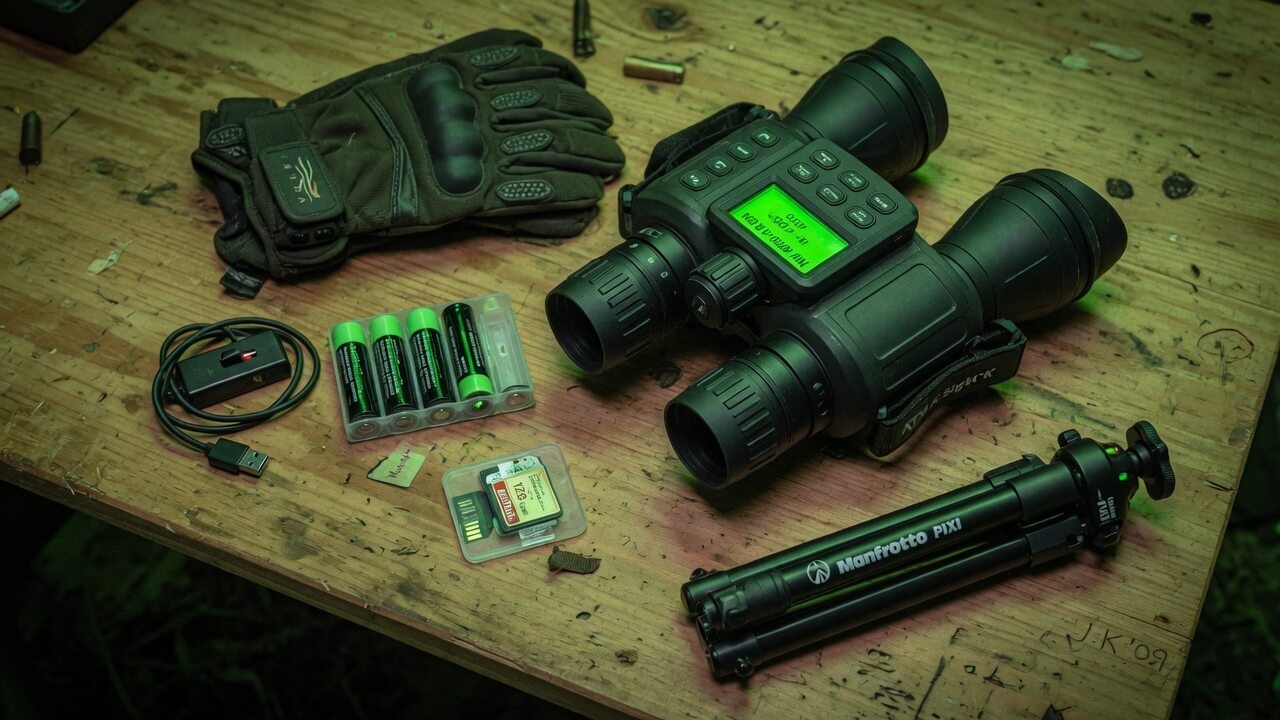
Common Mistakes Coyote Hunters Make With Night Vision
One common mistake is scanning too fast. Night vision works best when you move slowly and let your eyes catch contrast and motion.
Another mistake is using too much IR. More light does not always mean a better image.
Hunters also forget to practice before the hunt. You should know how to adjust focus, IR, zoom, recording, and brightness without thinking. Coyotes do not wait while you fight buttons.
A bigger mistake is relying on night vision for everything. Binoculars help you scan and identify, but safe shooting still depends on knowing your backdrop, local laws, and target clearly.
Finally, many hunters carry binoculars but never stabilize them. Even a small tripod, monopod, shooting stick, or chest support can make the image much easier to read.
Night Vision Binoculars vs Night Vision Scope for Coyotes
A night vision scope is for aiming. Binoculars are for scanning.
You do not want to scan an entire field through your rifle scope all night. It is tiring, unsafe, and inefficient. Night vision binoculars for coyote hunting let you observe without constantly pointing your firearm around.
The ideal setup is binoculars for scanning and a proper night-capable aiming system for the shot. Even if you are hunting with a partner, dedicated scanning optics make the stand smoother.
| Situation | Better Tool |
|---|---|
| Scanning wide fields | Night vision binoculars |
| Confirming movement near a call | Night vision binoculars |
| Taking the shot | Night vision scope or night-capable sight |
| Watching multiple approach lanes | Binoculars on tripod |
| Quick target engagement | Weapon-mounted optic |
How to Use Night Vision Binoculars More Effectively on a Coyote Stand
Set up with the wind in mind first. Optics cannot fix bad stand placement.
Once you start calling, scan slowly from downwind to crosswind areas. Coyotes often circle before committing, so do not stare only at the call.
Keep your IR low at first. Increase it only when you need more reach or better identification.
Pause often. Many coyotes are first seen as a small movement, not a full body shape. A slow scan gives your brain time to notice something different.
If you hunt with a partner, one person should scan while the other stays ready. Good communication matters. A whispered “left fence line, 150 yards” is better than everyone moving at once.
For hunters who also chase hogs at night, the approach changes because hogs move differently and often appear in groups. You can compare those differences in night vision binoculars for hog hunting, especially if you hunt both predators and nuisance animals.
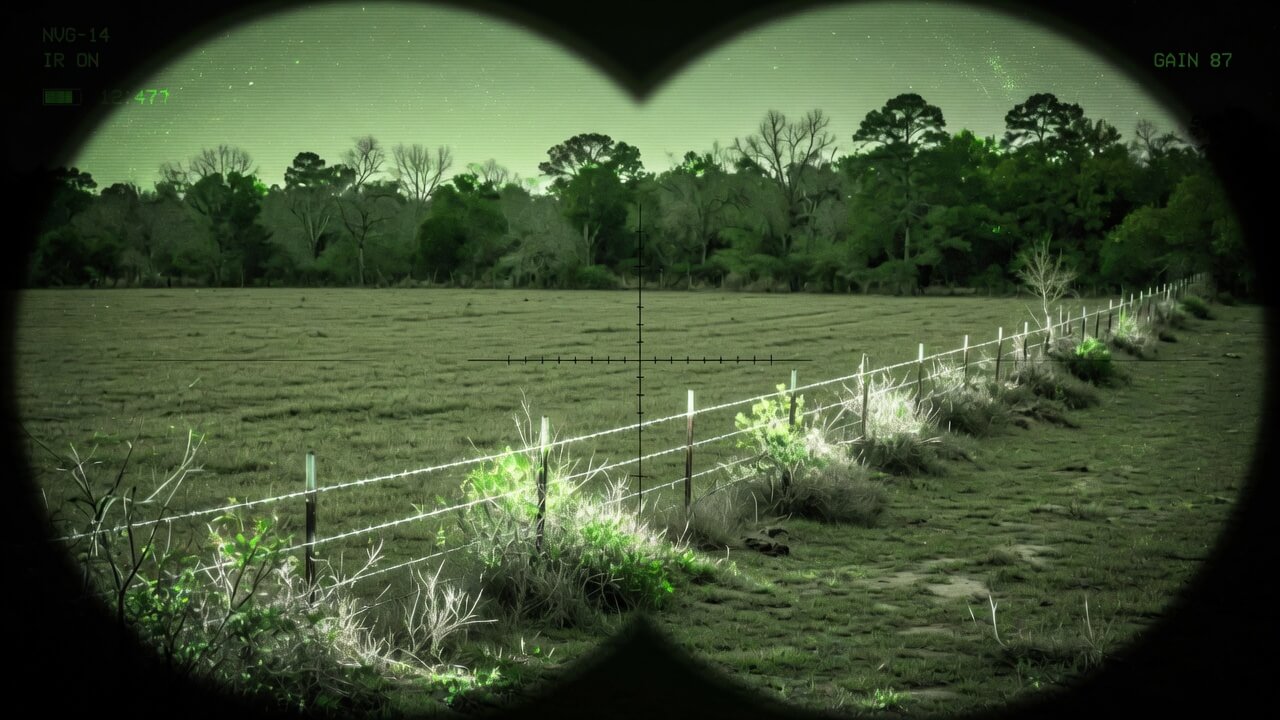
Final Thoughts
The best night vision binoculars for coyote hunting are not the ones with the loudest marketing claim. They are the ones that help you scan calmly, identify clearly, and stay efficient during the short window when a coyote appears.
For most predator hunters, a practical digital night vision binocular with 3x to 5x magnification, adjustable IR, decent battery life, and simple controls is the right starting point. If you hunt big open ground, prioritize range and tripod stability. If you hunt brush, prioritize field of view and glare control.
Night hunting rewards patience. The right binoculars do not magically call coyotes into range, but they do give you more time, more confidence, and fewer missed opportunities.
For more optics tips, field comparisons, and hunting binocular content, visit the bestbinocular.net home page or explore the latest posts on the blog.
FAQs About Night Vision Binoculars for Coyote Hunting
Are night vision binoculars good for coyote hunting?
Yes, night vision binoculars for coyote hunting are very useful for scanning fields, identifying movement, and confirming targets after dark. They are especially helpful when calling coyotes in open fields, pasture edges, and farm country.
What magnification is best for coyote hunting at night?
For most hunters, 3x to 5x magnification works best. It gives enough reach without making the view too narrow. Very high magnification can make it harder to find fast-moving coyotes.
Is thermal better than night vision for coyotes?
Thermal is better for detecting heat quickly, but night vision is often better for seeing terrain and identifying visual details. Many hunters use thermal for scanning and night vision for confirmation, but budget hunters can start with digital night vision binoculars.
Do coyotes see infrared light?
Coyotes generally do not see infrared the way humans see visible light, but poor IR use can still create reflections, glare, and unnatural field conditions. It is better to use controlled, adjustable IR instead of blasting the area with maximum illumination.
How far can night vision binoculars see coyotes?
It depends on the binoculars, IR strength, moonlight, weather, and terrain. Many digital models can detect movement farther than they can safely identify it. For ethical hunting, focus on clear identification distance, not just maximum detection range.
Should I use a tripod with night vision binoculars for coyote hunting?
A tripod is not required, but it helps a lot during long stands. It reduces hand shake, makes scanning smoother, and helps you watch field edges more carefully without fatigue.
Are digital night vision binoculars worth it for beginners?
Yes, digital night vision binoculars are often a smart entry point for beginner coyote hunters. They are usually more affordable than thermal optics and easier to learn than older analog night vision systems.




