
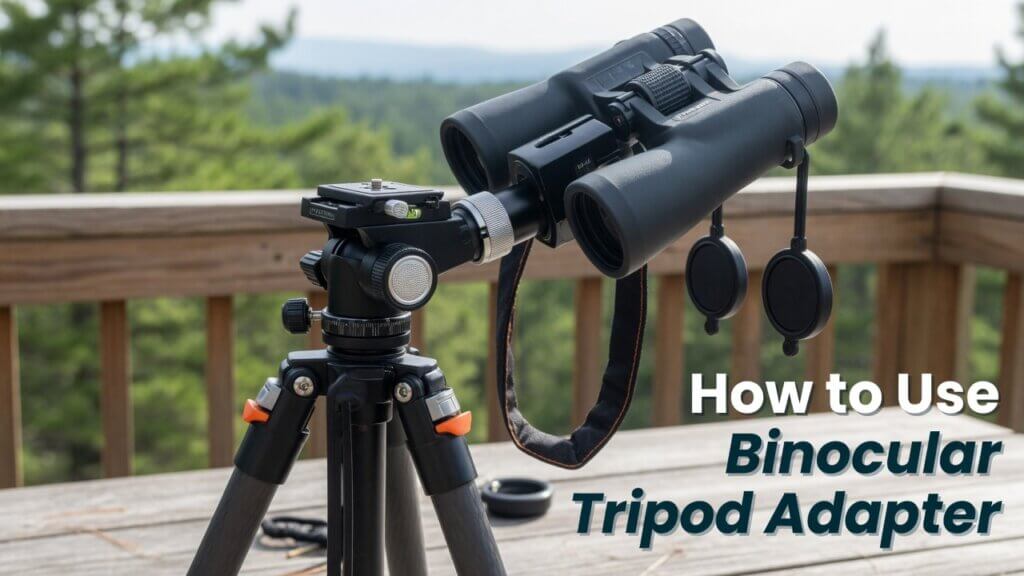
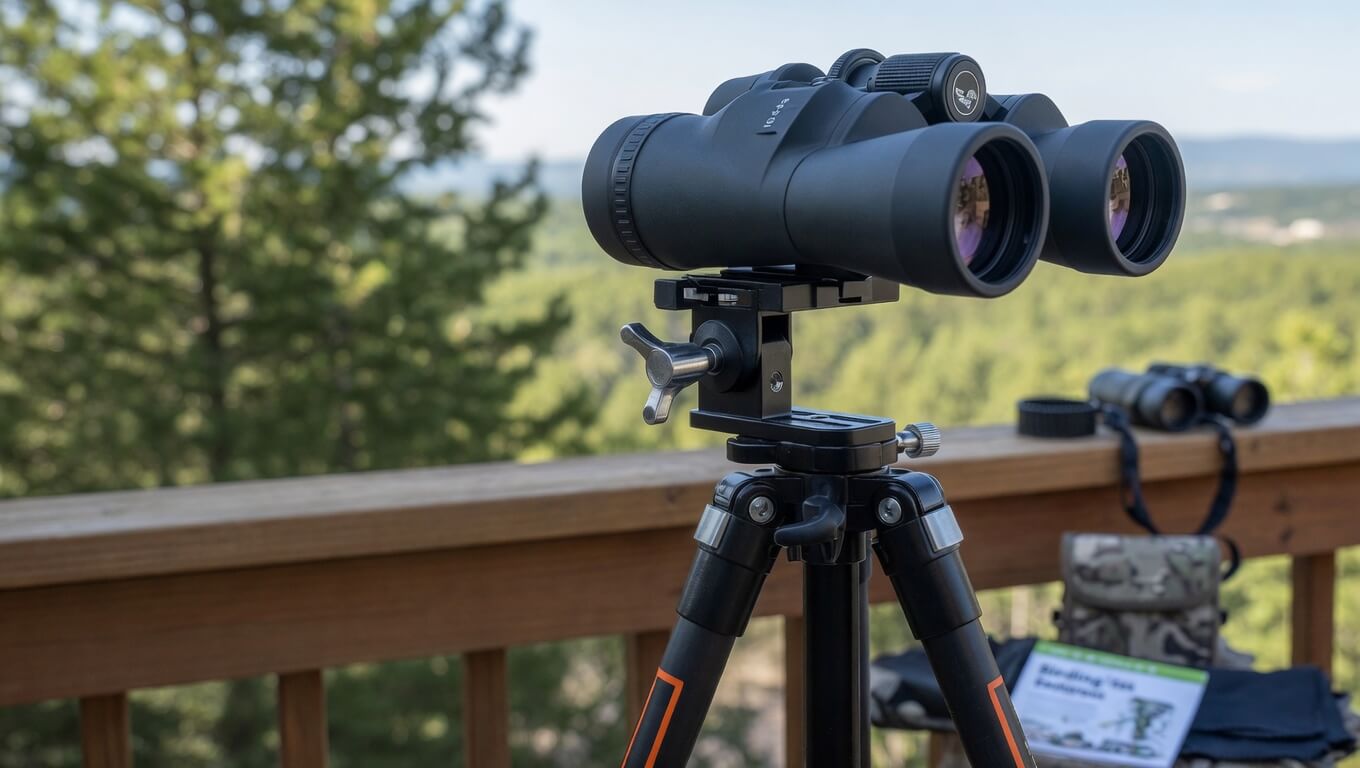
How to Use a Binocular Tripod Adapter Properly
Learning how to use a binocular tripod adapter properly can completely change the way your binoculars feel in real use. Handheld binoculars are fine for quick scanning, but once you start watching the moon, distant wildlife, ships, mountains, targets, or night sky objects, shaky hands become annoying fast.
A tripod adapter solves that problem by connecting your binoculars to a tripod so the view stays steady. Sounds simple, right? It is — but only when you know which adapter fits, where it attaches, how tight it should be, and how to balance the binoculars without stressing the hinge.
This guide keeps things practical, with clear advice on choosing, attaching, tightening, and balancing a binocular tripod adapter correctly.
What Is a Binocular Tripod Adapter?
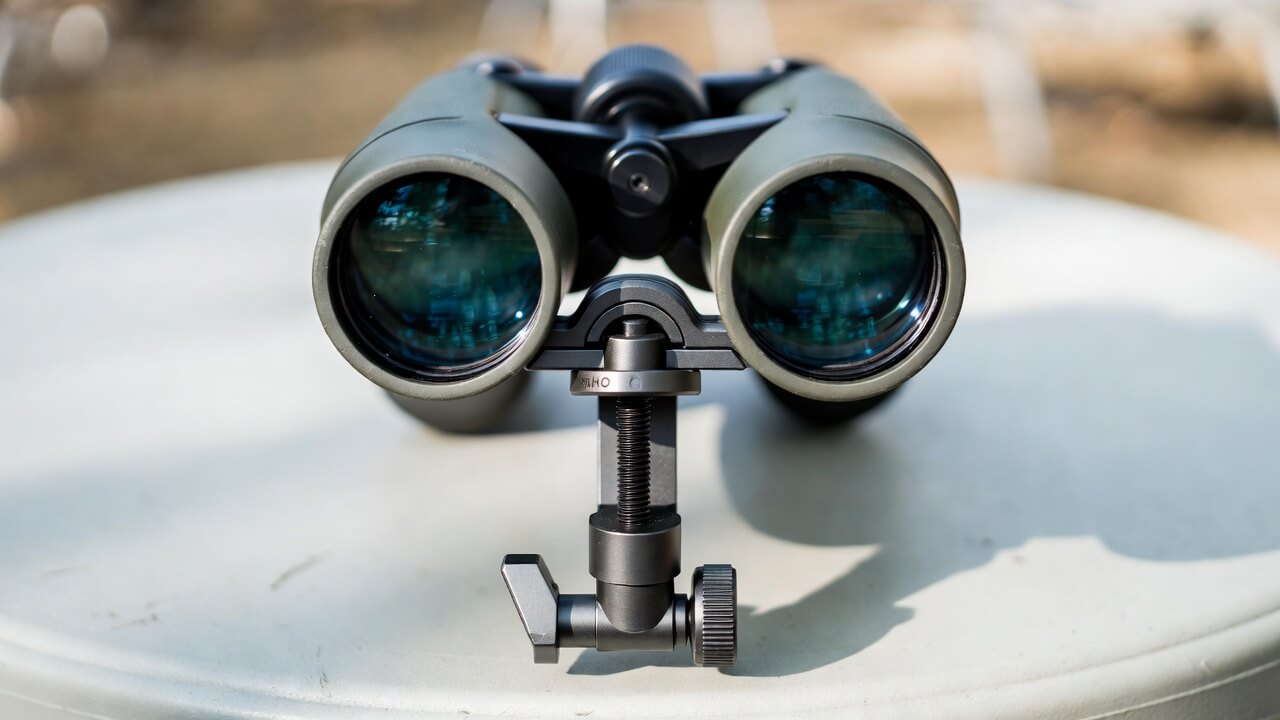
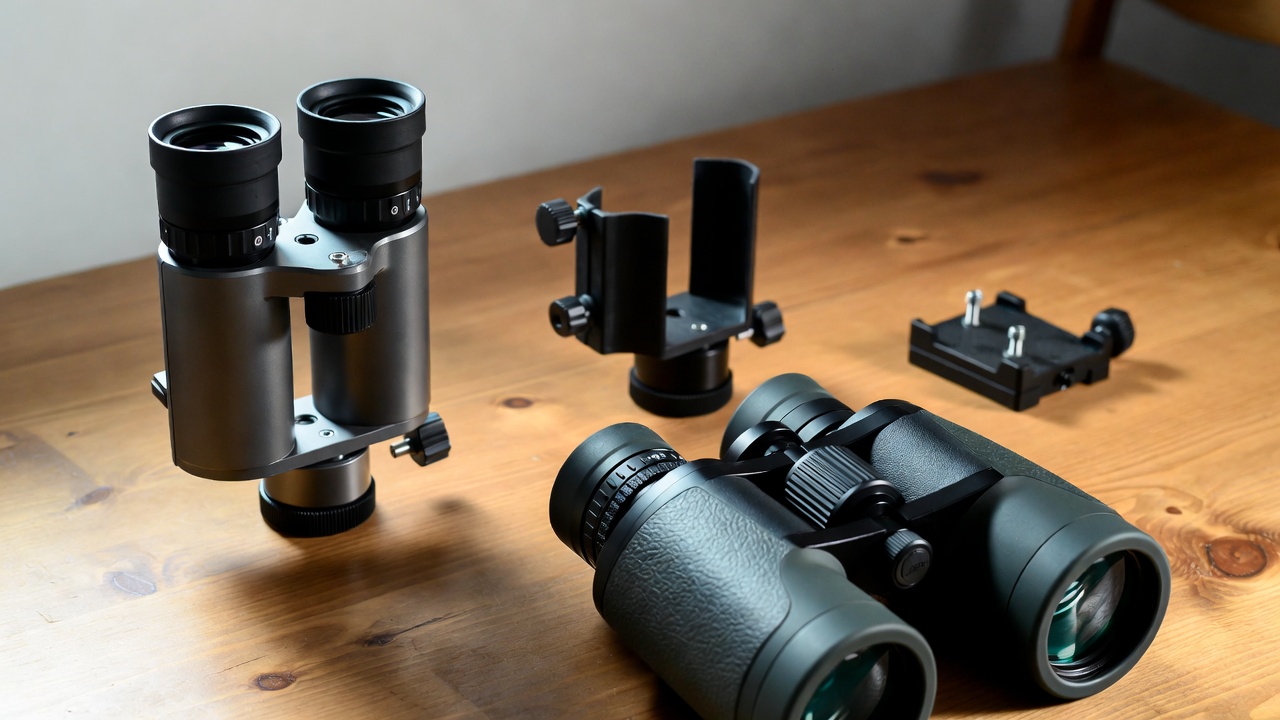
A binocular tripod adapter is a small mounting accessory that lets you attach binoculars to a standard camera tripod. Most binoculars do not mount directly onto a tripod because they have a different body shape than cameras. The adapter acts as the bridge between the binocular and tripod head.
Most common binocular tripod adapters use an L-shaped bracket design. One end screws into the binocular’s front hinge socket, and the bottom end screws onto the tripod plate.
Some adapters are metal, some are plastic, and some use a slim or quick-release design. The best one depends on your binocular size, weight, and use case.
If you are still learning the bigger setup process, read the full pillar guide on how to mount binoculars to a tripod because it explains tripod choice, mounting angles, and stability in more depth.
Why Use a Binocular Tripod Adapter?
The main reason is stability. Even decent binoculars can feel average when your hands are shaking. A tripod adapter helps you get the full performance out of the optics you already own.
Here is where it makes a real difference:
| Use Case | Why the Adapter Helps |
|---|---|
| Astronomy | Keeps stars, moon details, and planets steadier |
| Bird watching from one spot | Reduces arm fatigue during long observation |
| Ocean or mountain viewing | Makes distant details easier to track |
| Hunting or scouting | Helps scan wide areas without constant hand movement |
| Target spotting | Improves focus on small distant marks |
| Digiscoping | Makes phone photos through binoculars easier |
The underrated benefit is comfort. With a tripod-mounted setup, you stop fighting the binoculars and start actually observing. That matters more than people think.
How to Use Binocular Tripod Adapter Step by Step
Using a binocular tripod adapter is not hard, but small mistakes can make the setup wobbly. Here is the clean process I recommend.
Step 1: Check If Your Binoculars Have a Tripod Adapter Socket
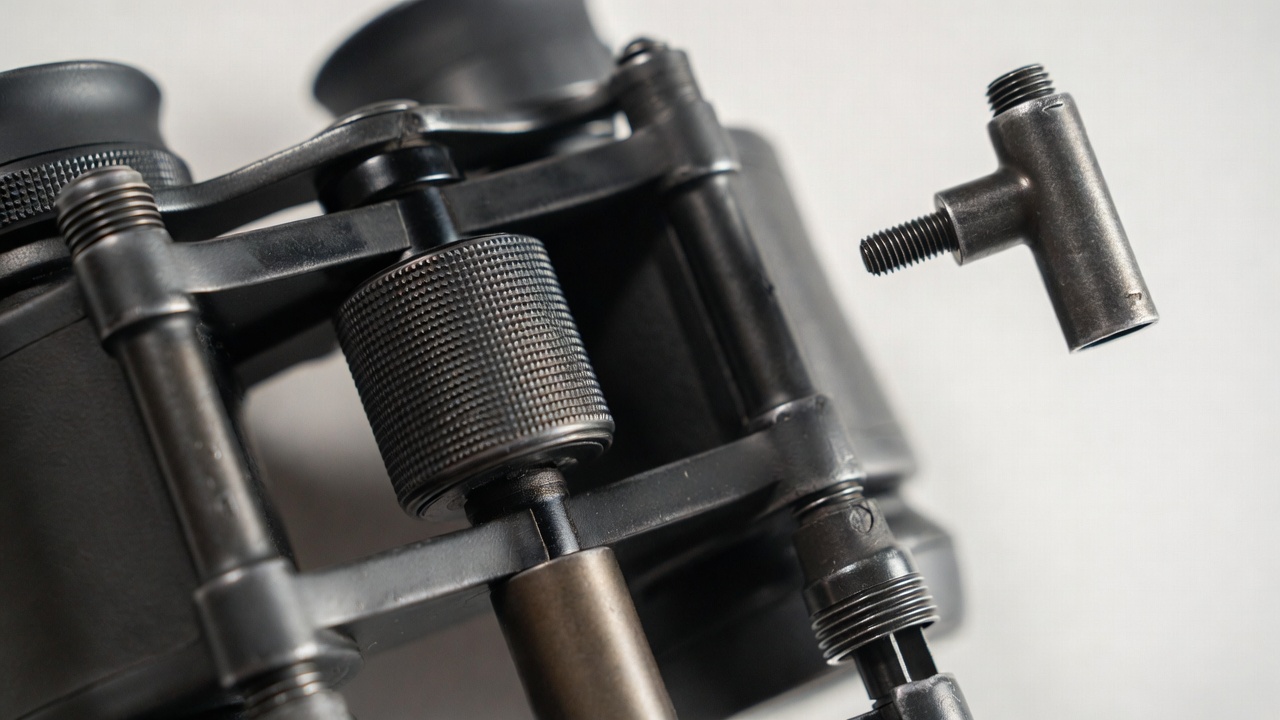
Before buying or using an adapter, check the front center hinge of your binoculars. Most tripod-adaptable binoculars have a small threaded socket hidden under a removable cap.
Look between the two objective barrels at the front hinge. You may see a small plastic or metal cover. Unscrew that cap gently. Under it, there should be a threaded hole.
That threaded hole is where the binocular tripod adapter connects.
Some compact binoculars do not have this socket. Some roof prism binoculars hide it very well. And some cheap models skip it completely.
For more detail on compatibility, check the supporting guide: can binoculars be mounted on a tripod. It will help you avoid buying an adapter for binoculars that cannot accept one.
Step 2: Choose the Right Adapter Type
Not every adapter feels the same in real use. A lightweight plastic adapter may work for small 8×42 binoculars, but it can flex badly with heavier 15×70 astronomy binoculars.
Here is a quick comparison:
| Adapter Type | Best For | Pros | Cons |
|---|---|---|---|
| Plastic L-adapter | Lightweight binoculars | Cheap, easy to find | Can flex with heavy optics |
| Metal L-adapter | 10×50, 12×50, 15×70 models | Stronger, more stable | Slightly heavier |
| Slim roof-prism adapter | Narrow bridge binoculars | Fits tight spaces better | May be harder to install |
| Quick-release adapter | Frequent mounting/removal | Faster setup | Usually costs more |
My honest take: if your binoculars are 10×50 or larger, buy a metal adapter. The tiny price difference is worth it. Wobble ruins the whole point of using a tripod.
Step 3: Attach the Adapter to the Binoculars
Remove the small cap from the binocular’s front hinge socket. Then screw the adapter’s top bolt into that socket.
Do not force it.
The threads should catch smoothly. If the adapter feels crooked or stiff from the first turn, stop and realign it. Cross-threading the hinge socket is a pain you do not want.
Tighten it until it feels secure, but do not over-tighten. You are not bolting a car wheel. You just need firm contact without damaging the binocular body.
This is one of the most common mistakes when people first learn how to use binocular tripod adapter correctly. They either leave it loose, causing wobble, or crank it down too hard.
Both are bad.
Step 4: Connect the Adapter to the Tripod Plate
Most tripods use a quick-release plate. Remove the plate from the tripod head and screw it into the bottom of the binocular tripod adapter.
The adapter should have a standard tripod thread hole at the bottom. Line up the tripod plate screw and tighten it properly.
Once the plate is attached to the adapter, lock the plate back onto the tripod head.
Now gently test the binoculars. Move them slightly left and right. If the setup feels loose, check three points:
- The adapter-to-binocular connection
- The adapter-to-tripod plate connection
- The tripod plate lock
Most wobble comes from one of these three spots.
Step 5: Adjust the Tripod Height Before Fine Aiming
Set your tripod height before you start focusing. This sounds obvious, but it saves frustration.
For daytime viewing, keep the eyepieces around eye level while standing or sitting. For astronomy, avoid raising the center column too high because it makes the setup less stable.
A lower tripod with a chair is often better than a fully extended tripod. Serious binocular users know this. Comfort beats height.
If your setup still feels awkward, read the detailed binocular tripod mount setup guide for tripod height, head movement, and field positioning tips.
Best Product Recommendation: Vortex Uni-Daptor Binocular Tripod Adapter
If I had to recommend one adapter for most users, I would pick the Vortex Uni-Daptor Binocular Tripod Adapter.
It makes sense for people who mount and remove binoculars often. The design is cleaner than basic L-brackets, and it is especially useful if you switch between handheld viewing and tripod viewing in the same session.
It is not the cheapest adapter, and that is okay. Cheap adapters can work, but the Vortex Uni-Daptor is more convenient for field use, especially for birding, hunting, and nature observation where you do not want to waste time twisting parts every few minutes.
Best for:
| User Type | Why It Makes Sense |
|---|---|
| Bird watchers | Quick switch between tripod and handheld viewing |
| Hunters/scouts | Practical for repeated setup and takedown |
| General outdoor users | Less fiddly than basic adapters |
| Mid-size binocular owners | Good match for common 8×42, 10×42, and 10×50 binoculars |
If you use very large astronomy binoculars like 15×70 or 20×80, I would lean toward a heavy-duty metal L-adapter instead. Bigger binoculars need more support.
How Tight Should the Adapter Be?
Tight enough that the binoculars do not wobble. Not so tight that you feel like you are stressing the hinge.
A good rule: tighten by hand until secure, then stop. Do not use pliers. Do not force extra turns. Do not treat the adapter like permanent hardware.
After mounting, lightly tap the binocular body. If the image shakes for a long time, something is loose or your tripod is too light.
This matters a lot with higher magnification. At 8x, minor vibration is tolerable. At 15x, every tiny movement looks dramatic.
Common Mistakes When Using a Binocular Tripod Adapter
Buying the Cheapest Adapter for Heavy Binoculars
This is probably the biggest mistake. A weak adapter can flex under the weight of large binoculars. The connection may technically work, but the view still shakes.
For 15×70 binoculars, a thin plastic adapter is usually a bad match. Use metal.
Mounting the Adapter Crooked
If the adapter is not lined up properly with the hinge socket, the binoculars may sit slightly off-center. That can make panning feel strange and may put uneven pressure on the connection.
Always start the thread slowly.
Using a Weak Tripod
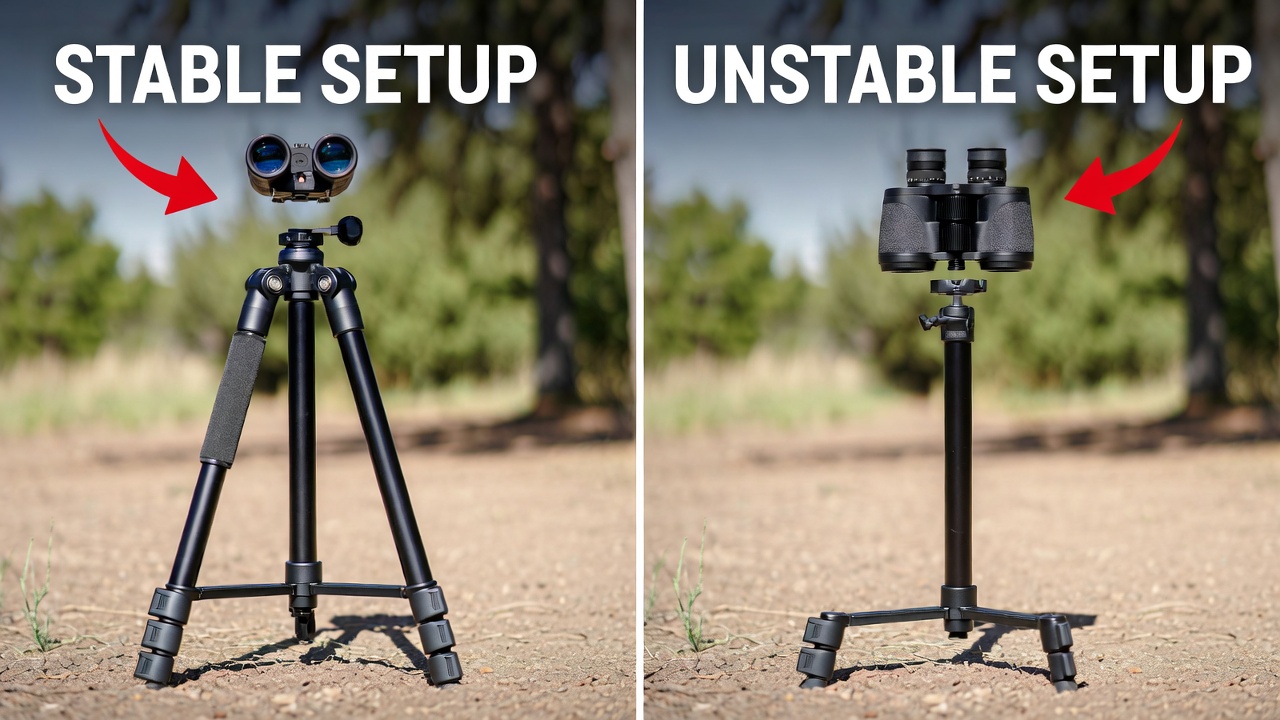
A solid adapter cannot save a flimsy tripod. If the tripod legs twist or the head droops, your view will still be unstable.
For large binoculars, tripod strength matters as much as adapter quality.
Raising the Center Column Too High
The center column is convenient, but it reduces stability when fully extended. If the image shakes every time you touch the focus wheel, lower the center column and extend the legs instead.
Forgetting to Balance the Binoculars
Some binoculars are front-heavy. If the tripod head is loose, the binoculars may tilt forward. Tighten the head enough to hold position while still allowing smooth movement.
Pros and Cons of Using a Binocular Tripod Adapter
Pros
A tripod adapter gives you a steadier view, especially at higher magnification. It also reduces arm fatigue and makes long observation sessions more comfortable.
For astronomy, the improvement is huge. The moon looks sharper. Star clusters are easier to hold in view. Even daytime landscapes feel more detailed because your eyes are not constantly correcting hand shake.
It also helps when sharing binoculars with family or friends. Once the binoculars are aimed, another person can look without needing to find the subject again.
Cons
The setup is less mobile. You cannot move as quickly as handheld viewing. It also adds one more accessory to carry.
Some adapters are annoying to attach in the dark or cold. And if your binoculars have a narrow bridge, a bulky adapter may not fit well.
So, is it worth it? For quick casual viewing, maybe not always. For serious viewing sessions, yes — absolutely.
Real-World Use Cases
Backyard Astronomy
This is where the adapter shines. If you are using 10×50 or 15×70 binoculars to view the moon, Orion, the Pleiades, or bright planets, handheld viewing gets tiring quickly.
A tripod adapter keeps the object steady long enough for your eyes to relax. You start seeing more detail because the image is not constantly jumping.
For astronomy, I recommend a metal adapter and a tripod with a smooth pan head. A cheap photo tripod may work for 10×50 binoculars, but heavier models need stronger support.
Bird Watching from a Fixed Spot
If you watch from a balcony, garden, lakeside, or hide, tripod mounting is underrated. You can scan a tree line or water edge without holding binoculars to your face for 30 minutes.
However, for fast-moving birds, handheld binoculars are still better. A tripod works best when you are observing a known area rather than chasing movement.
Coastal and Mountain Viewing
Looking at ships, ridges, buildings, or distant landmarks becomes much easier with a tripod. Heat shimmer can still affect the image, but at least hand shake is removed from the equation.
This is where how to use binocular tripod adapter becomes less about gear and more about comfort. Sit down, lock the view, and observe slowly.
Target Spotting
For target shooting or range use, a tripod-mounted binocular can work well at moderate distances. It is not always a replacement for a spotting scope, but it can be useful if your binoculars have enough magnification.
The key is a stable head. A loose tripod head will make small target details hard to read.
Buyer Tips Before Choosing a Binocular Tripod Adapter
First, check your binocular weight. Lightweight 8×42 binoculars do not need a heavy adapter. Larger 12×50, 15×70, or astronomy binoculars do.
Second, look at the space between the barrels. Some roof prism binoculars have a tight hinge area, and thick adapters may not fit. Slim adapters are better for narrow designs.
Third, think about how often you will mount and remove the binoculars. If you do it once per session, a simple L-adapter is fine. If you switch often, a quick-release design is worth considering.
Fourth, do not ignore the tripod. A good adapter on a weak tripod is like putting premium tires on a broken cart. The whole system matters.
Binocular Tripod Adapter vs Handheld Viewing
| Feature | Tripod Adapter Setup | Handheld Viewing |
|---|---|---|
| Stability | Excellent | Depends on hand steadiness |
| Portability | Lower | High |
| Best for long sessions | Yes | Not ideal |
| Best for fast movement | Not always | Yes |
| Astronomy use | Strongly recommended | Limited comfort |
| Setup time | Takes longer | Instant |
| Image detail | Easier to notice | Can be lost due to shake |
Handheld viewing is still useful. I would never say every binocular session needs a tripod. But when you want to study something, not just glance at it, tripod mounting wins.
How to Get a Steadier View After Mounting
Once you know how to use binocular tripod adapter, the next step is improving the whole viewing experience.
Use these small adjustments:
- Keep the tripod legs wide and firm.
- Avoid touching the binoculars while observing.
- Use slow, gentle focus adjustments.
- Keep the center column low when possible.
- Use a chair for long sessions.
- Add weight to the tripod hook if it is windy.
- Use a fluid or pan head for smoother movement.
One thing I learned fast: a steady setup is not just about tight screws. It is about reducing every tiny vibration from the ground up.
Where a Tripod Adapter Does Not Help Much
A tripod adapter is not magic. It will not improve poor optics. It will not fix misaligned binoculars. It will not make cheap high-magnification binoculars suddenly sharp.
It also may not be ideal if you are walking through dense woods or tracking fast wildlife. In those situations, handheld binoculars are faster and more natural.
The adapter is best when your viewing position is controlled and your subject is distant, slow-moving, or fixed.
Related Guides for a Better Setup
If this is your first time using a mounted binocular system, start with the full guide on how to mount binoculars to a tripod. It gives you the complete process from tripod choice to final positioning.
Still unsure whether your model is compatible? The article can binoculars be mounted on a tripod explains which binoculars work and what to check before buying an adapter.
For a practical layout of the full setup, read binocular tripod mount setup so you can avoid shaky positioning and awkward viewing angles.
You can also visit the homepage at bestbinocular.net for more binocular guides, reviews, and blog tips built around real buying decisions.
Final Thoughts
Knowing how to use binocular tripod adapter is one of those small skills that makes binocular viewing feel more serious and comfortable. The adapter itself is simple, but the results can be massive when paired with the right tripod and used correctly.
For small binoculars, a basic adapter may be enough. For heavier models, get a strong metal adapter or a reliable quick-release option. Do not cheap out if your binoculars are large. That tiny bracket is holding your whole viewing experience together.
A steady binocular setup helps you slow down, see more detail, and enjoy longer sessions without arm fatigue. And once you try mounted binoculars for astronomy, coastal viewing, or long-distance observation, handheld viewing starts to feel limited pretty quickly.
FAQs About How to Use Binocular Tripod Adapter
Do all binoculars work with a tripod adapter?
No. Your binoculars need a threaded tripod adapter socket, usually located under a small cap on the front center hinge. Many full-size binoculars have one, but some compact models do not.
What size thread does a binocular tripod adapter use?
Most binocular tripod adapters connect to a standard tripod plate using the common 1/4″-20 tripod screw size. Still, always check your binocular, adapter, and tripod specifications before buying.
Is a metal binocular tripod adapter better than plastic?
For heavier binoculars, yes. Metal adapters are usually more stable and less likely to flex. Plastic adapters can be okay for lightweight binoculars, but they are not my first choice for 10×50 or larger models.
Can I use a camera tripod for binoculars?
Yes, you can use a camera tripod if it is strong enough and has a standard mounting plate. For large binoculars, choose a tripod with a stable head and avoid lightweight travel tripods that shake easily.
Why do my binoculars still shake on a tripod?
The adapter may be loose, the tripod plate may not be locked properly, the tripod head may be weak, or the center column may be raised too high. Check each connection point before blaming the binoculars.
Can I use a tripod adapter for astronomy binoculars?
Yes, and it is highly recommended for 10×50, 12×50, 15×70, and larger astronomy binoculars. The higher the magnification, the more helpful a tripod adapter becomes.
Should I remove the adapter after every use?
You can leave it attached if your binocular case has enough space, but many users remove it to avoid pressure on the hinge during storage. For travel, removing it is usually safer.
How do I attach binoculars to a tripod adapter?
First, remove the protective cap from the tripod socket on your binoculars. Screw the binocular tripod adapter into the socket by hand until it is secure, then attach the adapter to the tripod plate. Finally, lock the plate into the tripod head and check that the binoculars are firmly attached before use.




