
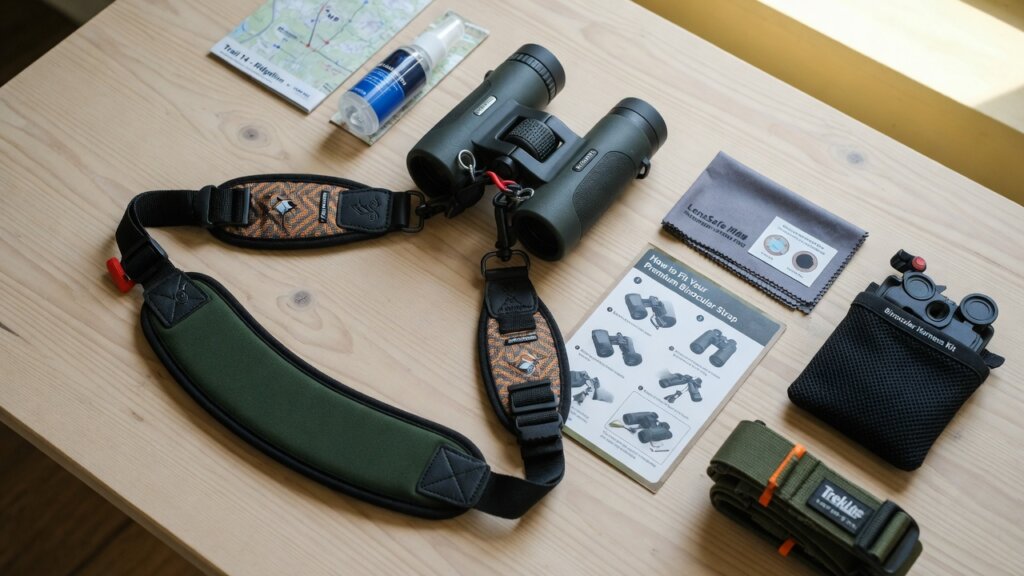
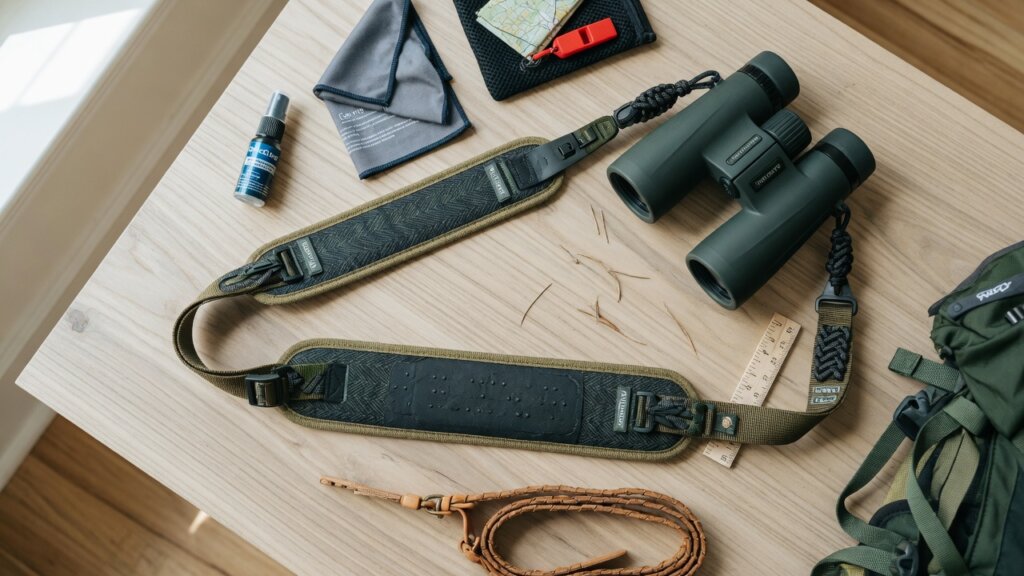
Why Choosing the Right Binocular Strap Matters
A binocular strap looks like one of those accessories you only notice when it annoys you.
You notice it when the factory strap digs into your neck halfway through a birding walk. You notice it when your binoculars bounce against your chest while climbing a trail. You notice it when you lift your optics too quickly and the strap twists around the eyecups. And you definitely notice it when your expensive binoculars slip from your hand and the only thing between them and the ground is a thin strip of nylon.
That is why a good binocular strap is not just a comfort accessory. It changes how often you actually use your binoculars.
A poor strap makes you put binoculars back in the bag. A good strap keeps them ready. That difference matters when you are watching birds, glassing a hillside, traveling through a city, sitting in a stadium, or scanning the water from a boat deck. The best binoculars are only useful when they are easy to reach at the right moment.
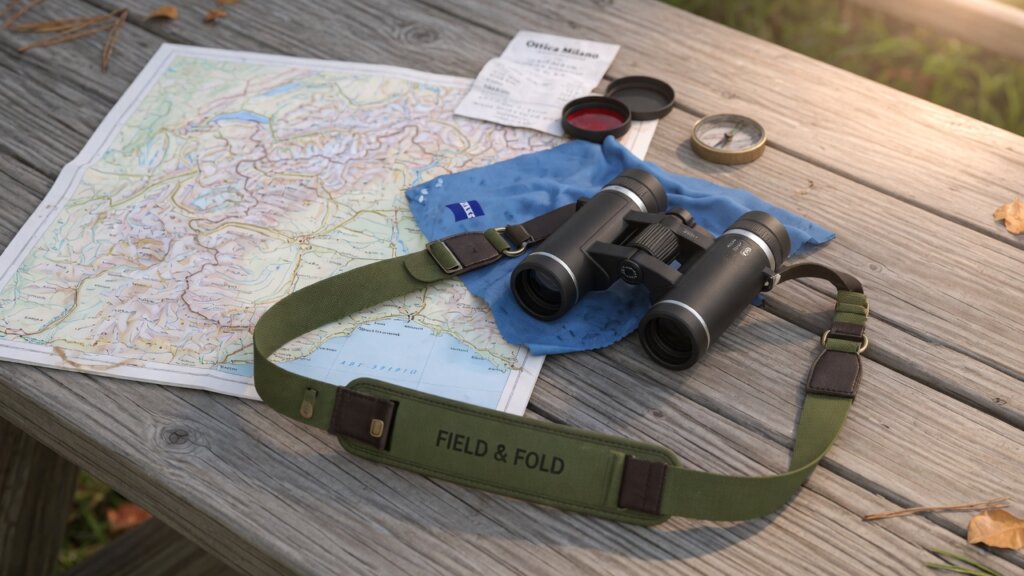
Why the Right Binocular Strap Matters More Than Most People Think
Most binoculars come with a basic strap in the box. It usually works, but “works” is not the same as “works well.”
A standard strap is often narrow, stiff, and built for occasional use. It may be fine for ten minutes in the backyard, but it starts showing its limits during longer sessions. The pressure sits on one narrow area of your neck. The binoculars swing when you bend down. The attachment points can feel awkward. If the strap is too short, the binoculars sit too high. If it is too long, they hit your stomach or belt.
A quality binocular strap fixes these little frustrations before they ruin the experience.
It spreads weight better. It keeps binoculars stable. It improves grab-and-view speed. It makes heavier models feel less tiring. It also gives you more confidence when moving over uneven ground or pulling binoculars in and out of a vehicle, backpack, or travel case.
That sounds simple, but in real use, it can be the difference between enjoying your optics and constantly adjusting them.
For more focused neck comfort, compare this with our guide on binocular neck straps and choose the style that feels better for long viewing sessions.
What Is a Binocular Strap?
A binocular strap is a carrying accessory designed to secure binoculars to your body while keeping them accessible. It usually attaches to the small strap lugs on each side of the binocular body and rests around your neck, shoulder, or upper body depending on the strap style.
Some straps are basic neck straps. Others are padded, neoprene, quick-release, shoulder-style, floating, harness-compatible, or universal models. The right choice depends on your binocular weight, how long you carry them, where you use them, and how fast you need to raise them to your eyes.
The simple version: a binocular strap prevents drops and improves carrying comfort.
The more useful version: the right binocular strap helps you use your binoculars more naturally, with less fatigue and less fuss.
Types of Binocular Straps
Not every binocular strap is built for the same kind of user. A traveler with compact 8×25 binoculars does not need the same setup as someone carrying full-size 10×42 binoculars all day. A hunter glassing from uneven terrain has different needs than someone watching a concert from a seat.
Here are the main strap types worth knowing.
Standard Neck Strap
This is the classic strap style. It loops around your neck and attaches to both sides of the binoculars.
A neck strap is simple, lightweight, and familiar. It is usually enough for compact and mid-size binoculars, especially if you only use them for shorter sessions. The downside is that all the weight rests on the neck. With heavier binoculars, that gets old fast.
A soft, wider version is much better than the thin factory strap many binoculars include.
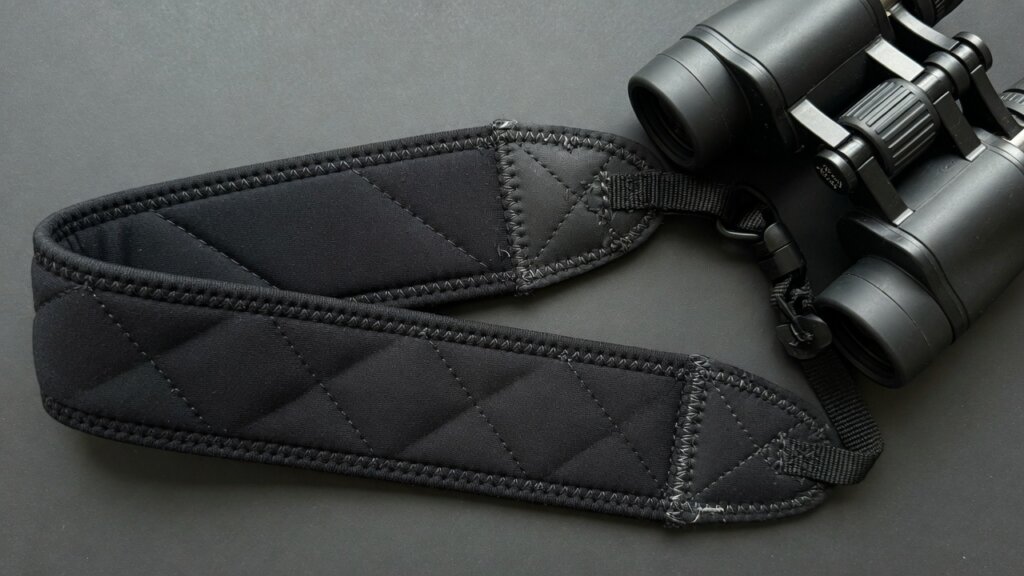
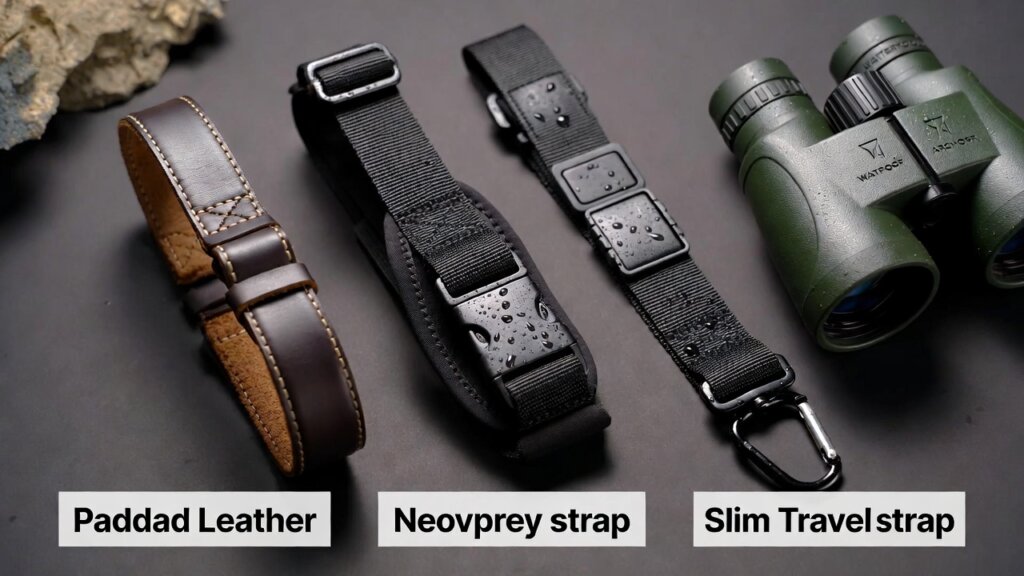
Neoprene Binocular Strap
A neoprene binocular strap has a soft, slightly stretchy feel. It cushions the weight and reduces pressure on the neck. It is one of the easiest upgrades for birders, travelers, and casual outdoor users.
Neoprene also has a little bounce to it. Some people love that because it makes heavier binoculars feel lighter. Others prefer a firmer strap because too much stretch can feel less stable while walking quickly.
Long walks and wet weather can make binoculars uncomfortable to carry, so a neoprene binocular strap is a practical choice for softer, more comfortable support.
Padded Binocular Strap
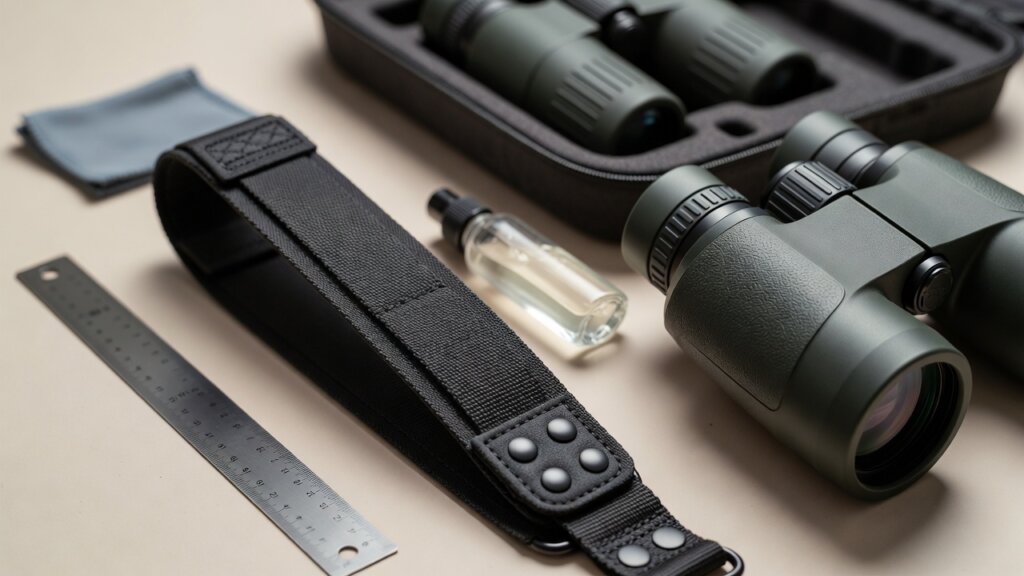
A padded strap uses extra cushioning around the neck or shoulder area. Unlike neoprene, padding may feel more structured. This makes it a good option for heavier binoculars, especially 10×42, 10×50, 12×50, and rangefinder binoculars.
The best padded binocular strap does not just feel soft. It also spreads the weight evenly and stays flat instead of bunching up.
If your main problem is neck pressure, a padded binocular strap is a better option to compare for comfort-focused carrying.
Quick Release Binocular Strap
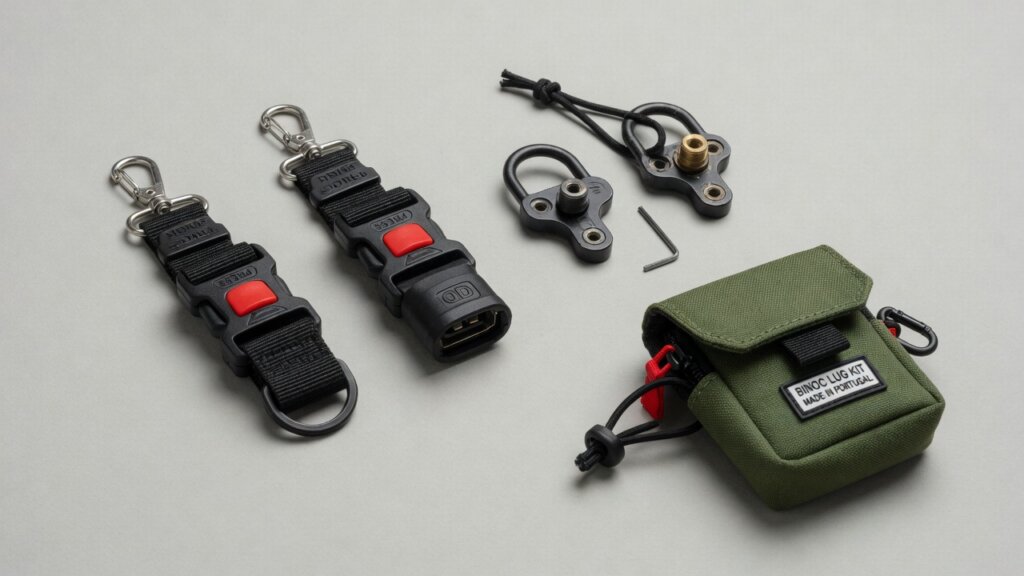
A quick release binocular strap uses clips, buckles, or detachable connectors so you can remove the binoculars from the strap quickly.
This is helpful if you switch between a neck strap, harness, tripod adapter, car mount, or protective case. It is also useful for people who pack binoculars often and dislike feeding thin strap ends through the lugs every time.
The downside is that quick-release hardware must be strong. Cheap clips can rattle, loosen, or feel less secure than fixed attachments.
If you change setups often, a quick release binocular strap can make switching between carry styles much easier.
Binocular Shoulder Strap
A shoulder strap carries binoculars across one shoulder or diagonally across the body. It can reduce direct neck strain and is often more comfortable for travel, sightseeing, and casual walking.
Shoulder carry works especially well when you do not need binoculars constantly at eye level but still want them close. The downside is that some shoulder straps swing more unless they include stabilizing features.
For travel and sightseeing, a binocular shoulder strap is also worth comparing with traditional neck carry.
Universal Binocular Strap
A universal binocular strap is designed to fit many binocular models. It usually uses narrow attachment ends, adjustable length, and common connector systems.
Universal straps are useful when replacing a lost strap, upgrading a factory strap, or using one strap across multiple binoculars. Just make sure the attachment width fits your binocular lugs. Some compact binoculars have tiny slots, while larger models may handle wider webbing.
For buyers replacing an old strap, a universal binocular strap is a practical option because it is designed to fit many binocular models and helps reduce concerns about compatibility.
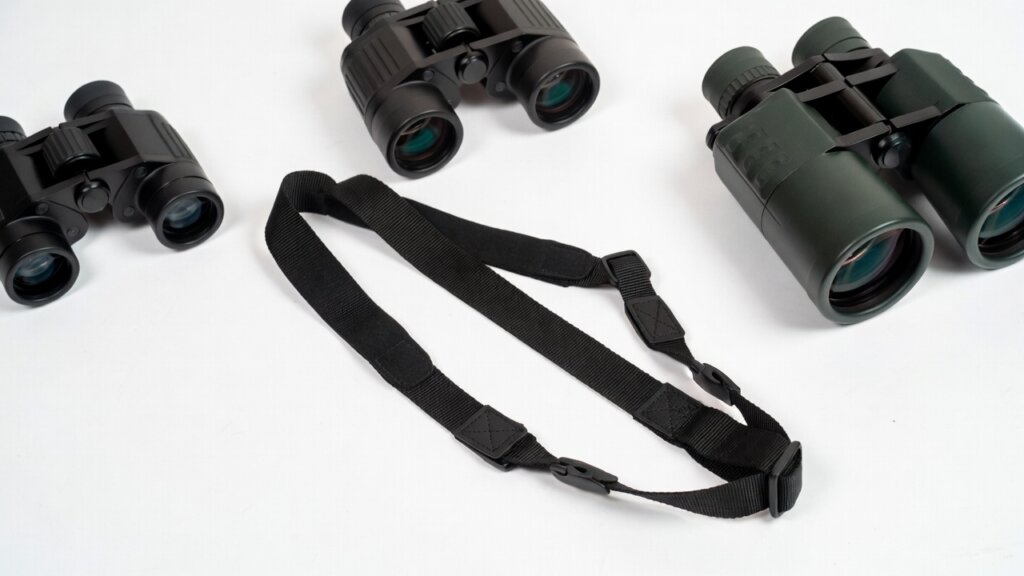
Binocular Strap Comparison Table
| Binocular Strap Type | Best For | Main Benefit | Possible Drawback |
|---|---|---|---|
| Standard neck strap | Casual users, compact binoculars | Simple and lightweight | Can dig into the neck |
| Neoprene strap | Birding, hiking, general outdoor use | Soft and flexible comfort | May feel slightly bouncy |
| Padded strap | Heavy binoculars, long sessions | Spreads weight better | Can feel bulky |
| Quick release strap | Users switching setups | Easy to detach and reattach | Hardware quality matters |
| Shoulder strap | Travel, sightseeing, casual carry | Reduces neck strain | May swing while walking |
| Universal strap | Replacement and mixed binocular use | Fits many models | Must check attachment size |
How a Binocular Strap Affects Real-World Use
A strap does not improve glass quality, magnification, or lens coatings. But it affects how comfortably and confidently you use all of those features.
That is the part buyers often underestimate.
You may buy excellent binoculars with sharp optics, but if they are uncomfortable to carry, they will spend more time in the case than around your neck. A better binocular strap removes friction. It makes it easier to keep the binoculars ready instead of packed away.
Bird Watching
Bird watching rewards speed. A bird may land, move, and disappear in seconds. If your binoculars are in a backpack, you miss the moment. If they are hanging comfortably at chest height, you get the view.
For birders, the best binocular strap should be quiet, comfortable, and stable. A noisy buckle or stiff nylon edge can become irritating during slow walks. A soft neoprene or padded strap usually works well, especially with 8×42 or 10×42 binoculars.
One small observation: birders often start by caring about optical specs, then slowly become picky about straps, lens caps, and harness systems. That is normal. Comfort becomes more important the longer you stay outside.
Hiking and Backpacking
For hiking, bounce control matters. A strap that feels fine in a parking lot may become annoying on a steep trail. If the binoculars swing forward every time you step over rocks, you will either hold them constantly or pack them away.
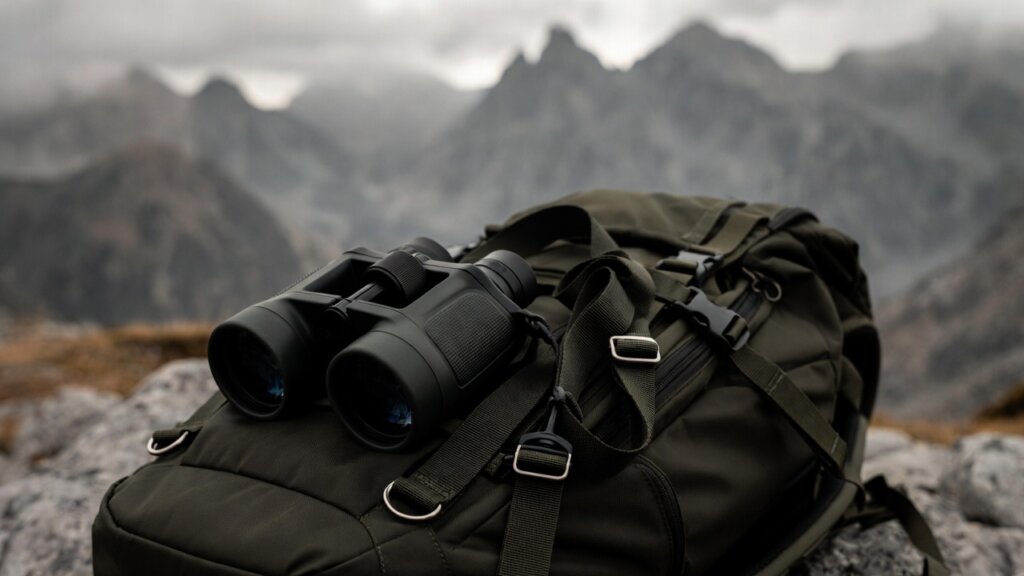
A binocular strap for hiking should be secure, adjustable, and wide enough to reduce pressure. Some hikers prefer shoulder straps or harness systems because they keep weight off the neck. But for lighter binoculars, a good neoprene strap can be enough.
Hunting and Glassing
Hunters often carry binoculars for long periods, sometimes with rangefinders, packs, and layered clothing. A thin strap is not ideal here. It can slide over jackets, twist under backpack straps, or create neck fatigue during long glassing sessions.
A padded binocular strap or harness-style carry is usually better for serious field use. Quick-release features are also valuable if you switch from handheld viewing to tripod-mounted glassing.
For this use case, quiet materials matter. A loud plastic buckle tapping against the binocular body is not something you want in still conditions.
Travel and Sightseeing
Travelers usually want convenience. The binocular strap should pack easily, feel comfortable over a shirt or light jacket, and not look overly tactical or bulky.
Compact binoculars pair well with a simple soft neck strap or shoulder strap. If you are walking through cities, visiting viewpoints, or taking a cruise, a lightweight strap with smooth edges is more pleasant than a heavy padded model.
Travel buyers also care about appearance more than they admit. A neat, low-profile strap feels less awkward in public and makes binoculars easier to carry without looking like you are wearing field gear.
Sports, Concerts, and Events
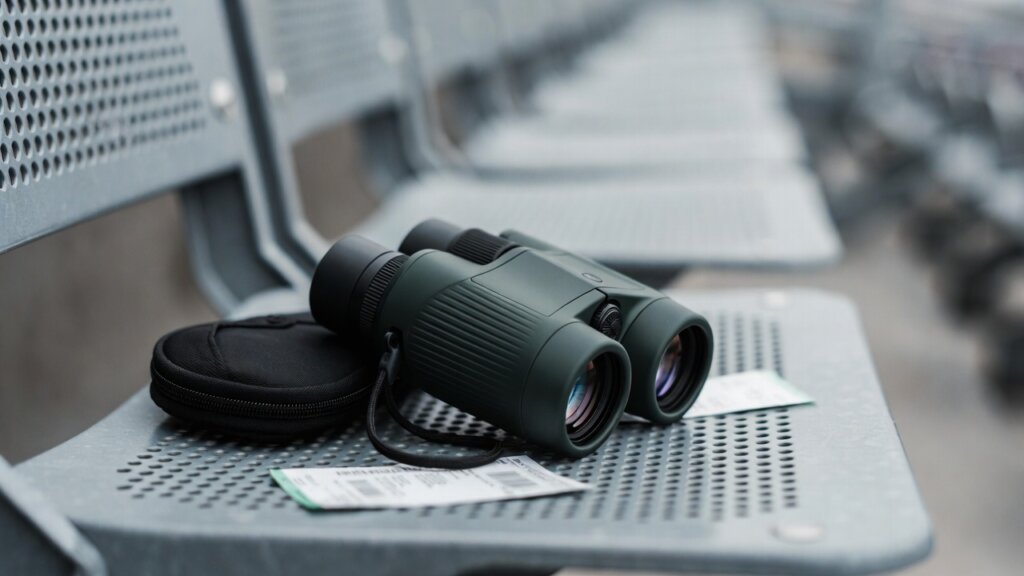
For stadiums and concerts, comfort and quick access are the main priorities. You are usually seated or standing in one area, not hiking for miles. A simple neck strap often works, but it should not be scratchy or too short.
Compact binoculars are the usual choice here. A bulky strap can feel like overkill. The ideal setup is lightweight, soft, and easy to tuck away when not in use.
What Makes a Good Binocular Strap?
A good binocular strap has to balance comfort, durability, stability, fit, and ease of use. The best one is not always the thickest or most expensive. It is the one that matches your binocular size and viewing habits.
Comfort
Comfort starts with width and material. A wider strap spreads pressure across more surface area. Soft edges prevent rubbing. Padding helps with heavier optics. Neoprene adds cushioning and flexibility.
For small binoculars, too much padding can feel unnecessary. For heavy binoculars, too little padding becomes a problem quickly.
A simple rule: the heavier the binoculars, the more support your strap should provide.
Attachment Security
The attachment points matter more than the strap body. Most binocular straps use narrow webbing ends that thread through side lugs. Others use split rings, quick clips, or proprietary connectors.
A secure strap should not slip loose when pulled. Stitching should be neat. Buckles should lock firmly. If the strap uses quick-release clips, they should feel solid and not flimsy.
This is where cheap straps can be risky. Saving a few dollars is not worth it if the clip fails while carrying expensive optics.
Adjustability
A good binocular strap should allow enough length adjustment for different body sizes, jackets, and carry preferences.
Some users like binoculars high on the chest for quick access. Others prefer them lower for relaxed walking. In winter, the strap may need to fit over bulky clothing. In summer, it may sit directly against the neck.
The more situations you use your binoculars in, the more adjustability matters.
Stability
Stability is about how much the binoculars move while you walk.
A loose strap may feel comfortable when standing still but annoying when moving. A strap that sits too low can make binoculars bounce. A strap that twists easily can slow down viewing. Shoulder straps can also shift unless worn correctly.
For active use, stability can matter as much as softness.
Weather Resistance
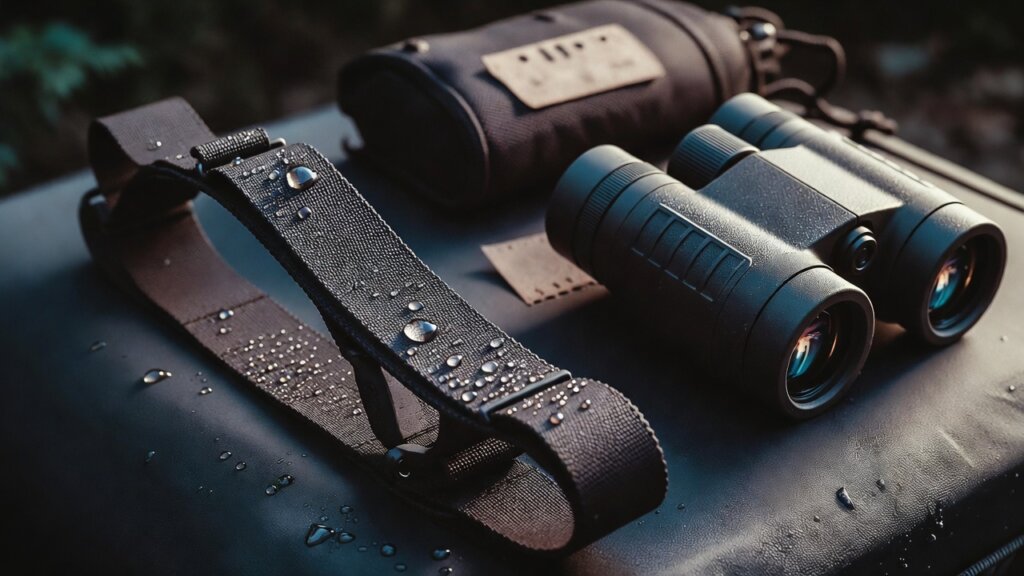
Outdoor straps face sweat, rain, dust, salt air, and temperature changes. Nylon webbing is durable and dries quickly. Neoprene is comfortable but may hold moisture longer. Leather can look premium but may need more care.
For marine use or rainy climates, avoid straps that absorb too much water or take forever to dry.
Binocular Strap Materials Compared
| Material | Feel | Best Use | Notes |
|---|---|---|---|
| Nylon webbing | Strong and lightweight | General use, travel, hiking | Durable but can feel stiff if narrow |
| Neoprene | Soft, stretchy, cushioned | Birding, outdoor walking | Comfortable but may bounce slightly |
| Leather | Classic, premium feel | Casual use, vintage binoculars | Stylish but less weather-friendly |
| Padded fabric | Soft and supportive | Heavy binoculars | Good comfort, may be bulkier |
| Elastic blend | Flexible and light | Compact binoculars | Less ideal for heavy models |
Pros
- Increases comfort, reduces neck pressure for long use.
- Helps prevent binocular drops.
- Improves field readiness; binoculars stay accessible.
Cons
- Not always needed for lightweight or compact binoculars.
- Padded straps can feel bulky on small binoculars.
- Quick-release or neoprene straps may add hardware or stretch.
The key is matching the strap to the binoculars instead of buying the thickest option.
Buyer Psychology: Why People Choose the Wrong Binocular Strap
Most buyers choose a binocular strap based on what looks comfortable in a product photo. That is understandable, but incomplete.
Comfort is not just softness. It is also weight distribution, strap length, movement control, attachment design, and how the strap behaves with your clothing.
A strap that looks thick and premium may feel too warm in summer. A slim leather strap may look stylish but dig into your neck after an hour. A quick-release strap may sound convenient but become annoying if the clips are bulky.
The best buying mindset is not “What is the most comfortable strap?” It is “What problem am I trying to solve?”
- If your neck hurts, choose padding or neoprene.
- If your binoculars bounce, choose a more stable carry style.
- If you switch between gear setups, choose quick release.
- If you lost the original strap, choose universal compatibility.
- If you travel light, choose compact and low-profile.
That is how you avoid buying the wrong accessory twice.
Best Binocular Strap by Use Case
Best for Bird Watching
For bird watching, a soft neoprene or padded binocular strap usually makes the most sense. Birders often carry 8×42 or 10×42 binoculars for hours. A thin strap becomes irritating, especially during slow walks where the binoculars stay around the neck the whole time.
Look for quiet material, soft edges, and enough length adjustment to keep the binoculars at upper-chest height.
Best for Hiking
For hiking, the best binocular strap should control movement. A shoulder strap or stable padded neck strap can work, depending on binocular weight.
Best for Heavy Binoculars
Heavy binoculars need weight distribution. A padded strap is the safest recommendation. For 10×50, 12×50, marine binoculars, or rangefinder binoculars, thin straps are rarely comfortable.
Choose a strap with wide padding, strong stitching, and secure connectors.
Best for Travel
Travelers should choose a low-profile binocular strap that packs easily and does not feel bulky around the neck. A slim padded strap or soft shoulder strap works well with compact binoculars.
Avoid overly tactical designs if you want something simple, low-profile, and natural for travel. A clean design feels more natural for cruises, sightseeing, and city viewpoints.
Best for Switching Gear
If someone uses binoculars with a tripod, harness, or case, quick release is the easiest recommendation. A quick release binocular strap saves time and reduces the frustration of rethreading straps.
Just remind buyers not to choose the cheapest clip system.
How to Choose the Right Binocular Strap
The easiest way to choose a binocular strap is to start with your binocular size.
Compact binoculars under 10 ounces do not need heavy padding. Mid-size binoculars benefit from softer material. Full-size binoculars need real support. Large binoculars need either a wide padded strap or a harness-style carry system.
Next, think about duration.
For ten-minute use, almost any strap can work. For two hours, comfort matters. For a full day outdoors, poor strap design becomes impossible to ignore.
Then think about movement.
If you mostly stand still, a neck strap is fine. If you walk a lot, stability matters more. If you climb, bend, or carry a backpack, a shoulder strap or harness setup may be smarter.
Finally, check compatibility.
Not all strap ends fit every binocular. Some compact binoculars use small lugs. Some heavier models need stronger attachment hardware. A universal binocular strap is useful, but only if the connector style matches your binocular body.
Common Mistakes to Avoid
Choosing Padding Without Checking Bulk
Thicker is not always better. A very padded strap can feel awkward on compact binoculars. It may also take more space in a small case.
Ignoring Strap Length
A strap that is too short keeps binoculars awkwardly high. A strap that is too long causes bounce. Adjustable length is not optional for most users.
Trusting Weak Quick-Release Clips
Quick release is convenient, but cheap plastic clips can be the weakest part of the system. Strong connectors matter.
Forgetting About Clothing Layers
A strap that fits perfectly over a T-shirt may feel short over a winter jacket. Outdoor users should choose a strap with extra adjustment range.
Buying for Looks Only
A vintage leather binocular strap may look beautiful, but it may not be the best choice for rain, sweat, or long-distance carrying.
Binocular Strap vs Binocular Harness
A binocular strap and binocular harness both carry binoculars, but they solve different problems.
A strap is simpler. It is lighter, easier to pack, and better for casual use. It works well for birding, travel, sports, and general outdoor viewing.
A harness spreads weight across the shoulders and chest. It is better for long hiking days, hunting, and heavy binoculars. The trade-off is bulk. A harness takes more time to put on and may feel excessive for casual users.
| Feature | Binocular Strap | Binocular Harness |
|---|---|---|
| Ease of use | Very easy | More setup required |
| Comfort with heavy binoculars | Good with padding | Usually better |
| Portability | Packs easily | Bulkier |
| Best for | Casual use, travel, birding | Hunting, hiking, long field days |
| Access speed | Fast | Fast once fitted |
| Appearance | Simple and low-profile | More technical |
For most people, a better binocular strap is the first upgrade. A harness becomes worth considering when the binoculars are heavy or the carry time is long.
Should You Replace the Factory Binocular Strap?
In many cases, yes.
Factory straps are often acceptable, but not excellent. Manufacturers spend most of the product budget on optics, body construction, coatings, and packaging. The strap is usually included because buyers expect one, not because it is the best possible carry system.
You should replace the factory binocular strap if:
- Your neck gets sore after short use.
- The strap feels scratchy or stiff.
- The binoculars bounce too much.
- The strap is too short or too long.
- You want quick release connectors.
- You carry heavier binoculars often.
- The attachment points look weak or worn.
You may not need to replace it if your binoculars are lightweight and you only use them occasionally.
Best Features to Look For Before Buying
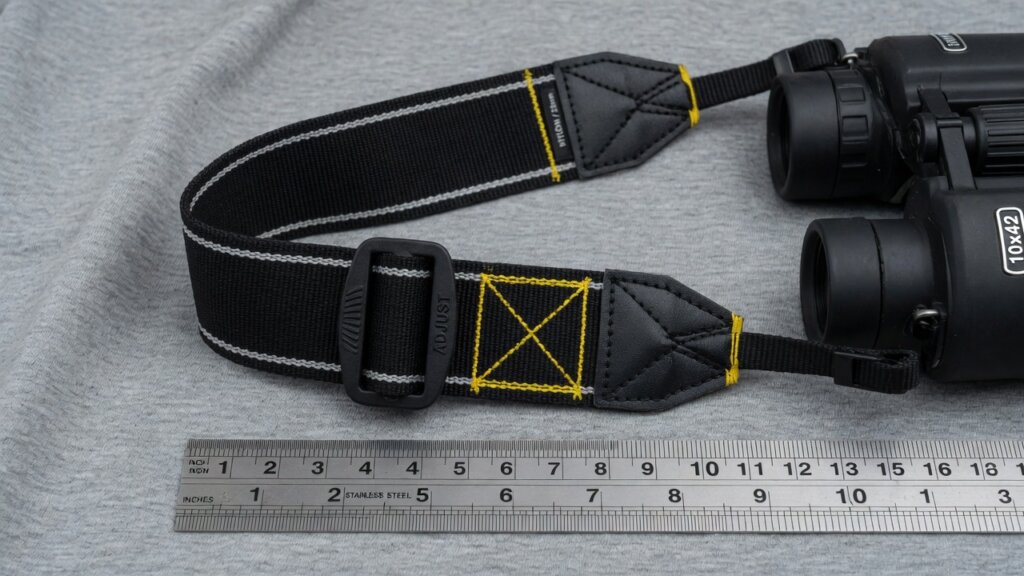
A strong binocular strap should have reinforced stitching at stress points. The webbing should feel secure, not flimsy. Padding should be soft but not sloppy. The strap should lie flat around the neck or shoulder. Adjustment sliders should hold position without slipping.
If you are buying online, study close-up photos. Look at how the strap attaches. Read complaints about slipping, twisting, or clip failure. Positive reviews about comfort are useful, but negative reviews often reveal the real weaknesses.
Also check whether the strap works with your binocular case. Some thick straps make it harder to fit binoculars back into small molded cases.
Real-World Recommendations Without Overcomplicating It
- If you use compact binoculars for travel, choose a slim soft strap. Do not overbuild the setup.
- If you use 8×42 binoculars for birding, choose a neoprene or padded binocular strap.
- If you use 10×42 binoculars for hiking, choose padding plus good stability.
- If you use heavy 10×50 or 12×50 binoculars, choose a wide padded strap or consider a harness.
- If you switch between strap, case, tripod, and harness, choose quick release.
- If you are replacing a lost strap and unsure about fit, choose a universal binocular strap with narrow attachment ends.
That is the cleanest way to match product to purpose.
Binocular Strap Care and Maintenance
A binocular strap does not need much care, but a little maintenance keeps it safer.
After wet use, let the strap dry before storing it in a closed case. If it gets dirty, wipe nylon or neoprene with a damp cloth and mild soap. Avoid harsh cleaners because they can weaken stitching or damage soft padding.
Check the attachment points every few months. Look for fraying, loose stitching, cracked clips, or stretched holes. This matters more if you carry expensive binoculars or use them outdoors often.
A strap can look fine from a distance but fail at the connector. That is the area worth inspecting closely.
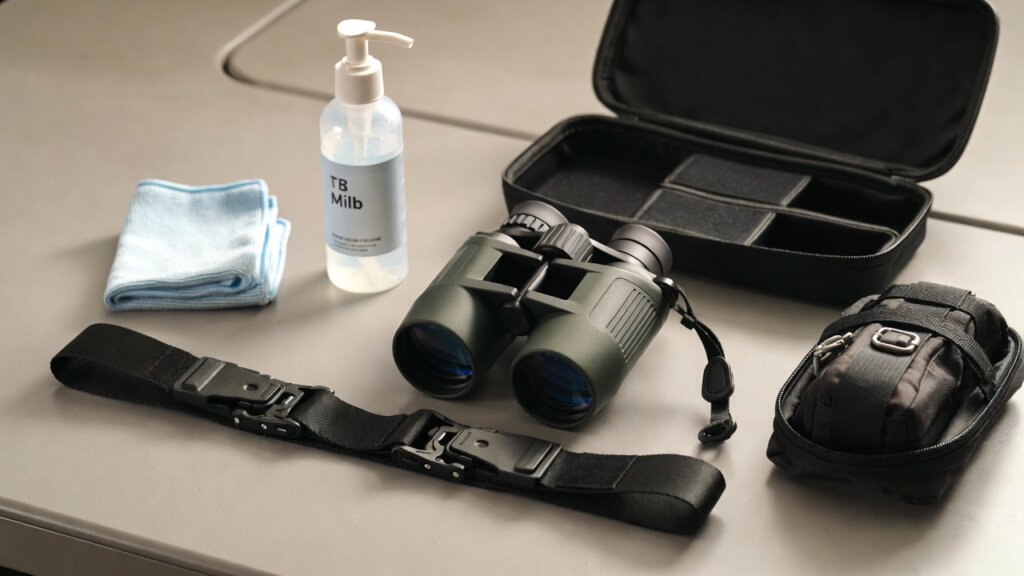
Final Buying Advice
A binocular strap is a small accessory, but it has a direct effect on comfort, safety, and how often you actually use your binoculars.
For casual users, a simple soft strap may be enough. For birders, a neoprene strap usually feels better than the factory option. For heavier binoculars, padding matters. For travel, low-profile carry is more convenient. For gear-heavy users, quick release connectors save time.
The best binocular strap is not the one with the most features. It is the one that disappears during use. You stop thinking about the strap, stop adjusting your binoculars, and just enjoy the view.
That is the real upgrade.
For more binocular buying help, comfort accessories, and field-tested optics advice, start from [BestBinocular.net] and explore the full binocular gear library.
FAQs About Binocular Straps
What is the best binocular strap for most users?
The best binocular strap for most users is a soft adjustable neoprene or padded strap. It offers better comfort than a basic factory strap without adding too much bulk. For compact binoculars, a slim strap is enough. For full-size binoculars, choose wider padding.
Are neoprene binocular straps better?
Neoprene binocular straps are better for many users because they feel soft and reduce neck pressure. They are especially useful for bird watching, hiking, and general outdoor use. However, some people dislike the slight stretch and prefer a firmer padded strap.
Can any strap fit any binoculars?
Not always. Many straps are universal, but attachment lug size can vary. Compact binoculars may have narrow slots, while larger binoculars may accept wider webbing. Always check the connector width before buying a universal binocular strap.
Is a binocular strap better than a harness?
A binocular strap is better for casual use, travel, and lighter binoculars. A harness is better for heavy binoculars, hunting, and long field days. Most users should start with a comfortable strap unless they already know neck fatigue is a major problem.
How long should a binocular strap be?
A binocular strap should let the binoculars rest around the upper chest or lower chest, depending on preference. They should be easy to raise to your eyes without pulling, but not so low that they bounce while walking.
Do I need a padded binocular strap?
You need a padded binocular strap if your binoculars feel heavy, your neck gets sore, or you carry them for long sessions. For compact binoculars, padding may not be necessary. For 10×42 and heavier models, padding is usually worth it.
Are quick release binocular straps safe?
Quick release binocular straps are safe when they use strong connectors and reliable locking clips. Avoid cheap clips that feel loose or brittle. For expensive binoculars, connector quality is more important than convenience.
What is the best binocular strap for bird watching?
The best binocular strap for bird watching is usually a quiet neoprene or padded strap. It should reduce neck pressure, avoid noisy hardware, and keep binoculars ready at chest height for fast viewing.
Can I use a camera strap for binoculars?
Sometimes, but it depends on the attachment system. Some camera straps are too wide for binocular lugs. Others work well with adapters or split rings. A dedicated binocular strap is usually easier and safer.
When should I replace my binocular strap?
Replace your binocular strap if you see fraying, weak stitching, cracked clips, slipping adjusters, or stretched attachment points. You should also replace it if it causes discomfort or makes you use your binoculars less often.
Can I wear a binocular strap over a jacket?
Yes. A binocular strap can be worn over a jacket, but you may need to adjust the length so the binoculars sit comfortably against your chest. For cold-weather bird watching or hiking, choose a strap with enough adjustment range to work over thicker clothing.




