
Why the Right Binocular Cleaning Tools Matter
Binocular cleaning tools look simple from the outside: a cloth, a brush, maybe a little bottle of solution. But anyone who has carried binoculars through dust, sea air, cold mornings, hunting blinds, birding trails, safari roads, or a messy vehicle console knows the truth. Cleaning binoculars is not just about making the glass look shiny. It is about protecting coatings, avoiding micro-scratches, keeping your view sharp, and making sure your binoculars still feel dependable years later.
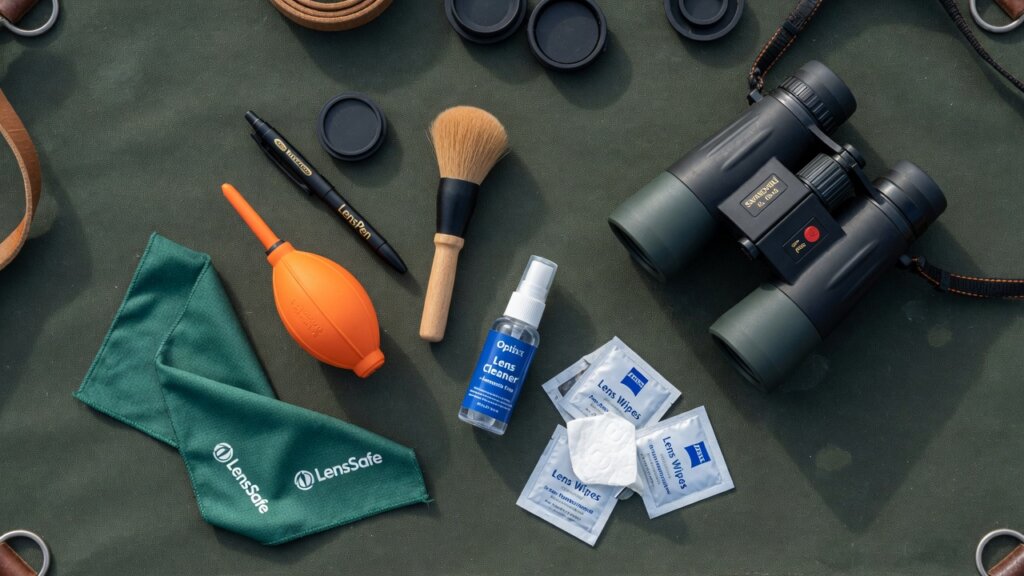
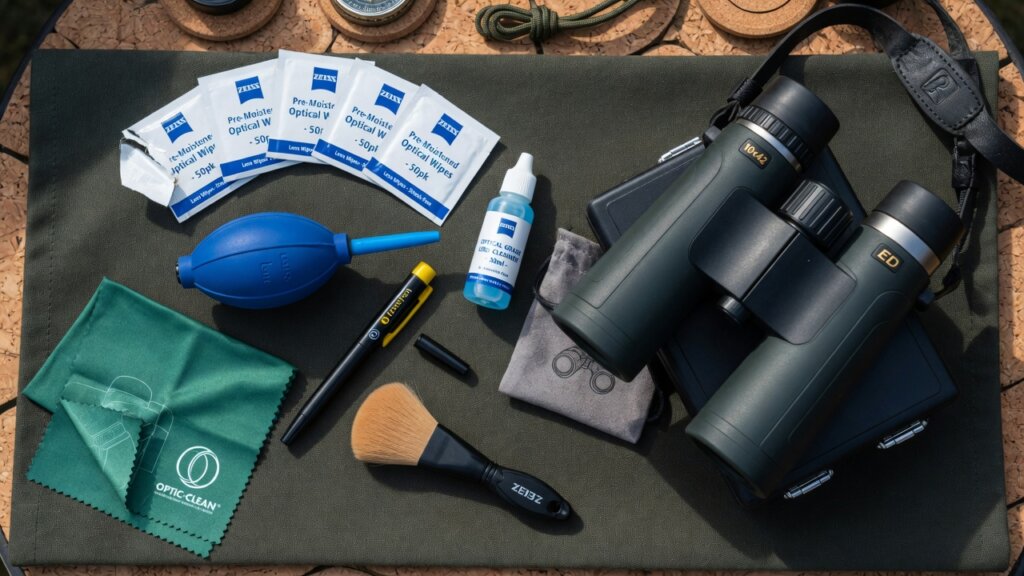
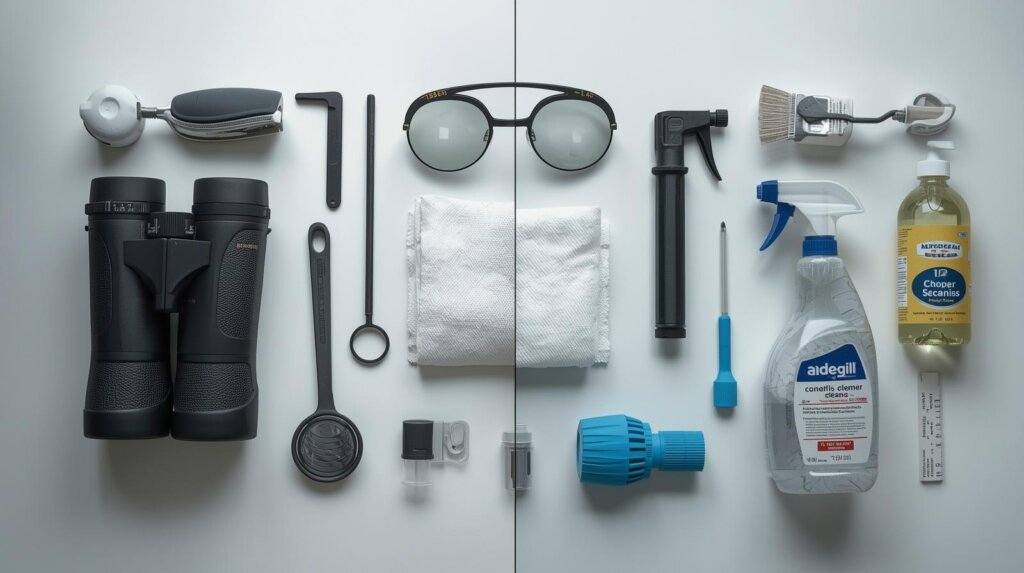
A good cleaning setup does not need to be expensive. In fact, the best binocular cleaning tools are usually small, boring-looking items that do one job very well. A proper microfiber cloth removes fingerprints without dragging grit across the lens. A blower clears dust before you touch the glass. A lens brush reaches edges that cloths miss. A lens pen handles oily marks when you are in the field. A safe lens cleaning solution helps with dried spots without attacking coated lenses. These tools work best as a system, not as random accessories tossed into a drawer.
Why Binocular Cleaning Tools Matter More Than Most People Think
Most binocular owners clean their lenses too late, too aggressively, or with the wrong material. The problem is not always visible immediately. A shirt sleeve may seem harmless once. A tissue may remove the smudge. A quick breath on the lens might appear to work. But over time, those shortcuts can leave fine scratches, coating dullness, smearing, or stubborn haze that does not fully clear.
Modern binocular lenses usually have anti-reflective coatings, phase coatings, hydrophobic coatings, or other surface treatments depending on the model. These coatings help with contrast, brightness, color fidelity, and glare control. They are tough enough for normal outdoor use, but they are not designed for rough wiping, dirty cloths, household cleaners, or repeated pressure with dusty particles still on the glass.
The safest cleaning logic is simple: remove loose particles first, then deal with oils and smudges. Nikon’s lens-cleaning guidance also starts with a blower brush for loose dust before using lint-free cleaning materials for smudges and oily stains. Celestron’s lens cleaning kit description follows the same practical idea: brush for dust, then wipes or fluid for smudges and fingerprints.
That is why binocular cleaning tools are not optional if you actually use your optics outdoors. They are part of ownership, just like a case, harness, neck strap, or lens caps.
What Counts as a Binocular Cleaning Tool?
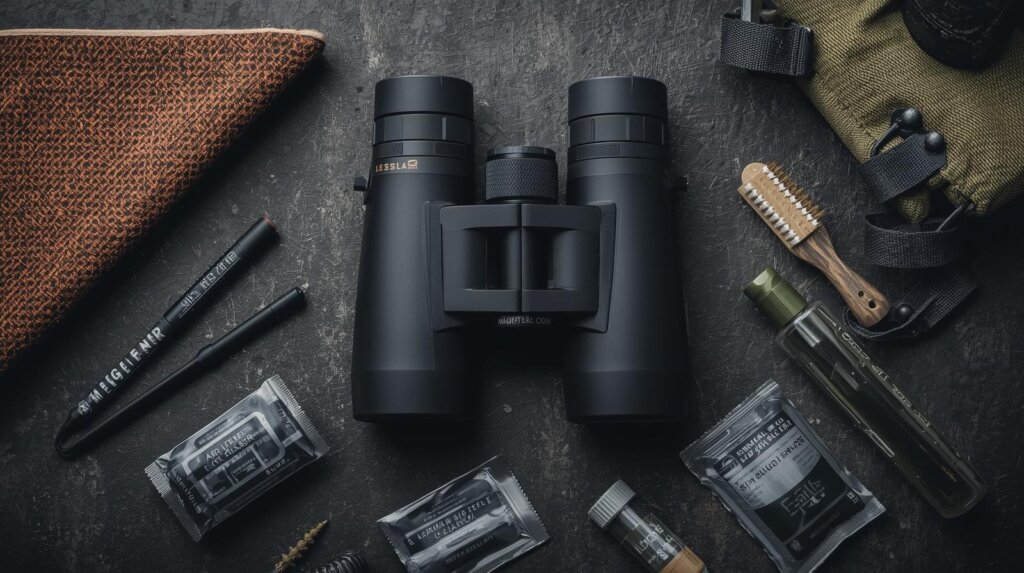
Binocular cleaning tools are accessories designed to clean lenses, eyecups, barrels, focus wheels, lens edges, and sometimes the exterior body without damaging optical surfaces. The core tools include:
| Tool | Main Job | Best For | Avoid Using It For |
|---|---|---|---|
| Air blower | Removes loose dust without contact | Sand, trail dust, pollen, dry particles | Oily fingerprints |
| Lens brush | Sweeps debris from lens edges | Dust around rims, small grit | Wet cleaning |
| Microfiber cloth | Wipes smudges safely | Fingerprints, light haze | Dirty lenses with grit still on them |
| Lens cleaning solution | Breaks down oil and dried marks | Coated lenses, stubborn smears | Spraying directly into binoculars |
| Lens pen | Field cleaning with brush + cleaning tip | Quick outdoor fixes | Muddy or wet lenses |
| Optical wipes | Convenient disposable cleaning | Travel, range bags, glove boxes | Daily heavy cleaning if abrasive |
| Anti-fog spray | Reduces fogging in cold/humid conditions | Winter birding, marine use | Dirty lenses without cleaning first |
A complete cleaning setup does not mean buying every gadget available. It means choosing the right tool for the kind of dirt you actually face.
The Ideal Binocular Cleaning Tools Kit
The best kit for most users includes five essentials: an air blower, a soft lens brush, a clean microfiber cloth, a coated-lens-safe cleaning solution, and a lens pen. Add optical wipes and anti-fog spray only if your lifestyle calls for them.
Here is the setup I would recommend for different users:
| User Type | Must-Have Tools | Nice-to-Have Tools | Why |
|---|---|---|---|
| Bird watchers | Air blower, microfiber cloth, lens pen | Anti-fog spray | Frequent outdoor moisture and fingerprints |
| Hunters | Lens pen, brush, blower, wipes | Compact pouch | Dust, mud, glove handling |
| Marine users | Microfiber cloth, solution, anti-fog spray | Blower | Salt mist and fogging |
| Safari/travel users | Wipes, blower, lens pen | Spare cloths | Dusty roads and limited cleaning space |
| Backyard stargazers | Blower, brush, microfiber cloth | Solution | Dust and fingerprints, less harsh exposure |
| Kids/family use | Wipes, microfiber cloth | Lens pen | Fingerprints are the main issue |
Check the current price for a complete optics cleaning kit here.
Air Blower for Cleaning Binoculars
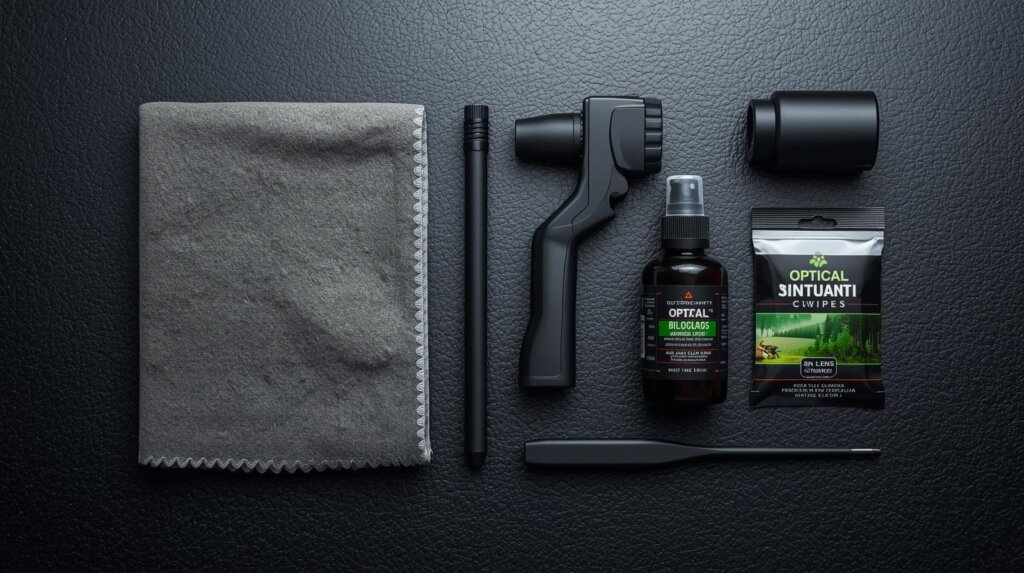
An air blower is usually the first tool you should reach for. It removes loose particles without touching the lens. That matters because dust, sand, pollen, and dried trail grit can act like fine abrasive material if you rub them with a cloth.
A manual rubber air blower is better for most binocular users than canned compressed air. Manual blowers are gentle, portable, reusable, and do not blast freezing propellant onto the lens. They are especially useful after hiking, beach use, safari drives, desert glassing, or any trip where the binoculars have been exposed to dry airborne dirt.
Use short bursts of air while holding the binoculars slightly angled downward. That way, loosened particles fall away from the glass instead of settling back into the lens cup.
Before you touch the glass, learn why an [air blower for cleaning binoculars] can save your coatings from unnecessary wiping damage.
Pros of an Air Blower
| Pros | Why It Helps |
|---|---|
| No contact with the lens | Reduces scratch risk |
| Reusable | No ongoing wipe cost |
| Safe for lens edges | Clears dust near eyecups and objective rims |
| Works in the field | Lightweight and easy to pack |
Cons of an Air Blower
| Cons | What to Know |
|---|---|
| Does not remove oil | You still need cloth or solution |
| Weak blowers feel useless | Choose a medium or large blower |
| Bulky in tiny pockets | Better for kit bags than jeans pockets |
Lens Cleaning Brush for Binoculars
A lens cleaning brush is not the same as a random paintbrush or makeup brush. A proper optics brush uses soft bristles that sweep away particles without scratching coated glass. The brush is especially useful around lens edges, eyecup grooves, hinge areas, and the small rim where dust likes to sit.
The mistake many users make is brushing too hard. You are not scrubbing a boot sole. You are lifting debris. Let the bristles do the work with light strokes, starting from the center and moving outward, or gently sweeping around the rim before using a blower again.
If your binoculars often ride in a truck, backpack, hunting pack, or beach bag, a brush becomes more important than you might think. Dust does not always sit flat on the lens. Sometimes it collects where the glass meets the housing, and that is exactly where cloths tend to drag dirt across the surface.
If grit keeps collecting around the rim of your optics, a dedicated lens cleaning brush for binocula is the smarter first step than wiping harder.
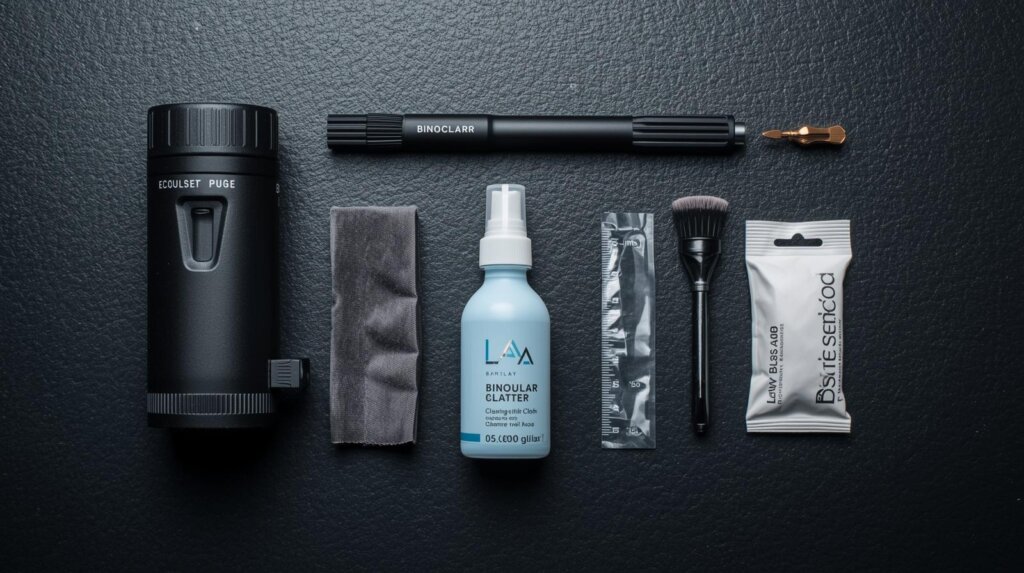
Microfiber Cloth for Binocular Lenses
A microfiber cloth is probably the most used binocular cleaning tool, and also the most abused. A clean microfiber cloth is excellent for fingerprints, light haze, and finishing passes after using cleaning solution. A dirty microfiber cloth is just a soft-looking piece of sandpaper.
Keep at least two cloths: one in your field kit and one at home. Wash or replace them regularly. Do not store them loose in a dusty backpack pocket. Do not use the same cloth for sunscreen, knife oil, phone screens, snacks, and binocular lenses. That is how smears become permanent frustration.
For coated lenses, use gentle circular movements or center-to-edge passes depending on the shape and access. Avoid pressing hard. If the smudge does not lift, the answer is usually not more force. It is a small amount of proper lens cleaning solution applied to the cloth, not directly into the binocular lens housing. Audubon’s binocular care advice also recommends spraying the lens cloth rather than the binoculars themselves.
For a full breakdown of cloth quality, storage, and washing mistakes, see our practical guide to choosing a microfiber cloth for binocular lenses.
What Makes a Good Microfiber Cloth?
| Feature | Why It Matters |
|---|---|
| Fine, soft weave | Reduces lint and surface drag |
| Clean storage pouch | Keeps dust off the cloth |
| Medium size | Easier to control than tiny square cloths |
| Washable material | Longer life and better value |
| No rough edges | Prevents accidental scratching |
Lens Cleaning Solution for Coated Lenses
A lens cleaning solution should be made for optical surfaces, not kitchen counters, windows, or general glass. Household cleaners can contain harsh chemicals, ammonia, or ingredients that may damage coatings. Even when a lens looks like “just glass,” the surface treatment is part of the performance.
For binoculars, I prefer an alcohol-free or coating-safe optical solution when possible. Use it sparingly. One small spray on the microfiber cloth is usually enough. The cloth should be slightly damp, not wet. You do not want liquid running into lens edges, eyepiece assemblies, focus mechanisms, or seals.
ZEISS also advises using lens spray with a microfiber cloth for lens cleaning, with gentle wiping rather than rough pressure. The same logic applies to binoculars: the solution helps loosen oils, but the method still matters.
When fingerprints or dried water marks do not lift with dry cloth alone, a safe lens cleaning solution for coated lenses can make the difference without risking the optical finish.
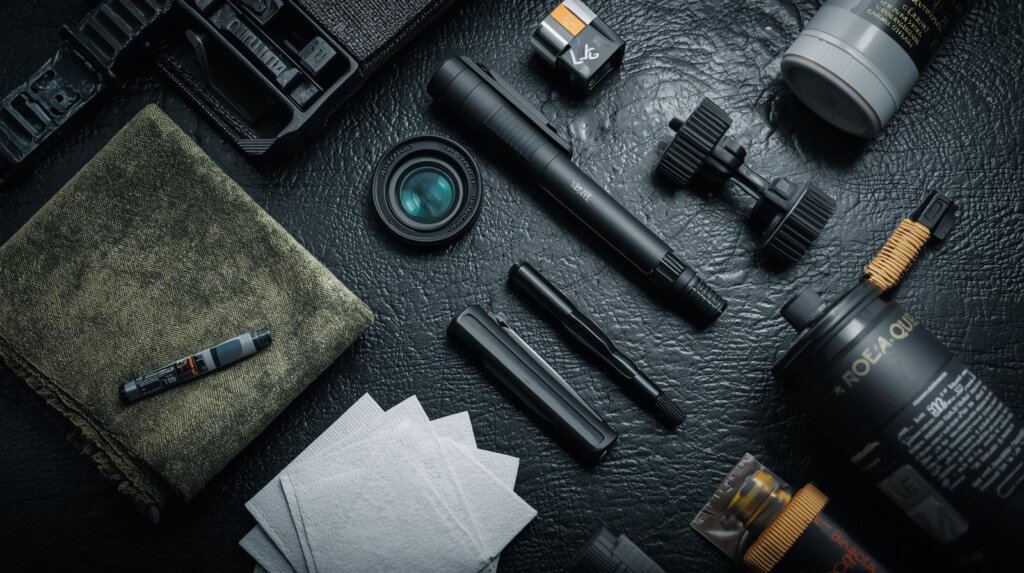
When to Use Lens Cleaning Solution
Use solution when:
| Situation | Should You Use Solution? | Reason |
|---|---|---|
| Fingerprints | Yes | Oils need help breaking down |
| Dried rain spots | Yes, lightly | Cloth alone may smear |
| Dust only | No | Blow or brush first |
| Salt mist | Yes, carefully | Salt residue can cling |
| Mud splatter | Only after debris removal | Never rub grit into glass |
| Eyecup grime | Maybe | Use cloth or swab carefully |
Lens Pen for Binoculars
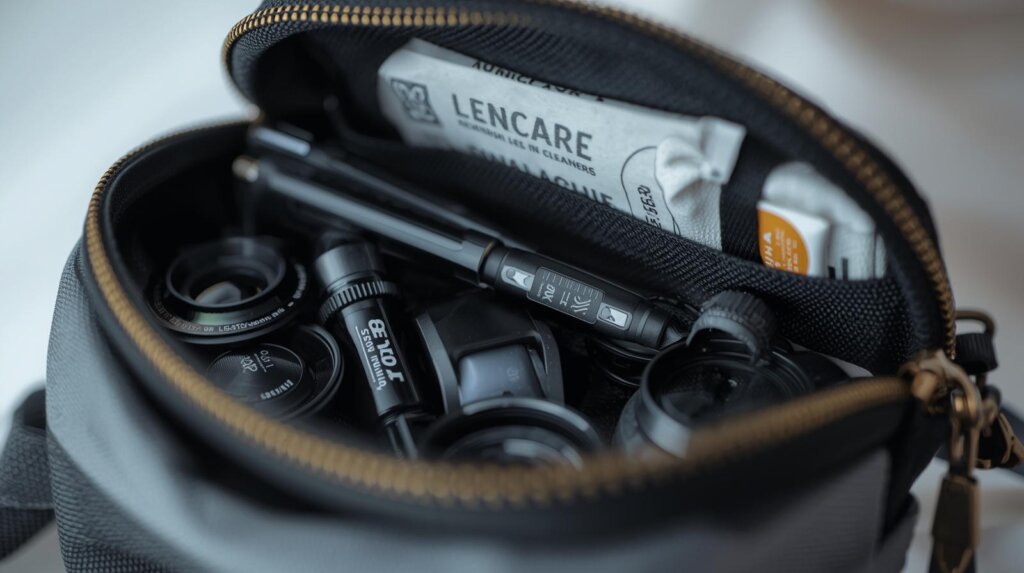
A lens pen is one of the most useful binocular cleaning tools for outdoor users because it combines two jobs in one small item. One end usually has a retractable brush. The other end has a cleaning tip designed to lift fingerprints and oily smudges.
The reason I like lens pens for binoculars is not because they replace a full cleaning kit. They do not. I like them because they are realistic. When you are standing near a trailhead, sitting in a blind, or unpacking gear from a vehicle, you probably will not set up a careful cleaning station. A lens pen gives you a controlled way to fix the view without reaching for your shirt.
Celestron describes its LensPen as a dual-function optical cleaning tool designed to be small enough to keep in an accessory case or camera bag. That portability is exactly why it belongs in a binocular kit.
For field use, the most convenient upgrade is often a [lens pen for binoculars] because it gives you a brush and smudge cleaner in one pocket-sized tool.
Lens Pen Pros and Cons
| Pros | Cons |
|---|---|
| Compact and easy to carry | Tip can get dirty over time |
| Great for fingerprints | Not ideal for wet mud |
| Includes brush end | Must be capped properly |
| Useful in the field | Not a replacement for solution |
| Affordable | Cheap versions may feel rough |
Cleaning Wipes for Optical Lenses
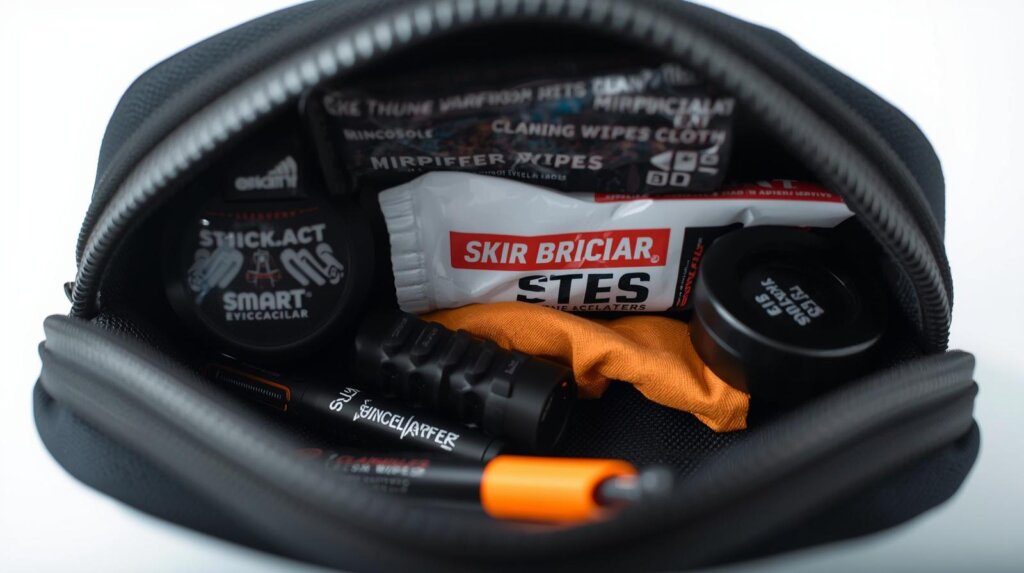
Optical cleaning wipes are useful because they are individually packed, disposable, and convenient. They make sense in travel bags, range bags, glove compartments, camera pouches, and emergency kits. When a lens gets smudged during a trip and you do not have a clean microfiber cloth nearby, a sealed wipe is better than guessing what is on your sleeve.
But wipes are not perfect. Some are too wet. Some leave streaks. Some dry out. Some are not ideal for repeated daily use on expensive coated optics. The best use for cleaning wipes is occasional convenience, not replacing a careful cleaning routine.
If you travel often or share binoculars with family, keep a few cleaning wipes for optical lenses in your bag for quick, sealed, no-laundry cleanups.
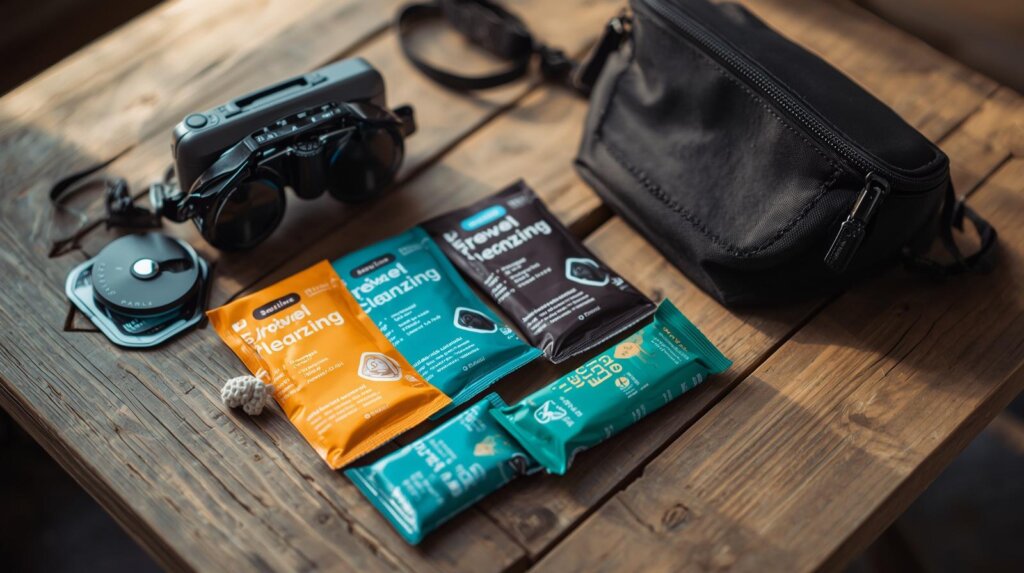
When Wipes Make Sense
| Scenario | Wipes Are Useful? | Notes |
|---|---|---|
| Travel | Yes | Easy to pack and discard |
| Shared binoculars | Yes | Good for fingerprints |
| Daily home cleaning | Not always | Microfiber may be better |
| Heavy dust | Only after blowing | Do not wipe grit |
| Expensive premium optics | Carefully | Use trusted optical wipes only |
Anti-Fog Spray for Binoculars
Anti-fog spray is not really a cleaning tool in the classic sense, but it belongs in the larger binocular care category. Fogging happens when temperature and humidity shift quickly. Think early morning birding, cold-weather hunting, marine viewing, wetland observation, or taking binoculars from a warm vehicle into cold air.
Anti-fog spray works best on already-clean lenses. If you apply it over fingerprints, dust, or residue, you may get streaking. Clean the lenses first, let them dry, then apply a small amount according to the product instructions. Some anti-fog products are designed for glasses, screens, scopes, and optics, but always check whether they are safe for coated lenses.
ZEISS notes its AntiFOG product is applied to a cloth and rubbed on lenses, with claimed fog prevention for up to 72 hours for eyewear use. For binocular users, the bigger lesson is method: apply carefully with a cloth, do not flood the optic.
If cold mornings keep ruining your view, an anti fog spray for binoculars may be worth adding after your regular cleaning setup.
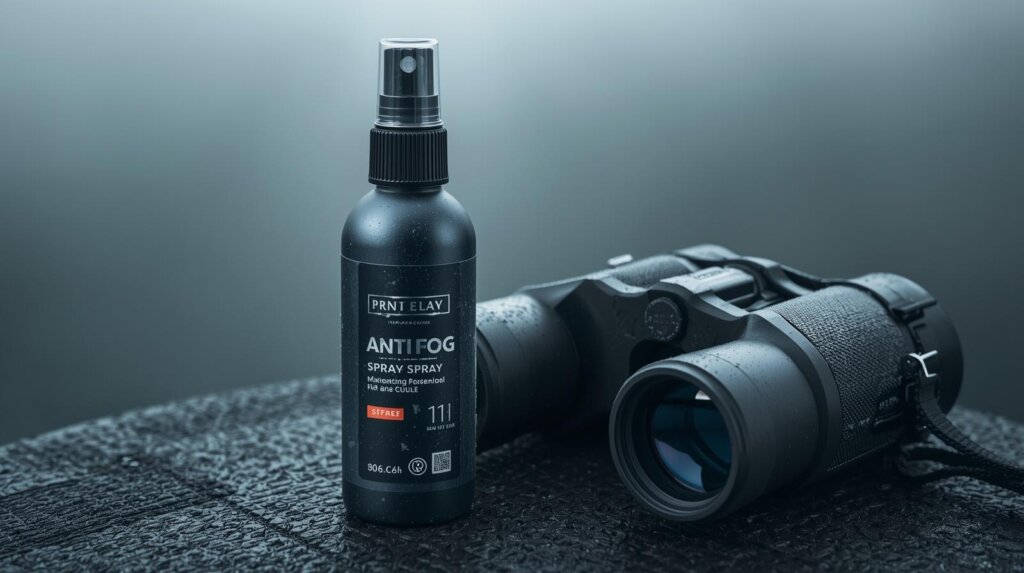
The Right Cleaning Order for Binocular Lenses
The order matters more than the brand name on the cleaning tool. A premium cloth used at the wrong time can still cause damage. A cheap blower used correctly can prevent scratches.
Use this simple sequence:
| Step | Tool | Purpose |
|---|---|---|
| 1 | Air blower | Remove loose dust and grit |
| 2 | Lens brush | Clear particles near edges |
| 3 | Microfiber cloth | Remove light smudges |
| 4 | Cleaning solution | Loosen oils and dried marks |
| 5 | Dry microfiber finish | Remove streaks |
| 6 | Anti-fog spray | Optional prevention layer |
Notice that touching the lens comes after dust removal. That is the point many users skip.
Common Mistakes That Damage Binocular Lenses
Wiping Dust Before Blowing It Off
This is the classic mistake. The lens looks dusty, so the user grabs a cloth and wipes. If the dust includes sand, grit, dry mud, salt crystals, or hard particles, the cloth can drag those particles across the coating. Use air first.
Breathing on the Lens
Many people breathe on lenses because it feels natural. The problem is moisture from breath can include tiny droplets and residue. It may work in a pinch, but it is not a habit worth building, especially with expensive binoculars.
Using T-Shirts, Tissue, or Paper Towels
Clothing carries dirt, sweat, detergent residue, sunscreen, and body oils. Tissues and paper towels may feel soft to fingers but can be rougher than proper optical microfiber. They also leave lint and streaks.
Spraying Cleaner Directly on the Lens
Liquid can seep into edges, seals, eyecups, or mechanical parts. Spray the cloth lightly instead. That one habit prevents many cleaning problems.
Cleaning Too Often
Yes, you can over-clean binoculars. A tiny speck near the edge that does not affect your view may not need an immediate full cleaning session. Every contact with the lens carries some risk, so clean when the view is affected or contamination could cause damage.
Binocular Cleaning Tools for Different Real-World Situations
For Bird Watching
Birders often deal with fingerprints, morning moisture, pollen, and quick transitions between warm cars and cool outdoor air. A microfiber cloth, blower, lens pen, and anti-fog spray make the most sense. Birders also tend to raise and lower binoculars frequently, so eyepiece smudges happen often.
Recommended setup:
| Tool | Priority |
|---|---|
| Lens pen | High |
| Microfiber cloth | High |
| Air blower | Medium |
| Anti-fog spray | Medium |
| Cleaning solution | Medium |
For Hunting
Hunters need durable, compact binocular cleaning tools. Gear gets handled with gloves, moved through brush, and exposed to dust, rain, cold, or mud. A lens pen clipped into a bino harness is more realistic than a large bottle of cleaner.
Recommended setup:
| Tool | Priority |
|---|---|
| Lens pen | High |
| Air blower | High |
| Optical wipes | High |
| Microfiber cloth | Medium |
| Cleaning solution | Low for field, high at home |
For Marine and Coastal Use
Salt is the enemy. Marine users should avoid letting salt residue dry and sit for long periods. Use a blower for dry particles, then a lightly damp microfiber cloth with safe solution when needed. Keep your cleaning cloth sealed so it does not collect sand.
Recommended setup:
| Tool | Priority |
|---|---|
| Microfiber cloth | High |
| Lens cleaning solution | High |
| Anti-fog spray | High |
| Air blower | Medium |
| Wipes | Medium |
For Travel and Safari
Dust is the big problem. Safari vehicles, dry roads, luggage handling, and hotel-room cleaning habits can all create lens contamination. A blower and sealed wipes are practical because you may not always have a clean surface to work on.
Recommended setup:
| Tool | Priority |
|---|---|
| Air blower | High |
| Optical wipes | High |
| Lens pen | High |
| Microfiber cloth | High |
| Cleaning solution | Medium |
Buyer Psychology: What People Really Need vs. What They Buy
Most buyers make one of three mistakes. Some buy the cheapest kit and assume all cloths and solutions are the same. Some buy an expensive brand-name kit but never learn the cleaning order. Others buy nothing, then panic-clean their binoculars with whatever is nearby.
The smart purchase is not the biggest kit. It is the kit you will actually use correctly.
A beginner should buy a complete optics cleaning kit with a blower, brush, microfiber cloth, and solution. A frequent outdoor user should add a lens pen and sealed wipes. A premium binocular owner should be more selective about cloth quality, solution safety, and clean storage.
The emotional side matters too. People clean aggressively because smudges feel annoying. They want the view fixed immediately. But optics care rewards patience. Blow first. Brush gently. Wipe lightly. Use solution only when needed. That slower rhythm keeps binoculars performing longer.
What to Look for Before Buying Binocular Cleaning Tools
Coating-Safe Labels
Look for products made for optics, camera lenses, scopes, binoculars, or coated lenses. Avoid household glass cleaners.
Clean Storage
A microfiber cloth without a pouch is likely to get dirty. A brush without a cap can collect debris. A lens pen without secure caps becomes risky.
Field Portability
If you use binoculars outdoors, the tools need to fit your real kit. A large home cleaning set is useful, but not when you are three miles from the trailhead.
Replaceable or Washable Parts
Microfiber cloths should be washable or replaceable. Lens pens should be replaced once the cleaning tip becomes dirty or worn. Wipes should stay sealed.
No Overly Harsh Ingredients
For lens solutions and wipes, avoid products that seem designed for general glass rather than optics. The safest language is usually optical, coated lens safe, camera lens safe, or anti-reflective coating safe.
Best Binocular Cleaning Tools by Need
| Need | Best Tool | Why |
|---|---|---|
| Dust removal | Air blower | No-contact cleaning |
| Edge cleaning | Lens brush | Reaches rims and grooves |
| Fingerprints | Microfiber cloth + solution | Removes oils gently |
| Field cleaning | Lens pen | Compact and practical |
| Travel cleaning | Optical wipes | Sealed and disposable |
| Cold weather | Anti-fog spray | Reduces fogging |
| Premium optics | Full optics kit | Safer, more controlled process |
My Practical Recommendation
If I were building a binocular cleaning setup from scratch, I would not start with ten products. I would start with this:
| Priority | Tool | Why I Would Buy It |
|---|---|---|
| 1 | Manual air blower | Prevents the worst cleaning mistake |
| 2 | Optical microfiber cloths | Needed for most smudges |
| 3 | Lens pen | Best field tool |
| 4 | Coated-lens-safe solution | Helps with oils and dried marks |
| 5 | Soft lens brush | Better edge cleaning |
| 6 | Optical wipes | Travel convenience |
| 7 | Anti-fog spray | Useful only in certain conditions |
For most readers, a complete binocular cleaning tools kit is the easiest first purchase. Then add a better lens pen or extra microfiber cloths later. Do not overthink it, but do not cheap out on the cloth and solution either. Those are the items that actually touch the glass.
If your binoculars are worth protecting, start with a simple optics-safe kit and keep it in the same bag as your binoculars so you actually use it.
How Often Should You Clean Binoculars?
Clean binoculars only when they need it. That may sound too simple, but it is the right approach.
If the view is clear and the lenses only have tiny edge dust, leave them alone or use a blower. If you see fingerprints, haze, salt residue, dried raindrops, or sticky marks, clean them properly. If the binoculars have been used in sand, coastal spray, dusty roads, or muddy conditions, inspect them before storing.
A good habit is to do a quick check after every major outing:
| After Use Condition | Cleaning Needed? |
|---|---|
| Clean backyard use | Usually no |
| Light dust | Blower only |
| Fingerprints | Microfiber cloth or lens pen |
| Rain spots | Cloth + solution |
| Salt air | Careful cleaning recommended |
| Mud splatter | Remove debris first, then clean |
| Foggy cold morning | Clean first, anti-fog if needed |
How to Store Binocular Cleaning Tools
Storage is where many cleaning kits fail. A dusty cloth, dirty brush, or uncapped lens pen can become more dangerous than helpful.
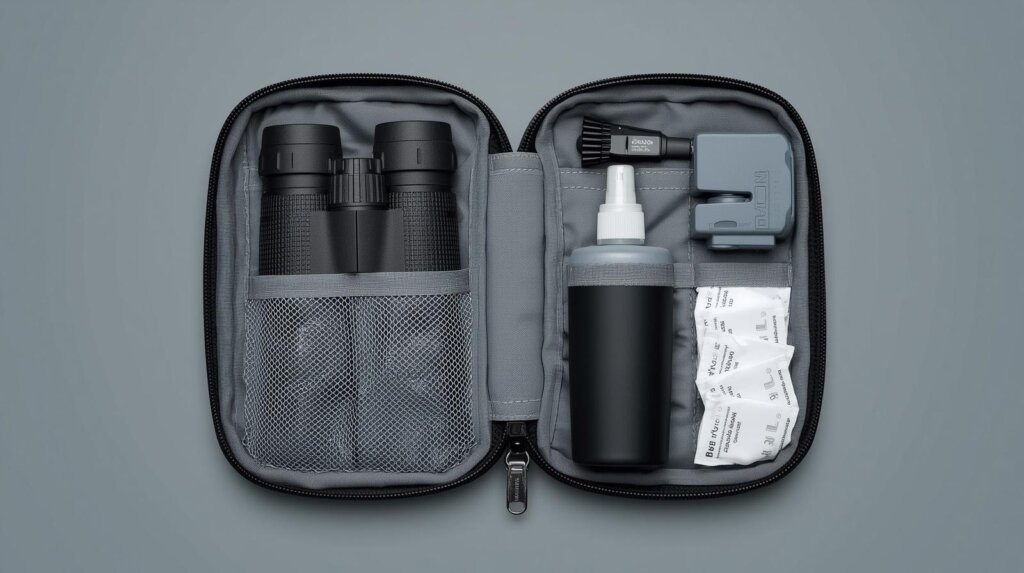
Keep tools inside a small zip pouch. Store microfiber cloths in individual sleeves. Keep solution bottles tightly closed. Replace wipes that dry out. Do not store the kit next to loose snacks, sand-covered gloves, oily tools, or sunscreen bottles.
If you use a binocular harness, keep a lens pen or small cloth in a dedicated clean pocket. Do not toss it into the same pocket as keys, pocket knives, trail mix, or fire starters.
Binocular Cleaning Tools vs. Camera Cleaning Tools
Many camera cleaning tools can work for binoculars, but not all of them are ideal. Camera kits often include blowers, lens pens, microfiber cloths, and cleaning solution. These are usually suitable if they are safe for coated optics.
The difference is how binoculars are used. Binoculars have two objective lenses and two eyepieces, more exposed rubber armor, eyecups, hinge areas, focus wheels, and sometimes deeper lens recesses. They are also handled more casually than camera lenses. That means binocular users often need more dust removal and more fingerprint control.
| Tool Type | Camera Use | Binocular Use |
|---|---|---|
| Air blower | Sensor/lens dust | Lens dust and eyecup dust |
| Microfiber cloth | Front element cleaning | Eyepieces and objectives |
| Lens pen | Quick lens touch-up | Great for field use |
| Cleaning solution | Controlled cleaning | Useful but must be applied carefully |
| Wipes | Travel photography | Travel binocular care |
Should You Buy a Full Kit or Individual Tools?
A full kit is best for beginners, casual users, and anyone who wants a simple solution. Individual tools are better for experienced users who already know what they like.
| Buying Option | Best For | Pros | Cons |
|---|---|---|---|
| Full cleaning kit | Beginners and families | Convenient, complete, affordable | Some tools may be average quality |
| Individual tools | Premium binocular owners | Better quality control | Costs more and takes more thought |
| Travel wipes only | Occasional users | Simple and compact | Not enough for full care |
| Lens pen only | Field users | Portable and useful | Not enough for all cleaning needs |
My honest take: start with a complete kit, then upgrade the cloth and lens pen if you use your binoculars often.
FAQs About Binocular Cleaning Tools
What are the best binocular cleaning tools for beginners?
The best binocular cleaning tools for beginners are a manual air blower, soft lens brush, microfiber cloth, coated-lens-safe cleaning solution, and a lens pen. This setup covers dust, fingerprints, light smudges, and basic field cleaning without making the process complicated.
Can I use glasses cleaner on binocular lenses?
Sometimes, but only if the cleaner is safe for coated lenses. Many binocular lenses have special coatings, so avoid harsh household glass cleaners. If the glasses cleaner is designed for anti-reflective coated lenses and used lightly on a microfiber cloth, it may be suitable.
Is a microfiber cloth enough for cleaning binoculars?
A microfiber cloth is useful, but it is not enough by itself. If dust or grit is on the lens, use an air blower or lens brush first. A cloth should usually be used after loose particles are removed.
Can I clean binocular lenses with water?
A tiny amount of clean moisture may help in some situations, but plain water can leave spots and does not break down oils well. A proper optical lens cleaning solution is usually better for fingerprints and dried marks.
Are lens pens safe for binoculars?
A lens pen is safe when used correctly on dry lenses after loose dust has been removed. Keep the caps on, replace the pen when dirty, and avoid using it on muddy or gritty glass.
Should I use anti-fog spray on binoculars?
Anti-fog spray can help if you use binoculars in cold, humid, or marine conditions. Clean the lenses first, then apply anti-fog product carefully with a cloth. Avoid overapplying.
Can cleaning wipes damage binocular lenses?
Good optical cleaning wipes are generally safe when used on lenses without loose grit. The risk comes from low-quality wipes, dried-out wipes, or wiping dusty lenses before blowing off particles.
How do I clean binoculars without scratching them?
Use a no-contact method first. Blow away dust, brush edges gently, then use a clean microfiber cloth. For oily marks, apply lens solution to the cloth rather than spraying the binoculars directly.
How often should I replace microfiber cloths?
Replace microfiber cloths when they feel rough, stop cleaning well, collect lint, or have been contaminated with oil, sand, sunscreen, or dirt. Washing helps, but cloths are inexpensive enough to replace regularly.
What should I keep in a field cleaning kit?
A field cleaning kit should include a lens pen, small air blower, sealed optical wipes, and a clean microfiber cloth in a pouch. For home cleaning, add lens solution and extra cloths.
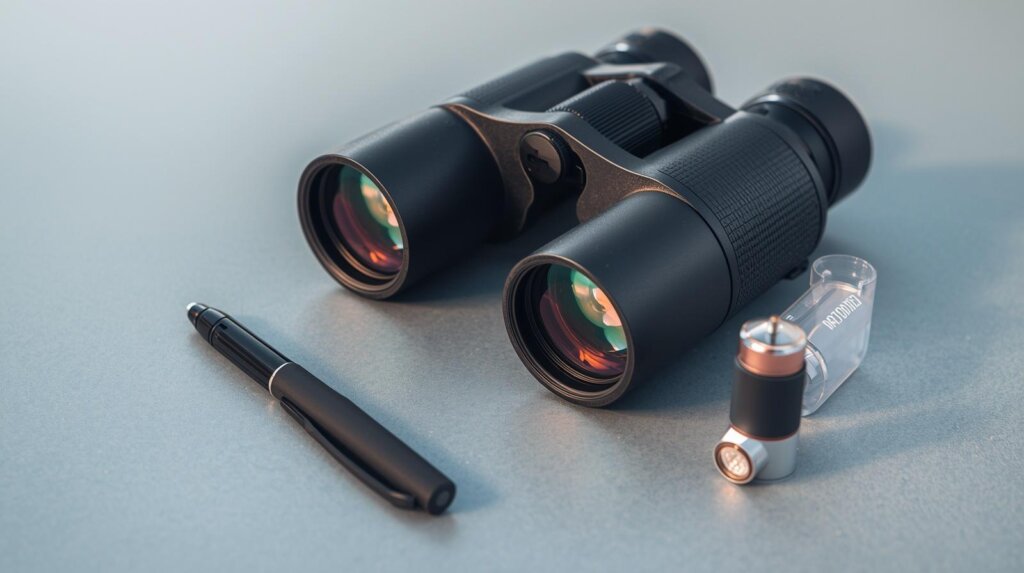
Final Verdict: Build a Small Kit, Use It Correctly, and Protect the View
Binocular cleaning tools are not exciting in the way binocular magnification, glass quality, or field of view can be exciting. But they protect all of those things. A bright, sharp binocular can only perform well if the lenses stay clean and the coatings stay healthy.
The best setup is simple: air blower first, brush second, microfiber cloth third, solution only when needed, lens pen for field fixes, wipes for travel, and anti-fog spray for tough weather. That small group of binocular cleaning tools covers almost every real-world situation without turning lens care into a complicated ritual.
protect dusty lenses with an air blower for cleaning binoculars, remove rim debris with a lens cleaning brush for binoculars, handle fingerprints with a microfiber cloth for binocular lenses, deal with stubborn smears using a lens cleaning solution for coated lenses, carry a lens pen for binoculars in the field, pack cleaning wipes for optical lenses for travel, and reduce cold-weather fog with an anti fog spray for binoculars.
And when you are ready to explore more binocular care, buying advice, and outdoor optics tips, start from the main hub at bestbinocular.net and build your gear knowledge from there.




