
Best Lens Cleaning Solution for Coated Lenses to Protect Binocular Optics
A good lens cleaning solution for coated lenses is not about making glass look shiny for a few minutes. It is about removing fingerprints, trail dust, pollen, dried mist, sunscreen smears, and oily marks without wearing down the delicate anti-reflective coatings that make binoculars perform well in the first place.
Coated binocular lenses are not ordinary glass. The lenses may have anti-reflective, hydrophobic, or protective coatings, while some binoculars also use prism coatings that improve contrast and clarity. Use the wrong cleaner, and the damage may not show immediately. It often appears later as hazy patches, rainbow-like smears, or a surface that never looks fully clear again. That is why choosing the right lens cleaning solution for coated lenses matters more than most casual users think.
Why Coated Binocular Lenses Need a Specific Cleaning Solution
Binocular lenses collect grime differently from phone screens or regular windows. When you are glassing from a hiking ridge, sitting in a hunting blind, watching shorebirds near salt air, or packing binoculars in a dusty vehicle, the front objective lenses become a magnet for tiny particles.
The risk is not only dirt. The real problem is rubbing dirt across the coating.
A proper lens cleaning solution for coated lenses softens oily residue and helps lift contaminants so they can be removed with less friction. That matters because binocular coatings are designed for light transmission, contrast, glare control, and color clarity. They are not built to survive repeated cleaning with household glass cleaner, paper towels, shirt fabric, or random alcohol sprays.
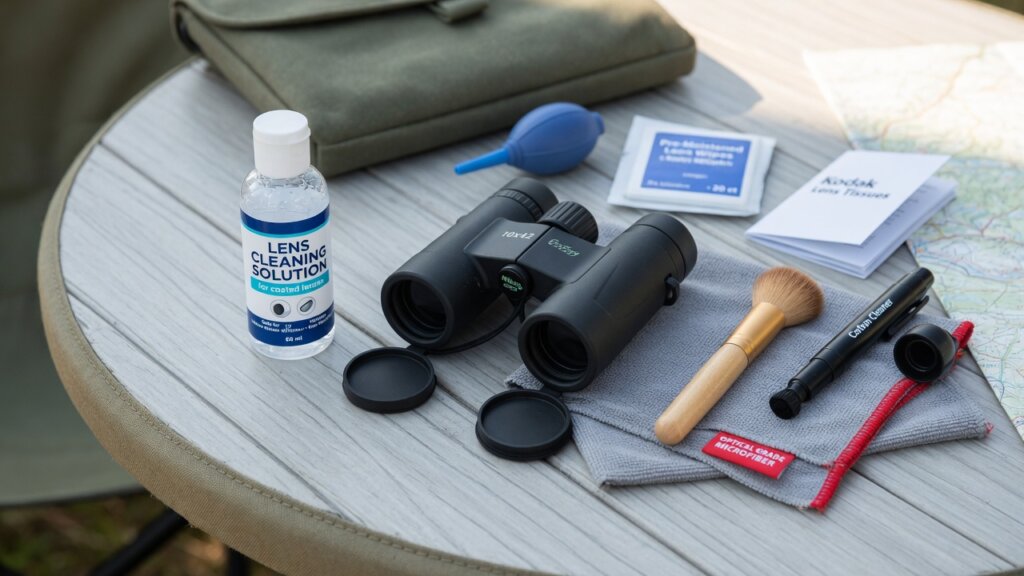
For a complete cleaning setup, start with the main silo article on binocular cleaning tools. It helps you build a simple kit instead of buying random accessories that do not work well together.
What Makes a Lens Cleaning Solution Safe for Coated Lenses?
A safe formula should clean without being aggressive. That sounds simple, but many users make the mistake of assuming “stronger” means “better.” With binocular optics, gentle usually wins.
The best lens cleaning solution for coated lenses should be:
| Feature | Why It Matters for Binoculars |
|---|---|
| Coating-safe formula | Reduces risk of damaging anti-reflective coatings |
| Fast-drying | Helps avoid streaks and leftover moisture marks |
| Residue-free | Keeps the view clear without a cloudy film |
| Suitable for optical glass | Works better than general-purpose cleaners |
| Paired with microfiber | Prevents scratches from rough wiping materials |
Avoid anything with ammonia, harsh solvents, strong fragrance, or unknown industrial chemicals. These ingredients may be acceptable for household surfaces, but binocular coatings need a lighter touch.
A good test is simple: if the bottle does not clearly say it is suitable for coated lenses, optical lenses, camera lenses, binoculars, or precision optics, do not use it.
Lens Cleaning Solution vs Wipes vs Lens Pen
Each cleaning tool has a place. The mistake is using one tool for every situation.
| Cleaning Option | Best For | Not Ideal For |
|---|---|---|
| Lens cleaning solution | Fingerprints, oil, sunscreen, stubborn smudges | Loose dust without brushing first |
| Cleaning wipes | Travel, quick cleaning, emergency use | Heavy grit or repeated deep cleaning |
| Lens pen | Dust and light smudges in the field | Wet grime, salt spray, sticky residue |
| Dry microfiber cloth | Final polish and light marks | Mud, sand, dried sweat, heavy oils |
A lens cleaning solution for coated lenses is best when you need controlled cleaning at home, in a vehicle, or after a long outdoor trip. Wipes are easier on the move, and a lens pen is excellent for quick field touch-ups.
For better field cleaning, read the supporting article on lens pen for binoculars. For travel-friendly cleaning, the article on cleaning wipes for optical lenses explains when wipes are useful and when they are not enough.
When You Should Use Lens Cleaning Solution on Binoculars
You do not need to spray your binocular lenses every time you see one dust speck. Overcleaning can be just as risky as undercleaning.
Use lens cleaning solution for coated lenses when the lens has:
- Fingerprints from adjusting or packing
- Oily eyelash marks on eyepieces
- Sunscreen or skin oil smears
- Dried mist or light water spots
- Pollen film after spring use
- Salt haze from coastal viewing
- Sticky dust that does not lift with air alone
Here is the practical rule: if a dry blower or soft brush removes the debris, stop there. If the mark is oily, smeary, or bonded to the glass, then a coating-safe solution makes sense.
I prefer cleaning after the trip, not during it, unless the view is genuinely affected. In the field, people rush. They press harder. They use whatever cloth is nearby. That is when coatings get scratched.
How to Clean Coated Lenses Without Leaving Streaks
Start by removing loose dust first. Use an air blower or a clean lens brush. This small step prevents grit from becoming sandpaper.
Then apply a small amount of lens cleaning solution to a microfiber cloth, not directly onto the binocular lens. Direct spraying can push liquid toward lens edges, seals, or internal gaps. A lightly damp cloth gives you more control.
Wipe gently in small circles from the center outward. Do not scrub. If a mark does not disappear immediately, add a little more solution to the cloth and repeat with light pressure.
Finish with a dry section of the microfiber cloth to remove any leftover moisture.
The technique matters as much as the product. Even the best lens cleaning solution for coated lenses can perform badly if the cloth is dirty, rough, or overloaded with old oil.
Real-World Use Cases: Which Cleaner Fits Your Situation?
Hiking and Backpacking
Dust, sweat, and sunscreen are the main enemies here. A small 2 oz bottle of lens cleaning solution and one sealed microfiber cloth are enough. Keep them inside a zip pouch so the cloth does not collect backpack grit.
For hiking, I would not carry a large bottle. Weight matters, and leaks are annoying.
Bird Watching Near Water
Humidity and mist often leave thin marks on objective lenses. A lens cleaning solution for coated lenses works well after the session, especially if you have been near saltwater. Do not let salt residue sit for days. It can become harder to remove and may encourage more aggressive wiping later.
Hunting and Low-Light Glassing
Hunters often clean lenses in poor light, with cold fingers, and under pressure. That is a bad combination. Use a blower first, then a lens pen for dust. Save the liquid cleaning for camp or home unless the view is badly affected.
Safari, Travel, and Vehicle Use
Fine dust inside vehicles is sneaky. It settles on lenses, caps, and cloths. In this case, your microfiber cloth must be kept sealed. A dirty cloth plus liquid cleaner can create micro-scratches faster than people expect.
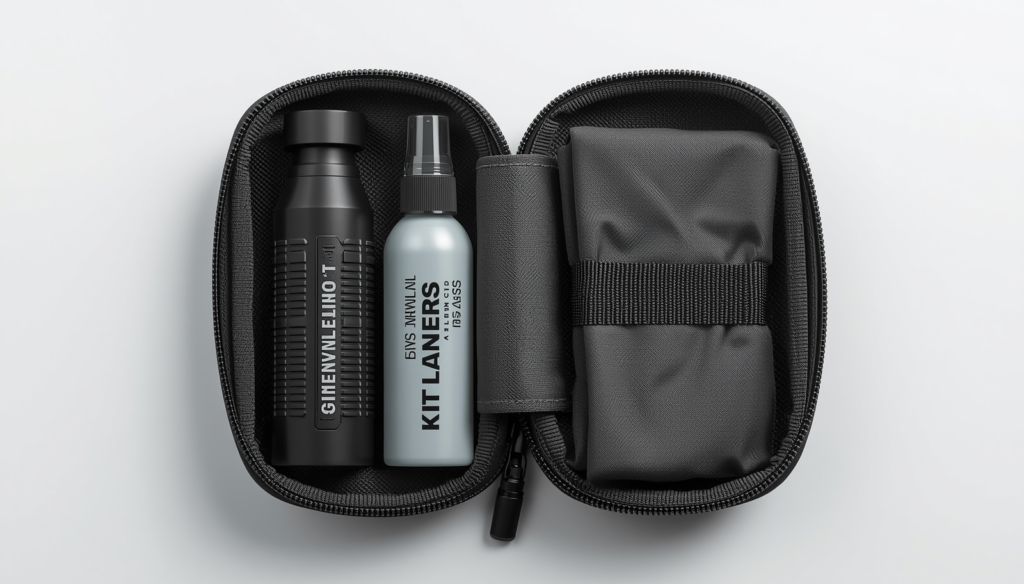
One Product Worth Considering
For most binocular owners, ZEISS Lens Cleaning Spray or the ZEISS Lens Care Kit is a strong option because it is made for optical surfaces and is commonly paired with a microfiber cloth. ZEISS describes its lens spray as an alternative to wipes that should be used with a microfiber cloth, and its sports optics lens care kit is formulated for coated lenses including binoculars, camera lenses, and other optics.
I would not call it the only good cleaner on the market, but it is one of the safer mainstream choices when you want a lens cleaning solution for coated lenses from a brand with deep optics experience.
Use it lightly. The product is good, but heavy spraying is still unnecessary.
Pros and Cons of Lens Cleaning Solution for Coated Lenses
| Pros | Cons |
|---|---|
| Removes oily fingerprints better than dry cloth alone | Requires a clean microfiber cloth |
| Better for stubborn smudges than a lens pen | Can streak if over-applied |
| Useful after dusty, humid, or coastal trips | Not ideal for loose grit without brushing first |
| Helps reduce rubbing pressure | Bottles can leak during travel if poorly packed |
| Works well for home cleaning kits | Not as convenient as single-use wipes |
The biggest advantage is control. You decide how much liquid to use, which cloth to pair it with, and how gently to clean. The biggest downside is that people often use too much.
More solution does not mean a cleaner lens. It usually means more streaks.
Buyer Tips Before Choosing a Lens Cleaning Solution
A smart buyer should look beyond the label design. Some bottles look professional but give very little information about lens safety.
Choose a lens cleaning solution for coated lenses that clearly mentions optical use. Better still, look for wording such as coated lenses, anti-reflective lenses, binoculars, camera lenses, scopes, or precision optics.
Also consider bottle size. A large bottle is fine for home use, but a compact bottle is better for a binocular case, vehicle kit, or travel pouch.
The cloth matters too. A cheap cleaner with a good microfiber cloth can outperform an expensive cleaner used with a dirty cloth. Wash microfiber carefully, avoid fabric softener, and store it away from dust.
For more practical outdoor optics tips, visit the blog tips page and the Best Binocular home page for more binocular care and buying support.
Common Mistakes That Damage Coated Lenses
The first mistake is using household glass cleaner. Window sprays are not designed for precision optics. They may contain ingredients that are too aggressive for lens coatings.
The second mistake is using tissues or paper towels. Paper feels soft to your fingers, but it can be rough on coated glass.
The third mistake is cleaning in circles with trapped dust still on the lens. If dust is visible, remove it first.
The fourth mistake is breathing on the lens and wiping it with a shirt. Many users do this out of habit because it feels harmless, but it is not recommended for coated optics.
The fifth mistake is using the same microfiber cloth for everything. A cloth that cleaned sunglasses, phone screens, and car dust should not touch binocular optics.
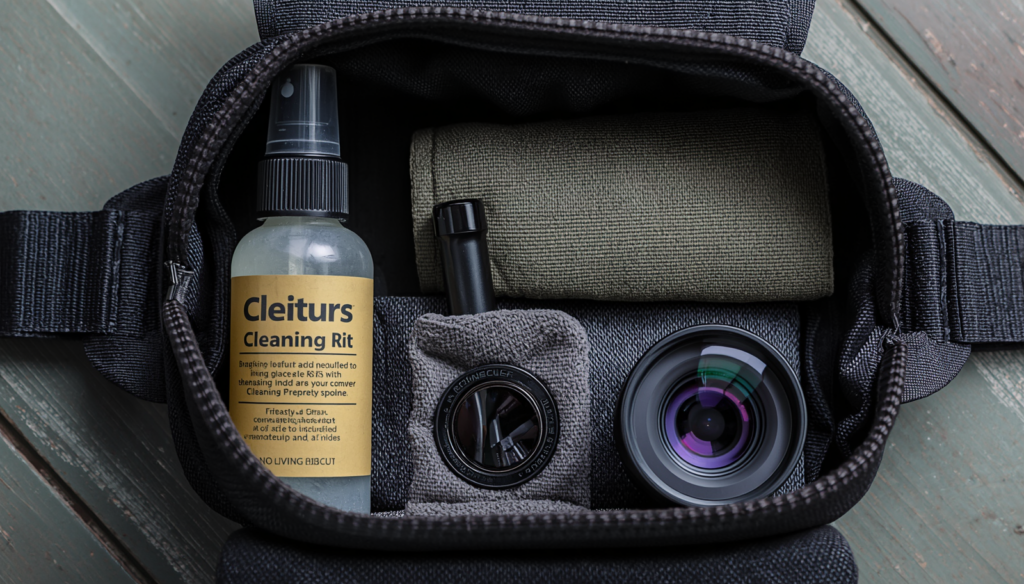
Best Cleaning Routine for Different Lens Conditions
| Lens Condition | Best First Step | Best Cleaner Choice |
|---|---|---|
| Loose dust | Air blower or soft brush | No liquid needed |
| Fingerprints | Blow dust first | Lens cleaning solution for coated lenses |
| Eyelash oil | Light brush if needed | Solution with microfiber cloth |
| Dried water spots | Damp microfiber | Coating-safe solution |
| Salt mist | Gentle pre-clean | Lens solution, then dry microfiber |
| Mud splash | Do not wipe dry | Careful damp cleaning after debris removal |
This is where experience matters. A beginner sees a dirty lens and starts wiping. A careful optics user first asks, “Is this dust, oil, salt, or grit?”
That one question changes the cleaning method.
Why Residue-Free Cleaning Matters
Some cleaners remove the visible mark but leave a thin film. You may not notice it indoors, but outdoors it can lower contrast, especially when looking toward bright sky, snow, water, or low sun.
A residue-free lens cleaning solution for coated lenses helps keep the image crisp. It also reduces the temptation to keep wiping the same spot again and again.
If your binoculars look clean indoors but hazy outside, residue may be the reason. Try a fresh microfiber cloth and a smaller amount of solution next time.
Storage Tips After Cleaning
After cleaning, let the lenses fully dry before replacing caps. Trapped moisture under lens caps is not ideal, especially if the binoculars are stored in a warm case.
Keep your cleaning solution upright. Store microfiber cloths in a small resealable pouch. Replace cloths when they feel greasy, stiff, or dusty even after washing.
A good cleaning kit should feel boring. That is the point. The goal is simple, safe, and controlled cleaning without risky shortcuts or harsh chemicals..
FAQs About Lens Cleaning Solution for Coated Lenses
What is the best lens cleaning solution for coated lenses?
The best lens cleaning solution for coated lenses is a coating-safe, residue-free optical cleaner designed for binoculars, camera lenses, scopes, or anti-reflective lenses. Avoid household glass cleaners and unknown sprays.
Can I use alcohol wipes on coated binocular lenses?
Some optical wipes are safe when designed for coated lenses, but random alcohol wipes are risky. They may be too harsh or leave residue. Use wipes made specifically for optical lenses.
Should I spray lens cleaner directly on binocular lenses?
It is better to spray the cleaner onto a microfiber cloth first. This gives more control and reduces the chance of liquid reaching lens edges or seals.
How often should I clean coated binocular lenses?
Clean only when needed. Dust can often be removed with air or a brush. Use lens cleaning solution when fingerprints, oil, dried mist, or stubborn smudges affect the view.
Can lens cleaning solution remove scratches?
No. A lens cleaning solution can remove smudges, oil, and residue, but it cannot repair scratches. Scratches are physical damage to the surface or coating.
Is a microfiber cloth enough without cleaning solution?
Sometimes, yes. A clean microfiber cloth can handle light marks, but oily fingerprints and sunscreen smears usually need a proper lens cleaning solution for coated lenses.
Final Thoughts
A lens cleaning solution for coated lenses is worth owning if you use binoculars outdoors, travel with them, or handle them often. The key is not aggressive cleaning. The key is controlled cleaning.
Use air first. Use liquid only when the mark needs it. Pair the solution with a clean microfiber cloth. Avoid household cleaners, tissues, shirt sleeves, and dirty cloths.
Good binoculars are built to handle the outdoors, but their coatings deserve respect. Clean them carefully, and they will reward you with clearer views, better contrast, and fewer frustrating smears when the moment actually matters.




