
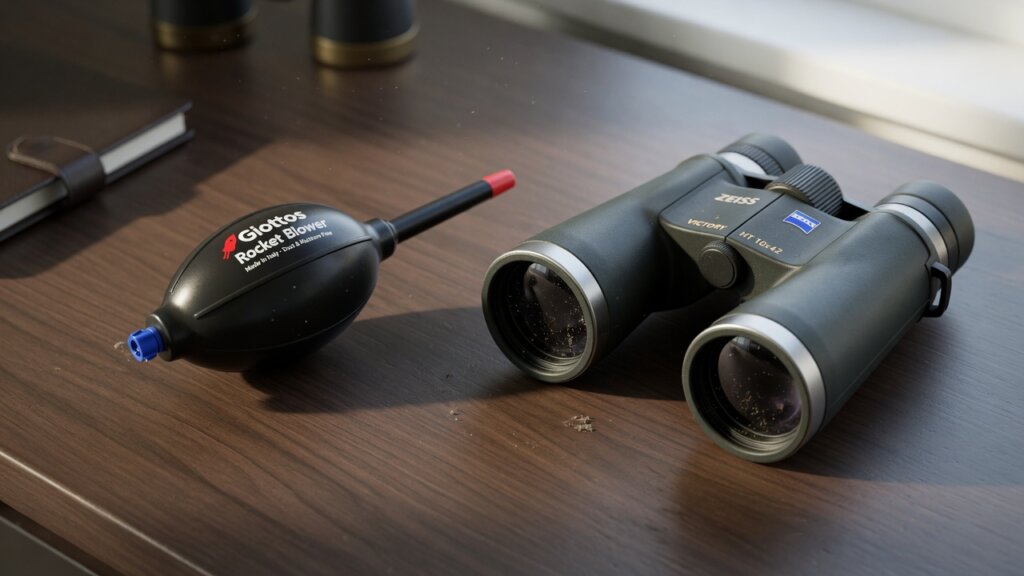
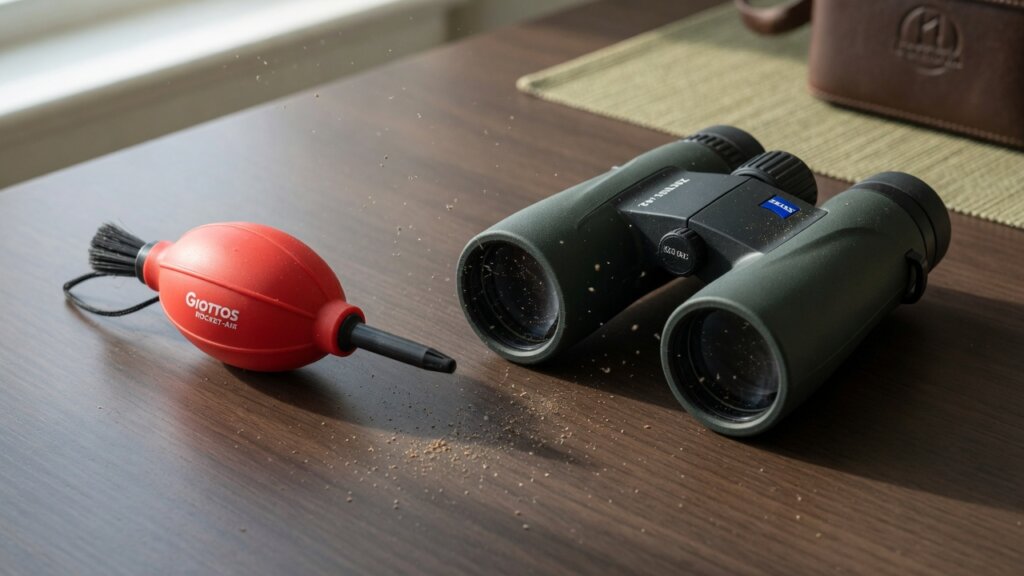
Best Air Blower for Cleaning Binoculars Before Wiping Coated Lenses
Dust looks harmless until you drag it across coated glass.
That is the real reason an air blower for cleaning binoculars belongs in every binocular cleaning kit. Not because it looks fancy. Not because every accessory list says you need one. It matters because loose grit, sand, pollen, dried salt mist, and field dust should be removed before a cloth, lens pen, or cleaning solution ever touches the lens.
A good air blower is the “first move” tool. You use it before wiping. Before brushing. Before panicking over a smudge that may actually be a dust film.
If you use binoculars for bird watching, hunting, hiking, stargazing, boating, sports, or travel, your lenses collect more debris than you think. The front objective lenses face wind, dust, moisture, and fingerprints from quick handling. The eyepieces pick up skin oils, lint, and tiny particles from pockets, cases, and clothing.
An air blower for cleaning binoculars helps remove that loose debris without pressure, rubbing, or chemical contact. That makes it one of the safest cleaning tools for coated lenses.
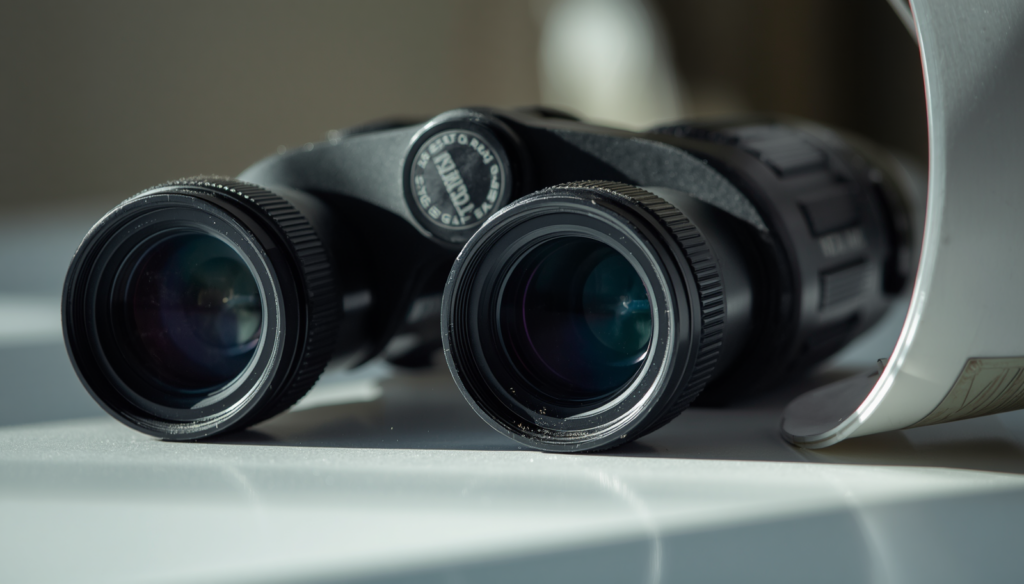
Why an Air Blower Should Be Used Before Any Cloth
Most people clean binoculars in the wrong order.
They see dust, grab a microfiber cloth, and start wiping. That feels logical, but it can be risky. If the lens has tiny sand grains or dry grit on it, the cloth can push those particles across the coating. Over time, that can leave fine cleaning marks.
An air blower for cleaning binoculars reduces that risk.
It pushes loose particles away without touching the glass. You are not grinding anything into the coating. You are not adding liquid too early. You are simply clearing the surface before using another tool.
This matters more if your binoculars have multi-coated lenses. These coatings help with light transmission, contrast, glare control, and clarity. They are durable, but they are not magic. Bad cleaning habits can still damage them.
For a full cleaning setup, this article fits naturally inside our main binocular cleaning tools guide, where cloths, air blowers, brushes, cleaning sprays, and storage habits all work together instead of being treated as separate accessories.
What an Air Blower for Cleaning Binoculars Actually Does
An air blower is usually a soft rubber bulb that releases a controlled puff of air when squeezed.
That puff helps remove:
- Dry dust
- Loose pollen
- Sand particles
- Lens cap lint
- Tiny debris from a binocular case
- Field dirt around eyecups
- Dust near focus wheels and hinge areas
It does not remove everything.
An air blower for cleaning binoculars will not fully remove fingerprints, dried water spots, sunscreen residue, or oily smudges. For proper cleaning, it’s best to use a safe lens cleaning solution along with a high-quality microfiber cloth. This is especially important for binoculars with anti-reflective coatings. You can also read our guide on lens cleaning solution for coated lenses for more detailed cleaning tips.
Think of the air blower as the first layer of protection. It gets the risky loose particles out of the way so the next cleaning step is safer.
Air Blower vs Canned Air: Big Difference
This is where many binocular owners make a common cleaning mistake.
A manual air blower and canned compressed air are not the same thing.
| Cleaning Option | Safe for Binocular Lenses? | Best Use | Main Risk |
|---|---|---|---|
| Manual rubber air blower | Yes | Removing loose dust before wiping | Weak airflow if poorly made |
| Canned compressed air | Not recommended | Electronics, keyboards, some tools | Too much pressure, propellant residue |
| Mouth blowing | No | Emergency only, not ideal | Moisture droplets and saliva |
| Lens brush | Yes, if clean | Light dust after air blowing | Dirty bristles can scratch |
| Microfiber cloth | Yes, after dust removal | Smudges and fingerprints | Can drag grit if used first |
Canned air can blast too hard. It may also release cold propellant or residue if tilted. That is not what you want near coated binocular lenses, rubber seals, eyecups, or internal edges.
Mouth blowing is also a bad habit. It adds moisture. Sometimes it adds tiny saliva droplets too. That can turn dry dust into sticky grime.
A manual air blower for cleaning binoculars gives you better control. It is simple, low-risk, and does not require chemicals.
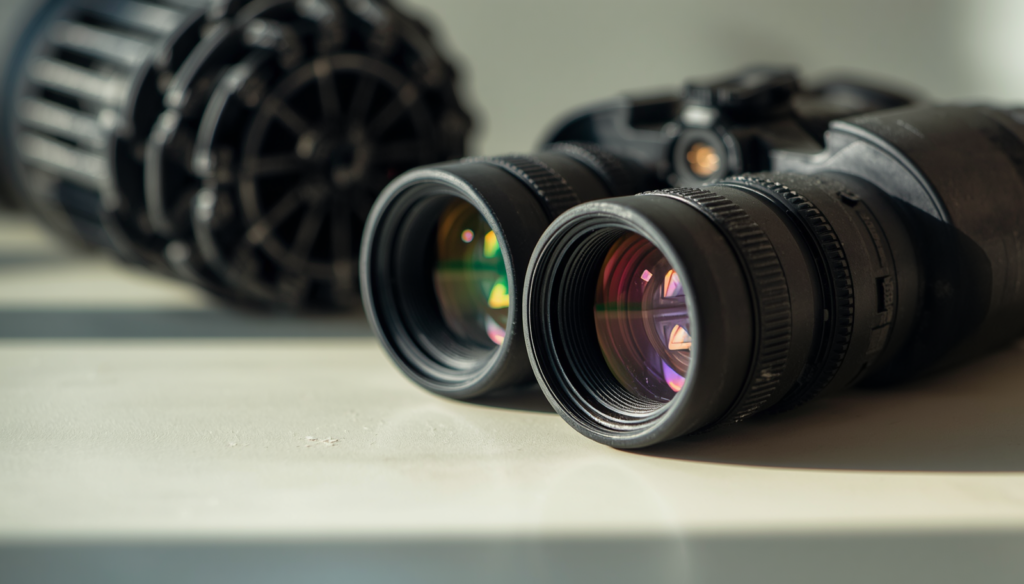
When You Should Use an Air Blower
Use it any time the binocular lens has visible dust or debris.
Here are real situations where an air blower makes sense:
After Hiking on Dry Trails
Trail dust gets everywhere. Even if your binoculars stay in a case, dust can collect around the objective lenses and eyecups. A few puffs from an air blower for cleaning binoculars can clear the loose layer before you pack them away.
After Bird Watching Near Fields or Trees
Pollen and dry plant particles can settle on lenses quickly. A blower is perfect here because pollen often sits loosely on the glass before moisture makes it sticky.
After Beach or Coastal Use
Salt air and sand are rough on optics. Never wipe beach dust straight away. Use an air blower first, then inspect the lens. If you see dried salt marks, follow with a coated-lens-safe solution.
After Hunting in Dusty or Windy Conditions
Binoculars carried on a harness collect dust around the eyecups and objective covers. Use the blower before evening storage so grit does not sit on the glass overnight.
Before Using a Lens Pen
A lens pen can be helpful for cleaning binocular lenses, but only after all loose dust and debris have been removed. Using the carbon tip on lenses with sand or grit can easily cause scratches. For safer and more effective cleaning, check out our guide on lens pens for binoculars to understand when they work well and when you should avoid using them.
What Makes a Good Air Blower for Cleaning Binoculars?
Not every blower is worth buying. Some are too weak. Some have cheap rubber that smells bad or cracks. Some roll around in your bag and collect dust on the nozzle.
A good air blower for cleaning binoculars should feel simple but well-made.
Strong but Controlled Airflow
You want enough air pressure to move dust, but not a harsh blast. The airflow should feel focused, not scattered.
A bigger bulb usually gives stronger airflow. A compact blower is easier to carry, but it may take more squeezes to clean larger objective lenses.
Soft, Non-Scratch Nozzle
The nozzle should not be sharp or rough. You should never touch the lens with it, but accidents happen. A soft nozzle lowers the risk.
One-Way Air Valve
Better blowers pull air in from the back and push it out through the nozzle. This helps prevent dust from being sucked into the nozzle and blown back onto your lens.
Stable Base
This sounds minor, but it matters. A blower with a flat or stable base is easier to keep clean on a desk or in a gear box. If it constantly rolls onto dirty surfaces, the nozzle may pick up debris.
Easy to Pack
For travel binoculars, compact size matters. For home cleaning or astronomy binoculars, a larger blower is usually better.
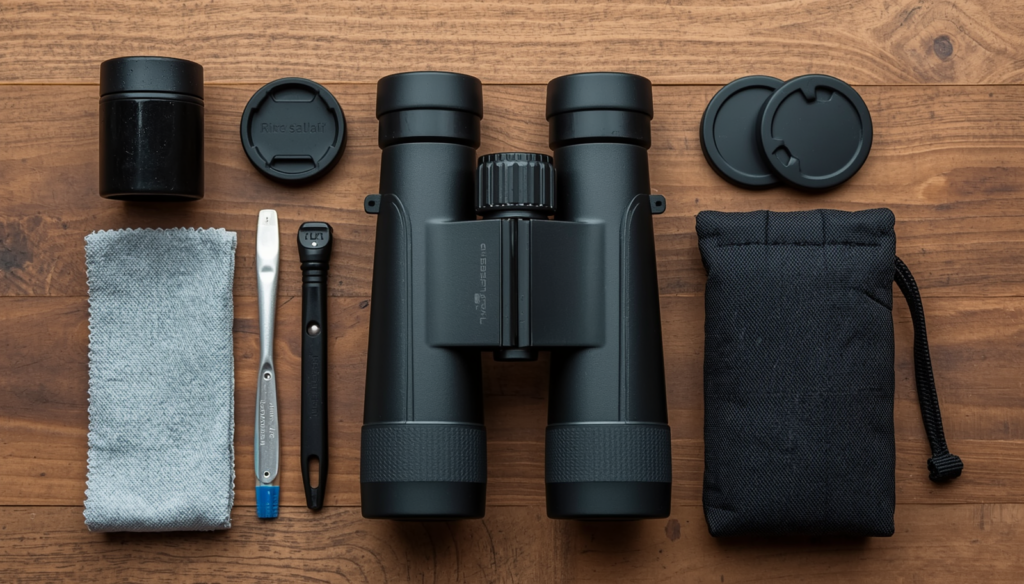
Recommended Product: Giottos Rocket Air Blower
If you only want one reliable product, the Giottos Rocket Air Blower is a strong pick.
It is popular among camera users, but it works very well for binocular cleaning too. Camera lenses and binocular lenses have the same basic cleaning problem: coated glass does not like rough wiping. The Rocket-style design gives stronger airflow than many tiny pocket blowers, and the standing base helps keep the nozzle off dirty surfaces.
Why it makes sense for binocular owners:
- Strong airflow for objective lenses
- No chemicals or residue
- Useful for eyepieces, lens caps, and hinge dust
- Works for cameras, scopes, and other optics too
- Better long-term value than disposable canned air
Practical recommendation:: get a medium or large blower for home and car use. If you need something for a hiking pouch, a smaller blower is easier to carry, but it will not feel as powerful.
How to Use an Air Blower Without Making Things Worse
You do not need a complicated process. You just need patience.
First, hold the binoculars with the lens facing slightly downward. That helps dust fall away instead of settling back on the glass. Then squeeze the blower a few times away from the binoculars first. This clears any dust sitting inside the nozzle.
After that, aim the nozzle near the lens, not touching it. Use short puffs from different angles. Work from the center outward, then around the lens edges.
Do the same around the eyepieces. Eyepieces often collect lint from clothing and skin contact. If the eyecups twist up and down, use a few puffs around the grooves.
One important thing: do not jam the nozzle close to the lens. Keep a small gap. You want airflow, not physical contact.
If dust remains stuck after blowing, do not keep blasting forever. That usually means the dirt is oily, damp, or bonded to a smudge. Move to a safe lens cleaning solution or clean lens pen after the loose particles are gone.
Common Mistakes People Make
Wiping Before Blowing
This is the biggest mistake. Always use an air blower for cleaning binoculars before a cloth if dust is visible.
Using a Dirty Blower
A blower tossed loose into a backpack can collect dirt around the nozzle. Store it in a pouch or sealed compartment.
Touching the Lens with the Nozzle
The nozzle should hover near the surface. It should not tap the glass.
Using Too Much Cleaning Liquid Afterward
After air blowing, some users overdo the next step. A lens should not be soaked. A small amount of coated-lens-safe solution is enough for smudges.
Blowing Moisture from Your Mouth
This is the “quick fix” that creates more cleaning work. Moisture can turn dust into streaks.
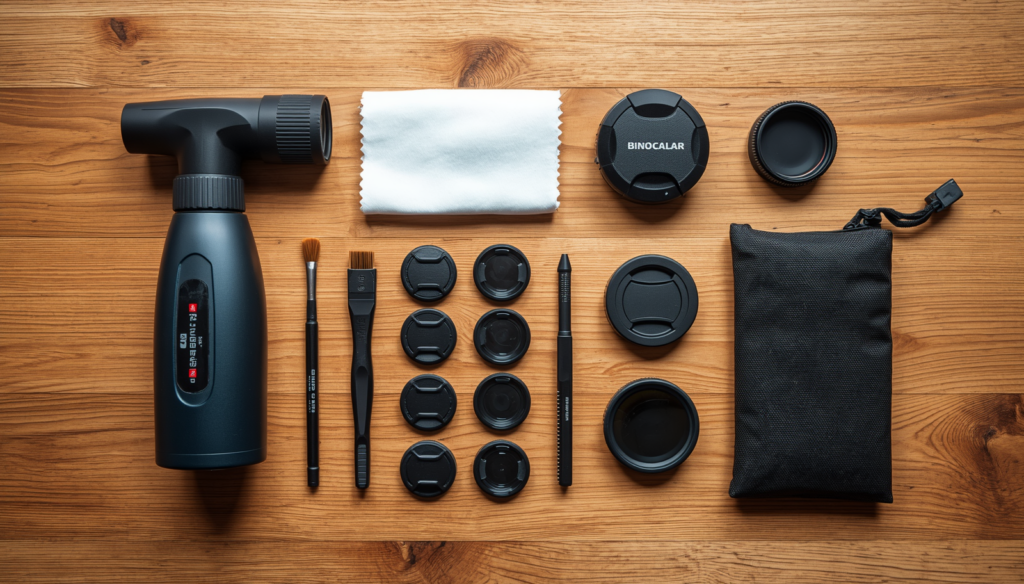
Pros and Cons of Using an Air Blower
| Pros | Cons |
|---|---|
| Safest first step before wiping lenses | Does not remove fingerprints or oily marks |
| No chemicals needed | Cheap models may have weak airflow |
| Helps protect lens coatings | Needs proper storage to stay clean |
| Reusable and travel-friendly | Larger models take more bag space |
| Useful for binoculars, cameras, scopes, and lens caps | Not a full cleaning kit by itself |
The pros easily win. An air blower for cleaning binoculars is not exciting, but it saves your lenses from unnecessary contact. That is exactly what good cleaning should do.
Air Blower vs Lens Brush vs Lens Pen
These tools are often sold together, but they are not interchangeable.
| Tool | Best For | Use Before or After Blower? |
|---|---|---|
| Air blower | Loose dust, pollen, dry debris | First |
| Lens brush | Dust stuck near edges or grooves | After blower |
| Lens pen | Light smudges and fingerprints | After blower |
| Lens solution | Oils, dried spots, stubborn marks | After blower |
| Microfiber cloth | Final wipe and polish | After blower and solution |
A blower removes what can be removed without contact. A brush handles particles around edges. A lens pen or solution handles marks that air cannot move.
That order matters.
If your binoculars are expensive, do not treat cleaning like wiping sunglasses. Optics deserve a slower process.
Best Use Cases by Binocular Type
Compact Travel Binoculars
Compact binoculars often live in bags, glove boxes, and jacket pockets. They collect lint fast. A small air blower for cleaning binoculars is useful before trips and after travel days.
Hunting Binoculars
Dust, dry grass, mud flecks, and cold-weather condensation are common. Keep a blower in your gear box and use it before deeper cleaning.
Bird Watching Binoculars
Birders often clean lenses in changing outdoor conditions. A blower is great for pollen, seed dust, and dry trail debris. It also helps when you do not want to risk wiping in the field.
Marine Binoculars
For boating and coastal use, an air blower helps with dry particles, but salt residue needs extra care. Use the blower first, then a safe solution if needed.
Astronomy Binoculars
Large objective lenses show dust easily under light. A larger blower is better here because it covers more glass with fewer puffs.
Buyer Tips Before You Choose One
Do not overthink it, but do not buy the cheapest no-name blower either.
Look for a blower with decent size, a soft nozzle, and a stable base. If you own full-size binoculars like 10×42, 12×50, or astronomy models, go medium or large. If you carry compact binoculars while traveling, a smaller blower is fine.
Avoid kits where the blower looks like an afterthought. Tiny weak blowers often feel useless outdoors. They may work on a phone screen, but binocular lenses need better airflow.
Also check the nozzle shape. A narrow nozzle gives more focused airflow. A wider one may feel softer but less effective.
A smart move is to keep one larger blower at home and one compact blower in your field kit. That gives you proper cleaning power where you need it.
Where an Air Blower Fits in a Full Cleaning Kit
An air blower for cleaning binoculars is not the whole solution. It is the starting point.
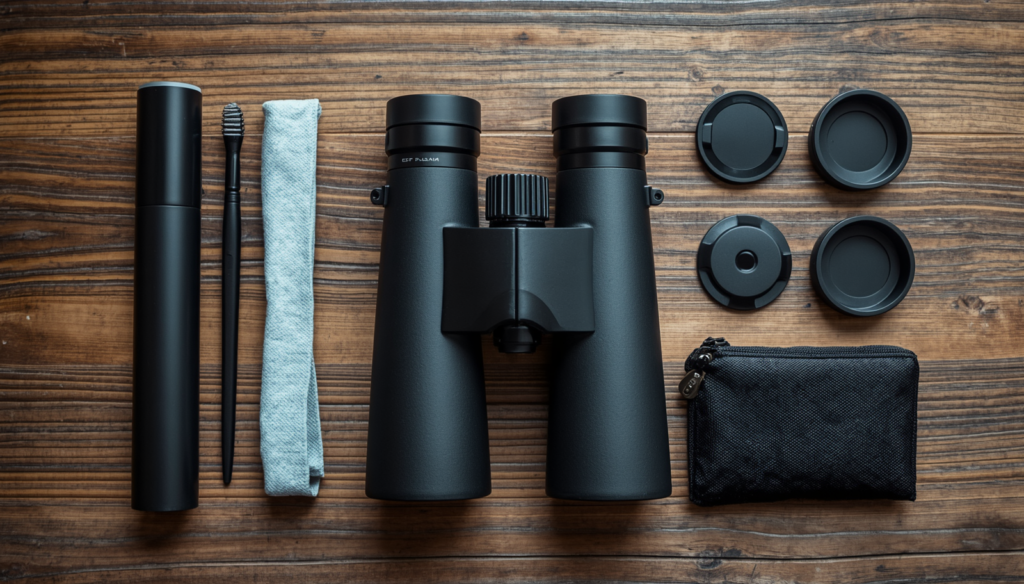
A practical binocular cleaning setup includes:
- Manual air blower
- Clean lens brush
- Lens pen
- Coated-lens-safe solution
- High-quality microfiber cloth
- Storage pouch
- Lens caps or rain guard
If you are putting together a complete binocular cleaning kit, it’s worth exploring our binocular cleaning tools guide. It explains which cleaning tools are genuinely useful for proper lens care and which accessories are mostly unnecessary extras.
Final Verdict: Is an Air Blower Worth It?
Yes, an air blower is worth adding to a binocular cleaning kit.
An air blower for cleaning binoculars is one of the lowest-cost tools that can prevent the most common cleaning damage. It will not remove every mark, and it will not replace a lens solution or lens pen. But it makes every cleaning step after it safer.
That is its main value.
For most binocular owners, the best cleaning habit is simple: blow first, inspect, then clean only if needed. The less you rub coated glass, the better.
If you care about keeping your binoculars clear, sharp, and scratch-free, a manual air blower should be in your kit from day one.
For more practical tips on cleaning, maintenance, and optic care, visit our blog section where you’ll find helpful guides for binocular users. You can also explore additional binocular buying advice and maintenance resources on bestbinocular.net.
FAQs About Air Blower for Cleaning Binoculars
What is the best air blower for cleaning binoculars?
A medium or large manual rubber air blower is usually best. The Giottos Rocket Air Blower is a strong option because it gives controlled airflow, stands upright, and works well for binoculars, cameras, and other optics.
Can I use canned air instead of an air blower?
It is better to avoid canned air on binocular lenses. Canned air can release too much pressure and may leave residue if used incorrectly. A manual air blower for cleaning binoculars is safer and easier to control.
Should I use an air blower before a microfiber cloth?
Yes. Always use an air blower before wiping dusty lenses. It removes loose grit that could scratch the coating when dragged across the glass by a cloth.
Will an air blower remove fingerprints from binocular lenses?
No. An air blower removes loose dust and dry debris. Fingerprints need a coated-lens-safe cleaning solution, lens pen, or microfiber cloth after loose particles are removed.
Can an air blower damage binocular lenses?
A manual blower is very safe when used properly. Keep the nozzle away from the glass and use short puffs. The main risk comes from touching the lens with a dirty nozzle.
Is a small pocket blower enough for binoculars?
A small blower can work for compact binoculars or light dust. For full-size binoculars, a medium or large blower is better because it moves more air with less effort.
How often should I use an air blower on binoculars?
Use it whenever you see dust, pollen, lint, or dry debris. You can also use it before storing binoculars after outdoor use, especially after hiking, hunting, beach trips, or dusty travel.




