
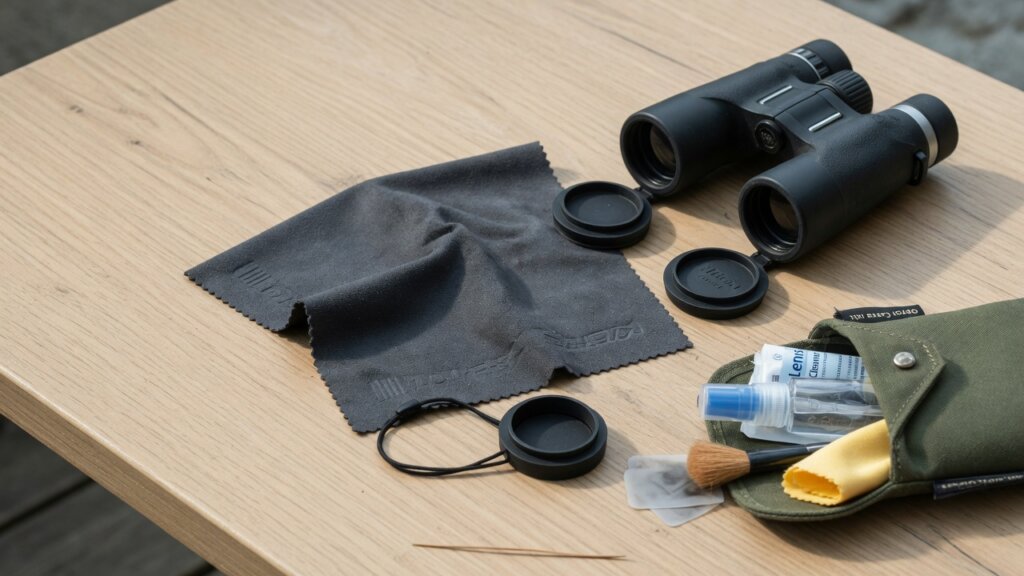
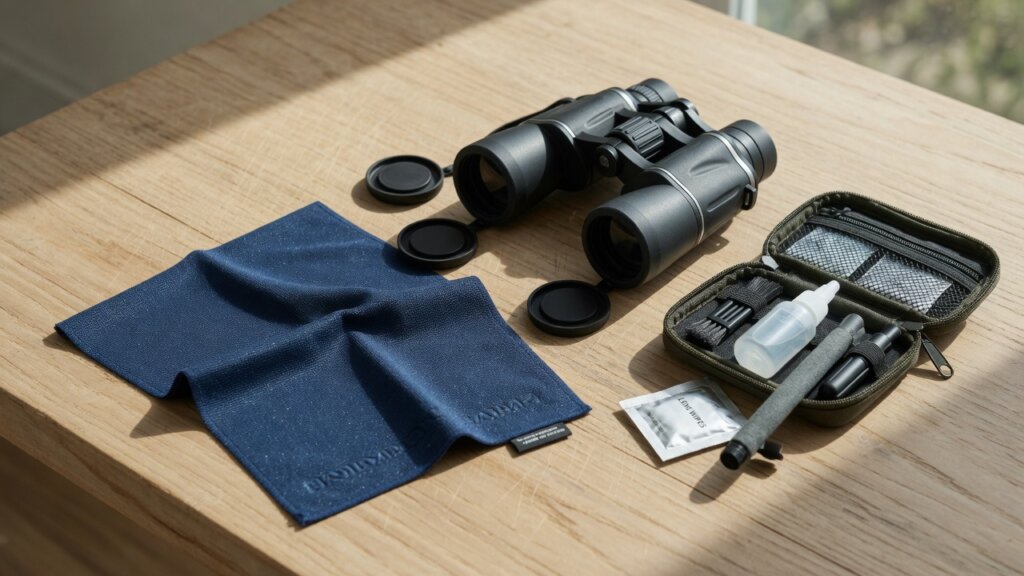
Best Microfiber Cloth for Binocular Lenses for Safe, Scratch-Free Cleaning
A microfiber cloth for binocular lenses looks simple, but it can decide whether your binoculars stay clear for years or slowly collect tiny cleaning scratches. If you use binoculars outdoors, you already know lenses rarely stay perfect for long. Fingerprints happen. Dust settles. A little forehead oil finds its way onto the eyecups. Fog dries into faint marks. And when you are hiking, hunting, traveling, or watching a match, the first instinct is usually to wipe the glass quickly.
That quick wipe is where many binocular owners make mistakes.
A proper microfiber cloth for binocular lenses is not the same as a shirt corner, tissue, towel, paper napkin, or random cleaning rag from a drawer. Binocular lenses often have delicate anti-reflective coatings, and those coatings need gentle contact. The cloth should lift oils and fine dust without dragging grit across the surface. Used correctly, it gives you a cleaner view without turning every cleaning session into a risk.
For a full cleaning setup, this article fits naturally inside our main binocular cleaning tools guide, where cloths, air blowers, brushes, cleaning sprays, and storage habits all work together instead of being treated as separate accessories.
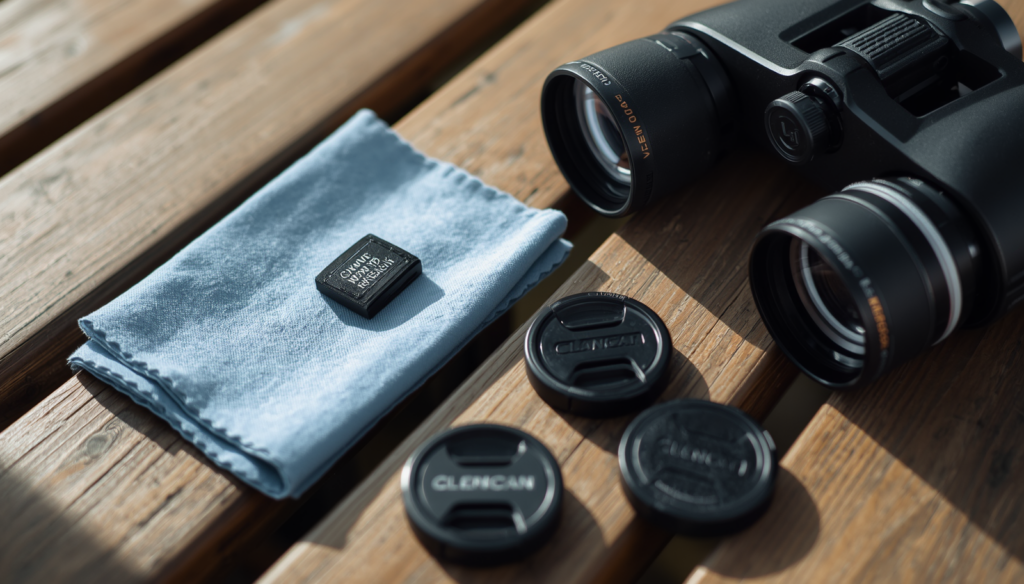
Why a Microfiber Cloth Matters More Than People Think
A microfiber cloth for binocular lenses is not just for making glass look shiny. Its real job is to remove light smudges, skin oil, fingerprints, and final streaks after dust has already been cleared away.
That last part matters.
A cloth should not be the first tool you use on dirty binocular lenses. If there is grit, sand, trail dust, or dried mud on the glass, rubbing immediately can create fine marks. These marks may not look serious under normal light, but they can scatter light over time, especially when viewing toward sunrise, sunset, snow, water, or bright stadium lights.
Think of it like cleaning a car windshield. If you rub dry dust around with pressure, you are not cleaning; you are sanding.
That is why I like using a microfiber cloth for binocular lenses as the finishing tool, not the whole cleaning system. First remove loose particles with air. Then use the cloth for oils and streaks. If the lens has stubborn residue, pair the cloth with a safe lens solution instead of rubbing harder.
For that first dust-removal step, it is worth reading our supporting article on an air blower for cleaning binoculars. A blower helps remove particles before the cloth touches the glass, which makes the whole process safer.
What Makes a Good Microfiber Cloth for Binocular Lenses?
Not every microfiber cloth is equal. Some feel soft but shed lint. Some clean eyeglasses fine but are too small for binocular objectives. Some are washed with fabric softener and leave streaks. Others arrive in bulk packs but pick up dust because they are stored loose in a backpack pocket.
A good microfiber cloth for binocular lenses should feel dense, smooth, and clean. It should not have rough stitched edges that touch the glass. It should fold easily into a pouch. It should remove fingerprints without needing heavy pressure. Most importantly, it should be reserved only for optics.
That last habit is underrated. Do not use the same cloth for your phone screen, sunglasses, camera filter, car dashboard, and binocular lenses. A cloth that picked up pocket grit yesterday can scratch your binocular coating today.
Quick Buying Checklist
| Feature | Why It Matters for Binocular Lenses | What to Choose |
|---|---|---|
| Soft microfiber texture | Reduces rubbing risk on coated lenses | Smooth, lens-grade microfiber |
| Larger size | Covers objective lenses without finger contact | Around 8×8 inches or larger |
| Lint-free finish | Prevents fibers from sticking to glass | Avoid cheap shedding cloths |
| Washable material | Keeps oils from building up | Reusable microfiber |
| Storage pouch | Keeps dust away from the cloth | Individual pouch or case |
| No rough seams | Prevents edge scratches | Seamless or soft-edge cloth |
A microfiber cloth for binocular lenses should feel like a precision accessory, not an afterthought. If it comes loose in a multipack with no protection, place each cloth in a small zip pouch before taking it outside.
Microfiber Cloth vs Other Lens Cleaning Options
A microfiber cloth is useful, but it is not always the best tool for every situation. The mistake many beginners make is trying to solve every cleaning problem with one cloth.
Here is the practical difference:
| Cleaning Tool | Best For | Avoid Using It When |
|---|---|---|
| Microfiber cloth | Fingerprints, light oils, final polishing | Lens has sand, grit, or mud |
| Air blower | Loose dust and dry particles | Sticky fingerprints need removal |
| Lens brush | Dust around lens edges | Bristles are dirty or oily |
| Lens cleaning solution | Grease, dried spots, stubborn marks | Formula is not coating-safe |
| Pre-moistened wipes | Travel cleaning and quick use | Wipes are too wet or harsh |
| Tissue or shirt | Emergency only? Better avoided | Almost always for coated optics |
The safest routine is simple: blow first, wipe second, use solution only when needed.
If your binoculars have coated lenses and dried fingerprints, our article on lens cleaning solution for coated lenses will help you choose a safer liquid instead of guessing with household glass cleaner.
How to Use a Microfiber Cloth Without Damaging Lenses
A microfiber cloth for binocular lenses works best with light movement and patience. Heavy pressure is not a cleaning technique. It is a warning sign that you need air, solution, or more time.
Start by holding the binoculars downward at a slight angle. Use a blower to remove loose particles from the objective lenses and eyepieces. Then inspect the glass under soft light. If the marks are only fingerprints or faint smears, use the cloth.
Fold the microfiber cloth into a clean section. Do not use the same dirty corner repeatedly. Touch the lens gently and wipe in small circles or light strokes from the center outward. If the smear moves around instead of disappearing, stop and use a lens-safe solution on the cloth, not directly into the binocular housing.
ZEISS, for example, recommends removing sand, dust, and particles first with a blower or soft brush, then applying mild lens cleaning fluid onto a soft microfiber lens cleaning cloth for binocular optics.
That advice matches real outdoor use. On a clean indoor lens, a cloth alone may be enough. On binoculars used in dry wind, beach air, desert trails, or dusty hunting blinds, the cloth should come after dust removal.
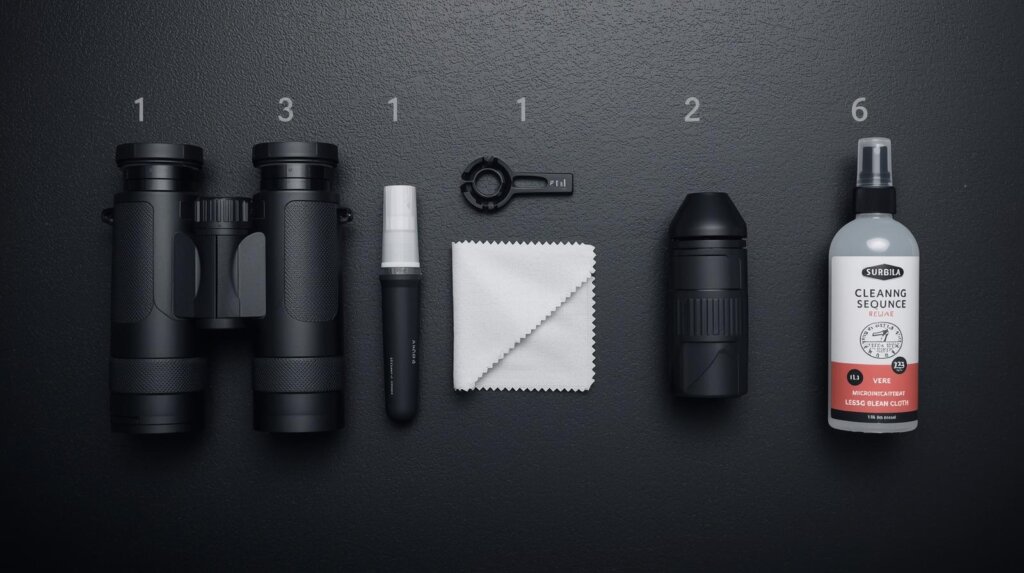
Real-World Use Cases: Where the Cloth Actually Helps
A microfiber cloth for binocular lenses earns its place when you are outside and need clarity fast. But the way you use it changes by situation.
Hiking and Backpacking
On a trail, dust is usually the main enemy. Your binoculars may hang from a harness, sit in a case, or ride inside a backpack pocket. Even when lens caps are on, fine particles can collect around the eyecups.
For hiking, keep one microfiber cloth in a small sealed pouch and another at home for deeper cleaning. Do not throw the cloth loose into the same pocket as snacks, keys, or a multitool. A clean cloth weighs almost nothing, so there is no reason to risk using a dirty one.
Bird Watching and Nature Viewing
Bird watchers often clean lenses in a hurry because the moment disappears quickly. A rare bird lands, the eyepiece fogs slightly, and the temptation is to wipe fast. That is when a microfiber cloth for binocular lenses is useful, especially for eyepiece smudges from eyelashes or skin oil.
Still, avoid panic wiping. If you see visible grit, clear it first. Better to miss a few seconds than permanently mark your optics.
Hunting and Early Morning Glass
Cold mornings create fog, condensation, and oily marks around the eyecups. A microfiber cloth helps with light moisture, but it should be dry and clean. If the cloth is damp from previous use, it can leave streaks.
Hunters should keep the cloth inside a waterproof pouch. A cloth stored in an open chest pocket can collect dust, lint, and sweat. That is not what you want touching coated glass.
Travel, Safari, and Cruises
Travel binoculars collect sunscreen, salt air, fingerprints, and bag dust. In these situations, a microfiber cloth for binocular lenses is essential because you may not have your full cleaning kit nearby.
For cruises or coastal travel, be careful with salt residue. Salt crystals can be abrasive. Use a blower first and, when needed, a coating-safe solution. Never grind dried salt across the lens with a dry cloth.
Pros and Cons of Microfiber Cloths for Binocular Lenses
A microfiber cloth for binocular lenses is one of the cheapest tools in your cleaning kit, but it still has limits.
| Pros | Cons |
|---|---|
| Lightweight and easy to carry | Can scratch if dirty or used over grit |
| Good for fingerprints and oils | Not enough for mud, salt, or sticky residue |
| Reusable and washable | Can leave streaks if contaminated |
| Safe for coated lenses when clean | Easy to misuse with too much pressure |
| Works with lens cleaning solution | Needs proper storage |
Practical recommendation: a microfiber cloth is not exciting, but it is one of those tools you appreciate after you stop using random fabric. Once you see fewer streaks and less cleaning stress, it becomes part of your normal binocular routine.
Recommended Microfiber Cloth Option
If you want one safe, easy recommendation, the ZEISS Microfiber Cleaning Cloth is a strong fit for binocular owners. It is made for optical surfaces and is commonly listed for use on camera lenses, eyeglasses, telescopes, spotting scopes, and other valuable optics. B&H lists the ZEISS cloth as suitable for removing lint, dust, dirt, and fingerprints, and notes a larger 11.8 x 15.7 inch size, which is useful for binocular objective lenses.
ZEISS also describes its microfiber cloth as usable dry or with lens spray, while its cleaning spray is designed for coated lenses when used with a clean microfiber cloth.
Why I like it for binoculars: it is large enough to fold into clean sections, it comes from an optics brand, and it makes sense for people who use binoculars alongside cameras, spotting scopes, or glasses.
Do you need ZEISS specifically? Not always. A good lens-grade microfiber cloth can work well. But if you want a safe default instead of buying a random bulk pack, ZEISS is a sensible pick.
Common Mistakes That Ruin the Benefit
The biggest mistake is using a microfiber cloth for binocular lenses when the cloth itself is dirty. Microfiber attracts particles. That is useful during cleaning, but it also means the cloth can become a dust trap.
Another mistake is washing it incorrectly. Avoid fabric softener because it can coat the fibers and cause streaking. Wash gently, rinse well, and air dry. Keep lens cloths separate from towels or clothing that sheds lint.
Also, never use the cloth to clean the binocular body first and then the glass. Rubber armor, focus wheels, and hinge areas can hold dirt. If you wipe those parts and then move to the lens, you may drag debris onto the coating.
Here is my simple rule: one cloth for glass only.
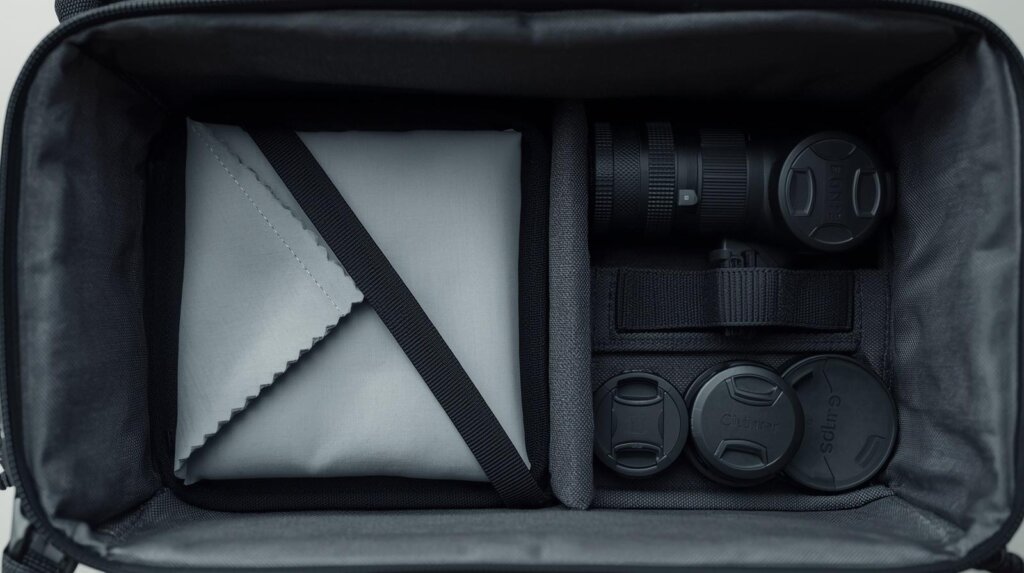
Buyer Psychology: Why People Underbuy Cleaning Cloths
Most people spend money on binocular magnification, lens size, prism type, waterproofing, and brand reputation. Then they clean the lenses with whatever is nearby. This approach can put expensive optics at unnecessary risk.
.
A microfiber cloth for binocular lenses protects the part of the binocular that actually delivers the view. You do not need a luxury cloth, but you do need a clean, optics-safe one. It is a low-cost item that supports a high-value purchase.
The smarter move is to own more than one. Keep one in your binocular case, one in your travel bag, and one at home. When one gets dirty, wash it instead of forcing it back into use.
For more practical care advice and gear-support content, visit our blog page or start from the bestbinocular.net home page to explore more binocular buying and maintenance resources.
Best Situations to Use a Microfiber Cloth
A microfiber cloth for binocular lenses is best when:
| Situation | Should You Use It? | Better Method |
|---|---|---|
| Light fingerprint on eyepiece | Yes | Wipe gently with clean cloth |
| Dusty objective lens | Not first | Use blower, then cloth |
| Dried water spots | Maybe | Use lens solution on cloth |
| Sand after beach use | No, not first | Blow particles away carefully |
| Greasy sunscreen mark | Yes, with solution | Use coating-safe cleaner |
| Fog on eyepiece | Yes, lightly | Use dry clean cloth |
This is where experience matters. Cleaning is not about making the lens perfect every five minutes. It is about removing what affects viewing while touching the glass as little as possible.
FAQs About Microfiber Cloth for Binocular Lenses
Can I use any microfiber cloth for binocular lenses?
No, not every microfiber cloth is ideal for binocular lenses. Use a clean, soft, lens-grade microfiber cloth. Avoid rough household microfiber towels used for cars, kitchens, furniture, or screens because they may hold grit or cleaning residue.
Should I use a microfiber cloth on dry binocular lenses?
Yes, but only if the lens has no loose dust, sand, or grit. For dry dust, use an air blower first. A microfiber cloth for binocular lenses is better for fingerprints, light oil, and final polishing.
Can a microfiber cloth scratch binocular lenses?
The cloth itself is usually safe when clean, but trapped dirt can scratch lens coatings. That is why storage matters. Keep your cloth in a pouch and wash it when it starts leaving streaks.
How often should I wash my binocular microfiber cloth?
Wash it when it feels oily, dusty, stiff, or starts spreading smears instead of removing them. For regular outdoor users, washing after several field trips is a good habit. Let it air dry fully before storage.
Can I use lens cleaning spray with microfiber cloth?
Yes, if the spray is safe for coated lenses. Apply the solution to the cloth, not directly into the binocular body. This reduces the chance of liquid entering edges, seals, or eyepiece areas.
Is a microfiber cloth enough for cleaning binoculars?
It is enough for light smudges and fingerprints, but it should be part of a wider cleaning kit. A safer kit includes an air blower, lens brush, microfiber cloth, and coated-lens cleaning solution.
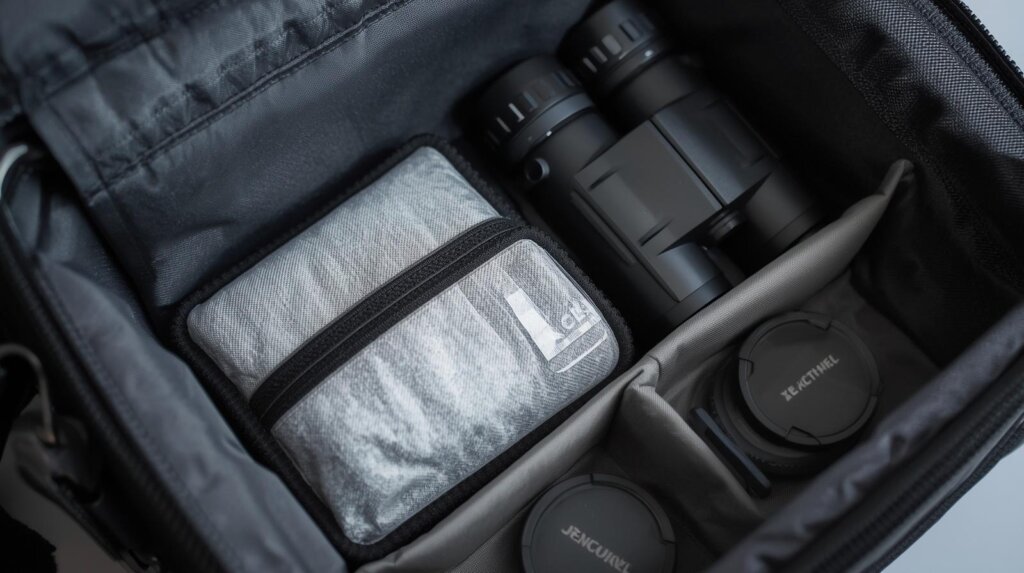
Final Thoughts
A microfiber cloth for binocular lenses is small, cheap, and easy to overlook, but it plays a big role in keeping your view sharp. The key is not just owning one. The key is using it at the right time, keeping it clean, and pairing it with the right tools when dust, grit, or stubborn marks are involved.
For light fingerprints, eyepiece smudges, and final polishing, a clean microfiber cloth is exactly what you want. For dusty lenses, use air first. For oily or dried marks, use a safe lens solution with the cloth. And for long-term lens protection, stop treating cleaning as an emergency habit and make it part of your normal binocular care routine.
A good microfiber cloth for binocular lenses will not make poor binoculars premium, but it will help good binoculars stay good for longer. That is the real value.




