
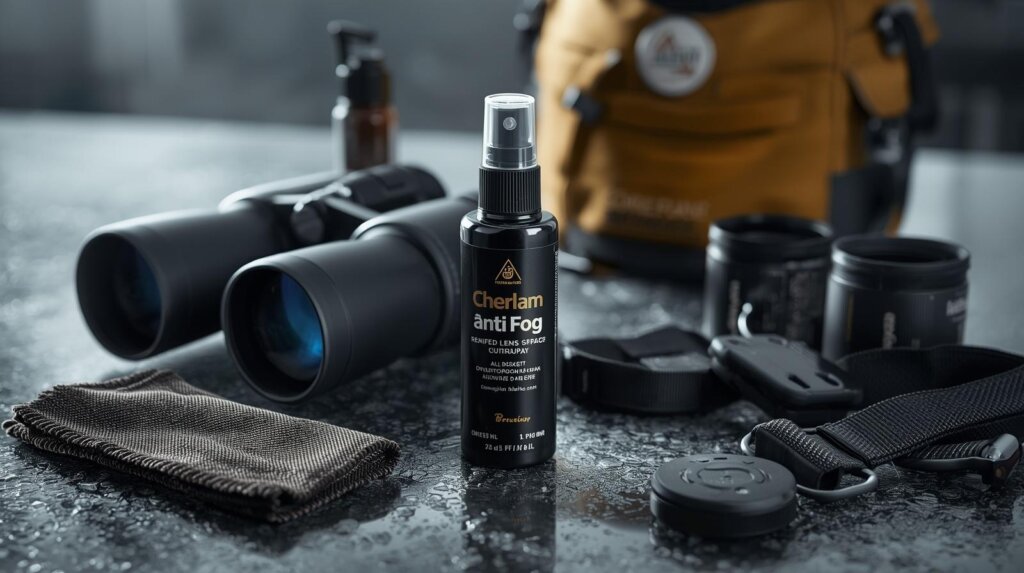
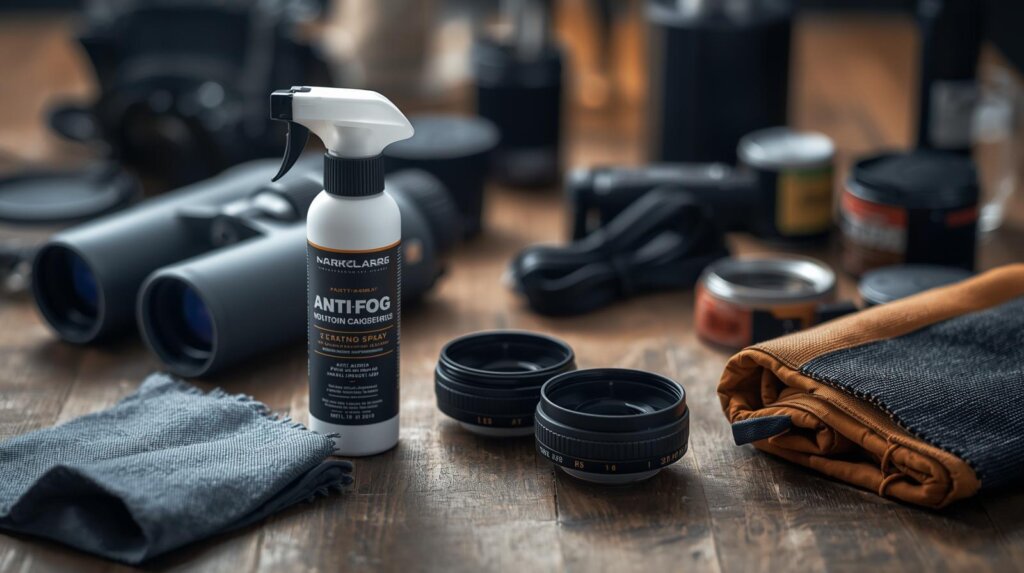
Why Anti Fog Spray for Binoculars Matters in the Field
Cold mornings, wet trails, humid boat rides, and sudden temperature changes can turn a clear pair of binoculars into a foggy mess fast. That is exactly where anti fog spray for binoculars earns its place in a proper optics cleaning kit.
Fogged binocular lenses are annoying because they usually happen at the worst time. You lift your binoculars for a quick view, the eyepieces cloud over, and you may end up wiping the lenses with your shirt. That can leave smears, create fine dust scratches, and damage lens coatings over time.
A good anti fog spray does not make binoculars magic. It will not fix internal fogging, broken seals, or moisture trapped inside the barrels. But for external lens fog on eyepieces and objective lenses, it can make a real difference.
What Is Anti Fog Spray for Binoculars?
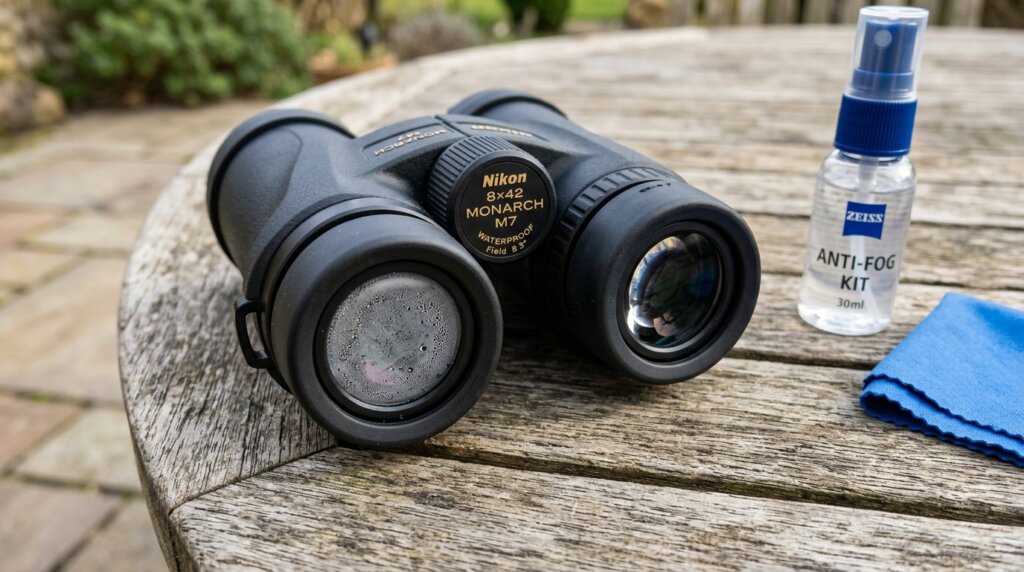
Anti fog spray for binoculars is a lens treatment designed to reduce surface condensation. It creates a thin, transparent layer on the lens surface so tiny water droplets spread out instead of forming cloudy fog patches.
That sounds simple, but the real value is practical.
When you move from a warm car to cold air, breathe near the eyepieces, or use binoculars in damp weather, the outer glass can fog up. Anti fog spray helps keep that view usable for longer.
It is especially useful for:
- Cold-weather glassing
- Marine and boating use
- Hunting from blinds or stands
- Early morning field use
- Rainy hikes
- High-humidity travel
- Wearing glasses with binoculars
If your binoculars fog on the outside, anti fog spray may help. If the fog is trapped inside the binocular body, that is a sealing or nitrogen-purge issue, not a cleaning issue.
For a complete cleaning setup, this product works best when paired with other basic binocular cleaning tools like an air blower, microfiber cloth, and lens-safe cleaning fluid.
Why Binocular Lenses Fog Up in Real Use
Binocular fog is mostly about temperature and moisture. Your binoculars may be cold, your face may be warm, and your breath carries moisture. When that moisture hits cold glass, it condenses.
This is why eyepieces fog more often than front objective lenses. Your eyes, nose, and breath sit close to them.
Common fogging moments include:
| Situation | Why Fog Happens | Anti Fog Spray Helpful? |
|---|---|---|
| Leaving a warm car in winter | Warm moisture meets cold glass | Yes |
| Using binoculars with a face covering | Breath rises toward eyepieces | Yes |
| Boat or coastal viewing | Humid air settles on glass | Yes |
| Rainy trail use | Moisture builds on exposed lenses | Sometimes |
| Internal lens haze | Moisture inside binocular body | No |
| Cheap binoculars with poor sealing | Humidity gets inside | Limited help |
This is where buyer expectations matter. Anti fog spray for binoculars is not a repair product. It is a surface treatment. When used correctly, it helps stop external fog from ruining the moment.
Is Anti Fog Spray Safe for Binocular Lenses?
Usually, yes — but only if you choose a lens-safe formula.
Binocular lenses often have anti-reflective coatings, phase coatings, dielectric coatings, hydrophobic coatings, or other optical treatments. Harsh household chemicals can damage those coatings. That is why you should not use bathroom mirror sprays, car windshield products, alcohol-heavy cleaners, or random “anti-fog hacks” on quality binoculars.
Look for anti fog spray made for:
- Optics
- Camera lenses
- Eyeglasses
- Scopes
- Safety glasses
- Coated lenses
Avoid anything with strong solvents, ammonia, abrasives, or unknown ingredients.
If you own quality binoculars, avoid using cheap or harsh fluids on coated lenses
Anti Fog Spray vs Lens Cleaning Solution
A lot of people mix these two up.
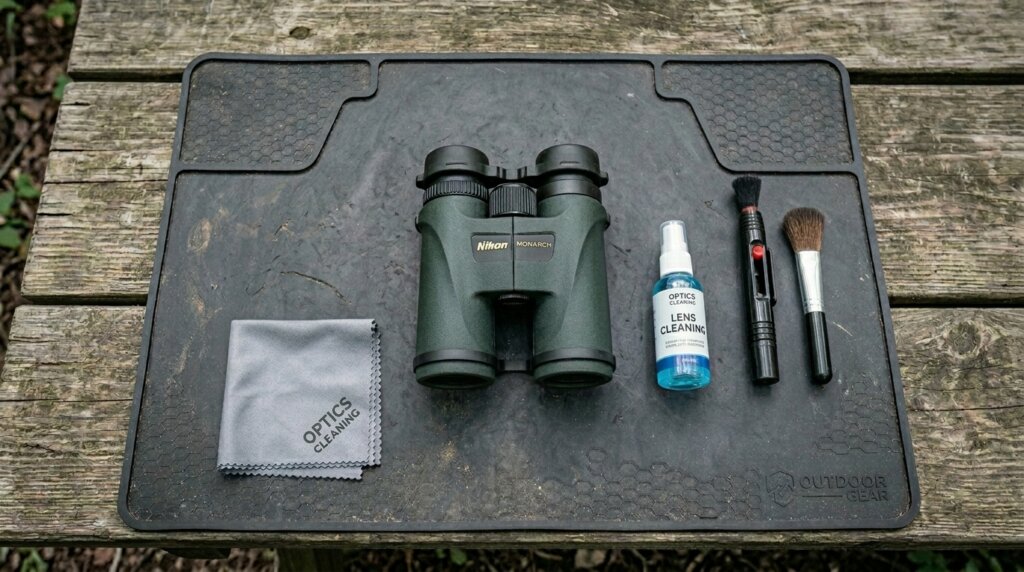
A lens cleaning solution removes dirt, skin oil, fingerprints, salt residue, and smudges. An anti fog spray for binoculars helps reduce condensation after the lens is already clean.
They are not the same job.
| Product | Main Purpose | Best Used For | Not Ideal For |
|---|---|---|---|
| Anti fog spray | Prevents external fogging | Cold, humid, damp use | Heavy dirt or grit |
| Lens cleaning solution | Cleans smudges and oils | Fingerprints, dust film, grime | Long-lasting fog prevention |
| Air blower | Removes loose dust | Sand, grit, dry particles | Oil or fog |
| Lens pen | Light cleaning | Dust and small marks | Wet moisture or heavy grime |
Before applying anti fog spray, clean the lens properly. If there is dust or grit on the glass, rubbing spray across it can create fine scratches. That is why using an air blower first is the safer approach. It removes loose particles without touching the lens.
Then, if needed, use a proper lens cleaning solution for coated lenses before applying anti fog treatment.
When Anti Fog Spray Actually Helps
The best use case is external eyepiece fog.
Let’s say you are outside on a cold morning. Your binoculars are hanging from your chest harness. You lift them up, press your face in, and the eyepieces fog because warm air from your face meets cold glass. That is a classic case where anti fog spray can help.
It also helps when:
You Use Binoculars in Winter
Cold glass fogs quickly when warm breath hits it. Anti fog spray gives you more viewing time before the lens clouds up.
You Wear Glasses
Glasses and binocular eyecups can trap warm air. If your glasses already fog, your binocular eyepieces may fog too. Anti fog treatment can reduce the problem on both surfaces if the product is safe for coated lenses.
You Use Binoculars Near Water
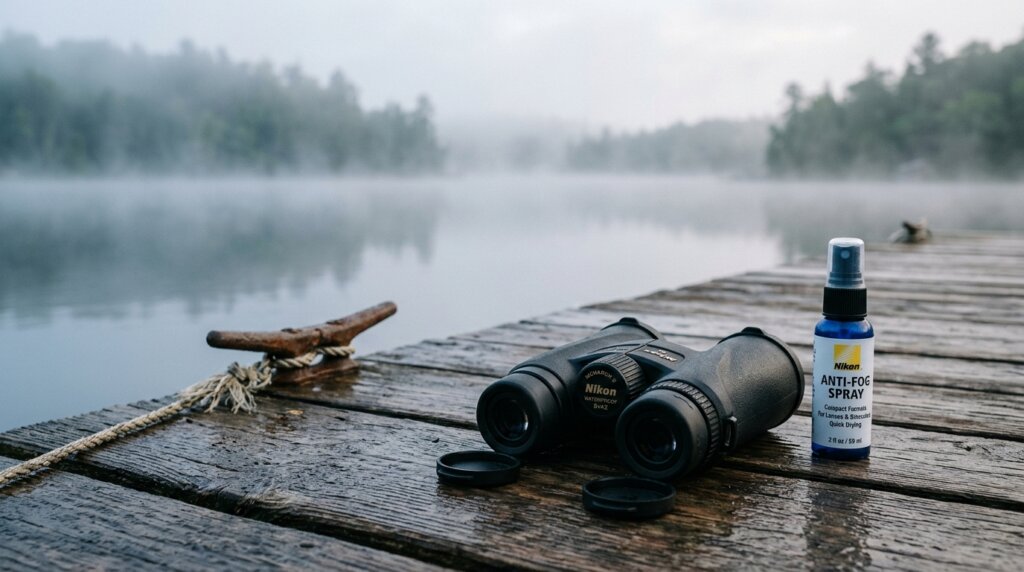
Boat decks, fishing piers, wetlands, and coastal viewpoints are all high-moisture environments. Even waterproof binoculars can get external fog on the glass.
You Move Between Indoor and Outdoor Temperatures
This happens often during travel. You leave a hotel, cabin, vehicle, or visitor center, then your binocular lenses fog from the temperature shift.
When Anti Fog Spray Will Not Fix the Problem
This part matters because some buyers expect too much.
Anti fog spray for binoculars will not fix internal fogging. If moisture appears inside the binoculars, behind the glass, or between internal elements, you likely have a sealing problem. That may happen with damaged waterproofing, old binoculars, poor storage, or non-purged budget models.
Anti fog spray also will not help much if:
- The lens is dirty before application
- You use too much spray
- You wipe with a rough cloth
- The product is not made for coated optics
- The binoculars are already wet
- You store binoculars in a damp case
One common mistake is spraying directly onto the lens. That can cause fluid to run toward the lens edges, rubber seals, or eyecup gaps. It is safer to spray lightly onto a microfiber cloth, then apply it to the glass.
How to Use Anti Fog Spray on Binoculars Without Overdoing It
You do not need a heavy layer. More spray does not mean better fog protection. It usually just means streaks.
A simple process works best:
- Blow off dust first.
- Clean fingerprints or oil if needed.
- Apply a small amount of anti fog spray to a clean microfiber cloth.
- Wipe the lens gently in a circular motion.
- Let it settle for a short moment.
- Buff lightly with a dry section of the cloth if streaks remain.
Do not scrub. Do not press hard. Do not use paper towels, hoodie sleeves, tissues, or random cotton cloths.
The goal is a thin, even layer. If the lens looks smeary after application, you used too much.
Best Type of Anti Fog Spray for Binoculars
The best anti fog spray for binoculars should be safe, gentle, and easy to apply in the field. Fancy packaging does not matter much. Lens compatibility matters more.
Look for these features:
| Feature | Why It Matters |
|---|---|
| Safe for coated lenses | Protects anti-reflective coatings |
| Non-abrasive formula | Reduces scratch risk |
| Compact bottle | Easy to carry in a pouch or case |
| Streak-free finish | Keeps the view clear |
| Works on eyeglasses too | Useful if you wear glasses |
| Microfiber cloth included | Better field application |
Avoid sprays that smell harsh, feel sticky, or leave a rainbow film on the lens. That usually means more cleaning later.
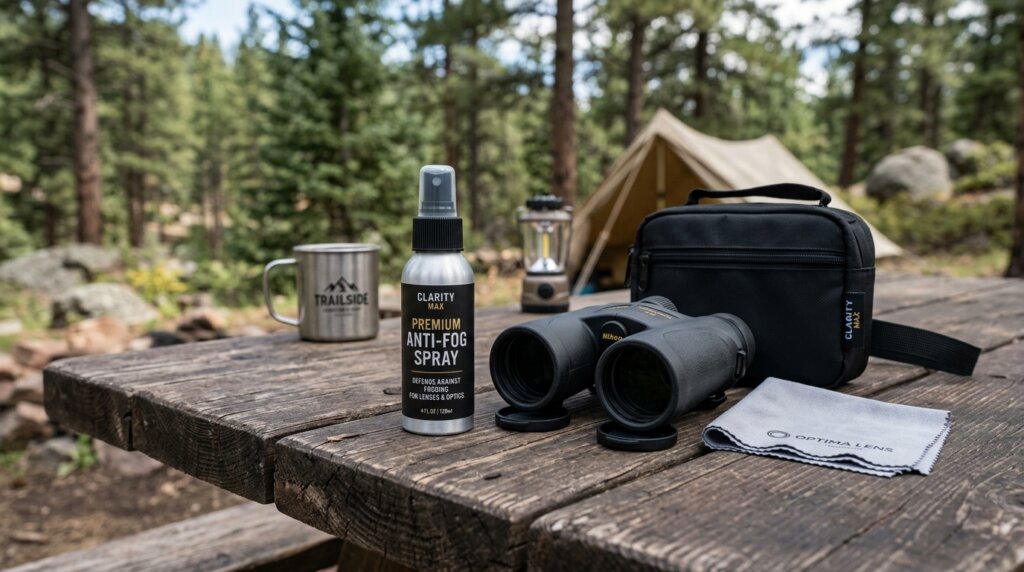
Recommended Product: ZEISS AntiFOG Spray
If I had to recommend one highly relevant option, I would pick ZEISS AntiFOG Spray.
ZEISS AntiFOG Spray is a strong option because it is designed for optical surfaces rather than household glass, and its anti-fog products are commonly used for eyeglasses, camera optics, and coated lenses. For binocular users, that matters because you want something designed around clear glass, not a random household anti-fog product.
Best for:
- Binocular eyepieces
- Eyeglasses used with binoculars
- Outdoor optics users
- Cold and humid conditions
- Travel cleaning kits
Why it makes sense: it fits the exact job. You are not buying a huge bottle made for mirrors or car glass. You are buying a small optics-friendly product that belongs in the same pouch as your microfiber cloth and blower.
Still, always check the product label before applying it to expensive binocular coatings. That is just smart ownership.
Pros and Cons of Anti Fog Spray for Binoculars
Pros
| Pros | Why It Matters |
|---|---|
| Helps prevent external lens fog | Better visibility in cold or humid weather |
| Small and easy to carry | Fits in binocular case or daypack |
| Useful for eyeglass wearers | Can help glasses and binocular eyepieces |
| Affordable add-on | Cheaper than replacing damaged optics |
| Works well with a cleaning kit | Complements blower and lens solution |
Cons
| Cons | What to Know |
|---|---|
| Does not fix internal fog | Internal moisture needs repair or replacement |
| Can streak if overused | Apply lightly |
| Not all formulas are coating-safe | Choose optics-friendly products |
| Needs reapplication | Not permanent |
| Poor cloths can scratch lenses | Use clean microfiber only |
Buyer Tips Before You Add One to Your Kit
Before buying anti fog spray for binoculars, think about where you actually use your optics.
If you mostly use binoculars indoors, from a porch, or in dry weather, you may not need it often. But if you use binoculars outdoors in changing weather, it is a smart low-cost tool.
Here is the practical buying logic:
- For winter use: definitely worth carrying.
- For humid areas: very useful.
- For marine use: helpful, but still protect binoculars from salt and spray.
- For casual backyard viewing: optional.
- For premium binoculars: choose only coating-safe optics spray.
- For glasses wearers: more valuable because it can solve two fogging problems.
Do not buy the biggest bottle. Buy the bottle you will actually carry.
A small anti fog spray sitting inside your binocular case is useful. A large bottle sitting at home is not.
Common Mistakes People Make With Anti Fog Spray
The biggest mistake is using anti fog spray as a cleaner. It is not meant to remove grit. If you rub dust across the lens, you may scratch the coating.
Another mistake is spraying too much. A wet lens is harder to buff and more likely to streak.
People also forget to clean the microfiber cloth. A dirty cloth can carry sand, dried salt, or old oil. That defeats the whole purpose.
And please, do not use saliva. Some people do this with goggles or glasses, but it is a bad idea for binoculars. It is messy, inconsistent, and not lens-care friendly.
Anti Fog Spray vs Anti Fog Wipes
Anti fog wipes are convenient, but they are usually single-use. Spray gives you more control and lasts longer.
| Option | Best For | Downside |
|---|---|---|
| Anti fog spray | Regular binocular users | Needs microfiber cloth |
| Anti fog wipes | Travel and emergency use | More waste, less control |
| Anti fog cloth | Quick eyeglass-style use | May be less effective on dirty lenses |
| No treatment | Dry weather only | Fog can ruin the view |
For most binocular owners, spray plus microfiber is the better long-term setup.
Real-World Use Case: Cold Morning Viewing
Imagine your binoculars have been sitting in a cold vehicle overnight. You step outside before sunrise, pull them from the case, and raise them to your eyes. Within seconds, the eyepieces haze over.
Without anti fog spray, you start wiping. Then they fog again. Then you wipe again. Now your lens has streaks.
With anti fog spray applied properly beforehand, the eyepieces stay clearer for longer. You still need good habits, but the viewing experience feels less frustrating.
That is the real value. It saves moments.
Real-World Use Case: Humid Summer Travel
In humid places, binoculars may fog when moving from an air-conditioned room to warm outdoor air. This happens a lot during travel. The glass is cool, the outside air is wet, and condensation forms quickly.
Using anti fog spray for binoculars before heading out can reduce that cloudy transition. It is not perfect, but it helps keep your first few minutes outside from becoming a wipe-and-wait session.
For more practical optics care and buying advice, the main BestBinocular.net homepage is a helpful starting point, especially if you are building a full binocular setup instead of buying random accessories one by one.
Where Anti Fog Spray Fits in a Binocular Cleaning Kit
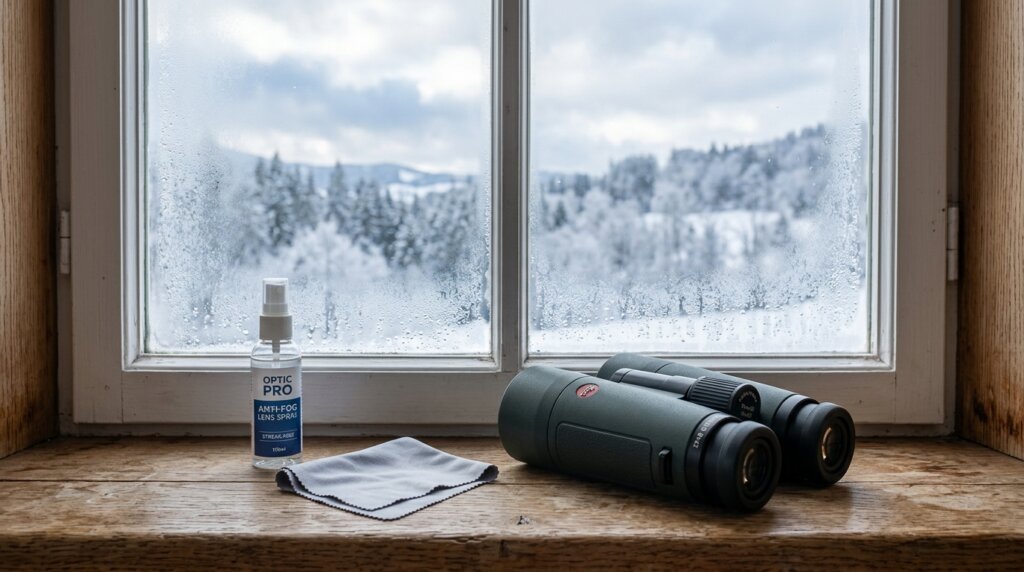
A good binocular cleaning kit should not be complicated. You only need a few safe tools.
A practical cleaning kit should include:
| Tool | Purpose |
|---|---|
| Air blower | Removes loose dust before touching glass |
| Soft lens brush | Clears light particles around edges |
| Lens cleaning solution | Removes smudges and oils |
| Microfiber cloth | Safe wiping and buffing |
| Anti fog spray | Reduces external condensation |
| Protective case | Keeps everything clean and dry |
The order matters. Dust removal comes first. Cleaning comes second. Anti-fog treatment comes last.
If you want fewer lens scratches and better long-term clarity, build your kit around safe handling, not aggressive cleaning.
You can also check the site’s blog tips page for more binocular care tips, storage habits, and simple field-use advice.
Final Verdict: Is Anti Fog Spray for Binoculars Worth It?
Yes, anti fog spray for binoculars is worth it if you use binoculars in cold, damp, humid, or changing weather conditions.
It is not a miracle product. It will not repair internal fogging or make cheap, poorly sealed binoculars perform like premium waterproof models. But for external eyepiece fog and surface condensation, it is one of the most useful small accessories you can keep in your case.
The key is using it correctly: clean first, apply lightly, and stick with a formula made for coated lenses.
For casual users, it is a nice extra. For outdoor users, glasses wearers, hunters, boaters, hikers, and anyone who has lost a clear view to fog, it is a smart add-on.
FAQs About Anti Fog Spray for Binoculars
Can I use anti fog spray on binocular lenses?
Yes, you can use anti fog spray on binocular lenses if the product is safe for coated optics. Avoid harsh household sprays, ammonia-based cleaners, and car windshield products because they may damage lens coatings.
Does anti fog spray fix internal fogging in binoculars?
No. Anti fog spray only helps with external lens fog. If your binoculars are fogging inside, the problem is likely moisture trapped in the binocular body or damaged seals.
Should I spray anti fog solution directly on binoculars?
It is better to spray a small amount onto a clean microfiber cloth first. Direct spraying can send liquid into lens edges, eyecup gaps, or seals.
How often should I apply anti fog spray for binoculars?
Apply it when needed, usually before cold, humid, rainy, or marine use. Reapply when fog protection weakens or after you clean the lenses.
Can anti fog spray damage lens coatings?
A poor-quality or harsh formula can damage coatings. Use an anti fog spray labeled safe for coated lenses, optics, eyeglasses, cameras, or scopes.
Is anti fog spray better than anti fog wipes?
For regular use, spray is usually better because it lasts longer and gives more control. Wipes are convenient for travel but create more waste and may dry out over time.
Can I use anti fog spray on binocular eyecups?
Do not apply anti fog spray to rubber eyecups unless the product label says it is safe for rubber. Focus on the glass surfaces only.
What is the best anti fog spray for binoculars?
A coating-safe optics product like ZEISS AntiFOG Spray is a strong choice because it is made for clear optical surfaces and works well for eyepieces and glasses.




