
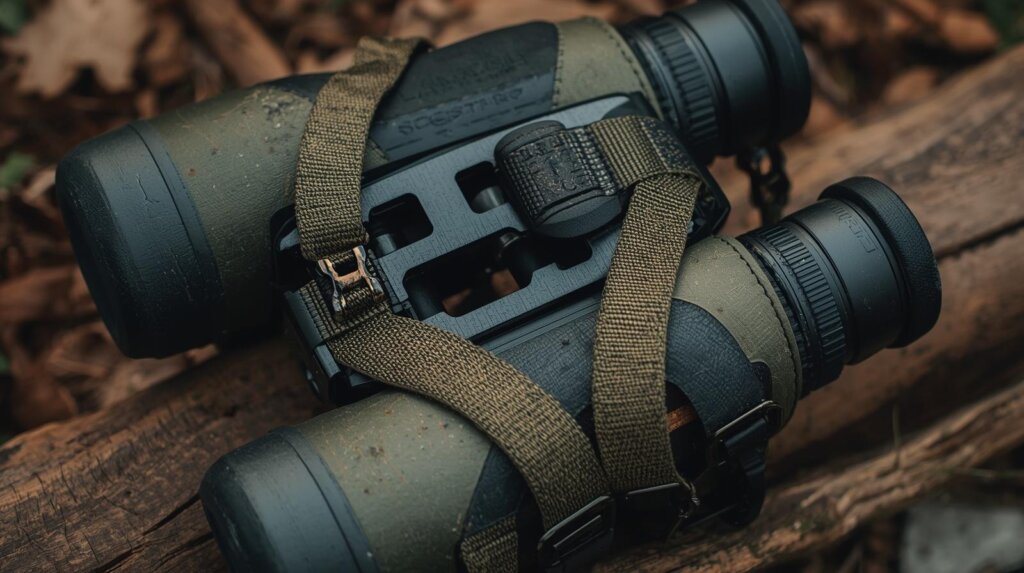
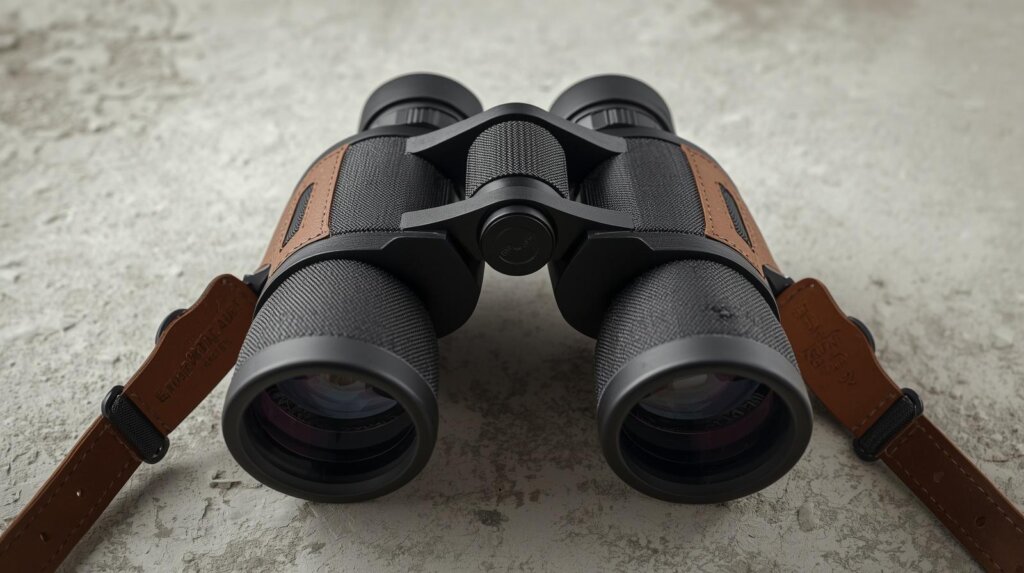
Why a Comfortable Binocular Harness Matters for Long Use
A comfortable binocular harness for long use is not just about carrying binoculars. It is about how your shoulders feel after three hours, how fast you can raise your glass when something appears, and whether the harness keeps your binoculars secure without making your chest feel trapped.
A cheap strap can feel fine for 20 minutes. The real test begins when you are hiking uphill, glassing from one spot for a long time, climbing in and out of a vehicle, or wearing layers in cold weather. That is where a proper binocular harness becomes less of an accessory and more of a comfort tool.
If you are building your setup around comfort, you should also read our main pillar guide on the best binocular harness because it covers the bigger picture: protection, fit, storage, budget, and field use.
Why Comfort Matters More Than Most Buyers Think
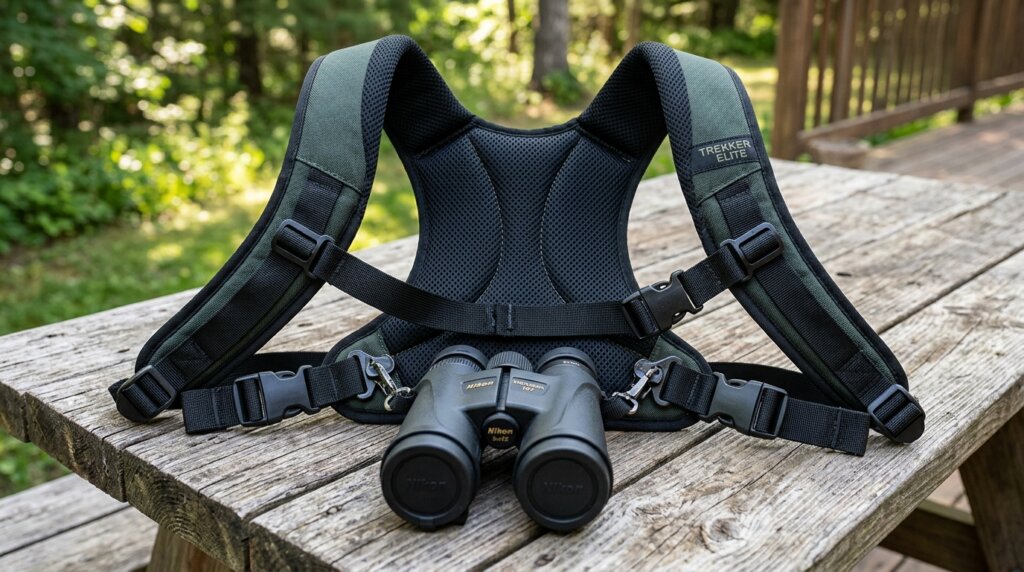
Most people buy a binocular harness because they are tired of neck strain. That is fair. A neck strap pulls all the weight into one narrow area, especially with 10×42 or 12×50 binoculars. After a while, even good optics start feeling annoying.
A comfortable binocular harness for long use solves this by spreading the weight across your shoulders, upper back, and chest. The difference is not small. You notice it when you stop thinking about the binoculars completely.
That is the real goal.
The best harness does not keep reminding you that you are wearing it. It should sit close, move naturally, and let you lift your binoculars without fighting elastic, buckles, or stiff fabric.
For long sessions, comfort usually depends on five things:
| Comfort Factor | Why It Matters During Long Use |
|---|---|
| Shoulder padding | Prevents pressure points during long walks |
| Weight distribution | Reduces neck fatigue and upper-back stress |
| Chest fit | Stops bouncing without feeling tight |
| Adjustability | Helps the harness fit over thin or thick clothing |
| Breathability | Reduces heat buildup during warm conditions |
A harness can look premium online and still feel awkward after two hours. That is why real-world comfort matters more than product photos.
What Makes a Comfortable Binocular Harness for Long Use?
A comfortable binocular harness for long use should feel stable without being restrictive. That balance is important. Too loose, and the binoculars bounce. Too tight, and your shoulders start pulling forward.
Padded Shoulder Straps
Padded straps are one of the first things to check. Thin straps can dig into your shoulders, especially if your binoculars are heavy. Wide straps help, but width alone is not enough. The padding should feel soft but not bulky.
For hiking, hunting, and travel, a low-profile padded strap is usually better than thick foam. Thick padding can rub under backpack straps or feel hot in summer.
Back Panel Design
A good back panel spreads tension evenly. Some harnesses use an X-back design, while others use a flat mesh panel. Both can work, but for long use, a breathable back panel is often the better choice because it keeps the straps from twisting and feels more stable.
A poor back design creates uneven pressure. You may not notice it at first, but after a few miles, one shoulder starts carrying more load than the other.
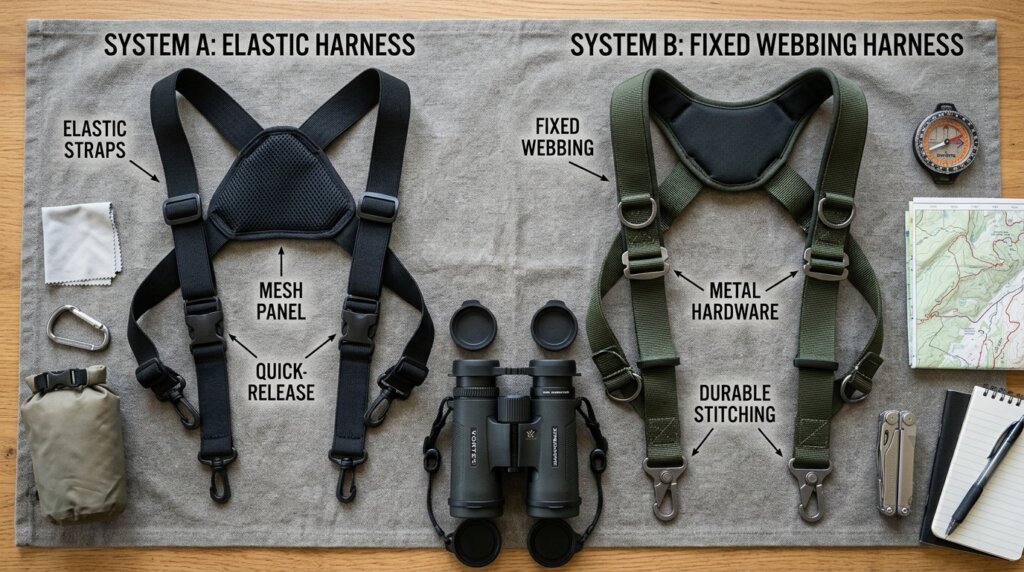
Elastic vs Fixed Webbing
Elastic harnesses feel flexible and easy at first. The downside is bounce. If you walk fast, climb, or lean forward, elastic can make binoculars move more than you want.
Fixed webbing feels more controlled. It is usually better for long use because the binoculars stay close to your chest. The best option depends on your activity, but for serious comfort, stability often beats stretch.
Best Real-World Use Cases for a Long-Wear Binocular Harness
A comfortable binocular harness for long use is useful in more situations than people expect. It is not only for hunters or serious birders. Anyone who carries binoculars for several hours can benefit.
Long Hiking Days
On a hike, your binoculars should be ready, not buried in a backpack. But a neck strap gets uncomfortable quickly, especially when you are moving uphill.
A harness keeps the binoculars centered and reduces swinging. This matters on rocky trails where loose gear can hit your chest or snag against straps.
For hiking, choose a lightweight harness with breathable material and quiet buckles. If you want something budget-focused, our guide on an affordable binocular harness can help you find comfort without overspending.
Hunting and Glassing Sessions
Long glassing sessions are where harness comfort becomes serious. You may be sitting, kneeling, standing, walking, and raising your binoculars again and again. A stiff or badly fitted harness becomes distracting fast.
For hunting, an enclosed chest pack style is often better because it protects binoculars from dust, brush, and weather. The trade-off is bulk. If comfort is your top priority, look for quiet fabric, smooth access, and padded straps that do not rub around the neck.
Safari, Travel, and Sightseeing
Travel users often want something lighter and less tactical-looking. A comfortable binocular harness for long use can help during sightseeing, cruises, national parks, and long walking tours.
In this case, a slim harness usually works better than a large chest pack. It keeps binoculars handy without making your outfit feel overloaded.
Recommended Product: Marsupial Gear Enclosed Binocular Pack
If I had to recommend one highly relevant product style for long use, I would choose the Marsupial Gear Enclosed Binocular Pack.
The reason is simple: it solves more than one problem at once. It carries binoculars close to the chest, protects them inside an enclosed pouch, and uses a harness system that is built for long field sessions. It is especially useful for hunters, hikers, and anyone who glasses for hours instead of minutes.
Is it the cheapest option? No. But comfort over long use is usually where cheap harnesses start showing their limits. If you are carrying expensive binoculars or spending full days outside, the extra structure makes sense.
Pros
| Pros | Why It Helps |
|---|---|
| Enclosed design | Better protection from dust and bumps |
| Stable chest carry | Reduces bouncing during movement |
| Comfortable harness support | Better for long sessions than a neck strap |
| Practical storage | Useful for small accessories |
Cons
| Cons | What to Know |
|---|---|
| More bulky than strap-only harnesses | Not ideal for minimalist travel |
| Higher price point | Better suited for serious outdoor use |
| May feel warm in hot weather | Breathability depends on clothing and conditions |
For casual weekend walks, this may be more harness than most users need. But for long use, repeated use, and serious outdoor work, it makes a lot of sense.
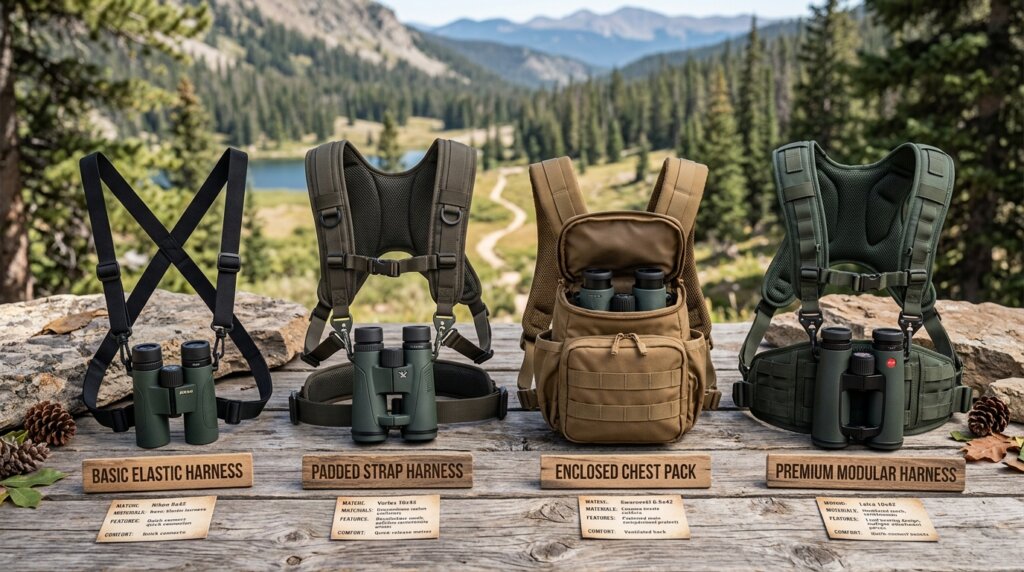
Comfort Comparison: Harness Types for Long Use
Not every harness style fits the same buyer. A comfortable binocular harness for long use depends on how and where you use your optics.
| Harness Type | Best For | Comfort Level | Main Drawback |
|---|---|---|---|
| Basic elastic harness | Casual walking, short use | Good for light binoculars | Can bounce during movement |
| Padded strap harness | Hiking and travel | Better shoulder comfort | Less protection |
| Enclosed chest pack | Hunting, glassing, rugged use | Excellent stability | More bulk |
| Premium modular harness | Serious outdoor users | High comfort and storage | Higher cost |
A simple elastic harness can work well for compact binoculars. But once you move into heavier binoculars or longer sessions, a structured harness becomes more comfortable.
For users comparing serious brands, our article on premium binocular harness brands breaks down what makes higher-end designs worth considering.
How to Choose the Right Fit for Your Body and Binoculars
Fit is where many buyers make mistakes. They focus on brand and price but ignore how the harness sits on the body.
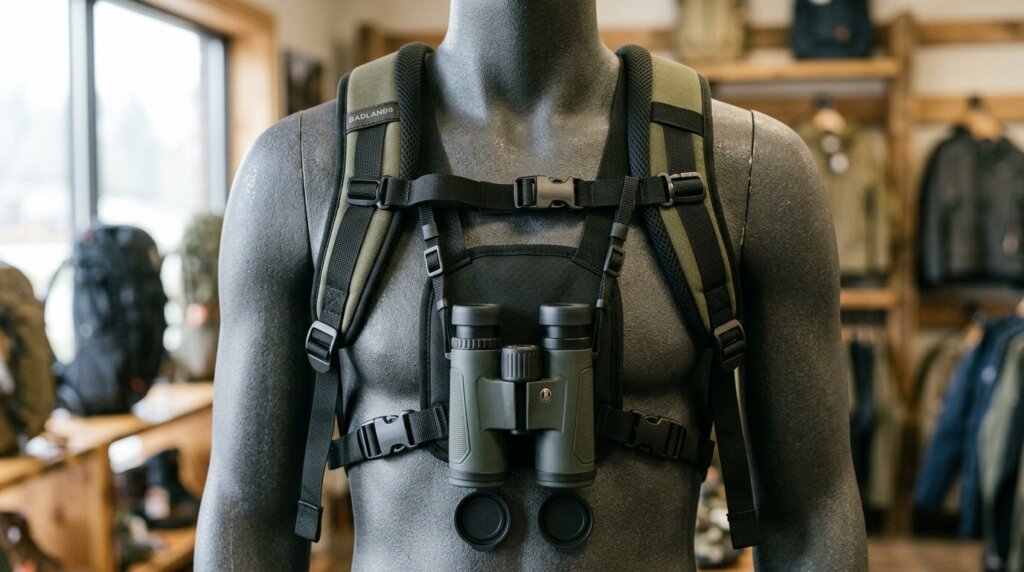
A comfortable binocular harness for long use should place the binoculars high enough for quick access but low enough that they do not press into your throat when you sit or bend.
Check Binocular Size First
Compact binoculars like 8×32 models do not need a heavy-duty chest pack. A lighter harness may feel better.
Larger binoculars like 10×42, 10×50, or 12×50 need more support. With heavier glass, the harness must control movement and spread weight properly.
Adjust Over Real Clothing
Do not adjust your harness over a thin shirt and assume it will work over a jacket. Long-use comfort changes when you add layers.
A good harness should have enough strap length for seasonal clothing. If it only fits well in one outfit, it may become annoying later.
Test Sitting and Bending
Many harnesses feel fine while standing still. The better test is sitting down, bending forward, reaching into a pack, or walking uphill.
If the binoculars push into your chest or the straps pull your shoulders forward, the fit is not right.
Common Mistakes That Ruin Harness Comfort
Even a quality harness can feel bad if it is used wrong. Here are common mistakes that can ruin harness comfort.
Wearing It Too Low
If the binoculars hang too low, they bounce more and take longer to raise. This also creates extra pull on the shoulders.
For long use, keep the binoculars centered around the upper chest.
Over-Tightening the Straps
Many people tighten the harness too much because they want zero movement. That can backfire. Over-tight straps restrict shoulder movement and make breathing feel less natural.
The harness should be snug, not restrictive.
Ignoring Heat and Sweat
A comfortable binocular harness for long use also needs airflow. Heavy chest packs can feel warm in summer. If you hike in hot weather, breathable mesh and lighter fabric matter.
Buying Only for Storage
Extra pockets are useful, but too much storage can turn a harness into a bulky chest bag. If comfort is the main goal, do not overbuy features you will not use.
Buyer Psychology: What You Really Need vs What Looks Impressive
A lot of buyers want the “best” harness, but what they really need is the least annoying harness for their style of use.
That is different.
If you only carry binoculars for short walks, a premium enclosed harness may be more than you need. If you spend long hours glassing, a basic elastic harness may save money upfront but cost comfort later.
Ask yourself:
| Buyer Question | Best Direction |
|---|---|
| Do I carry binoculars for more than 2 hours? | Choose padded or structured support |
| Do I move through brush, dust, or rough ground? | Choose enclosed protection |
| Do I travel light? | Choose slim and low-profile |
| Do I use heavy binoculars? | Choose fixed webbing and better weight distribution |
| Do I wear a backpack too? | Avoid bulky shoulder padding |
A comfortable binocular harness for long use should match your actual habits, not just the most expensive option online.
Practical Tips for Long-Wear Comfort
Small adjustments can make a big difference after several hours.
First, balance the tension on both sides. Uneven straps create shoulder fatigue faster than most people realize.
Second, keep the binoculars close to your body. The farther they hang away from your chest, the more they bounce.
Third, check the harness with your backpack before a long trip. Some harness straps and backpack straps compete for the same shoulder space.
Fourth, clean the harness occasionally. Dust, sweat, and grit can make fabric stiff and uncomfortable over time.
Finally, do not ignore small rubbing points. A tiny irritation after 20 minutes can become a real problem after five hours.
When a Comfortable Harness Is Worth the Upgrade
A comfortable binocular harness for long use is worth upgrading when your current setup makes you tired, slows you down, or causes you to leave binoculars behind.
That last point matters. If your binoculars are uncomfortable to carry, you will use them less. A better harness keeps your optics ready, which makes the whole experience more enjoyable.
For more practical optics tips, you can explore our blog page or visit the Best Binocular home page for more binocular guides and buying advice.
Final Thoughts
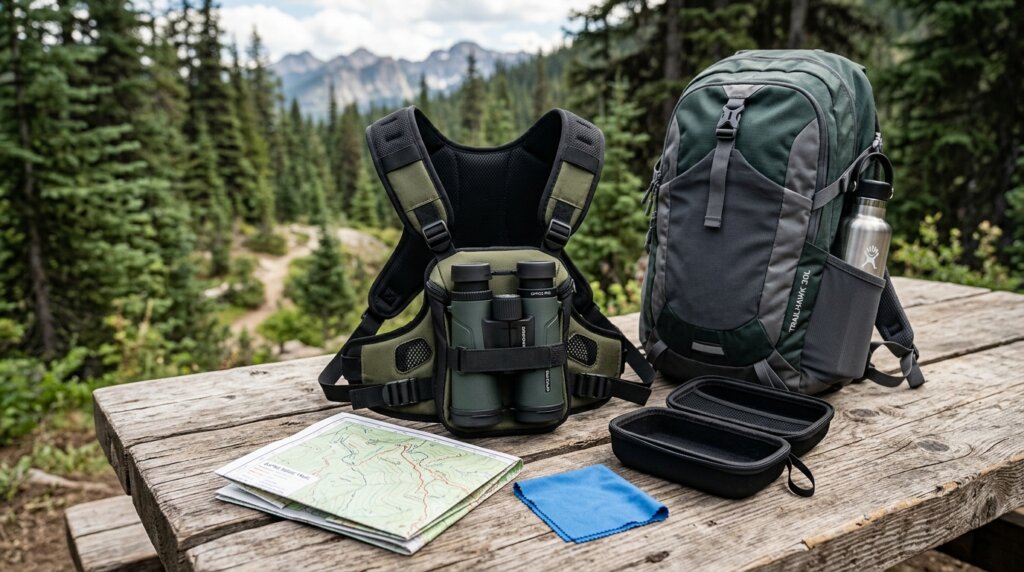
A comfortable binocular harness for long use is one of those upgrades that seems small until you actually wear one for a full day. Then the difference becomes obvious.
The right harness keeps your binoculars secure, reduces neck fatigue, improves access, and makes long sessions feel easier. Do not choose based only on storage pockets or rugged looks. Choose based on fit, weight distribution, breathability, and how naturally it moves with your body.
For casual users, a lightweight padded harness may be enough. For serious outdoor use, an enclosed chest pack like the Marsupial Gear Enclosed Binocular Pack is a smarter long-term choice.
Comfort is not a luxury here. It is the reason you keep your binoculars on you instead of leaving them in the bag.
FAQs About Comfortable Binocular Harnesses for Long Use
What is the most comfortable binocular harness for long use?
The most comfortable binocular harness for long use is usually one with padded shoulder straps, stable chest positioning, and good adjustability. For heavier binoculars, an enclosed chest pack or structured harness often feels better than a basic elastic strap.
Is a binocular harness better than a neck strap?
Yes, for long use, a binocular harness is usually better than a neck strap. A neck strap puts pressure on one area, while a harness spreads the weight across your shoulders and back. This reduces neck strain and helps keep binoculars stable.
Are elastic binocular harnesses comfortable?
Elastic binocular harnesses can be comfortable for light binoculars and casual use. However, they may bounce more during hiking or fast movement. For long use with heavier binoculars, fixed webbing or padded harness systems usually feel more stable.
Should I choose an enclosed binocular harness?
Choose an enclosed binocular harness if you want better protection from dust, bumps, and weather. It is especially useful for hunting, hiking, and long glassing sessions. The downside is extra bulk, so casual users may prefer a lighter strap-style harness.
How should a binocular harness fit?
A binocular harness should fit snugly without pulling your shoulders forward. The binoculars should sit around the upper chest for quick access and reduced bounce. You should be able to breathe, bend, sit, and raise the binoculars naturally.
Can I wear a binocular harness with a backpack?
Yes, but you need to check strap compatibility. A low-profile harness works better with backpacks because bulky shoulder padding can create pressure points. Always test the harness and backpack together before a long hike.




