
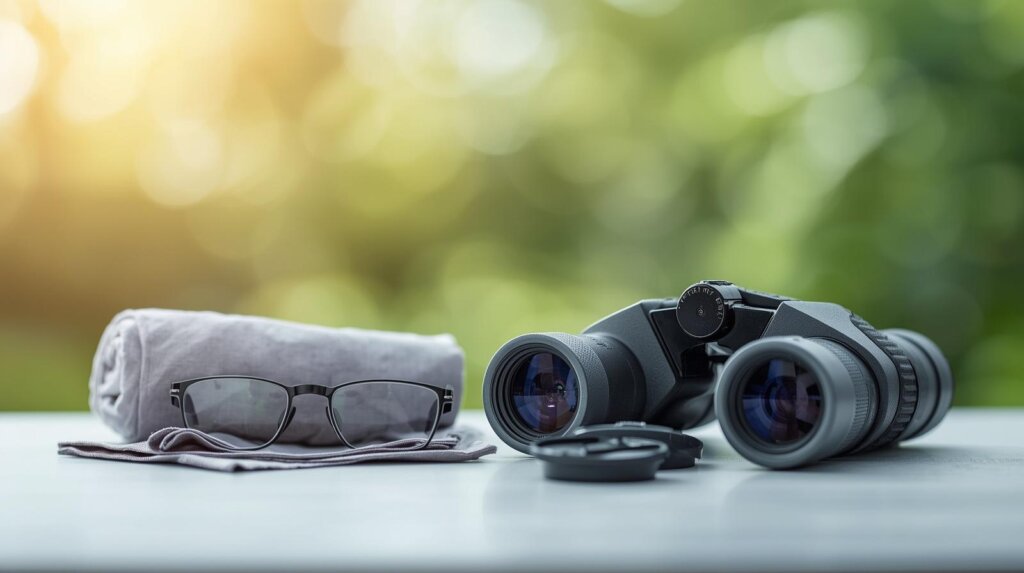
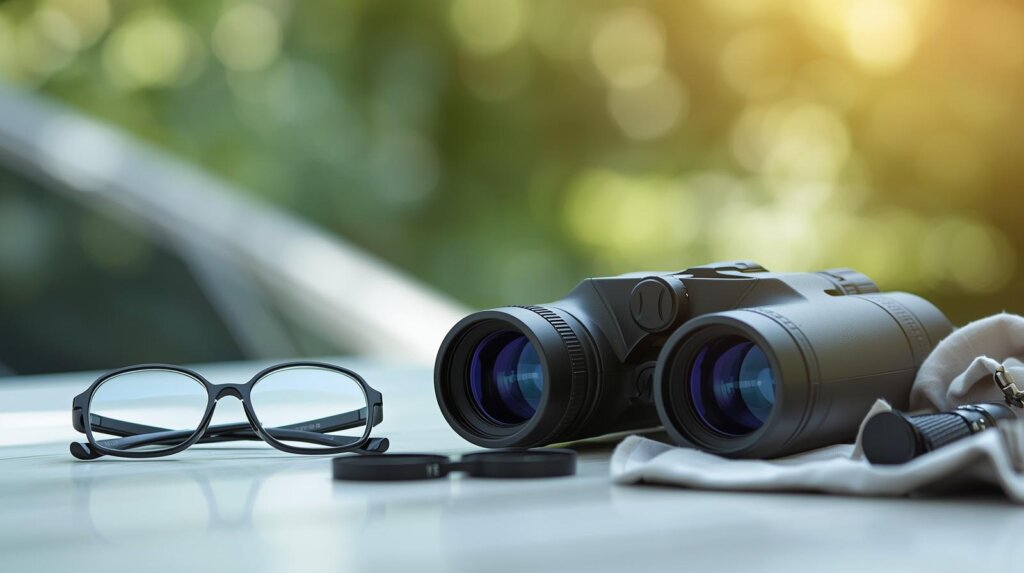
Why Binocular Focus Adjustment Is Different for Glasses Wearers
Wearing glasses changes the way binoculars feel against your face. The view may look darker, the edges may disappear, or one eye may seem sharper than the other even when the binoculars are technically in focus. That is why learning how to adjust binocular focus for glasses matters so much. It is not only about turning the center wheel until the image looks clear. It is about matching the eyecups, eye relief, diopter, interpupillary distance, and your own prescription to get a clean, relaxed view.
For glasses wearers, the biggest mistake is treating binoculars like a quick “look and focus” tool. If the eyecups are left fully extended, your glasses hold your eyes too far back from the ocular lenses. This can create tunnel vision, black edges, and a smaller field of view. Once the binoculars are set correctly, though, the experience becomes completely different. You get the full image circle, less eye strain, and a sharper view through both eyes.
If you are still learning the diopter setup, our guide on how to adjust binocular diopter explains the process in more detail.
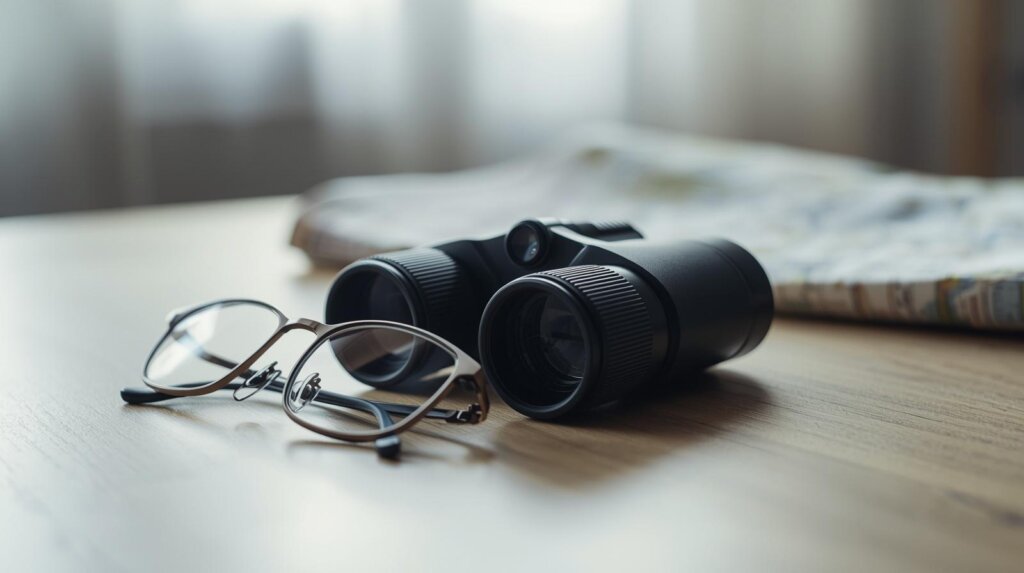
Why Glasses Change Binocular Focus
Glasses add distance between your eyes and the binocular eyepieces. That distance is not always a problem, but it becomes one when the binocular does not have enough eye relief or when the eyecups are set too high.
Eye relief is the distance your eye can sit behind the eyepiece while still seeing the full field of view. Glasses wearers usually need longer eye relief because the lenses of the glasses already create a gap. If the binocular’s eye relief is too short, you may still get a sharp center image, but the edges will look cropped.
That is the part many beginners misunderstand. A binocular can be “focused” and still feel wrong.
You might notice:
| Problem | Likely Cause | What It Feels Like |
|---|---|---|
| Black half-moons around the view | Eyes not aligned with eyepieces | The image disappears when you move slightly |
| Narrow tunnel-like view | Eyecups too extended | You cannot see the full scene |
| One eye sharper than the other | Diopter not adjusted | Your brain keeps fighting the image |
| Eye strain after a few minutes | Wrong IPD or focus balance | Viewing feels tiring instead of relaxed |
| Smudged or hazy image | Glasses or eyepieces dirty | Focus never feels crisp |
When adjusting binocular focus for glasses, the goal is not just “sharp.” The goal is comfortable sharpness across both eyes.
Start With the Eyecups Before Touching the Focus Wheel
This is the step that fixes half the complaints glasses wearers have with binoculars.
If you wear glasses while using binoculars, keep the eyecups twisted down or folded down. That lets your glasses sit closer to the ocular lenses and helps you see the full field of view. If you leave the eyecups extended, your eyes sit too far back, and the view becomes restricted.
Twist-Down Eyecups vs Fold-Down Eyecups
Modern binoculars usually have twist-up eyecups. These are easier to fine-tune because you can set them at different click positions. Older or budget binoculars may use rubber fold-down eyecups. They still work, but they feel less precise.
| Eyecup Type | Best For Glasses? | Practical Notes |
|---|---|---|
| Twist-up eyecups | Yes | Best for controlled eye positioning |
| Fold-down rubber eyecups | Yes | Simple but can wear out over time |
| Fixed eyecups | Usually no | Often uncomfortable for glasses wearers |
My honest take: twist-up eyecups are worth prioritizing if you wear glasses daily. They make small adjustments easier, especially if you switch between glasses and no glasses.
Set the Binocular Width to Match Your Eyes
Before focusing, adjust the hinge width. This is called interpupillary distance, or IPD. It simply means the distance between your eyes.
Hold the binoculars up to your glasses and move the barrels closer together or farther apart until the two image circles merge into one clean circle. If you see two overlapping circles, the width is wrong. If the view looks like a figure-eight, keep adjusting.
This step sounds basic, but it matters more with glasses because your eye position is slightly less forgiving. The glasses frame can also push the binoculars a little off-center, especially if the bridge of your glasses is thick.
A clean single circle means your eyes, glasses, and binocular barrels are lined up properly.
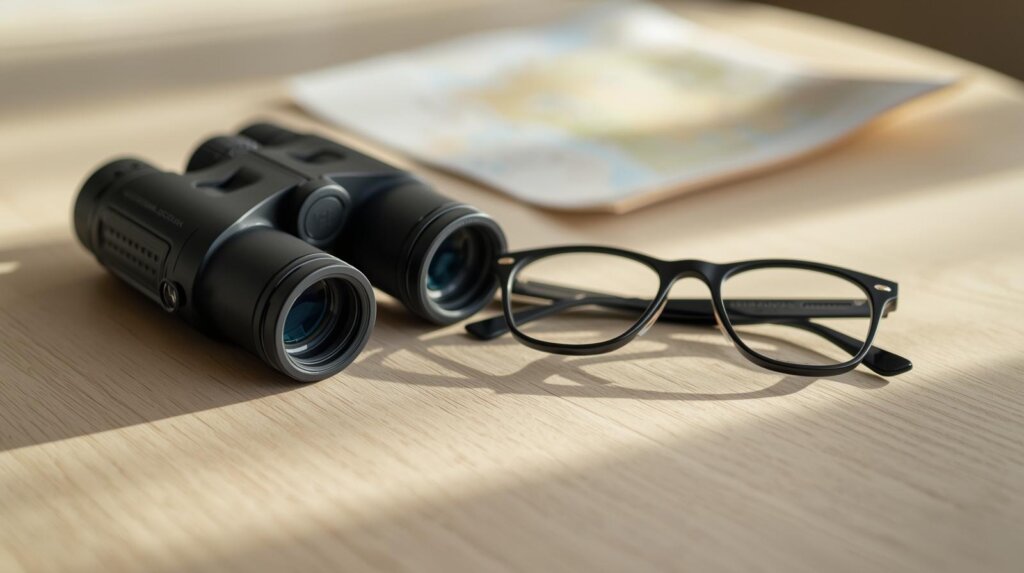
How to Adjust Binocular Focus for Glasses Step by Step
Once the eyecups and width feel right, you can begin the actual focus adjustment. Choose a detailed object at medium distance, such as a sign, fence line, tree bark, rooftop edge, or distant building texture. Avoid moving objects while setting focus.
First, look through both barrels and use the center focus wheel until the image looks generally clear. Do not chase perfection yet. You are only getting close.
Next, cover the right lens or close your right eye, depending on where the diopter is located. On most binoculars, the diopter is on the right eyepiece. Focus the left eye using the center wheel only. Make the left image as sharp as possible.
Then close or cover the left eye and look through the right side. Do not touch the center focus wheel now. Instead, turn the diopter ring until the right eye matches the same sharpness.
Open both eyes. The image should now feel balanced, steady, and natural.
For a more detailed explanation, read how to set diopter on binoculars to understand why the right-eye adjustment matters.
Should You Wear Glasses With Binoculars or Take Them Off?
This depends on why you wear glasses.
If you wear glasses only for nearsightedness or farsightedness, many binoculars can compensate through the focus wheel. In that case, you may be able to remove your glasses and use the binoculars comfortably.
But if you have astigmatism, glasses usually help more. Astigmatism affects the shape of how your eye focuses light, and binocular focus alone may not fully correct it. If the image looks smeared, stretched, or never quite crisp without glasses, keep your glasses on.
| Situation | Better Choice | Why |
|---|---|---|
| Mild nearsightedness | Try without glasses | Center focus may compensate |
| Mild farsightedness | Try without glasses | Binocular focus may be enough |
| Astigmatism | Use glasses | Focus wheel may not correct distortion |
| Progressive lenses | Test both ways | Lens zones can affect comfort |
| Sunglasses outdoors | Use only if optically clear | Cheap sunglasses can reduce sharpness |
For most users with prescription glasses, the best answer is simple: adjust the binoculars while wearing the same glasses you will use outdoors.
Eye Relief Matters More Than Magnification for Glasses
Many buyers obsess over 10x magnification, bigger lenses, or premium glass. Those things matter, but for glasses wearers, eye relief is often the comfort deal-breaker.
Look for binoculars with at least 15mm of eye relief. Around 16mm to 20mm is usually better for glasses. Too little eye relief causes that annoying cropped view where you can see the center but not the full width.
This is where buyer psychology gets interesting. A person may test binoculars in a shop, see a sharp center image, and assume the model is good. Then, outside during bird watching, hiking, hunting, or travel, they realize the view feels cramped. The issue was not sharpness. It was eye relief.
One Product Worth Considering
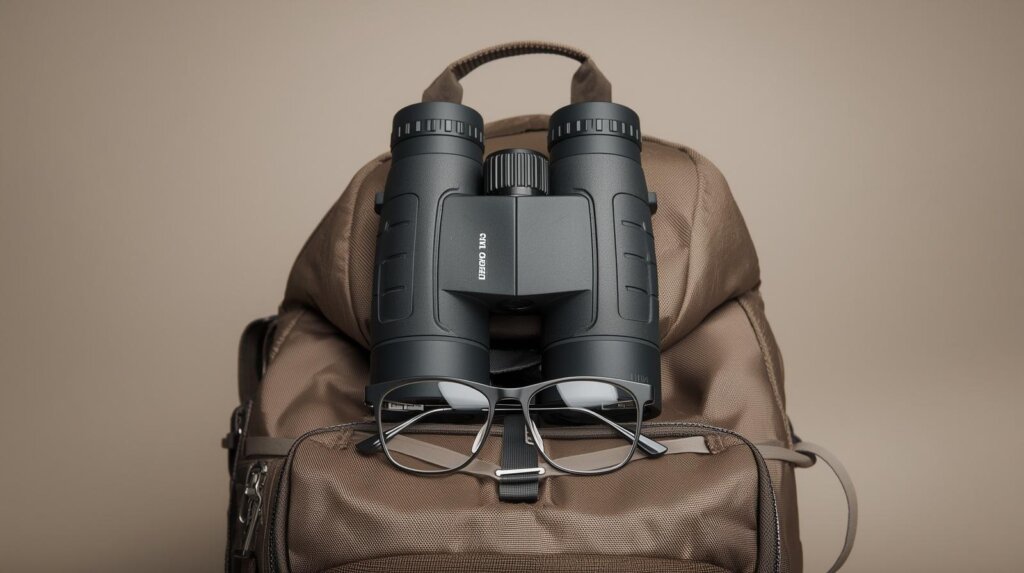
For glasses wearers who want a practical all-around option, the Vortex Diamondback HD 8×42 can be worth considering because it offers long eye relief, steady 8x magnification, and a wide field of view.
I prefer 8×42 over 10×42 for many glasses wearers because the view is steadier, the exit pupil is more forgiving, and the binocular is easier to align behind eyeglass lenses. Unless you specifically need extra reach, 8x often feels more relaxed in real use.
Common Mistakes When Focusing Binoculars With Glasses
The most common mistake is adjusting the diopter before setting the center focus correctly. That creates a false balance. One eye may look acceptable for a moment, but the view falls apart when you change distance.
Another mistake is pressing the binoculars too hard against your glasses. This can tilt your frames, smudge the lenses, and shift your eye position. You want light contact, not pressure.
Some users also forget that progressive lenses can complicate binocular viewing. If you look through the lower part of progressive glasses, the image may distort. Try to look through the distance-viewing zone of your lenses, usually the upper-middle area.
Quick Pros and Cons of Using Binoculars With Glasses
| Pros | Cons |
|---|---|
| Better correction for astigmatism | Requires longer eye relief |
| No need to remove glasses outdoors | Glasses may smudge eyepieces |
| Faster switching between naked-eye view and binocular view | Some frames reduce comfort |
| More natural for prescription users | Short eye relief models feel restrictive |
My opinion: glasses wearers should not compromise on eye relief. A slightly less powerful binocular with comfortable eye placement is usually better than a high-magnification model that constantly gives blackouts.
Real-World Use Cases: What Changes in the Field?
Bird Watching
When tracking birds through branches, glasses wearers need a wide, easy view. If your binocular focus is too sensitive or your eyecups are too high, you will lose the subject before you settle into the image. Keep eyecups down, use a relaxed grip, and focus on the bird’s eye or feather edge when possible.
Hiking and Travel
For travel, speed matters. You may be looking at signs, mountains, architecture, or wildlife from different distances. Once your diopter is set, avoid touching it again. Use only the center focus wheel during the day. This keeps your binocular focus adjustment quick and predictable.
Hunting and Low Light
Low light exposes bad setup quickly. If your glasses are not aligned properly behind the eyepieces, the image may look darker than it should. A 42mm objective with long eye relief is usually more forgiving than a compact binocular for glasses users.
Sports and Concerts
For stadiums or concerts, comfort beats extreme detail. You may hold the binoculars for short repeated views, so blackouts become annoying fast. Set the eyecups down and test the view before the event starts.
For a broader focusing routine that works for both glasses and non-glasses users, visit binocular focus adjustment steps and compare your setup process with the standard method.
Buyer Tips for Glasses Wearers
When shopping, do not judge binoculars only by magnification. Pick them up and check how easily your eyes find the view while wearing glasses. A good binocular should not make you hunt for the image.
Look for:
| Feature | Recommended for Glasses Wearers |
|---|---|
| Eye relief | 15mm minimum, 16–20mm preferred |
| Eyecups | Twist-down or multi-position twist-up |
| Magnification | 8x for easier viewing, 10x for more reach |
| Objective size | 32mm for travel, 42mm for all-around use |
| Focus wheel | Smooth, not loose or overly stiff |
| Diopter ring | Firm enough not to move accidentally |
Also check your glasses frame shape. Thick frames, oversized lenses, and deep nose bridges can change how close your eyes sit to the binocular eyepieces. Sometimes the binocular is not the problem. The frame geometry is.
For more optics buying ideas, comparison posts, and practical field advice, explore the blog tips page or visit the bestbinocular.net home page for more binocular resources.
How to Know Your Focus Is Correct
A properly adjusted binocular should feel calm. That sounds simple, but it is true. Your eyes should not feel like they are pulling the image together.
You know your focus is right when:
- The full image circle is visible with glasses on
- Both eyes feel equally sharp
- The view does not blackout with small movements
- You can change distance using only the center focus wheel
- You do not feel eye strain after a few minutes
- The diopter does not need constant re-adjustment
If you keep adjusting every few seconds, something is wrong. Usually, it is the eyecup position, IPD, or diopter—not the binocular’s optical quality.
FAQs About How to Adjust Binocular Focus for Glasses
Do I need to fold down binocular eyecups when wearing glasses?
Yes, most glasses wearers should fold down or twist down the eyecups. This allows your eyes to sit close enough to the eyepieces to see the full field of view without black edges or tunnel vision.
Why do I see black shadows when using binoculars with glasses?
Black shadows usually happen when your eyes are not aligned with the eyepieces or when the eyecups are too high. Adjust the eyecups down, reset the binocular width, and hold the binoculars lightly against your glasses.
Can binoculars correct my vision without glasses?
Binoculars can often compensate for nearsightedness or farsightedness, but they may not fully correct astigmatism. If you have astigmatism and the image looks distorted without glasses, use your prescription glasses while focusing.
What eye relief is best for glasses wearers?
A minimum of 15mm eye relief is a good starting point. Many glasses wearers feel more comfortable with 16mm to 20mm, especially if they want the full field of view without pressing the binoculars into their frames.
Should I adjust the diopter with my glasses on or off?
Adjust the diopter the same way you plan to use the binoculars. If you normally use binoculars with glasses, set the diopter while wearing glasses. If you use them without glasses, set the diopter without glasses.
Why is one eye blurry even after focusing?
One eye may be blurry because the diopter is not properly set. Focus the non-diopter side first with the center wheel, then adjust the diopter side separately until both eyes match.
Are 8x or 10x binoculars better for glasses wearers?
For many glasses wearers, 8x binoculars feel easier and more forgiving. They are steadier, usually brighter in practical use, and often easier to align behind glasses. A 10x binocular is better when you need extra reach but may feel less stable.
Final Thoughts
Learning how to adjust binocular focus for glasses is really about comfort, not just clarity. The correct setup starts with folded or twisted-down eyecups, a clean single-circle view, a properly set center focus, and a carefully adjusted diopter. Once those pieces work together, binoculars feel much more natural with prescription glasses.
The biggest lesson is this: do not blame your eyes too quickly. Many glasses wearers think binoculars are uncomfortable because of their prescription, when the real issue is short eye relief, poor eyecup position, or an unset diopter. Get those right, and the view becomes wider, sharper, and easier to hold for longer.




