
Why Setting the Diopter on Binoculars Matters
Most people blame blurry binoculars on weak lenses, bad weather, or “cheap optics.” Sometimes that is true. But a lot of the time, the real problem is much simpler: the diopter is not set correctly.
Learning how to set diopter on binoculars is one of those small adjustments that makes a massive difference. When the diopter is dialed in, both eyes work together. The image looks sharper, your eyes feel less tired, and you stop chasing focus every few seconds.
The annoying part? Many binocular owners skip this step because the center focus wheel feels like it should handle everything. It does not.
The center focus wheel adjusts both barrels together. The diopter adjustment corrects the difference between your left and right eye. Even if your eyesight feels “normal,” your eyes rarely focus exactly the same.
What Is the Diopter on Binoculars?
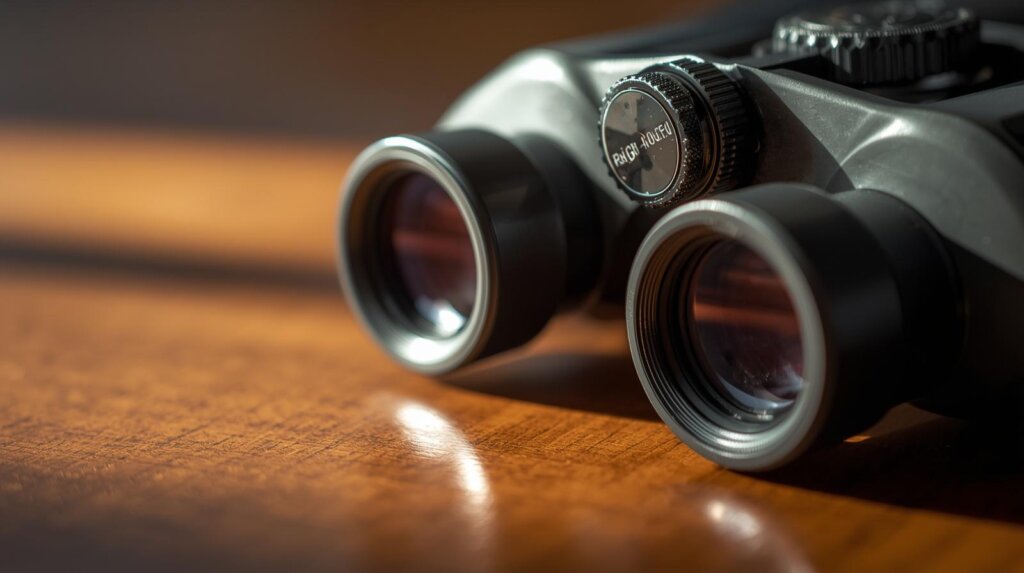
The diopter is a small adjustment ring, usually placed near the right eyepiece, that fine-tunes focus for one eye. Most binoculars use the right eyepiece for diopter correction, but some premium models place the diopter near the center hinge or focus wheel.
Think of it like matching the binoculars to your own eyesight.
Your left eye might be slightly stronger than your right eye. Your right eye might need a tiny bit more correction. The center focus wheel cannot fix that difference because it moves both optical barrels together. The diopter handles that small mismatch.
That is why two people can use the same binoculars and get totally different results. One person sees a crisp image. The next person picks them up and says, “Why are these blurry?”
Nothing may be wrong with the binoculars. The diopter is just set for someone else’s eyes.
If you want a full setup guide, our article on how to adjust binocular diopter explains the complete adjustment process in more detail.
Why Setting the Diopter Matters So Much
A badly set diopter does not always make the image obviously blurry at first. That is the sneaky part.
Sometimes the view looks “almost sharp,” but your eyes keep working hard to merge the image. After 10 or 15 minutes, you may feel eye strain, mild headache, or that weird feeling where one eye seems to be doing more work than the other.
That is usually a diopter issue.
When you know how to set diopter on binoculars correctly, you get:
| Benefit | What It Means in Real Use |
|---|---|
| Sharper image | Details look cleaner without constant refocusing |
| Less eye strain | Your eyes do not fight each other |
| Faster target focus | You can focus quickly on birds, deer, signs, boats, or stadium action |
| Better low-light performance | A properly focused image feels clearer at dawn or dusk |
| More consistent viewing | You do not keep adjusting the focus wheel every few seconds |
This matters even more if you use binoculars for hunting, bird watching, hiking, astronomy, marine viewing, sports, or travel. In real outdoor use, you often have only a few seconds to lock onto a subject. A wrong diopter setting slows you down.
How to Set Diopter on Binoculars Step by Step
This method works for most standard center-focus binoculars.
1. Choose a Clear, Detailed Target
Pick something with clean detail about 30 to 50 yards away. A sign, brick wall, tree bark, rooftop edge, fence post, or license plate works well.
Do not use a moving object for this setup. Moving subjects make it harder to tell whether the problem is your focus or the target.
Also, avoid setting the diopter indoors unless you have a large room and a detailed target. Outdoor light makes the process easier and more accurate.
2. Set the Diopter Ring to Zero
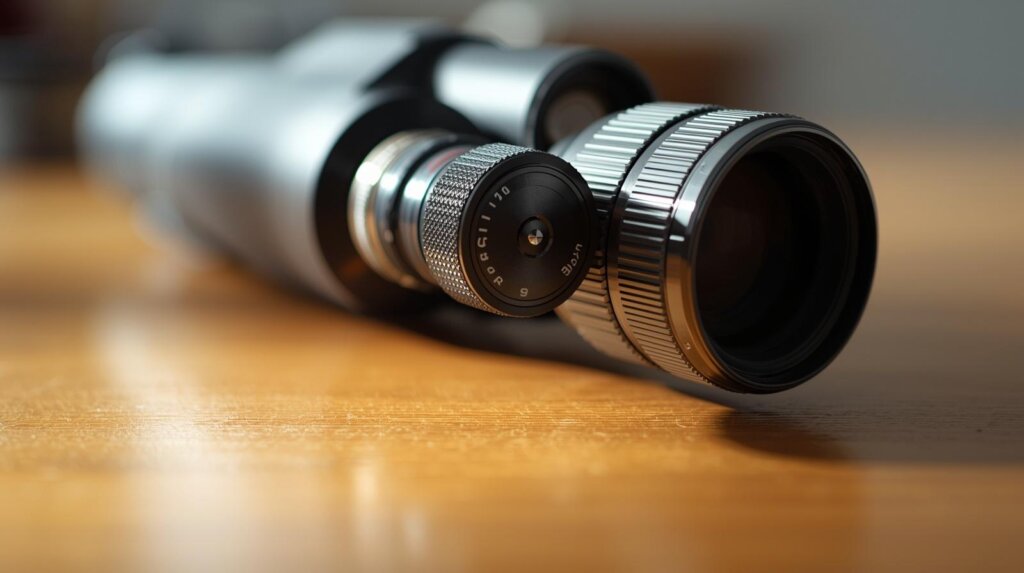
Look for the diopter marking near the right eyepiece. Many binoculars show a “0” mark in the middle, with plus and minus signs on each side.
Turn the diopter ring to zero before starting.
If your binoculars do not have clear markings, gently turn the diopter ring until it feels centered. Do not force it. Some rings are stiff, especially on waterproof models.
3. Cover the Right Objective Lens
Now cover the right front lens with the lens cap or your hand. Keep both eyes open if possible, but only your left eye should be seeing through the binoculars.
A common mistake is closing one eye too tightly. That can change your facial tension and slightly affect your focus judgment. It sounds picky, but it matters.
Look through the left eyepiece and use the center focus wheel only. Turn it slowly until the target looks as sharp as possible through your left eye.
Take your time here. This is the base focus.
4. Cover the Left Objective Lens
Now switch sides. Cover the left front lens and look through the right eyepiece.
Do not touch the center focus wheel anymore.
This part is important. The center focus wheel is already set for your left eye. Now the diopter adjustment must bring the right eye into balance.
5. Adjust the Diopter Ring for the Right Eye
While looking through the right eyepiece, slowly turn the diopter ring until the same target looks sharp.
Small movements matter. Do not spin the ring fast. A tiny adjustment can make the image snap into focus.
Once the right-eye image looks crisp, stop.
Now uncover both lenses and look with both eyes. The image should feel natural and sharp. You should not feel like one eye is pulling harder than the other.
That is the core answer to how to set diopter on binoculars: focus the left eye with the center wheel, then focus the right eye with the diopter ring.
Quick Diopter Setup Table
| Step | What to Do | What Not to Do |
|---|---|---|
| 1 | Pick a still, detailed target | Do not use a flying bird or moving car |
| 2 | Set diopter to zero | Do not start from a random old setting |
| 3 | Cover right lens | Do not adjust diopter yet |
| 4 | Focus left eye with center wheel | Do not rush the sharpness check |
| 5 | Cover left lens | Do not touch center focus now |
| 6 | Focus right eye with diopter ring | Do not over-rotate the diopter |
| 7 | Check both eyes together | Do not ignore eye strain |
Real-World Example: Why Your Binoculars Look Sharp One Day and Bad the Next
Here is a common situation.
You set your binoculars perfectly at home. Then you take them on a hunting trip or hiking trail. A friend borrows them for a few minutes. Later, you pick them up and everything feels slightly off.
What happened?
They probably moved the diopter.
This is why I like binoculars with a locking diopter ring. It is not just a fancy feature. It stops accidental movement when binoculars rub against a chest harness, backpack strap, or jacket.
If you share binoculars often, make a note of your personal diopter position. Some people remember it as “one small mark toward plus” or “halfway between zero and minus.” That little habit saves time.
Once the diopter is set, you can follow these binocular focus adjustment steps to make normal field focusing faster and easier.
Diopter Ring vs Center Focus Wheel
Many beginners mix these two up, so here is the simple difference.
| Feature | Center Focus Wheel | Diopter Adjustment |
|---|---|---|
| Main job | Focuses both barrels together | Balances focus between your eyes |
| Used how often? | Constantly during viewing | Usually set once per user |
| Location | Center bridge | Usually right eyepiece |
| Fixes distance blur? | Yes | Not mainly |
| Fixes eye difference? | No | Yes |
Once the diopter is set, you normally use only the center focus wheel while viewing different distances.
For example, when you shift from a nearby tree to a distant ridge, use the center focus wheel. Do not keep changing the diopter. If you keep adjusting the diopter during normal viewing, the binoculars will feel inconsistent and frustrating.
Common Mistakes When Setting Binocular Diopter
Adjusting the Diopter First
This is probably the most common mistake.
People look through both eyepieces and twist everything until the image looks better. That can work by accident, but it is not reliable.
Set the left side first with the center focus wheel. Then set the right side with the diopter.
Using a Poor Target
A blank wall, cloudy sky, or plain field is not useful. You need texture and edges.
Good targets include printed signs, roof tiles, brick lines, tree bark, power pole labels, or a distant fence.
Setting It While Tired
Your eyes behave differently when you are tired. If your view seems perfect at night but bad the next morning, your eyes may have been strained during setup.
For best results, set the diopter in daylight when your eyes feel normal.
Forgetting Eyecup Position
Eyecups affect eye placement. If your eyes are too close or too far from the eyepiece, the image may show black shadows or soft edges.
If you wear glasses, twist the eyecups down. If you do not wear glasses, twist them up.
A wrong eyecup setting can make you think the diopter is wrong when the real issue is eye relief.
Letting Someone Else Change It
This one hurts because it happens all the time.
If someone borrows your binoculars and adjusts the diopter, your setup is gone. Not a big deal, but you need to reset it.
Pros and Cons of Diopter Adjustment
| Pros | Cons |
|---|---|
| Makes the view sharper for your eyes | Can be moved accidentally |
| Reduces eye strain | Confusing for beginners |
| Helps both eyes work together | Shared binoculars need readjustment |
| Improves real-world viewing comfort | Some cheap models have loose diopter rings |
| Usually takes less than two minutes | Poor markings make settings harder to remember |
My honest take: a diopter adjustment is not optional. It is part of setting up binoculars properly. Skipping it is like buying good shoes and never tying the laces.
Product Recommendation: Vortex Diamondback HD 10×42
The Vortex Diamondback HD 10×42 can be a practical option for users who want a center-focus binocular with a right-eye diopter and outdoor-friendly handling.
It makes sense for beginners because the focus wheel feels smooth, the right-eye diopter is easy to understand, and the 10×42 size works for bird watching, hiking, hunting, travel, and general outdoor use.
It is not the cheapest binocular, and it is not trying to be a luxury European optic. That is exactly why it fits this topic. It sits in the practical middle: good enough to show the benefit of correct diopter adjustment, but not so expensive that casual users feel locked out.
Best for:
| User Type | Why It Fits |
|---|---|
| Bird watchers | Good detail at normal outdoor distances |
| Hikers | Manageable size and weight |
| Hunters | Useful 10x magnification for scanning |
| Beginners | Easy focus behavior |
| Travelers | Versatile for landscapes and events |
Buyer tip: if you often share binoculars with family or friends, look for models with firm or locking diopter controls. Loose diopter rings are annoying because they drift without you noticing.
Use-Case Scenarios: When Diopter Setup Really Matters
Bird Watching
Birds do not wait around while you fight the focus wheel. A proper diopter setting helps you snap into focus faster when a bird lands on a branch, moves through brush, or appears briefly near water.
Bad diopter setup makes feathers look mushy, especially in low light.
Hunting
For hunting, wrong diopter settings can cost you detail. Antlers, ears, movement lines, and background separation all become harder to judge when one eye is slightly out of focus.
You want your binoculars ready before the moment happens.
Hiking and Travel
On trails, overlooks, and city viewpoints, you constantly switch between near and far subjects. Once the diopter is set, the center focus wheel becomes much more predictable.
That makes the whole viewing experience feel smoother.
Stargazing
For casual astronomy, diopter setup matters a lot. Stars are tiny points of light, so even a small focus mismatch can turn them into soft blobs.
If stars never look sharp through your binoculars, check the diopter before blaming the optics.
For more advanced alignment and sharpness checks, read how to calibrate binoculars to understand when the issue is setup-related and when the binoculars may actually need repair.
How Often Should You Reset the Diopter?
You do not need to reset the diopter every time you use your binoculars.
Reset it when:
- Someone else has used your binoculars
- The diopter ring may have been bumped
- The image suddenly feels uneven
- You changed from glasses to no glasses
- You feel eye strain after a few minutes
- You bought used binoculars
- You cleaned the eyepiece area and may have moved the ring
If your binoculars are only used by you and the diopter ring stays in place, the setting can remain good for months.
What If the Image Is Still Blurry After Setting the Diopter?
If you followed the steps and the view still looks bad, the problem may not be the diopter.
Possible causes include dirty lenses, fog inside the barrels, poor eye spacing, damaged prisms, weak coatings, or binoculars that are out of collimation.
Start simple. Clean the outer lenses with a proper blower and microfiber cloth. Adjust the interpupillary distance so both circles merge into one clean image. Check the eyecups. Then repeat the diopter setup.
If the image still looks doubled, tilted, or uncomfortable, the binoculars may need collimation service.
Why Diopter Quality Should Matter Before You Buy
Most people compare binoculars by magnification, objective lens size, and price. That makes sense, but it misses a real comfort factor: control quality.
A cheap binocular with a loose diopter can feel sharp one minute and off the next. A stiff, poorly marked diopter can also be frustrating if multiple people use the same pair.
When buying binoculars, check these details:
| Diopter Feature | Why It Matters |
|---|---|
| Clear markings | Easier to remember your setting |
| Firm movement | Less chance of accidental changes |
| Locking design | Best for travel, hunting, and shared use |
| Smooth eyepiece feel | More precise adjustment |
| Good eye relief | Better comfort with or without glasses |
Do not buy binoculars only because the box says “HD” or “high power.” If the focusing system feels cheap, the viewing experience will get old fast.
For more binocular tips, buying help, and practical outdoor optics advice, visit the blog tips page or explore the bestbinocular home page for more helpful resources.
Final Thoughts
Learning how to set diopter on binoculars is a small skill, but it changes how your binoculars feel in real use.
Set the left eye with the center focus wheel. Set the right eye with the diopter ring. Then leave the diopter alone and use the center wheel for normal focusing.
That is it.
The biggest mistake is treating the diopter like a second focus wheel. It is not. It is your personal eyesight correction setting. Once it is right, the binoculars become faster, sharper, and much easier on your eyes.
FAQs About How to Set Diopter on Binoculars
What does the diopter do on binoculars?
The diopter adjusts one eyepiece, usually the right side, to match the difference between your left and right eye. It helps both eyes see one sharp, balanced image through the binoculars.
How do I know if my binocular diopter is wrong?
Your diopter may be wrong if the image looks slightly blurry, one eye feels strained, you keep refocusing often, or the view looks sharper through one eye than the other.
Should I set binocular diopter with glasses on or off?
Set the diopter the same way you normally use your binoculars. If you wear glasses while viewing, keep them on and twist the eyecups down. If you view without glasses, set the diopter without them.
Do all binoculars have a diopter adjustment?
Most center-focus binoculars have a diopter adjustment, usually near the right eyepiece. Some compact or very cheap binoculars may have limited adjustment, while some premium models place it near the center focus system.
Why is only one side of my binocular blurry?
One side may look blurry because the diopter is not set correctly, the lens is dirty, the eyecup position is wrong, or the binoculars have internal alignment issues. Always reset the diopter first before assuming the binoculars are damaged.
Do I need to adjust the diopter every time?
No. Once the diopter is set for your eyes, you usually do not need to change it unless someone else uses your binoculars, the ring gets bumped, or your viewing setup changes.
Is diopter adjustment the same as binocular calibration?
No. Diopter adjustment matches the binoculars to your eyes. Calibration usually refers to optical alignment, focus accuracy, or collimation. If you see double images, that may be a calibration or collimation problem, not just a diopter issue.
What number should I set the diopter to?
There is no single correct diopter number for everyone. Start at zero, focus the binoculars normally, then adjust the diopter slowly until the image looks equally sharp through both eyes. Once you find the clearest setting, leave it there for future use.




