
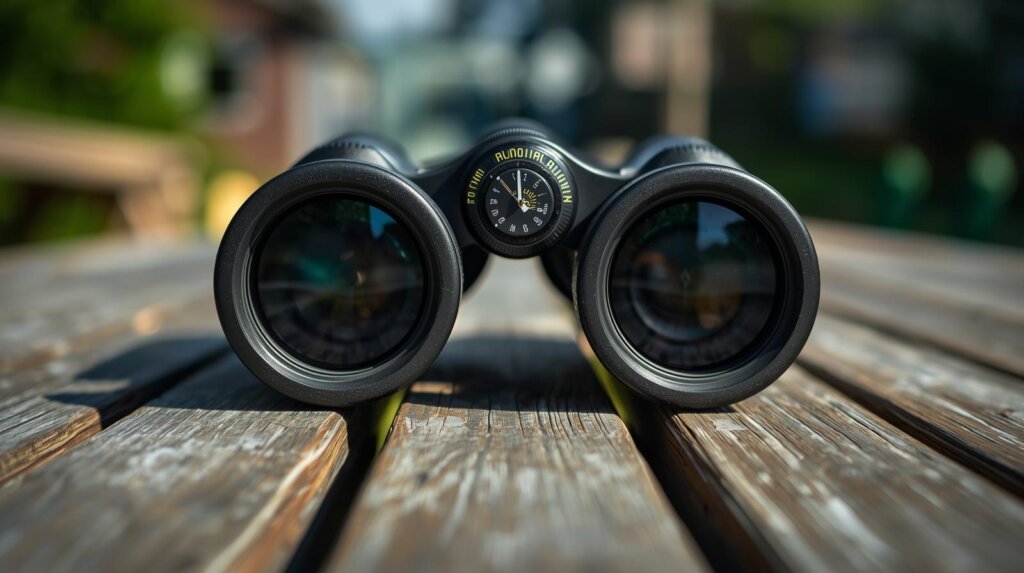
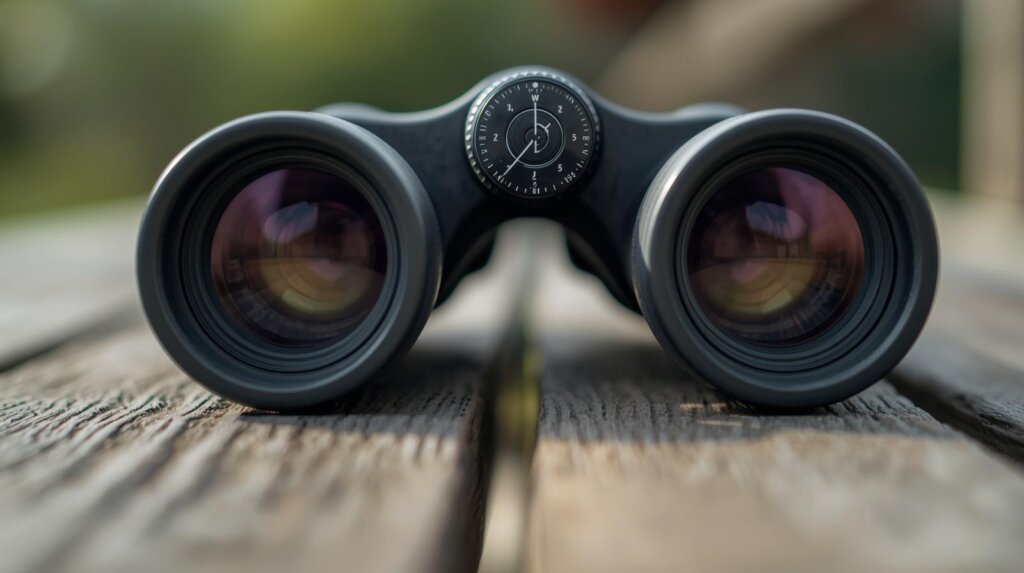
Why Your Binoculars Are Not Focusing Properly
You lift your binoculars, turn the focus wheel, aim at something clear… and the image still looks soft. Annoying, right?
The frustrating part is that binocular focus problems do not always come from the same place. Sometimes the binoculars are fine and the diopter is simply off. Sometimes the eyecups are wrong for your eyes. Sometimes the lenses are dirty, fogged, knocked out of alignment, or just not built for the distance you are trying to focus on.
So when people ask, “why are my binoculars not focusing?”, the honest answer is: because one part of the viewing setup is not matching your eyes, your subject distance, or the condition of the binoculars.
This article breaks down the real causes in plain language so you can quickly figure out whether the issue is user adjustment, lens condition, glasses setup, or an actual binocular defect.
The Most Common Reason: Your Diopter Is Not Set Correctly
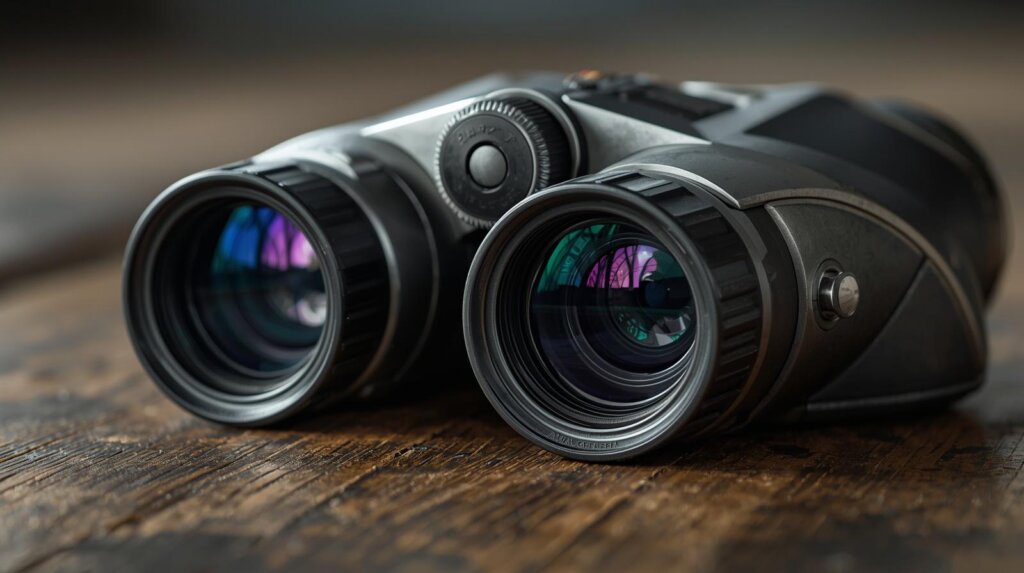
The diopter is the small adjustment that balances the difference between your left and right eye. On many binoculars, it sits on the right eyepiece. On some models, it may be under the center focus wheel or built into a locking ring.
Here’s where many beginners go wrong: they use only the center focus wheel and ignore the diopter.
The center focus wheel adjusts both barrels together. The diopter fine-tunes one side so both eyes see the same sharp image. If the diopter is off, one eye may be sharp while the other stays soft. Your brain tries to combine both views, and the final image feels blurry, strained, or “almost focused but not quite.”
That is one of the biggest reasons behind the question, why are my binoculars not focusing, especially when the binoculars are new.
If one side still feels softer than the other, our guide on how to adjust binocular diopter explains the full adjustment process so your binoculars match your eyes instead of forcing your eyes to fight the optics.
Signs the Diopter Is the Problem
| Symptom | What It Usually Means |
|---|---|
| One side looks sharper than the other | Diopter is not balanced |
| Image looks clear for a second, then feels strained | Your eyes are compensating |
| Focus wheel helps, but never fully fixes it | Diopter needs resetting |
| You get eye fatigue after a few minutes | Left/right focus mismatch |
| Someone else uses the binoculars and sees clearly | Your personal diopter setting is different |
My honest take: if your binoculars are not focusing and they are not physically damaged, check the diopter before blaming the glass. A wrong diopter setting can make even decent binoculars feel cheap.
Your Binoculars May Be Too Close to the Subject
Not every binocular can focus on close objects.
Each pair has a close focus distance. That means the nearest point where the binoculars can create a sharp image. If your binoculars have a close focus of 15 feet and you try to focus on something 6 feet away, the view will stay blurry no matter how much you turn the wheel.
This happens a lot when people test binoculars indoors. They point them at a wall, shelf, label, window frame, or object across the room and think something is wrong.
It may not be broken. You may simply be too close.
Real-World Example
If you buy binoculars mainly for backyard viewing, insects, indoor testing, or close-range garden details, close focus matters more than many buyers realize. But if you use binoculars for hiking, travel, stadium viewing, wildlife watching, or landscapes, a slightly longer close focus is usually less of a deal-breaker.
This is why two binoculars can both be “good” but feel totally different depending on your use case.
Your Eye Width May Not Match the Binoculars
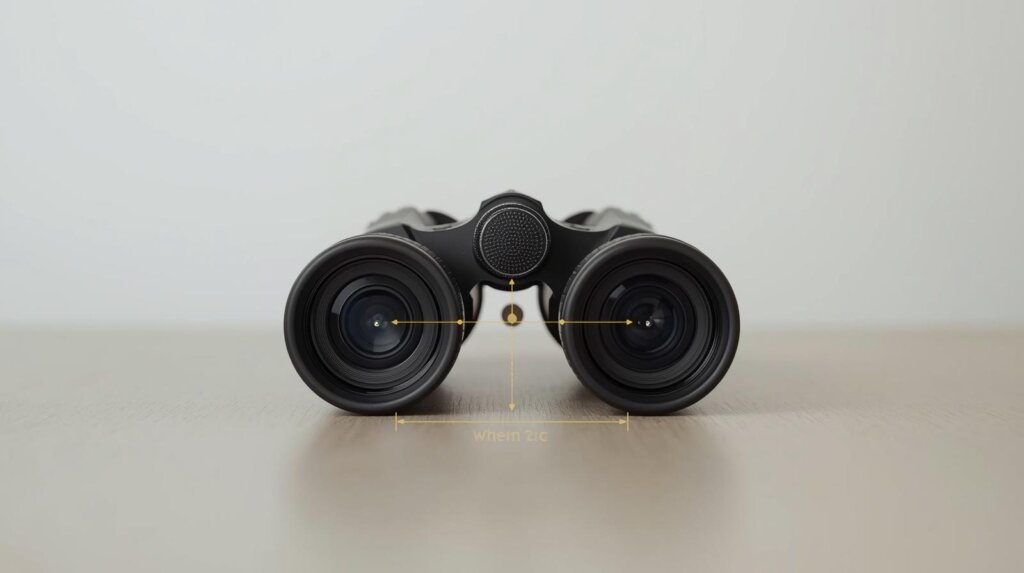
Another overlooked issue is interpupillary distance. That is just a technical way of saying the distance between your eyes.
Binoculars fold in and out at the hinge. You need to adjust that hinge until both barrels line up with your eyes. If they are too wide or too narrow, the view may look like two separate circles, shadowy edges, or a soft image that never feels comfortable.
This is not a lens problem. It is an alignment-with-your-face problem.
A properly adjusted pair should show one clean circular image, not two overlapping circles.
Quick Signs Your Eye Width Is Wrong
| What You See | Likely Cause |
|---|---|
| Two circles instead of one | Hinge width is wrong |
| Black shadows around edges | Eye position is off |
| Image disappears when you move slightly | Eye relief or eyecup issue |
| You keep shifting the binoculars on your face | Barrels are not lined up with your eyes |
This is especially common with kids, people with narrower faces, and compact binoculars that have limited hinge range.
Dirty Lenses Can Make Focus Feel Worse Than It Is
Sometimes the focus system works perfectly, but the lenses are covered with fingerprints, dust, dried water spots, sunscreen, pocket lint, or oil from your hands.
The tricky part is that dirty lenses do not always look obviously dirty at first glance. But when light hits them from the side, smudges can scatter light and make the image look hazy.
That haze can feel like poor focus.
Before assuming your binoculars have a mechanical issue, inspect both objective lenses and eyepieces under soft light. Do not scrub them with your shirt. That is one of those common mistakes that slowly ruins coatings over time.
Use an air blower first, then a proper lens brush or microfiber cloth made for optics.
Dirty Lens vs Focus Problem
| Issue | How It Looks | What to Do |
|---|---|---|
| Fingerprints | Greasy haze, lower contrast | Clean with lens cloth |
| Dust | Specks or soft glare | Blow dust off first |
| Water spots | Patchy blur | Use optic-safe cleaning fluid |
| Internal fog | Cloudiness inside | Needs drying or service |
| Bad focus setting | Image changes as you turn wheel | Reset focus and diopter |
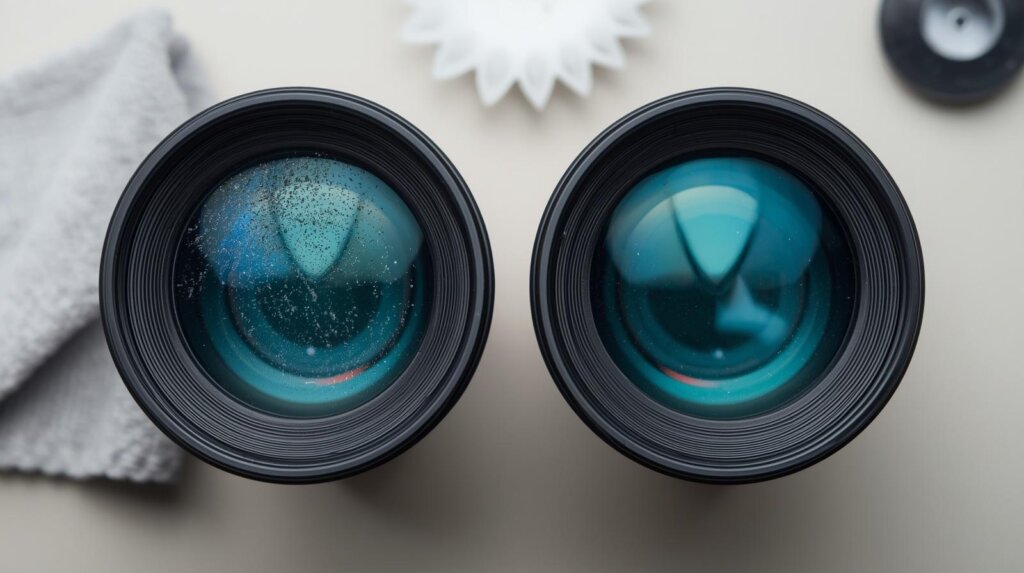
Fogging Can Make Binoculars Look Out of Focus
Fog is sneaky. You may think the binoculars are not focusing, but the real issue is moisture.
External fog happens when warm, moist air hits cold glass. You see this when moving from an air-conditioned room to humid outdoor air, or from a cold car into warmer weather.
Internal fog is worse. That means moisture has entered the binocular body. Cheap or damaged binoculars are more likely to have this issue. Waterproof and nitrogen-purged binoculars are designed to reduce fogging, but even they can struggle if seals are damaged.
If your binoculars look cloudy inside the lenses, no focus adjustment will fix that.
When Fog Is the Real Problem
You may notice:
- The view looks milky instead of sharp
- The blur does not change much when turning the focus wheel
- The issue gets worse in humid weather
- One barrel looks cloudier than the other
- The image has low contrast even in good daylight
A temporary external fog issue can clear after the binoculars adjust to the temperature. Internal fog usually needs repair or replacement.
You May Be Using the Eyecups Wrong
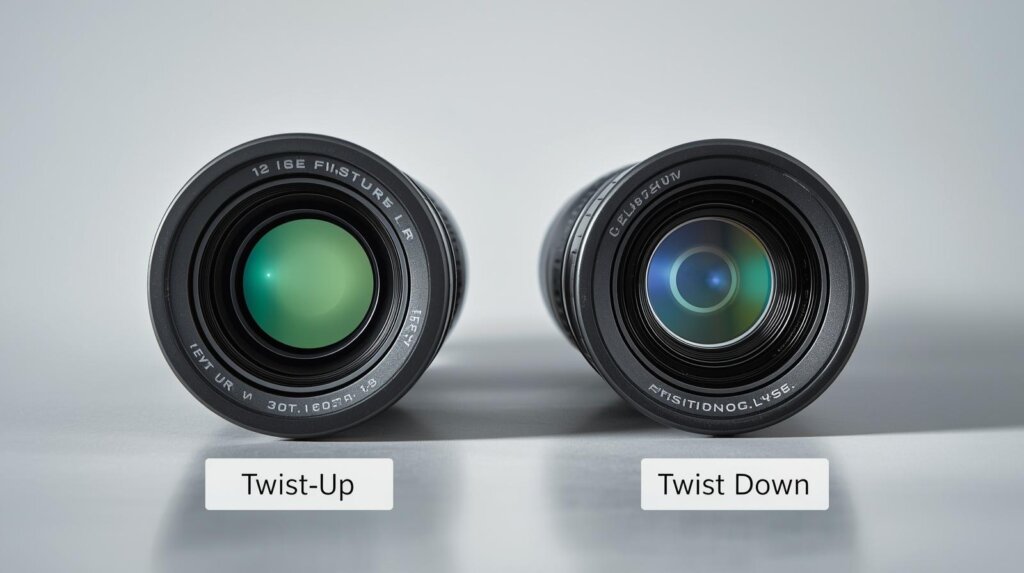
Eyecups control the distance between your eyes and the eyepiece lenses. This distance is called eye relief.
If you do not wear glasses, eyecups are usually twisted up. If you wear glasses, eyecups are usually twisted down so your glasses can sit closer to the eyepieces.
When the eyecups are in the wrong position, you may see blackouts, kidney-shaped shadows, soft edges, or a view that never feels centered.
This is one reason glasses wearers often think their binoculars are not focusing properly, even when the focus wheel and diopter are technically correct.
If you wear glasses, read how to adjust binocular focus for glasses to avoid common eye relief and eyecup mistakes.
Eyecup Position Comparison
| User Type | Eyecup Position | Why It Matters |
|---|---|---|
| No glasses | Usually twisted up | Keeps eyes at the right distance |
| Glasses | Usually twisted down | Allows full field of view |
| Sunglasses | Usually down or partly down | Prevents blackouts |
| Thick lenses | Fully down may work better | Gives more usable eye relief |
My opinion: eyecups are underrated. A lot of people blame “bad optics” when the real issue is that their eyes are sitting too far away from the eyepiece.
The Focus Wheel May Be Stiff, Loose, or Damaged
A healthy focus wheel should move smoothly. It should not feel gritty, stuck, wobbly, or uneven.
If the focus wheel turns but the image barely changes, there may be an internal focusing mechanism issue. If it is extremely stiff, dirt, impact damage, or cold weather may be affecting movement. If it spins too freely, something inside may be loose.
This is more common with very cheap binoculars, old binoculars, or pairs that have been dropped.
Focus Wheel Problems: Pros and Cons of Repair
| Option | Pros | Cons |
|---|---|---|
| Try basic cleaning around wheel | Easy, low cost | Won’t fix internal damage |
| Manufacturer repair | Best for quality binoculars | May take time |
| Replace cheap binoculars | Often cheaper than repair | Wasteful if issue is minor |
| Keep using as-is | No extra cost | Frustrating and unreliable |
For budget binoculars, repair often does not make financial sense. For mid-range or premium binoculars, warranty support is worth checking.
Your Binoculars Could Be Out of Collimation
Collimation means both barrels are optically aligned. When binoculars are out of collimation, each side points slightly differently. Your eyes try to merge the two images, which can cause blur, double vision, headaches, or eye strain.
This usually happens after a drop, hard knock, shipping damage, or poor factory quality control.
A focus wheel cannot fix bad collimation. A diopter adjustment cannot fully fix it either.
Signs of Collimation Trouble
- You see double images
- The view feels uncomfortable quickly
- One barrel seems slightly higher or lower
- Your eyes feel like they are “pulling” the image together
- The binoculars worked before but became blurry after a drop
This is one of the few situations where your binoculars may not be focusing because they are physically misaligned.
If that is the case, don’t keep forcing your eyes through them. It is not worth the strain.
Low Light Can Make Focus Seem Worse
Binoculars need light to show detail. In low light, your pupils open wider, contrast drops, and small focus errors become more obvious.
A pair that looks sharp at noon may feel softer at dusk. That does not always mean the binoculars are broken. It may mean the objective lens size, coatings, prism quality, or magnification is not ideal for dim conditions.
For example, compact 10×25 binoculars may be convenient, but they usually struggle more in low light than 8×42 binoculars.
Low-Light Focus Comparison
| Binocular Type | Low-Light Performance | Best For |
|---|---|---|
| 8×42 | Strong balance of brightness and stability | Wildlife, hiking, general use |
| 10×42 | More reach but slightly harder to hold steady | Distant viewing |
| 8×32 | Lighter, decent daylight view | Travel and casual use |
| 10×25 | Compact but dimmer | Bright daytime use |
| 7×50 | Bright and steady | Marine and night-sky viewing |
This is where buyer psychology kicks in. Many beginners chase high magnification because “10x” or “12x” sounds more powerful. But more magnification also magnifies hand shake, focus errors, and atmospheric shimmer.
For most people, an 8×42 is easier to focus and more forgiving.
Heat Waves and Distance Can Ruin Sharpness
Sometimes your binoculars are focusing just fine, but the air between you and the subject is the problem.
Heat shimmer, dust, humidity, and long-distance haze can make a sharp optic look soft. This is common when viewing across roads, rooftops, beaches, desert ground, fields, or parking lots.
You can turn the focus wheel all day and still not get a crisp image because the air itself is moving.
This matters for people using binoculars for long-distance viewing. If the subject is very far away and the air is unstable, even expensive binoculars cannot magically remove atmospheric distortion.
Cheap Binoculars May Have Weak Optical Quality
Let’s be real: some binoculars are just not that good.
Very cheap binoculars often have poor coatings, loose focus wheels, weak prisms, soft edges, narrow eye relief, and inconsistent quality control. They may focus in the center but stay blurry around the edges. Or one barrel may never quite match the other.
That does not mean everyone needs expensive binoculars. But there is a point where ultra-budget optics become more frustrating than useful.
When It Might Be Time to Upgrade
You may need better binoculars if:
- The focus wheel feels rough or inaccurate
- The image is never sharp in either barrel
- The edges are extremely blurry
- You see glare even in normal daylight
- The binoculars feel uncomfortable after a few minutes
- You have already reset the diopter and cleaned the lenses
One Product Worth Considering: Vortex Diamondback HD 8×42
If your current binoculars constantly fight you on focus, one practical upgrade to consider is the Vortex Diamondback HD 8×42.
I like this type of binocular for people who want a more forgiving, everyday setup. The 8x magnification is easier to hold steady than higher-powered models, and the 42mm objective size gives a useful brightness boost for general outdoor use. Vortex lists the Diamondback HD with adjustable eyecups, a center focus wheel, and a right-eyepiece diopter, which are exactly the controls you want when solving focus comfort issues.
This is not the cheapest option, but that is part of the point. If your binoculars still look blurry after using low-end optics, the problem may not be your eyes. It may be that the binoculars are too cheaply made to deliver a clean, comfortable image.
Best Fit
| Good For | Not Ideal For |
|---|---|
| Bird watching | Ultra-tight budgets |
| Hiking | Pocket-only carry |
| General wildlife viewing | People wanting 12x magnification |
| Travel with serious viewing | Indoor close-range testing |
| Glasses users needing adjustable eyecups | Users who want the smallest binocular possible |
Common Mistakes That Make Binoculars Hard to Focus
Mistake 1: Adjusting Both Eyes at Once
Many people look through both barrels and keep turning the focus wheel, hoping the image will snap into place. But if the diopter is wrong, you need to isolate each eye during setup.
If the left and right sides still do not match, follow our step-by-step guide on how to set diopter on binoculars.
Mistake 2: Testing Too Close Indoors
Indoor testing causes a lot of false panic. Try looking at a distant sign, rooftop, pole, or tree line instead of something across the room.
Mistake 3: Ignoring Glasses Setup
If you wear glasses and leave the eyecups fully extended, you may lose field of view and create blackouts. That can feel like poor focus even when it is actually eye relief.
Mistake 4: Buying Too Much Magnification
A 12x binocular may sound better than 8x, but it is harder to hold steady. Hand shake makes the image look soft, especially without a tripod.
Mistake 5: Cleaning Lenses the Wrong Way
Using a shirt, tissue, towel, or rough cloth can scratch coatings. Once coatings are damaged, focus may still work, but clarity and contrast suffer.
Quick Diagnosis: why binoculars won’t focus?
| Problem | Most Likely Cause | What It Feels Like |
|---|---|---|
| One eye sharp, one eye blurry | Diopter not set | Uneven focus |
| Both eyes blurry indoors | Subject too close | Focus wheel cannot fix it |
| Shadows around view | Eyecups or eye position | Black edges or cut-off image |
| Cloudy view | Fog or dirty lenses | Hazy low-contrast image |
| Double image | Collimation issue | Eye strain or overlap |
| Soft image at long distance | Heat shimmer or haze | Wavy unstable view |
| Image shakes too much | High magnification | Hard to keep sharp |
| Focus wheel feels broken | Mechanical issue | Stiff, loose, or no response |
Real-World Use Cases
For Bird Watching
If your binoculars are not focusing during bird watching, check three things first: diopter, close focus distance, and hand stability. Birds move quickly, so slow focus wheels or high magnification can make the experience frustrating.
An 8×42 binocular is usually easier for fast viewing than a 12x model.
For Hiking and Travel
For hiking, dust, sweat, rain, and temperature changes can all affect clarity. Keep a microfiber cloth and small air blower in your bag. Also avoid tossing binoculars loose into a backpack because knocks can affect alignment.
For Sports and Stadium Use
If the image looks blurry in a stadium, the issue may be eye relief or hand shake. Lower magnification is often easier to use because you can track movement without constantly refocusing.
For Stargazing
Stars are unforgiving. If your diopter is off, stars may look like fuzzy dots instead of sharp points. Also, handheld shake becomes obvious at night. A tripod adapter can make a huge difference.
Buyer Tips Before Replacing Your Binoculars
Before buying new binoculars, ask yourself:
- Do I wear glasses?
- Do I need close focus?
- Will I use them mostly in daylight or low light?
- Do I prefer compact size or better brightness?
- Is the focus wheel smooth enough for moving subjects?
- Does the diopter lock or move too easily?
- Am I choosing magnification I can actually hold steady?
Here is the blunt truth: people often buy binoculars based on power, price, or brand name. But comfort and focus control matter just as much. A binocular that fits your eyes will beat a stronger binocular that constantly frustrates you.
For more practical optics help and buying advice, visit the bestbinocular.net homepage or explore more binocular tips and blog guides to build a smarter setup before spending money.
FAQs About Why Binoculars Are Not Focusing
Why are my binoculars not focusing even when I turn the wheel?
Your binoculars may not be focusing because the diopter is not set, the subject is too close, the lenses are dirty, the eyecups are in the wrong position, or the barrels are out of alignment. Start with the diopter and eye width before assuming the binoculars are damaged.
Why is one side of my binoculars blurry?
One blurry side usually means the diopter is not adjusted for your eyes. It can also happen if one lens is dirty, one eyepiece is damaged, or the binoculars are misaligned after being dropped.
Can binoculars lose focus over time?
Yes, binoculars can develop focus problems over time if the focus mechanism wears down, the diopter ring becomes loose, seals fail, or the binoculars are knocked out of alignment. Poor storage and rough handling can speed up these issues.
Why do my binoculars look blurry with glasses?
Binoculars may look blurry with glasses if the eyecups are not twisted down, the eye relief is too short, or your glasses are sitting too far from the eyepieces. Glasses users should choose binoculars with comfortable eye relief and adjustable eyecups.
Are cheap binoculars harder to focus?
Cheap binoculars can be harder to focus because they often have weaker focus mechanisms, lower-quality prisms, poor coatings, and inconsistent alignment. Some budget models are fine for casual use, but ultra-cheap ones often struggle with sharpness and comfort.
Why do my binoculars focus in the center but stay blurry at the edges?
That is usually an optical quality issue. Many lower-cost binoculars are sharpest in the center and softer near the edges. A little edge softness is normal, but extreme blur may mean poor design or defective optics.
Can dirty lenses stop binoculars from focusing?
Dirty lenses do not usually stop the focus wheel from working, but they can make the image look hazy, soft, or low contrast. Fingerprints, dust, water spots, and oil can all make binoculars seem out of focus.
How do I know if my binoculars are broken?
Your binoculars may be broken if the focus wheel does not change the image, the diopter ring is loose, you see double images, one barrel is permanently blurry, or the view became bad after a drop. If basic adjustments do not help, the binoculars may need repair or replacement.
Why do binoculars go out of focus when I move them?
Binoculars may go out of focus when you move them because the distance to the subject changes, the focus wheel is too loose, or your eye position shifts behind the eyepieces. Refocus gently and keep the binoculars steady against your eyes for a clearer view.
Final Take: The Problem Is Usually Setup Before It Is Damage
So, why are my binoculars not focusing?
Most of the time, it comes down to diopter adjustment, eye position, eyecup setup, dirty lenses, close focus limits, or unrealistic expectations from high magnification. Actual damage is possible, especially after a drop, but it should not be your first assumption.
Start with the simple stuff: set the eye width, clean the lenses properly, check the eyecups, focus on a distant object, and reset the diopter. If the view still looks wrong after that, then you can start thinking about collimation problems, internal fog, mechanical focus failure, or upgrading to better binoculars.
A sharp view is not only about better glass. It is about getting the binoculars, your eyes, and your use case working together.




