
Why Binocular Calibration Matters for Clear Viewing
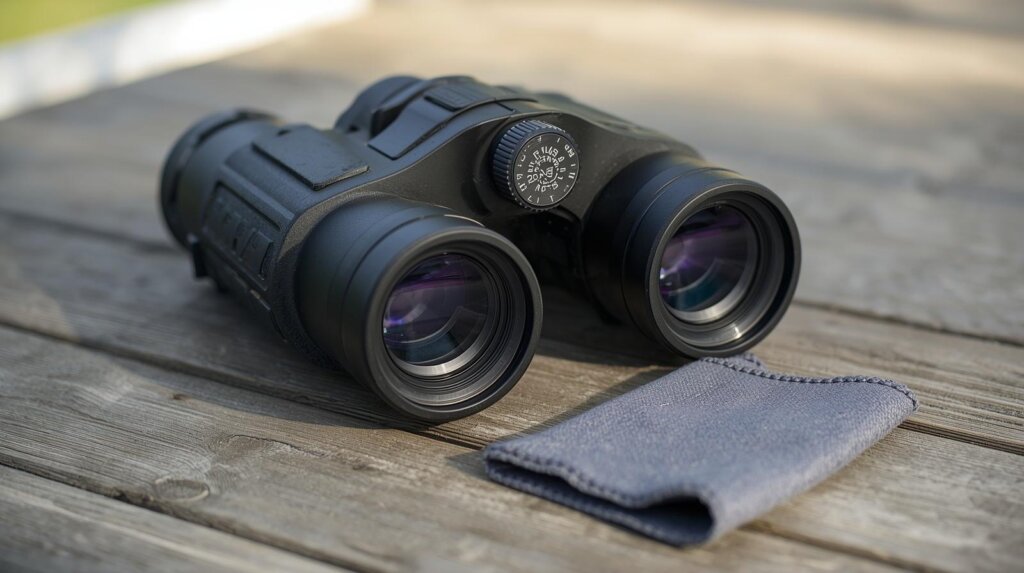
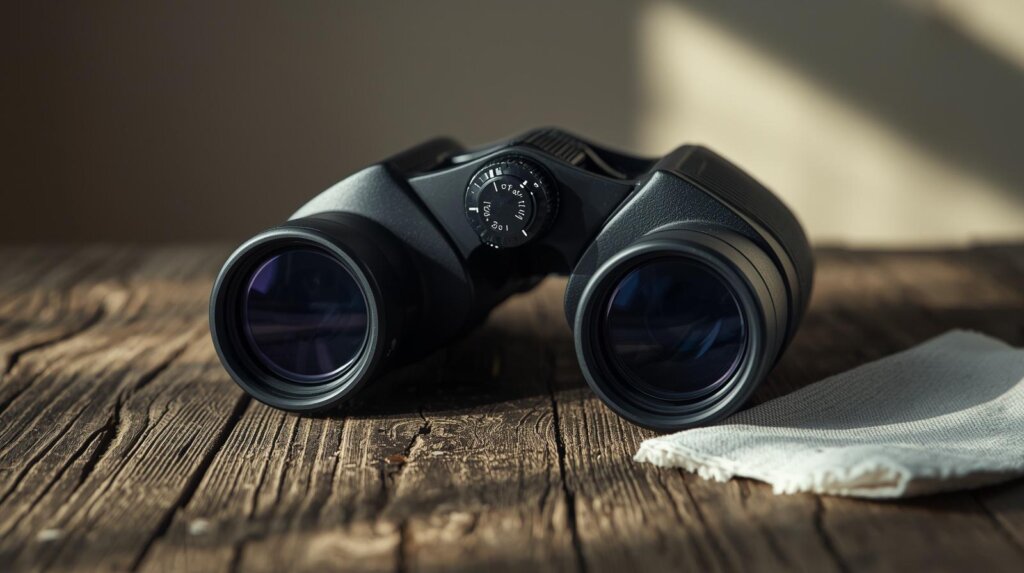
Most people think blurry binoculars mean the lenses are bad. Sometimes that is true. But in many cases, the real problem is simpler: the binoculars are not calibrated for your eyes.
Learning how to calibrate binoculars is basically learning how to make both barrels work with your vision instead of against it. Your left and right eyes rarely see exactly the same. One eye may be slightly stronger, sharper, or more dominant. The diopter adjustment fixes that difference.
When binoculars are calibrated correctly, the view feels natural. You are not constantly touching the focus wheel. You are not closing one eye every few minutes. You are not wondering why one side looks sharper than the other.
This article breaks down how to calibrate binoculars in a practical, field-ready way for birding, hiking, hunting, sports viewing, travel, and general outdoor use.
What Does It Mean to Calibrate Binoculars?
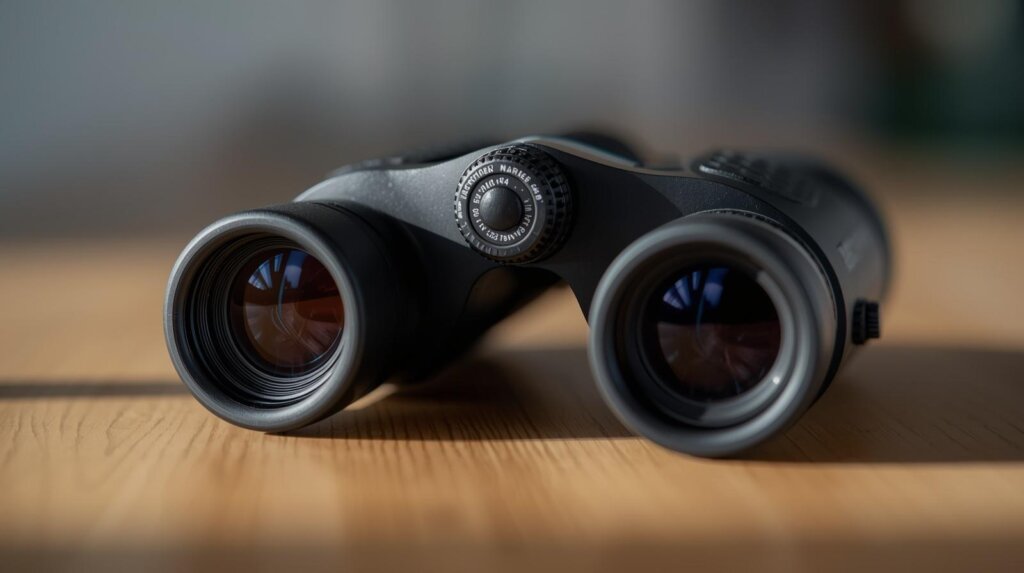
To calibrate binoculars means adjusting the binoculars so both eyes see the same level of sharpness through both optical barrels.
There are usually two main controls involved:
| Binocular Control | What It Does | When You Use It |
|---|---|---|
| Center focus wheel | Focuses both barrels together | Every time your viewing distance changes |
| Diopter adjustment | Balances one barrel to match your eye difference | Usually once, then only when needed |
| Eyecups | Set correct eye distance from lenses | Especially important for glasses wearers |
| Hinge adjustment | Sets interpupillary distance | Every time comfort or alignment feels off |
The center focus wheel handles distance. The diopter handles your personal eye balance.
That is the part many beginners miss. They keep spinning the main focus wheel, but the binoculars still feel “almost sharp.” That usually happens because the diopter has never been set properly.
For a deeper diopter-specific breakdown, read the main silo article on how to adjust binocular diopter. It connects directly with this calibration process and helps you understand why one tiny ring can make such a big difference.
Why Binocular Calibration Matters More Than People Think
Bad calibration is sneaky.
You may still see an image, but your eyes work harder than they should. After 20 minutes, you may feel eye strain, forehead pressure, or mild frustration because the view never feels fully relaxed.
When you know how to calibrate binoculars, you get:
- Sharper detail across both eyes
- Less eye fatigue during long sessions
- Faster focusing in the field
- Better depth and contrast perception
- More confidence that the problem is not your binocular quality
This matters a lot in real use.
For bird watching, poor calibration can make feather detail look soft. For hiking, distant signs or landmarks may look slightly smeared. For sports, fast-moving action becomes harder to follow. For astronomy, stars may look like tiny fuzzy dots instead of clean points.
Honestly, many people upgrade binoculars before they ever calibrate the pair they already own. That can lead to unnecessary spendin.
How to Calibrate Binoculars Correctly
The cleanest way to calibrate binoculars is to separate the job of the center focus wheel from the job of the diopter.
Pick a fixed object with detail. A sign, brick wall, tree bark, fence post, or rooftop edge works well. Avoid moving objects because your eyes will chase motion instead of judging sharpness.
Stand or sit steady. If your hands shake, rest your elbows on a table, railing, or backpack.
Step 1: Adjust the Hinge First
Before touching focus, open or close the binocular hinge until both circles merge into one clean image.
If you see two circles, a figure-eight shape, or dark edges, the hinge spacing is wrong for your eyes.
This is called interpupillary distance. Big word, simple idea: the binocular barrels need to match the distance between your eyes.
A properly adjusted hinge gives you one round, comfortable image. No squinting. No black crescents at the edge.
Step 2: Reset the Diopter to Zero
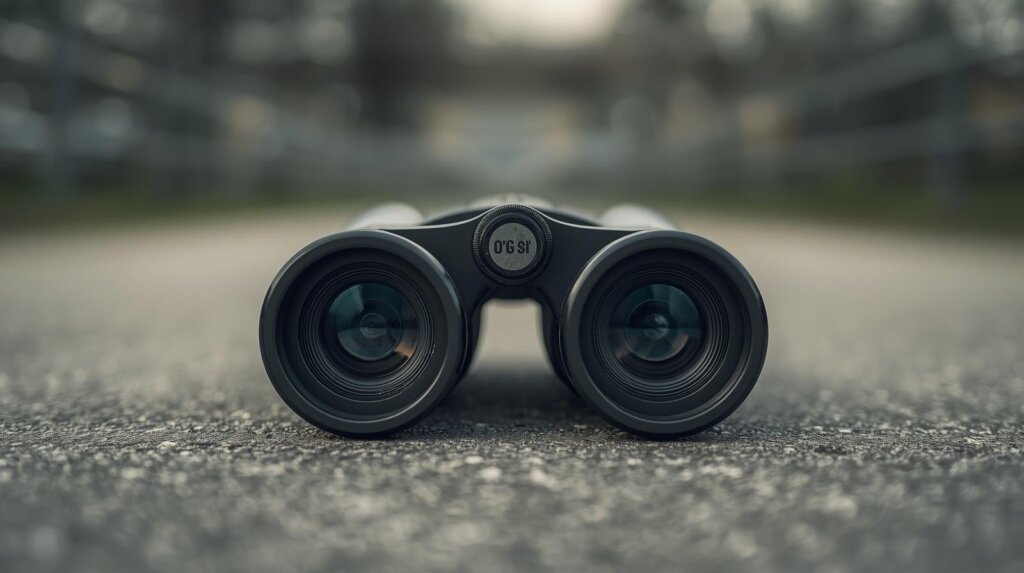
Most binoculars have a diopter ring near the right eyepiece. Some premium models place it near the center focus wheel or use a locking ring.
Set the diopter to zero or the center mark first.
This gives you a neutral starting point. Do not assume the mark from a previous user is correct. If someone else used the binoculars before you, their setting could be totally wrong for your eyes.
This is one reason shared binoculars often feel “bad” even when they are perfectly fine.
Step 3: Focus the Left Barrel First
Cover the right objective lens with the lens cap or your hand. Do not close your right eye tightly because that can strain your face and slightly affect how your other eye sees.
Look through the left barrel with your left eye.
Now use only the center focus wheel until your target looks as sharp as possible.
Take your time here. Do not rush it. The goal is not “clear enough.” The goal is the cleanest edge detail you can get.
A brick line, printed sign, or roof edge is better than a plain wall because it gives your eye something precise to judge.
Step 4: Focus the Right Barrel With the Diopter
Now cover the left objective lens and look through the right barrel with your right eye.
Do not touch the center focus wheel.
Instead, turn the diopter ring until the image in your right eye looks equally sharp.
This is the real calibration moment. You are not focusing for distance anymore. You are matching the right optical barrel to your right eye.
Once the right side looks sharp, stop. Do not over-adjust. Tiny movements matter.
Step 5: Check With Both Eyes Open
Uncover both lenses and look at the same target with both eyes.
The image should feel balanced, crisp, and easy. You should not feel like one eye is doing more work.
Now move to a different object farther away and use only the center focus wheel. If your binoculars are calibrated correctly, the main focus wheel should now bring both eyes into focus together.
That is the point of learning how to calibrate binoculars properly. Once the diopter is set, daily focusing becomes faster and smoother.
Quick Calibration Table for Different Users
| User Type | Best Calibration Target | Extra Tip |
|---|---|---|
| Bird watchers | Tree bark, feeder pole, fence detail | Calibrate in daylight before going into shaded areas |
| Hikers | Trail sign, rock edge, distant structure | Recheck after rough backpack storage |
| Glasses wearers | Printed sign or high-contrast object | Set eyecups down before calibrating |
| Sports viewers | Stadium lettering or scoreboard edge | Avoid calibrating on moving players |
| Beginners | Brick wall or window frame | Take 2 minutes instead of guessing |
Common Signs Your Binoculars Are Not Calibrated
You probably need to calibrate your binoculars if:
- One side looks sharper than the other
- You keep refocusing every few seconds
- Your eyes feel tired quickly
- The image looks clear for one eye but soft for both eyes together
- You get headaches after short viewing sessions
- Someone else recently used your binoculars
- The diopter ring moved in your bag
A lot of “focus problems” are really calibration problems. If you are still stuck after calibration, check this supporting article on why are my binoculars not focusing. It helps separate user adjustment issues from actual optical problems.
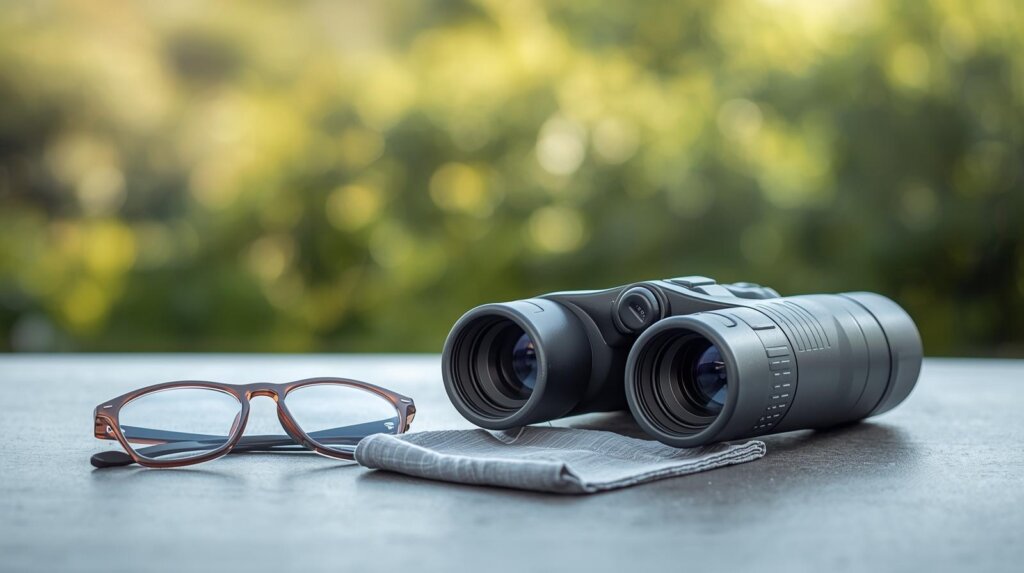
Calibrating Binoculars With Glasses
Glasses change the way your eyes sit behind the eyepieces. That means calibration can feel different if you wear prescription glasses.
Most glasses wearers should twist the eyecups down. This lets your glasses sit closer to the ocular lenses and helps you see the full field of view.
Then calibrate normally:
Focus left barrel first with the center wheel.
Focus right barrel second with the diopter.
Check both eyes together.
The biggest mistake glasses wearers make is leaving the eyecups fully extended. That can create black edges, tunnel vision, and a narrow viewing experience.
If you wear glasses often, you should also read how to adjust binocular focus for glasses. It covers eye relief, eyecup position, and why some binoculars are much easier for glasses users than others.
Pros and Cons of Calibrating Your Own Binoculars
| Pros | Cons |
|---|---|
| Saves money before buying new binoculars | Takes patience the first time |
| Reduces eye strain | Easy to over-adjust the diopter |
| Improves sharpness immediately | Shared binoculars may need resetting |
| Helps you detect real optical issues | Cheap binoculars may have loose diopter rings |
| Makes field use faster | Needs rechecking after bumps or travel |
In practical terms, calibration is one of the simplest ways to improve viewing comfort. It does not make cheap glass premium, but it does help your binoculars perform as well as they realistically can.
Real-World Use Cases
Bird Watching
Birding exposes poor calibration quickly. Small details matter: feather edges, eye rings, wing bars, and color separation.
If your binoculars are not calibrated, you may still spot the bird, but you will miss the detail that helps with identification. Calibrate before entering the field, not while the bird is already moving through branches.
For birding, I prefer calibrating on something still and textured before starting, like bark or a fence rail. Then the center focus wheel can do its job quickly when movement starts.
Hiking and Travel
On trails or city viewpoints, binoculars often come in and out of a bag. That movement can bump the diopter ring.
Before a trip, check your calibration at home. During travel, check again if the view suddenly feels off. Do not immediately blame fog, dust, or poor light.
Small travel binoculars are especially easy to knock out of adjustment because the controls are compact.
Sports and Stadium Viewing
For sports, you do not want to fight focus while the action is moving. Calibrate on a fixed object first, like scoreboard text or a seat number across the stadium.
Once both barrels are balanced, you can track movement with less effort.
Stargazing
Astronomy is less forgiving than daytime use. A badly calibrated binocular can make stars look soft, doubled, or stretched.
Calibrate during daylight first. Then at night, fine-tune carefully on a bright star or distant light. If the image still looks doubled after calibration, the issue may be collimation, not diopter adjustment.
Calibration vs Collimation: Do Not Mix These Up
People often confuse calibration with collimation.
| Term | Meaning | Can You Fix It Yourself? |
|---|---|---|
| Calibration | Adjusting focus and diopter for your eyes | Yes |
| Collimation | Aligning the internal optical barrels | Usually no |
| Focus adjustment | Changing sharpness for distance | Yes |
| Eyecup adjustment | Setting eye position | Yes |
Calibration is user adjustment. Collimation is optical alignment.
If your binoculars show double images, severe eye strain, or two views that never merge properly, the binoculars may be out of collimation. That is not the same as learning how to calibrate binoculars. In that case, professional repair or replacement may make more sense.
One Product Worth Considering
If you want binoculars that are easier to keep calibrated, look for a model with comfortable eye relief, solid focus control, waterproofing, and a reliable diopter mechanism.
A strong all-around choice is the Nikon MONARCH M5 8×42. Nikon lists the MONARCH M5 8×42 with 8x magnification, 42mm objectives, 19.5mm eye relief, waterproof/fogproof construction, ED glass, and a 335 ft field of view at 1,000 yards, which makes it practical for birding, hiking, travel, and general outdoor use.
I would not buy it only because of calibration. I would consider it because it gives beginners and intermediate users a forgiving 8×42 setup: steady enough to handhold, bright enough for mixed light, and comfortable enough for longer viewing sessions.
Buyer Tips Before You Blame Your Binoculars
Before upgrading, ask yourself:
- Have I calibrated the diopter properly?
- Are the eyecups set correctly?
- Is the hinge spacing right?
- Am I testing on a still target?
- Are the lenses actually clean?
- Did someone else use these binoculars recently?
This is buyer psychology in the optics world: people often assume blur means “I need better binoculars.” Sometimes yes. But many times, the binoculars simply need to be adjusted to your eyes.
That is why knowing how to calibrate binoculars should come before reading another best-of list.
For more practical binocular tips, you can also visit the blog tips page or explore the full site from the bestbinocular.net home page.
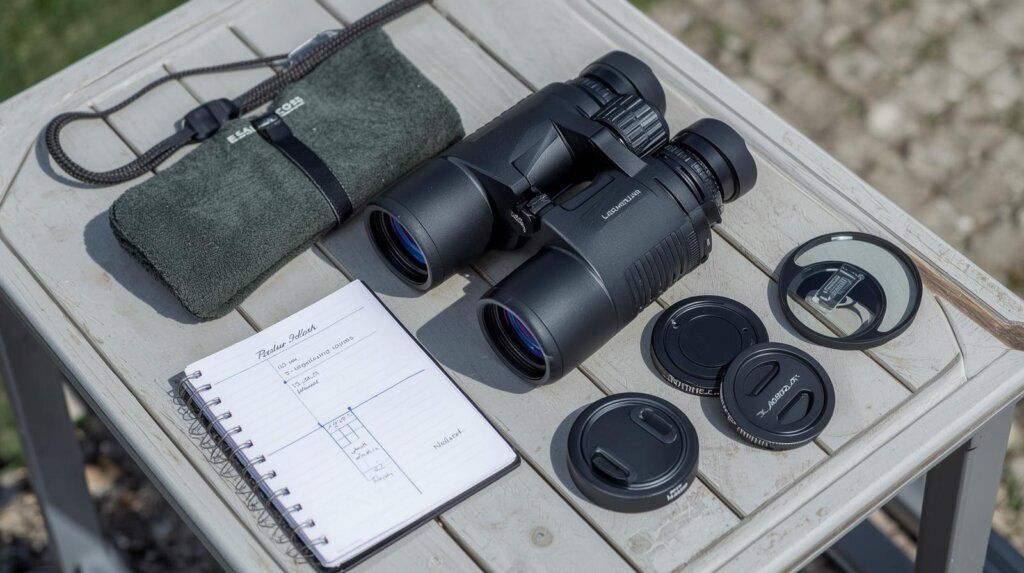
Common Mistakes When Calibrating Binoculars
Using a Moving Target
Do not calibrate on birds, cars, athletes, or people walking. Your eyes will keep tracking movement, and you will not judge sharpness accurately.
Use something still.
Closing One Eye Too Hard
Squinting tightly can change facial tension and make the open eye feel less relaxed. Cover the lens instead.
Touching the Center Focus During Diopter Adjustment
This is the classic mistake.
After focusing the left barrel with the center wheel, leave the center wheel alone while adjusting the right barrel with the diopter.
Ignoring Eyecup Position
Eyecups are not decoration. They control how your eyes line up with the exit pupil.
Wrong eyecup position can make perfectly calibrated binoculars feel uncomfortable.
Over-Turning the Diopter
The diopter ring usually needs small movement, not a dramatic twist. If you keep swinging it back and forth, you will overshoot the sharpest point.
Move slowly. Pause. Let your eye judge.
How Often Should You Calibrate Binoculars?
You do not need to fully calibrate binoculars every time you use them.
Recheck calibration when:
- Someone else uses your binoculars
- The binoculars fall or get bumped
- The diopter ring moves in storage
- Your prescription changes
- You switch between glasses and no glasses
- The view suddenly feels uneven
For personal binoculars, a good diopter setting can stay useful for months. For shared binoculars, calibration may need to happen every session.
FAQs About How to Calibrate Binoculars
How do I know if my binoculars are calibrated correctly?
Your binoculars are calibrated correctly when both eyes see a sharp, balanced image and the center focus wheel brings both barrels into focus together. The view should feel relaxed, not like one eye is working harder than the other.
Is binocular calibration the same as focusing?
No. Focusing adjusts sharpness for distance. Calibration balances the binoculars to your eyes, mainly through the diopter adjustment. Once calibrated, normal focusing becomes easier and more accurate.
Which eye should I calibrate first?
Most binoculars are calibrated by focusing the left barrel first with the center focus wheel, then adjusting the right barrel with the diopter. Some models may have the diopter on the left or center, so check your binocular layout.
Why are my binoculars still blurry after calibration?
Your lenses may be dirty, the eyecups may be set wrong, the hinge spacing may be off, or the binoculars may have an internal alignment issue. If both barrels never merge cleanly, collimation could be the problem.
Do glasses wearers calibrate binoculars differently?
The main process is the same, but glasses wearers usually need the eyecups twisted down. Good eye relief also matters. If the binoculars have short eye relief, glasses users may struggle to see the full image even after calibration.
Can two people use the same binocular calibration?
Not usually. Each person’s eyes are different. If two people share one pair, the diopter may need to be reset for each person. This is why shared binoculars often feel blurry after someone else uses them.
Should I calibrate binoculars indoors or outdoors?
Outdoor calibration is better if you have a still, detailed target and good light. Indoors can work if you use printed text or a textured object at enough distance. Avoid dim light when setting the diopter for the first time.
Final Thoughts
Learning how to calibrate binoculars is not complicated, but it does require doing things in the right order.
Set the hinge. Reset the diopter. Focus the left side with the center wheel. Focus the right side with the diopter. Then check both eyes together.
That simple process can turn a frustrating pair of binoculars into a clean, comfortable viewing tool. It will not fix broken optics, poor collimation, or scratched lenses, but it will remove the most common user-side problem.
Before buying new binoculars, calibrate the pair you already own. You might find they were better than you thought.




