
If you are shopping with a specific budget in mind, this Celestron Binoculars Price Guide 2026 will help you avoid one of the most common buying mistakes: paying for magnification when what you really needed was better optics, better handling, or a more realistic use case. Celestron’s binocular range is broad enough to confuse first-time buyers and tempt experienced ones into buying too much glass for the wrong job. In 2026, that matters more than ever because the gap between entry-level value and “looks impressive on paper” is exactly where money gets wasted.
At a glance, the Celestron Binoculars Price Guide 2026 shows that Celestron’s lineup still falls into two very different worlds. Nature DX is where practical all-around outdoor binoculars live, while SkyMaster is where larger-aperture astronomy and long-distance viewing models take over. The two lines overlap in price less than many buyers expect, but they behave very differently in real use. That is why a $180 Nature DX can be the smarter buy than a cheaper giant binocular, and why a $130 SkyMaster can still make sense if your main use is backyard night sky viewing from a stable setup.
Before you buy, it also helps to understand where this article fits in the full Celestron content silo. For a wider model-selection overview, start with 👉Celestron Binoculars (Ultimate Buying Guide 2026). If your main priority is astronomy, jump to 👉Best Celestron Binoculars for Stargazing (2026 Guide). For a full breakdown of strengths and weaknesses, read 👉Celestron Binoculars Review: Are They Worth Buying in 2026? and 👉Are Celestron Binoculars Good? Honest Pros & Cons Explained.
What You Should Expect to Pay for Celestron Binoculars in 2026
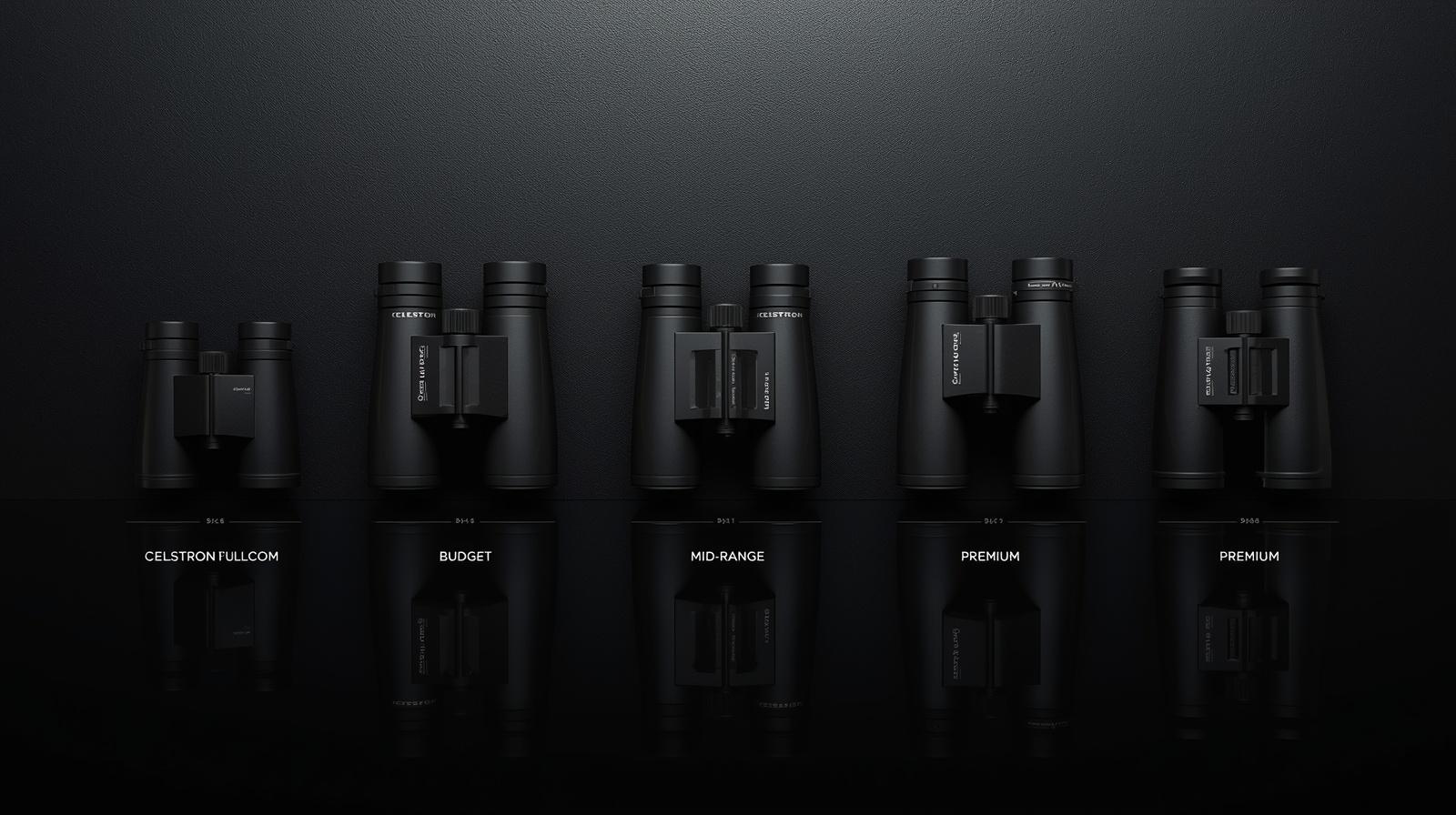
Here is the simple version. If you want a compact, serious outdoor binocular from Celestron, expect to spend roughly $170 to $230 in the Nature DX and Nature DX ED range. If you want a large-aperture SkyMaster for astronomy or very long-distance viewing, the entry point starts just above $100, but the more confidence-inspiring Pro and Pro ED versions push much closer to $280 to $450.
| Price Tier | What You’ll Usually Get | Best Fit |
|---|---|---|
| Under $120 | Basic large-aperture SkyMaster models like 12×60 | Budget astronomy, occasional long-distance viewing |
| $130 to $170 | Entry SkyMaster 15×70 and 25×70, plus smaller Nature DX options | First giant binocular or light all-purpose use |
| $170 to $230 | Core Nature DX and Nature DX ED territory | Birding, hiking, travel, sports, everyday outdoor use |
| $230 to $350 | Nature DX ED and SkyMaster Pro / Pro ED crossover zone | Buyers who know their use case and want a meaningful upgrade |
| $350 and up | Larger Pro ED SkyMaster and very large aperture models | Dedicated astronomy or tripod-based long-range use |
Those bands are based on current Celestron listings and retailer snapshots. Official pricing shows Nature DX 8×42 at $179.95, Nature DX ED 8×42 at $229.95, SkyMaster 12×60 at $109.95, SkyMaster 15×70 at $129.95, SkyMaster Pro 15×70 at $279.95, SkyMaster Pro ED 15×70 at $349.95, SkyMaster Pro ED 20×80 at $449.95, and SkyMaster 25×100 at $519.95. Retailer pricing can dip lower, with B&H and Adorama showing examples such as Nature DX 8×42 around $159.99 and Nature DX ED 8×42 around $199.99.
Why Some Celestron Binoculars Cost More Than Others
Nature DX vs Nature DX ED
This is one of the easiest places to overspend or underspend. The standard Nature DX line already gives you phase-coated BaK-4 prisms, fully multi-coated optics, waterproofing, nitrogen filling, tripod adaptability, and a very useful 6.5-foot close focus on the 8×42. That is not bargain-bin stuff. It is the reason the Nature DX line has stayed popular for so long.
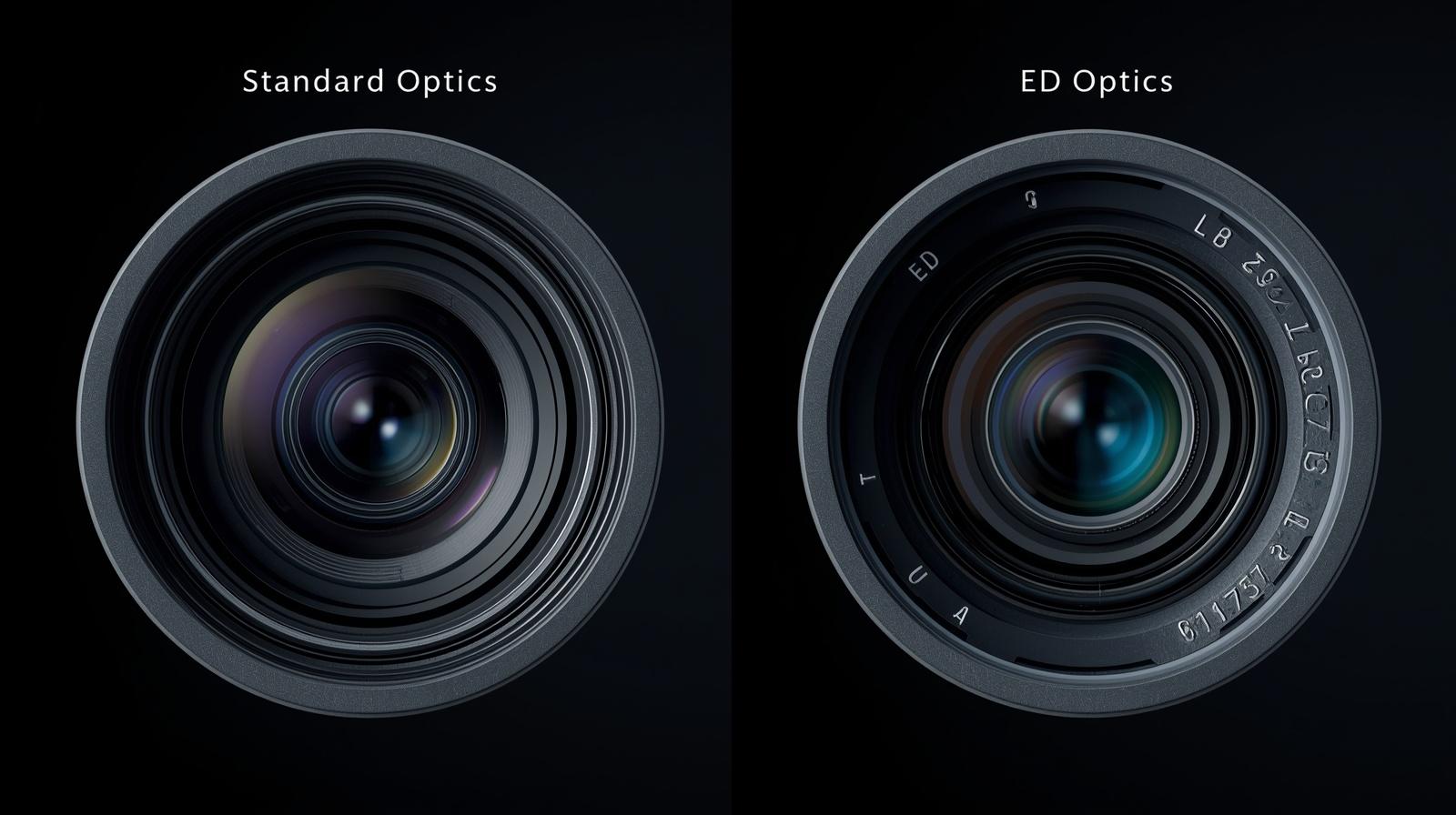
The ED versions charge more because they are solving a real optical problem, not just dressing up the box. Nature DX ED adds extra-low dispersion glass to reduce chromatic aberration and improve contrast and color fidelity. In plain English, you notice the upgrade most when looking at high-contrast edges, distant detail, or fine markings where cheaper glass can look a little smeared or fringed. That is why the jump from standard Nature DX to Nature DX ED is one of the more reasonable price upgrades in the Celestron line.
SkyMaster vs SkyMaster Pro vs SkyMaster Pro ED
SkyMaster pricing is more dramatic because the line is not just scaling up glass size. The standard 15×70 is aimed at value-first buyers. It gives you multi-coated optics, BaK-4 prisms, water resistance, and a tripod adapter in the box. That is good value, but it is still very much a price-conscious giant binocular.
Move into SkyMaster Pro and Pro ED, and the price climbs because the expectation changes. The Pro ED 15×70, for example, adds ED lenses and XLT fully multicoated optics, pushing it into a different conversation entirely. At that point you are not just buying aperture. You are buying a better attempt at controlling the weaknesses that cheap giant binoculars usually have.
Nature DX Pricing: Where the Best Value Usually Starts
For most readers, the real action in this Celestron binoculars price guide is here.
| Model | Official Price | What It Feels Like in Real Use |
|---|---|---|
| Nature DX 10×32 | $169.95 | Lighter and more compact, but less forgiving in low light |
| Nature DX 8×42 | $128.00 | The sweet spot for most buyers |
| Nature DX 10×42 | $189.95 | Better for extra reach, slightly less relaxed to use |
| Nature DX 12×50 | $209.95 | More niche, more hand-shake sensitivity |
| Nature DX ED 8×42 | $229.95 | The upgrade buy if image quality matters more than raw savings |
Current official pricing and model placement come directly from Celestron’s Nature DX listings.
The model I would most confidently recommend to a broad audience is the Celestron Nature DX 8×42. Not because it is the cheapest, but because it usually lands in the least regretful zone. You get waterproofing, nitrogen filling, fully multi-coated optics, phase-coated BaK-4 prisms, close focus for nearby detail, and enough brightness to stay pleasant in early morning or late afternoon. That combination makes it easier to live with than a cheaper binocular that looks good only in perfect conditions.
This is also the point where Celestron starts feeling less like a budget compromise and more like a sensible buy. A lot of buyers chase magnification because it sounds impressive. Then they discover that a shaky 12x view is less enjoyable than a calmer, wider, brighter 8×42. The Nature DX 8×42 avoids that trap.
If your budget stretches and you care about crispness, the Nature DX ED 8×42 is the logical step up. The price increase is not trivial, but it is grounded in a visible improvement, especially if you spend long sessions glassing birds, distant scenery, or sports action. Street pricing makes the upgrade easier to justify too, because retailers have listed it below official MSRP.
SkyMaster Pricing: Where Bigger Looks Cheap Until You Actually Use It
SkyMaster is where Celestron gets a lot of attention from astronomy buyers, and fair enough. The line still offers one of the cheaper ways into large-aperture binocular viewing.
| Model | Official Price | Best Use |
|---|---|---|
| SkyMaster 12×60 | $109.95 | Budget entry into astronomy and long-range viewing |
| SkyMaster 15×70 | $129.95 | Best low-cost giant-binocular starting point |
| SkyMaster 25×70 | $139.95 | Tempting on price, less forgiving without support |
| SkyMaster Pro 15×70 | $279.95 | Better for buyers who want more confidence and build quality |
| SkyMaster Pro ED 15×70 | $349.95 | Serious step-up for astronomy and high-contrast views |
| SkyMaster Pro ED 20×80 | $449.95 | More committed astronomy setup |
| SkyMaster 25×100 | $519.95 | Large, heavy, specialty use |
These current price checkpoints come from Celestron’s SkyMaster collection and related product listings, with retailer snapshots confirming that some Pro ED models also sell below list price at major stores.
The thing people get wrong with SkyMaster is assuming lower price equals better value. A $129.95 SkyMaster 15×70 can absolutely be a good buy, but only if you use it like a 15×70 should be used. That means mostly stable viewing, realistic expectations, and some tolerance for size and weight. It weighs about 48 ounces, includes a tripod adapter, and is water resistant rather than fully waterproof or nitrogen purged. That is a very different ownership experience from a Nature DX 8×42 you can grab casually and use anywhere.
If your main goal is backyard stargazing, the standard SkyMaster 15×70 is where value gets interesting. If your goal is “one binocular for everything,” it is the wrong place to save money.
Real-World Use Case Scenarios
Scenario 1: You want one binocular for birding, travel, and weekend outdoor use
Pay in the $180 to $230 range and stay in the Nature DX family. This is the zone where Celestron gives you the most broadly useful ownership experience. The Nature DX 8×42 is the best first pick, and the Nature DX ED 8×42 is the cleaner-image upgrade if you know you will use it often.
Scenario 2: You mainly want binoculars for stargazing from home
Pay in the $130 to $350 range depending on how serious you are. The standard SkyMaster 15×70 is the budget choice. The SkyMaster Pro ED 15×70 is where the category starts feeling more intentional rather than simply cheap. For a deeper astronomy-focused breakdown, read 👉Best Celestron Binoculars for Stargazing (2026 Guide).
Scenario 3: You want long-range daytime views from a balcony, coast, or open landscape
This is where buyers often make the wrong call. They buy the biggest SkyMaster they can afford, then discover handheld long-range viewing gets tiring fast. In many of those cases, a better-built 8×42 or 10×42 is actually the smarter spend, even if it looks less dramatic on the spec sheet.
Scenario 4: You are comparing price, not just performance
Then you need brand context too. Celestron often wins by giving you strong features at reachable prices, but it does not automatically win every comparison. For that angle, see 👉 Celestron vs Nikon Binoculars (2026): Which Brand Is Better?.
For a broader reality check on how these binoculars hold up as actual purchases, not just price tags, read 👉 Celestron Binoculars Review: Are They Worth Buying in 2026? and 👉Are Celestron Binoculars Good? Honest Pros & Cons Explained.
Should You Buy New, Discounted, or Used?
One of the more interesting things in this 2026 Celestron binoculars price guide is that Celestron’s own used listings create a pretty clear second-hand ceiling. Official used examples have included the Nature DX 8×42 at $129.97, the Nature DX ED 8×42 at $169.97, and the SkyMaster 15×70 at $94.97. That gives you a useful benchmark when you are browsing eBay, forums, or local listings. If a used seller is asking close to new-street pricing, move on. Human optimism around used optics pricing remains one of the strangest recurring hobbies on the internet.
Also remember the hidden-cost issue. Nature DX binoculars are tripod adaptable, but if you want a dedicated adapter, Celestron’s binocular tripod adapter is a separate $19.95 accessory. Standard SkyMaster 15×70 already includes a tripod adapter, which makes its value look even stronger for astronomy buyers.
Common Pricing Mistakes Buyers Make
Buying magnification instead of usability
A cheaper 15x or 25x model is not automatically a better deal than an 8×42. If you cannot use it comfortably, you did not save money.
Underestimating support gear
Large SkyMaster binoculars make more sense when mounted or stabilized. That affects the real total cost.
Paying for ED glass when you barely use binoculars
ED is worth it for frequent users, detail-hunters, and picky eyes. It is less urgent for someone who only pulls binoculars out a few weekends a year.
Buying tiny savings at the cost of weather protection
Nature DX gives you waterproofing and nitrogen filling. Standard SkyMaster does not. That difference matters if you actually go outdoors instead of only imagining picturesque future adventures.
Final Verdict
For most buyers, the right expectation is this: Celestron’s best value in 2026 sits in the $180 to $230 band, especially around the Nature DX 8×42 and Nature DX ED 8×42. If your priority is astronomy and you understand the trade-offs, the SkyMaster 15×70 remains a strong low-cost entry point. If you want better refinement in the same large-aperture style, expect the real step-up zone to begin around $280 to $350.
That is the core lesson of this Celestron binoculars price guide. Do not ask, “What is the cheapest Celestron I can buy?” Ask, “What kind of viewing experience am I actually paying for?” That question leads to better purchases almost every time.
For more guides, comparisons, and updated roundups, browse the 👉BestBinocular.net home page and the 👉Blog Tips section.
FAQs
What is the average price of Celestron binoculars in 2026?
For mainstream Celestron binoculars, most buyers will land between about $170 and $230 in the Nature DX range or $110 to $350 in the SkyMaster range, depending on size and build level.
Are Celestron binoculars cheap or good value?
Usually good value, not just cheap. Celestron’s better models justify their pricing by offering real features like waterproofing, phase-coated BaK-4 prisms, fully multi-coated optics, ED glass in higher versions, and usable accessories.
Which Celestron binocular gives the best value for money?
For most people, the Nature DX 8×42 is the safest value recommendation because it balances price, brightness, portability, close focus, and outdoor durability unusually well for the money.
Is the SkyMaster 15×70 worth buying in 2026?
Yes, if your main use is astronomy or stable long-distance viewing. No, if you want an easy everyday binocular for hiking, birding, or casual travel.
Is Nature DX ED worth paying extra for?
If you care about sharper edges, better contrast, and lower chromatic aberration, yes. If you are a casual user who mainly wants a solid outdoor binocular, standard Nature DX often gives enough performance for less money.
Should I buy Celestron binoculars new or used?
Used can be smart if the price is meaningfully lower than current new-street pricing and the optics are clean, aligned, and mechanically sound. Celestron’s own used listings provide useful benchmarks for what a fair second-hand price should look like.




