
Buying the best binoculars sounds simple until you actually start comparing them.
One model says “HD glass.” Another says “ED glass.” A third one has 10x magnification and looks stronger on paper, but then your hands shake, the image narrows, and suddenly that “powerful” pair feels annoying after ten minutes. I’ve seen people spend too much on binoculars they barely use, and I’ve also seen cheap pairs completely ruin what should’ve been a beautiful wildlife or travel moment.
The truth is simple: the best binoculars aren’t always the most expensive binoculars. They’re the ones that match how you actually use them.
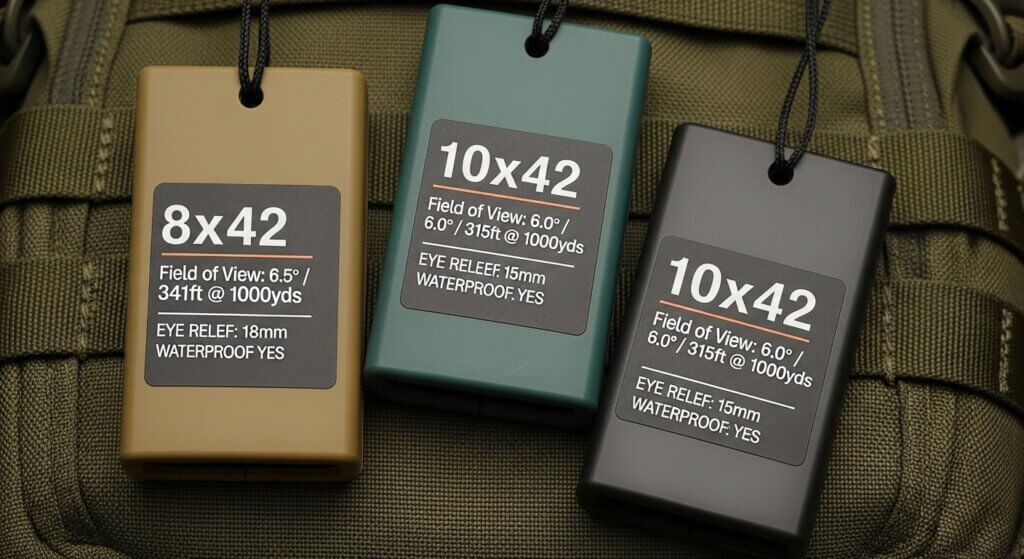
For most people, that means a comfortable, waterproof, easy-to-hold pair in the 8×42 or 10×42 range. These sizes hit the sweet spot for brightness, detail, field of view, and real-world handling. You can use them for bird watching in the morning, hiking in the afternoon, backyard wildlife at sunset, and even casual stargazing at night. That’s why this guide focuses less on empty marketing words and more on practical choices you’ll notice in the field.
Quick Answer: Best Binoculars by Real Use Case
Here’s the fast version before we go deep.
| Category | Best Type to Choose | Recommended Example | Best For |
|---|---|---|---|
| Best overall for most people | 8×42 roof prism | Vortex Viper HD 8×42 | Birding, wildlife, hiking, general use |
| Best wide-view experience | 8×42 premium mid-range | Nikon Monarch M7 8×42 | Birds in motion, nature watching, travel |
| Best value pick | 8×42 ED glass | Nikon Monarch M5 8×42 | Beginners who want real quality |
| Best budget-friendly option | 8×42 waterproof | Bushnell H2O 8×42 | Casual outdoor use, boating, camping |
| Best premium binoculars | 8×42 alpha glass | Swarovski NL Pure 8×42 | Serious birders and optics lovers |
| Best for long-distance detail | 10×42 | Leupold BX-2 Alpine HD 10×42 | Open country, hiking, sports, hunting-style viewing |
| Best image-stabilized option | 10×30 IS | Canon 10×30 IS II | Shaky hands, travel, long viewing sessions |
| Best for stargazing | 15×70 tripod-friendly | Celestron SkyMaster 15×70 | Moon viewing, bright star fields, astronomy |
My overall recommendation: if you want one pair that does almost everything well, start with a good 8×42 binocular. It gives you enough magnification without making the image jumpy, enough brightness for early and late light, and enough field of view to find subjects quickly.
What Makes the Best Binoculars Actually “Best”?
The best binoculars are not just sharp in the center of the image. Almost every decent binocular looks okay when you point it at a bright object at noon. The real test starts when the light gets tricky.
Try using binoculars under trees, beside water, through heat shimmer, or at the edge of sunset. That’s when weak optics show their cracks. Colors look dull. Edges blur. The focus wheel feels vague. The image shakes. Your eyes get tired. You keep adjusting instead of enjoying the view.
A good pair disappears in your hands. You lift it, focus once, and the scene opens up naturally. That feeling matters more than a big spec sheet.
The Big Four Features That Matter Most
When choosing the best binoculars, focus on these four things first:
| Feature | Why It Matters | What to Look For |
|---|---|---|
| Magnification | Controls how close the subject appears | 8x for most people, 10x for distance |
| Objective lens size | Controls brightness and low-light performance | 42mm is the safest all-around size |
| Field of view | Helps you find and follow subjects | Wider is better for birds and moving subjects |
| Eye relief | Comfort for glasses wearers | 15mm or more is usually safer |
A binocular can have a famous brand name and still be wrong for you. A compact 10×25 may look convenient, but it often feels dim and twitchy outdoors. A giant 15×70 may look powerful, but it needs support. A premium 8×42, on the other hand, works in more situations than almost anything else.
That’s why so many experienced outdoor users end up with an 8×42 as their main pair.
Best Binoculars Overall: Vortex Viper HD 8×42
The Vortex Viper HD 8×42 is my top overall pick because it sits in that rare middle ground where performance feels premium, but the price doesn’t jump into luxury territory.
This is the kind of binocular I’d recommend to someone who says, “I don’t want beginner junk, but I also don’t want to spend Swarovski money.” It’s sharp, bright, rugged, and easy to use. More importantly, it feels dependable in real outdoor use.
In a shaded woodland trail, the Viper HD gives you enough brightness to pull detail out of branches and leaves. On a windy hillside, the 8x magnification stays manageable. Around water, the waterproof and fogproof build gives peace of mind. It’s not the lightest binocular ever made, but it balances well enough that you don’t feel like you’re carrying a brick around your neck.
Pros
| Pros | Why It Matters |
|---|---|
| Excellent all-around sharpness | Works well for birding, travel, and wildlife |
| Comfortable 8×42 format | Stable view without feeling underpowered |
| Strong build quality | Good for rougher outdoor use |
| Good eye relief | More comfortable for many glasses wearers |
| Lifetime-style brand reputation | Helps buyer confidence |
Cons
| Cons | Who Should Think Twice |
|---|---|
| Costs more than entry-level models | Not ideal for very casual users |
| Slightly heavier than compact travel binoculars | Minimalist travelers may prefer 8×30 or 8×32 |
| Not quite alpha-level edge clarity | Serious optics collectors may still want premium glass |
Best Real-World Use
The Viper HD 8×42 makes the most sense for someone who wants one pair for almost everything: bird watching, hiking, wildlife, family trips, nature parks, and backyard viewing.
It’s especially good for the buyer who has already tried cheap binoculars and thought, “There has to be something better than this.”
Best Wide-View Binoculars: Nikon Monarch M7 8×42
Some binoculars feel like you’re looking through two little tubes. The Nikon Monarch M7 8×42 feels more open. That wide, easy view is the main reason it deserves a high spot in this guide.
For bird watching, field of view is not a small detail. If a bird jumps from one branch to another, a wider view helps you keep up. If you’re scanning a tree line, you can cover more area with less frustration. If you’re new to binoculars, it makes finding the subject much easier.
The Monarch M7 is one of the best binoculars for people who care about a relaxed viewing experience. It doesn’t feel fussy. The focus is smooth, the body is light enough for long walks, and the image has that clean Nikon look many users love.
Pros
| Pros | Why It Matters |
|---|---|
| Very wide field of view | Great for birds, wildlife, and moving subjects |
| Lightweight for a full-size binocular | Easier to carry during long walks |
| ED glass | Helps reduce color fringing |
| Waterproof and fogproof | Safer for real outdoor use |
| Comfortable handling | Good for beginners and experienced users |
Cons
| Cons | Who Should Think Twice |
|---|---|
| Costs more than the Monarch M5 | Budget buyers may prefer M5 |
| Edges may not satisfy luxury-level users | Premium buyers may want Swarovski or Zeiss |
| 8x may feel short for open-country distance | Choose 10x if you mostly view far objects |
Best Real-World Use
Pick the Monarch M7 8×42 if you want a wide, easy, forgiving view. It’s excellent for birding, nature walks, parks, travel, and general outdoor observation.
And if you’re just starting out, don’t miss this helpful supporting guide: best binoculars for beginners. It will help you avoid the classic first-buyer mistake: choosing too much magnification too soon.
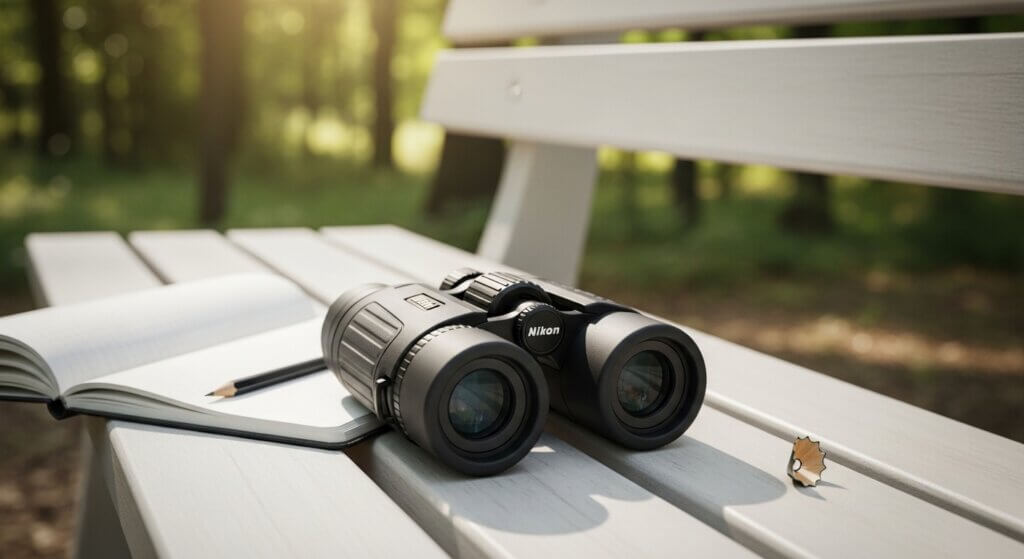
Best Binoculars for the Money: Nikon Monarch M5 8×42
The Nikon Monarch M5 8×42 is the pair I’d put in front of someone who wants quality but still watches the budget carefully.
It doesn’t have the same wide, immersive field of view as the Monarch M7, but it gives you dependable optics, ED glass, long eye relief, waterproofing, and a comfortable body at a friendlier price. That combination makes it one of the best binoculars for the money.
The M5 is also a smart psychological buy. Many people don’t need the “best possible” binocular. They need a pair that feels clearly better than cheap department-store optics without making the purchase feel reckless. The Monarch M5 hits that emotional sweet spot.
Pros
| Pros | Why It Matters |
|---|---|
| Strong value for the price | Great step-up binocular |
| ED glass | Cleaner image than basic budget models |
| Long eye relief | Friendly for many glasses wearers |
| Lightweight body | Easy to carry |
| Trusted Nikon optics | Good buyer confidence |
Cons
| Cons | Who Should Think Twice |
|---|---|
| Narrower field of view than M7 | Birders may prefer the M7 |
| Not as bright or crisp as premium models | Serious daily users may want to upgrade |
| Basic feel compared with higher-end options | Not a luxury-handling binocular |
Best Real-World Use
The Monarch M5 8×42 works beautifully for casual birding, travel, weekend hikes, backyard wildlife, and general viewing. If your goal is maximum value, read the supporting article here: best binoculars for the money.
Best Waterproof Budget Binoculars: Bushnell H2O 8×42
Budget binoculars can be risky. Some look fine online, then arrive with stiff focus wheels, dim glass, loose eyecups, or weird double vision. That’s why I prefer budget picks from brands with a real optics history.
The Bushnell H2O 8×42 is not going to beat a Vortex Viper HD or Nikon Monarch M7. It shouldn’t. But for casual use, camping, boating, lake trips, and occasional backyard viewing, it gives you a rugged waterproof design at a price that makes sense.
This is the pair you buy when you want something useful, not precious. Keep it in the car, take it to the cabin, bring it near water, or hand it to a family member without panicking every time it touches a picnic table.
Pros
| Pros | Why It Matters |
|---|---|
| Affordable | Easy entry point |
| Waterproof design | Good for boating and wet weather |
| Rubber armor | Better grip outdoors |
| 8×42 size | More useful than tiny compact budget models |
| Good casual backup pair | Handy for families and travel bags |
Cons
| Cons | Who Should Think Twice |
|---|---|
| Not premium sharpness | Serious birders should spend more |
| Lower contrast than mid-range models | Details won’t pop as much |
| Budget feel | Not ideal for daily heavy use |
Best Real-World Use
Choose the Bushnell H2O 8×42 for casual outdoor use, camping, boating, backyard wildlife, and as a second pair. For more affordable picks, check best budget friendly binoculars.
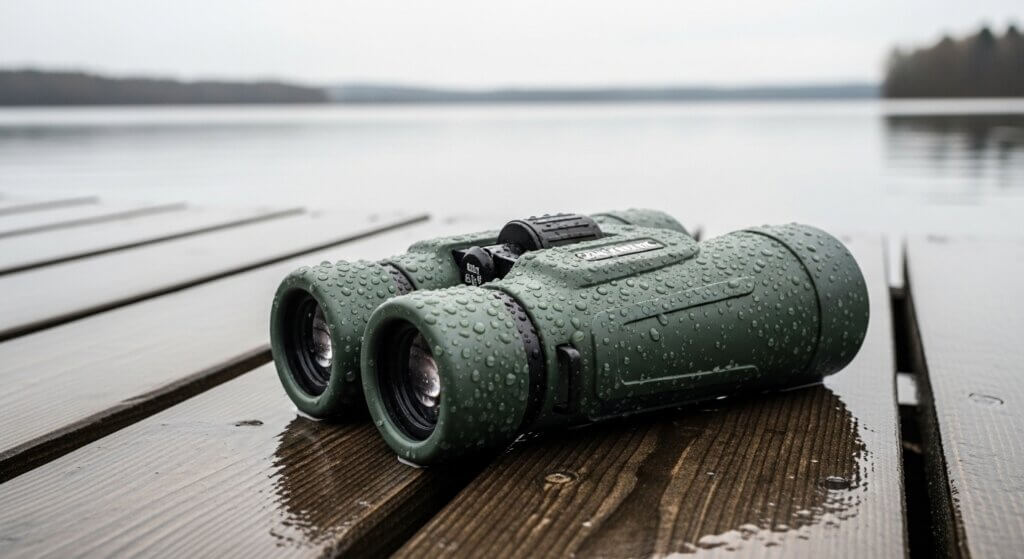
Best Premium Binoculars: Swarovski NL Pure 8×42
The Swarovski NL Pure 8×42 is not the practical choice for most buyers. Let’s be honest about that first. It costs serious money, and many casual users would be better served by a Vortex, Nikon, Maven, or Celestron.
But if you care deeply about optics, the NL Pure is special.
The view feels huge, natural, and almost window-like. The edge-to-edge clarity, color fidelity, and immersive field of view make it one of the best binoculars for people who spend hours looking through glass. If you bird every week, travel for wildlife, guide nature walks, or simply love high-end optics, this is where luxury starts to feel less like vanity and more like comfort.
It’s like sitting in a premium chair during a long workday. You don’t need it for five minutes. You appreciate it after five hours.
Pros
| Pros | Why It Matters |
|---|---|
| Exceptional immersive view | Feels natural and wide |
| Premium edge clarity | Less eye strain over long sessions |
| Excellent low-light performance | Strong at dawn and dusk |
| Luxury build quality | Designed for serious long-term use |
| High resale appeal | Premium optics often hold value better |
Cons
| Cons | Who Should Think Twice |
|---|---|
| Very expensive | Overkill for casual users |
| Heavier than smaller binoculars | Not ideal for ultralight travel |
| Performance gains are subtle for beginners | New users may not appreciate the full difference |
Best Real-World Use
Choose the Swarovski NL Pure 8×42 if you already know you love binoculars and want one of the finest viewing experiences available. Beginners should usually start lower unless money is not a concern.
Best 10×42 Binoculars for Distance: Leupold BX-2 Alpine HD 10×42
An 8×42 is my safest recommendation for most people, but sometimes 10×42 makes more sense.
If you spend time in open country, on ridgelines, at sports fields, across lakes, or scanning distant terrain, the Leupold BX-2 Alpine HD 10×42 gives you more reach without becoming too large. The 10x magnification helps when your subject is far enough that 8x feels a little short.
The trade-off? You’ll notice more hand shake. You’ll also get a narrower field of view than most 8×42 models. That’s not a flaw. It’s physics doing what physics does.
Pros
| Pros | Why It Matters |
|---|---|
| More reach than 8x | Better for distant subjects |
| Rugged outdoor design | Good for rough use |
| Manageable weight | Still portable |
| Good brand reputation | Strong buyer trust |
| Useful for open areas | Great for ridges, fields, and shorelines |
Cons
| Cons | Who Should Think Twice |
|---|---|
| More hand shake than 8x | Not ideal for shaky hands |
| Narrower view | Harder for fast birds or close woods |
| Less forgiving for beginners | Takes more skill to use well |
Best Real-World Use
Pick a 10×42 if most of your viewing happens at distance. For mixed everyday viewing, 8×42 usually feels easier.
Need a simpler everyday-focused breakdown? Read best binoculars for everyday use before buying.
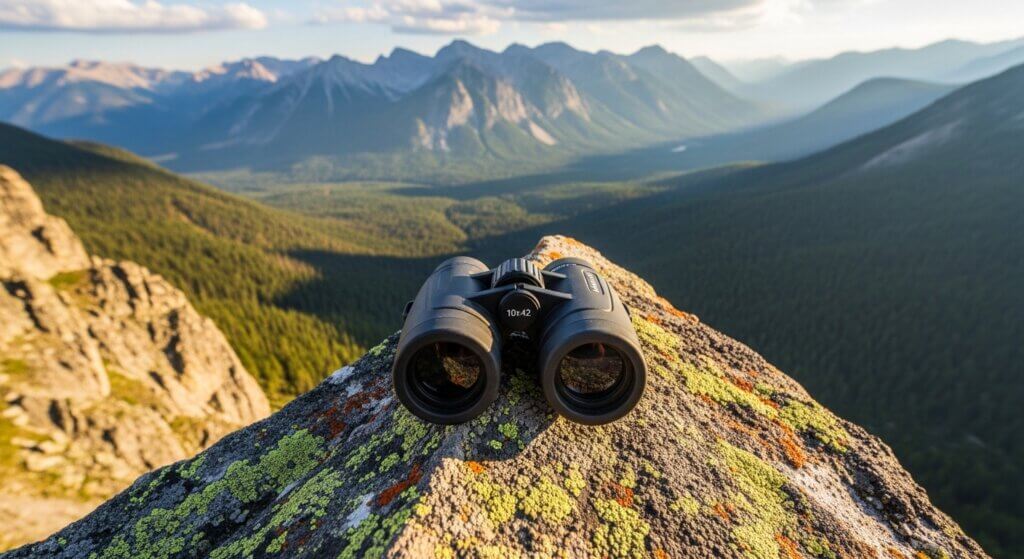
Best Image-Stabilized Binoculars: Canon 10×30 IS II
Image-stabilized binoculars are a different experience. Press the stabilization button, and the small tremors in your hands calm down. The view becomes easier to study.
The Canon 10×30 IS II is useful for travelers, sports watchers, balcony viewing, and anyone whose hands shake enough to make 10x binoculars frustrating. The 30mm objective lenses won’t match the low-light brightness of a good 42mm binocular, but the stabilization can reveal detail your hands would otherwise hide.
That’s the funny part: a stabilized 10×30 can sometimes show more usable detail than a non-stabilized 10×42 in real handheld use.
Pros
| Pros | Why It Matters |
|---|---|
| Image stabilization | Reduces hand shake |
| Compact for travel | Easier to pack |
| 10x detail | Helpful for distance |
| Great for casual viewing | Fun and easy to use |
| Strong for seated viewing | Sports, balconies, ships, travel |
Cons
| Cons | Who Should Think Twice |
|---|---|
| Not fully rugged like many outdoor roof prisms | Avoid rough wet use |
| Smaller 30mm lenses | Not ideal at dusk |
| Requires batteries | More to manage |
| Different feel from traditional binoculars | Some users prefer classic optics |
Best Real-World Use
Choose image-stabilized binoculars if hand shake bothers you or if you often watch distant subjects from a fixed position. For hiking through rain or brush, a rugged waterproof 8×42 still makes more sense.
Best Binoculars for Stargazing: Celestron SkyMaster 15×70
For night sky viewing, the rules change. You want more light gathering and more magnification, but you also need stability.
The Celestron SkyMaster 15×70 is a popular entry point for astronomy because the large 70mm objective lenses gather far more light than normal 42mm binoculars. You can enjoy the moon, bright star fields, and large night-sky objects more easily than with small compact binoculars.
But don’t buy these expecting a casual neck-strap experience. They’re big. They’re heavy. They work best with a tripod or at least some kind of support.
Pros
| Pros | Why It Matters |
|---|---|
| Large 70mm lenses | Better light gathering for astronomy |
| 15x magnification | More sky detail |
| Tripod adaptable | Important for steady viewing |
| Affordable entry into astronomy | Good for beginners |
| Fun for moon viewing | More dramatic than small binoculars |
Cons
| Cons | Who Should Think Twice |
|---|---|
| Heavy | Not ideal handheld |
| Not a general-use binocular | Too large for hiking |
| Needs support | Tripod strongly recommended |
| Water resistant, not fully adventure-proof | Treat with care |
Best Real-World Use
Choose the SkyMaster 15×70 for backyard astronomy, moon viewing, and occasional night-sky exploring. Don’t choose it as your only pair unless stargazing is your main goal.
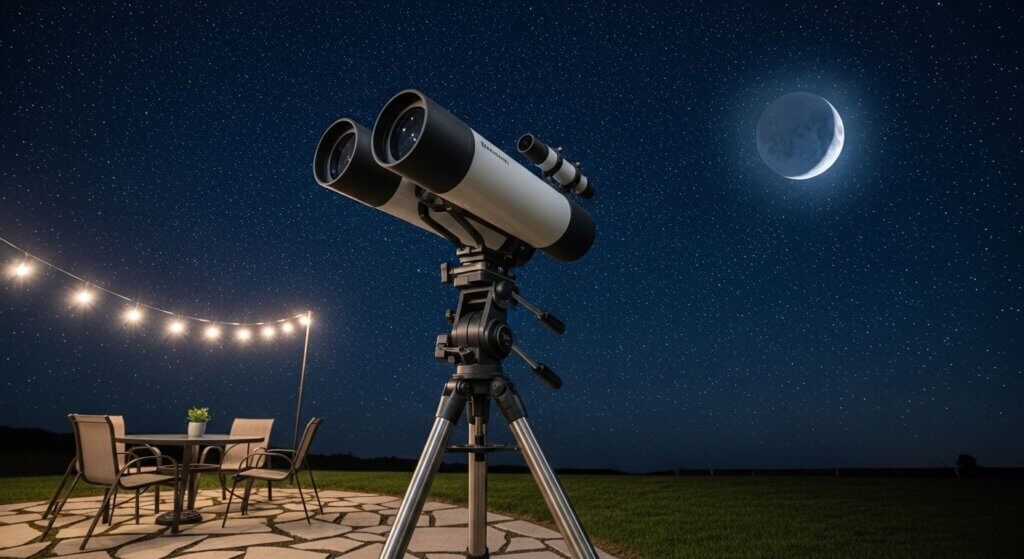
8×42 vs 10×42: Which One Should You Buy?
This is the decision most buyers get stuck on.
The short answer: choose 8×42 if you want the most useful, comfortable, all-purpose binoculars. Choose 10×42 if you regularly view distant subjects and can hold binoculars steady.
| Feature | 8×42 | 10×42 |
|---|---|---|
| Image stability | Easier to hold steady | More hand shake |
| Field of view | Usually wider | Usually narrower |
| Brightness feel | More relaxed, brighter-feeling view | Slightly darker feel in some models |
| Detail at distance | Good | Better |
| Beginner-friendly | Excellent | Good, but less forgiving |
| Best for | Birding, hiking, travel, general use | Open country, sports, distant wildlife |
I usually recommend 8×42 first because it creates fewer problems. People underestimate how much field of view and steadiness matter. A shaky 10x view can feel less useful than a calm 8x view, especially when you’re standing, breathing hard, or following movement.
Still, 10×42 has its place. If you’re watching ships from a coast, players from upper stadium seats, or wildlife across open fields, 10x feels satisfying.
Roof Prism vs Porro Prism Binoculars
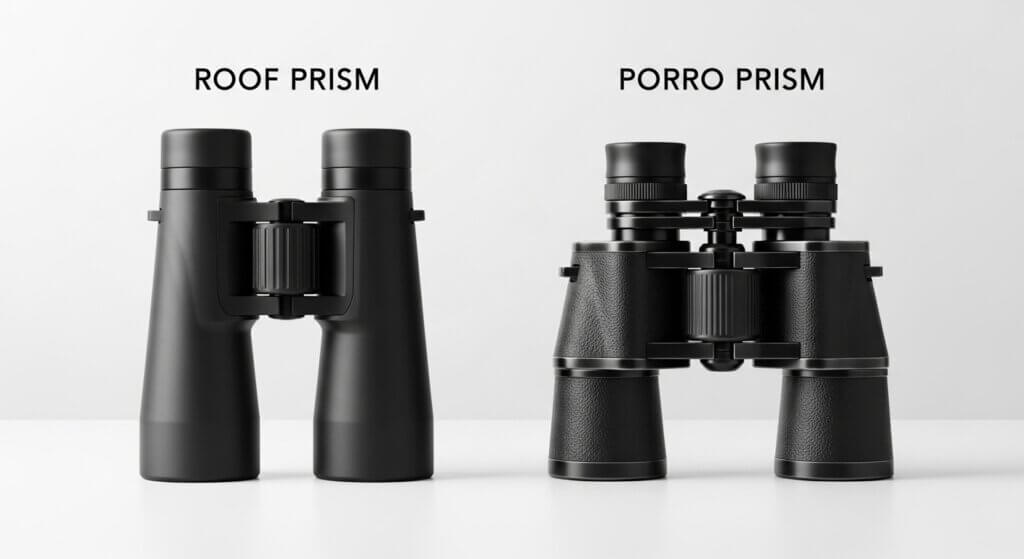
Most modern premium binoculars use roof prisms. They look straight, compact, and clean. Porro prism binoculars have the classic offset shape and often give strong optical performance for less money, but they’re bulkier.
| Type | Best For | Main Advantage | Main Downside |
|---|---|---|---|
| Roof prism | Hiking, birding, travel, premium use | Compact and rugged | More expensive for good quality |
| Porro prism | Budget optics, astronomy, casual use | Strong value and depth perception | Bulkier and often less waterproof |
For most buyers looking for the best binoculars overall, roof prism models are the better choice. They carry better, seal better, and feel more modern in daily use.
Porro models still make sense for astronomy and budget shoppers. Just don’t buy a bulky Porro pair expecting it to feel like a compact hiking binocular.
What to Look for Before Buying Binoculars
Magnification
Magnification is the first number in 8×42 or 10×42. It tells you how many times closer the image appears.
For most people:
- 8x is easier, steadier, and wider.
- 10x gives more reach but magnifies shake.
- 12x and above usually need support.
- 15x and above are specialty binoculars.
Don’t chase power just because it sounds impressive. The best binoculars make viewing easier, not harder.
Objective Lens Size
The second number is the objective lens diameter. In 8×42, the objective lenses are 42mm.
Common sizes:
| Size | Best For |
|---|---|
| 25mm | Pocket travel, bright daylight |
| 30mm / 32mm | Lightweight hiking and travel |
| 42mm | Best all-around balance |
| 50mm | Low light and astronomy-style viewing |
| 56mm+ | Specialty low-light and tripod use |
A 42mm binocular is the safest choice because it gathers enough light without becoming huge.
Field of View
Field of view tells you how wide the scene looks through the binoculars. A wide field helps you find birds, follow movement, and scan landscapes without feeling trapped.
For birding and general use, this matters a lot. A narrow binocular can feel like trying to watch the world through a straw.
Eye Relief
Eye relief matters most if you wear glasses. Longer eye relief lets you see the full image without pressing your glasses awkwardly into the eyecups.
As a simple rule, look for 15mm or more. Many glasses wearers prefer 17mm to 20mm when possible.
Close Focus
Close focus tells you how near an object can be while still focusing clearly. This matters for butterflies, flowers, insects, feeder watching, and close backyard viewing.
A close focus around 6 to 8 feet feels very useful. Anything much longer may annoy nature watchers who enjoy nearby detail.
Waterproofing and Fogproofing
Outdoor binoculars should be waterproof and nitrogen- or argon-purged if you plan to use them seriously. Morning dew, rain, boat spray, humidity, and cold-to-warm temperature changes can all expose weak sealing.
Even if you don’t plan to stand in rain, weatherproofing adds confidence.
Best Binoculars by Buyer Type
For Complete Beginners
Start with an 8×42 from a trusted brand. Don’t overthink it. A Nikon Monarch M5, Celestron TrailSeeker ED, or Vortex Diamondback/Viper-style model will usually make more sense than a high-powered mystery brand.
New users need a wide, stable view more than extreme magnification.
Helpful next read: best binoculars for beginners.
For Everyday Use
Everyday binoculars should be easy to grab, easy to carry, and not too expensive to actually use. The best everyday pair may not be your dream pair. It’s the pair that stays near the door, in the car, or in your travel bag.
Look for 8×32, 8×42, or 10×42 depending on your needs.
Helpful next read: best binoculars for everyday use.
For General Outdoor Use
General-use buyers usually want one pair for several things: birds, hikes, landscapes, sports, and wildlife. This is where 8×42 shines.
A general-use binocular should feel comfortable after 30 minutes, not just impressive after 30 seconds.
Helpful next read: best binoculars for general use.
For All-Purpose Viewing
“All-purpose” sounds vague, but it’s actually a useful category. These binoculars need to handle travel, nature, casual sports, and backyard viewing without being too specialized.
Choose an 8×42 if you want comfort. Choose a 10×42 if you want reach.
Helpful next read: best all-purpose binoculars.
For Budget Buyers
Budget buyers should avoid two traps: ultra-high magnification and no-name optics with flashy claims. A simple 8×42 waterproof model from a known brand will usually beat a “20x zoom military HD” pair with questionable quality.
Helpful next read: best budget friendly binoculars.
Why People Often Choose the Wrong Binoculars
Most people buy binoculars emotionally first and logically second.
They see “12x” and think stronger is better. They see “compact” and think easier is better. They see a low price and think all binoculars are basically the same. Then they use them outdoors and realize the mistake.
Here’s what usually happens:
| Buyer Thought | Real-World Problem |
|---|---|
| “I want maximum zoom.” | The image shakes and feels narrow. |
| “I want the smallest pair.” | The view is dim and less comfortable. |
| “I’ll just buy the cheapest.” | Focus, sharpness, and durability disappoint. |
| “Premium is always better.” | You may pay for performance you don’t need. |
| “Specs tell the whole story.” | Handling and comfort matter just as much. |
The smarter way to buy is to imagine your real viewing day.
Are you standing in a forest? Walking with kids? Watching sports from a seat? Traveling light? Scanning open hills? Looking at the moon from a tripod?
That use case should decide your binoculars.
Best Binoculars Comparison Table
| Model | Size | Strength | Weakness | Best For |
|---|---|---|---|---|
| Vortex Viper HD | 8×42 | Best overall balance | Not cheap | Serious all-around users |
| Nikon Monarch M7 | 8×42 | Wide, easy view | Costs more than M5 | Birding and nature |
| Nikon Monarch M5 | 8×42 | Great value | Narrower FOV | Budget-conscious quality buyers |
| Bushnell H2O | 8×42 | Affordable waterproof design | Basic optics | Casual outdoor use |
| Swarovski NL Pure | 8×42 | Premium immersive view | Very expensive | Serious optics lovers |
| Leupold BX-2 Alpine HD | 10×42 | More distance reach | More shake than 8x | Open country and sports |
| Canon 10×30 IS II | 10×30 | Stabilized image | Not rugged waterproof | Travel and shaky hands |
| Celestron SkyMaster | 15×70 | Great light gathering | Heavy, tripod needed | Stargazing |
My Final Buying Advice
If you want the safest answer, buy a good 8×42.
That’s the boring answer, maybe, but it’s boring because it works. The best binoculars for most people are not extreme. They’re balanced. They help you see more without fighting the tool in your hands.
Choose the Vortex Viper HD 8×42 if you want the strongest overall recommendation. Choose the Nikon Monarch M7 8×42 if you want a wide, relaxed viewing experience. Choose the Nikon Monarch M5 8×42 if value matters most. Choose the Bushnell H2O 8×42 if you need something affordable and waterproof for casual use. Choose the Swarovski NL Pure 8×42 if you want a truly premium optical experience and you already know you’ll use it often.
And don’t forget the bigger goal: binoculars should make you want to look longer.
A great pair turns a quick glance into a moment. A far ridge gets texture. A dark tree line gets detail. A stadium seat gets closer to the action. A quiet evening sky suddenly has depth.
That’s what the best binoculars really do. They don’t just magnify the world. They make you pay attention to it.
For more binocular buying help, start from the main resource page here: bestbinocular.net — your shortcut to smarter binocular choices without wasting money on the wrong pair.
FAQs About the Best Binoculars
What are the best binoculars for most people?
The best binoculars for most people are high-quality 8×42 binoculars because they offer a steady view, good brightness, wide field of view, and comfortable handling. A model like the Vortex Viper HD 8×42 or Nikon Monarch M7 8×42 works well for birding, wildlife, travel, hiking, and everyday outdoor viewing.
Are 8×42 or 10×42 binoculars better?
8×42 binoculars are better for most users because they are steadier, wider, and easier to use. 10×42 binoculars are better when you need more distance detail, such as viewing across open fields, shorelines, or stadiums. Beginners usually feel more comfortable with 8×42.
What magnification is best for binoculars?
The best magnification for general binocular use is usually 8x. It gives enough detail while keeping the image stable. 10x is useful for longer distances, but it magnifies hand shake. Higher magnifications such as 12x, 15x, or 20x often need a tripod or image stabilization.
What does 8×42 mean in binoculars?
In 8×42 binoculars, “8x” means the image appears eight times closer than with the naked eye. The “42” means the objective lenses are 42mm wide. This size is popular because it balances brightness, field of view, weight, and stability.
Are expensive binoculars worth it?
Expensive binoculars are worth it if you use them often and care about edge clarity, color accuracy, low-light performance, and long-session comfort. Casual users do not always need premium models. A good mid-range pair often delivers the best value.
What are the best binoculars for beginners?
The best binoculars for beginners are usually 8×42 models from trusted brands. They are easier to hold steady and make it simpler to find subjects. Beginners should avoid very high magnification because it can make the image shaky and frustrating.
Are waterproof binoculars necessary?
Waterproof binoculars are highly recommended for outdoor use. Even if you don’t plan to use them in rain, waterproof and fogproof designs help protect against humidity, dew, sudden weather changes, and accidental splashes.
What binoculars are best for bird watching?
For bird watching, 8×42 binoculars are usually the best choice. They offer a wide field of view, stable image, and enough brightness for early morning and shaded areas. Birders who watch distant shorebirds or raptors may prefer 10×42.
Can binoculars be used for stargazing?
Yes, binoculars can be used for stargazing. For casual night-sky viewing, 10×50 can work well. For brighter astronomy views, 15×70 binoculars gather more light but usually need a tripod.
What is the best budget binocular size?
The best budget binocular size is usually 8×42. It gives better brightness and usability than tiny compact binoculars while staying affordable. A budget 8×42 from a trusted brand is usually smarter than a cheap high-magnification pair.




