
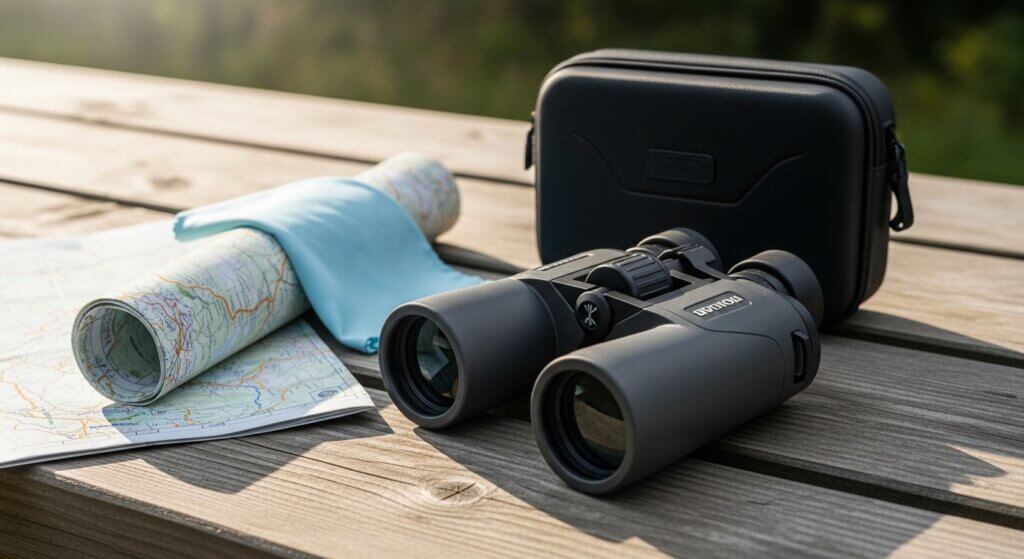
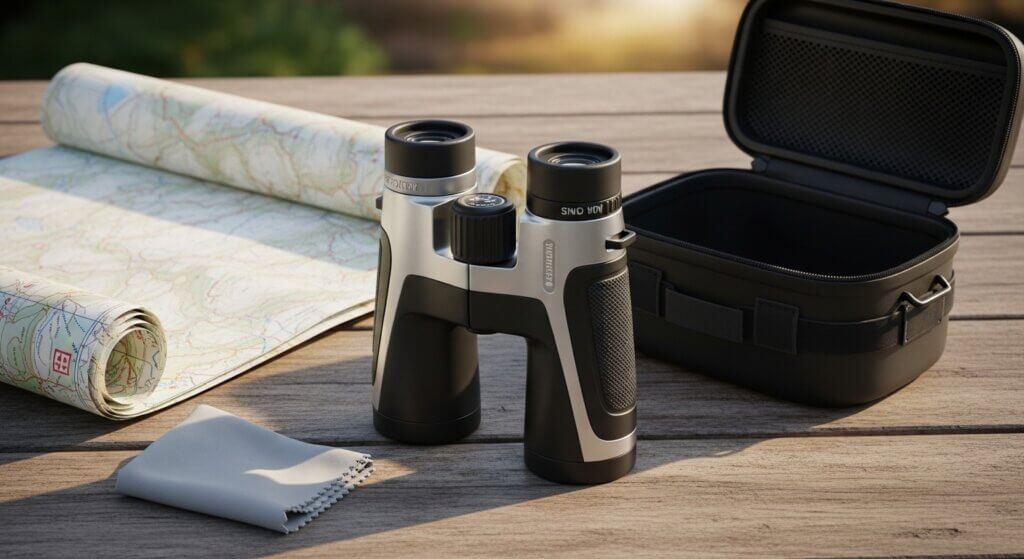
Finding the best all-purpose binoculars sounds simple until you start shopping. Then the numbers hit you: 8×42, 10×50, 12×42, ED glass, roof prism, Porro prism, eye relief, close focus, field of view. Suddenly, buying one “simple” pair starts feeling like choosing camera lenses for a wildlife documentary.
Here is the truth: most people do not need five pairs of binoculars.
They need one reliable pair that works for backyard birding, casual hiking, travel, sports, wildlife watching, camping, scenic viewpoints, and the random “what is that over there?” moment. That is where the best all-purpose binoculars earn their place.
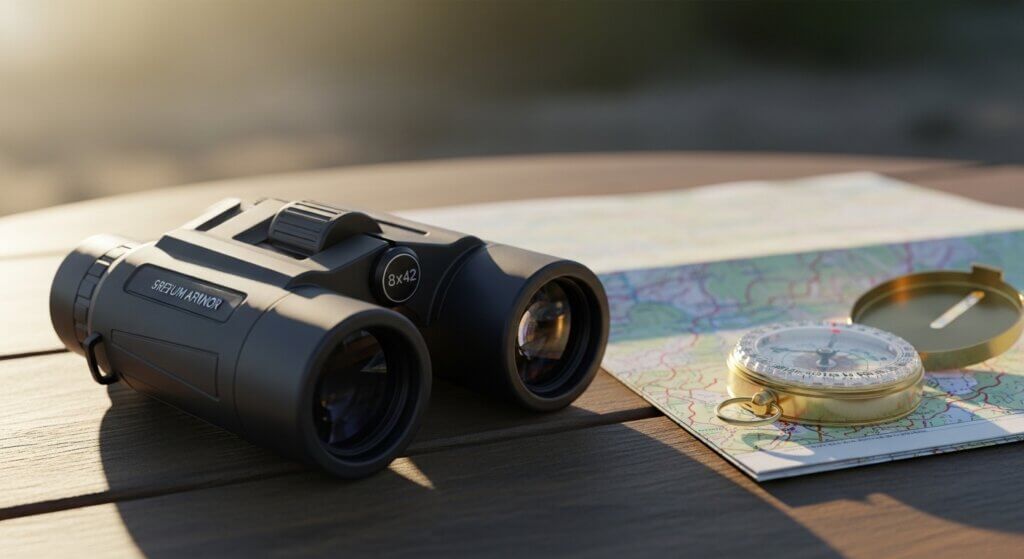
For most users, the sweet spot is 8×42 binoculars. Not the most powerful. Not the smallest. Not the cheapest. But the most balanced. They are bright enough for early morning, steady enough for handheld viewing, wide enough to track movement, and comfortable enough to use for more than five minutes without regretting the purchase.
If you are still comparing broader options, start with our Best Binoculars Overall Guide first. This article is more focused on the one-pair-for-everything buyer.
What Makes Binoculars Truly “All-Purpose”?
All-purpose does not mean perfect for every extreme situation. That is where many buyers get fooled.
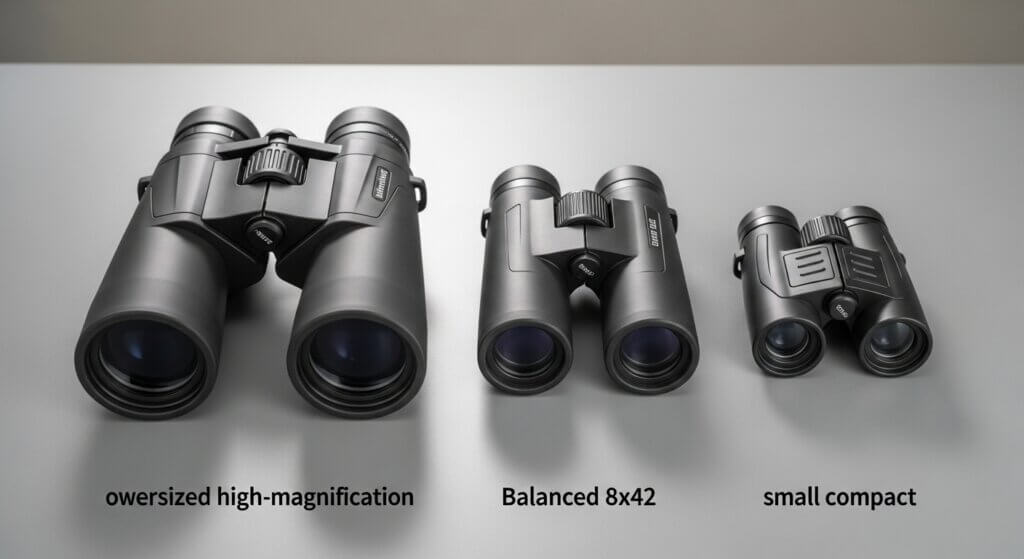
A compact 10×25 pair may be easy to carry, but it struggles in low light. A big 12×50 pair may pull distant objects closer, but it shakes more in your hands and feels bulky on a long walk. A marine binocular may be tough, but it can feel oversized for everyday use.
The best all-purpose binoculars sit in the middle. They handle different situations without becoming annoying in any one of them.
A good all-purpose pair should do five things well:
| Feature | Why It Matters | Best All-Purpose Choice |
|---|---|---|
| Magnification | Controls how close the view appears | 8x for most users |
| Objective Lens | Affects brightness and size | 42mm is the best balance |
| Field of View | Helps you find and follow subjects | Wider is better |
| Weight | Affects comfort during long use | Around 22–26 oz is ideal |
| Weather Protection | Keeps binoculars useful outdoors | Waterproof and fogproof |
This is why 8×42 keeps showing up in serious recommendations. It is not because everyone is copying each other. It is because real-world use keeps proving the same point: 8×42 is the least frustrating size for the widest number of people.
Best Overall Pick: Nikon Monarch M5 8×42
For one highly relevant recommendation, the Nikon MONARCH M5 8×42 is the pair I would point most general users toward.
It has the right formula: 8x magnification, 42mm objective lenses, ED glass, waterproof and fogproof construction, and a manageable weight. Nikon lists the Monarch M5 8×42 with 8x magnification, 42mm objective lenses, 22.2 oz weight, ED glass, waterproof protection down to 3.3 ft, and nitrogen-filled fogproofing. Nikon’s global specs also list a 112m field of view at 1,000m, 2.5m close focus, and 630g body weight.
That combination matters more than flashy marketing.
In real use, this type of binocular feels practical. You can keep it in a car, take it to a lake, carry it on a trail, use it from a balcony, or pack it for a trip without feeling like you bought something too specialized.
Why It Works So Well
The 8x power gives you enough reach without making the image too shaky. The 42mm lenses bring in enough light for cloudy days, shaded woods, and late afternoon viewing. ED glass helps reduce color fringing around bright edges, which matters when you are looking at tree branches, distant signs, birds against the sky, or white boats on water.
Is it the cheapest option? No.
But cheap binoculars often become drawer binoculars. They seem fine for ten minutes, then you notice the dim image, stiff focus wheel, narrow view, or headache-inducing edge distortion. The Monarch M5 8×42 is not luxury-level glass, but it is a smart middle-ground pick for people who want one pair and do not want to upgrade again next month.
Pros
✅ Excellent balance of size, brightness, and usability
✅ ED glass gives cleaner image quality than many entry-level models
✅ Good for birding, hiking, travel, general wildlife, and sports
✅ Waterproof and fogproof for real outdoor use
✅ Comfortable 8x magnification for handheld viewing
Cons
- Not pocket-sized
- Field of view is good, but not class-leading
- More expensive than basic budget binoculars
- Serious astronomy users may want larger 50mm lenses
If your budget is tighter, compare this against our best budget friendly binoculars article before buying. Spending less can make sense, but only if you know which compromises are acceptable.
8×42 vs 10×42: Which Is Better for All-Purpose Use?
This is the decision that traps many buyers.
At first, 10x sounds better. More magnification must mean a better view, right? Not always.
With 10x binoculars, distant objects appear closer, but hand shake also becomes more noticeable. The field of view is usually narrower, which makes it harder to find fast-moving subjects. In open country, 10x can be useful. For general use, 8x is often more enjoyable.
| Type | Best For | Weakness |
|---|---|---|
| 8×42 | Everyday use, birding, hiking, travel, mixed viewing | Slightly less reach |
| 10×42 | Open fields, distant wildlife, sports from far seats | More shake, narrower view |
| 10×50 | Low-light distance viewing, casual astronomy | Heavier and bulkier |
| 8×32 | Travel and daytime hiking | Less bright in poor light |
For the best all-purpose binoculars, 8×42 wins because it is easier to live with. You can hold the image steady. You can scan wide areas. You can use it in the woods, at the beach, on a road trip, or at a stadium without constantly fighting the optics.
If your use is mostly casual and varied, do not let magnification numbers bully you into buying 10x.
Real-World Use Cases: Where All-Purpose Binoculars Should Perform
A strong all-purpose pair should not feel like a mistake once you leave the product page. Here is how the right pair behaves in normal life.
Backyard Birding
You do not need a professional birding setup to enjoy birds from your window or patio. What you need is a bright image, fast focus, and a wide enough view to locate movement quickly.
The best all-purpose binoculars should let you spot small details like wing bars, feather color, and head markings without making the view feel shaky. This is another reason 8×42 works better than many 10x models for casual birding.
For a broader mixed-use angle, you can also read our article on best binoculars for general use. It pairs well with this page when choosing between everyday and hobby-level use.
Hiking and Camping
On a trail, weight matters. A heavy pair feels exciting at home and irritating after two miles.
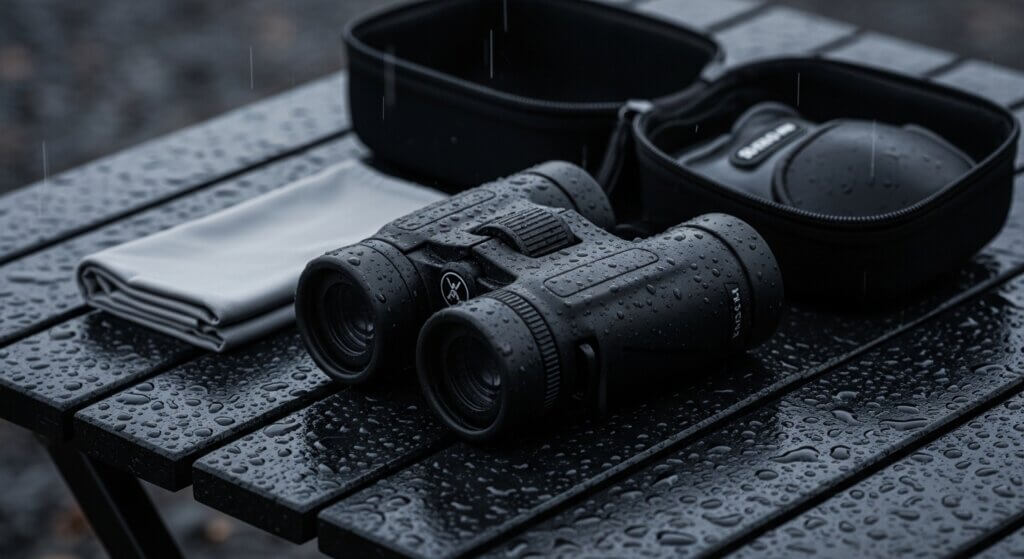
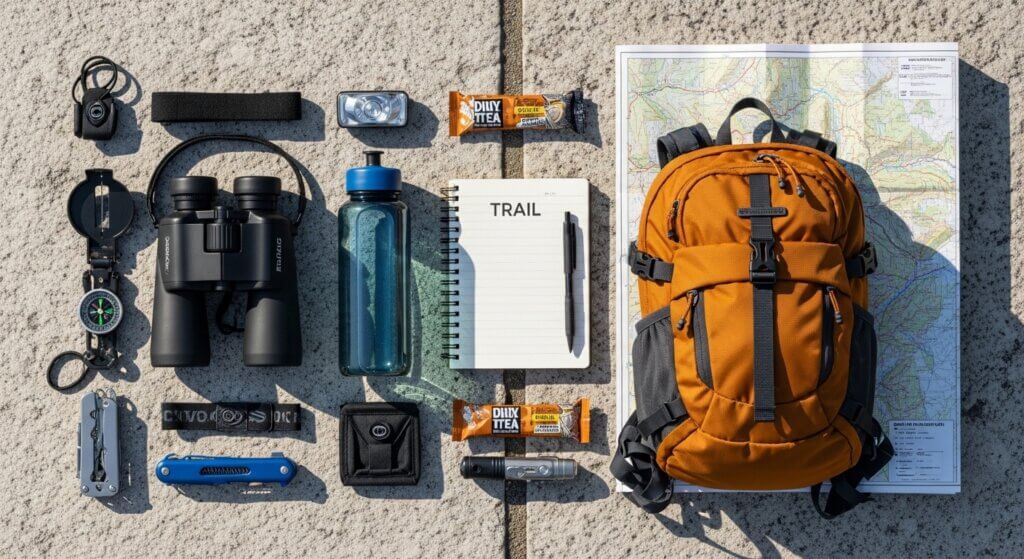
Good all-purpose binoculars should hang comfortably from a neck strap or harness. They should not feel delicate. Waterproofing matters here because weather changes quickly, and fogproofing helps when temperatures shift between a warm car and cold outdoor air.
You also want a focus wheel that turns smoothly. A stiff or overly sensitive focus wheel becomes annoying when you are trying to catch a quick view across a ridge.
Travel and Road Trips
Travel binoculars need to be useful without becoming luggage punishment.
Tiny compact binoculars are tempting because they fit anywhere. The problem is that many small binoculars feel dim, narrow, and uncomfortable during longer use. For sightseeing, coastlines, architecture, national parks, and scenic overlooks, 8×42 gives you a much better viewing experience.
The only exception is minimalist travel. If you are packing very light, an 8×32 may make sense. But for true all-purpose performance, 8×42 still gives the better view.
Sports and Events
For sports, binoculars need a wide view and quick focus. A narrow, high-powered pair can make it hard to follow action.
An 8×42 pair works well for motorsports, cricket, football, horse racing, golf, and outdoor events. It will not replace a broadcast camera, but it helps you see facial expressions, jersey numbers, movement, and distant action more clearly.
For indoor concerts or theater, check the venue rules first. Also, smaller binoculars may be more discreet.
Wildlife Watching
Wildlife watching exposes bad binoculars quickly.
A cheap pair may work when an animal is standing still in bright sunlight. But once the light drops, the subject moves, or the background becomes busy, weak optics fall apart.
The best all-purpose binoculars should give you enough brightness and contrast to separate the subject from brush, shadows, water, or tree lines. You do not need extreme magnification for most wildlife. You need a steady, bright, usable image.
What People Get Wrong
Most binocular mistakes come from buying for fantasy instead of real use.
People imagine themselves glassing mountains at sunrise or tracking rare wildlife from huge distances. Then they buy heavy, high-powered binoculars and use them twice.
Here is the blunt version: if binoculars are uncomfortable, you will not carry them. If you do not carry them, the specs are worthless.
The smarter move is to buy for your most common use, not your most dramatic imagined use.
If you mostly walk, travel, watch birds casually, visit parks, or use binoculars around the house, get a balanced pair. Not the biggest. Not the strongest. The most usable.
Common Mistakes to Avoid
Mistake 1: Buying Too Much Magnification
More power sounds impressive, but it often creates a shakier, darker, narrower view. For handheld use, 8x is usually more forgiving than 10x or 12x.
Mistake 2: Ignoring Eye Relief
If you wear glasses, eye relief is not optional. Look for longer eye relief so you can see the full image without pressing your glasses awkwardly into the eyecups.
Mistake 3: Choosing Cheap Binoculars With Big Numbers
A low-cost 20×50 pair may look powerful on paper. In the field, it may be shaky, dim, and hard to focus. Big numbers do not fix poor glass.
Mistake 4: Forgetting About Weight
A few extra ounces may not sound like much, but they matter when binoculars hang from your neck for hours.
Mistake 5: Buying Without Considering Weather
Even if you are not a hardcore outdoors person, waterproof and fogproof binoculars are worth it. Rain, humidity, dust, and temperature changes are normal parts of real use.
Quick Comparison: Best All-Purpose Binocular Sizes
| Size | All-Purpose Rating | Best Situation | Verdict |
|---|---|---|---|
| 8×25 | Fair | Pocket travel | Convenient but limited |
| 8×32 | Good | Day hiking and travel | Nice lightweight option |
| 8×42 | Excellent | Most mixed use | Best all-purpose choice |
| 10×42 | Good | Longer distance viewing | Better for open spaces |
| 10×50 | Moderate | Low light and casual astronomy | Too bulky for many users |
| 12×50 | Low | Mounted distance viewing | Too shaky for general use |
If someone asks me for one practical answer, I do not start with 12x or compact models. I start with 8×42 roof-prism binoculars with waterproofing, decent coatings, comfortable eye relief, and a smooth focus wheel.
That is the real formula behind the best all-purpose binoculars.
Are Expensive Binoculars Worth It?
Sometimes, yes. But not always.
Premium binoculars usually give you sharper edges, better low-light performance, smoother mechanics, stronger build quality, and less eye strain. You can feel the difference when you compare them side by side.
But for most people, there is a point where extra money brings smaller improvements.
The practical range for good all-purpose binoculars is usually mid-budget to upper-midrange. Very cheap models often disappoint. Ultra-premium models are wonderful but unnecessary unless you are deeply into birding, hunting, wildlife observation, or professional fieldwork.
The Nikon Monarch M5 8×42 sits in that sensible middle area. It is not bargain-bin cheap, and it is not luxury-priced. That is why it makes sense as a one-pair recommendation.
Final Verdict: What Should You Buy?
The best all-purpose binoculars for most people are 8×42 waterproof roof-prism binoculars with good coatings, comfortable eye relief, and manageable weight.
That setup gives you the best balance for birding, hiking, camping, travel, sports, backyard viewing, and casual wildlife watching. It is bright without being bulky. It is powerful without being shaky. It is practical without feeling cheap.
My single product pick is the Nikon Monarch M5 8×42 because it lands in the right zone for serious everyday use. It has the specs that matter, the comfort most buyers need, and the versatility that makes all-purpose binoculars worth buying in the first place.
For wider buying research, visit our Best Binoculars Overall Guide. To compare practical everyday models, check best binoculars for general use. For lower-cost picks, read best budget friendly binoculars. You can also explore more field tips on our blog tips page or start from the bestbinocular.net home page.
FAQs About the Best All-Purpose Binoculars
What are the best all-purpose binoculars for most people?
The best all-purpose binoculars for most people are 8×42 binoculars. They offer a strong mix of brightness, steady handheld viewing, wide field of view, and manageable size. They work well for birding, hiking, travel, sports, camping, and general outdoor use.
Are 8×42 or 10×42 binoculars better for all-purpose use?
8×42 binoculars are usually better for all-purpose use because they are easier to hold steady and often provide a wider field of view. 10×42 binoculars give more reach, but they can feel shakier and less comfortable for casual users.
Are compact binoculars good for all-purpose use?
Compact binoculars are good for travel and daytime use, but they are not always the best all-purpose choice. Smaller lenses usually mean a dimmer image, especially in shade, cloudy weather, or early morning. If you want one pair for many situations, 8×42 is usually better.
Do I need waterproof binoculars?
Yes, waterproof binoculars are worth buying for all-purpose use. Even if you do not plan to use them in heavy rain, waterproofing and fogproofing help protect your binoculars from humidity, sudden weather changes, dust, and temperature shifts.
What is the biggest mistake when buying all-purpose binoculars?
The biggest mistake is buying too much magnification. Many beginners choose 10x, 12x, or higher because they think more power means better performance. In reality, higher magnification can create more shake, a narrower view, and more eye strain. For most people, 8×42 is the safer and smarter choice.




