
Finding the best binoculars for the money sounds simple until you start comparing prices, magnification numbers, lens coatings, waterproof claims, and “HD optics” labels that every brand seems to throw around. The truth? The best value binoculars are not always the cheapest pair, and they are not always the most expensive either.
A good money-for-value binocular sits in the sweet spot. It gives you clear detail, steady handling, decent low-light performance, and enough durability that you do not feel nervous taking it outside. That matters whether you are watching birds from your backyard, checking distant landscapes while hiking, spotting wildlife near a lake, or using binoculars for travel, sports, wildlife watching, or general outdoor viewing.
This article is not about chasing luxury optics just to sound impressive. It is about helping you choose binoculars that feel worth every dollar after months of real use.
What “Best Binoculars for the Money” Really Means
The best binoculars for the money should give you the strongest mix of optical quality, build quality, comfort, and real-world usability at a fair price.
A cheap pair can look tempting, but poor binoculars usually have the same problems: blurry edges, weak brightness, stiff focus wheels, eye strain, bad grip, and fragile hinges. You save money once, then regret it every time you use them.
On the other hand, premium binoculars can cost more than a weekend trip. Some are wonderful, no doubt. But most casual users do not need elite European glass just to enjoy bird watching, hiking, travel, or backyard wildlife.
The real value zone is usually where the binoculars are good enough that you stop thinking about the gear and start enjoying the view.
For most people, that means looking for:
| Feature | Best Value Choice | Why It Matters |
|---|---|---|
| Magnification | 8x or 10x | Strong detail without too much shake |
| Objective lens | 42mm | Good brightness without becoming bulky |
| Prism type | Roof prism | Compact and easier to carry |
| Waterproofing | Yes | Safer for travel, rain, lakes, and humidity |
| Eye relief | 15mm or more | Better comfort, especially with glasses |
| Weight | Around 20–25 oz | Comfortable for longer use |
If you are still comparing broader options, start with our Best Binoculars Overall Guide first. It gives you the full buying picture before you narrow down to value-focused models.
The Best Overall Pick for the Money: Nikon PROSTAFF P7 10×42
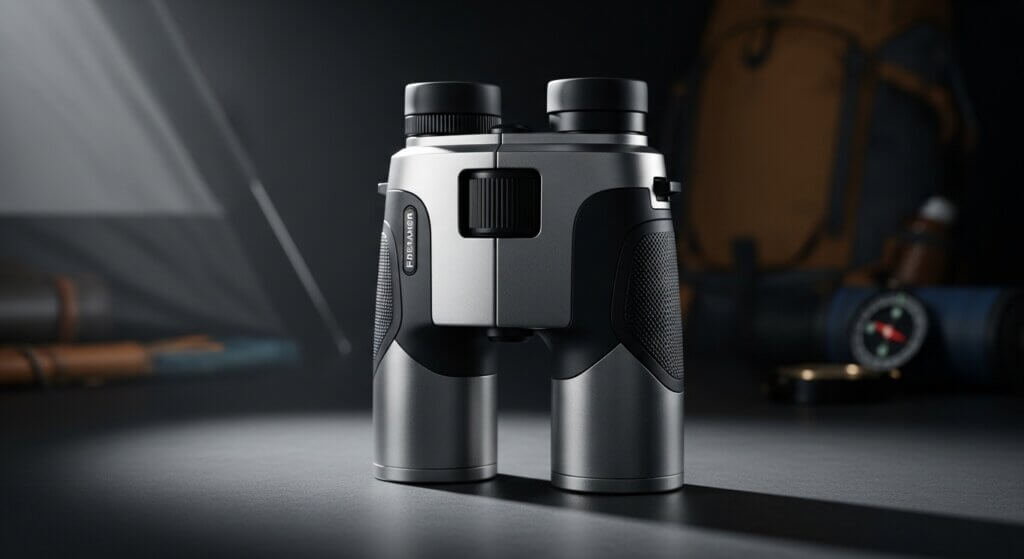
My strongest single recommendation for the best binoculars for the money is the Nikon PROSTAFF P7 10×42.
It lands in that practical middle ground where the optics feel better than basic entry-level binoculars, but the price does not jump into painful premium territory. Nikon lists the PROSTAFF P7 10×42 at 600g / 21.2 oz body weight, with 15.7mm eye relief and a 3.0m / 9.8 ft close focus distance. It also uses multilayer coatings, phase-correction-coated roof prisms, and dielectric high-reflective prism coatings for brighter, more natural-looking views.
That combination matters in real use. A lot of affordable binoculars look fine in bright daylight but fall apart when the light gets soft. The P7 does a better job holding contrast in early morning, cloudy weather, and shaded woodland areas.
It is not perfect. No binocular is. The 10x magnification gives more reach, but it also shows more hand shake than an 8x pair. If your hands are naturally shaky, or you mostly watch fast-moving birds at close range, the 8×42 version may feel calmer. But if you want one binocular for open fields, travel viewpoints, wildlife watching, and general outdoor use, the 10×42 version gives you more detail without becoming too heavy.
Why This Binocular Makes Sense for Value Buyers
The PROSTAFF P7 10×42 works because it does not waste your money on gimmicks. It focuses on the things that matter: clarity, brightness, waterproofing, field usability, and comfort.
You can use it from a porch, in a car, on a trail, at a scenic overlook, near water, or during casual bird watching. It feels serious without feeling overbuilt.
Pros
- Clearer and brighter than many cheap binoculars
- 10x magnification gives useful reach
- Waterproof and fogproof design for outdoor use
- Good-size focus wheel for quick adjustments
- Comfortable enough for longer viewing sessions
- Strong value from a trusted optics brand
Cons
- More hand shake than 8x binoculars
- Not pocket-sized
- Close focus is good, not class-leading
- Serious birders may still prefer higher-end glass
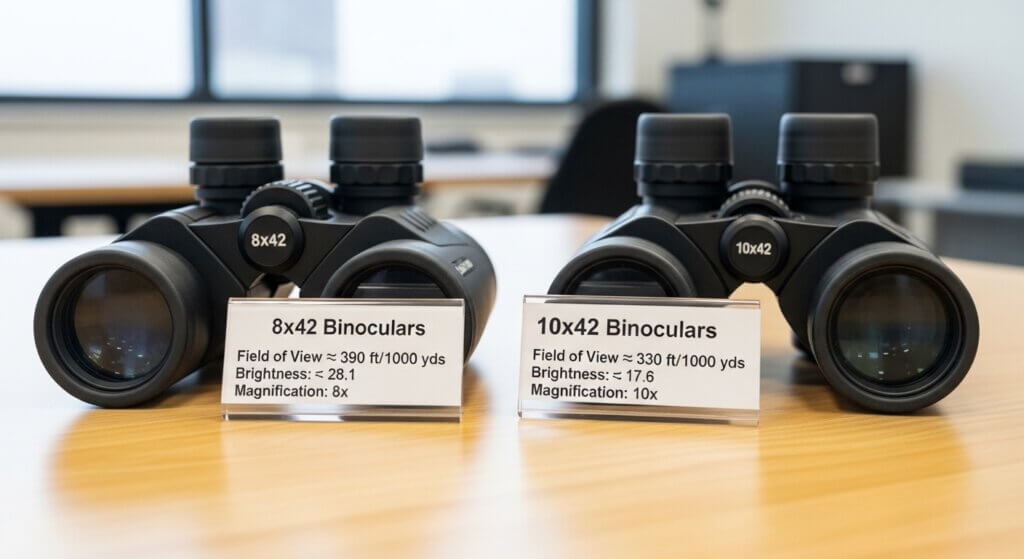
8×42 vs 10×42: Which Gives Better Value?
This is where many buyers mess up. They assume higher magnification automatically means better binoculars. It does not.
A 10×42 binocular brings distant subjects closer. That sounds better, and sometimes it is. If you are watching deer across a field, boats offshore, mountain ridges, or birds perched far away, 10x helps.
But 8×42 binoculars are easier to hold steady. They usually give a wider field of view, which makes it easier to find moving subjects. They also feel more relaxed for long sessions.
Choose 8×42 If You Want:
- Easier handheld stability
- Wider view
- Better tracking for birds
- Less eye fatigue
- A more beginner-friendly experience
Choose 10×42 If You Want:
- More detail at distance
- Better reach for open areas
- More useful viewing from overlooks
- Stronger performance for wildlife and travel
- A slightly more powerful all-around binocular
For everyday buyers, 8×42 is safer. For people who want extra reach and can hold binoculars steady, 10×42 often feels more exciting.
For a broader breakdown of versatile options, read our guide to the best all-purpose binoculars. It helps if you want one pair for mixed activities instead of one specific hobby.
Best Binoculars for the Money by Use Case
The best value depends on how you actually use the binoculars. A pair that feels perfect for hiking may feel weak for astronomy. A compact travel binocular may be convenient but frustrating in low light.
Here is the honest breakdown.
For Bird Watching
For bird watching, the best binoculars for the money are usually 8×42. Birds move quickly. They hide in branches. They do not wait while you fight a narrow field of view.
An 8×42 pair gives you a steadier image and makes it easier to follow movement. If you are mostly watching birds in your backyard, local park, or wooded trail, do not chase 12x magnification. You will see more shake than detail.
That said, 10×42 works well for shorebirds, raptors, open fields, and bigger distances.
For Hiking and Travel
For hiking, weight matters more than people admit. A binocular that feels fine in your hand for five minutes can feel annoying after two hours around your neck.
If your main use is hiking, sightseeing, road trips, or national parks, look for roof prism binoculars around 8×32, 8×42, or 10×42. Compact models are easier to carry, but full-size 42mm lenses give a brighter, more satisfying view.
The best travel binoculars for the money should be waterproof, lightweight, and easy to focus with one hand.
For Hunting and Wildlife
For hunting and wildlife viewing, 10×42 is often the smarter value pick. You usually need more reach across fields, hills, and tree lines.
Still, do not go too powerful. A 12x or 15x binocular sounds impressive until you realize you need a tripod or extremely steady hands. For handheld use, 10×42 is the practical ceiling for most people.
For Sports and Stadiums
For sports, concerts, and stadium use, compact binoculars can make sense. You do not need huge objective lenses in a bright stadium. A small 8×25 or 10×25 pair may be enough.
But here is the catch: compact binoculars are less comfortable for long viewing. They also have smaller exit pupils, so eye placement is fussier. If comfort matters more than pocket size, a lightweight 8×32 is a better long-term buy.
For Stargazing
For casual stargazing, 10×50 binoculars usually give better value than 10×42 because the larger lenses gather more light. But they are heavier.
If you want binoculars for both daytime use and occasional night-sky viewing, 10×42 is acceptable. If astronomy is your main goal, go 10×50 or consider tripod-friendly models.
What Specs Are Worth Paying For?
Some binocular features are worth the extra cost. Others are just marketing language dressed up in shiny words.
Fully Multi-Coated Lenses
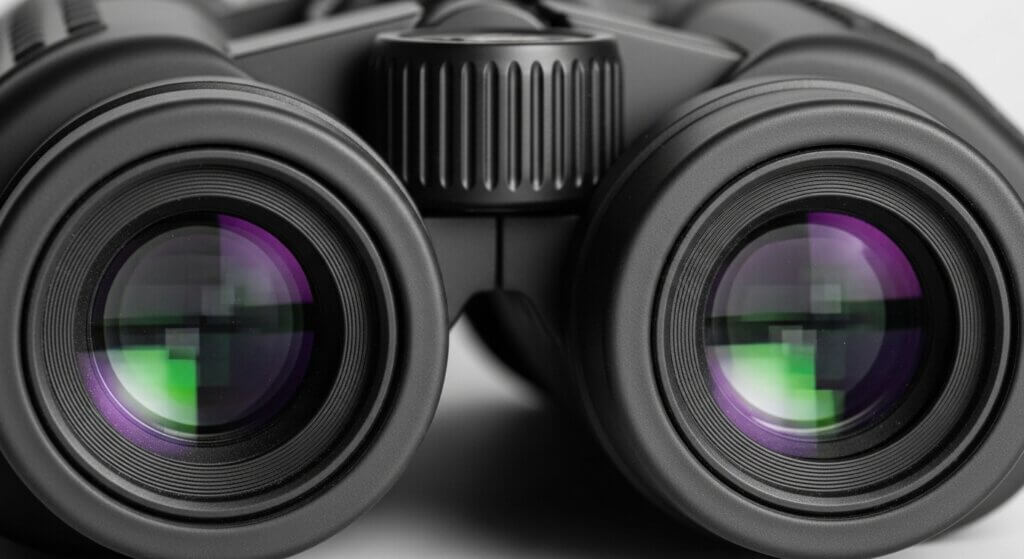
This is worth paying for. Better coatings help transmit more light and reduce glare. You see better contrast, especially in tricky light.
Avoid binoculars that only say “coated optics” without more detail. That usually signals a lower-grade model.
Waterproof and Fogproof Build
Do not treat waterproofing as a luxury. Outdoor gear gets exposed to mist, rain, sweat, dust, and temperature changes.
Waterproof and nitrogen-filled binoculars last longer and feel safer to carry. For the money, this is one of the smartest features to prioritize.
Good Eye Relief
If you wear glasses, eye relief matters a lot. Look for around 15mm or more. Without enough eye relief, you may lose part of the view and feel like you are looking through a tunnel.
Even if you do not wear glasses, comfortable eye relief still makes viewing easier.
ED Glass
ED glass can reduce color fringing and improve sharpness, especially around high-contrast edges. It is a good feature, but not always necessary for casual use.
If the price jump is small, ED glass is worth considering. If it doubles the cost, think carefully. Many non-ED binoculars still perform well for general viewing.
Where Cheap Binoculars Usually Disappoint
Cheap binoculars do not always fail immediately. They disappoint slowly.
At first, they seem fine. Then you notice the edges are soft. Then the focus wheel feels rough. Then your eyes feel tired after ten minutes. Then the rubber armor starts peeling, or the hinge becomes loose.
The biggest problems are usually:
- Dim image in cloudy weather
- Narrow field of view
- Blurry edges
- Poor color accuracy
- Weak focus control
- Bad alignment between barrels
- Uncomfortable eyecups
- No real waterproofing
The worst part? New buyers often blame themselves. They think they “do not know how to use binoculars.” In reality, the binoculars are just poor.
A good pair should feel natural after a few minutes. You should not be fighting the focus every time you lift it to your eyes.
Mid-Range Binoculars Are Usually the Best Deal
The best binoculars for the money are usually not found at the very bottom of the market. The strongest value often sits in the mid-range.
Why? Because that is where brands include useful optical upgrades without charging luxury prices.
You get better coatings, cleaner prisms, waterproof sealing, smoother focus, better eye relief, and a more durable body. Those upgrades change the experience.
A $40 pair may be okay for a child, emergency glove box, or rare use. But for regular outdoor viewing, you will probably outgrow it fast.
A $150–$300 binocular often gives the best return for most users. Spend less, and you risk frustration. Spend much more, and the improvements become more subtle unless you are a serious hobbyist.
Real-World Buying Scenarios
Scenario 1: You Want One Pair for Everything
Choose an 8×42 or 10×42 roof prism binocular. This is the safest value category. It works for birding, travel, hiking, wildlife, backyard viewing, and general outdoor use.
If you are unsure, 8×42 is easier. If you want more distance, 10×42 is better.
Scenario 2: You Mostly Watch from Home
If you use binoculars from a deck, window, balcony, or backyard, weight matters less. A 10×42 can be excellent because you are not carrying it all day.
You may also enjoy a 10×50 if brightness matters more than portability.
Scenario 3: You Travel Often
Pick something lighter. An 8×32 or compact 10×25 may make more sense if space is limited.
But be honest. Tiny binoculars are convenient, not magical. If you expect rich, bright views, a 42mm model still wins.
Scenario 4: You Are Buying Your First Serious Pair
Do not buy the cheapest pair. Also, do not buy the most advanced pair.
Start with a reliable 8×42 or 10×42 from a trusted brand. Learn what you like. After that, you can decide if you need premium glass, image stabilization, or a specialty model.
For simpler everyday options, see our article on the best binoculars for general use. It is useful if you want practical picks without overthinking technical specs.
Common Mistakes When Buying Value Binoculars
Buying Too Much Magnification
This is the classic mistake. More magnification does not always mean a better view. A shaky 12x image is worse than a steady 8x image.
For handheld use, most people should stay between 8x and 10x.
Ignoring Weight
Heavy binoculars feel stable at first, but they become tiring. If you hike, travel, or walk long distances, weight should be part of your buying decision.
Choosing Pocket Size Over Comfort
Compact binoculars are nice until you use them for a long time. Smaller lenses mean less brightness. Smaller bodies can also be harder to hold steady.
Believing Every “HD” Label
“HD” does not always mean high-end. Some brands use it loosely. Look for actual features: prism coatings, lens coatings, waterproofing, eye relief, and field of view.
Forgetting About Return Policy
Even good binoculars are personal. Face shape, glasses, hand size, and viewing style all matter. Buy from a place with a sensible return policy when possible.
Quick Comparison: Budget vs Mid-Range vs Premium
| Category | Typical Buyer | Strength | Weakness | Best For |
|---|---|---|---|---|
| Budget binoculars | Casual users | Low price | Dimmer image, weaker build | Rare use, kids, backup pair |
| Mid-range binoculars | Most buyers | Best balance | Not elite-level optics | Birding, hiking, travel, wildlife |
| Premium binoculars | Serious users | Excellent clarity | Expensive | Dedicated birders, hunters, professionals |
For most people, mid-range binoculars win. They offer the best mix of performance and price without turning a hobby into a financial mistake.
My Honest Take: Do Not Buy Specs, Buy Usefulness
A lot of binocular advice gets trapped in numbers. Field of view. Exit pupil. Prism coating. Eye relief. All of that matters, but only because it affects the viewing experience.
The best binoculars for the money are the pair you actually want to carry, lift, focus, and use again.
If a binocular is too heavy, you will leave it at home. If it is too cheap, you will stop trusting it. If it is too expensive, you may baby it instead of using it.
That is why a strong mid-range 8×42 or 10×42 binocular makes so much sense. It is practical. It is capable. It gives you enough performance to enjoy the outdoors without feeling like you overpaid for a logo.
Final Recommendation
If you want one dependable pair and do not want to waste money, the Nikon PROSTAFF P7 10×42 is one of the best binoculars for the money for general outdoor use, travel, wildlife watching, and distance viewing.
Choose the 10×42 if you want more reach. Choose an 8×42 version if you want a steadier image and easier bird tracking.
Either way, stay focused on the real goal: clear views, comfortable handling, and a binocular you will actually use.
For more buying help, visit the Best Binoculars home page and check our binocular blog tips page for practical advice before choosing your next pair.
FAQs About the Best Binoculars for the Money
What are the best binoculars for the money?
The best binoculars for the money are usually mid-range 8×42 or 10×42 models with good coatings, waterproofing, comfortable eye relief, and a durable build. For most buyers, the Nikon PROSTAFF P7 10×42 is a strong value pick because it balances clarity, reach, comfort, and price well.
Are expensive binoculars always better?
Expensive binoculars are often better, but they are not always better for your needs. Premium models may give sharper edges, better low-light performance, and improved color control. However, casual users may not notice enough difference to justify the higher price.
Is 8×42 or 10×42 better for the money?
8×42 is better for steadiness, wider viewing, and bird watching. 10×42 is better for distance, wildlife, travel viewpoints, and open landscapes. If you are a beginner, 8×42 is usually easier. If you want more reach, 10×42 gives better detail.
What should I avoid when buying cheap binoculars?
Avoid binoculars with very high magnification, vague “HD” claims, poor eye relief, no waterproofing, and unknown brands with weak return policies. Cheap binoculars often look fine online but feel frustrating in real use.
How much should I spend on good binoculars?
Most people should expect to spend around $150–$300 for good value binoculars. This range usually gives you better optics, waterproofing, smoother focusing, and stronger durability without entering premium pricing.
Are compact binoculars worth it?
Compact binoculars are worth it for travel, stadiums, concerts, and casual daytime use. However, they are not the best choice for low light, long viewing sessions, or serious wildlife watching. For better all-around performance, 8×42 or 10×42 is usually a smarter buy.
Do I need waterproof binoculars?
Yes, waterproof binoculars are worth it for most outdoor users. Even if you do not plan to use them in rain, they handle humidity, mist, dust, and changing weather better than non-waterproof models.




