
Finding the best binoculars for everyday use is not about buying the most powerful pair on the shelf. That is where many people waste money. A 12x or 15x binocular looks exciting in a product title, but after five minutes of shaky hands, narrow views, and neck strain, it usually ends up in a drawer.
Everyday binoculars need to be simple: easy to carry, steady in the hands, bright enough for morning or evening, and useful in different situations. You might use them from your balcony, at a park, during a road trip, at a sports event, while hiking, or when watching ships, aircraft, wildlife, or faraway scenery. That means the right choice is usually not the biggest binocular. It is the one that disappears into your routine.
If you are building your full setup, you can also compare this article with our main Best Binoculars Overall Guide for broader buying advice.
What “Everyday Use” Really Means for Binoculars
Everyday use means your binoculars must handle mixed situations without annoying you. They should work for quick views, casual outdoor trips, weekend travel, backyard watching, light birding, concerts, sports, and scenic viewing.
This is different from buying binoculars for one narrow purpose.
For example, bird watchers may care deeply about close focus, edge sharpness, and color accuracy. Stargazers may want large 50mm lenses. Hunters may care about low-light glass and rugged armor. But the best binoculars for everyday use need balance more than extremes.
In real life, everyday binoculars are used like this:
You hear a sound outside and want to check the trees. You are sitting in the car near a viewpoint. You are at a cricket match or football game and want a closer view without carrying a heavy case. You are on a family trip and someone says, “Can you see that building over there?” That is the real test.
A good everyday binocular should be ready in seconds.
Quick Recommendation: The Best Everyday Size
For most people, the sweet spot is 8×42.
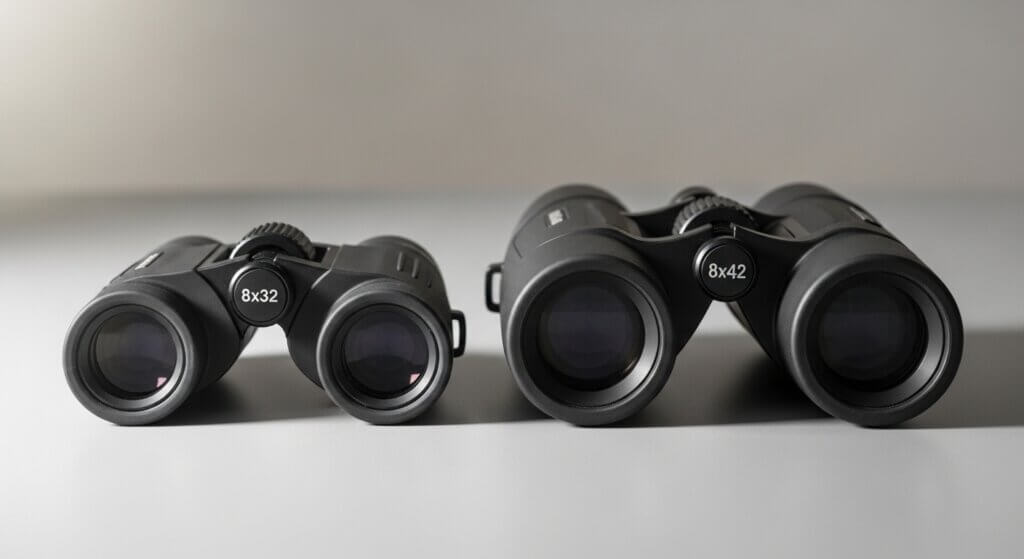
That may sound boring, but boring is often correct. An 8×42 binocular gives you enough magnification to bring distant details closer, while still being easy to hold steady. The 42mm objective lenses collect enough light for cloudy days, shaded areas, and late afternoon use.
A 10×42 can also work, but it is less forgiving. You get more reach, but more hand shake. For casual users, that trade-off is not always worth it.
Best Everyday Binocular Setup
| Feature | Best Everyday Choice | Why It Works |
|---|---|---|
| Magnification | 8x | Steadier view and wider field |
| Lens size | 32mm or 42mm | 32mm for portability, 42mm for brightness |
| Prism type | Roof prism | Compact and easier to carry |
| Waterproofing | Yes | Safer for travel and outdoor use |
| Weight | Under 25 oz | Comfortable for regular carrying |
| Eye relief | 15mm+ | Better for eyeglass wearers |
| Focus wheel | Smooth and central | Faster for mixed use |
If you want one pair to keep in the car, backpack, or near a window, 8×42 is the safest pick.
Best Binoculars for Everyday Use: What to Look For
1. Choose 8x Before You Chase Higher Power
This is the mistake beginners make again and again. They think more magnification means better binoculars.
Not always.
With handheld binoculars, higher magnification also magnifies your hand movement. A 12x binocular may look powerful on paper, but it can feel jumpy when you are standing, walking, or watching something that moves.
For everyday viewing, 8x gives a calmer image. You can scan a wider area, find your subject faster, and hold the view longer without fatigue.
That matters more than bragging numbers.
2. Pick 42mm for Brightness or 32mm for Portability
A 42mm binocular is better if you care about brighter views. It handles cloudy weather, shaded trails, and early evening better than smaller lenses.
A 32mm binocular is better if you want something lighter and more compact. It is easier to carry in a small bag, especially for travel or city use.
Here is the honest version:
If you want maximum practicality, get 8×42.
If you want maximum carry comfort, get 8×32.
The best binoculars for everyday use usually live somewhere between those two sizes.
3. Do Not Ignore Weight
Heavy binoculars feel premium for the first two minutes. After that, they become a burden.
If you are buying everyday binoculars, weight matters more than many people admit. Anything under about 25 oz feels manageable for most casual users. Once you go much heavier, you start thinking twice before packing them.
And that is the death of an everyday binocular.
A pair you do not carry is not useful, no matter how sharp it is.
4. Waterproofing Is Worth It
You do not need military-grade durability for casual use, but waterproofing is smart. Everyday binoculars get taken outside. They sit in backpacks. They deal with fog, humidity, dust, grass, wet hands, and unexpected rain.
Waterproof and fogproof binoculars simply remove stress.
This is especially important if you travel, hike, keep binoculars in your vehicle, or live somewhere humid.
5. Eye Relief Matters If You Wear Glasses
If you wear glasses, do not buy binoculars without checking eye relief. Look for around 15mm or more. More eye relief helps you see the full image without pressing your glasses awkwardly into the eyecups.
People skip this detail, then blame the binoculars for having a “small view.”
The problem is often poor eye relief.
One Product Worth Considering: Nikon PROSTAFF P3 8×42
If I had to recommend one practical everyday model for a normal buyer, I would look seriously at the Nikon PROSTAFF P3 8×42.
It is not the fanciest binocular Nikon makes, and that is exactly why it makes sense here. Everyday buyers usually do not need luxury glass. They need a reliable pair that is bright, steady, weather-ready, and not painful to carry.
Nikon lists the PROSTAFF P3 8×42 with 8x magnification, 42mm objective lenses, a 377 ft field of view at 1,000 yards, 20.3 oz weight, 20.2mm eye relief, and a 9.8 ft close focus distance. which is a strong everyday mix for casual outdoor use and eyeglass wearers.
Why It Fits Everyday Use
Pros:
- Steady 8x magnification for casual handheld viewing
- 42mm lenses for better brightness than pocket models
- Good eye relief for glasses
- Wide enough field of view for scanning parks, fields, and events
- Light enough for regular use
- Sensible price range for most buyers
Cons:
- Not as sharp at the edges as premium binoculars
- Still larger than compact 8×25 or 10×25 models
- Serious birders may eventually want higher-end glass
This is the kind of binocular that works for real people. It is not a trophy purchase. It is a “grab it and use it” purchase.
Everyday Binocular Use Cases
Backyard and Balcony Viewing
For backyard use, the best binoculars for everyday use should focus quickly and feel comfortable in short bursts. You may use them to check trees, rooftops, distant buildings, clouds, or movement across a field.
An 8×42 binocular is ideal here because you get a bright image without needing a tripod. You can leave it near a window or shelf and grab it whenever something catches your eye.
Do not buy giant binoculars for this. You will use them less.
Walking, Hiking, and Travel
For walking and travel, the decision becomes harder. A full-size 8×42 gives better brightness, but a compact 8×32 is easier to pack.
If you travel light, choose 8×32. If you care more about view quality, choose 8×42.
For hiking, waterproofing and rubber armor matter. Your binoculars will get bumped, touched with dusty hands, and exposed to weather. A small difference in build quality can make a big difference over time.
Sports and Stadiums
For sports, avoid overly powerful binoculars. You need to follow movement, not stare at one frozen object.
An 8x binocular is usually better than 10x or 12x at stadiums because the field of view is wider. You can follow players, action, and movement without constantly losing the scene.
For indoor arenas or concerts, compact binoculars may be more comfortable, but they will not be as bright.
Casual Bird Watching
You do not need expensive birding binoculars to enjoy birds casually. An 8×42 pair is one of the best options for beginners and everyday users.
Why? Birds move fast. A wider field of view helps you find them quickly. The steadier image makes it easier to follow them in trees. The 42mm lenses help in shade.
If bird watching becomes your main hobby later, you can upgrade. For now, do not overbuy.
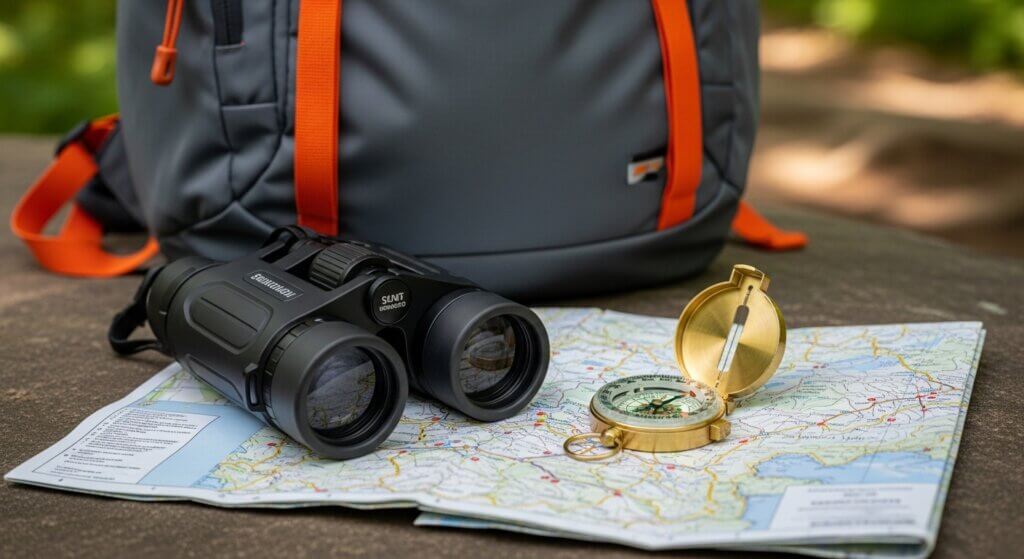
8×32 vs 8×42 vs 10×42 for Everyday Use
| Type | Best For | Main Advantage | Main Weakness |
|---|---|---|---|
| 8×32 | Travel, walking, city use | Light and compact | Less bright in low light |
| 8×42 | Most everyday users | Best balance of brightness and steadiness | Slightly bulkier |
| 10×42 | Distant viewing, open landscapes | More reach | More shake and narrower view |
Here is the blunt advice: if you are unsure, get 8×42.
That is the safest answer for the best binoculars for everyday use because it covers the most situations with the fewest compromises.
If you already know you hate carrying gear, get 8×32 instead.
Common Mistakes Buyers Make
Buying Too Much Magnification
This is the biggest mistake. People buy 12x or 20x binoculars because they sound powerful. Then they discover the image shakes, the view is narrow, and the binoculars are frustrating without support.
Everyday binoculars should be easy first, powerful second.
Choosing Cheap Toy-Like Binoculars
Very cheap binoculars often look fine in photos, but the experience can be poor: dim image, stiff focus wheel, weak alignment, uncomfortable eyecups, and plastic-heavy build.
You do not need to spend a fortune. But if the price looks too good to be true, the view usually explains why.
Ignoring Return Policies
Binocular comfort is personal. Eye spacing, hand size, glasses, focus feel, and weight all matter.
Even with good research, you may not love a pair once you hold it. Buy from a place with a fair return option.
Thinking Compact Always Means Better
Pocket binoculars are convenient, but small lenses limit brightness. A tiny 10×25 pair may be easy to carry, but it can feel dim and shaky compared with an 8×42.
Compact binoculars are great when size is the priority. They are not always the best everyday viewing experience.
What You Actually Want
Most buyers say they want “clear binoculars.”
That is too vague.
What they really want is confidence. They want to pick up the binoculars, find the subject fast, see a bright image, adjust focus without fighting the wheel, and not feel stupid for buying the wrong thing.
The best binoculars for everyday use should reduce friction. They should make viewing feel natural.
That means:
- Not too heavy
- Not too powerful
- Not too delicate
- Not too expensive
- Not too complicated
This is why mid-range 8×42 binoculars beat extreme models for most users.
Pros and Cons of Everyday Binoculars
Pros
- Useful for travel, sports, parks, views, and casual wildlife watching
- Easier to carry than specialty large binoculars
- More practical than high-power models
- Good 8×42 options offer bright, steady viewing
- Great entry point before buying expensive specialty optics
Cons
- Not specialized enough for serious astronomy
- Smaller compact models can struggle in low light
- Budget models may lose sharpness near the image edges
- Full-size models still need a case or strap for travel
Everyday binoculars are about compromise. But the right compromise feels smart, not limiting.
How Much Should You Spend?
For everyday use, most buyers should avoid both extremes.
Under-budget binoculars often disappoint. Ultra-premium binoculars are amazing, but casual users may not notice enough difference to justify the cost.
A realistic everyday range is usually:
| Budget Level | What to Expect |
|---|---|
| Low budget | Basic view, acceptable for occasional use |
| Mid-range | Better clarity, waterproofing, comfort, and durability |
| Premium | Sharper image, better coatings, stronger low-light performance |
| Luxury | Excellent optics, but often overkill for casual everyday use |
The smart move is to buy the best mid-range pair you can comfortably afford. For more budget-focused options, read our best binoculars for the money article before spending.
Best Everyday Binoculars vs All-Purpose Binoculars
These two categories overlap, but they are not identical.
Everyday binoculars focus on convenience. They should be easy to grab, carry, and use often.
All-purpose binoculars may lean slightly more toward performance across hobbies like birding, hiking, hunting, boating, and travel.
If you want a broader “one binocular for everything” breakdown, check our best all-purpose binoculars guide. It will help if you want one pair that can stretch beyond casual use.
Final Buying Tips Before You Choose
Before buying the best binoculars for everyday use, ask yourself one uncomfortable question:
Will I actually carry this?
If the answer is no, buy smaller. If the answer is yes, choose better optics and a 42mm lens.
Do not buy based only on magnification. Do not buy based only on brand. Do not buy the cheapest pair and expect premium performance. And do not buy a huge binocular unless you enjoy carrying huge binoculars.
For most people, a waterproof 8×42 roof-prism binocular is the right answer. It is steady, bright, practical, and versatile enough for daily life.
FAQs About the Best Binoculars for Everyday Use
What are the best binoculars for everyday use?
The best binoculars for everyday use are usually 8×42 binoculars because they offer a steady view, good brightness, comfortable handling, and enough power for travel, parks, sports, backyard viewing, and casual wildlife watching.
Are 8×42 binoculars good for everyday use?
Yes, 8×42 binoculars are one of the best choices for everyday use. They are easier to hold steady than 10x or 12x models, and the 42mm lenses provide a brighter image than most compact binoculars.
Are 10×42 binoculars better than 8×42?
Not always. 10×42 binoculars show distant objects slightly closer, but they also show more hand shake and usually have a narrower field of view. For casual daily use, 8×42 is often more comfortable.
Should I buy compact binoculars for everyday carry?
Compact binoculars are good if portability matters most. However, very small binoculars can look dim in low light. If you want the best balance, choose 8×32 for compact carry or 8×42 for better viewing comfort.
What binoculars are best for travel and general use?
For travel and general use, 8×32 binoculars are great if you pack light, while 8×42 binoculars are better if you want brighter, more comfortable views. Waterproofing is strongly recommended for both.
Are expensive binoculars worth it for everyday use?
Expensive binoculars can offer sharper images, better coatings, and stronger low-light performance. But for everyday use, a good mid-range pair is usually enough. Casual users rarely need luxury-level optics.
Can I use everyday binoculars for bird watching?
Yes. An 8×42 binocular works very well for casual bird watching. It gives a wide, steady view and enough brightness for trees, parks, gardens, and shaded areas.
What is the best magnification for everyday binoculars?
The best magnification for everyday binoculars is usually 8x. It gives enough zoom for most situations while keeping the image stable and easy to follow.
More Helpful Binocular Resources
For a full buying overview, start with our Best Binoculars Overall Guide. For budget-friendly picks, visit best binoculars for the money. And if you want one pair for several hobbies, read best all-purpose binoculars.
You can also explore more binocular tips on our blog tips page or visit the bestbinocular.net home page for the latest buying resources.




