
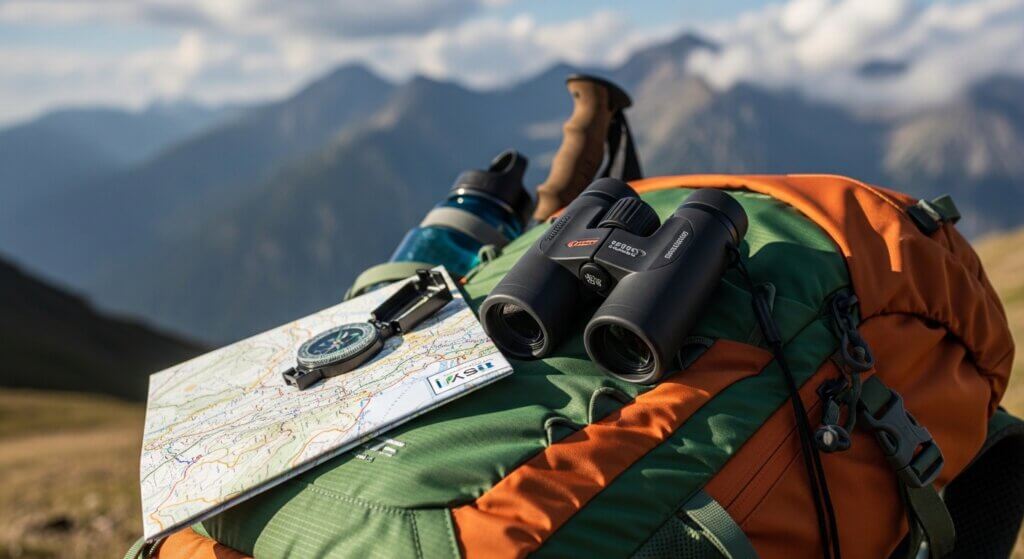
Why Backpackers Need Lightweight Compact Binoculars
The best compact binoculars for backpacking are not the biggest, brightest, or most expensive binoculars on the shelf. They’re the pair you’ll actually carry after mile seven, when your shoulders are already tired, your water bottle feels heavier than it did that morning, and every “nice-to-have” item starts fighting for space in your pack.
That’s the brutal truth.
Backpacking binoculars live in a different world than backyard birding binoculars or cruise binoculars. You’re not just asking, “Can I see clearly?” You’re asking, “Is this worth carrying uphill for three days?”
For most backpackers, the sweet spot is a compact 8×25 or 8×32 binocular: light enough to disappear into a hip belt pocket, stable enough for handheld viewing, and useful enough for scanning ridgelines, campsites, trail junctions, wildlife, lakes, fire towers, and distant weather movement.
If you’re comparing binoculars for different travel styles, start with our full guide on best compact binoculars for travel. This backpacking guide goes deeper into trail weight, durability, packability, and real outdoor use.
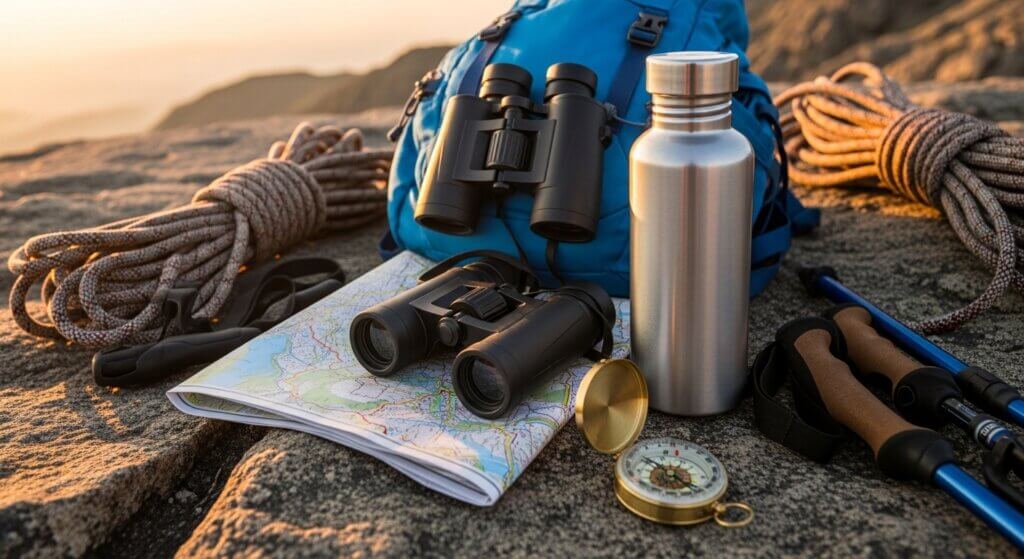
What Makes Compact Binoculars Good for Backpacking?
Backpacking is ruthless. A binocular that feels “small” at home can feel annoying after a long climb.
The best compact binoculars for backpacking need to do four things well:
- Stay light
- Survive rough handling
- Give a steady view
- Work quickly without fuss
That last point matters more than people admit. On the trail, you don’t always have five minutes to adjust your binoculars. Sometimes you hear movement in the trees, spot a lookout tower across a valley, or need to check whether that distant opening is a campsite or just a patch of pale rock.
Good backpacking binoculars should come out fast, focus easily, and give you a usable image without making you baby them.
The Real Trail Problem: Weight vs. View Quality
Here’s where most buyers mess up.
They buy a tiny 10×25 binocular because it sounds powerful. Then they discover the image shakes, the view feels narrow, and low-light performance drops hard in the evening.
For backpacking, 8x is usually better than 10x. It’s steadier in your hands, easier to use when breathing hard, and more forgiving when you’re standing on uneven ground. A 10x compact can work, but it punishes shaky hands and makes quick scanning harder.
That’s why many experienced hikers lean toward 8×25 or 8×32 binoculars for backpacking.
Best Overall Pick: Nikon Trailblazer ATB 8×25
If I had to recommend one highly relevant product for most backpackers, I’d pick the Nikon Trailblazer ATB 8×25.
It hits the backpacking sweet spot better than most compact binoculars because it’s light, waterproof, fogproof, rubber-armored, and small enough to carry without resentment. This is exactly the kind of binocular you throw into your hiking kit and actually use instead of leaving it at home.
It is not a luxury glass. Don’t expect premium edge-to-edge sharpness or magical twilight brightness. But for backpacking, that’s not the main game. The main game is carrying a practical optic that improves your trail experience without becoming another burden.
Why It Makes Sense for Backpacking
The Nikon Trailblazer ATB 8×25 is especially useful for:
- Checking distant trail features
- Scanning across lakes and valleys
- Watching ridgelines from camp
- Spotting signs, cabins, bridges, or route markers
- Enjoying wildlife from a respectful distance
- Keeping binoculars in a hip pocket or top-lid pocket
Its compact size matters. A lot.
A larger 8×42 binocular may look better at dawn or dusk, but it also takes more space and weighs more. On a casual day hike, that may not matter. On a multi-day backpacking route, it absolutely does.
Pros
- Very backpack-friendly size
- Light enough for long miles
- Waterproof and fogproof design
- Good 8x magnification for handheld use
- Rubber armor helps with grip
- Easier to carry than most 8×32 or 8×42 models
Cons
- Not ideal for serious low-light glassing
- Smaller objective lenses mean less brightness at dusk
- Eye relief may feel tight for some eyeglass wearers
- Not as immersive as larger binoculars
My honest take: for most casual backpackers, this is enough binocular. Spending more only makes sense if you know you’ll use optics constantly.
Backpacking Binocular Size Comparison
Not every compact binocular size works the same way on the trail. Here’s a practical comparison.
| Binocular Size | Best For | Backpacking Benefit | Main Trade-Off |
|---|---|---|---|
| 8×21 | Emergency-use, ultralight kits | Extremely small and easy to pack | Dimmer image and narrower feel |
| 8×25 | Most backpackers | Best balance of weight and usability | Less bright than 8×32 |
| 10×25 | Long-distance views | More reach for distant terrain | Shakier and harder to hold steady |
| 8×32 | Serious trail viewing | Brighter, more comfortable image | Heavier and bulkier |
| 10×32 | Open country and ridge scanning | Better detail at distance | Needs steadier hands |
If you’re buying your first pair, start with 8×25 unless you already know you want more brightness.
8×25 vs. 8×32: Which Is Better for Backpacking?
This is the decision that actually matters.
An 8×25 binocular is better when your priority is low weight. It fits in smaller pockets, feels less annoying around your neck, and is easier to pack on minimalist trips.
An 8×32 binocular is better when you care more about comfort and brightness. The image usually feels easier on the eyes, especially in shaded forests, cloudy weather, and early evening.
Here’s the clean answer:
Choose 8×25 if you want binoculars for occasional viewing during backpacking trips.
Choose 8×32 if you plan to use binoculars often and don’t mind carrying extra weight.
That’s it. Don’t overcomplicate it.
For backpackers who also take scenic city trips, you may find the advice in best compact binoculars for sightseeing helpful because sightseeing optics often share the same need for light weight, fast focusing, and easy carry.
When Compact Binoculars Actually Help on a Backpacking Trip
A lot of people imagine binoculars are only for birders or hunters. That’s narrow thinking.
On backpacking trips, compact binoculars help in several realistic ways.
1. Scouting Trail Conditions
From a ridge or open slope, binoculars can help you check snow patches, stream crossings, exposed switchbacks, trail signs, and shelter areas before you commit energy to a route.
No, binoculars won’t replace a map or GPS. But they can save you from wasting time.
2. Checking Campsites from a Distance
Sometimes you can see a lake, meadow, or clearing from above, but you can’t tell whether it’s flat, crowded, exposed, or worth the descent.
A compact binocular helps you inspect the area before walking down.
That matters when your legs are cooked.
3. Wildlife Viewing Without Getting Too Close
Good backpacking etiquette means you don’t walk toward wildlife just to get a better look. Binoculars let you keep distance and still enjoy the moment.
This is one of the best reasons to carry them.
4. Watching Weather Movement
Cloud walls, rain bands, smoke haze, and distant storms are easier to read when you can scan far terrain. Backpackers who travel in mountains know how quickly the mood can shift.
A small binocular won’t make you a weather expert, but it gives you more information.
5. Enjoying Camp More
This is the part gear nerds forget. Sometimes binoculars are just fun.
After dinner, sitting near camp and scanning cliffs, far shorelines, ridges, or distant cabins can turn a quiet evening into something memorable. That’s not a spec-sheet feature, but it’s real.
Features That Matter Most in Backpacking Binoculars
You don’t need every feature. You need the right ones.
Weight Under 12 Ounces
For the best compact binoculars for backpacking, weight is not a minor detail. It is the detail.
Under 12 ounces is excellent for most backpackers. Around 16 to 18 ounces can still work if the binoculars are 8×32 and you care about better viewing comfort. Once you get close to 20 ounces or more, you’re leaving the compact backpacking category and moving toward serious optics.
Waterproof and Fogproof Build
Backpacks get rained on. Lenses fog. Morning air gets wet. Gear gets shoved into damp pockets.
Waterproof and fogproof binoculars are not luxury features for backpacking. They’re practical protection.
Rubber Armor
Rubber armor gives grip and adds some shock resistance. You don’t need a tank, but you do need something that won’t feel slippery when your hands are cold, wet, or dusty.
Easy Central Focus
Avoid binoculars with tiny, stiff focus wheels. On trail, you may use gloves, sweaty hands, or one-handed adjustments. A smooth central focus wheel makes a bigger difference than most beginners expect.
Wide Field of View
A wider field of view makes it easier to scan terrain. It also helps when you’re trying to locate something quickly.
This is one reason 8x often beats 10x for backpacking.
Common Mistakes When Buying Compact Binoculars for Backpacking
Most bad purchases come from chasing the wrong number.
Mistake 1: Buying Too Much Magnification
A 12x compact binocular sounds impressive until you try holding it steady after climbing 2,000 feet.
More magnification is not always better. For handheld backpacking use, 8x is usually the safer choice.
Mistake 2: Choosing the Smallest Pair Possible
Tiny binoculars are easy to pack, but some are miserable to use. If the eyecups feel awkward, the focus wheel is stiff, or the image feels dim, you won’t enjoy them.
The smallest binocular is not always the best compact binocular.
Mistake 3: Ignoring Eye Relief
If you wear glasses, pay attention to eye relief. Many pocket binoculars have short eye relief, which can make the full view harder to see.
Eyeglass wearers may be happier with an 8×32 model because it often gives a more comfortable viewing experience.
Mistake 4: Buying Cheap “High Power” Binoculars
Those no-name “30×60” pocket binoculars online are usually disappointment machines. The numbers look bold. The experience usually isn’t.
Backpacking gear needs trust. Cheap mystery optics often fail that test.
Best Use-Case Scenarios
Weekend Backpacking Trip
For a quick overnight or two-night trip, an 8×25 compact binocular is ideal. It gives you enough viewing power without making your pack feel cluttered.
Best choice: Nikon Trailblazer ATB 8×25.
Mountain Backpacking
For alpine routes, open ridges, and long valley views, 8×25 still works well. If you spend a lot of time scanning far slopes, consider 8×32 for a brighter and more relaxed view.
Forest Backpacking
In dense woods, you may not need binoculars constantly. But when the trail opens near rivers, lakes, overlooks, or meadows, compact binoculars become useful fast.
Choose 8×25 for easy carry.
Backpacking With Ferries, Islands, or Coastal Travel
If your trip combines backpacking with ferries, coastlines, islands, or ship-based travel, you may also want to read best compact binoculars for cruises. Cruise binoculars prioritize stability and wide views over extreme magnification, which overlaps nicely with backpacking needs.
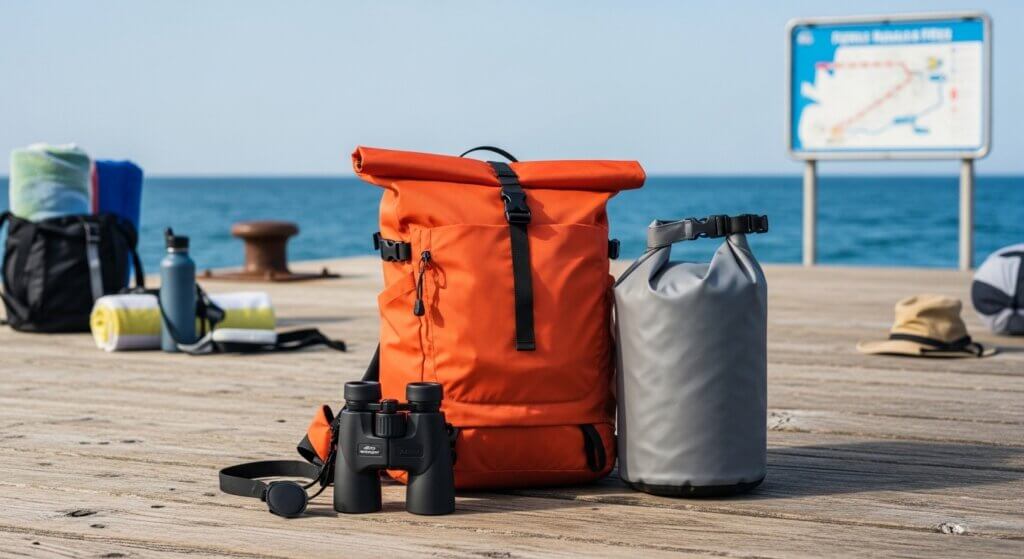
What You Really Want From Backpacking Binoculars
Most people think they want the sharpest binocular. Actually, backpackers want the least annoying useful binocular.
That sounds less glamorous, but it’s more accurate.
A backpacking binocular should feel like a small advantage, not a commitment. You should be able to grab it quickly, use it for 20 seconds, and put it away without adjusting straps, opening a bulky case, or worrying about scratches every time it touches your pack.
The best compact binoculars for backpacking are the ones that blend into your trip until the exact moment you need them.
That’s why I favor compact, waterproof 8x models over big “serious” binoculars for most backpackers.
Quick Buying Tips Before You Choose
Look for 8x magnification first. It gives a steadier image and works better for quick handheld viewing.
Pick 25mm if weight matters most. Pick 32mm if comfort and brightness matter more.
Choose waterproof and fogproof construction. Backpacking conditions are too unpredictable for delicate optics.
Avoid strange magnification claims. If the specs look too good for the price, they probably are.
Think about where the binocular will live. If it doesn’t fit in your hip belt pocket, jacket pocket, or top lid, you may stop carrying it.
For more practical buying advice, explore our binocular tips blog or read the full guide on best compact binoculars for travel before choosing your final pair.
Final Verdict: What Should Most Backpackers Buy?
For most people, the best compact binoculars for backpacking are lightweight 8×25 waterproof binoculars.
They give enough reach for trail scouting, campsite checking, wildlife viewing, and scenic overlooks without adding serious pack weight. If you want one practical recommendation, the Nikon Trailblazer ATB 8×25 is a strong fit because it balances size, weight, weather protection, and real-world usefulness.
If you’re more optics-focused and don’t mind extra weight, move up to an 8×32. But be honest with yourself. If you already complain about pack weight, don’t buy a heavier binocular because a spec sheet made you feel guilty.
Backpacking rewards gear you actually carry.
The best binocular is not the one with the biggest numbers. It’s the one that earns its place in your pack.
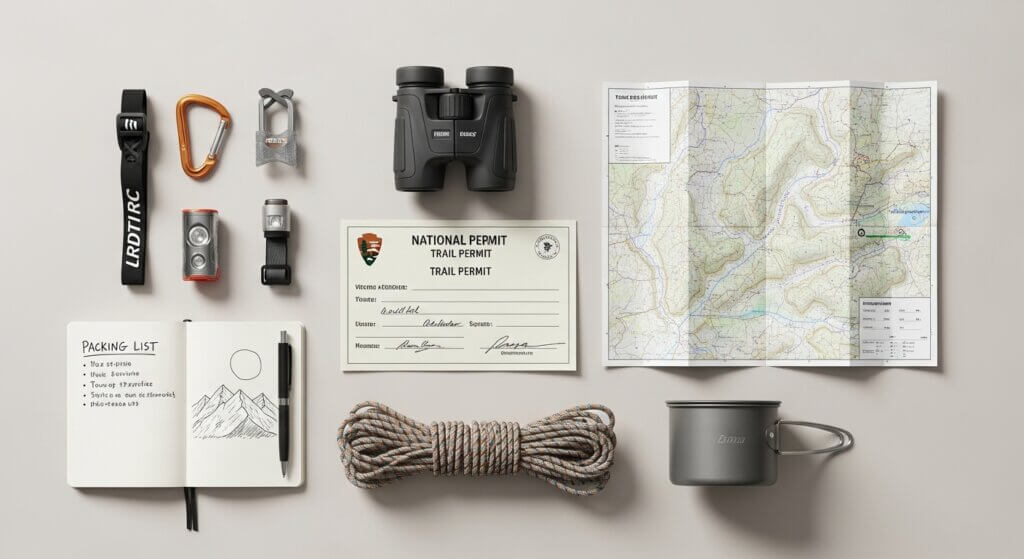
FAQs About the Best Compact Binoculars for Backpacking
What are the best compact binoculars for backpacking?
The best compact binoculars for backpacking are usually lightweight 8×25 or 8×32 models with waterproof construction, rubber armor, and easy focusing. For most backpackers, an 8×25 model offers the best balance of weight, size, and usefulness.
Is 8x or 10x better for backpacking binoculars?
8x is usually better for backpacking because it gives a steadier handheld view and a wider field of view. 10x can show more distant detail, but it is harder to hold steady, especially when you’re tired or standing on uneven ground.
Are 8×25 binoculars bright enough for backpacking?
Yes, 8×25 binoculars are bright enough for daytime backpacking, scenic viewing, trail scouting, and casual wildlife watching. They are less effective in low light than 8×32 or 8×42 binoculars, but they are much easier to carry.
Should backpackers choose 8×25 or 8×32 binoculars?
Choose 8×25 if you care most about saving weight and space. Choose 8×32 if you want a brighter, more comfortable view and don’t mind carrying extra weight. For minimalist backpacking, 8×25 makes more sense.
Are compact binoculars worth carrying while backpacking?
Compact binoculars are worth carrying if you enjoy scenic views, wildlife watching, route scouting, or checking distant landmarks. They are not essential survival gear, but a lightweight pair can add real value without taking much space.
Do I need waterproof binoculars for backpacking?
Yes, waterproof binoculars are strongly recommended for backpacking. Rain, condensation, wet hands, and damp packs are common on trails. Waterproof and fogproof binoculars are more reliable in real outdoor conditions.
Can I use travel binoculars for backpacking?
Yes, many travel binoculars work well for backpacking if they are compact, lightweight, and weather-resistant. For a broader comparison, read the main guide on Compact Binoculars for Travel, then choose based on your pack weight and trip style.




