
What Makes Compact Travel Binoculars Worth Packing?
The best compact binoculars for travel are not always the smallest pair on the shelf.
That sounds strange until you’ve actually carried a pair through airports, hotel lobbies, rainy overlooks, crowded viewpoints, cruise decks, old city streets, and long day tours where every ounce starts to feel personal. A tiny binocular that looks perfect online can feel twitchy, dim, narrow, or uncomfortable once you’re trying to spot a cathedral detail, a whale spout, a mountain village, or the number on a distant train platform.
A good travel binocular does something very simple: it makes the trip feel bigger without making your bag feel heavier.
That’s the sweet spot. You want enough magnification to pull distant detail closer, enough brightness for early morning and late afternoon, enough field of view to find things quickly, and enough durability to survive real travel. Not careful travel. Real travel. The kind where your backpack gets shoved under a seat, your jacket gets rained on, and your “quick walk” turns into eight miles on stone streets.
This page breaks down the Best Compact Binoculars for Travel from a practical, field-use angle. We’ll look at what actually matters, which sizes make sense, where different models fit, and how to choose a pair based on the way you travel—not just based on a spec sheet.
Why Compact Binoculars Matter More When You Travel
Travel is one of the few situations where binoculars can go from “nice accessory” to “I’m so glad I packed these.”
You notice it the first time you’re standing at a coastal lookout and everyone else is squinting. Or when you’re on a cruise deck and a dark shape breaks the water far from the ship. Or when you’re in an old European square and the sculpted details near the top of a cathedral are impossible to appreciate with the naked eye.
That’s where the Best Compact Binoculars for Travel justify their place.
A full-size 10×42 binocular might give you a brighter, steadier view, but it rarely feels fun to carry through airports and day tours. A travel binocular needs to live in the middle ground. It should be light enough that you bring it without thinking, yet capable enough that you don’t regret leaving your bigger optics at home.
For most travelers, the best compact binoculars fall into three practical groups:
| Travel Binocular Size | Best For | Main Advantage | Main Trade-Off |
|---|---|---|---|
| 8×20 | Luxury pocket carry, city travel, museums, architecture | Extremely small and light | Less forgiving in low light |
| 8×25 | All-around travel, cruises, sightseeing, casual wildlife | Balanced size, brightness, and stability | Still not as bright as 8×32 |
| 8×28 / 7×28 | Comfort-focused travel, longer viewing, relaxed handling | Easier view and better comfort | Slightly bulkier |
| 10×25 | Distant landmarks, sports, open landscapes | More reach | Narrower view and shakier image |
| 8×32 | Serious travel optics, birding trips, safari lodges | Brighter and easier view | Larger than true compact models |
For most people, an 8×25 compact binocular is the safest recommendation. It keeps the view steady, gives you enough brightness for normal travel conditions, and doesn’t punish you every time you pack light.
Quick Picks: Best Compact Binoculars for Travel
Here’s the short version before we dig deeper.
| Category | Recommended Style | Why It Works |
|---|---|---|
| Best overall travel choice | ZEISS Terra ED Pocket 8×25 | Sharp, compact, waterproof, premium without going extreme |
| Best budget travel pick | Nikon Trailblazer ATB 8×25 | Lightweight, simple, easy to pack |
| Best rugged casual travel pick | Nocs Standard Issue 8×25 | Waterproof, grippy, fun for cruises and outdoor trips |
| Best comfort-focused compact | Maven C.2 7×28 | Relaxed 7x view, 4mm exit pupil, better handling |
| Best for eyeglass wearers | Pentax AD 8×25 WP | Long eye relief and waterproof build |
| Best premium pocket binocular | Leica Ultravid 8×20 BR | Tiny, refined, high-end optical feel |
| Best value with close focus | Celestron Nature DX 8×25 | Great close focus, waterproof, useful for mixed travel |
What Makes the Best Compact Binoculars for Travel Different?
The travel category is tricky because people use binoculars in unpredictable ways.
A hiker often knows the terrain. A hunter knows the glassing distance. A birder knows the species and habitat. Travelers? They use binoculars for everything. One day it’s a city skyline. The next day it’s a cruise ship horizon. Then it’s an alpine cable car, a desert viewpoint, a safari lodge, a stadium seat, or a monastery carved into a cliff.
The Best Compact Binoculars for Travel need range, not perfection in one narrow lane.
They Must Be Light Enough to Carry Daily
A binocular that stays in the hotel room is not useful.
That’s the honest test. If a pair feels too bulky for a day bag, it doesn’t matter how nice the glass is. Travel binoculars need to disappear into your routine. You should be able to toss them into a sling bag, side pocket, or jacket without turning the day into a gear-hauling exercise.
For most travelers, anything around 9 to 13 ounces feels easy. Once you move closer to 18 ounces, you’re entering compact-but-not-pocket territory.
They Need a View That Feels Easy
Small binoculars can be fussy.
The smaller the exit pupil, the more carefully your eyes need to line up behind the lenses. That’s why cheap 10×25 binoculars often frustrate beginners. They look good on paper, but the view can feel narrow and shaky.
An 8×25 binocular usually feels calmer. A 7×28 can feel even more relaxed because the image shakes less and the exit pupil is more forgiving.
They Should Handle Weather Without Drama
Travel weather rarely respects your plans.
Cruise spray, tropical humidity, foggy mountain mornings, dusty desert air, sudden city rain—these things happen. Waterproof and fogproof construction gives you peace of mind. It also protects your money. Internal fogging or moisture damage can ruin a trip and the binocular.
For serious travel, skip fragile toy binoculars. Go for waterproof, nitrogen-filled or sealed models when possible.
8×25 vs 10×25: Which Is Better for Travel?
This is the choice most buyers struggle with.
A 10×25 binocular sounds better because 10x gives more magnification. More reach feels like more value. But travel use is not that simple.
For the Best Compact Binoculars for Travel, 8x usually wins for most people.
Choose 8×25 If You Want the Best All-Around Travel View
An 8×25 gives you a steadier image, wider field of view, and easier eye placement. That matters when you’re scanning a busy harbor, following birds near a resort, looking across a valley, or trying to identify a landmark from a moving tour bus.
The view feels less nervous.
That one word—nervous—describes many compact 10x binoculars. Small 10x binoculars magnify hand shake. They also tend to have a narrower field of view, so finding your subject takes more effort.
Choose 10×25 If You Mainly View Far, Fixed Objects
A 10×25 compact binocular makes sense when distance matters more than comfort. Think sports events, open landscapes, ships on the horizon, castle towers, mountain ridgelines, or architectural details across a plaza.
Just be honest about your hands. If you struggle to hold small optics steady, 10x can become tiring fast.
The Simple Rule
If this is your first travel binocular, buy 8×25.
If you already know you want more reach and you’re comfortable with a slightly shakier view, consider 10×25.
That’s the kind of buying decision that prevents regret.
Best Compact Binoculars for Travel: Product Recommendations
Now let’s look at the models that make sense for actual travel use. This isn’t a random list of popular optics. These picks cover different travel personalities: premium travelers, budget packers, cruise guests, safari visitors, architecture lovers, casual birders, and people who just want one pair that works almost anywhere.
ZEISS Terra ED Pocket 8×25: Best Overall Compact Travel Binocular
The ZEISS Terra ED Pocket 8×25 sits in a smart middle zone. It’s compact enough for serious travel, but it doesn’t feel like a novelty optic. The view is crisp, the handling feels premium, and the waterproof build suits real outdoor movement.
This is the kind of binocular I’d recommend to someone who wants to buy once and use it for years across different trip styles.
It works well for city viewpoints, coastal walks, mountain overlooks, ferry rides, garden tours, and casual wildlife spotting. The folding design makes it easy to pack, and the 8x magnification keeps the image calmer than most compact 10x models.
Pros
- Sharp, premium-feeling view for the size
- Lightweight and easy to pack
- Waterproof and travel-ready
- Strong all-around 8×25 format
- Good choice for people who want one dependable pair
Cons
- Costs more than basic travel binoculars
- Small controls can still feel compact for large hands
- Not as bright as an 8×32 at dusk
Best Use Case
Choose the ZEISS Terra ED Pocket 8×25 if you want the Best Compact Binoculars for Travel for mixed trips: sightseeing, cruises, light hiking, coastal routes, and scenic viewpoints.
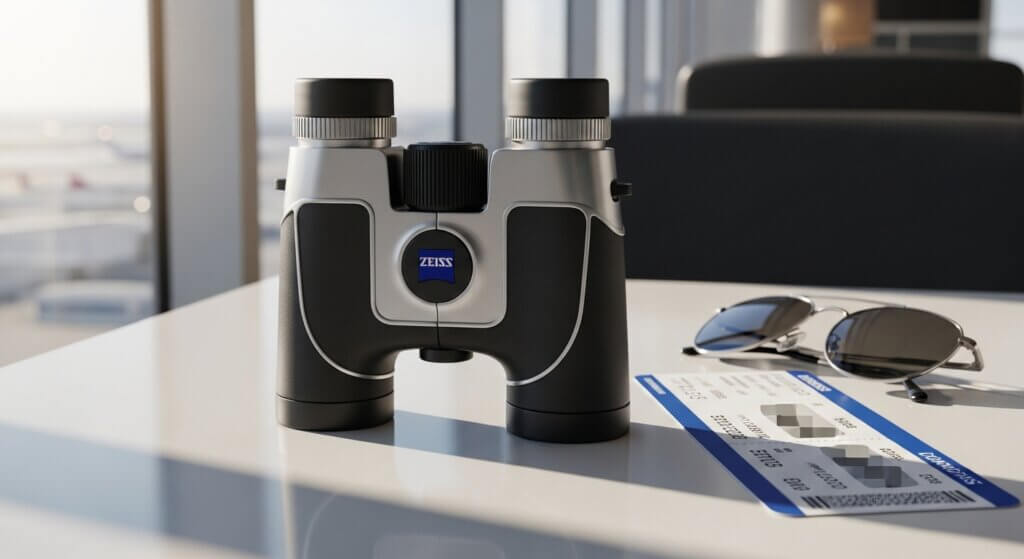
Nikon Trailblazer ATB 8×25: Best Budget Compact Binoculars for Travel
The Nikon Trailblazer ATB 8×25 is one of those travel picks that makes sense because it doesn’t overcomplicate the decision. It’s compact, light, affordable, and practical.
No, it won’t feel like a luxury European pocket binocular. But for travelers who want a simple pair for viewpoints, cruises, family trips, casual hikes, and stadium seats, it gives you a lot of usefulness for the money.
The biggest appeal is confidence. You can throw it in a bag without babying it. You can hand it to someone else without getting nervous. You can use it as your “always packed” binocular.
Pros
- Budget-friendly
- Lightweight and compact
- Easy to carry on family trips
- Good starter travel binocular
- Waterproof and fogproof design
Cons
- Eye relief may feel tight for some eyeglass wearers
- Not the brightest compact option
- Less refined than premium models
Best Use Case
Choose the Nikon Trailblazer ATB 8×25 if you want the Best Compact Binoculars for Travel on a budget and care more about usefulness than luxury polish.
Celestron Nature DX 8×25: Best Value Travel Binocular for Close Focus
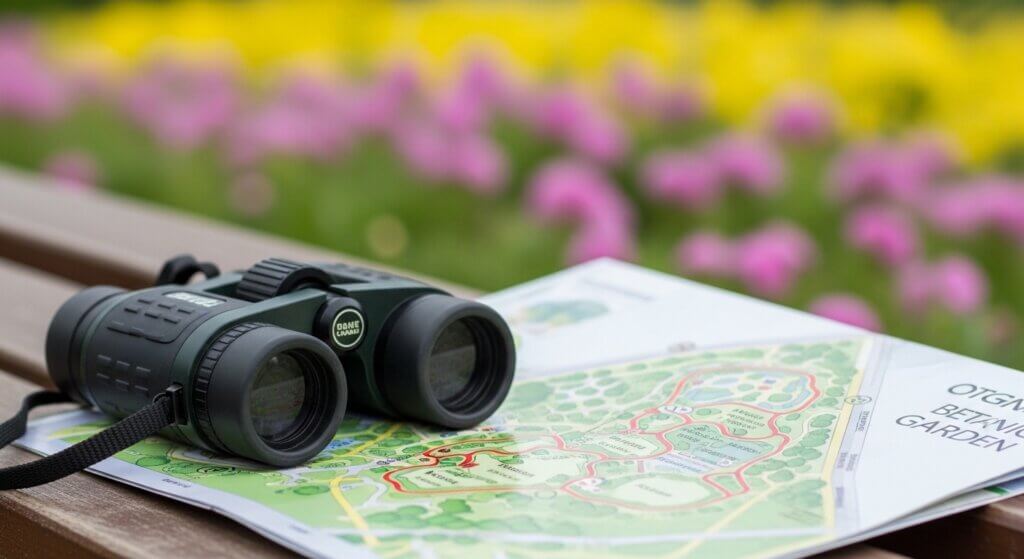
The Celestron Nature DX 8×25 is a strong value pick for travelers who enjoy gardens, butterflies, ruins, museums with distant ceiling detail, harbor views, and casual nature stops.
Its close-focus ability is especially useful. Many compact binoculars are fine for distant scenes but less exciting when you want to inspect nearby details. The Nature DX gives you more flexibility.
This is a great “I want one affordable pair for everything” option, especially for travelers who mix city sightseeing with parks, trails, and nature reserves.
Pros
- Strong value for the features
- Good close focus for travel nature viewing
- Waterproof and nitrogen filled
- Fully multi-coated optics
- Useful 8×25 all-around format
Cons
- Slightly heavier than some pocket models
- Not as compact as ultra-premium double-hinge binoculars
- Edge sharpness won’t match premium glass
Best Use Case
Choose the Celestron Nature DX 8×25 if you want a flexible travel binocular for sightseeing and close-range nature details without spending premium money.
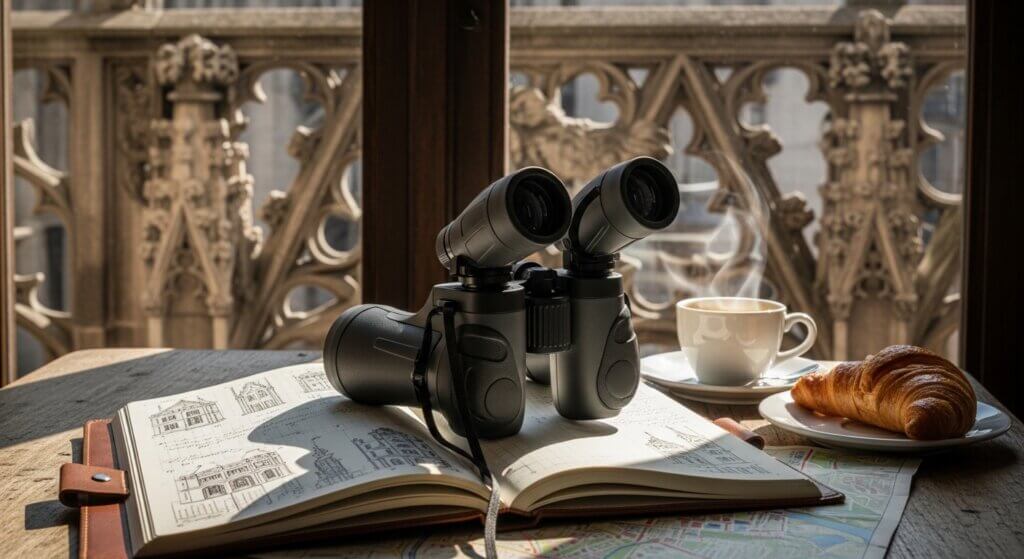
Nocs Standard Issue 8×25: Best Rugged Compact Binoculars for Cruises and Outdoor Trips
The Nocs Standard Issue 8×25 feels like it was built for travelers who don’t want delicate gear.
It has a grippy body, waterproof construction, and a fun, casual personality. That makes it especially appealing for cruises, kayaking trips, beach towns, road trips, festivals, and outdoor travel where your binoculars may get passed around.
This is not the stiff, formal binocular your uncle keeps in a velvet-lined case. It’s more like the pair you keep near the top of your bag because something interesting might happen.
Pros
- Rugged waterproof design
- Grippy body is easy to handle
- Good for cruises, beach trips, and casual adventure
- Fun color options
- Works with smartphone digiscoping accessories
Cons
- Short eye relief may not suit glasses wearers
- Close focus is not as strong as some rivals
- Optical refinement is more casual than premium
Best Use Case
Choose the Nocs Standard Issue 8×25 if your travel style includes water, boats, outdoor movement, and casual sharing. It’s one of the best compact binoculars for travel when durability and grab-and-go fun matter more than luxury optics.
Maven C.2 7×28: Best Compact Binoculars for Relaxed Viewing
The Maven C.2 7×28 is interesting because it doesn’t chase the usual “more magnification is better” mindset.
The 7x magnification gives you a steadier, calmer image. The 28mm objective lenses also create a more forgiving view than many tiny pocket binoculars. That matters when you’re using binoculars for longer periods, especially on scenic drives, safari lodges, ferry decks, and mountain viewpoints.
This is the compact binocular for travelers who value comfort.
It may not slip into the smallest pocket, but it rewards you with a view that feels easier. If compact 10x binoculars make you fight for eye placement, this is the opposite experience.
Pros
- Very relaxed 7x view
- More forgiving eye placement
- Good brightness for its compact size
- ED glass and premium-feeling optics
- Excellent for longer travel viewing sessions
Cons
- Less magnification than 8x or 10x options
- Slightly larger than true pocket binoculars
- Not ideal if you want maximum reach
Best Use Case
Choose the Maven C.2 7×28 if you want the best compact binoculars for travel for comfort, scenic observation, and steady handheld viewing.
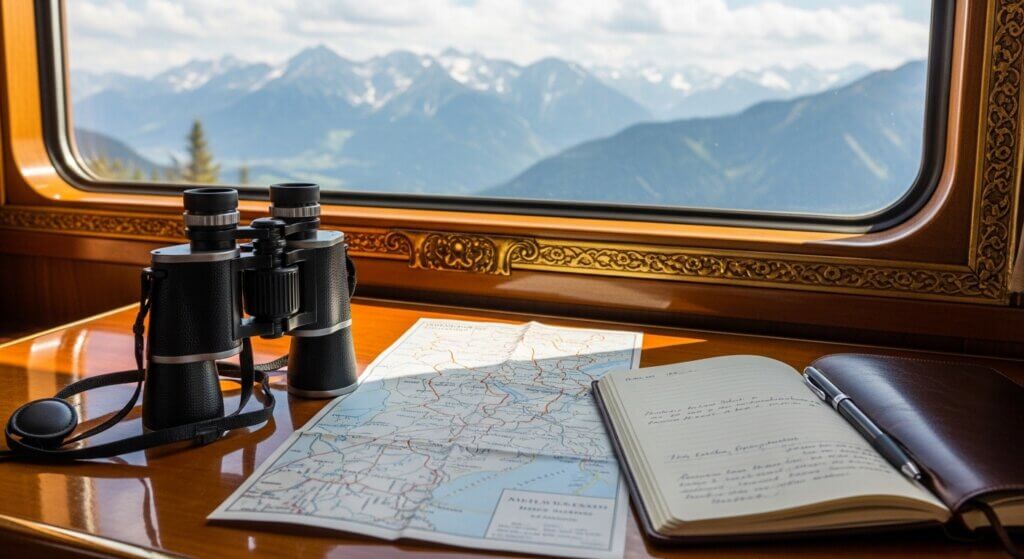
Pentax AD 8×25 WP: Best Compact Travel Binoculars for Eyeglass Wearers
Eyeglass wearers have a harder time with compact binoculars.
Many small binoculars have tight eye relief, which means you lose part of the view unless you press your glasses awkwardly into the eyecups. That gets old fast.
The Pentax AD 8×25 WP stands out because it offers long eye relief in a compact waterproof format. That makes it a smart choice for travelers who wear glasses and don’t want to constantly remove them.
It’s also a nice pick for slower, more thoughtful travel: gardens, historic sites, harbor watching, and scenic viewpoints where comfort matters.
Pros
- Long eye relief
- Waterproof construction
- Good choice for glasses wearers
- Comfortable 8x format
- Practical travel size
Cons
- Narrower field of view than some rivals
- Not the smallest pocket binocular
- Design feels more functional than stylish
Best Use Case
Choose the Pentax AD 8×25 WP if you wear glasses and want compact binoculars that don’t make you wrestle for the full view.
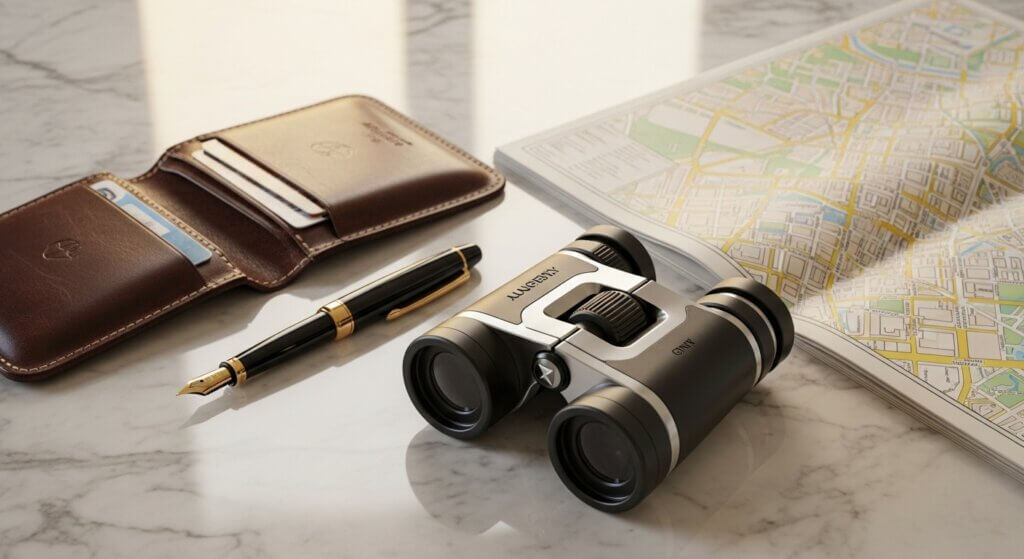
Leica Ultravid 8×20 BR: Best Premium Pocket Binoculars for Travel
The Leica Ultravid 8×20 BR is for a specific kind of traveler.
You care about excellent build quality. You want something tiny. You appreciate premium optics. You’d rather carry a jewel-like pocket binocular than a larger travel optic.
This is not the best value pick. It’s not the most forgiving choice either, because 8×20 binoculars have smaller exit pupils than 8×25 or 8×28 models. But the craftsmanship and optical character make it special.
If you travel with a small leather bag, premium camera, or minimalist kit, this kind of binocular fits beautifully.
Pros
- Extremely compact
- Premium optical feel
- Elegant build quality
- Easy to carry daily
- Ideal for luxury travel and city sightseeing
Cons
- Expensive
- Less forgiving in dim light
- Small format requires careful eye placement
Best Use Case
Choose the Leica Ultravid 8×20 BR if you want a truly premium pocket binocular and you’re willing to trade some low-light comfort for size and refinement.
Compact Binoculars by Travel Style
The best compact binoculars for travel depend heavily on how you move. A cruise traveler does not need the same feel as a backpacker. A safari traveler has different needs than someone visiting museums and old towns.
Best Compact Binoculars for Cruises
Cruises are binocular heaven.
You can use them for coastlines, ports, distant ships, seabirds, whales, harbor approaches, and scenic sail-ins. But cruise binoculars should be waterproof or at least weather-resistant. Sea air, spray, and humidity are not friendly to cheap optics.
For cruises, I’d lean toward:
- Nocs Standard Issue 8×25 for rugged deck use
- ZEISS Terra ED Pocket 8×25 for a premium all-around view
- Nikon Trailblazer ATB 8×25 for budget cruise packing
For a deeper cruise-specific breakdown, read our guide on best compact binoculars for cruises. It explains how to choose a pair for sea spray, deck movement, glare, and wide ocean views.
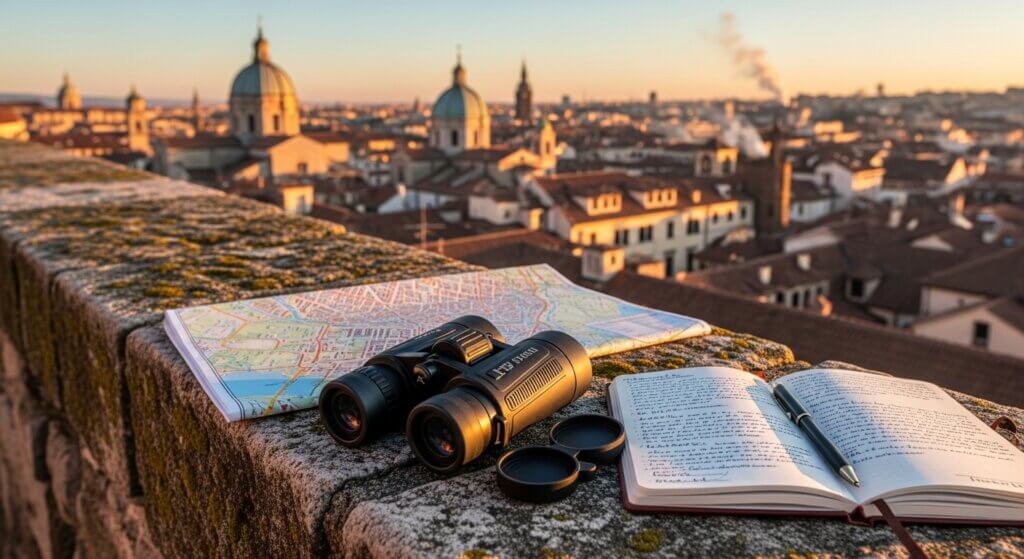
Best Compact Binoculars for Sightseeing
Sightseeing binoculars need a wide, easy view.
You might use them for cathedral ceilings, mountain villages, city skylines, ancient ruins, castles, bridges, monuments, and observation decks. You don’t need huge magnification. You need fast focusing, comfortable handling, and a view that doesn’t feel like peering through a straw.
Good sightseeing picks include:
- ZEISS Terra ED Pocket 8×25
- Celestron Nature DX 8×25
- Pentax AD 8×25 WP
- Leica Ultravid 8×20 BR for luxury pocket carry
For city trips, heritage sites, and scenic overlooks, don’t miss the supporting article on best compact binoculars for sightseeing. It gives you a cleaner path if architecture, landmarks, and travel photography are your main focus.
Best Compact Binoculars for Hiking
Hiking adds a different challenge: weight matters more.
A binocular that feels fine in your suitcase may become annoying after a steep climb. Hiking travelers should look for lightweight bodies, waterproofing, simple handling, and enough durability for dust and sweat.
For hiking, consider:
- ZEISS Terra ED Pocket 8×25 for premium lightweight use
- Nikon Trailblazer ATB 8×25 for budget trail trips
- Maven C.2 7×28 for relaxed scenic viewing
- Nocs Standard Issue 8×25 for rugged casual hikes
If your trips include mountain paths, national parks, or long walking days, build your gear list around best compact binoculars for hiking. A few ounces saved can feel like a gift by mile six.
Best Compact Binoculars for Backpacking
Backpacking is stricter than hiking.
Every item has to justify itself. If you’re counting grams, you may prefer an 8×20 or 8×25 over an 8×32. But don’t go so tiny that the view becomes frustrating. A binocular you hate using is dead weight.
For backpacking, the best choices are usually:
- Leica Ultravid 8×20 BR for premium ultralight carry
- ZEISS Terra ED Pocket 8×25 for better balance
- Nikon Trailblazer ATB 8×25 for affordable packability
For minimalist packing and long-distance routes, check best compact binoculars for backpacking. It focuses on weight, durability, and the “will I actually carry it?” test.
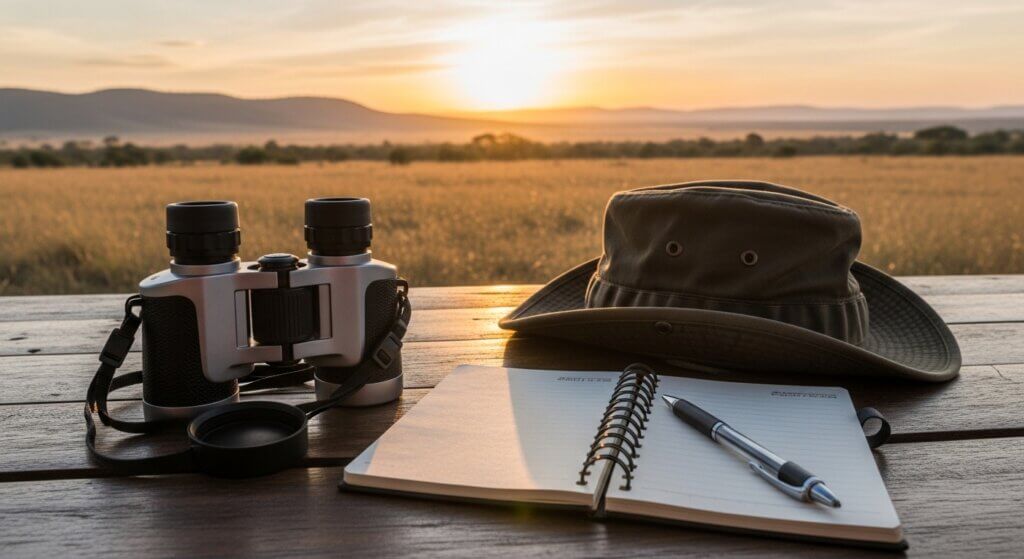
Best Compact Binoculars for Safari
Safari travel is where compact binoculars become a harder decision.
You can use compact binoculars on safari, especially if you’re packing light or pairing them with a camera. But if wildlife viewing is the heart of the trip, an 8×32 or 10×32 may serve you better than an ultra-small 8×20.
Still, if you need compact safari binoculars, look for comfort, field of view, and brightness.
Good compact safari picks include:
- Maven C.2 7×28 for steady, relaxed viewing
- ZEISS Terra ED Pocket 8×25 for premium compact use
- Celestron Nature DX 8×25 as a value backup
- Nocs Standard Issue 8×25 for rugged casual travel
Before you pack for game drives, read best compact binoculars for safari. The right choice can make the difference between “I saw something moving” and “I can actually tell what it is.”
Best Compact Binoculars for Sports Events
Sports events reward reach, but they punish shaky optics.
If you’re sitting far from the field, court, track, or stage, 10x can help. But if you’re following fast movement, 8x may feel easier and more enjoyable. A wider field of view helps you keep up with the action.
For sports travel, consider:
- Nikon Trailblazer ATB 10×25 if you want extra reach
- Nocs Standard Issue 8×25 for casual stadium use
- ZEISS Terra ED Pocket 8×25 for premium clarity
- Celestron Nature DX 8×25 for value
For stadium seats, race days, and travel tournaments, best compact binoculars for sports events will help you match magnification to your seating distance instead of guessing.
Why People Choose the Wrong Travel Binoculars
Most people don’t buy bad binoculars because they’re careless.
They buy the wrong pair because the product page makes the wrong features look important.
Mistake 1: Chasing Maximum Magnification
A 12x compact binocular sounds powerful. In practice, it’s usually shaky, dim, and hard to aim. Travel binoculars should help you enjoy the view, not turn sightseeing into a hand-stability contest.
For most travelers, 8x is the smarter choice.
Mistake 2: Going Too Cheap
There’s a difference between affordable and flimsy.
A very cheap compact binocular may look fine for five minutes indoors. Then you take it outside and notice glare, poor sharpness, stiff focus, or misalignment. That ruins trust. Once a binocular gives you eye strain, you stop reaching for it.
Mistake 3: Ignoring Eye Relief
If you wear glasses, eye relief matters more than people admit.
Look for longer eye relief and twist-up eyecups. Otherwise, you may not see the full image circle. That’s why models like the Pentax AD 8×25 WP deserve attention for eyeglass wearers.
Mistake 4: Forgetting Weather
Travel exposes gear to moisture.
Even if you don’t plan to hike in rain, your binoculars may face humidity, cruise spray, wet backpacks, cold-to-warm transitions, and dusty conditions. Waterproof and fogproof features are not marketing fluff when you travel often.
What Specs Actually Matter?
Let’s cut through the noise.
Magnification
For the best compact binoculars for travel, 8x is the safest all-around choice. It gives enough reach without making the view too shaky.
Use 10x only if you need more distance and can hold the binocular steady.
Objective Lens Size
The second number tells you lens diameter.
An 8×25 has 25mm objective lenses. A 10×25 also has 25mm lenses. Bigger lenses gather more light, but they also add size and weight.
For travel, 25mm is the classic compact sweet spot. A 28mm model gives a little more comfort. A 32mm model gives better brightness but starts feeling less pocketable.
Field of View
Field of view tells you how wide the scene looks.
A wider field helps you find subjects faster. That matters when watching moving boats, birds, sports, or street-level scenery. Narrow compact binoculars can feel frustrating because you spend too much time searching.
Eye Relief
Eye relief is the distance your eye can sit behind the eyepiece and still see the full view.
If you wear glasses, don’t ignore this. Compact binoculars often have shorter eye relief. Around 15mm or more usually feels more comfortable, though design still matters.
Close Focus
Close focus matters if you enjoy gardens, insects, museum details, textures, flowers, and nearby architectural elements.
Not every travel moment is far away. Sometimes the best detail is ten feet in front of you.
Best Compact Binoculars for Travel Comparison Table
| Model | Format | Best For | Strength | Watch-Out |
|---|---|---|---|---|
| ZEISS Terra ED Pocket | 8×25 | Best overall travel | Premium compact balance | Higher price |
| Nikon Trailblazer ATB | 8×25 | Budget travel | Light and affordable | Tight eye relief |
| Celestron Nature DX | 8×25 | Value and close focus | Versatile features | Slightly bulkier |
| Nocs Standard Issue | 8×25 | Cruises and rugged trips | Waterproof, grippy build | Short eye relief |
| Maven C.2 | 7×28 | Relaxed viewing | Steady, forgiving view | Less reach |
| Pentax AD WP | 8×25 | Eyeglass wearers | Long eye relief | Narrower view |
| Leica Ultravid BR | 8×20 | Premium pocket carry | Tiny and refined | Expensive, less forgiving |
My Practical Ranking
If I were helping a traveler choose quickly, I’d simplify it like this:
- Best overall: ZEISS Terra ED Pocket 8×25
- Best budget pick: Nikon Trailblazer ATB 8×25
- Best rugged fun pick: Nocs Standard Issue 8×25
- Best comfort pick: Maven C.2 7×28
- Best for glasses: Pentax AD 8×25 WP
- Best luxury pocket pick: Leica Ultravid 8×20 BR
- Best value nature/sightseeing pick: Celestron Nature DX 8×25
That ranking isn’t about brand prestige alone. It’s about matching the binocular to the kind of travel where it feels useful instead of annoying.
Real-World Travel Scenarios
Scenario 1: The City Break Traveler
You’re visiting Rome, Istanbul, Paris, Prague, or Edinburgh. Your binoculars will mostly be used for rooftops, domes, towers, bridges, street views, and skyline details.
Best fit: Leica Ultravid 8×20 BR, ZEISS Terra ED Pocket 8×25, or Celestron Nature DX 8×25.
You want compact size, easy focus, and clean detail. You don’t need a huge objective lens.
Scenario 2: The Cruise Traveler
You’re standing on deck watching coastlines, ports, seabirds, lighthouses, and distant ships.
Best fit: Nocs Standard Issue 8×25 or ZEISS Terra ED Pocket 8×25.
Waterproofing matters here. So does grip.
Scenario 3: The National Park Traveler
You’re visiting overlooks, lakes, trails, and wildlife areas.
Best fit: Maven C.2 7×28, ZEISS Terra ED Pocket 8×25, or Nikon Trailblazer ATB 8×25.
A steady view matters more than extra magnification. You’ll use binoculars often, not just once.
Scenario 4: The Family Vacation Traveler
- You want a pair everyone can use without stress.
- Best fit: Nikon Trailblazer ATB 8×25, Nocs Standard Issue 8×25, or Celestron Nature DX 8×25.
- Don’t overbuy. Choose something durable, simple, and easy to share.
Scenario 5: The Premium Traveler
- You want beautiful gear that feels as good as it looks.
- Best fit: Leica Ultravid 8×20 BR or ZEISS Terra ED Pocket 8×25.
- The Leica wins for pocket luxury. The ZEISS wins for a more forgiving all-around travel view.
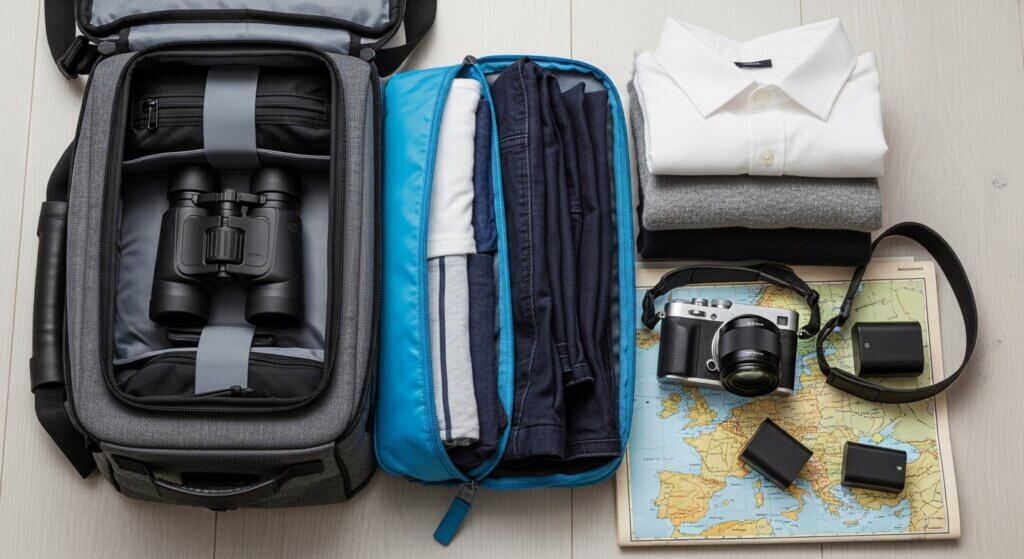
Should You Buy Compact Binoculars or Use a Camera Zoom?
A camera zoom can capture a scene. Binoculars let you experience it.
That’s the difference.
With a camera, you often look at a screen, adjust settings, zoom, shoot, review, and move on. With binoculars, you simply observe. You can scan a ridgeline, study a tower, follow a ship, or watch cloud shadows move over a valley.
A good travel binocular makes you slower in the best way.
You notice more. You linger longer. You catch details you would’ve missed.
That’s why the best compact binoculars for travel still make sense even in a world full of phone cameras.
How Much Should You Spend?
You don’t need to spend luxury money to enjoy travel binoculars.
But there are sensible tiers.
Under $100
You can find usable compact binoculars here, especially for casual trips. Be careful with ultra-cheap models. Look for waterproofing, decent coatings, and real customer trust.
Best fit: casual sightseeing, family trips, backup binoculars.
$100–$300
This is the sweet spot for many travelers. You get better build quality, better coatings, and more comfortable handling.
Best fit: frequent travel, hiking, cruises, national parks.
$300–$600+
This tier makes sense if you value premium optics, better mechanics, and long-term ownership.
Best fit: serious travelers, luxury trips, compact everyday carry, optical enthusiasts.
Final Verdict: What Are the Best Compact Binoculars for Travel?
The Best Compact Binoculars for Travel should feel easy before they feel impressive.
That’s the key.
A travel binocular should not demand space, patience, or perfect conditions. It should come along quietly and make the trip richer when the moment arrives. The best pair is the one you’ll actually carry to the overlook, deck, stadium, balcony, or old stone wall.
For most travelers, the ZEISS Terra ED Pocket 8×25 is the strongest overall recommendation because it balances compact size, sharpness, weather protection, and real-world usability.
If you’re on a tighter budget, the Nikon Trailblazer ATB 8×25 makes sense as an easy starter pair. If your travel includes water, cruises, and rougher handling, the Nocs Standard Issue 8×25 has the right personality. If comfort matters more than maximum reach, the Maven C.2 7×28 deserves a serious look. If you wear glasses, the Pentax AD 8×25 WP is the smarter call. And if you want a premium pocket binocular that feels special every time you pick it up, the Leica Ultravid 8×20 BR remains a beautiful travel companion.
When you’re ready to build a wider optics setup, explore more expert buying paths and field-tested binocular advice on bestbinocular.net. It’s the easiest next stop if you want sharper choices before your next trip.
FAQs About the Best Compact Binoculars for Travel
What are the best compact binoculars for travel?
The best compact binoculars for travel are usually 8×25 models because they balance size, stability, brightness, and ease of use. The ZEISS Terra ED Pocket 8×25 is a strong overall pick, while the Nikon Trailblazer ATB 8×25 is a good budget option.
Is 8x or 10x better for travel binoculars?
8x is better for most travelers because it gives a steadier image and wider field of view. 10x gives more reach, but it can feel shakier in a small binocular. Choose 10x only if you often view distant, fixed subjects.
Are compact binoculars good for cruises?
Yes, compact binoculars are excellent for cruises. They help you see coastlines, ships, ports, whales, seabirds, and lighthouses. Choose waterproof or fogproof models because cruise decks expose optics to humidity and sea spray.
Are 8×25 binoculars bright enough for travel?
Yes, 8×25 binoculars are bright enough for most daytime travel, sightseeing, cruises, and hiking. They won’t match an 8×32 or 8×42 in low light, but they offer a strong balance of portability and performance.
What size binoculars are best for sightseeing?
For sightseeing, 8×25 is usually the best size. It gives enough magnification for landmarks, rooftops, monuments, and scenic views while staying compact enough for day bags and city walks.
Can I use compact binoculars for safari?
You can use compact binoculars for safari, especially if you want to pack light. However, if safari wildlife viewing is the main purpose of your trip, consider 8×32 binoculars for better brightness and comfort. For compact safari use, 7×28 or 8×25 models work best.
Are pocket binoculars worth it?
Pocket binoculars are worth it if you value portability and actually carry them. A slightly larger 8×25 often feels more comfortable than an ultra-small 8×20, but premium 8×20 binoculars are excellent for minimalist travelers.
What is the best compact binocular for eyeglass wearers?
The Pentax AD 8×25 WP is a strong compact option for eyeglass wearers because it offers long eye relief. Always check eye relief before buying compact binoculars if you wear glasses.
Should travel binoculars be waterproof?
Yes, waterproof travel binoculars are strongly recommended. Travel exposes optics to rain, humidity, cruise spray, condensation, and dust. Waterproof and fogproof construction makes the binocular more reliable.




