
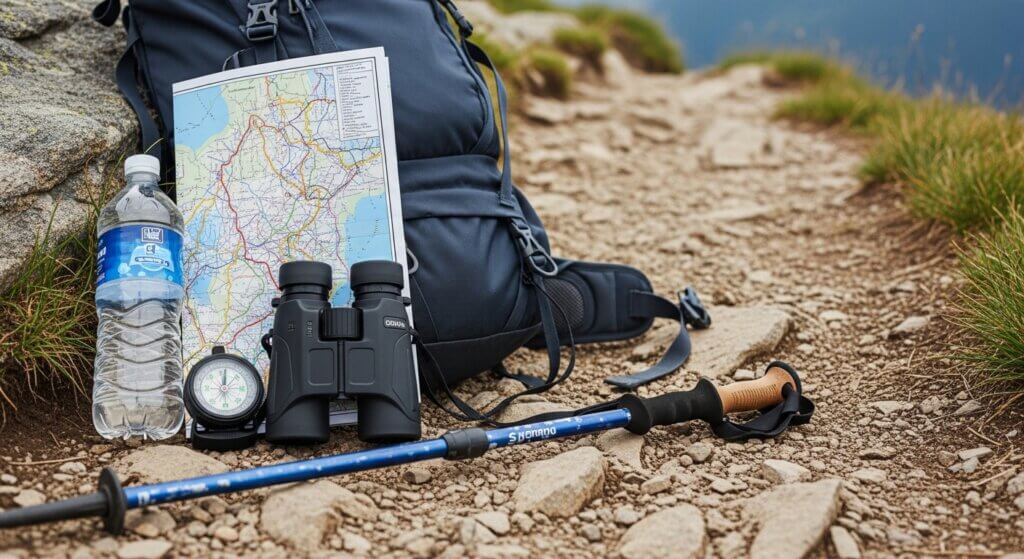
Why Hikers Need Lightweight and Durable Compact Binoculars
Finding the best compact binoculars for hiking is not about buying the strongest magnification or the most expensive glass you can find. That sounds smart on paper, but it often fails on the trail. Hiking binoculars have to survive sweat, rain, dust, backpack pressure, quick hand use, and those awkward “wait, what was that on the ridge?” moments.
A hiking binocular should feel almost invisible until you need it.
That is the real test.
You may want to spot mountain goats on a far slope, read a trail marker across a valley, scan a lake from a viewpoint, or enjoy distant scenery without pulling out a heavy full-size pair. The problem is that many compact binoculars are either too shaky, too dim, too fragile, or too annoying to carry.
This article focuses on one clear intent: helping you choose the best compact binoculars for hiking when weight, comfort, durability, and real trail use matter more than fancy marketing language.
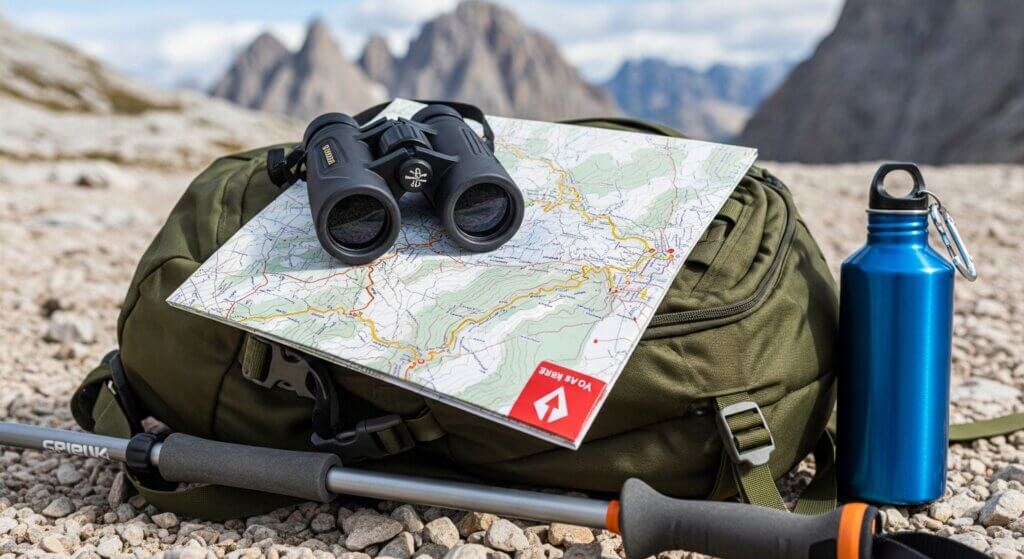
Why Compact Binoculars Make More Sense for Hiking
Full-size binoculars can be beautiful to look through. They are brighter, steadier, and usually more comfortable for long viewing sessions. But hiking is not a slow backyard birdwatching session.
- You are moving.
- You are climbing.
- You are sweating.
You may already have a backpack, water, snacks, rain shell, power bank, phone, first aid kit, and maybe a camera. Add a bulky 10×42 binocular around your neck, and suddenly “premium optics” starts feeling like punishment.
That is why the best compact binoculars for hiking sit in the sweet spot between optical performance and carry comfort. They do not have to beat a full-size binocular in low light. They just need to be good enough that you actually bring them.
And that is where many hikers make the wrong decision. They buy binoculars for perfect image quality at home, then leave them behind because they feel like a brick after mile three.
For trail use, the best binocular is the one you will carry without thinking.
What Size Binoculars Are Best for Hiking?
For most hikers, the best compact hiking binocular sizes are:
| Binocular Size | Best For | Main Advantage | Main Trade-Off |
|---|---|---|---|
| 8×25 | Day hikes, mountain trails, travel hiking | Lightweight, wide view, easier to hold steady | Not ideal at dusk |
| 10×25 | Open ridges, distant viewpoints, wildlife far away | More reach in a small body | More hand shake, narrower view |
| 8×32 | Serious nature hikes, mixed light, longer viewing | Brighter and more comfortable | Heavier than pocket binoculars |
| 10×32 | Long-distance viewing with better light than 10×25 | Good detail at distance | Still harder to steady |
If you want the best compact binoculars for hiking for general use, start with 8×25 or 8×32. That is the honest answer.
A 10x compact sounds better because the number is bigger. But on a windy trail, after climbing, with your hands slightly tired, 10x can shake more than you expect. The extra zoom may show you less detail, not more, because the image jumps around.
8x vs 10x: The Hiking Decision Most People Get Wrong
The biggest mistake hikers make is choosing magnification like they are buying a telescope.
They think:
“10x must be better than 8x.”
Not always.
For hiking, 8x is often the smarter choice. It gives you a wider field of view, less shake, and faster target finding. That matters when you quickly lift your binoculars to scan a ridge, tree line, waterfall, or distant trail junction.
10x makes sense if you mostly hike in open landscapes: deserts, coastal cliffs, alpine ridges, large national parks, or wide valleys. But if you hike in forests, mixed terrain, or uneven trails, 8x usually feels easier.
My blunt opinion: most casual hikers should not buy 10×25 binoculars first. They look better in product listings, but 8×25 is usually more useful in real hiking conditions.
Best Compact Binoculars for Hiking: My Main Recommendation
Recommended Pick: Nikon Trailblazer ATB 8×25
For most hikers who want one practical, compact, trail-friendly pair, the Nikon Trailblazer ATB 8×25 is a strong choice.
It is not a luxury binocular. It is not the brightest compact binocular in the world. It will not make a cloudy sunset look like a full-size 8×42. But it hits the hiking sweet spot very well: small, light, waterproof, fogproof, wide enough, and simple to carry.
The Nikon Trailblazer ATB 8×25 weighs about 9.9 oz, has 8x magnification, 25 mm objective lenses, a 429-foot field of view at 1,000 yards, 8.2-foot close focus, and waterproof/fogproof construction according to Nikon and retailer specifications.
That combination makes it a very reasonable pick for hikers who want compact binoculars without overthinking every spec.
Why It Works Well on a Hike
The 8x magnification is steady enough for handheld viewing. The 25 mm lenses keep the body small. The wide field of view helps when you are scanning quickly instead of staring at one fixed subject for ten minutes.
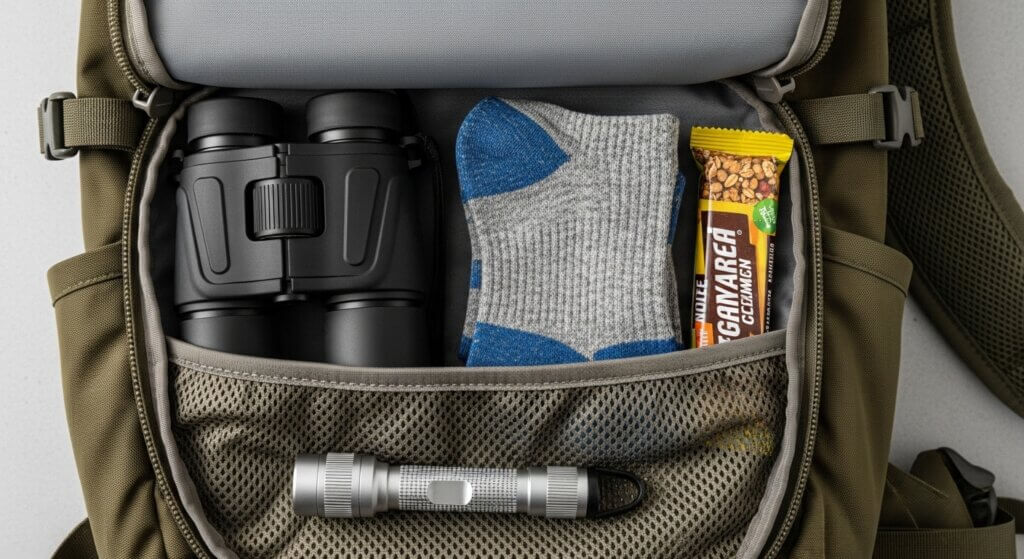
This is the kind of binocular you can keep in a side pocket, hip belt pouch, small sling bag, or jacket pocket. That matters. If your binoculars are buried deep in your pack, you will miss half the moments you bought them for.
Pros
- Light enough for long hikes
- Wide field of view for quick scanning
- Waterproof and fogproof build
- Good size for travel and trail use
- Practical price for casual and intermediate hikers
- Easier to hold steady than most 10x compact binoculars
Cons
- Eye relief is limited, especially for glasses wearers
- Low-light performance is only average
- Not as immersive as 8×32 or 8×42 binoculars
- Small body can feel less comfortable during long viewing sessions
Who Should Buy It?
Buy it if you want the best compact binoculars for hiking that are small enough to carry regularly, useful enough for real trail views, and not so expensive that you become scared to use them outdoors.
Skip it if you wear glasses full-time and need generous eye relief. Also skip it if your main use is dawn wildlife watching, where a larger 8×32 or 8×42 binocular will perform better.
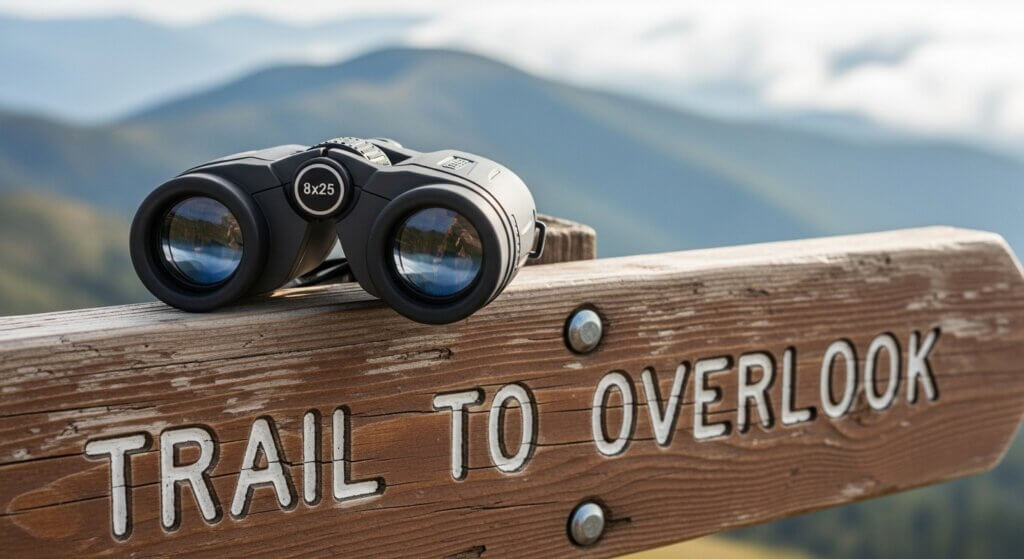
Real Hiking Scenarios: What Binoculars Actually Need to Do
Scenario 1: You Reach a Viewpoint
This is where compact binoculars shine. You reach a lookout, pull them out, and scan the valley. You may want to see a distant cabin, river bend, mountain ridge, or trail switchback.
For this, 8×25 binoculars work very well. You do not need giant lenses in bright daylight. You need a clear view, fast focus, and a wide enough image to explore the landscape.
Scenario 2: You Hear Something in the Trees
Forest hiking is trickier. Small binoculars can feel useful, but you need to locate things quickly. A narrow-view 10x compact can be frustrating here.
That is why 8x is usually better for wooded hikes. You can scan faster and keep the image steadier.
Scenario 3: You Hike Near Water
Lakes, rivers, coastal trails, and waterfalls introduce moisture. This is where waterproof and fogproof construction matters. Cheap binoculars may work fine on a dry sidewalk. They become annoying when lenses fog inside or the body feels slippery after rain.
For hiking near water, never treat waterproofing as a bonus. Treat it as basic protection.
Scenario 4: You Travel and Hike on the Same Trip
If your binoculars need to work for airports, road trips, national parks, scenic overlooks, and light hiking, compact models make even more sense. For broader travel use, you can also read our main article on Compact Binoculars for Travel to compare hiking needs with general travel use.
Compact Hiking Binoculars vs Backpacking Binoculars
Hiking and backpacking are close, but they are not the same.
A day hiker can tolerate slightly more weight. A backpacker counts every ounce because small weight decisions start to matter over long miles.
For hiking, an 8×25 or 8×32 binocular is realistic. For backpacking, 8×25 often makes more sense because pack weight becomes a bigger deal over multiple days.
| Feature | Hiking Binoculars | Backpacking Binoculars |
|---|---|---|
| Weight Priority | High | Extremely high |
| Best Size | 8×25 or 8×32 | 8×25 |
| Carry Style | Neck strap, pouch, side pocket | Hip belt, chest pouch, ultralight pouch |
| Main Use | Scenic viewing, wildlife, trail checking | Occasional viewing without pack burden |
| Ideal Buyer | Day hikers and travel hikers | Multi-day hikers and thru-hikers |
If your trips are longer and every ounce matters, our article on best compact binoculars for backpacking will help you focus more on ultralight carry and pack-friendly choices.
Compact Hiking Binoculars vs Cruise Binoculars
Cruise binoculars are used differently. On a cruise, you are usually standing still on a deck or balcony. Weight matters less. Low-light performance, image stability, and wide ocean scanning matter more.
Hiking binoculars must be more rugged and easier to carry while moving.
| Feature | Hiking Use | Cruise Use |
|---|---|---|
| Main Challenge | Weight, shock, sweat, rain | Distance, glare, ocean movement |
| Best Magnification | 8x for most hikers | 7x, 8x, or stabilized options |
| Durability Need | High | Moderate to high |
| Carry Comfort | Critical | Less critical |
| Weather Concern | Rain, dust, fog | Sea spray, glare, humidity |
If you are choosing one pair for both hiking and cruise travel, an 8×25 waterproof compact is a sensible middle ground. For ship-specific viewing, check our guide to the best compact binoculars for cruises before buying.
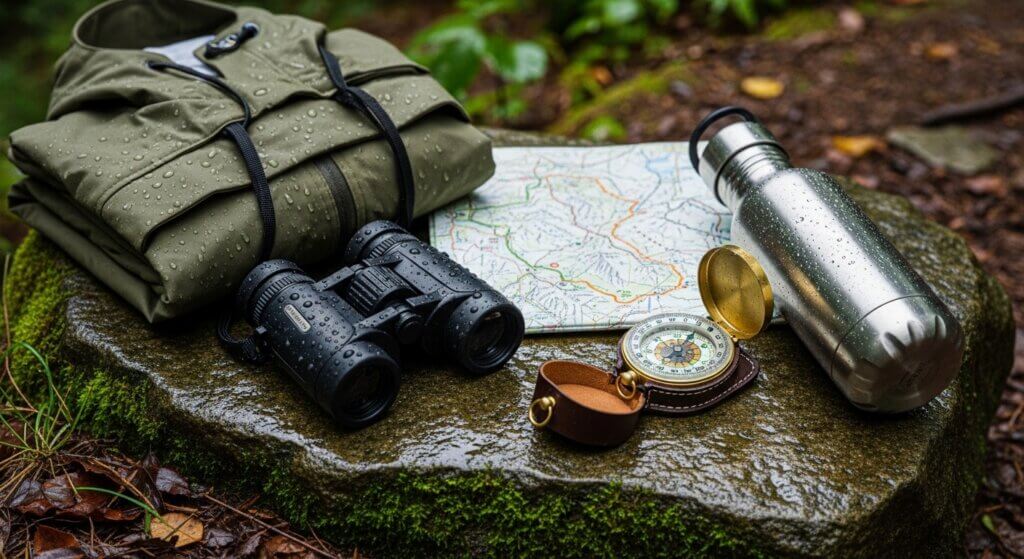
Features That Matter Most in the Best Compact Binoculars for Hiking
Weight Under 12 Ounces
For hiking, weight is not just a number. It decides whether your binoculars come with you or stay in the car.
A compact pair under 12 ounces is much easier to carry casually. You can go heavier if you want better brightness, but once binoculars become annoying, you will stop using them.
Waterproof and Fogproof Build
Hiking weather changes fast. Morning fog, sudden drizzle, sweat, humidity, and cold-to-warm temperature shifts can all cause problems.
A waterproof and fogproof binocular is worth paying for. Do not buy ultra-cheap compact binoculars for hiking unless you are okay with replacing them later.
Wide Field of View
A wide field of view helps you find things faster. It is especially useful when scanning mountainsides, forests, lakes, and wide viewpoints.
This is one reason 8x compact binoculars often feel better than 10x compact binoculars on the trail.
Comfortable Focus Wheel
You will often focus with one hand while holding trekking poles, a phone, or a backpack strap. A stiff or tiny focus wheel gets annoying fast.
Look for a focus wheel that turns smoothly without feeling loose.
Rubber Armor
Rubber armor is not just for looks. It helps with grip and gives some protection if the binoculars knock against a rock, buckle, bottle, or backpack frame.
No, rubber armor does not make binoculars indestructible. But on the trail, small protection helps.
Common Mistakes When Buying Hiking Binoculars
Mistake 1: Buying Too Much Magnification
This is the classic mistake. More zoom feels exciting until your hands shake and the image becomes harder to enjoy.
For most hikers, 8x is better than 10x.
Mistake 2: Ignoring Eye Relief
If you wear glasses, check eye relief before buying. Many compact binoculars have short eye relief, which can make the image feel cramped.
This is one weak point of many small 8×25 models. They are portable, but not always glasses-friendly.
Mistake 3: Choosing the Cheapest Pair
Cheap compact binoculars often look fine in product photos. Then you use them outside and notice dim images, stiff hinges, poor alignment, fogging, or a narrow view.
You do not need to buy luxury glass. But the lowest-priced random pair is rarely the best compact binoculars for hiking in real use.
Mistake 4: Carrying Them the Wrong Way
If your binoculars are inside your main backpack compartment, you will not use them. Keep them reachable.
A hip belt pouch, chest pouch, jacket pocket, or side pocket is better. The easier they are to grab, the more value you get from them.
What You Really Want vs What You Think You Want
Most buyers think they want maximum power.
What they actually want is a clean, quick, enjoyable view without extra hassle.
That difference matters.
When shopping for the best compact binoculars for hiking, ask yourself:
- Will I carry these for five miles without noticing them?
- Can I hold the image steady when tired?
- Are they weather-resistant enough for real trails?
- Can I access them quickly?
- Do they work for my eyes, especially if I wear glasses?
- Will I still use them after the excitement of buying fades?
That last question is brutal but useful. Many people buy binoculars like they are planning an expedition. Then they use them twice.
Buy for your real hiking habits, not your fantasy hiking personality.
Quick Comparison: What Type of Hiker Are You?
| Hiker Type | Best Choice | Why |
|---|---|---|
| Casual day hiker | 8×25 compact | Light, simple, easy to carry |
| Wildlife-focused hiker | 8×32 compact/mid-size | Brighter and more comfortable |
| Alpine ridge hiker | 10×25 or 8×32 | More reach for open terrain |
| Forest trail hiker | 8×25 | Wider view and less shake |
| Glasses wearer | 8×32 with longer eye relief | More comfortable viewing |
| Minimalist hiker | 8×21 or 8×25 | Pocket-friendly and light |
| Travel hiker | 8×25 waterproof | Works for both travel and trails |
Are Compact Binoculars Good Enough for Wildlife on Hikes?
Yes, but with limits.
Compact binoculars are good for quick wildlife spotting in daylight. They can help you identify movement, scan distant slopes, and enjoy animals from a safe distance.
But they are not magic.
If you hike mostly at dawn, dusk, or deep forest, compact 25 mm lenses may feel dim. In that case, an 8×32 binocular is a better compromise. It is still smaller than a full-size pair but gives noticeably better brightness and comfort.
For bright daylight hikes, 8×25 is enough for most people.
Are Expensive Compact Binoculars Worth It?
Sometimes.
Premium compact binoculars can offer sharper edges, better contrast, smoother focus, improved coatings, and better build quality. If you hike often, travel frequently, or care deeply about optics, they may be worth it.
But for many hikers, a practical mid-priced compact binocular makes more sense. The jump from bad to good is huge. The jump from good to premium is real, but not always worth the extra money for casual trail use.
That is why I like practical models such as the Nikon Trailblazer ATB 8×25. It gives regular hikers what they actually need without pretending to be a luxury optic.
How to Carry Compact Binoculars While Hiking
The wrong carry method ruins the experience.
A neck strap works, but it can bounce while walking. A chest harness is more stable, though it may feel excessive for small binoculars. A hip belt pouch is often the best option because it keeps the binoculars protected and reachable.
For short hikes, a jacket pocket works fine.
For longer hikes, use a small padded pouch. Dust and lens scratches are boring problems until they happen to you.
Final Buying Tips Before You Choose
Before buying the best compact binoculars for hiking, check these points:
- Choose 8x unless you have a clear reason for 10x.
- Stay under 12 ounces if carry comfort matters.
- Get waterproof and fogproof protection.
- Prioritize field of view for faster scanning.
- Avoid tiny binoculars if you have large hands and want long viewing comfort.
- Check eye relief if you wear glasses.
- Do not buy only because a product says “HD.”
- Think about where you will carry them, not just how they look online.
Final Verdict: Best Compact Binoculars for Hiking
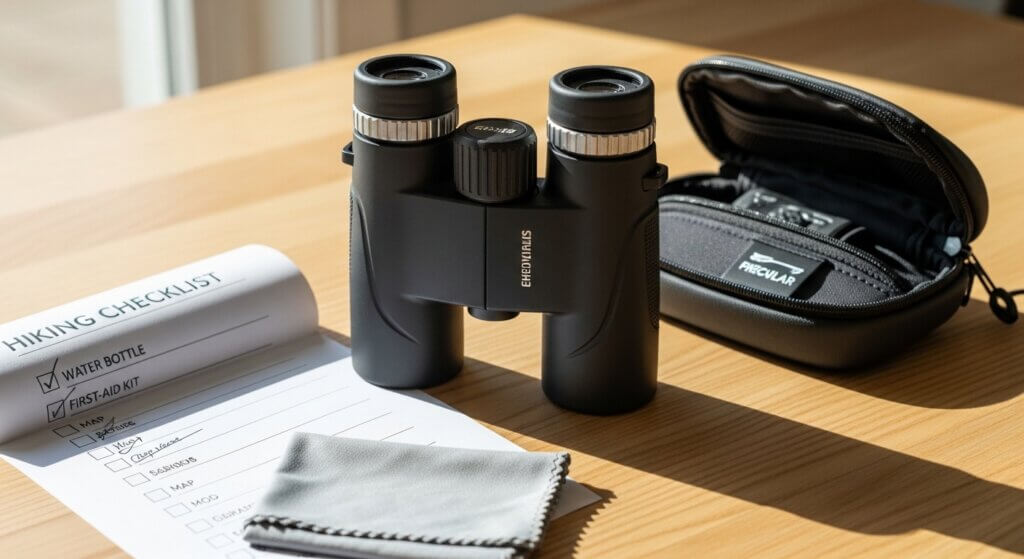
The best compact binoculars for hiking should be light, weather-ready, easy to steady, and quick to use. They should not feel like a burden, and they should not require a perfect viewing setup every time you stop.
For most hikers, an 8×25 waterproof compact binocular is the safest choice. It balances size, weight, field of view, and usability better than most other options.
The Nikon Trailblazer ATB 8×25 is my top practical recommendation because it fits the real hiking use case: scenic views, quick wildlife spotting, trail scanning, travel days, and casual outdoor use without heavy gear fatigue.
If you are building a complete binocular setup for different travel styles, start with our main Compact Binoculars for Travel guide. For lighter multi-day trips, read the best compact binoculars for backpacking article. For ocean trips and deck viewing, visit our guide to the best compact binoculars for cruises.
For more practical buying advice, explore our binocular tips blog or read the full guide on best compact binoculars for travel before choosing your final pair.
FAQs About the Best Compact Binoculars for Hiking
What magnification is best for hiking binoculars?
For most hikers, 8x is the best magnification. It gives a steadier image, wider field of view, and faster target finding than 10x. A 10x compact binocular can work well in open landscapes, but it is harder to hold steady.
Are 8×25 binoculars good for hiking?
Yes, 8×25 binoculars are excellent for hiking when you want a light and portable pair for daylight use. They are easy to carry and good for scenic views, trail scanning, and casual wildlife spotting. They are not the best choice for very low-light viewing.
Are compact binoculars worth it for hiking?
Compact binoculars are worth it if you enjoy viewpoints, wildlife, landscapes, or exploring distant details on the trail. The key is choosing a pair light enough to carry often. Heavy binoculars may offer better views, but they are useless if left at home.
Should I choose 8×25 or 10×25 for hiking?
Choose 8×25 for most hiking. It is steadier, wider, and easier to use quickly. Choose 10×25 only if you often hike in wide-open areas and want extra reach for distant ridges or landscapes.
Are compact binoculars waterproof?
Some compact binoculars are waterproof, but not all. For hiking, choose waterproof and fogproof binoculars whenever possible. Trail conditions can include rain, humidity, dust, sweat, and sudden temperature changes.
What are the best compact binoculars for hiking with glasses?
If you wear glasses, look for binoculars with longer eye relief, ideally around 15 mm or more. Many 8×25 compact binoculars have short eye relief, so glasses wearers may prefer an 8×32 model for better comfort.
Can I use hiking binoculars for travel too?
Yes. In fact, compact hiking binoculars often work very well for travel because they are small, light, and easy to pack. A waterproof 8×25 pair is a good crossover choice for hiking, sightseeing, road trips, and general outdoor travel.




