
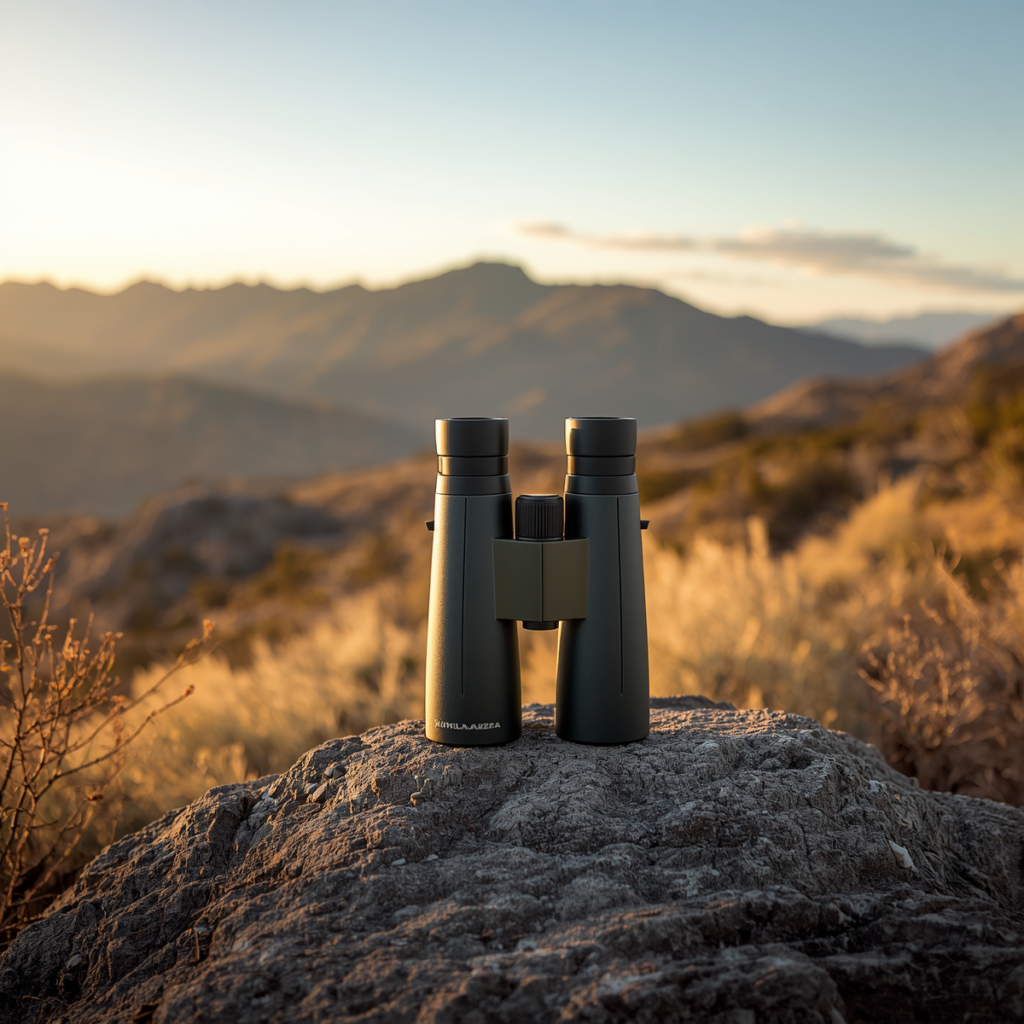
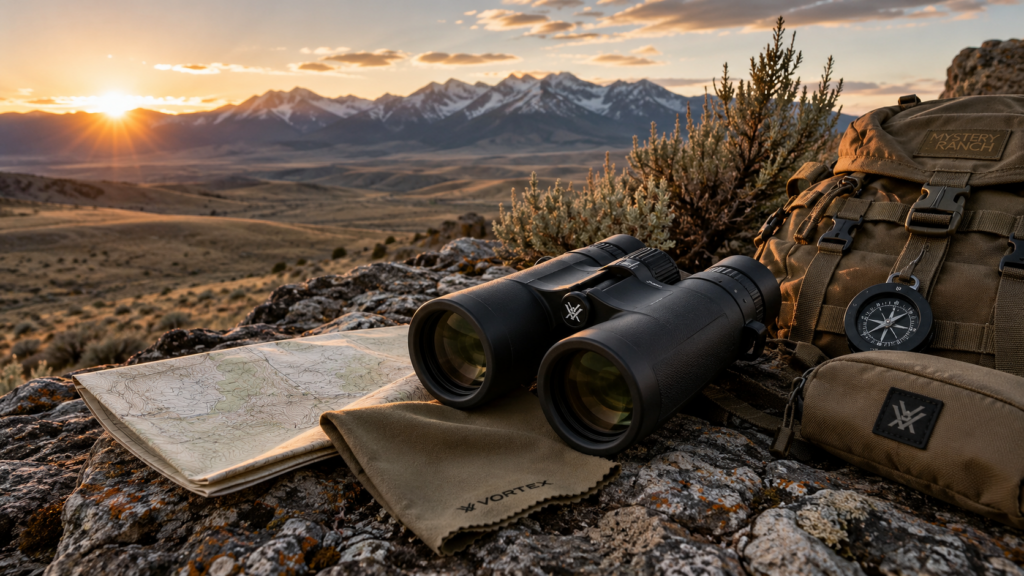
Choosing the Right Binoculars for Western Hunting
The best binoculars for western hunting are not always the pair with the biggest magnification number. That mistake gets made every season.
Western hunting is different. You are not just glassing a food plot at 120 yards or checking a tree line from a blind. You may be picking apart a shaded basin, a burned ridge, a sage flat, a rocky coulee, or a patch of timber that looks empty until one ear flick gives away a bedded buck.
That is why western hunters need binoculars that balance reach, stability, field of view, comfort, and low-light performance. You need enough magnification to study country, but not so much that every heartbeat shakes the image. You need bright glass, but you also need a pair you will actually carry all day.
For most hunters, the sweet spot is a premium 10×42 or 12×42 binocular. If you hunt open mule deer country, high desert antelope flats, elk basins, sheep country, or wide western ridges, this article will help you choose the right setup without falling for lazy “more power is always better” advice.
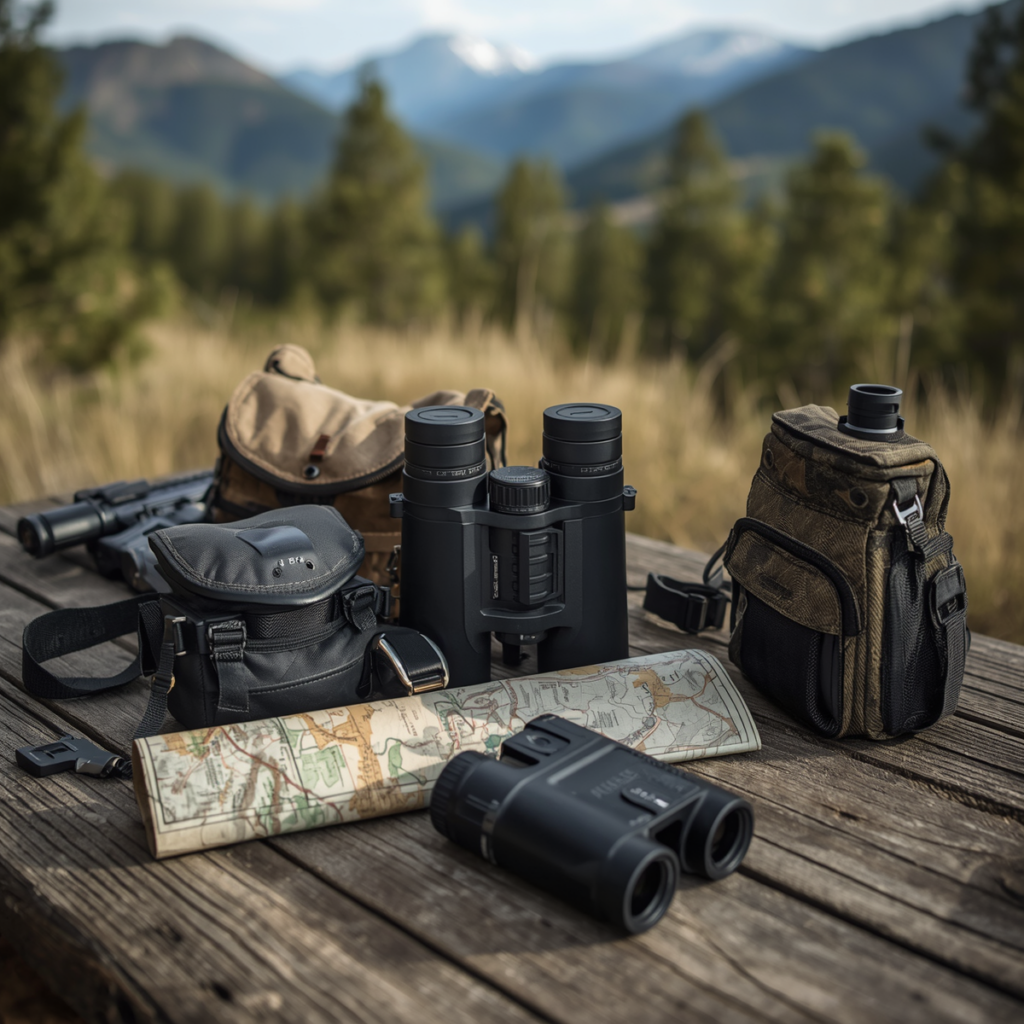
Why Western Hunting Demands Better Binoculars
Western hunting punishes bad glass.
In close timber, average binoculars can get by. In big country, they fall apart fast. Cheap optics may show you a hillside, but they struggle to show subtle detail. Antler tips blend into branches. Elk bodies disappear in shadows. Heat shimmer turns distant animals into wavy shapes. Your eyes get tired, and after thirty minutes, you start glassing faster than you should.
That is when hunters miss game.
The best binoculars for western hunting help you slow down. They let you scan longer, judge better, and separate real movement from rocks, brush, and wishful thinking. A good pair does not magically find animals for you, but it keeps your eyes in the glass long enough for animals to reveal themselves.
That matters more than most gear specs.
A western hunter often spends more time behind binoculars than behind a rifle. You may glass one basin for an hour before moving. You may check the same shaded cut five different times as the sun shifts. You may need to judge whether a buck is worth a stalk before dropping 1,000 feet into ugly country.
In that world, binoculars are not accessories. They are decision-making tools.
Best Overall Setup: 10×42 or 12×42?
If you want one safe answer, choose a high-quality 10×42.
If you want one western-specific answer, seriously consider a premium 12×42.
Here is the honest difference.
A 10×42 binocular gives you a wider field of view, steadier handheld image, better low-light comfort, and easier scanning. It is excellent for elk, deer, antelope, and general mountain hunting. If you still-hunt timber edges, glass from your knees, or move a lot, 10×42 makes sense.
A 12×42 gives you more reach. It helps when you are picking apart distant basins, judging antler frame, or trying to confirm movement across a canyon. The tradeoff is shake. You can handhold good 12x glass, but it performs best when you brace against your pack, trekking poles, or a tripod.
That is why many serious western hunters eventually land on this setup:
| Hunting Style | Better Choice | Why It Works |
|---|---|---|
| General western big game | 10×42 | Easy to handhold, wide view, versatile |
| Mule deer glassing | 12×42 | More detail across basins and broken terrain |
| Elk hunting in mixed timber/open country | 10×42 | Faster scanning and better handheld control |
| Antelope hunting | 10×42 or 12×42 | Depends on distance and tripod use |
| Backpack hunting | 10×42 | Lighter mental and physical load |
| Tripod-heavy glassing | 12×42 | Better reach without jumping to bulky 15x |
For most readers searching for the best binoculars for western hunting, 10×42 is the practical answer. For hunters who already glass patiently and use a tripod, 12×42 can feel like a cheat code.
My Top Product Pick: Swarovski NL Pure 12×42
If I had to choose one high-end binocular for serious western hunting, I would pick the Swarovski NL Pure 12×42.
Not because it is cheap. It is not.
I like it because it gives western hunters something rare: 12x detail without the cramped, tunnel-like feel many higher-power binoculars have. The view feels wide, open, and relaxed. That matters when you are glassing big country for long stretches.
The NL Pure 12×42 makes the most sense for hunters who spend real time behind glass. Think mule deer hunters studying open basins, elk hunters checking far avalanche chutes, or backpack hunters who want more reach without carrying separate 15x binoculars.
Why it fits western hunting so well
The biggest advantage is detail at distance. A 10x binocular may show you an animal. A good 12x binocular can help you study posture, antler shape, ear movement, and body position with more confidence.
The second advantage is efficiency. You cover country with your eyes instead of your legs. That saves energy, and in western terrain, energy is currency.
The third advantage is comfort. Premium glass reduces the “I need a break” feeling that comes from eye strain. When you are tired, cold, and sitting on uneven rock, that comfort matters more than a spec sheet can explain.
Pros
| Pros | Why It Matters in the West |
|---|---|
| Excellent detail at long distance | Helps judge animals across canyons and basins |
| Wide-feeling view for 12x | Makes scanning less tiring |
| Premium edge clarity | Useful when picking apart large landscapes |
| Great ergonomics | Easier to hold during long glassing sessions |
| Strong low-light performance for its class | Helpful at first and last legal light |
Cons
| Cons | What to Know Before Buying |
|---|---|
| Expensive | Best for committed hunters, not casual users |
| More shake than 10x | Works best with bracing or a tripod |
| Not as bright-feeling as 8x or some 10x options in very dim timber | Better for open country than thick woods |
| Requires patience | The benefit shows up when you glass slowly |
The Swarovski NL Pure 12×42 is not the right choice for everyone. If you mostly hunt whitetails in timber, it is more binocular than you need. But for open-country mule deer, elk, antelope, and serious western glassing, it is one of the most convincing choices in the premium class.
For a broader premium comparison, you can also read our pillar resource on the Best High-end Binoculars for Hunting to see how western glassing fits into the full high-end hunting optics silo.
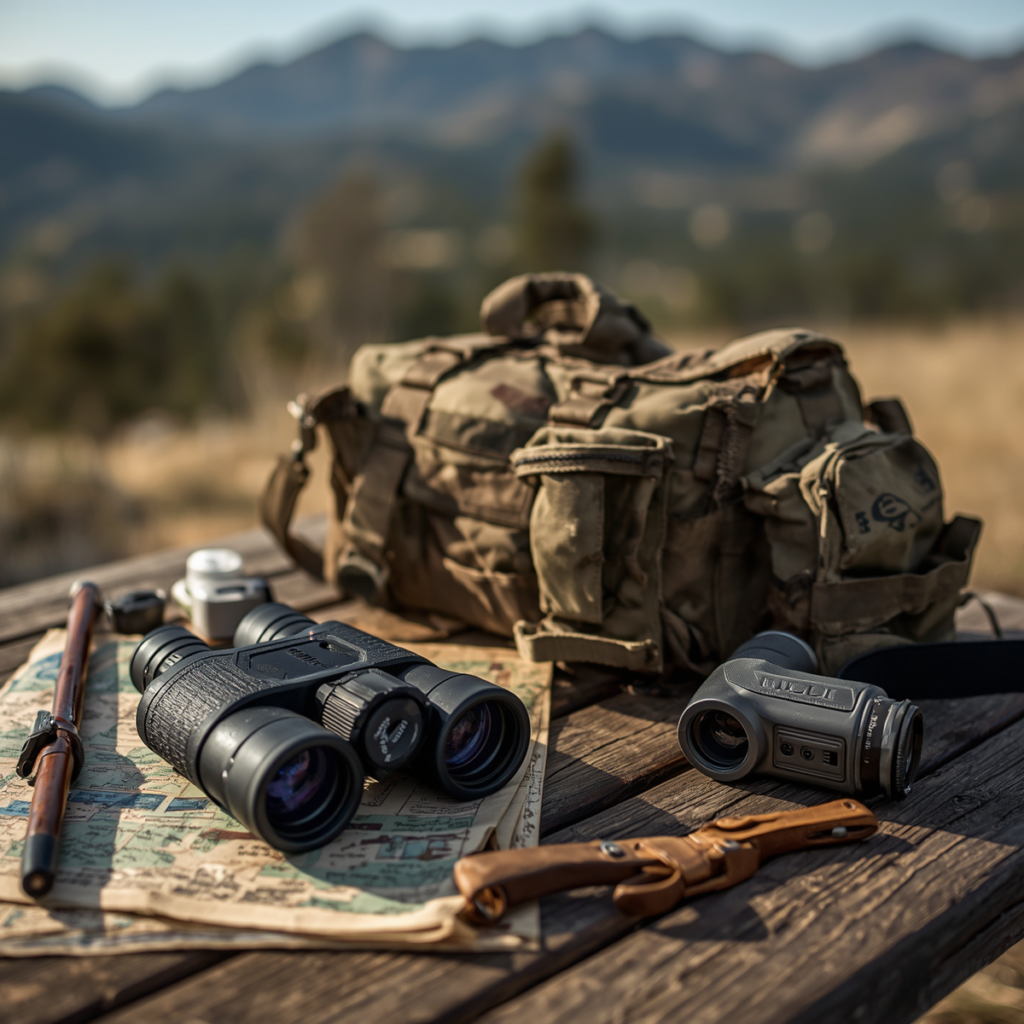
10×42 vs 12×42 for Western Hunting
This is the comparison that matters most.
Forget the argument that one is always better. That is campfire talk. The right answer depends on how you hunt.
A 10×42 is easier to live with. You can freehand it longer. You can scan faster. It works well when elk are moving through dark timber pockets or when mule deer appear and disappear in brushy draws. It also gives newer hunters a more forgiving view.
A 12×42 rewards disciplined glassing. If you sit down, brace your elbows, use a tripod, and grid the landscape properly, the extra magnification helps. You do not just see farther. You interpret better.
Here is the simple breakdown.
| Feature | 10×42 | 12×42 |
|---|---|---|
| Handheld stability | Better | More shake |
| Long-distance detail | Good | Better |
| Field of view | Usually wider | Usually narrower, though premium models help |
| Low-light ease | Slight edge | Still strong in premium glass |
| Best for beginners | Yes | Only if steady and patient |
| Best for tripod glassing | Good | Excellent |
| All-day versatility | Excellent | Great for open country |
My opinion: if you are buying your first serious western binocular, start with 10×42. If you already know you like to sit, grid, and glass for long periods, go 12×42.
That is the cleanest way to avoid buyer’s remorse.
Western Hunting Use Cases
Mule Deer in Open Basins
Mule deer hunting is where premium binoculars earn their keep.
A buck can bed in shade and look like a gray rock. Sometimes you do not spot the whole deer. You spot the curve of an antler, a horizontal back line, or the slight twitch of an ear. That is why the best binoculars for western hunting need contrast and edge clarity, not just magnification.
For mule deer, I lean toward 12×42 if you use a tripod. You can study brush pockets without constantly reaching for a spotting scope. You can also evaluate a buck before making a stalk that may cost you the entire afternoon.
If mule deer are your main focus, pair this article with our supporting guide on the best deer hunting binoculars for more deer-specific glassing scenarios.
Elk in Broken Timber and High Country
Elk hunting is trickier.
Some elk country is wide open. Some of it is a mess of timber, burns, dark north-facing slopes, and avalanche chutes. A 12x binocular can help across big basins, but a 10×42 often feels better when you need to scan quickly.
For elk, I usually prefer 10×42 unless the hunt is very open and glassing-heavy. Elk are large animals, but they still vanish into shadows like ghosts with hooves. You need brightness, field of view, and fast target pickup.
For more elk-focused advice, check our dedicated article on the best elk hunting binoculars so you can match your optics to timber, high-country, and late-season elk conditions.
Antelope on the Plains
Antelope hunting looks easy until you start judging distance, terrain, and approach routes.
Here, both 10×42 and 12×42 work well. A 10×42 gives you quick scanning across flats. A 12×42 helps judge animals that are far away in shimmering heat. The bigger issue is not just seeing antelope. It is planning a stalk through country that appears flat but is full of tiny dips and folds.
For antelope, I would rather have a premium 10×42 and a rangefinder than a shaky high-power binocular I cannot hold steady.
Backpack Hunts
Backpack hunting changes the buying decision.
Weight matters. Bulk matters. Neck fatigue matters. Even the case matters after six miles and 2,000 feet of climbing.
The best binoculars for western hunting on backpack trips should be powerful enough to glass seriously, but not so heavy that you resent them. This is where premium 10×42 and premium 12×42 models shine. They give real performance without forcing you into large 15x glass.
A tripod is still worth considering, especially if you hunt mule deer or sheep-style terrain. Even a lightweight tripod changes what you can see.
What Specs Matter Most?
Magnification
Magnification gets too much attention, but it still matters.
For western hunting, 8x usually feels too short unless you hunt timber-heavy country. 10x is the safest all-around choice. 12x gives more detail for open country. 15x belongs on a tripod and usually works better as a second optic, not your only binocular.
Objective Lens Size
Most hunters should stay with 42mm objectives.
A 10×42 gives a 4.2mm exit pupil, which feels comfortable in many hunting conditions. A 12×42 gives a smaller 3.5mm exit pupil, so glass quality and eye placement matter more. That is one reason premium 12x binoculars perform better than cheaper 12x models in the real world.
Larger 50mm or 56mm binoculars can help in low light, but they add weight. On a western hunt, weight has a way of becoming emotional by day three.
Field of View
Field of view matters because western hunting is not just about zooming in. It is about finding animals first.
A narrow view makes you feel like you are looking through a straw. A wider view helps you scan slopes, track movement, and avoid missing animals near the edge of the image.
This is one reason premium glass often feels better even before you know why. It gives you a more natural viewing experience.
Edge Clarity
Edge clarity sounds like an optics nerd topic until you spend an hour glassing a basin.
With poor edge clarity, you constantly recenter the image. That creates fatigue. With strong edge clarity, your eyes can roam around the view more naturally. You notice details faster, and you do not feel like the binocular is fighting you.
Low-Light Performance
Western hunters love talking about low light, but here is the practical version: good low-light performance gives you a few more useful minutes when animals are most active.
Do not judge low light only by objective size. Coatings, glass quality, contrast, and exit pupil all matter. A premium 10×42 can outperform a cheap 10×50 because the image is cleaner, not just bigger.
Common Mistakes When Buying Western Hunting Binoculars
Buying Too Much Magnification
A shaky 15x handheld image is not better than a steady 10x image.
Many hunters buy magnification because it sounds powerful. Then they discover they cannot hold it still enough to benefit. For handheld use, 10×42 remains the dependable choice. For 12x, plan to brace or use a tripod.
Ignoring the Tripod
A tripod can make average glass better and premium glass incredible.
If you hunt open country, do not treat a tripod as optional fluff. Even a compact tripod lets you slow down and pick apart details. You will spot more animals because the image stops moving.
Choosing Based Only on Brightness
Brightness is nice, but contrast finds animals.
A bright washed-out image does not help when you are trying to separate a gray buck from gray brush. The best binoculars for western hunting show texture, shadow detail, and color separation. That is what helps you identify game in messy terrain.
Forgetting About Comfort
A binocular that feels awkward in your hands will annoy you all season.
Check eyecups, eye relief, focus wheel feel, balance, harness fit, and how naturally the barrels sit in your hands. Western hunting involves long sessions. Tiny comfort issues become big issues.
What You Are Really Paying For
When hunters buy premium binoculars, they often think they are paying for a sharper image.
That is only part of it.
You are paying for confidence. You are paying for less doubt when judging an animal. You are paying for fewer headaches after long glassing sessions. You are paying for a view that keeps you patient when cheaper glass would make you quit early.
That patience finds animals.
Premium binoculars also hold value better. A great pair can last through many seasons, many tags, and many miles. Cheap glass often gets replaced once the hunter realizes the real cost was not money. It was missed opportunity.
Still, do not buy prestige for the sake of prestige. Buy the level of glass that matches how seriously you hunt. A weekend hunter may be thrilled with a good mid-range 10×42. A dedicated western hunter who spends weeks in mule deer or elk country can justify premium optics much more easily.
Practical Field Setup
For western hunting, I like this setup:
| Item | Recommendation |
|---|---|
| Main binocular | Premium 10×42 or 12×42 |
| Harness | Quiet, comfortable, low-profile |
| Tripod | Lightweight but stable enough for wind |
| Rangefinder | Separate unit unless you prefer rangefinding binoculars |
| Lens cloth | Keep one dry and protected |
| Rain cover | Useful in snow, dust, and sudden weather |
| Spotting scope | Optional, mostly for trophy judging or extreme distance |
A good binocular harness also matters. It protects your glass, keeps dust off the lenses, and stops the binocular from bouncing against your chest. Out west, dust and weather are not minor details. They are part of the hunt.
Best Binoculars for Western Hunting: Final Verdict
The best binoculars for western hunting depend on how you glass.
Choose a premium 10×42 if you want the most versatile setup for elk, deer, antelope, timber edges, open hillsides, and handheld use. It is the safest choice and the easiest to recommend to most hunters.
Choose a premium 12×42 if you hunt big open country, use a tripod, and care about pulling more detail from distant basins. It takes more discipline, but the reward is real.
For one premium recommendation, the Swarovski NL Pure 12×42 stands out because it gives western hunters the reach of 12x with a wide, comfortable viewing experience. It is expensive, but for serious open-country hunters, it makes sense.
The real takeaway is simple: buy binoculars for the way you actually hunt, not the way marketing copy tells you to hunt.
If your season involves long sits, far ridges, shaded basins, and slow glassing, invest in optics that keep you behind the glass longer. That is where western hunts are won.
FAQs About the Best Binoculars for Western Hunting
What magnification is best for western hunting?
For most hunters, 10×42 is the best all-around magnification for western hunting. It gives a strong mix of reach, stability, field of view, and low-light comfort. A 12×42 binocular is better for open-country hunters who glass from a tripod or brace often.
Are 12x binoculars too shaky for western hunting?
They can be shaky if you handhold them all day. However, premium 12x binoculars work very well when you brace your elbows, sit steady, or mount them on a tripod. If you hunt open basins and glass slowly, 12x can be excellent.
Are 10×42 binoculars enough for mule deer hunting?
Yes, 10×42 binoculars are enough for mule deer hunting, especially if they have good glass and you use them patiently. However, many dedicated mule deer hunters prefer 12x binoculars or add a spotting scope for more detail at distance.
Do I need a tripod for western hunting binoculars?
You do not always need one, but a tripod helps a lot. It stabilizes the image, reduces eye fatigue, and allows you to study terrain more carefully. If you use 12x or higher magnification, a tripod becomes much more important.
Are rangefinding binoculars good for western hunting?
Rangefinding binoculars can be very useful, especially for rifle hunters and open-country setups. The downside is weight, price, and sometimes optical compromise compared with top non-ranging binoculars. Some hunters prefer separate premium binoculars and a separate rangefinder.
What is better for elk hunting, 10×42 or 12×42?
For elk hunting, 10×42 is usually better if you hunt mixed timber and open country. It is steadier and faster for scanning. A 12×42 makes sense if your elk hunting involves long-distance glassing across open basins.
Should I buy expensive binoculars for western hunting?
Buy expensive binoculars if you spend serious time glassing and hunt often enough to benefit from them. Premium optics reduce eye strain, improve contrast, and help you stay patient. If you only hunt once in a while, a strong mid-range pair may be enough.
Where Should You Go Next?
Still comparing options? Start with our Best High-end Binoculars for Hunting guide.
You can also visit the bestbinocular.net home page to browse the full binoculars content silo before choosing your next setup.




