
Why Rangefinding Binoculars Make Hunting Decisions Faster
The best rangefinding binoculars for hunting are not just binoculars with a laser slapped inside. That is the mistake a lot of hunters make when they first start shopping.
A regular binocular helps you find game. A rangefinder tells you the distance. A good rangefinding binocular does both without making you drop one tool, grab another, re-find the animal, and hope it has not stepped behind brush by then.
That matters most when the moment gets messy.
You may be glassing a shaded cutline at first light. You may spot antler tips on a broken ridge. You may be sitting over a field edge where distance looks shorter than it really is. In those moments, guessing yardage is a bad habit. Switching between separate optics can also cost you time. The best rangefinding binoculars for hunting solve that problem by giving you one steady view, one range reading, and one cleaner decision.
This guide focuses on real hunting use, not spec-sheet bragging. We will look at when rangefinding binoculars make sense, what features actually matter, where they fall short, and which single product makes the most sense for serious hunters who want strong performance without jumping straight into the most expensive European glass.
What Are Rangefinding Binoculars, Really?
Rangefinding binoculars combine two tools into one body: a binocular and a laser rangefinder. You look through them like normal binoculars, press a ranging button, and get a distance reading in the display.
The better models go further. They may include angle compensation, ballistic data, environmental sensors, app pairing, wind input, or onboard ballistic solvers. For rifle hunters, that can help with elevation holds. For bowhunters, angle-compensated distance can be useful from treestands or steep terrain.
But here is the honest part: not every hunter needs them.
If you only hunt thick woods where most shots happen inside 80 yards, a separate compact rangefinder may work fine. If you glass long valleys, hunt western country, chase elk, sit big agricultural fields, or shoot across uneven terrain, the best rangefinding binoculars for hunting can feel like a serious upgrade.
The main benefit is speed. You are already looking through the binoculars. You already have the animal, tree line, rock face, or field edge in view. A quick button press gives you distance without breaking your position.
Why Hunters Choose Rangefinding Binoculars Over Separate Gear
A separate binocular and rangefinder setup works. Plenty of hunters use it well. The problem shows up when things move fast.
Imagine this.
You glass a buck feeding at the far end of a cut bean field. You bring up your handheld rangefinder. The buck turns. You lose him behind grass. Now you have to find him again, range again, and settle yourself down. That small interruption can feel huge when your heart rate jumps.
With the best rangefinding binoculars for hunting, you stay in the same view. You spot, judge, range, and keep watching.
Main Advantages
| Benefit | Why It Matters in the Field |
|---|---|
| Faster ranging | You do not need to switch tools when game appears |
| Less chest clutter | One unit replaces binoculars plus a handheld rangefinder |
| Better stability | Two-handed binocular grip can feel steadier than a tiny rangefinder |
| Easier landmark ranging | Range trees, rocks, cuts, saddles, and field edges while scouting |
| Better for long glassing | You can observe and measure distance from the same view |
Main Drawbacks
| Drawback | What to Know Before Buying |
|---|---|
| Higher cost | Good rangefinding binoculars cost much more than basic binoculars |
| Heavier body | Electronics and laser systems add weight |
| Battery dependence | You still need power for the rangefinder function |
| More complexity | Ballistic modes and app pairing need setup |
| Optical trade-offs | Some models prioritize ranging tech over pure glass quality |
That last point matters. The best rangefinding binoculars for hunting should still be good binoculars first. If the glass gives you eye strain after 20 minutes, the rangefinder feature will not save the hunt.
Best Overall Pick: Vortex Fury HD 5000 AB 10×42
My top recommendation for most serious hunters is the Vortex Fury HD 5000 AB 10×42.
It sits in a practical sweet spot. You get 10x magnification, a 42mm objective lens, angle-aware ranging, ballistic tools, and a rugged hunting-friendly build without paying the very top-tier European price. Vortex lists the Fury HD 5000 AB as a 10×42 rangefinding binocular with in-display ballistic data, built-in environmental sensors, Applied Ballistics Elite, app pairing, and compatibility with popular Kestrel and Garmin devices. Its official ranging specs include reflective targets to 5,000 yards, trees to 2,400 yards, and deer-sized targets to 1,600 yards.
That does not mean every hunter will range deer at 1,600 yards in real field conditions. Brush, light, target angle, weather, and steadiness all affect performance. Still, the stated range gives you room for real hunting tasks like ranging ridgelines, trees, rocks, field edges, and distant reference points. Vortex also lists useful hunting specs such as 10x magnification, 42mm objectives, 16mm eye relief, 321 feet field of view at 1,000 yards, and 32.4-ounce weight.
Why I Like It
The Fury HD 5000 AB feels like a hunter’s tool, not a fragile gadget. The feature set makes sense for rifle hunters who want ballistic support, western hunters who glass open country, and anyone who wants range readings without fumbling between optics.
It is especially useful for hunters who already understand their rifle, cartridge, and dope. If you do not know your real-world data, no ballistic binocular will magically fix that. But if you have your setup dialed in, the Fury HD 5000 AB can make the field workflow faster and cleaner.
Pros
| Pros | Field Benefit |
|---|---|
| Strong ranging capability | Useful for landmarks, long fields, ridges, and open-country hunting |
| Built-in ballistic features | Helps serious rifle hunters reduce manual calculations |
| 10×42 format | Balanced magnification for western hunting and general big-game use |
| Durable weather-ready design | Better suited for rough hunts than delicate range-only devices |
| Vortex warranty reputation | Nice peace of mind for hard-use hunting gear |
Cons
| Cons | Why It Matters |
|---|---|
| Not lightweight | You will feel it more than standard 10×42 binoculars |
| More tech than some hunters need | Bowhunters in thick woods may not use every feature |
| Requires setup | Ballistic profiles and app pairing take time |
| Display learning curve | You should practice before taking it into the field |
If you are building a premium optics kit, start with the main silo guide on Best High-end Binoculars for Hunting so you can compare rangefinding models with traditional premium glass before spending serious money.
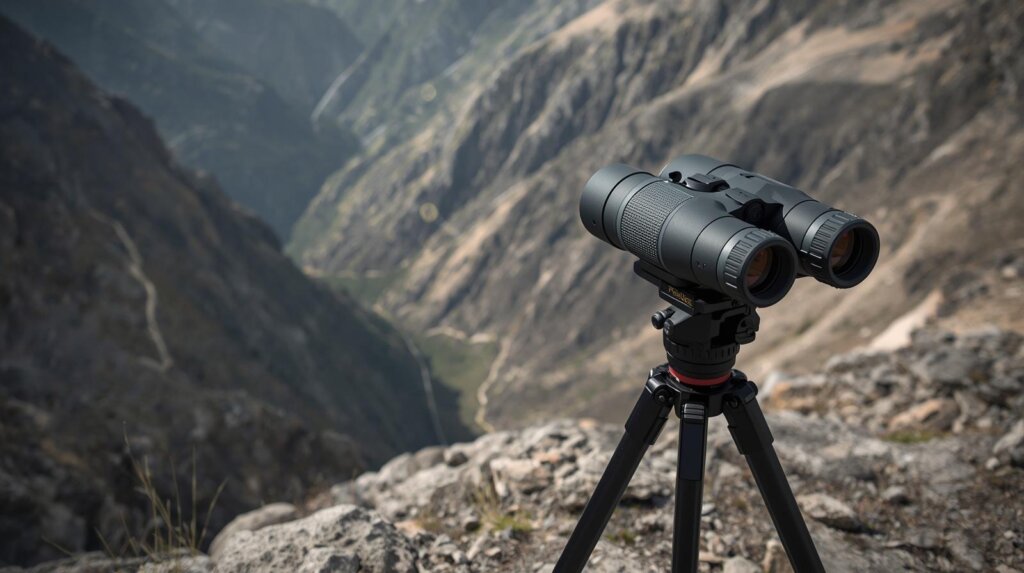
10×42 Is Usually the Sweet Spot
Most hunters shopping for the best rangefinding binoculars for hunting end up looking at 10×42 models. That is not random.
The 10x magnification gives you enough reach for open country, field edges, western ridges, and spotting details at distance. The 42mm objective lens keeps the binocular manageable while still letting in enough light for dawn and dusk use.
An 8x rangefinding binocular can feel steadier and wider. A 12x or 15x can help for long glassing, but weight and hand shake become bigger problems. For most hunters, 10×42 is the practical middle ground.
For a deeper breakdown of this exact size category, read best 10×42 hunting binoculars before choosing a rangefinding model. It helps you understand what a strong 10×42 view should feel like before you add electronics.
Rangefinding Binoculars vs Regular Hunting Binoculars
A regular premium binocular often gives you better optical purity for the money. A rangefinding binocular gives you more function.
That is the real trade-off.
If you compare a high-end non-electronic 10×42 binocular against a similarly priced rangefinding binocular, the traditional binocular may look brighter, cleaner, or more relaxed at the edges. But it cannot give you instant distance. That is why the best rangefinding binoculars for hunting make the most sense for hunters who value workflow, speed, and field efficiency.
Quick Comparison
| Feature | Regular Hunting Binoculars | Rangefinding Binoculars |
|---|---|---|
| Viewing comfort | Often excellent for the money | Good to excellent, depending on model |
| Distance reading | No | Yes |
| Ballistic features | No | Often included in premium models |
| Weight | Usually lighter | Usually heavier |
| Battery needed | No | Yes for ranging |
| Best for | Pure glassing and simplicity | Glassing plus fast distance decisions |
If you mostly glass for hours and rarely need instant ranging, traditional premium binoculars may be better. If your hunts involve frequent distance checks, steep angles, field edges, or long shots, rangefinding binoculars earn their place quickly.
Best Use-Case Scenarios
The best rangefinding binoculars for hunting shine in specific situations. Here is where they make the biggest difference.
Western Elk and Mule Deer Hunting
Open country makes distance deceptive. A ridge that looks 450 yards away may be 620. A basin may trick your eye. Heat shimmer, slope, and scale all mess with judgment.
Rangefinding binoculars help you build a distance map while glassing. Range the far timber edge. Range the saddle. Range the rock pile. Range the open bench below it. When an animal steps out, you already understand the country.
Whitetail Field Edges
A bean field, cut corn field, powerline, or gas line can fool you. The far corner often looks closer than it is, especially in flat evening light.
A rangefinding binocular lets you range field markers before prime movement. You can know the distance to the oak, ditch, fence post, and far corner before the deer appears.
Spot-and-Stalk Hunting
During a stalk, every movement matters. Pulling out a second rangefinder can expose you, slow you down, or make noise.
With one tool, you can pause, glass, range, and keep moving. That smooth workflow is one reason many hunters move to the best rangefinding binoculars for hunting after years of carrying separate optics.
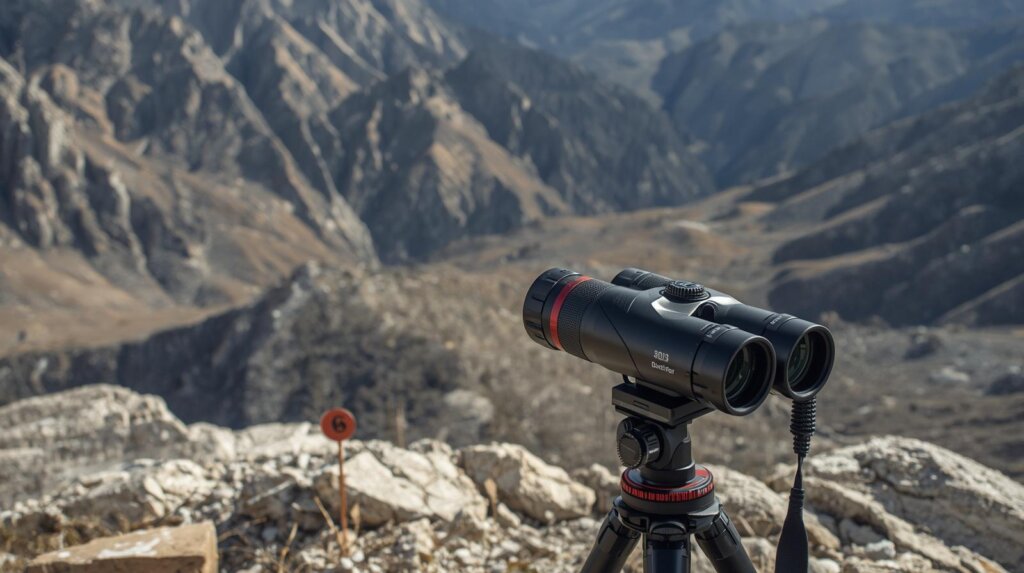
Steep Terrain and Angle Shots
Angle compensation matters when hunting from hills, mountains, or elevated stands. The line-of-sight distance may not match the horizontal distance your shot requires.
A good rangefinding binocular with angle compensation can reduce that confusion. This is especially useful when your shot angle is steep enough to make guessing risky.
What Features Actually Matter?
Some rangefinding binoculars sound impressive because the marketing is loaded with tech terms. Ignore the noise. Focus on what helps during real hunts.
Optical Quality
Start with the view. Is it bright? Is the center sharp? Does the image stay comfortable at dawn and dusk? Can you glass for long periods without eye fatigue?
If the glass feels harsh, the electronics become less exciting fast.
Ranging Speed
Slow ranging is frustrating. A good unit should deliver quick readings on trees, rocks, and field objects. You will often range landmarks more than animals, so do not only think about maximum animal range.
Angle Compensation
For hunters, angle compensation is not a luxury. It matters from treestands, ridges, canyons, and steep slopes.
Display Visibility
The display should be readable without overwhelming the image. Too dim and you struggle in daylight. Too bright and it can annoy you in low light.
Ballistic Support
Rifle hunters may want ballistic profiles, wind input, and environmental data. Bowhunters usually need simpler angle-compensated yardage. Do not pay for advanced ballistic features unless you will actually set them up and use them.
Weight and Balance
Rangefinding binoculars are heavier than normal binoculars. That is not always a dealbreaker, but it changes your harness comfort. If you hike hard, ounces become noticeable.
8×42 vs 10×42 Rangefinding Binoculars
This is where hunters overthink things.
An 8×42 rangefinding binocular gives you a steadier image, wider field of view, and easier handheld use. It can be excellent for timber, closer shots, and hunters who get shaky with 10x.
A 10×42 rangefinding binocular gives you more detail at distance. It is better for open country, western terrain, and field-edge hunting where animals may appear far across an opening.
For most people searching for the best rangefinding binoculars for hunting, I would start with 10×42 unless you mainly hunt thick woods or struggle to hold 10x steady.
To compare the two formats more closely, use this supporting guide on 8×42 vs 10×42 hunting binoculars. It will help you choose magnification before you commit to a rangefinding model.
Common Buying Mistakes
The first mistake is buying rangefinding binoculars only because they look cool. They are expensive tools. You should know exactly what problem they solve for your hunting style.
The second mistake is chasing maximum range numbers. Maximum reflective range is not the same as real-world animal ranging. A binocular that ranges reflective targets at huge distances may not perform the same on dark hide, brush, rain, fog, or uneven backgrounds.
The third mistake is ignoring ergonomics. Button placement matters. Focus wheel feel matters. Eyecup comfort matters. A binocular that annoys you in your hands will annoy you even more after five cold hours.
The fourth mistake is not practicing before season. Learn the menu. Build your ballistic profile. Test the display. Range different surfaces. Use it from your stand, tripod, pack, and kneeling position.
The fifth mistake is assuming electronics replace judgment. They do not. The best rangefinding binoculars for hunting help you make better decisions, but you still need shot discipline, wind awareness, and real practice.
When the Upgrade Is Worth It
Rangefinding binoculars are worth it when they remove friction.
If you constantly glass, then grab a rangefinder, then glass again, you already know the pain. If you hunt big country and build distance maps from your glassing spot, you will appreciate the upgrade. If your current setup feels cluttered on your chest, one combined unit can make your kit cleaner.
But if you only hunt short-range cover, rarely take shots beyond simple known distances, or dislike battery-powered gear, you may be happier with quality standard binoculars and a small rangefinder.
This is the honest line: the best rangefinding binoculars for hunting are not for everyone, but they are extremely useful for the right hunter.
Final Recommendation
For one product recommendation, the Vortex Fury HD 5000 AB 10×42 is the model I would put in front of most serious hunters first.
It has the right format, serious ranging capability, ballistic tools, and a field-ready design. It is not the cheapest option, and it is not the lightest binocular you will carry. But it makes sense for hunters who want one optic that can glass, range, and support more confident shot planning.
If you are already spending premium money on hunting optics, I would rather see you buy a rangefinding binocular that fits your actual field routine than buy the fanciest glass just because it looks impressive online.
The best rangefinding binoculars for hunting should make your hunt simpler, not more complicated. When they help you stay behind the glass, range faster, read terrain better, and avoid guessing, they are doing their job.
FAQs About the Best Rangefinding Binoculars for Hunting
Are rangefinding binoculars worth it for hunting?
Yes, rangefinding binoculars are worth it if you glass often, hunt open country, shoot across fields, or need fast distance readings without switching tools. They are less necessary for short-range timber hunting where shots are close and simple.
What magnification is best for rangefinding binoculars?
For most hunters, 10×42 is the best all-around choice. It gives enough reach for open country while staying manageable for handheld glassing. An 8×42 model may feel better in thick woods or for hunters who prefer a steadier image.
Do rangefinding binoculars work in low light?
Good models can work well in low light, but optical quality still matters. A poor-quality rangefinding binocular may struggle at dawn and dusk. Look for strong lens coatings, comfortable eye relief, and a clear display that does not overpower the view.
Are rangefinding binoculars good for bowhunting?
They can be useful for bowhunting, especially from treestands or steep terrain where angle-compensated distance matters. However, some bowhunters may prefer a smaller handheld rangefinder because it is lighter and faster at very close ranges.
What is the best rangefinding binocular for most hunters?
The Vortex Fury HD 5000 AB 10×42 is a strong choice for many serious hunters because it combines 10×42 optics, long-range ranging capability, built-in ballistic features, and a rugged hunting-focused build. It makes the most sense for rifle hunters, western hunters, and anyone who wants one tool for glassing and ranging.
Should I buy rangefinding binoculars or separate binoculars and a rangefinder?
Buy rangefinding binoculars if speed, simplicity, and one-tool efficiency matter most. Buy separate binoculars and a rangefinder if you want lighter gear, lower cost, or the best pure optical quality for your budget.
Can rangefinding binoculars replace a spotting scope?
No. Rangefinding binoculars can help you glass and measure distance, but they do not replace a spotting scope for detailed long-distance judging. For serious trophy evaluation at extreme distance, a spotting scope still has a role.
For more practical optics advice, field tips, and buying help, visit the Best Binocular blog page or explore the full site from the bestbinocular.net home page.




