
How to Choose Between 8×42 and 10×42 Binoculars
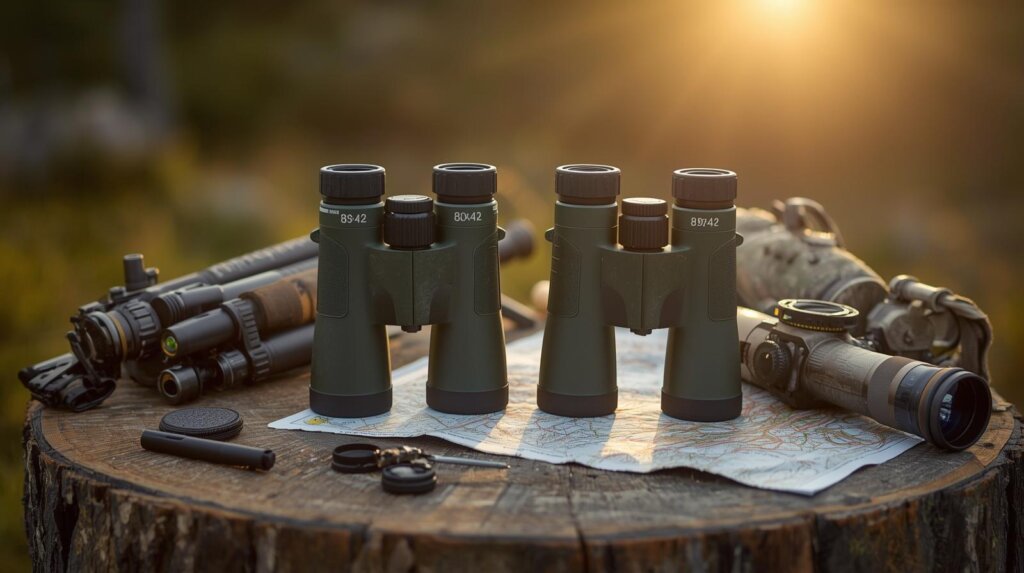
Choosing between 8×42 vs 10×42 hunting binoculars sounds simple until you are standing in a store, staring at two nearly identical pairs, wondering why one hunter swears by 8x and another says 10x is the only real choice.
Here is the honest answer: both can be excellent.
The better choice depends on how you hunt, where you hunt, how steady your hands are, how far you usually glass, and whether you spend more time inside timber or across open country. The mistake many hunters make is treating magnification like horsepower. Bigger sounds better. In real hunting, bigger can also mean shakier, narrower, and more tiring.
A 10×42 binocular brings the image closer. An 8×42 binocular usually feels steadier, wider, and easier to use for long sessions. That difference matters when your hands are cold, your breathing is up from climbing, and you are trying to pick apart a shadowy tree line before legal light disappears.
What 8×42 and 10×42 Actually Mean
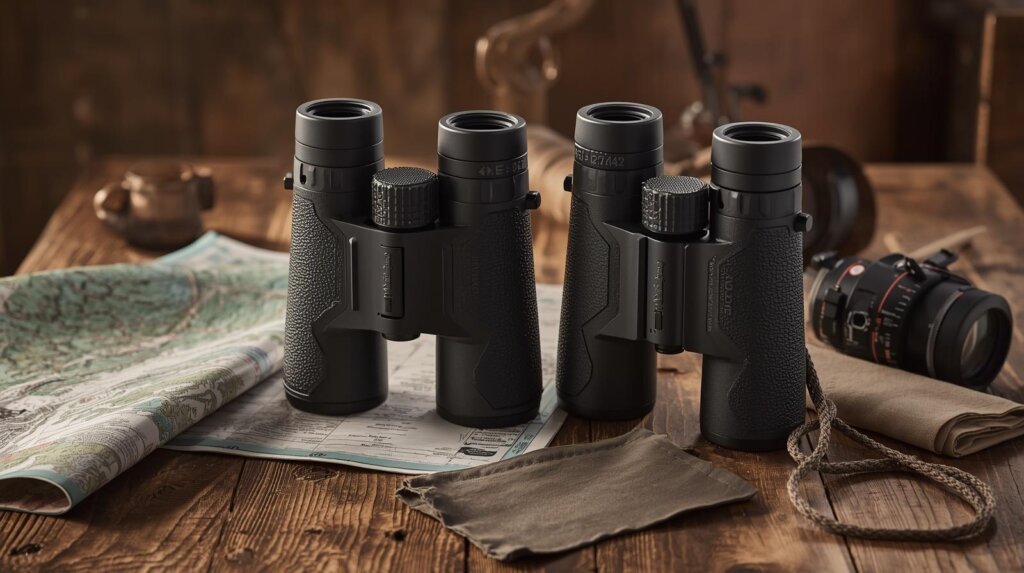
The first number is magnification. An 8×42 binocular makes the view appear eight times closer than your eyes alone. A 10×42 binocular makes it appear ten times closer.
The second number is objective lens diameter. Both use 42mm objective lenses, which is why this comparison is so popular for hunting. A 42mm lens hits a practical sweet spot: bright enough for early and late light, yet still manageable around your neck or in a chest harness.
The key difference is not lens size. It is how that 42mm objective behaves behind different magnification.
An 8×42 binocular has a larger exit pupil, about 5.25mm. A 10×42 binocular has a smaller exit pupil, about 4.2mm. In plain English, 8×42 usually feels easier behind the eyes and more forgiving when your face is not perfectly lined up. That matters when you are glassing from awkward positions or wearing gloves, a beanie, or a face covering.
A 10×42 gives you more reach. It can help you study details at distance, especially in open terrain. But that extra reach comes with more visible hand shake and usually a narrower field of view.
That is the whole battle behind 8×42 vs 10×42 hunting binoculars.
Quick Comparison Table: 8×42 vs 10×42 Hunting Binoculars
| Feature | 8×42 Hunting Binoculars | 10×42 Hunting Binoculars |
|---|---|---|
| Magnification | Lower, steadier view | Higher, closer detail |
| Field of view | Usually wider | Usually narrower |
| Low-light comfort | Often easier on the eyes | Still good, but less forgiving |
| Handheld stability | Better for most hunters | Shows more hand shake |
| Timber hunting | Excellent | Good, but sometimes too tight |
| Western glassing | Good | Often better |
| Beginner friendliness | Easier to use | Requires steadier hands |
| Tripod use | Helpful but not required | More useful with a tripod |
| Best for | Woods, whitetail, stalking, mixed terrain | Elk, mule deer, mountains, open country |
Choose 8×42 If You Hunt Timber, Brush, and Mixed Cover
An 8×42 binocular shines when the animal is not standing in the open like a catalog photo.
Think whitetail woods. Thick creek bottoms. Pine edges. Oak flats. Logging roads. Small openings where you might only catch a flicker, a horizontal back line, or a leg moving through cover.
In those moments, a wider field of view helps more than extra magnification.
With 8×42, you can scan faster and stay oriented. You are less likely to “lose the scene” when you raise the binoculars. That sounds minor, but it is huge in real hunting. A buck can step through one gap and vanish. If your binoculars feel too tight, you spend half the moment finding the same spot again.
This is why many deer hunters still love 8×42. It feels natural. It settles quickly. It does not punish small hand movement.
For a full deer-focused buying path, read our supporting guide on best deer hunting binoculars. It will help you match magnification to treestand, ground blind, and timber hunting conditions instead of buying based on specs alone.
8×42 Pros
8×42 binoculars are easier to hold steady, more forgiving in low light, and usually more comfortable for long handheld glassing. They also make it easier to track movement across thick cover.
8×42 Cons
You give up some reach. If you hunt huge basins, open sage, alpine bowls, or long agricultural fields, 8x may leave you wanting more detail at distance.
Choose 10×42 If You Hunt Open Country
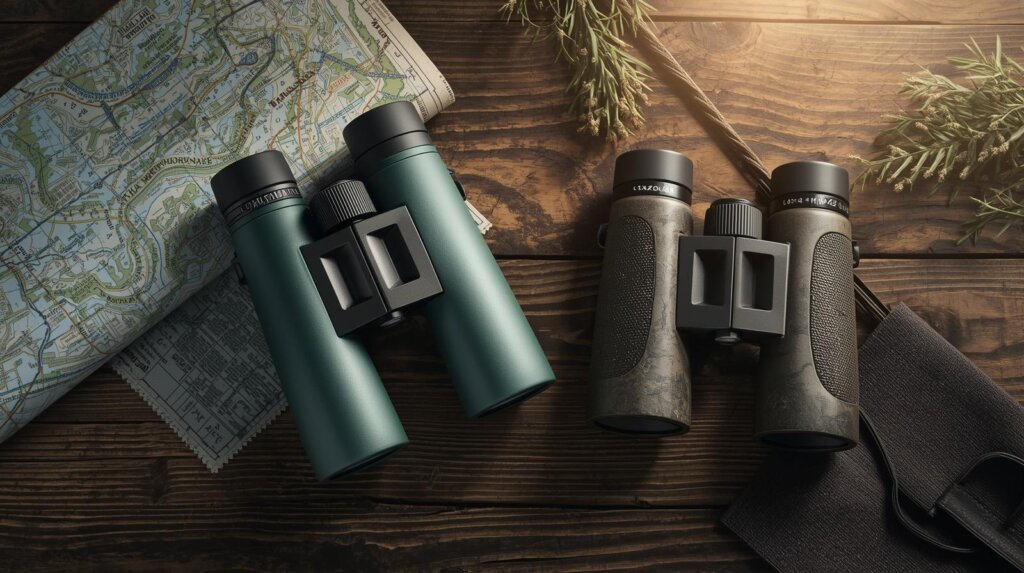
A 10×42 binocular makes more sense when distance is part of the game.
Western elk hunting, mule deer glassing, antelope country, mountain basins, desert ridges, and big farmland all reward extra reach. You are not just trying to find movement. You are trying to judge shape, posture, antler detail, body size, and behavior from farther away.
That is where 10×42 earns its keep.
The view feels closer. Small details become easier to separate. A patch of brush that looked empty through 8x may reveal an ear, a tine, or a bedded animal’s outline through 10x. That does not mean 10x is magic, but it does give you a little more information before you decide whether to move, wait, or pull out a spotting scope.
For elk hunters especially, 10×42 is often the safer all-around choice. You can still carry it comfortably, yet you get enough magnification for ridge-to-ridge glassing. For a deeper breakdown, visit our guide to best elk hunting binoculars.
10×42 Pros
10×42 binoculars show more distant detail, make open-country glassing more productive, and pair well with a tripod. They also feel more useful when you are trying to identify animals across canyons, fields, or mountain slopes.
10×42 Cons
The image can shake more in your hands. The field of view is often tighter. In close cover, 10x can feel like looking through a straw compared with a good 8×42.
The Real Low-Light Difference
Many hunters ask whether 8×42 is better than 10×42 in low light.
Technically, 8×42 has the advantage because of its larger exit pupil. It gives your eye a bigger “window” of light. In practical terms, that means the view can feel easier and more relaxed during dawn and dusk.
But here is where affiliate articles often get lazy: low-light performance is not only about magnification.
Glass quality matters. Coatings matter. Prism quality matters. Contrast matters. Stray light control matters. A premium 10×42 can beat a cheap 8×42 at last light because better optics preserve contrast and detail.
So, when comparing 8×42 vs 10×42 hunting binoculars, do not think 8x automatically wins every low-light test. It usually wins for comfort and forgiveness. A high-end 10×42 can still perform beautifully when the sun drops.
That is why high-end optics make sense for serious hunters. They do not just look brighter. They help your eyes stay relaxed long enough to notice what cheaper glass hides.
You can explore more premium options in our main silo guide: Best High-end Binoculars for Hunting.
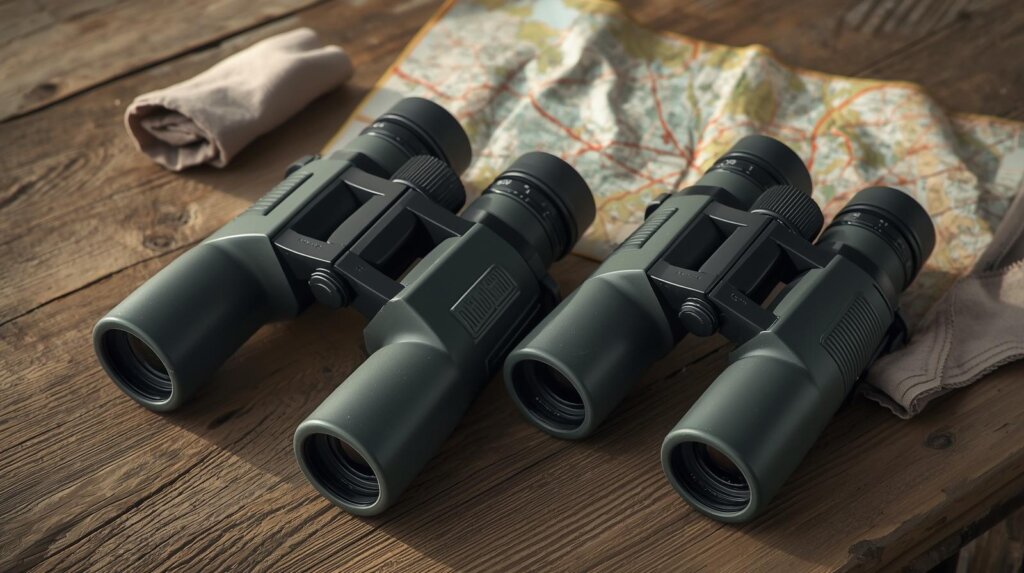
Hand Shake: The Detail Most Buyers Ignore
This is where the 8x vs 10x debate gets personal.
Some hunters can hold 10x binoculars steady without thinking about it. Others see a nervous, twitchy image the second they raise them. Your body matters more than the spec sheet.
Cold hands, wind, steep climbs, caffeine, fatigue, and awkward sitting positions all make 10x shake more noticeable. That shake eats detail. So even though 10x gives more magnification, you may not always see more useful information handheld.
That is why 8×42 can feel sharper in real use. Not because it has better glass, but because the image stays calmer.
Here is a simple field test: pick a license plate, fence post, sign, or small branch at distance. Look through 8x, then 10x. Do not brace your elbows. Use them the way you actually hunt. If the 10x image dances too much, your “extra detail” may only exist on paper.
A tripod changes the story. Put a 10×42 on a tripod, and it becomes much more powerful. The image settles. Your eyes stop fighting movement. You start noticing details that handheld glassing misses.
Field of View: Why 8x Feels Faster
Field of view is one of the biggest reasons I like 8×42 in thicker terrain.
A wider view helps you scan. It helps you follow movement. It helps you keep context. When you are watching a brushy hillside, context matters. You want to see trails, openings, shadows, and edges all at once.
With 10×42, the view feels more zoomed in. That is useful when you already know where to look. It is less useful when you are still searching.
This is why 8×42 often feels more “relaxed,” while 10×42 feels more “intentional.”
If you are still-hunting, stalking, or slipping through timber, 8×42 makes sense. If you are posted on a ridge and picking apart country section by section, 10×42 starts to pull ahead.
Real Hunting Scenarios: Which One Wins?
Whitetail From a Treestand
Choose 8×42.
You are usually scanning short to medium distances. You need a wide field, a steady image, and fast target pickup. A 10×42 can work, but it often feels like too much magnification in thick woods.
Ground Blind Over a Field
Choose 10×42 if the field is large. Choose 8×42 if you are watching close cover.
This is one of those “it depends” situations. Across a 300-yard bean field, 10x helps. Along a brushy food plot at 80 yards, 8x feels better.
Western Elk Glassing
Choose 10×42.
Elk country rewards detail at distance. A 10×42 gives you more reach without jumping into heavier 12x territory. If you use a tripod, 10×42 becomes even more useful.
Still-Hunting Timber
Choose 8×42.
You need speed, steadiness, and comfort. You are not judging animals two ridges away. You are trying to catch pieces of movement before they melt into cover.
Mountain Mule Deer
Choose 10×42.
You will likely glass open slopes, cuts, benches, and basins. The extra magnification helps you dissect country more carefully.
Beginner Hunter Buying One Pair
Choose 8×42 for woods and mixed terrain. Choose 10×42 for open country.
If you truly hunt a little bit of everything, I lean 10×42 only if you have steady hands or plan to use a tripod. Otherwise, 8×42 may give you a better everyday experience.
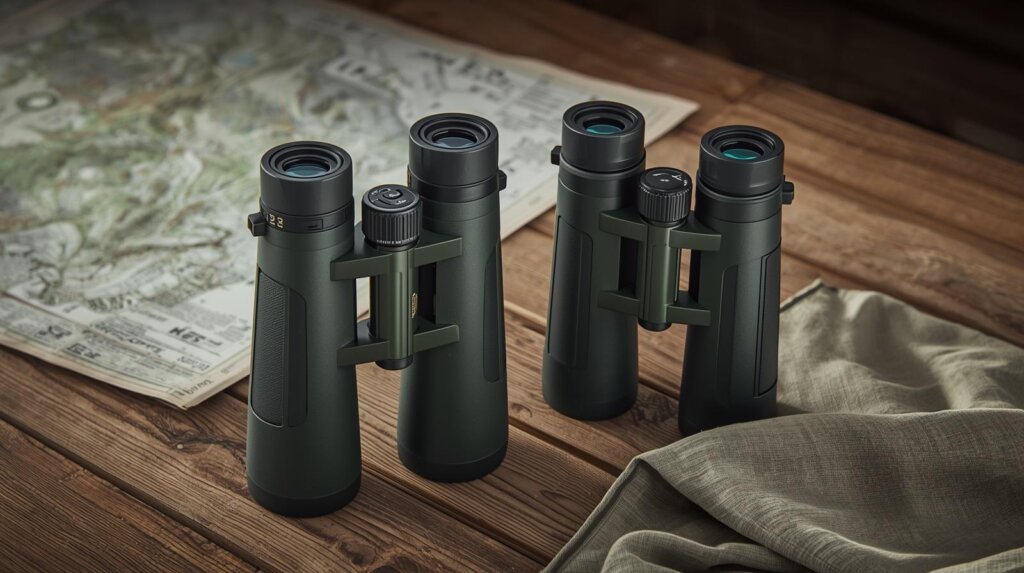
Recommended Premium Pick: Swarovski NL Pure 10×42
If you are building a serious high-end hunting setup and want one premium binocular that makes sense for open country, my pick is the Swarovski NL Pure 10×42.
It is not the budget-friendly answer. It is the “buy once, cry once, then enjoy the view for years” answer.
Swarovski lists the NL Pure 10×42 as a premium 10×42 binocular with a wide, comfortable field of view, strong optical performance, and a mountain-friendly build that makes it appealing for serious hunters: it gives you true 10x reach without feeling like a narrow, clumsy brick around your neck.
I would not force this recommendation on every hunter. If you mostly hunt tight timber, the 8×42 version may fit you better. Swarovski lists the NL Pure 8×42 with an even wider 173.9-yard field of view at 1,000 yards, which explains why it feels so easy for scanning and handheld use.
But for a premium all-around western hunting binocular, the NL Pure 10×42 hits hard. It gives you detail, clarity, comfort, and field usability without jumping into oversized binocular territory.
Why Hunters Often Pick the Wrong One
Most hunters do not buy the wrong binocular because they are careless. They buy the wrong one because the spec sheet whispers the wrong story.
10x sounds stronger. 8x sounds basic.
That is not how it works.
The best binocular is the one that helps you find game faster and glass longer with less eye fatigue. Sometimes that is 10×42. Sometimes it is 8×42.
A hunter who spends 80% of the season in thick hardwoods may not gain much from 10x. A hunter who spends days behind glass in elk country may regret choosing 8x because it feels a little short across big basins.
Your terrain should make the decision, not your ego.
Common Mistakes When Comparing 8×42 vs 10×42 Hunting Binoculars
Mistake 1: Assuming More Magnification Means Better Hunting
More magnification helps only if you can hold it steady and use it in the terrain you hunt. A shaky 10x view can show less real detail than a calm 8x view.
Mistake 2: Ignoring Field of View
A wide field helps you locate animals. A narrow field helps you inspect them. Those are different jobs.
Mistake 3: Buying for One Dream Hunt
Do not buy binoculars only for a hunt you might take someday. Buy for the hunting you actually do most often.
Mistake 4: Forgetting About a Tripod
If you choose 10×42 for western hunting, plan for tripod use. You do not need to mount them every second, but having the option makes long glassing sessions much better.
Mistake 5: Comparing Cheap 8x to Premium 10x
That comparison tells you almost nothing. Quality level matters. Compare similar glass tiers before judging magnification.
Final Verdict: 8×42 vs 10×42 Hunting Binoculars
For most timber, whitetail, and mixed-cover hunters, 8×42 hunting binoculars are easier to love. They feel steady, wide, bright, and forgiving. They help you scan naturally instead of fighting the image.
For western, elk, mule deer, mountain, and open-country hunters, 10×42 hunting binoculars usually make more sense. They give you extra reach, better distant detail, and stronger performance when paired with a tripod.
My practical rule is simple:
Choose 8×42 if your hunting happens mostly inside 300 yards, in timber, brush, rolling woods, or mixed cover.
Choose 10×42 if you regularly glass across canyons, fields, ridges, basins, or open slopes.
That is the cleanest answer in the 8×42 vs 10×42 hunting binoculars debate. Do not chase magnification for bragging rights. Choose the glass that fits your terrain, your hands, and your patience behind the binoculars.
FAQs About 8×42 vs 10×42 Hunting Binoculars
Are 8×42 or 10×42 binoculars better for hunting?
Neither is automatically better. 8×42 is better for timber, close cover, and steadier handheld viewing. 10×42 is better for open country, western hunting, and longer-distance glassing.
Is 10×42 too much for deer hunting?
Not always. A 10×42 can work well for deer hunting in fields, hills, and open country. For thick woods or treestand hunting, 8×42 often feels faster and easier.
Is 8×42 good enough for elk hunting?
Yes, 8×42 can work for elk hunting, especially in timber or mixed country. However, many elk hunters prefer 10×42 because it gives more detail across ridges, basins, and open slopes.
Which is better in low light, 8×42 or 10×42?
8×42 usually feels more forgiving in low light because it has a larger exit pupil. However, a premium 10×42 can still perform very well at dawn and dusk if the glass quality is high.
Do 10×42 binoculars need a tripod?
They do not require a tripod, but they benefit from one. A tripod reduces hand shake and helps you see more detail during long glassing sessions.
Should beginners choose 8×42 or 10×42 hunting binoculars?
Beginners who hunt woods or mixed terrain should usually start with 8×42. Beginners who hunt open country and have steady hands can confidently choose 10×42.
What is the best all-around magnification for hunting binoculars?
For many hunters, 10×42 is the most versatile all-around choice, especially in the West. For eastern whitetail hunters and timber hunters, 8×42 may be the better all-around option.
Keep Building Your Hunting Optics Setup
For a full premium buying path, start with our main guide to Best High-end Binoculars for Hunting. If your season focuses on specific game, compare options in our guides to best elk hunting binoculars and best deer hunting binoculars.
For more field-tested optics advice, practical buying tips, and gear explainers, browse the latest posts on our blog page or return to bestbinocular.net to explore the full hunting binoculars guide library.




