
Best Compact Zoom Binoculars: What to Know Before You Buy
Finding the best compact zoom binoculars is tricky because compact zoom models promise something very tempting: pocket-friendly size with adjustable magnification. On paper, that sounds perfect. One binocular for travel, concerts, sports, sightseeing, hiking, casual wildlife viewing, and maybe even a quick look at the moon.
In real life, not every compact zoom binocular delivers that experience.
Some feel exciting for the first five minutes, then become shaky, dim, narrow, and frustrating once you zoom in. Others get the balance right: enough magnification flexibility, light enough to carry, and practical enough that you actually bring them instead of leaving them at home.
That is the real test.
The best compact zoom binoculars are not the ones with the biggest zoom number printed on the body. They are the ones that stay usable when your hands are tired, the light is not perfect, and the subject is moving. If you want a compact binocular that can handle travel days, stadium seats, balcony views, city sightseeing, and casual outdoor scanning, this article will help you choose smarter.
What Makes Compact Zoom Binoculars Different?
Compact zoom binoculars are designed to give you variable magnification in a smaller body. Instead of being locked into one power, such as 8x or 10x, they let you move through a zoom range like 8-16x, 8-24x, or 10-30x.
That flexibility is the whole attraction.
At low power, you get a wider view and easier handling. At higher power, you can pull distant details closer. For casual users, that feels more useful than carrying one fixed-power binocular and wishing it could zoom.
But there is a trade-off.
As you increase magnification, the image usually gets darker, narrower, and harder to keep steady. That is why the best compact zoom binoculars are usually moderate zoom models, not extreme-power pocket binoculars with unrealistic claims.
If a small binocular says 30x or 60x and costs very little, be careful. High zoom in a tiny body often creates more disappointment than detail.
Who Should Buy Compact Zoom Binoculars?
Compact zoom binoculars are best for people who value portability and flexibility more than perfect optical performance.
They make sense if you want one small binocular for different situations:
| Use Case | Why Compact Zoom Works |
|---|---|
| Travel sightseeing | Start wide for buildings and landscapes, zoom in for signs, towers, and distant details |
| Stadium sports | Use low power to follow action, zoom in during pauses |
| Concerts and events | Stay compact while getting a closer stage view |
| Hiking and camping | Easy to pack without adding much weight |
| Casual bird or wildlife watching | Useful for slow or distant subjects, but not ideal for fast tracking |
| Balcony or city viewing | Good for scanning streets, skylines, and landmarks |
The best compact zoom binoculars are especially useful for people who do not want to own multiple binoculars. They are not the highest-performance choice for serious birders or hunters, but for everyday viewing, they can be very practical.
The Big Truth About Compact Zoom Binoculars
Here is the honest part: compact zoom binoculars are always a compromise.
A fixed 8×25 or 10×25 compact binocular will often look brighter and sharper than a zoom binocular of similar size. That is because zoom systems are more complex inside. More moving optical parts usually means more compromises in brightness, edge sharpness, and field of view.
But that does not mean zoom binoculars are bad.
It means you need to buy them for the right reason.
The best compact zoom binoculars are for people who enjoy control. You can scan at lower power, then zoom in when something deserves a closer look. That makes them fun for travel, casual outdoor use, and situations where you do not know exactly what you will be viewing.
The mistake is expecting them to behave like premium fixed-power binoculars. They will not. But a good pair can still be enjoyable, useful, and worth carrying.
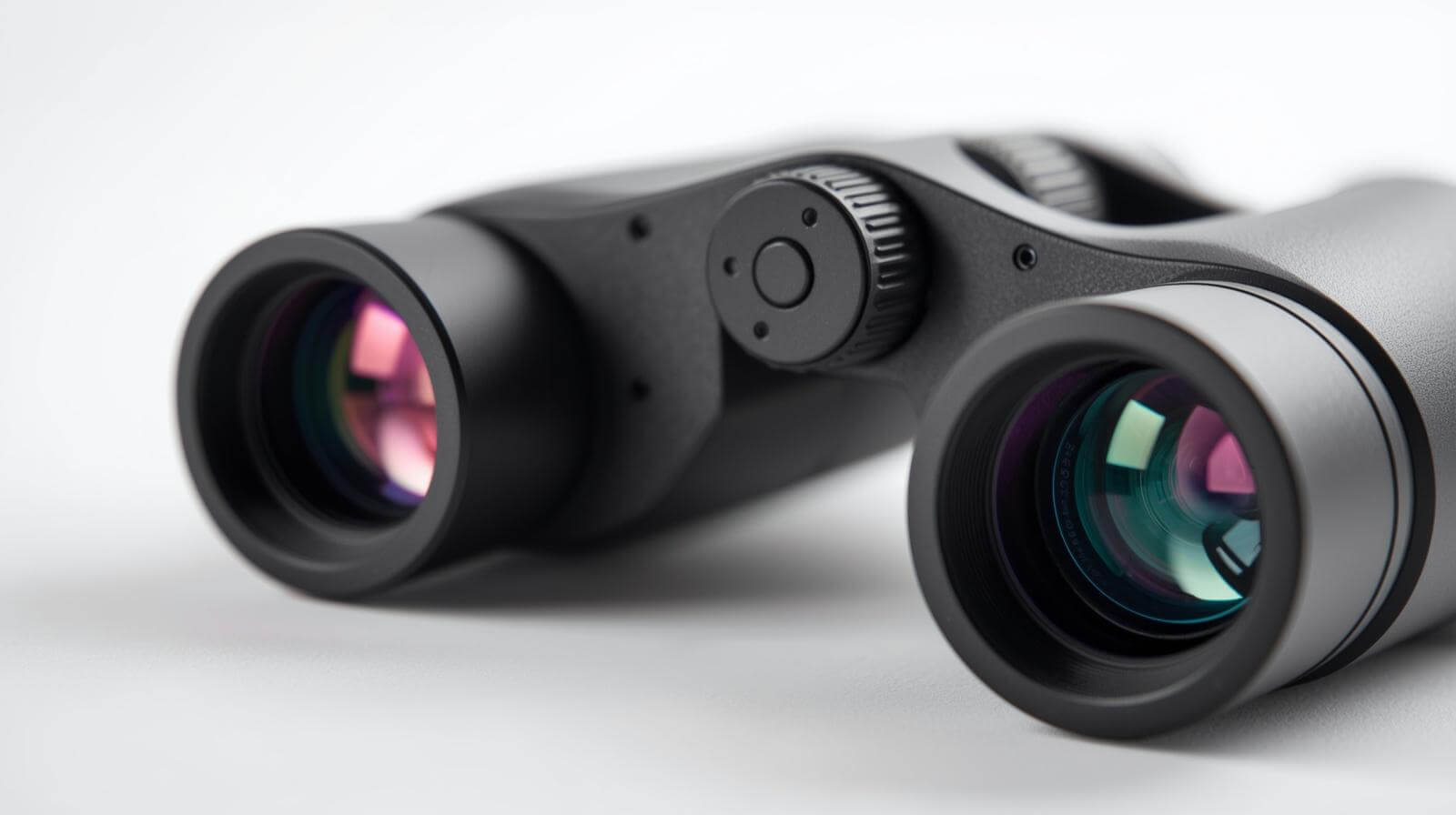
Best Compact Zoom Binoculars Pick: Pentax UP 8-16×21
If I had to recommend one compact zoom binocular that makes sense for most casual users, I would choose the Pentax UP 8-16×21.
It does not chase silly magnification numbers. That is exactly why it works.
The 8-16x zoom range is practical. At 8x, it behaves like a normal compact binocular: easier to hold, easier to scan, and better for wider scenes. At 16x, you get extra reach when you want to inspect a distant building, a stage setup, a scoreboard, a parked boat, or a landmark across the valley.
A compact 8-16×21 zoom binocular offers a sensible balance for casual users: small enough to carry easily, steady enough at the low end, and powerful enough at the high end for travel, events, and daytime sightseeing., which puts it in the genuinely compact category.
Why This Model Makes Sense
The Pentax UP 8-16×21 feels like a compact zoom binocular built for real use, not just spec-sheet marketing.
The zoom range is controlled. The weight is travel-friendly. The body is small enough to fit in a day bag, glove box, or carry-on pocket. And because it starts at 8x instead of 12x or 16x, you are not fighting shake from the first second you raise it to your eyes.
That matters more than people think.
A compact binocular should be quick. You see something, lift the binocular, focus, and enjoy the view. If it takes too long to stabilize, adjust, and refocus, you stop using it. The best compact zoom binoculars should feel convenient, not like a mini science project.
Pros
| Pros | Why It Matters |
|---|---|
| Practical 8-16x zoom range | More usable than extreme zoom in a small body |
| Lightweight 310g build | Easy to carry while traveling or walking |
| 3m close focus | Useful for nearby signs, displays, garden views, and details |
| Compact size | Better for everyday carry than full-size zoom binoculars |
| Good brand credibility | Pentax has a real optics background, not just generic labeling |
Cons
| Cons | What to Know |
|---|---|
| 21mm objective lenses | Not ideal for dusk or low-light use |
| Higher zoom needs steady hands | 16x is usable, but not as relaxed as 8x |
| Narrower view when zoomed in | Normal for compact zoom binoculars |
| Not a serious hunting or astronomy binocular | Better for casual daylight viewing |
Compact Zoom vs Full-Size Zoom Binoculars
This is where many buyers get confused.
A full-size zoom binocular, such as a 10-22×50 model, will usually be brighter and more powerful because it has larger objective lenses. But it is also bigger, heavier, and less convenient.
Compact zoom binoculars are the opposite. They sacrifice light-gathering power to stay portable.
| Feature | Compact Zoom Binoculars | Full-Size Zoom Binoculars |
|---|---|---|
| Size | Small and travel-friendly | Large and bulkier |
| Weight | Easier to carry all day | Better with a neck strap or tripod |
| Brightness | Best in daylight | Better in low light |
| Stability | Easier at low power, shaky at high power | Still shaky at high power, but more immersive |
| Best For | Travel, events, casual viewing | Long-distance viewing, backyard observation, tripod use |
If you are building your main buying page, your next step should be reading our complete best zoom binoculars guide, where compact, budget, and full-size zoom options fit into one bigger buying decision.
Best Real-World Uses for Compact Zoom Binoculars
Travel and City Sightseeing
This is where the best compact zoom binoculars feel most natural.
Imagine standing near a waterfront, castle wall, observation deck, mountain road, or old city square. At 8x, you scan the scene comfortably. Then you notice a clock tower, rooftop detail, distant sign, or boat name. A small push of the zoom lever brings it closer.
You are not trying to study feathers or judge antlers. You are simply enjoying more detail from far away.
That is exactly what compact zoom binoculars do well.
Sports Events
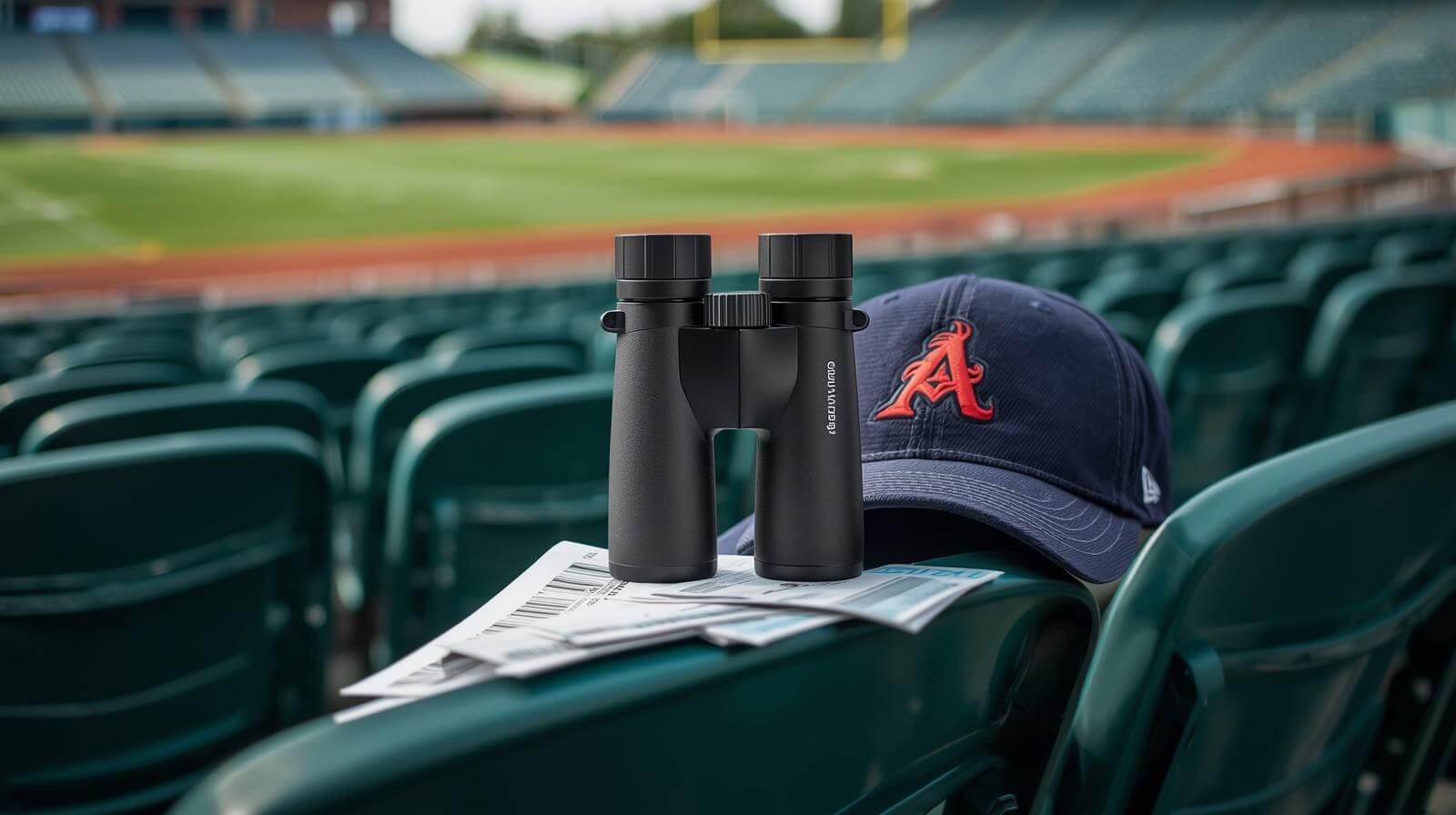
For stadium use, compact zoom binoculars are surprisingly useful. Low magnification helps you follow the flow of the game. Higher magnification helps during slower moments: substitutions, celebrations, warmups, scoreboards, or action on the far side.
The key is not to stay zoomed in all the time. Use low power most of the time and zoom only when the action slows.
Concerts and Stage Shows
For concerts, compact size matters more than optical perfection. Nobody wants to carry large binoculars into a venue.
A small zoom binocular lets you keep the full stage in view at low power, then zoom in to see instruments, lighting rigs, screens, or stage details. For balcony seats, this can make the event feel much more personal.
Just remember: indoor venues can be dim. A 21mm or 25mm compact binocular will not look as bright as a larger model. For best results, use lower zoom more often.
Hiking and Day Trips
For hiking, the best binocular is the one you actually carry.
A full-size zoom binocular may look better, but if it stays in the car, it is useless. Compact zoom binoculars win because they disappear into a small pack.
Use them for ridgelines, trail markers, distant cabins, mountain details, lake edges, and scenic overlooks. They are not perfect in deep forest shade, but in open daylight, they are very enjoyable.
What to Look for Before Buying
Choose a Sensible Zoom Range
For compact models, I prefer 8-16x or 8-24x over extreme claims like 20-60x.
The wider the zoom range, the more likely you are to see image shake, dimness, and softness at the top end. The best compact zoom binoculars stay realistic.
For most people, 8-16x is the sweet spot.
Do Not Ignore Objective Lens Size
Compact zoom binoculars usually have 21mm to 25mm objective lenses. That keeps them small, but it also limits brightness.
If you mostly view in daylight, that is fine.
If you want dawn, dusk, forest, or night use, compact zoom binoculars are not the best choice. You may be happier with a larger 10×42 or 10-22×50 model.
Check Eye Relief If You Wear Glasses
Eye relief matters a lot if you wear glasses. Too little eye relief means you may not see the full image circle.
For compact zoom binoculars, eye relief often gets shorter at higher magnification. That does not make them unusable, but glasses wearers should be more careful.
Weight Still Matters
A compact binocular should feel easy to carry.
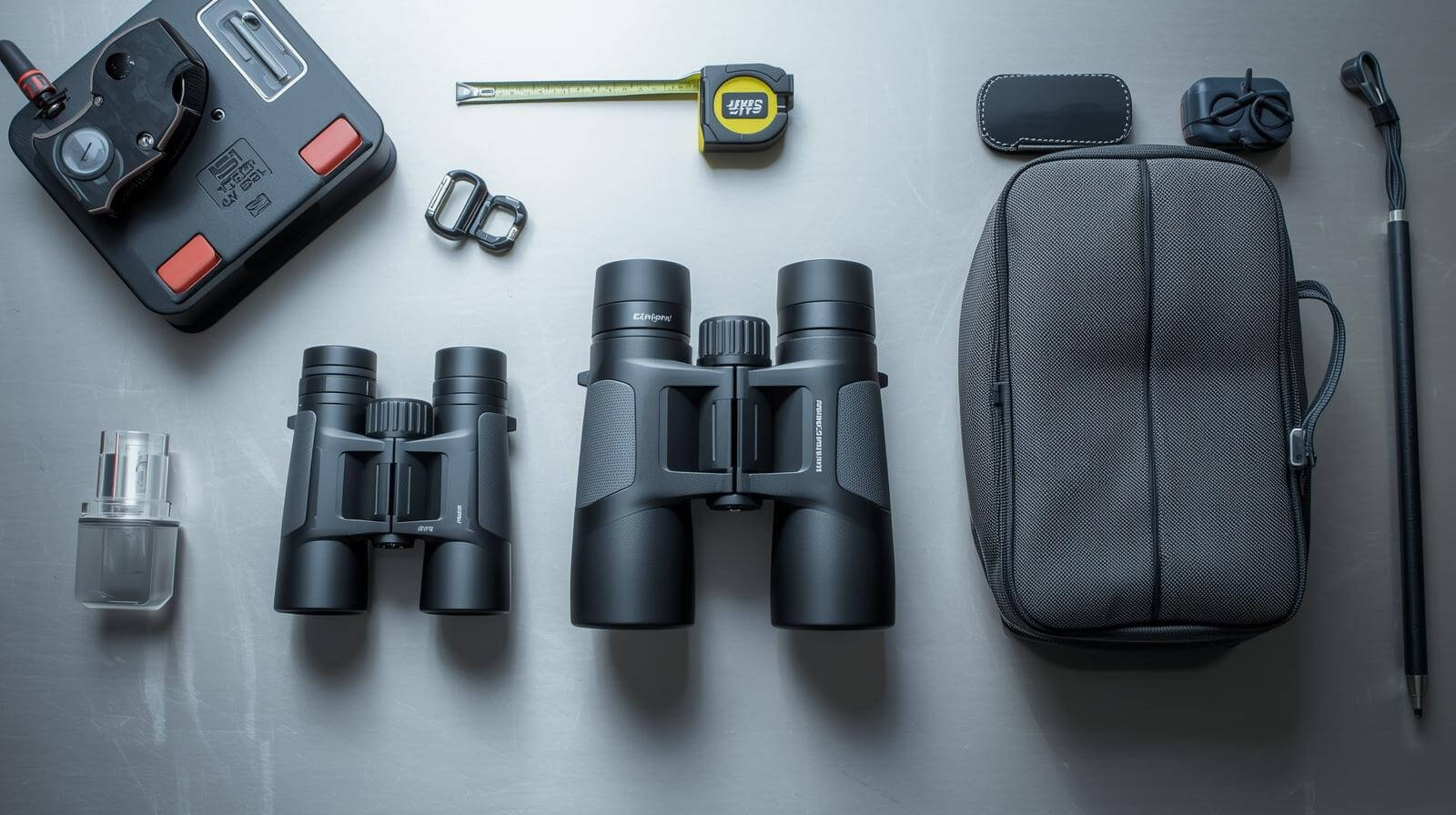
Once a zoom binocular gets too heavy, it loses the main benefit of being compact. Around 300g to 400g is a comfortable range for travel and casual use.
Common Mistakes When Buying Compact Zoom Binoculars
Mistake 1: Buying the Highest Zoom Number
This is the classic trap.
A tiny binocular promising huge magnification sounds exciting, but it usually becomes shaky and dim. More power does not automatically mean a better view. In compact binoculars, too much power often makes the image worse.
Mistake 2: Expecting Low-Light Performance
Compact zoom binoculars are mainly daylight tools. They can handle bright stadiums, sunny travel days, and open outdoor scenes. They are not made for serious twilight viewing.
Mistake 3: Staying Zoomed In All the Time
The best way to use compact zoom binoculars is to start low.
Find your subject first. Focus. Stabilize. Then zoom in slowly. If you start at maximum power, you will spend more time searching than viewing.
Mistake 4: Ignoring the Field of View
A narrow field of view makes it harder to track movement. This matters for sports, birds, and fast-changing scenes.
If your main use is scanning, sightseeing, and casual viewing, choose a model with a comfortable low-power setting.
Buyer Psychology: Why Compact Zoom Feels So Appealing
People buy compact zoom binoculars because they want freedom.
They do not want to think, “Should I bring 8x or 12x?”
They do not want to carry a large binocular.
They do not want to miss a distant detail.
That emotional pull is real.
But smart buyers understand the trade-off. The best compact zoom binoculars are not magic. They are convenience tools. They give you flexible reach in a small package, as long as you use them in the right conditions.
If price is your biggest concern, compare this article with our best budget zoom binoculars guide. And if you are shopping at entry-level prices, our best zoom binoculars under 100 article will help you avoid the worst low-cost mistakes.
Compact Zoom Binoculars Buying Checklist
| Buying Factor | Best Choice for Most Users |
|---|---|
| Magnification | 8-16x or 8-24x |
| Objective lens | 21mm to 25mm for pocket use |
| Weight | Around 300g to 400g |
| Best lighting | Daylight and bright conditions |
| Best users | Travelers, casual viewers, sports fans, concertgoers |
| Avoid if | You need serious low-light, hunting, or astronomy performance |
Final Verdict: Are Compact Zoom Binoculars Worth It?
Yes, compact zoom binoculars are worth it if you buy them for the right job.
They are not the sharpest binoculars in the world. They are not low-light champions. They are not the best choice for serious birding, hunting, or astronomy. But for travel, stadiums, concerts, hiking, sightseeing, and everyday curiosity, they can be genuinely useful.
The best compact zoom binoculars give you one thing fixed compact binoculars cannot: adjustable framing.
You can scan wide, zoom closer, and carry one small optic instead of overthinking every trip. For most casual users, that convenience is the real value.
My practical pick is the Pentax UP 8-16×21 because it keeps the zoom range realistic, stays lightweight, and fits the way compact binoculars are actually used. It is not trying to be a giant telescope in your pocket. It is simply a small, flexible viewing tool that makes everyday distance feel more interesting.
For more helpful binocular buying advice, visit our binocular tips blog or explore the BestBinocular homepage for more guides.
FAQs About the Best Compact Zoom Binoculars
What are the best compact zoom binoculars for travel?
The best compact zoom binoculars for travel are lightweight models with a practical zoom range, such as 8-16x or 8-24x. They should be small enough to carry all day and easy to use quickly in daylight.
Are compact zoom binoculars good for bird watching?
Compact zoom binoculars can work for casual bird watching, especially for perched or slow-moving birds. However, serious birders usually prefer fixed 8x or 10x binoculars because they offer a wider, brighter, and steadier view.
Are compact zoom binoculars good for concerts?
Yes, compact zoom binoculars are good for concerts, especially from balcony or rear seats. Lower magnification is better for seeing the full stage, while higher zoom helps you view stage details more closely.
What magnification is best for compact zoom binoculars?
For compact zoom binoculars, 8-16x is one of the most practical ranges. It gives you a steady low-power view with enough extra reach when needed. Extreme magnification in small binoculars is usually harder to use.
Why do compact zoom binoculars look dim at high zoom?
They look dimmer at high zoom because the exit pupil becomes smaller as magnification increases. With compact objective lenses, less light reaches your eyes, especially in shade, dusk, or indoor venues.
Should I buy compact zoom binoculars or fixed-power compact binoculars?
Buy compact zoom binoculars if you want flexibility and enjoy adjusting magnification. Buy fixed-power compact binoculars if you want better brightness, sharper views, and simpler handling. Both are useful, but they serve different buyers.




